










Gjør som tusenvis av andre bokelskere
Abonner på vårt nyhetsbrev og få rabatter og inspirasjon til din neste leseopplevelse.
Ved å abonnere godtar du vår personvernerklæring.Du kan når som helst melde deg av våre nyhetsbrev.

The conversation of Jesus with Nicodemus belongs not only to the theologically important but also to the exegetically controversial pericopes of the fourth gospel. Scholars have named it «Summe des Evangeliums» and «Evangelium en miniature» (cf. Jürgen Becker). Jn. 2,23-3,36, structured as a diptych of parallel and complementary scenes (2,23-3,21 & 3,22-36), each having a similar tripartite structure, contains the synthesis of the fourth evangelist¿s Christology and soteriology and serves as a key to understand the scheme of the whole gospel. Using the current tools of literary and narrative criticism (characterisation, chiasmus, double entendre, dualism, irony, misunderstanding, parallelism, plot, symbolism, etc.), the author examines minutely the network of Jn. 1,19-4,54, subjects Jn. 3 to a thorough exegesis, defends the integrity and unity of Jn. 3 and analyses the heart beat of the gospel, viz. its double and parallel Christology of the Son of Man and Son of God, which complement each other. Being at home in French and German besides English, through a wide consideration of literature and multi-disciplinary methodology, he contributes substantially to the understanding of a central text of the fourth gospel.
Maurice Blondel¿s major work L¿Action contains one of the most penetrating investigations ever of the natural sciences and their methodology. This study examines in detail this discussion of the sciences in its historical and systematic contours. It further clarifies the scientific character of Blondel¿s more general philosophy and should be of interest to philosophers of religion and those natural scientists interested in examining the foundations of modern science. In particular it clarifies precisely the interaction at the philosophical level between science and religion. It demonstrates clearly that when one remains consequent in the strictest application of the scientific method, one is forced not only to address the complex matter of consciousness and self-reference, but also such issues as freedom, morality, metaphysics and the more fundamental question of God.
The book has a twofold goal: to give an overview of the research in the area of textbook and to supply textbook authors and editors with the concrete suggestions for composing an effective textbook. The conclusions and suggestions are based on an overview of more than 500 sources of literature and many experimental studies of the author. The first part of the book investigates the methods for textbook evaluation: experiments, expert opinions, and textbook analysis. Special attention is given to the analysis of textbook feasibility before printing and to the exact criteria of appropriateness of textbooks for students of different grades and ability levels. Readability formulae and their use via computer are thoroughly discussed. The second part of the book begins with the rules of clear writing: their basis, the examples of application and efficiency. Beside that, some other important topics are examined: the possibilities of motivating students and arousing their interest in textbooks; the characteristics of influential illustrations and their relations to the text; the value forming aspects of textbooks. Textbooks form students¿ attitudes to other people, form their goals and self-esteem. This way the textbooks influence the fate of our youth. Textbooks deserve keen attention of society.
The main part of this study is a detailed analysis of the content of the Epistolae Obscurorum Virorum (EOV). It will identify the satirical devices which Crotus and Ulrich apply in their work. Furthermore, the structure of the work will be analyzed and it will be shown to what extent the epistolary tradition of antiquity and of the Middle Ages has influenced the form of these letters. Next, the treatment of the traditional medieval Seven Deadly Sins will be carefully examined in the text of the EOV. However, the study will focus its attention on the various methods with which Crotus and Ulrich satirize ignorance and literary barbarism. In doing so it will trace the humanist concept of ideal learning and it will show how the authors devised their caricature of ignorance in contrast with this high standard.
One of the main dimensions of Comparative Literature is its search for methods and theoretical frameworks that have some chance of being valid in a range of periods of human history and in a variety of cultures. While universal validity may be a pipedream at worst, at best an ideal to which to aspire, there can be no doubt as to the active existence of a general «Literaturwissenschaft» dealing with problems and perspectives which are common to literatures of all cultures. As can be seen in the present volume, the commonalities serve us best when they are used as exploratory tools rather than rigidly preset truths.The five groupings of papers: «Historical landmarks», «Myths of all times and places», «Reflections on Drama», «Aspects of Poetics», and «Before and after all, the text», share in an intensive quest for an answer to the question of what ultimately constitutes literature, underlies fictionality, motivates the aesthetic experience, in an interplay of the universal and the particular which forever defies narrow definitions.
In African terms the possession of a single nationality was the unique resource on which the Swazi monarchy could build in order to have constituted a royally dominated nationalism at independence. Accompanied by constraints whose origins are colonial and neo-colonial, Swazi foreign policy has in its own distinctive way, attempted to preserve Swaziland's independence since. Against the background of the deep conflict within the region, Swaziland's position in the international relations of Southern Africa has been contested, not least by its decision to sign a security agreement with South Africa in 1982, the first OAU state to do so.
Why was Bismarck interested in England's problem «The Defence of India»? What was the part played by India in Berlin's diplomatic circles during the time of Imperialism? How did Kaiser Wilhelm II and the German Foreign Office react to growing Indian nationalism? How did Berlin become the center of Indian revolutionaries during the First World War? These are some of the questions dealt with in this book which is based mainly on documentary sources not previously used. Interesting and provocative material interpreted by a well informed author.
Magical realism was one of the most significant literary developments in the last century. It has become synonymous with the seductive fictions of writers such as Gabriel García Márquez, Salman Rushdie, Toni Morrison, Ben Okri, Jeanette Winterson and Peter Carey. However, the genre has also become known for its theoretical indeterminacy. In fact, exoticist speculation, inspired by the links between magical realist literature and the world¿s cultural or political margins, has thrown the category into critical disrepute. This book rescues magical realism from misreadings and misdemeanours, tracing the historical development of the literary genre and analysing an original spectrum of magical realist texts from Latin America, Africa, India, Canada, the US, the UK and Australia. It asks such questions as: How did magical realism come to take over the world? What is the nature of its allure? Also, how does the marginal status of its authors inform the genre? Does magical realism have a political agenda? This book uses postcolonial theory to investigate notions of cultural identity and post-structural theory to examine the narrative strategies of magical realism, presenting a comprehensive historical and theoretical overview of the genre and a politically urgent argument about its subversive potentialities.
Transformation is a desired outcome of Christian spirituality. Christians pray, trust, and hope that their responsive embrace of God will transform them. Interdisciplinary study of this process, as journey and as significant movements, hits upon key philosophical, theological, and psychological debates. Are all spiritualities the same core with an overlay of traditional practices and beliefs? How is the Holy Spirit involved in human life as the potential for this transformation process unfolds from birth? Can psychological theories of transformation that do not affirm divine reality have explanatory and descriptive power for Christian understandings of transformation? These areas of focus and related questions encompass broad landscapes. This book places a magnifying glass on one piece of the terrain by engaging the work of philosopher, theologian, and psychologist James Loder, mystical spirituality scholars Andrew Louth, Bernard McGinn, Denys Turner, and Mark McIntosh, and archetypal movement founder James Hillman. Without denying differences, this work is the first analysis to identify connections among these thinkers. The significance of the connections is both substantive and methodological for intra- and inter-faith (broadly understood) spirituality discussion, as well as for the engagement of the Christian church with the culture of the twenty-first century.
This new assessment of the literary development of Irmtraud Morgner (1933-1990) liberates her from a critical straitjacket that has seen her early and middle-period works as essentially constrained and thwarted by state prescriptions. The author demonstrates that Morgner always had an organically evolving literary programme of her own. He uncovers a writer with a vision of ideology and democracy as humanised, intimate and personal. Morgner¿s diaries are called upon to demonstrate how she rechannelled into her later work material that had been banned by the censor. Morgner emerges as a figure whose work is deeply pertinent to our twenty-first-century preoccupations, be they in the West or East. The author advances powerful arguments for the value of six of her novels as key illustrations of her trust in the individual¿s capacity to give meaning to life without recourse to established ideological structures.
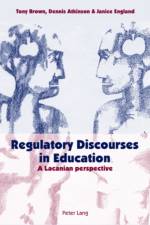
This book employs Lacanian psychoanalysis to develop new ways of understanding educational domains. It analyses events, practices and policies that occur in school classrooms, teacher education and higher-degree studies including educational research. It provides an accessible introduction, description and analysis of those aspects of Lacan¿s work concerned with language, identity and subjectivity directly relevant to the field of education. Regulative discourses and practices in education are a central concern and the authors demonstrate how Lacanian theory empowers our understanding of how such discourses are instrumental in forming teacher and researcher identities. The book also shows how regulatory practices and discourses are relevant to research methodologies that arise in the field of action research in education.
Abonner på vårt nyhetsbrev og få rabatter og inspirasjon til din neste leseopplevelse.
Ved å abonnere godtar du vår personvernerklæring.