








Gjør som tusenvis av andre bokelskere
Abonner på vårt nyhetsbrev og få rabatter og inspirasjon til din neste leseopplevelse.
Ved å abonnere godtar du vår personvernerklæring.Du kan når som helst melde deg av våre nyhetsbrev.

Carpe Mundum analyzes German Youth culture during the Weimar Republic (1918-1933). Each chapter addresses a distinct topic: sex educational materials for young people, the language of the censorship debates, novels dealing with war, historical narration, magazines, popular science and science fiction, radio, and sports. Together the themes illustrate the influence of nineteenth-century holistic thinking in popular culture in early twentieth-century Germany. Public policies and institutions governing German youth culture during the Weimar Republic, including education and social welfare, evince spiritual underpinnings of Naturphilosophie ¿ a movement which promoted the unity of all things. As cultural modernity in Germany enabled young people greater participation in shaping their culture, elements of a modernity of youth emerged as distinct from that of the adult world and its ideologically laden system of values. The essence of youthful modernity in Germany as evident most clearly in popular magazines, radio, and sports rests primarily on spontaneity, ingenuity and camaraderie.
Text is a linguistic unit of communication in which linguistically expressed conceptual units are connected in different conceptual structures. The conceptual construal of things, events and relations is structured on the basis of a variety of cognitive and communicational options. These choices form discourse schemas, partly in a culturespecific way. There is a dynamic relationship between schema and instantiation. The volume approaches these questions from a functional perspective, where the processual nature of discourse is as important as its structural character. The volume has two parts: the first one presents theoretical papers, the second deals with certain discourse types, and some linguistic features that characterize specific discourse types.
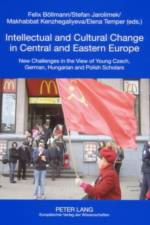
Intellectual and Cultural Change in Central and Eastern Europe is the theme of the University of Leipzig's SYLFF program. SYLFF stands for Sasakawa Young Leaders Fellowship Fund and is a world wide program administered by The Tokyo Foundation. The conference, held on January 11th-13th 2006 at the Bibliotheka Albertina in Leipzig, was an opportunity for outstanding young scholars from different fields, backgrounds and countries to present and discuss their ideas connected with aspects of the theme.
Abonner på vårt nyhetsbrev og få rabatter og inspirasjon til din neste leseopplevelse.
Ved å abonnere godtar du vår personvernerklæring.