










Gjør som tusenvis av andre bokelskere
Abonner på vårt nyhetsbrev og få rabatter og inspirasjon til din neste leseopplevelse.
Ved å abonnere godtar du vår personvernerklæring.Du kan når som helst melde deg av våre nyhetsbrev.

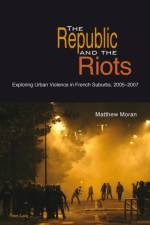
In 2005, the deaths of two teenagers in Clichy-sous-Bois provoked three weeks of rioting in French banlieues. Cars were burned, buildings were damaged and young people clashed with the police in unprecedented scenes of violence. The government declared a state of emergency as the riots spread across France. Two years later, the French public were met with familiar images when riots broke out in the Parisian suburb of Villiers-le-Bel. What were the underlying causes of these episodes of extreme violence? What did the riots signify? What do they tell us about French society? This book takes the reader inside the world of the banlieues and explores the nature and causes of the riots. Drawing on qualitative fieldwork conducted in Villiers-le-Bel, the author offers a unique insight into the motivating factors behind the violence. On a larger scale, the book examines the relationship between the underprivileged suburbs and the French republican model. The author explores a triad of interconnections: between republican ideals and the reality of daily life in the banlieues; between national projections of unity and localized realities of disunity; and between figures of authority and ordinary citizens.
The book explores some of the best-known contributions to Narrative Theory as used in the study of academic and professional discourse and actions. The volume not only incorporates a wide range of contexts to analyse narratives, it also uses narrative as a powerful methodological tool to investigate theoretical issues.
Memories of the Second World War play an important role in contemporary politics and society across Eastern Europe. One of the most controversial yet least studied pages of Ukraine's wartime history is that of the Waffen SS 'Galicia' Division, whose members are usually portrayed either as war criminals or as freedom fighters. The history of this unit is not limited to the Ukrainian context; it also has relevance throughout Eastern Europe, as well as in Britain, Canada and the USA. In the aftermath of the war, the 'Galicia' Division surrendered to British and American troops, but was not repatriated to the USSR, despite Soviet demands. Instead, its members were brought to the UK and eventually allowed to settle in the West, and this unexpected turn of events continues to cause much controversy. This book explores why over 8,000 members of the Waffen SS were allowed to move permanently to the West, by analysing the complex series of events and decisions that characterized the journey of the 'Galicians' from capitulation to acceptance into civilian life. Drawing on a rich range of different sources, the book examines the variety of often conflicting narratives created by the Division members, their supporters and their opponents, as well as the continuing influence of these narratives today. In doing so, the book sheds light on the complex processes of memory politics.
What are the points of contact between the study of language and the study of history? What are the possibilities for collaboration between linguists and historians, and what prevents it? This title seeks out the interdependencies between two fields and asks why exchanges between linguists and historians remain the exception rather than the rule.
Normative democratic theory does not lie securely above societal argumentation but is instead a crucial part of it. We need to know not just how the public should reason, but how it actually does reason, or could reason in better foreseeable circumstances. After all, given the general societal and cosmopolitan challenges that we face, the health and the necessary extension of democracy fundamentally depends on the reasoning capacities of the public. The concept of the public sphere is intrinsic to understanding this process, but it has long been limited by its division into the twin approaches of normative argumentation in democratic theory and empirical-theoretical application in the social sciences. This book aims to go beyond this entrenched divide to show how democratic theory can become empirically applicable and the social sciences normatively relevant. It does this by linking democratic theory to the theory of society and relating both to a cognitive-communicative account of public culture. The book contributes significantly to exchanges within and between sociology, philosophy, cultural and communication studies, political science, and cognate disciplines. It also aims to address a long-established concern of critical theory by combining empirical and normative perspectives to advance the goal of a better society.
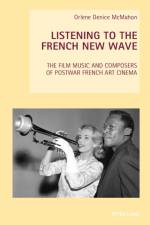
As perhaps the most studied film movement in cinematic history, the French New Wave has been analysed and criticised, romanticised and mythologised, raising the question of whether it is possible to write anything new about this period. Yet there are still gaps in the scholarship, and the study of music in New Wave films is one of the most striking. Listening to the French New Wave offers the first detailed study of the music and composers of French New Wave cinema, arguing for the need to re-hear and thus reassess this important period in film history. Combining an ethnographic approach with textual and score-based analysis, the author challenges the idea of the New Wave as revolutionary in all its facets by revealing traditional approaches to music in many canonical New Wave films. However, musical innovation does have its place in the New Wave, particularly in the films of the marginalised Left Bank group. The author ultimately brings to light those few collaborations that engaged with the ideology of adopting contemporary music practices for a contemporary medium. Drawing on archival material and interviews with New Wave composers, this book re-tells the story of the French New Wave from the perspective of its music.
Breaking Ground in Corpus-based Interpreting Studies
Fills a gap in the dissemination of practitioner research on special and inclusive education in Ireland. This book offers valuable insights into the challenges and barriers to inclusive education and point to ways that schools can address these challenges from the perspective of small-scale research.
This volume features current research approaches in the field of audiovisual translation (AVT) and media accessibility. It reflects on new challenges and potential avenues for investigation in traditional AVT practices as well as in media accessibility, including audio description, subtitling for the deaf and hard-of-hearing, and audio subtitling.
Given the consolidated position of English as the international language for communication in business and management, as well as in institutional contexts, this book depicts a wide panorama of encounters where identity, image and reputation are a key focus in creating effective interactions.
Focuses on the evolution of genres in specialized communication under the pressure of technological innovations and the profound social changes triggered by globalization in the contemporary world, in a context where rapid changes in communicative practices, patterns and technologies have affected the generic configuration of professional domains.
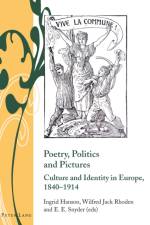
This collection offers new perspectives on the connections between politics, identity and representation in art and poetry in nineteenth- and early twentieth-century Britain and Europe. A diverse selection of contributions explore the reciprocal influence of political, religious, literary and artistic movements of the time.
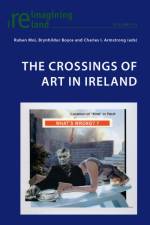
This volume explores inter-artistic connections in Irish literature, drama, film and the visual arts. It looks at how writers such as Seamus Heaney, John Banville and W.B. Yeats have responded to the visual arts, as well as discussing Brian Friel's drama, James Barry's Shakespeare paintings and contemporary Irish film and visual arts.
At a time of increasing interest in the history of mathematics, this book presents seven case studies illustrating the different ways that mathematical histories have been written since the seventeenth century, ranging from the 'historia' of John Wallis to the re-presentation of Thomas Harriot's manuscripts online.
Migrant Memories provides an innovative perspective on the power of cultural memory and the influence of cinema on the Italian diaspora in Britain. Based on extensive interviews with Southern Italian migrants and their children, this study offers a fresh understanding of the migrants' journey from Italy to Britain since the early 1950s. The volume examines how the experience of contemporary Italian identity has been mediated through film, photography and popular culture through the generations. Beginning with an analysis of the films of Frank Capra and Anthony Minghella, the book goes on to address the popular melodramas of Raffaello Matarazzo and ultimately argues that cinema, and the memory of it, had a significant influence on the identity formation of first-generation Italians in Britain. Coupled with this analysis of cinema's relationship to migration, the cultural memory of the Italian diaspora is explored through traditions of education, religion, marriage and cuisine. The volume highlights the complexities of cultural history and migration at a time when debates about immigration in Britain have become politically and culturally urgent.
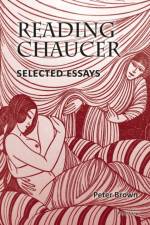
This volume contains ten essays, principally on Chaucer, but also on other English writers of the period such as John Gower, Ranulph Higden and Thomas Hoccleve. The Chaucerian focus includes the dream visions and Troilus and Criseyde as well as the Canterbury Tales. Reading Chaucer is divided into three sections, on Borderlands, Interiors and After-Images. The essays are representative of methods and approaches to Chaucer that are central to current scholarship: textual criticism, interdisciplinarity, manuscript study, cultural context, iconography, close reading and historicism. The book provides a coherent and authoritative introduction to some of the key frameworks - literary, political, social, scientific, aesthetic and religious - within which Chaucer's works are now read, while covering the full range of his writings and the defining genres of his creative moment, including the chronicle, romance, fabliau and petition.
What is the breaking news in the world today? How did you find out this news? How do you know it is true? Was it reported ethically? What checks and balances are being put on the news media? The answers to these questions reflect the themes of this book. The chapters are by experienced journalists, academics and practitioners in the field.
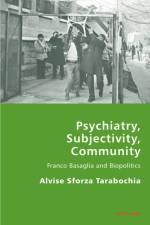
The law that abolished mental asylums in Italy in 1978 was nicknamed the 'Basaglia Law', after the physician whose work had revolutionised psychiatry in Italy and worldwide: Franco Basaglia (1924-1980). This book shows that his work is still powerful and relevant to contemporary debates about biopolitics.
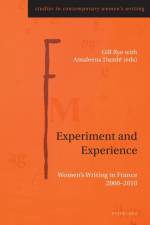
Experiment and Experience is a collection of critical essays on twenty-first-century women-authored literature in France. In particular, the volume focuses on how contemporary women's writing engages creatively with socio-political issues and real-life experiences. Topics include identities, family relations, violence, borders and the environment.
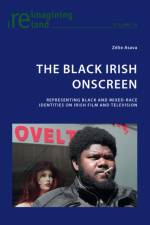
This book examines the position of black and mixed-race characters in Irish film culture. By exploring key film and television productions from the 1990s to the present day, the author uncovers and interrogates concepts of Irish identity, history and nation. In 2009, Ireland had the highest birth rate in Europe, with almost 24 per cent of births attributed to the 'new Irish'. By 2013, 17 per cent of the nation was foreign-born. Ireland has always been a culturally diverse space and has produced a series of high-profile mixed-race stars, including Phil Lynott, Ruth Negga and Simon Zebo, among others. Through an analysis of screen visualizations of the black Irish, this study uncovers forgotten histories, challenges the perceived homogeneity of the nation, evaluates integration, and considers the future of the new Ireland. It makes a creative and significant theoretical contribution to scholarly work on the relationship between representation and identity in Irish cinema. This book was the winner of the 2011 Peter Lang Young Scholars Competition in Irish Studies.
Given the increasing use of English worldwide and in intercultural communication, there is a growing interest in attitudes towards non-native speaker accents in English. Research on attitudes towards non-native English accents is therefore important because of concerns about positive and negative discrimination between people who speak with different accents. This book reveals exactly what types of accent variations trigger positive and negative attitudes towards the speaker. The author argues that certain types of variation in the pronunciation of English can have a significant effect on how listeners identify an accent and explores how this variation affects the development of certain attitudes towards the speaker. Specific sounds that are difficult for many learners to acquire (e.g. the initial sounds in 'this' or 'June') are examined in terms of attitudes towards speakers' pronunciation, including an original comparison of two different kinds of non-native accents (German and Greek). The results of the study provide a basis for further research in second language acquisition and applied linguistics as well as practical information for language instructors at all levels of English education.
Ulster's marching bands form perhaps the most vibrant participatory folk music tradition in contemporary Europe, and are one of the most significant and visible elements of working-class loyalist culture in the divided society of Northern Ireland. Their significance springs largely from the central place they have assumed in the lives of their members. This book presents an ethnography of three County Antrim flute bands from the very different genres of 'part-music', 'melody' and 'blood and thunder'. The author explores the emotional rewards of communal music-making and the way that identities are formed through the acquisition of tastes, competences and skills within specific communal contexts, paying particular attention to the impact of class position. These issues are examined in the context of the competitions, concerts and street parades that are central to the social lives of thousands of band members and supporters in Northern Ireland.
This book - written in collaboration with Rene Doursat, director of the Complex Systems Institute, Paris - adds a new dimension to Cognitive Grammars. It provides a rigorous, operational mathematical foundation, which draws from topology, geometry and dynamical systems to model iconic image-schemas and conceptual archetypes. It defends the thesis that Rene Thom's morphodynamics is especially well suited to the task and allows to transform the morphological structures of perception into Gestalt-like, abstract, proto-linguistic schemas that can act as inputs into higher-level specific linguistic routines. Cognitive Grammars have drawn upon the view that the deep syntactic and semantic structures of language, such as prepositions and case roles, are grounded in perception and action. This study raises difficult problems, which thus far have not been addressed as a mathematical challenge. Cognitive Morphodynamics shows how this gap can be filled.
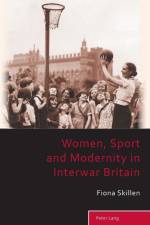
This book offers a unique examination of women's increasing involvement in sport during the period 1919-1939. Focusing primarily on sites of participation, it analyses where and how women accessed sport and their participation across class, age and marital groups. It also demonstrates the diverse ways in which sport was incorporated into women's everyday lives, with particular emphasis on the important and yet often neglected area of informal participation, so fundamental to understandings of women's sport. The unique combination of in-depth studies, drawing on the voices of the women themselves through oral testimonies, and the tracing of broad national and international trends, contributes to an innovative and comprehensive exploration of the evolution of women's sports participation across Britain during this significant period.
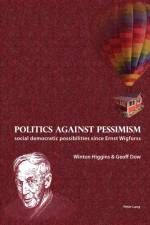
Neoliberalism has now failed, so can a social democratic resurgence replace it? This book retrieves the political thought of Swedish politician Ernst Wigforss to explore the unrealised potential of social democracy. Wigforss drew on many schools of thought to produce an alternative social democratic strategy. It outflanked economic liberalism, allowed his party to dominate Swedish politics for a half-century, and his country to achieve affluence and social equity as converging rather than competing objectives. OECD economies have since evolved political capacities - the welfare state, corporatist regulation, expanded citizen entitlements, civic amenity - far in excess of pessimistic evaluations offered by mainstream analyses. This book suggests that such developments confirm Wigforss's ideas, confounding conventional pessimism. Full employment, social equity, economic democracy, new political institutions, and transformative economic management are now more imaginable than ever in western countries. But their achievement depends on a radical reformist political mobilisation of the kind that Wigforss inspired, one which integrates these aspirations as mutually reinforcing goals.
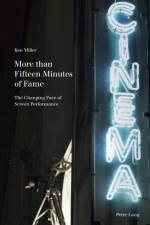
More than Fifteen Minutes of Fame tracks screen performance's trajectory from dominant discourses of realism and authenticity towards increasingly acute degrees of self-referentiality and self-reflexivity. Exploring the symbiotic relationship between changing forms of onscreen representation and our shifting status as social subjects, the book provides an original perspective through international examples from cinema, experimental production, documentary, television, and the burgeoning landscape of online screen performance. In an emerging culture of participatory media, the creation of a screen-based presence for our own performances of identity has become a currency through which we validate ourselves as subjects of the contemporary, hyper-mediatized world. In this post-dramatic, post-Warhol climate, the author's contention is that we are becoming increasingly wedded to screen media - not just as consumers but as producers and performers.
Audiovisual Translation in Close-Up
Examines the impact of classical Chinese literature on Mao Zedong's political rhetoric and his vision of a tripolar geopolitical landscape at the peak of the Cold War. This study offers insight into Mao's navigation of US and Soviet pressures while promoting socialist modernization in China.
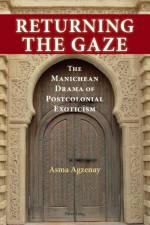
This book is proposed as a contribution to postcolonial critiques of the colonial and postcolonial exotic. It investigates the exotic as a representation of colonial cultural difference in colonial discourse, culture and history, and its oppositional rewritings in postcolonial thought and literature. Its analyses of the exotic include classical Arabo-Islamic ethnographic texts, Marco Polo's and Mandeville's travel accounts, Shakespeare's The Tempest, Montesquieu's Lettres Persanes, and a variety of colonial and postcolonial texts. Its Deconstructive approach to the exotic breaks new grounds of analysis beyond the Saidian problematic of Orientalism Homi Bhabha's intervention on the exotic, Hegel's Master/Slave dialectic, Michel Foucault's archaeology of Western cultural history, and Sartre's theorization of the gaze and its underlying Phenomenological subject. The scope of critical discussions of the exotic in this book includes - apart from Western cultural history - postmodern and postcolonial critiques of the colonial Other and exotic, and anthropological and philosophical discussions of the exotic. While tracing the divided inscription of the exotic as a colonial subject with reference to Shakespeare's The Tempest, the author throws into question l'Exote and the exotic Other as problematic subject positions for reading and rewriting the exotic in cultural history, and the double binds of counter-Exoticist discourses.
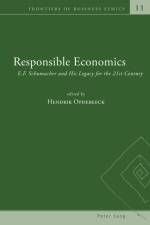
This book contains the proceedings of a conference on 'Responsibility in Economics and Business: the legacy of E.F. Schumacher' held in September 2011 by the Centre for Ethics of the University of Antwerp and the Business Ethics Center of Budapest. It engages with Schumacher's vision and addresses a need for responsibility in economics and business.
Abonner på vårt nyhetsbrev og få rabatter og inspirasjon til din neste leseopplevelse.
Ved å abonnere godtar du vår personvernerklæring.