






Gjør som tusenvis av andre bokelskere
Abonner på vårt nyhetsbrev og få rabatter og inspirasjon til din neste leseopplevelse.
Ved å abonnere godtar du vår personvernerklæring.Du kan når som helst melde deg av våre nyhetsbrev.

Includes essays that cover different methodologies and objects of analysis, including traditional textual and historical approaches as well as contemporary methods, such as cultural, sociological, cognitive and gender-oriented perspectives.
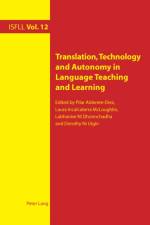
Brings together contributions from academics, language teachers and practitioners from across Europe and beyond to discuss questions of autonomy and technology in the area of language learning and translation. This book focuses on English, French, Italian, Irish and Spanish language acquisition.
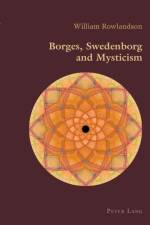
Jorge Luis Borges was profoundly interested in the ill-defined and shape-shifting traditions of mysticism. However, previous studies of Borges have not focused on the writer's close interest in mysticism and mystical texts, especially in the Swedish mystic Emanuel Swedenborg (1688-1772). This book examines the relationship between Borges' own recorded mystical experiences and his appraisal of Swedenborg and other mystics. It asks the essential question of whether Borges was a mystic by analysing his writings, including short stories, essays, poems and interviews, alongside scholarly writings on mysticism by figures such as William James. The book locates Borges within the scholarship of mysticism by evaluating his many assertions and suggestions as to what is or is not a mystic and, in so doing, analyses the influence of James and Ralph Waldo Emerson on Borges' reading of Swedenborg and mysticism. The author argues further that Swedenborg constitutes a far richer presence in Borges' work than scholarship has hitherto acknowledged, and assesses the presence of Swedenborg in Borges' aesthetics, ethics and poetics.
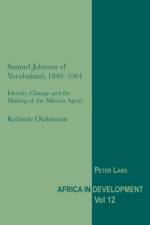
This book aims to understand how the nineteenth century African agent of mission appropriated change without losing cultural integrity, using the example of Samuel Johnson, 1846-1901. Drawing on multiple contexts, the book shows him as embodying the opportunities and the ambivalence of the time in the people's war-weary century of change.
Readings in Twenty-First-Century European Literatures brings together analyses of post-2000 literary works from twelve European literatures. Topics include the post-postmodern; the relationship between history, fiction and testimony; and human relations in the twenty-first century, including hypermodernity, ageing, intersexuality and migration.
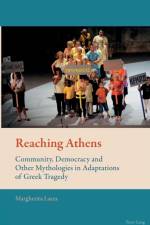
Why do revivals and adaptations of Greek tragedy still abound in European national theatres, fringe stages and international festivals in the twenty-first century? Taking as its starting point the concepts of myth developed by Jean-Luc Nancy and Roland Barthes and the notion of the 'classical' outlined by Salvatore Settis, this book analyses discourses around community, democracy, origin and Western identity in stage adaptations of Greek tragedy on contemporary European stages. The author addresses the ways in which the theatre produces and perpetuates the myth of 'classical' Greece as the origin of Europe and how this narrative raises issues concerning the possibility of a transnational European community. Each chapter explores a pivotal problem in modern appropriations of Greek tragedy, including the performance of the chorus, the concept of the 'obscene' and the audience as the demos of democracy. Modern versions of Women of Troy, Hippolytus and Persians performed in Britain, France, Spain, Germany, Italy, Poland and Greece are analysed through a series of comparative case studies. By engaging with the work of prominent theatre-makers such as Mark Ravenhill, Michel Vinaver, Katie Mitchell, Sarah Kane, Krzysztof Warlikowski, Romeo Castellucci, Calixto Bieito and Rimini Protokoll, this volume offers a critique of contemporary democratic Europe and the way it represents itself onstage.
Twenty years after the peace process began in the North of Ireland, many thorny political issues remain unresolved. One of the most significant questions involves the means by which acts of violence and the ideologies that subtended them can be dealt with, interrogated and questioned without rekindling conflict. This book focuses on a number of fictional and non-fictional texts published during the last two decades and analyses, through the prism of French cultural philosopher Jacques Ranciere's work, the emergence of an aesthetics of dissensus within these novels, short stories, graphic novels and memoirs. Associating close textual analyses with wider contextual readings, the book investigates the overlap of politics, aesthetics and the redistribution of the sensible in recent prose works, revealing how the authors avoid the pitfalls of a facile discourse of peace and reconciliation that whitewashes the past and behind which unaddressed tensions may continue to simmer.
This book provides a depth-psychological, analytic reading of all Albert Camus's imaginative literary works including his essays and reminiscences. The chronological procedure reveals an evolution of unconscious themes underlying the conscious views and attitudes to which Camus kept returning over the course of his life. Topics discussed in this study include the analysis of Camus's rejection of morality as the enemy of affection and self-fulfilment; his atheism; the apparent qualifications in his opposition to terrorism; and his absolute rejection of the death penalty as an instrument of state terrorism. This group of attitudes is located in the Camus family nexus, both in their external and historical reference and in their emerging internal conscious and unconscious meanings, enriched by autobiographical references in the novels to Camus's adult character and personal and political life experiences.
This is a vivid biography of Indonesia's foremost national hero, of the story of a remarkable figure whose life spanned Indonesia's troubled transition to the modern world. It will profitably be read by all those with an interest in the impact of European imperialism on non-European societies, East-West dialogue, and the making of modern Indonesia.
A Legacy of Shame is the first in-depth study of shame in French narratives of the Second World War and the Nazi Occupation of France. Wartime shame continues to be a recurrent theme in literature and film and is an ongoing topic of cultural and political debate and yet the problem of shame has only been mentioned incidentally by cultural critics. In the concluding lines of Le Syndrome de Vichy, Henry Rousso locates the 'syndrome', the continual return of wartime memories in the present, in the postwar desire to restore national unity and identity. This book proposes that beneath Rousso's syndrome lies a disintegrated sense of shame. Although this shame is painfully exposed in narratives, it remains unacknowledged as a collective, national memory and has consequently continued to trouble postwar constructions of national identity and history. By investigating narrative expressions of shame and theories of shame produced by the events of this historical moment, the book examines the issues that this legacy presents for cultural history, collective memory and, implicitly, for postwar national identity. This book is the winner of the Peter Lang Young Scholars Competition in French Studies 2011.
Many of the world's 7000 documented language groups are endangered due to falling rates of language and culture transmission from one generation to the next. Some endangered language groups have been the focus of efforts to reverse patterns of linguistic and cultural loss, with variable success. This book presents case studies of endangered language groups from Africa, the Americas, Asia, Europe and the Pacific (including Bisu, Iban, Iquito, Quechua, Wawa, Yi and sign languages) and of their associated knowledge and belief systems, to highlight the importance of preserving linguistic and cultural diversity. Issues of identity and pride emerge within the book, alongside discussion of language and culture policy.
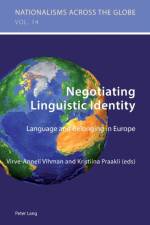
This book addresses the themes of language, identity and linguistic politics in Europe, drawing on approaches and methodologies from a range of disciplines from socio- and contact linguistics to cultural history, psychology and policy studies. It makes a significant contribution to our understanding of the linguistic landscape of today's Europe.
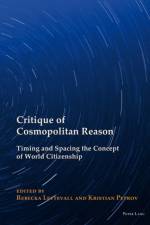
This book's critical approach addresses the anachronism, essentialism and ethnocentrism that underlie contemporary theoretical and methodological uses of the term "cosmopolitanism". It explores the concept of cosmopolitan reason from the viewpoints of comparative literature, psychoanalysis, phenomenology, postcolonialism and moral philosophy.
Translation can help improve foreign language teaching and learning - this study shows how. In an increasingly globalised world and in an increasingly multilingual Europe, translation plays an important role. Significant signs of a new revival of translation in language teaching have become visible, as shown by recent literature on applied linguistics. This book contributes to this movement, embracing both a theoretical and an empirical purpose by integrating viewpoints from Applied Linguistics, Translation Studies and Second Language Acquisition. In an attempt to show how the use of translation in foreign language classes can help enhance and further improve reading, writing, speaking and listening skills, this work calls for a re-evaluation and a rehabilitation of the translation activities in the foreign language classes.
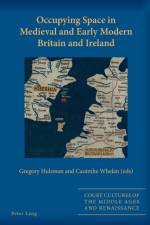
This collection offers a range of interdisciplinary viewpoints on the occupation of space and theories of place in Britain and Ireland in the medieval and early modern periods. The contributions consider space in both its physical and abstract sense, exploring literature, history, art, manuscript studies, religion, geography and archaeology.
This book is a review on the scientific literature on gender and emotion, including both existing empirical knowledge and methodological advances and recommendations. It is an interdisciplinary perspective, with contributions from the fields of psychology, neuroscience, psychiatry, economics, philosophy, and anthropology.
This interdisciplinary volume deepens our understanding of children's lives in the Global South. At a time when provision for early childhood care and education is expanding across the globe, this book examines issues around early childhood development and explores the importance of including local traditions in developing professional practices.
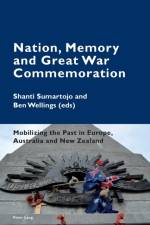
This innovative volume examines First World War commemoration in an international, multidisciplinary and comparative context, combining new studies of Western Europe, Australia, New Zealand and the South Pacific to illuminate the fluid and oft-contested relationships amongst nation, history and memory.
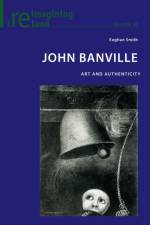
This study explores the fiction of John Banville within a variety of cultural, political, ethical and philosophical contexts. Through thematic readings of the novels, Eoghan Smith examines the complexity of Banville's view of the artwork and explores the novelist's attraction and resistance to forms of authenticity, whether aesthetic, existential or ideological. Emphasizing in particular the influence of Banville's major Irish modernist precursor, Samuel Beckett, this book places the local elements of his writing alongside his wide-ranging literary and philosophical interests. Highlighting the evolving nature of Banville's engagement with varieties of authenticity, it explores the art of failure and the failure of art, the power and politics of the contemporary imagination, and the ways in which this important contemporary writer continues to redefine the boundaries of Irish fiction.
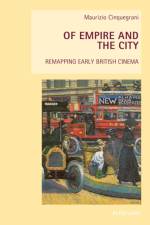
This book explores the cinematic representation of the city in British film from 1895 to 1914, featuring depictions of London, Glasgow, Dublin, Delhi and other British colonial cities. The author argues that the films are not only an invaluable record of the economic, social and cultural life of these cities but also that the spatial organization of these urban areas, and the cinematic representations of them, were shaped by the ideology and activity of imperialism. The pioneer camera operators who made these early films often put forward an imperialist ideology by paying particular attention to the cinematic representation of monumental and ceremonial spaces, modern communication and transport within the city and between the city and the empire. Of Empire and the City establishes connections between these cities and their cinematic representation by means of continuous motifs and themes, including modernity, Orientalism, spectatorship and the imperial subject. The book makes a unique contribution to studies of early film, British urban history and the history of the British Empire. This is a highly original and genuinely groundbreaking piece of scholarship on early British cinema. Very little work on this subject to date has sought to contextualise films of the 1890s and 1900s within the broader field of the history of imperialism. Cinquegrani's book systematically corrects this 'blind spot', and in its use of a wide range of ideas and methodologies [...] it offers a compelling new model for future scholarship on British cinema of the silent era. (Dr Jon Burrows, Associate Professor, Department of Film and Television Studies, University of Warwick)
Taking conflict as its collective theme, this book brings together the work of early modern specialists to offer a range of insights into the sometimes overlooked political and historical significance of Savoy between 1400 and 1700, in the wider context of early modern European history.
Engaging Ludwig Wittgenstein as 'philosophical hand-maid' (as opposed to 'metaphysical gate-keeper'), this book subjects to critique both traditional realist and post-modern constructivist perspectives as it examines how the nature and role of metaphor-making at the creative edge of language casts light on the God-language-world relationship.
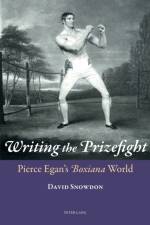
This book explores the literary contribution made by the pugilistic writing of Pierce Egan (c.1772-1849), identifying the elements that rendered Egan's style distinctive and examining how he invigorated the sporting narrative. In particular, it analyses Egan's inventive imagery and linguistic exuberance in the commentaries of the Boxiana series.
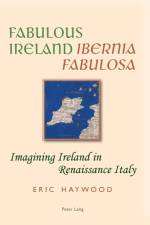
This book examines Italian descriptions of Ireland in the context of the Renaissance discovery of ancient culture and reshaping of geography, historiography, travel writing and the fashioning of the self and the other, arguing that Italians of the time imagined Ireland differently in different circumstances, populating it with their own fantasies.
Content and Foreign Language Integrated Learning
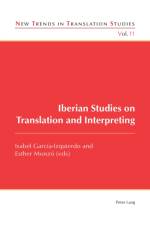
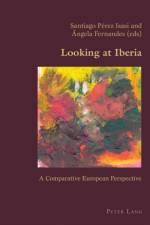
This collection of new essays focuses on key questions within the rapidly growing field of Iberian studies. From a comparative European perspective, the essays question the concept of 'Iberian' itself, query its suitability as a starting point for research and consider it in relation to more established concepts and identities.
In 1938 tyranny attained unprecedented power: the Nazis annexed Austria and the Sudetenland, the Soviet purge reached its peak and the persecution of the Jews escalated into the horror of Kristallnacht. Nabokov frequently engaged with the subject of totalitarianism, but in 1938, on the eve of the Second World War, he responded to the political situation with an intensity unmatched at any other time in his career, writing three stories, a play and a novel, each warning of the danger of leaving tyranny unopposed. Offering fresh insights into all of Nabokov's works of 1938, this book focuses on a major new reading of The Real Life of Sebastian Knight, revealing that Nabokov's seemingly non-political novel contains a hidden subtext of espionage and totalitarian tyranny. Drawing on the popular British authors he admired as a boy, Nabokov weaves a covert narrative reminiscent of a Sherlock Holmes story, in which Sebastian Knight, a latter-day Scarlet Pimpernel, uncovers a world of Wellsian scientific misadventure that foreshadows the Holocaust. The Real Life of Sebastian Knight emerges as an antitotalitarian masterpiece, in which the absolute solution is both a dire prediction of the future and Nabokov's artistic answer to the problem of the time.
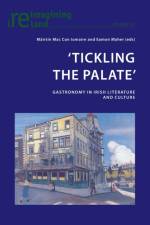
These essays offer fascinating insights into the role played by gastronomy in Irish literature and culture. They explore the importance of food in Irish writing; culinary practices among the 1950s Dublin working class; new trends among Ireland's 'foodie' generation; and the economic and tourism possibilities created by gastronomic nationalism.
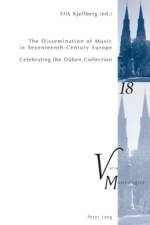
Offers fifteen musicologists from five countries that present findings and observations concerning production, distribution and use of music manuscripts and prints in seventeenth-century Europe. In this title, emphasis is laid on Dueben Collection the largest music collections of seventeenth-century Europe, preserved at Uppsala University Library.
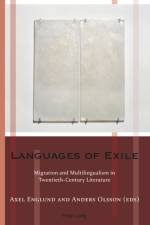
This book examines the relation between geographic and linguistic border crossings in twentieth-century world literature. Exploring the dynamic from a comparative and translingual perspective, this volume reveals differing literary strategies for responding to exile and argues for the crucial role of exile in understanding writing of the period.
Abonner på vårt nyhetsbrev og få rabatter og inspirasjon til din neste leseopplevelse.
Ved å abonnere godtar du vår personvernerklæring.