




Gjør som tusenvis av andre bokelskere
Abonner på vårt nyhetsbrev og få rabatter og inspirasjon til din neste leseopplevelse.
Ved å abonnere godtar du vår personvernerklæring.Du kan når som helst melde deg av våre nyhetsbrev.

Henry E Sigerist is known as the most influential medical historian in the first half of the 20th century. This book contains Sigerist's correspondences with the architect of American medicine, William H Welch, the pioneer brain surgeon, Harvey Cushing, the medical bibliographer, Fielding H Garrison, and the medical historian, Erwin H Ackerknecht.
CIUTI-Forum 2009
Provides an overview of the prosodic characteristics of spoken English and Spanish (both synchronic and diachronic) as well as the evolution of their standard versification systems in order to explore the systematic application of a number of text-setting Optimality Theory constraints to a large corpus of English and Spanish folk and art songs.
This study explores a number of early modern comedias that deal with historical siege or military episodes in the history of the Iberian peoples. Cervantes's La Numancia, Lope de Vega's El asalto de Mastrique and his lesser known La nueva victoria de don Gonzalo de Cordoba, Calderon de la Barca's El sitio de Breda, and Velez de Guevara's El Hercules de Ocana are key texts examined here. Taking the distinction between history and fiction in Neo-Aristotelian literary theory as a point of departure, this book considers the intellectual and historical conditions that affect the ways in which early modern dramatists interpret historical events according to their own literary and ideological purposes. The interplay of history and fiction demonstrates uses and discontents of legitimizing fiction in the early modern period. Parallel themes of epic and siege intermingled with romance and carnivalesque humour, provide alternative perspectives to early modern representations of empire and war on the Spanish stage.
Audiovisual Translation Subtitles and Subtitling
Aims to explain why claims about the autonomy and interrelatedness of the arts, expressed in the form of a provocative monthly journal, proved so influential as to be a source of inspiration for the "Oxford and Cambridge Magazine", "The Century Guild Hobby Horse", "The Yellow Book", "The Savoy", and even for Modernist periodicals.
Explores the work of two major twentieth-century artists by placing them in critical proximity. This book offers an approach to film-philosophy scholarship by embracing the cinematic as an inspiring channel through which to rethink our relationship with film and also with literature and, potentially, with art at large.
Global English and Arabic
Hailed by General Sir Ian Hamilton as 'a slashing man of action', Aylmer Hunter-Weston began the Great War as one of the British Army's rising stars. By its close, his reputation was very different. Drawing on original archival research, this is the first full-length study of his colourful and controversial career.
Introduces the concept ordinary African readers' hermeneutics in a study of the reception of the Bible in postcolonial Africa. This book looks beyond the scholarly and official church-based material to the way in which the Bible, and discourses on or from the Bible, are utilized within a range of diverse contexts.
The Celtic Tiger economy and the post-Tiger context have also seen momentous transformations in the Irish landscape. This book analyses the relationship between the rural and the urban and explores the way it is reflected in Irish literature, culture and language from the turn of the twentieth century to the present day.
Many universities have adopted criticality as a general aim of higher education, in order to meet the demands of an increasingly globalised world. But what is criticality, and how does it develop in practice? This book explores the concept in detail and considers how it can be systematically developed in practical ways through foreign language education. Taking a practice-first rather than a theory-first approach, the book presents two case studies based on action research in order to investigate criticality development through foreign language education. One study was conducted in beginner level Japanese language classes at a British university by a Japanese teacher-researcher, and the other was conducted in upper-intermediate English language classes at a Japanese university by a British teacher-researcher. The two studies illuminate the complex experiences of students and teachers as criticality starts to develop in both planned and unplanned ways, from beginner-level to more advanced levels of foreign language learning. The authors also suggest a range of practical teaching approaches which can be used to develop criticality through targeted instruction.
A World in Words, A Life in Texts
Brings a fresh approach to Irish educational debates, in which qualified educational specialists engage collaboratively in interdisciplinary reflection on their own teaching and learning. The volume addresses a multiplicity of key issues in Irish education, including teacher formation, curriculum development, teaching and learning methods.
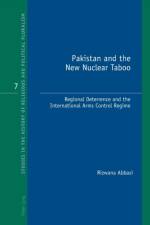
Examines Pakistan's nuclear behaviour from the 1950s onwards against the background of the emerging global non-proliferation system. This book provides a comprehensive scholarly account of the history of both India's and Pakistan's technological developments leading to their decision to develop nuclear weapons and confront the NPT constraints.
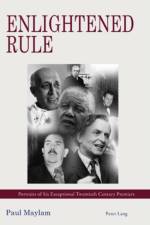
The twentieth century has been called an 'age of catastrophe', characterized by devastating wars and a general poverty of leadership at government level. This book, written in a more optimistic vein, offers biographical essays on six twentieth century heads of government - three from Latin America, and one each from Africa, Asia and Europe - who were exceptions to the norm. During their terms of office each displayed admirable qualities: moral authority, integrity, an egalitarian spirit, and a firm commitment to democracy, human rights, social justice and international peace. They shunned personality cults, grandiosity and conspicuous consumption. Their governance was shaped by high ideals, in the tradition of democratic socialism or social democracy, but also marked by pragmatism and an awareness that the realization of these ideals was not always practicable. Although some of the six became iconic, venerated figures, none of them are presented here as 'heroes' or 'great leaders'. Each had failings and flaws, and each has been subject to critique. They are rather presented as government heads whose leadership has been worthy of deep respect and admiration. Had other premiers emulated their style of governance, twentieth century history would have taken a very different course.
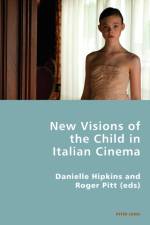
This book draws on a growing body of work in the history and theory of children on film and applies some of these new approaches to Italian cinema for the first time. In considering issues such as gender, the transnational, mourning and filmmaking itself the book maps out a revised understanding of the child in Italian film.
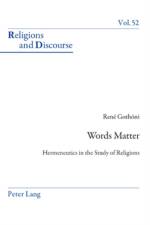
The challenge of methodic quality has haunted scholars in the human and social sciences since the end of the nineteenth century with the explosive and public success of the natural sciences and their precision and aim of controlling nature. The discussion has been dominated by the quest for proper scientific concepts and methods comparable to those employed in the natural sciences. This book discloses the limits of scientific concepts and methods, and the failure of approaches in the human sciences emulating the scientific procedures in the natural sciences, notably the cognitive science of religion, to articulate religious life in its actuality. The author demonstrates on the basis of his own field research conducted among Buddhist monks in Sri Lanka and Orthodox monks and pilgrims on the Holy Mountain of Athos in Greece how preconceptions and historical belongingness determine interpretation. He argues that in the human sciences words matter more than concepts and propositions, and elucidates how words are revelatory of the authenticity of being, when the attitude adopted is that the view of the encountered other might be right. In the conclusion the author identifies the methodic characteristics of hermeneutic reflection and proposes an analytic model for the human sciences that enables scholars to articulate the authenticity of actual life in words that reach the other.
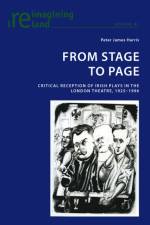
In December 1921 the Anglo-Irish Treaty was signed, which led to the creation of the Irish Free State and the partition of Ireland the following year. The consequences of that attempt to reconcile the conflicting demands of republicans and unionists alike have dictated the course of Anglo-Irish relations ever since. This book explores how the reception of Irish plays staged in theatres in London's West End serves as a barometer not only of the state of relations between Great Britain and Ireland, but also of the health of the British and Irish theatres respectively. For each of the eight decades following Irish Independence a representative production is set in the context of Anglo-Irish relations in the period and developments in the theatre of the day. The first-night criticism of each production is analysed in the light of its political and artistic context as well as the editorial policy of the publication for which a given critic is writing. The author argues that the relationship between context and criticism is not simply one of cause and effect but, rather, the result of the interplay of a number of cultural, historical, political, artistic and personal factors.
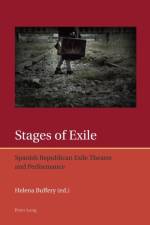
Investigates wider issues concerning the recovery and performability of these documentary traces, addressing their position within the contemporary debate over historical and cultural memory, their relationship to the contemporary stage, the insights they offer into the experience and performance of exile.
Scholarly consensus on the relationship of the Letter to the Hebrews to the Old Testament is far from universal or uniform. This book aims to address this area in Hebrews scholarship, which is lacking a critical account of the dependence of Hebrews on the Old Testament, especially Leviticus, in constructing a meaningful text. The book examines how the author of Hebrews uses the textual levitical tabernacle theme to construct the central motif of the heavenly tabernacle in Hebrews. In analysing the ways in which Hebrews relates to the Old Testament, the author makes use of literary theorist Gerard Genette's concepts of transtextuality and transformation. These concepts help set in relief the variegated textual relationships Hebrews has with the Old Testament in general, and Leviticus in particular, and the transformations that are central to constituting meaning in Hebrews.
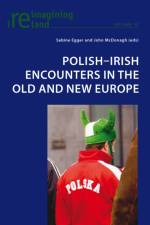
The cultural, political, social and economic interaction between Ireland and Poland has a long and complex history. This volume intends to contribute to an emerging debate around the issues concerned by looking at alternative frameworks for understanding the relationship between the two countries.
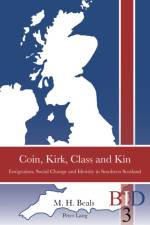
There are many detailed accounts of nineteenth-century emigrants, of their journeys and settlements abroad - but what of those they left behind? This book delves into the heart of Georgian Britain to explore the role that the men and women of the Scottish Borders played in the mass emigration of the early nineteenth century. Although most never departed themselves, their perceptions of wealth, poverty, morality and community shaped the flow of emigrants from the rural south to the wide and expanding British Empire, as well as its North American rival, the United States. Scouring the records of grand estates, humble Kirks, flamboyant newspapers and family correspondences, the author returns the Scottish Borders to the centre of Scotland's agricultural, industrial and demographic revolutions. Standing on the sharp edge of rural transformation, the Borders played both archetype and exception, pioneering the way from a regional past to an imperial future.
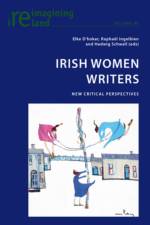
After a decade in which women writers have gradually been given more recognition in the study of Irish literature, this title proposes a reappraisal of Irish women's writing by inviting dialogues with new or hitherto marginalised critical frameworks as well as with foreign and transnational literary traditions.
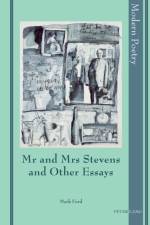
This volume brings together sixteen essays on British, Irish and American poets from the late nineteenth century to the present day. It offers a series of entertaining and compelling readings of the lives and works of Gerard Manley Hopkins, W.B. Yeats, Edward Thomas, T.S. Eliot, Hart Crane, Elizabeth Bishop, James Schuyler, Allen Ginsberg, John Ashbery, Ted Hughes and Paul Muldoon among others. Arranged chronologically, the essays present a wide-ranging and sophisticated narrative that takes the reader from the first stirrings of modernism through to the dynamic experiments of the present day. A number of essays attend to particular artistic alignments. One explores the relationship between Wallace Stevens and the unjustly neglected English poet Nicholas Moore, another the close friendship between James Schuyler and the painter Fairfield Porter, while a third contends that the lyrics, music and career of Bob Dylan unwittingly illustrate many of the key tenets of the great nineteenth-century essayist Ralph Waldo Emerson.
Explores the question of how education, both formal and informal, can positively impact on all pupils' life chances and life experiences. This title offers evidence for the ways in which education has proved detrimental to the advancement of social justice. It includes the promotion of gender equality and the empowerment of women.
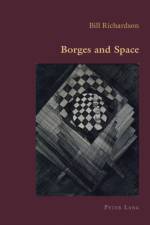
This book examines the relevance of the concepts of space and place to the work of Jorge Luis Borges. The core of the book is a series of readings of key Borges texts viewed from the perspective of human spatiality. Issues that arise include the dichotomy between 'lived space' and abstract mapping, the relevance of a 'sense of place' to Borges's work, the impact of place on identity, the importance of context to our sense of who we are, the role played by space and place in the exercise of power, and the ways in which certain of Borges's stories invite us to reflect on our 'place in the universe'. In the course of this discussion, crucial questions about the interpretation of the Argentine author's work are addressed and some important issues that have largely been overlooked are considered. The book begins by outlining cross-disciplinary discussions of space and place and their impact on the study of literature and concludes with a theoretical reflection on approaches to the issue of space in Borges, extrapolating points of relevance to the theme of literary spatiality generally.
Shows how the reuse, recycling and development of material becomes one of the hallmarks of Ramon del Valle-Inclan's writing during the first three decades of his literary career, linking one genre with another and blurring the borders between different aesthetics.
Abonner på vårt nyhetsbrev og få rabatter og inspirasjon til din neste leseopplevelse.
Ved å abonnere godtar du vår personvernerklæring.