










Gjør som tusenvis av andre bokelskere
Abonner på vårt nyhetsbrev og få rabatter og inspirasjon til din neste leseopplevelse.
Ved å abonnere godtar du vår personvernerklæring.Du kan når som helst melde deg av våre nyhetsbrev.

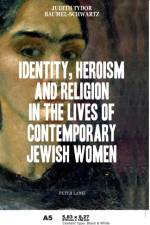
What makes us what we are? How does our gender affect our identity? Who are our heroes and heroines and how do they mould the decisions we make and the way we live our lives? In what ways does our connection - or lack there of - to our birth religion shape our adult selves? These are just some of the questions which Identity, Heroism and Religion in the Lives of Contemporary Jewish Women addresses. In examining the lives and deaths of various Jewish women during the 20th and 21st centuries this study focuses on the dynamic by which they formed their identities at times of crisis, whether in pre-State Israel, during and after the Holocaust in liberated Europe, or throughout Israel's formative years. As refugees, survivors, new immigrants or veteran citizens of a country these women's lives are probed and analyzed in terms of their relationship to each other, to their surroundings, their past, their future, their ideologies, and their geographic and virtual communities, presenting us with a mosaic of contemporary Jewish women's lives.
Zoulei is an endangered language spoken by several hundred speakers in China's Guizhou Province and adjacent areas. It is a variety of the Ahou dialect of the highly diverse Gelao group within the Tai-Kadai language family. Zoulei is a typical isolating and analytic language, basically monosyllabic, particularly with verbs, with a number of striking features that are generally not found in other members of the Tai-Kadai family. The language is also marked by a rich phoneme inventory and lexical tone, compounding, serial verb constructions and strong head-initial constituent order, as well as a vocabulary that may enhance our understanding of the early history and culture of this region. In the opening chapters, the volume describes the social, cultural, and linguistic organization of this group, outlines the main points of Zoulei phonology, and presents an overview of the grammar. In succeeding chapters, it examines a number of grammatical topics in greater detail, including phrase and clause structure, verbal syntax, discourse particles, among others. The volume also includes a vocabulary and several texts recorded from village elders.
This edited collection of essays presents a wide-ranging examination of the nature of scenes and subcultures in contemporary Berlin. It touches upon a number of key debates about cultural life in the city, drawing from examples specific to Berlin itself but germane also to those interested in discussions about broader issues of urban living.
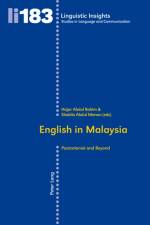
This book is a collection of research-based papers on the development of Malaysian English (ME) from the immediate post-Independence period to the present. The chapters chart the chronological, linguistic as well as functional development of contemporary ME that provide new information on the variety beyond its identity as a postcolonial English.
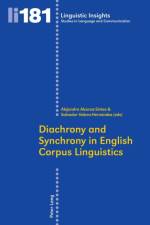
The book brings together current research on the description of English using a range of corpora. It consists of a foreword, a review of the diachronic studies and another of the synchronic studies, twelve research papers, and a subject index. Five of the papers are about diachronic description and seven are about synchronic description.
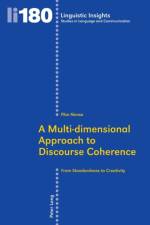
This book presents a comprehensive study of the subject of text and discourse coherence, integrating some of the traditional trends of discourse analysis and creating new channels of research which help to understand the notion further. Based on the work of leading theoreticians and on the actual consideration of authentic linguistic material, the book identifies the structural and cognitive aspects of standard discourse coherence and, as a variation from other mainstream approaches, it also explores the more subjective and culturally-bound conceptual aspects of coherence construction in creative modes of discourse. To achieve these aims, the study incorporates concepts and analytical practices from cognitive linguistic theories of conceptualisation; additionally, it draws from theories of communication to address the idiosyncratic and socio-cultural aspects which affect the formation of coherent discourse patterns. The intention is to broaden the perspective of the subject and to focus on its complexity, as well as to stress the need to conceive of discourse coherence as a multi-dimensional phenomenon consisting of numerous procedural components.
As the first of its kind, the present study of Ukrainian science fiction encompasses both the historical and thematic features of this genre. It contains a discussion of the representative and the most imaginative Ukrainian science fiction works published by writers residing in Ukraine and abroad. The initial part of the study focuses on the historical legacy of Ukrainian science fiction, with a special emphasis on the authors of the formative period and the emigre authors who wrote after the Second World War, but were totally ignored during the Soviet political hegemony. It is followed by an analysis of the impact of Soviet ideology on the science fiction that prevailed in Ukraine from the 1920s to the late 1950s. With the relaxation of political controls over literature, publications of Ukrainian science fiction after the 1960s were so numerous that it was not feasible to obtain and to examine all these items. However, the novels and stories that were utilized in this study do provide a representative sample of the themes that comprise the main thrust of Ukrainian science fiction from the early 1960s to the end of the 20th century.
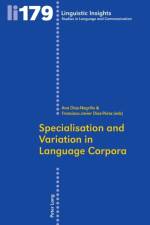
This volume intends to give evidence of the extraordinary expansion corpus linguistics and language corpora have experienced over the past years. It focuses on emerging types of corpora and corpus techniques and presents corpus-based studies in areas which have benefited from recent develpments in corpus linguistics methods and techniques.
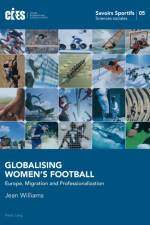
With an estimated 26 million female players globally (6 million based in Europe), the evolution of football has been dramatic. Growth in the women's game has led to more widespread player migration as new forms of professionalism emerge. This work explores those patterns of movement into, and out of, Europe using new archival evidence and player interviews.
This book focuses on the theme of foreignness and its representation in literature and cognate discourses. The volume brings together essays in English, Spanish and Catalan that consider from original and informed perspectives both the conceptualization of the foreign and foreignness in its human, geographical/spatial, historical and cultural guises, not only as contemplated but also as a lens in the act of contemplation. This multi- and inter-disciplinary collection of essays is the result of an inspired and timely collaboration between specialists in comparative literature from across the world. Dealing with fundamental questions relating to the trans- and intercultural, otherness, migration, cosmopolitanism and the global, it will be of interest to researchers and students in comparative literature, modern languages and area studies, travel writing, intercultural studies, sociolinguistics and social anthropology.
Chinese is an ancient language, but the present scope of its global study is unprecedented. Comprehending the impacts of worldwide linguistic realities on 'Chinese as a Foreign Language' (CFL) teachers and students will be critical to its long-term success. The most important phenomenon has been the establishment of English as a lingua franca, especially in the expanding marketplaces of Asia. This book examines the role of English as a medium of instruction in CFL classrooms. It begins by integrating existing studies on the global spread of English with research on English as a medium of second language acquisition. Several valuable empirical analyses from actual CFL classrooms serve both to validate the use of English as a lingua franca and expose that much more work needs to be done to ground this practice in deep sociocultural and ecological settings. The author advocates the development of a new pedagogy that emphasizes taking account of specific cultural, social, and political contexts in order to reach an ever-more diverse body of students. The book concludes with a discussion of the role of English in China's national education system and social development, as well as predictions about the future relationship between Chinese and English.
Street protests in the 'Arab Spring' countries have illustrated that public demand for recovering stolen assets has grown exponentially, as have expectations by concerned populations and governments. From a topic discussed in expert forums, it has thus become a topic of the people. The question is: Have practitioners and policy makers delivered on these expectations? Clearly, since the ratification of the UN Convention against Corruption (UNCAC) ten years ago, much progress has been made in streamlining respective legal and institutional frameworks. On the other hand, we also find that practical successes on the ground remain few and far apart, and largely limited to a handful of countries. This book asks why and, through the voice of renowned practitioners from a broad range of affected countries, analyses challenges that remain, identifies new stumbling blocks that have cropped up, and discusses practical solutions that are being tested with a view to overcoming these. The book is published by the Basel Institute on Governance's International Centre for Asset Recovery (ICAR).
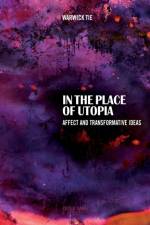
Considerable socio-political change has re-configured the discursive space once occupied by 'utopia'. Within the cultures of late capitalism and the organisational matrices of bio-political administration, that space is no longer animated by images of idealised states that are yet to come, or by a sense of simple failure in the production of those same states. Rather, it is overdetermined by a condition of differentiation in the representation of reality. The origins of that differentiation of representation appear to lie deep within the modernist project. In the Place of Utopia explores how that condition of representation might be animated anew by the discursive circuits through which modernity has come to operate, so as to enliven the ability of transformative ideas to lever change from within a range of organic crises current to the world system: the financialisation of global capitalism; the subsumption of worker subjectivities to the logic of capital; the broadening of the metabolic rift through industrial-capitalism. Central to this animation of transformative ideas is the relationship between language and the body.
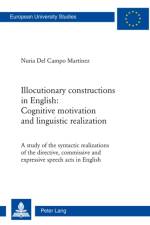
Grounded in the Lexical Constructional Model (LCM), a usage-based meaning construction model of language of recent design, this research argues that illocutionary meaning either results from filling in constructional variables such as X in the Can You XVP? construction or from affording access to abstract situational cognitive models through the metonymic activation of relevant elements of their structure. One such model is the Cost-Benefit Cognitive Model, which is incorporated into the description of pragmatic meaning and presented as lying at the core of the conventionalization process of illocutionary constructions. The inferential path based on the instantiation of the Cost-Benefit Cognitive Model determines the activation of speech act values that may become conventionalized within a linguistic community. The study determines the applicability of the analytical tools developed by the LCM for illocutionary description. The illocutionary acts selected are those proposed by the Cost-Benefit Cognitive Model as exploiting cultural principles of interaction.
La presente etude a pour objet essentiel les polemiques et accusations a caractere politique, dont Louis-Ferdinand Celine a fait et continue de faire l'objet. D'ou l'interrogation sur les causes de la fuite en Allemagne de l'ecrivain ainsi que sur sa relation avec les Allemands a l'epoque de la Seconde Guerre mondiale. C'est pourquoi, dans un premier temps l'accent est mis sur le contexte de l'epoque, afin de mieux percevoir la nature de la position de Celine a travers ses ecrits et pamphlets d'un antisemitisme virulent. Le livre evoque ensuite de facon detaillee les differentes etapes de l'exil de Celine, d'abord dans l'Allemagne embrasee de la fin de la guerre, ou il choisit de se refugier le 17 juin 1944, puis au Danemark (1945-1951), d'ou il devra repondre aux accusations de trahison formulees contre lui par la justice francaise, avant son retour en France et une rehabilitation tardive. Les ecrits qui forment le corpus de l'etude portent l'empreinte profonde de l'experience amere et cruelle de l'exil. Malgre un cheminement tortueux, qui lui confere une aura d'ecrivain maudit Celine demeure, aujourd'hui, l'un des genies de la litterature francaise du XXeme siecle.
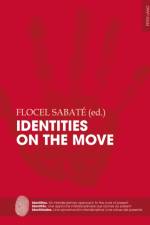
This is a collective book where historians, sociologists, linguistics and scientists offer a diachronic and interdisciplinary approach to the reasons that allow to get social cohesion throughout the creation of identities and its adaptation, so: identities on the move.
The book presents academic education in European countries and USA and special requirements, education and professional exams giving the right to perform legal professions. Each part is a guide through internal regulations leading to legal professions. The reader can see the differences and similarities in the European systems of presented countries.
Faced with the complexity of the current crisis experienced in a new manner by western countries within the globalisation process, this book provides a significant contribution both to an understanding of the mechanisms at the basis of these events and in proposing prospects for its positive evolution. The study investigates the new stage in the European integration process involving a transition from monetary union to economic union. The history of monetary unification is analysed from an economic and constitutional point of view and in the perspective of a new European social order, on the basis of the social market economy. An analogous approach is applied to the new stage in the integration process, the economic union. Three basic principles are analysed: zero inflation, zero deficit and zero debt as preconditions of development. A social market economy is the starting point for addressing these issues. The study ends with an analysis of the Atlantic dimension of a social market economy.
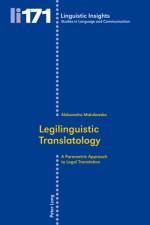
With the purpose of making the process of legal translation accessible to investigation, the author resorts to the parametrization of translational reality as an inalienable component of her translational theory being proposed here for consideration. The aim is to propose a more precise theory of legilinguistic translation which compels the author to clearly distinguish primitive terms and postulates. These latter specify the image (model) of the reality in question in terms of relevant dimensions used to characterize a set of translational objects and relations. The dimensions secure a systematic examination of the translation reality and process. In order to illustrate the practical application of the parametrization in legal translation, the discussion concerning this translation approach is limited to certain selected types of legal communicative communities which is amply exemplified. The research is based on data and information gathered during an in-depth case study of translations and parallel text corpora mainly in the field of civil law including insolvency and bankruptcy law.
The book explores the issue of "Re/membering place" as a process of reconstruction, of re-appropriation of the past, reshaping of identity in a colonial and postcolonial context of displacement, loss, and alienation in fiction and the arts in English-speaking countries.
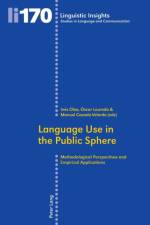
This book comprises a range of general discussions on tradition and innovation in the methodology used in discourse studies (Pragmatics, Discourse Analysis, Argumentation Theory, Rhetoric, Philosophy) and a number of empirical applications of such methodologies in the analysis of actual instances of language use in the public sphere.
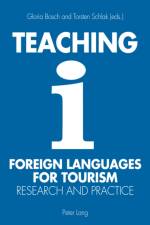
The aim of this book is to offer a broad picture of the current state of academic research on foreign language teaching for the tourism sector from different perspectives and cultural backgrounds. This multilingual volume includes sixteen essays written in four different languages - Spanish, German, French and English - of relevance for tourism. The articles offer different approaches and methods - most of them in applied linguistics - and constitute research studies as well as practical teaching proposals for different languages. The practical teaching proposals have been offered in training programmes for tourism studies at different European universities. This volume will contribute to the foundation of a specific discipline which combines foreign language teaching and learning on the one hand and tourism on the other, its main trends and the skills it requires, and suggests fruitful directions for future research in this field.
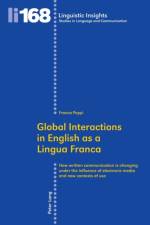
This volume investigates the changes undergone by written communication in our globalized world as English as a Lingua Franca (ELF). The latter usually functions as a language for communication purposes, but also becomes a language for identification purposes. The study takes into account different web-genres: from the replication of existing genres in other media to cybergenres, whose key evolutionary force is the progressive exploitation of the new functionalities afforded by the new medium. The variety of the contexts of use has made it possible to consider different ELF-using communities of practice, whose members adopt ELF and adapt it to express individual, national and professional identities in international interactions. The analysis focuses on lexicogrammatical innovations, which inevitably change in accordance with the different contexts of use, as well as on the communicative strategies underpinning these changes.
Cold War Narratives reveals the power that representations, understood as both cultural production and public discourse, have held in shaping the imaginaries of early Cold War America. By engaging conflicting accounts of the 1950s as either affirmations of a prosperous and confident nation (in TV shows, popular sociology, and advertising) or as critiques of a society in the throes of fear, rebelliousness, and inequality (in film, literature, and media), this study sheds new light on the ambivalent imaginaries of the American 1950s. Pitting visions of the Red Scare and of nuclear proliferation against narratives of an upbeat nation, eager to suburbanize and to adopt the new ethics of televised consensus, Cold War Narratives illustrates how America's leading metaphors of conformity shaped problematic gender roles, domesticity and consumption in the 1950s. It also exposes how dissenting voices to the Cold War consensus converged around the affirmation of specific identitarian discourses, especially highlighting the agency of youth and of the rising civil rights movement, and the way in which these two entered into unprecedented dialog through new discursive formations such as beat culture and rock 'n' roll.
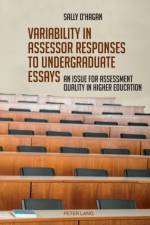
Academic standards in higher education depend on the judgements of individual academics assessing student work; it is in these micro-level practices that the validity and fairness of assessment is constituted. However, the quality of assessments of open-ended tasks like the coursework essay is difficult to ascertain because of the complex and subjective nature of the judgements involved. In view of current concerns about assessment quality and standards, this book is a timely reflection on the practices of academic judgement at university. It explores assessment quality through an empirical study of essay marking in an undergraduate discipline where large class sizes and significant numbers of second language students are common. The study shows that assessors vary in their interpretations of criteria and standards and that this results in inconsistent grading of essays. The book contributes to a growing scholarship of assessment with an evidence-based explanation of why assessors disagree and a discussion of the implications of this for the validity of assessment practices at university.
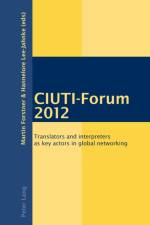
Constitutes the proceedings of the Ciuti-forum 2012 that highlight different types of networks leading not only to better practices and academic quality but also to new and innovative partnerships.
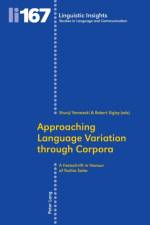
A collection of papers using samples of real language data (corpora) to explore variation in the use of English. It celebrates the achievements of Toshio Saito, a pioneer in corpus linguistics within Japan and founder of the Japan Association for English Corpus Studies (JAECS).
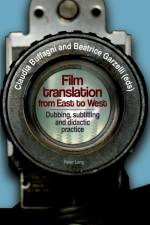
The central focus of this book is the translation of filmic products into European and Oriental languages, gathering together reflections on English, French, Spanish, German, Portuguese, Russian, Arabic, Chinese and Japanese, analysed also in their relation to Italian. Audiovisual language is investigated both on a theoretical and didactic level.
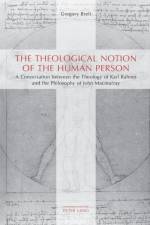
In a careful study of the writings of Karl Rahner and John Macmurray, this book presents a renewed understanding of the theological notion of the human person. This understanding of person is developed by examining the relational depths of Karl Rahner's theological anthropology in conversation with John Macmurray's understanding of agency found in his work on persons-in-relationship What makes this dialogue enriching and striking is that both thinkers arrive at a corresponding notion of person from very different starting points: Rahner commences his reflections as a theologian focusing on the mystery of God at the heart of his study of person. Macmurray on the other hand begins with the human person and ultimately arrives at a philosophical notion of God as personal agent.
In this study, the author shows that, under the influence of the popular geography of the eighteenth century, an increasing number of literary works began to make use of actual topographical data. Two of these works even make use of maps. He demonstrates that the kinship between geographical and literary representations of topography went further: they underwent parallel developments. His analyses of the different types of geographical representations of space that appeared in the course of the century allow him to explore the worldviews they embody, the new and often conflicting attitudes to space that they reveal, and the connections these representations have with the evolution of the contemporary notions of motion and mobility. The author underlines the role these topographical representations played in the nascent realism of the novel and the new life they breathed into poetry. His study is also a contribution to the discussion of the important changes that occurred in the way people thought about and lived space, many of which announce our time.
Abonner på vårt nyhetsbrev og få rabatter og inspirasjon til din neste leseopplevelse.
Ved å abonnere godtar du vår personvernerklæring.