





Gjør som tusenvis av andre bokelskere
Abonner på vårt nyhetsbrev og få rabatter og inspirasjon til din neste leseopplevelse.
Ved å abonnere godtar du vår personvernerklæring.Du kan når som helst melde deg av våre nyhetsbrev.

The book refers to universal eschatology contained in the Letters to the Thessalonians (1 Thess 4, 13-5, 11; 2 Thess 2, 1-12). The whole material is divided in two groups (eschatological motifs and apocalyptic motifs). Each of the motifs is analysed in the Biblical context and in the Intertestamental Literature context (the Old Testament Pseudepigrapha and the Qumran Literature). The exegetical analysis and the comparative analysis show similarity and diversity of the way Paul used the motifs. They also show which motifs were created or extensively modified by Paul in order to contribute to the creation of Christian eschatology. After presentation of the importance of eschatological topics in the 1-2 Thess (chapter I), the analyses of prodroms (chapter II) and events connected with the parousia (chapter III) indicate the way of using each of the motifs in different traditions. Based on results of the analyses, the Jewish background and Paul's original contribution to the New Testament eschatology are presented in chapter IV.
The book outlines in five chapters the different perspectives of sustainable language policies, role of translators and interpreters and the challenges they face on the globalized market. A special section is dedicated to training and research issues, which have to handle the difficult task of preparing students for the globalized and changing market.
The volume examines the debate on European unification (1939-79) in those magazines not exclusively dedicated to the "European" themes, but important for the cultural-political contest and those militant ones, essential for the theoretical elaboration. A section deals with the development of magazines directly sponsored by the Community institutions.
This monograph offers an incisive analysis of how the second language learner can achieve cultural proficiency, which is more than a set of rules and facts to be memorized by rote. How can the cultural dimension be taken into account, among the many choices of instructional material and language assessment tools? Is it possible to distinguish levels of cultural competence? How can the degree of cultural proximity between the source language and the target language influence the acquisition process? What strategies should be implemented in order to decode any cultural pitfalls? This handy guide addresses these and many other frequently asked questions underpinning language teaching methodology. Illustrated with a broad range of classroom-based examples, this book presents language as inextricably intertwined with social relations. The variety of languages involved (Chinese, Russian, Arabic, Hungarian, French and English) makes the volume especially attractive for language educators seeking effective teaching strategies in specific local contexts around the globe.
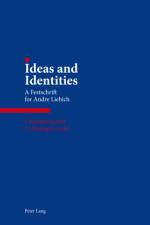
This volume provides contributions at the intersection of history and politics. The essays show that history provides better grounding as well as a more suitable paradigm for the study of politics than economics or other hard sciences. All of the contributors had their doctoral work supervised and shaped by Professor Andre Liebich.
This book is the first collection of essays dealing with game localization and accessibility from a multidisciplinary perspective, including game design, media accessibility, translation studies, terminology management, and cultural studies. It is also unique in the way it combines contributions from academia and the industry.
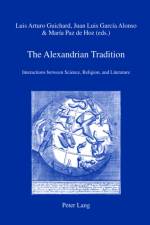
This book explores the interrelationship between Science, Religion and Literature in the Graeco-Roman world during the Imperial Period, and especially in Alexandria, situating it within the context of the long tradition of knowledge that had been consolidating itself in this city, above all during the Hellenistic era.
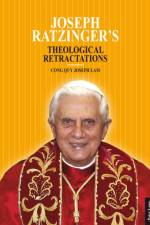
In examing Ratzinger's earlier works and essays from the insights of his later publications, this book offers a complete re-reading (retractation) of Ratzinger's theological thought on revelation, Christology and ecclesiology. It also highlights Ratzinger's contribution to catholic theology, especially his theological input at Vatican II and beyond.
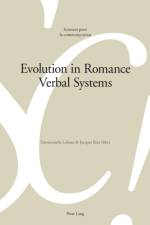
The present book focuses on evolution in the Romance verbal systems. In the wake of Bybee's and Dahl's studies, it advocates the benefits of adopting a cross-linguistic and diachronic approach. Indeed developments in related languages at different stages of grammaticalisation may shed light on evolution in each system.
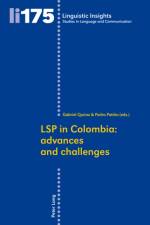
The book includes 20 chapters that deal with linguistic, phraseological, terminological, didactic, and textual issues related to terminology, translation, corpus linguistics, and computational linguistics. The research of each chapter was carried out by Colombian researchers in the country or abroad and the data comes from Spanish, English, and French.
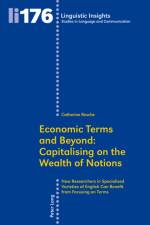
This book, which is aimed at researchers in specialised varieties of English, provides an illustration of how linguists can use terms, i.e. the expression of concepts in specialised fields, as entry points to explore any specialised domain, whether academic or professional, and to get acquainted with its history, its culture, and the evolution of the ideas that have nurtured it. Choosing the field of economics as an example, the author approaches terms from a diachronic, descriptive and contextual perspective, focusing on neonyms, metaphorical, ambiguous or indeterminate terms, as well as interface terms likely to underscore the evolving character of the domain. The analysis points out the role of terms as milestones highlighting key discoveries that have shaped scientific fields; terms can also be considered as barometers of the evolution of knowledge in a specific field and of a changing social environment. Whoever thought terms were only interesting for their definitions or for translation purposes will no doubt be surprised at the insights that can be gained from considering them from a different angle and for other purposes.
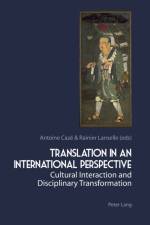
Translation not only plays a part in the dissemination of knowledge but also contributes to building knowledge, particularly in the humanities. The contributions to this volume illustrate such a state of affairs through specific case studies in three thematic categories: cultural transfer, terminology, and literature.
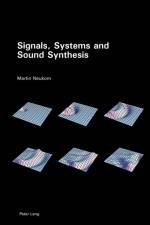
The subject of this book is the synthesis and treatment of sound by computer. Using illustrations, animations, sound examples and sample programs, it introduces the most important techniques of sound and score synthesis and explains the technical and mathematical principles necessary for understanding them. After reviewing fundamentals of acoustics, the author describes system and signal theory and introduces the programs and programming languages used in the book. The traditionally important synthesis techniques are described in detail, as are various nonlinear synthesis techniques and synthesis by physical modeling. The concluding chapters of the book deal with the projection of sound in space and with the use of algorithmic and stochastic procedures in computer music. The appendix contains a survey of basic mathematical principles, various tables for reference and a detailed index. The included CD contains the entire text of the book, as well as additional chapters and explanations, sound examples, animations illustrating dynamic processes and many sample computer programs.
This book examines the implementation and consequences of the Italian expatriate vote and representation introduced in 2001 in the external electoral colleges with special attention to the Electoral College known as Africa-Asia-Oceania-Antarctica. The Italian elections of 2006, 2008 and 2013 were important moments where the expatriate vote was expressed providing results which Italian lawmakers may have not anticipated. Moreover, the electoral expressions of the external colleges were not always in accord with Italians ones. This study examines how the stakeholders in the Africa-Asia-Oceania-Antarctica college understood and perceived this voting and representation facility after its implementation. What they thought in 2001 and what they think now. The study seeks the views of focus groups across numerous cities in Australia, interviews the protagonists and provides critical commentary on the future of this right and whether all this effort was worth it in providing Italians abroad with external voting and representation in elections and referendums.
This book studies the uses Hiberno-English in the works of James Joyce, Flann O'Brien, Bernard Shaw and Brian Friel. The use of Hiberno-English is both a literary device and a practice that bears on the question of an Irish national identity. This work examines above all the uses of Hiberno-English as a literary device.
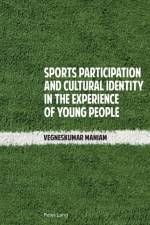
This book focuses on inclusion and exclusion in sporting activities among young people in a multicultural society. Do young people who identiy with cultural groups other than the majority experience exclusion from sporting teams, or do they find themselves readily included? Does this vary across identities, and sports? In the context of Australia, where sport is an integral part of national life and one in four of the population were born overseas, and over 270 different ancestries are acknowledged, young people were asked to write about their cultural identity and their experiences playing sport. Using a humanistic sociological approach, the inductive analysis justaposed their sense of cultural identity with their participation or non-participation in sport, and with the particular sports played. This book is important for all those in culturally diverse society especially academics, teachers and sports administrators, who are interested in the issue of exclusion and inclusion of cultural minorities in sport.
This book addresses the issue of task equivalence, which is of fundamental importance in the areas of language testing and task-based research, where task equivalence is a prerequisite. The main study examines the two 'seemingly-equivalent' picture-based spoken narrative tasks, using a multi-method approach combining quantitative and qualitative methodologies with MFRM analysis of the ratings, the analysis of linguistic performances by Japanese candidates and native speakers of English (NS), expert judgements of the task characteristics, and perceptions of the candidates and NS. The results reveal a complex picture with a number of variables involved in ensuring task equivalence, raising relevant issues regarding the theories of task complexity and the commonly-used linguistic variables for examining learner spoken language. This book has important implications for the possible measures that can be taken to avoid selecting non-equivalent tasks for research and teaching.
The people in Myanmar have faced socio-politico-economic crises under the military civil-turned regime since 1962. This book attempts to develop a theological response to the suffering (dukkha) of people (Ludu). By transferring the Korean Minjung Theology into the Myanmar context a "Ludu Theology" is evolved.
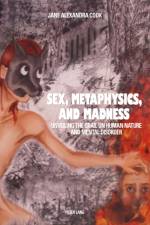
With philosophy traditionally seen as the way to truth, wisdom and goodness, it is to metaphysics, logic and ethics that we have historically turned to solve personal, social, and existential dilemmas, and find peace and contentment. Rarely is it noted, however, that despite two millennia of debate, philosophers have yet to produce a coherent theory of human/worldly existence. At the same time, the global incidence of mental illness has risen to what many see as epidemic proportions. This book argues that this is no coincidence. Its analysis of key metaphysical texts suggests that the entire philosophical (and religious) canon has been founded upon and distorted by an Aristotelian misconception. Through its social/discursive inscription, this misconceived metaphysics is disrupting the development of fe/male selfhood to a degree that, under further conditions, is causing mental illness. Thus, our metaphysics is making us mad, and the more muddled it gets, the more disordered we become. The testing of this theory via eating disorder research supports a new 'spirogenetic' model of subjectivity that resolves not only mental illness, but also the ancient mysteries of the Holy Grail and Philosopher's Stone.
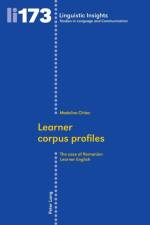
Aiming at exemplifying the methodology of learner corpus profiling, this book describes salient features of Romanian Learner English. As a starting point, the volume offers a comprehensive presentation of the Romanian-English contrastive studies. Another innovative aspect of the book refers to the use of the first Romanian Corpus of Learner English, whose compilation is the object of a methodological discussion. In one of the main chapters, the book introduces the methodology of learner corpus profiling and compares it with existing approaches. The profiling approach is emphasised by corpus-based quantitative and qualitative investigations of Romanian Learner English. Part of the investigation is dedicated to the lexico-grammatical profiles of articles, prepositions and genitives. The frequency-based collocation analyses are integrated with error analyses and extended into error pattern samples. Furthermore, contrasting typical Romanian Learner English constructions with examples from the German and the Italian learner corpora opens the path to new contrastive interlanguage analyses.
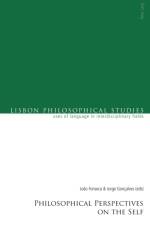
The book comprises 12 original articles dealing with the topic of the Self from several philosophical perspectives like phenomenology, analytical philosophy and in dialogue with other scientific areas such as psychology, neuroscience and psychiatry.
This book critically examines a wide range of contemporary literary scandals in order to identify the cultural and literary anxieties revealed by controversial works. It explores how scandal predominantly emerges in relation to texts which offer challenging representations concerning children, women, sexuality, religion and authenticity, and how literary controversies bring to the surface a series of concerns about the complex construction of identity, history and reality. Including works such as J.K. Rowling's Harry Potter series (1996-2007), Bret Easton Ellis' American Psycho (1991), James Frey's A Million Little Pieces (2003), Misha Defonseca's Misha: A Memoire of the Holocaust (1997), Salman Rushdie's The Satanic Verses (1988) and Philip Pullman's His Dark Materials trilogy (1995-2000), the author analyses a broad spectrum of texts in order to examine why books continue to provoke public debate and outrage, and what the arguments surrounding scandalous works suggest about literature and the world.
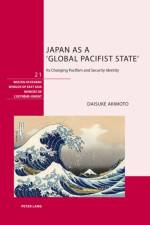
This book examines Japan's changing pacifism and security identity in an application of analytical eclecticism. Four theoretical perspectives of Japan's security identity (pacifist state, UN peacekeeper, normal state, US ally) are examined as case studies. This book attempts to reveal Japan's 'core security identity' as a 'global pacifist state'.
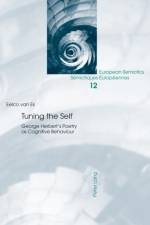
This book provides a cognitive analysis of the poetry of George Herbert (1593-1633). From Herbert's own thinking, recorded in his prose treatises, can be deduced that his poems should serve a specific function: teaching self-knowledge to his readers. The cognitive framework applied here can serve to explain this function.
Helps you explore the dynamics of communicating specialised contents to the lay public is an undoubtedly topical issue.
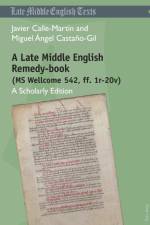
The present edition offers the diplomatic transcription of MS Wellcome 542, housing a late Middle English hitherto unedited remedy-book based on the medical lore of Hippocrates, Socrates and Galen. A glossary, notes and introduction also accompany the edition. The introduction has been conceived as a state of the art of this scientific treatise, and deals with the textual transmission of the text, a codicological/palaeographic description together with the scribe's dialect and idiolect. The edition therefore conforms itself as a primary source for research not only in Historical Linguistics but also in other related fields such as the History of Medicine or Ecdotics.
This book presents a cultural analysis of social discourses and lived experiences of single women, a demographic category that census figures indicate to be the statistical norm in the United States and Canada - and yet, it remains a group that largely sees itself as marginalized. While singleness and other forms of non-normative lifestyles have been gaining interest from academics and society at large, a distinct commitment to female singleness studies has yet to emerge. Each chapter looks at distinct features of social constructions of female singleness and/or lived experiences of single women, and textual analyses and cultural critiques are used to develop a richer investigation of the data. The theoretical framework is grounded in a cultural analysis, not only using the concepts thematically to more clearly understand the data, but also calling into question the utility of the concepts themselves.
This volume offers a critical insight into the life and work of the controversial Victorian explorer and translator Richard Francis Burton (1821-1890). Analysis focuses on his travel accounts and erotic translations, which both re-elaborated and challenged dominant Victorian discourses on race, gender and sexuality, generating controversies in the fields of anthropology, sexology and medicine. The premise of the study is that Burton entertained an ambiguous relationship with the colonial institutions: on the one hand, he pursued the colonial project, while on the other, he was an irreverent outsider who clashed with the imperial authorities. As this investigation reveals, he defied British sociocultural norms by appropriating and importing the rituals and languages of the colonial subjects. The volume examines Burton's 'impersonations' of multiple masculine identities in the countries that he visited, which involved elaborate processes of both identification and dis-identification. The author argues that these impersonations enabled a series of queer encounters which broke down the barriers between imperial Self and colonised Other, and led Burton to embody several self-conscious, performative constructions of masculinity. Burton's life and works are analysed in light of recent critical and theoretical debates.
Pragmatic competence plays a key role in intercultural communication, particularly for students studying in a target community. This book investigates the effect of study abroad on second language learners' productive and receptive pragmatic competences, as well as their cognitive processes during speech act production. It employs a variety of research instruments, both quantitative and qualitative, to explore learners' pragmatic development over one year. The inclusion of a control group is a methodological strength of the longitudinal study, many such studies often not including a control group. In addition, the study longitudinally examines learners' cognitive processes during study abroad with innovative and insightful analyses. The book makes an important contribution to second language pragmatics with regard to developmental changes in both speech act production and perception during such processes.
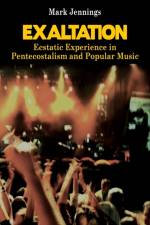
Based on two richly described case studies - a Pentecostal worship service and popular music festival - this book draws on sociology, theology and religious studies in order to understand the significance of ecstatic experience in these contexts. Interviews with performers in both settings, together with detailed first person accounts of worship services and live performances, combine to create a picture of the role of music, performance and space in catalysing ecstasy. Drawing on the work of thinkers as diverse as Michel Foucault, Emile Durkheim, Victor Turner and Friedrich Schleiermacher, this book demonstrates that religious and non-religious disciplines, paradigms and understandings can work in a complementary fashion to help us understand the significance of phenomena such as music and ecstatic experience. Ultimately, the argument put forward in the book is that ecstatic experience takes place in both religious and secular settings and is best understood by both theistic and non-theistic approaches, working together. The ecstatic experience common to both contexts is theorised as 'proto-religious phenomena' - the kernel from which religion may develop.
Abonner på vårt nyhetsbrev og få rabatter og inspirasjon til din neste leseopplevelse.
Ved å abonnere godtar du vår personvernerklæring.