










Gjør som tusenvis av andre bokelskere
Abonner på vårt nyhetsbrev og få rabatter og inspirasjon til din neste leseopplevelse.
Ved å abonnere godtar du vår personvernerklæring.Du kan når som helst melde deg av våre nyhetsbrev.

This book is written to satisfy the individual's desire for intellectual stimulation, to sow in the mind the seed of new ideas, and involve the reader in productive debates. It covers culture, history and the future, raising questions, presenting arguments and engaging the enquirer in reflection. It illustrates the relationship between past history and current social practices, proposing the concept of compartmentalization of behaviour, where history is understood to contribute to why there are so many displaced excesses amongst the English, alongside an ethos of moderation - why, in a country with such high civility, there is hooliganism, why riots in English cities can be particularly violent, why the country has the highest rate of teenage pregnancy in Europe, why it lags behind many others in the early diagnosis of cancer - and what can be done about this. The book also explores what affects us all globally - the making of history, the psychology of dictatorships, the unconscious in history, the development of new democracies, the emerging psychosocial trends in the world to come, the cognitive, emotional and identity-ethos of the evolving century and the future of history. Finally, it identifies history's foundations and the fundamental human tendency which, beyond the class interests of Marx and the search for recognition of Hegel, motivates and perpetuates history itself.
What became of ethnic Germans in Eastern Europe during the Second World War? In recent years, their suffering, flight and expulsion during and after the war has attracted increasing critical attention. A wave of literary fiction has accompanied this trend, contributing to, and sometimes triggering, heated debate in the media and German-speaking society more widely. Often said to have broken a 'taboo', these postunification novels are in fact only the latest in a long history of literary representations of flight and expulsion in German writing. This book offers the first comprehensive account in English of 'expulsion literature' in West Germany from the early 1950s to present-day Germany, providing detailed readings of both canonical and lesser known texts and carefully placing the novels in their broader literary and historical context. The book demonstrates that these literary representations have often been viewed too narrowly and offers an alternative and, arguably, more positive perspective on the representation of flight and expulsion over six decades in German literature.
Based on the thorough examination of French archival sources, this book examines in detail two industries in which women formed the majority of the workforce in France between 1890 and 1914. The choice of the tobacco and hat industries is particularly relevant in the sense that the tobacco industry, unlike the hat industry, was a state monopoly in which women were in the majority and held meaningful responsibilities in unions at a time when women were generally in the minority and under-represented in the labour movement. The main aim of this comparison is to assess and qualify differences between both industries in terms of workforce and work organisation, trade unions' attitudes to women and women's membership and participation in order to get a better understanding of the factors that could have had an impact on female workers' attitude towards trade unions. By making women's presence more visible, therefore more apprehensible, this book contributes to a better understanding of the way in which women perceived themselves, and were perceived, as workers, women, union members and militants in French trade union history prior to 1914.
This book analyses the depiction and function of politically active women in novels by six female authors from the margins of the democratic revolution of 1848 and the first German women's movement: Louise Aston, Malwida von Meysenbug, Mathilde Franziska Anneke, Fanny Lewald, Louise Otto-Peters, and Hedwig Dohm. What was their political stance in relation to democratic developments and women's rights? How did they render their political convictions into literary form? Which literary images did they use, criticise, or invent in order to depict politically active women in their novels in a positive light? Which narrative strategies were employed to 'smuggle' politically and socially radical ideas into what were sometimes ostensibly conventional plots? These authors wrote before modern feminist theory was established; however, their proto-feminist observations, demands, and discursive tactics contributed much to the formation and institutionalisation of feminist thought. This book contextualises the authors' works in their historical and social environment in order to evaluate what can be considered radical and political in the period 1845-1919.
This book analyses articulations of cultural identity in the work of the twentieth-century Polish poet Jerzy Harasymowicz, concentrating on the ways in which his shifting perspectives on the Carpathian Lemko Region are used to address the dilemmas of power, hybridity and interethnic contact. Set against the background of communist Poland, the poems examined here challenge official narratives of identity, while exploring the possibilities and limits of self-creation in poetry. Constituting the first post-1989 reading of Harasymowicz's verse, free from the constraints imposed by political censorship, this book provides a reinterpretation of the poet's work and reconsiders his contested legacy. By framing the discussion within the context of postcolonial studies, the author explores the usefulness of this approach in reassessing cultural representations of Polish national identity and raises broader questions about the ability of postcolonial theory to redefine the established notions of national literature and culture.
This book offers a collection of revised and expanded papers from the International Network for the History of Hospitals 2009 conference. It discusses a select group of hospitals and communities, including those based in Europe and the Americas, from three main perspectives: isolation and disease, communities and the poor, and war and hospitals.
Church schools are booming, becoming increasingly popular with parents across the world. However, research shows that teachers face considerable challenges as they try to offer a distinctively Christian education within a church school context. This book is the account of a qualitative research project investigating the joys and difficulties experienced in English church school classrooms. The research team spent a year working alongside fourteen teachers from Catholic and Church of England secondary schools, introducing them to What If Learning, a pedagogical initiative designed by an international team of educationalists to support teachers in developing Christian approaches to teaching and learning. The highs and lows of the teachers' experience are documented in this book and the lessons that emerge are explored in detail. The findings of the project are highly significant for all those involved with church school education and point towards valuable new ways of thinking about Christian faith and learning.
"Poetics of the Antilles" explores the poetry and thought of four major Francophone Caribbean writers: Perse, Cesaire, Fanon and Glissant. The book portrays the complex history of the negritude movements in light of Fanon's critique and reveals the original aesthetic ideas and philosophical reflections on which these authors' rich production rests.
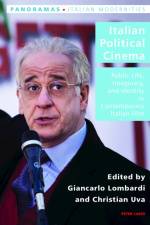
Despite recent societal anti-political sentiments, Italian cinema has continued to address politics, including reflections on public life, memory, and national identity. This is done via (1) thematic approaches discussing contemporary political film, (2) analyses of prominent directors currently engaged in filone, and (3) case studies of selected films.
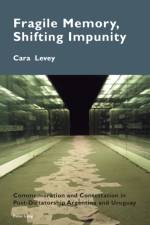
Fragile Memory, Shifting Impunity is an interdisciplinary study of commemorative sites related to human rights violations committed primarily during dictatorial rule in Argentina (1976-1983) and Uruguay (1973-1985). Taking as a departure point the 'politics of memory' - a term that acknowledges memory's propensity for engagement beyond the cultural sphere - this study shifts the focus away from exclusively aesthetic and architectural readings of marches, memorials and monuments to instead analyse their emergence and transformation in post-dictatorship Argentina and Uruguay. This book incorporates the role of state and societal actors and conflicts underpinning commemorative processes into its analysis, reading the sites within shifting contexts of impunity to explore their relationship to memory, truth seeking and justice in the long aftermath of dictatorship.
What is it to care for another human being? How do we show compassion for each other? Is 'social care' an activity only for paid professionals? This book sets out on a radical re-examination of the nature of social care, the way it is practised, and its purpose. Rather than being confined to a qualified cohort of designated carers, social care is an activity for all. It is the gateway to the humanization of both care-giver and care-receiver. Yet the process of humanization, in order to be effective, needs to encompass both the personal and political worlds. The resultant integral social care can be re-imagined as compassionate activism. The scope of the book ranges from the practical to the theoretical. It assesses the specific skills needed in providing social care; it examines social care theory and practice; and it extends its investigation as far as the dysfunctions in the current political and economic system. The book proposes a 'dialogic practice' as an effective method of achieving personal and social transformation, one which is available to professional practitioners and others alike. The value and process of dialogue affirms that our humanity is primarily characterized by care and compassion rather than individual self-interest.
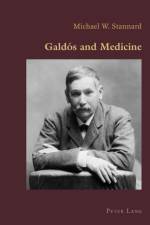
Benito Perez Galdos (1843-1920) is revered as Spain's greatest nineteenth-century author. Writing in the realist tradition of Dickens, Zola and Balzac, he described life in Madrid with unequalled fidelity. In addition, he was unique among novelists of his time in his knowledge of medicine, revealed in his depictions of mental and physical disease. While critical analyses of his novels abound, this book is the first detailed study of the medicine that appears in his novels and newspaper articles. Galdos acquired his medical knowledge at a time of great changes: anaesthesia and antisepsis were developed, and the germs responsible for many human diseases identified. French medicine was especially influential, though increasing international exchange resulted in new ideas also being adopted from England, Germany and Italy. The author of this study analyses Galdos's network of medical contacts, together with some of the sources available to them. Subjects such as epidemic disease, madness and children's diseases are examined and the light they throw upon the medicine of the time is discussed. The concluding chapter of the book assesses the significance of Galdos's depictions of disease and of doctors.
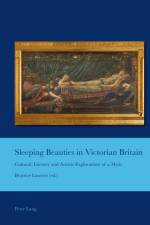
The figure of the beautiful reclining female sleeper is a recurring theme in the Victorian imagination. This book compiles and examines a corpus of Sleeping Beauties drawn from Victorian medical reports, literature and the arts and explores the significance of the enduring revival of the myth.
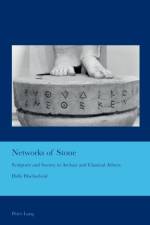
Networks of Stone explores the social and creative processes of sculpture production in Athens in the sixth and fifth centuries BC. Using the concept of art worlds, it analyses the contributions and interactions of all those who were in some way part of creating the sculpture set up in the sanctuaries and cemeteries of Athens. The choices that were made not only by patrons and sculptors but also by traders in various materials and a range of craftsmen all influenced the final appearance of these works of art. By looking beyond the sculptor to the network of craftsmen and patrons that constituted the art world, this study offers new insights into well-known archaeological evidence and some of the highlights of classical art history.
This essay collection examines the relationship between media and cosmopolitanism in an increasingly fragmented and globalizing world. It covers areas such as cosmopolitanization in everyday life, the mediation of suffering and cosmopolitanism, cosmopolitanism and trauma studies, and researching cosmopolitanism from a non-Western perspective.
The Doppelganger - the double, twin, mirror image or alter ego of someone else - is a universal theme that has been prevalent in German culture since the Romantic period. This volume explores the phenomenon of the double in multiple aspects of German visual culture, from painting and classical ballet to film and photography.
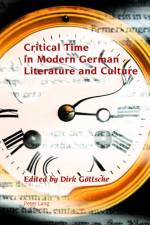
The fleeting nature of time is a defining feature of modern and postmodern existence. This volume engages with the critical sense of time in German culture, exploring the importance of temporality for artistic and literary production since c. 1800. Topics include time and space in art, the politics of time and memory, and the poetics of time.
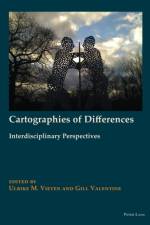
This volume explores how we can learn to live with individual and group differences in the twenty-first century, locating this within the ambivalences of contemporary cosmopolitanism. It analyses visual, normative and cultural embodiments of difference, presenting dynamic conflicts at local sites connected through globalization and Europeanization.
Challenges and Reforms in Vocational Education
Against the background of increasing qualification needs there is a growing awareness of the challenge to widen participation in processes of skill formation and competence development. This book focuses on conditions, and processes which help to combine vocational education and training (VET) with qualifications leading into higher education.
This book includes a selection of papers from the 14th International 'Culture & Power' Conference held in Ciudad Real, Spain, in 2010. It contributes to contemporary debates on identity-construction practices from various theoretical positions in different social, historic and national contexts.
This book examines what happens when consumption - originally based on ethical issues - become a sort of religious behaviour which excludes possibly equally-valid alternatives by principle. Five related studies are presented in both consumer and political marketing.
Dispelling widespread views that female same-sex desire is virtually absent from Italian literature and cultural production in the modern era, this groundbreaking study demonstrates that narratives of lesbianism are significantly more numerous than has been previously asserted. Focusing on texts published between 1860 and 1939, the author traces and analyses the evolution of discourses on female same-sex desire in and across a wide variety of genres, whether popular bestsellers, texts with limited distribution and subject to censorship, or translations from other languages. All the works are considered in relation to broader socio-cultural contexts. The analysis uncovers a plurality of different sources for these narratives of lesbianism and desire between women, showing how different layers of discourse emerge from or are reworked in and across several genres. From scientists who condemned the immoral and degenerate nature of Sapphic desire, to erotic publications that revelled in the pleasures of female same-sex intimacy, to portrayals of homoerotic desire by female writers that call (more or less obliquely) for its legitimization, these texts open up important new perspectives on discourses of sexuality in modern Italy.
This book presents the first detailed analysis of the mechanism of translating the Polish past tense into French. Grounded in the field of aspectual research, this study bridges the gap between theory and practice by presenting a set of equivalency rules for Polish past imperfective verb forms and French past tenses. Drawing on a wide selection of Polish literary texts and their translations into French, the author analyses the translation of Polish past imperfective verbs in factual contexts and their actual uses in narration. Using the semantic theory of aspect developed by Stanislaw Karolak, the author establishes rules of equivalency for imperfective uses in both languages as well as rules of equivalency between Polish past imperfective verbs and perfect tenses in French (passe compose, passe simple and plus-que-parfait). The translation rules developed in this study can be applied directly in translation practice as well as providing a resource for scholars of the French and Polish languages. Additionally, this book lays the foundation for future contrastive studies on aspect in languages from different language families.
This book attempts to explore the nature of quality assurance policies and practices in three universities in the Southern African region. It looks at how they were developed, the parties that were involved in the policy process, the implications of such processes for policy implementation, and institutional and contextual factors mediating quality assurance practices on the ground. The major aim of the book is to explore both enabling and constraining factors affecting quality enhancement in higher education in this region. The book is based on a set of case studies undertaken at the three universities. Although they share a relatively common geographical location, the universities have different contextual environments and are at different stages of quality assurance development.
This book, premised on the development and survival of the European integrationist project, tackles some crucial questions with the potential to affect EU performance. It evaluates the basic understanding and power of European identity, and the responses offered by individual states and supranational elites and their respective publics.
This book traces the learning experiences of the jazz community in Bristol, UK from 1945 to 2012. Grounded in a methodology of participant observation and case studies, it documents changes in the economic, cultural and educational circumstances faced by the players. In their own words, the musicians recall the influences that initiated and developed their musicianship. Drawing on first-person accounts, the study traces the historical development of jazz music and musicians in Bristol. In the post-war years, players began to develop significant stylistic aspects in the jazz lexicon. Drawing on media sources and interaction in performance, players garnered a host of performing skills whilst suffering dwindling audiences and declining venues. Reforms in English music education in the 1980s offered formal opportunities to study jazz in the city's schools, drawing minimal attention from institutions. Practical learning and playing opportunities offered by the Local Authority music service sustained a modest membership over the years. Post millennium, local schools, with one or two exceptions, showed little interest in jazz education. Nevertheless, maintaining its traditional stance, Bristol's jazz community continues to exhort top quality jazz performances including compositions that match national and international standards.
This volume contains the first modern critical editions of Concilium (1525) and Rychsztag (1526), two vernacular verse dialogues by the Zurich-based Zwinglian author Utz Eckstein, together with translations of both into English prose
This volume explores the expansion of audiovisual translation (AVT) studies and practices within European institutions, universities and businesses. Contributors focus on the intersections of AVT with cultures and languages and address the important issue of media accessibility.
Peter Raina's House of Lords Reform recounts the long struggle to bring an ancient institution up to date. The first volume ended in 1937, as crisis overwhelmed Europe. Reform issues were not forgotten, however. This second volume continues the story, presenting a wealth of illuminating records, a great many of them published here for the first time. The 4th Marquess of Salisbury planned changes to the Lords even before the war's end. Further proposals followed after the establishment of the Labour government in 1945. Fearful that its legislation would be blocked, Labour amended the Parliament Act, 1911 to limit the Lords' delaying powers to just one year. Some believed the Upper House would disappear altogether. Salisbury's heir worked hard for preservation, and managed to secure an all-party conference. Its complex schemes and animated discussions are all presented here in original documents. Though the conference failed, Lords Reading, Exeter and Simon continued the effort, with ideas that would eventually bear fruit. They championed the rights of women, self-regulation through standing orders, and the creation of life peers. The Churchill government formed a Lords Reform Committee but could get no further. Then, in an unexpected twist, the cause finally triumphed when Harold Macmillan and the Earl of Home got a one-clause bill through parliament in 1958. The Life Peers Act transformed the nature of British politics.
Abonner på vårt nyhetsbrev og få rabatter og inspirasjon til din neste leseopplevelse.
Ved å abonnere godtar du vår personvernerklæring.