



Gjør som tusenvis av andre bokelskere
Abonner på vårt nyhetsbrev og få rabatter og inspirasjon til din neste leseopplevelse.
Ved å abonnere godtar du vår personvernerklæring.Du kan når som helst melde deg av våre nyhetsbrev.

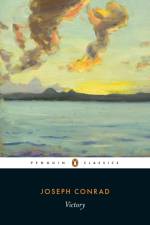
Axel Heyst, a dreamer and a restless drifter, believes he can avoid suffering by cutting himself off from others. Then he becomes involved in the operation of a coal company on a remote island in the Malay Archipelago, and when it fails he turns his back on humanity once more. But his life alters when he rescues a young English girl, Lena, from Zangiacomo's Ladies' Orchestra and the evil innkeeper Schomberg, taking her to his island retreat. The affair between Heyst and Lena begins with her release, but the relationship shifts as Lena struggles to save Heyst from detachment and isolation. Featuring arguably the most interesting hero created by Conrad, Victory is both a compelling tale of adventure and a perceptive study of the power of love.
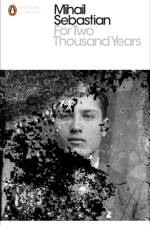
'Absolutely, definitively alone', a young Jewish student in Romania tries to make sense of a world that has decided he doesn't belong. Spending his days walking the streets and his nights drinking and gambling, meeting revolutionaries, zealots, lovers and libertines, he adjusts his eyes to the darkness that falls over Europe, and threatens to destroy him. Mihail Sebastian's 1934 masterpiece, now translated into English for the first time, was written amid the anti-Semitism which would, by the end of the decade, force him out of his career and turn his friends and colleagues against him. For Two Thousand Years is a prescient, heart-wrenching chronicle of resilience and despair, broken layers of memory and the terrible forces of history.
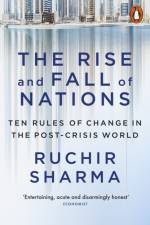
The crisis of 2008 ended the illusion of a golden era in which many people imagined that prosperity and political calm would continue to spread indefinitely. In a world now racked by slowing growth and mounting unrest, how can we discern which nations will thrive and which will fail? Shaped by prize-winning author Ruchir Sharma's twenty-five years travelling the world, The Rise and Fall of Nations rethinks economics as a practical art. By narrowing down the thousands of factors that can shape a country's future, it spells out ten clear rules for identifying the next big winners and losers in the global economy.Each rule looks at a nation's political, economic, and social conditions in real time to filter out the hype and noise. He shows, for example, how slow population growth is eroding economic growth, and ranks nations by how well they respond. He describes the way cycles of political complacency and revolt fuel economic booms and busts. Amid growing tensions over inequality, he demonstrates how billionaire lists yield clues to which economies are most or least threatened by extreme wealth. In a period when the world is struggling with trillions of dollars in new debt, he explains which nations are most likely to avert this threat or buckle under it. Sharma's rules are based on the data he has collected over many years at Morgan Stanley Investment Management in New York, where he is now Head of Emerging Markets and Chief Global Strategist. This is a book of original research, not mere opinion. The final chapter takes the reader on a surprising world tour of the likely winners and losers in the near future. The Rise and Fall of Nations is enlivened by Sharma's stories from the road and his encounters with presidents, tycoons, and villagers from Rio to Beijing. It is a pioneering field guide to understanding our impermanent world.
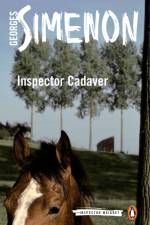
Maigret's old colleague becomes an unexpected rival in book twenty-four of the new Penguin Maigret series.In everyone's eyes, even the old ladies hiding behind their quivering curtains, even the kids just now who had turned to stare after they had passed him, he was the intruder, the undesirable. No, worse, he was fundamentally untrustworthy, some stranger who had just turned up from who knew where to do who knew what.Penguin is publishing the entire series of Maigret novels in new translations. This novel has been published in a previous translation as Maigret's Rival.'Compelling, remorseless, brilliant' John Gray'One of the greatest writers of the twentieth century . . . Simenon was unequalled at making us look inside, though the ability was masked by his brilliance at absorbing us obsessively in his stories' Guardian 'A supreme writer . . . unforgettable vividness' Independent
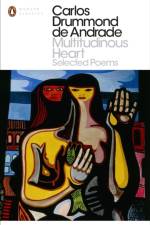
In 1962 de Andrade published Antologia Po tica, a personal anthology of poems from his first ten books. This selection draws on de Andrade's anthology to encompass his finest works within his chosen areas of interest: The Individual, Minas Gerais, Family, Friends, Social Confrontation, Experience of Love, Poetry Itself, and An Attempt to Understand ExistenceFeted as the most important - and premiere modernist - Brazilian poet of the twentieth century, Carlos Drummond de Andrade appears in Penguin Classics for the first time. His fans and translators have included Mark Strand, Lloyd Schwartz and Elizabeth Bishop.
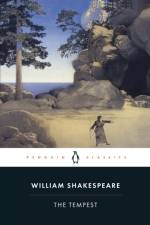
'The magic in The Tempest is real ... It contains a great many unanswered questions' Margaret AtwoodA storm rages. Prospero and his daughter watch from their desert island as a ship carrying the royal family is wrecked. Miraculously, all on board survive. Plotting, mistaken identities, bewitching love and enchantment follow as the travellers explore this mysterious place of spirits and monsters, and discover that all is not as it seems. Shakespeare's late, great play is a work filled with marvels, music and strangeness, fully exploiting the power of language and the magic of theatre.Used and Recommended by the National TheatreGeneral Editor Stanley WellsEdited with an Introduction by Martin Butler
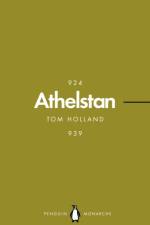
The formation of England occurred against the odds: an island divided into rival kingdoms, under savage assault from Viking hordes. But, after King Alfred ensured the survival of Wessex and his son Edward expanded it, his grandson Athelstan inherited the rule of both Mercia and Wessex, conquered Northumbria and was hailed as Rex totius Britanniae: 'King of the whole of Britain'.Tom Holland recounts this extraordinary story with relish and drama, transporting us back to a time of omens, raven harbingers and blood-red battlefields. As well as giving form to the figure of Athelstan - devout, shrewd, all too aware of the precarious nature of his power, especially in the north - he introduces the great figures of the age, including Alfred and his daughter Aethelflaed, 'Lady of the Mercians', who brought Athelstan up at the Mercian court. Making sense of the family rivalries and fractious conflicts of the Anglo-Saxon rulers, Holland shows us how a royal dynasty rescued their kingdom from near-oblivion and fashioned a nation that endures to this day.
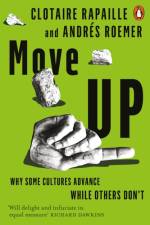
With an abundance of data and evidence, Move UP explores the societal and biological factors that determine whether cultures are able to ascend socially, economically and intellectually. This provocative, ambitious and entertaining book devises a formula that will allow countries and individuals to assess their own potential for upward mobility. Drawing on science and statistics as much as on human instinct and emotion, Move UP reconsiders the modern world with a motion to improving it.
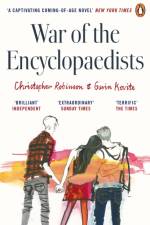
War of the Encyclopaedists is Christopher Robinson and Gavin Kovite's dazzling literary debut.On a summer night in an arty enclave of Seattle, friends Mickey Montauk and Halifax Corderoy throw one last blowout party before their lives part ways. They had planned to move together to Boston, but global events have intervened: Montauk has just learnt that his National Guard unit will deploy to Baghdad at the end of the summer. And Corderoy is faced with a moral dilemma: his girlfriend Mani has just been evicted and he must decide whether or not to abandon her when she needs him most. The year that follows will transform them all.'This book has sweep and heart and humour. It captures coming of age during foreign wars and domestic malaise, and it does so with electrifying insight' Mary Karr, author of The Liars' Club'As bizarre, hilarious and devastating as the past decade . . . Simultaneously a coming-of-age story, a war story, and a story of the disaffected millennial generation for whom the war hardly happened at all' Phil Klay, author of Redeployment
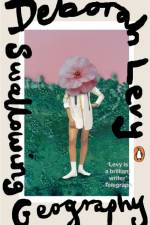
Swallowing Geography is a stunning early novel by the Man Booker-shortlisted Deborah Levy. Embedded in this beautifully written novel is Deborah Levy's gift for blending fairytale with biting satire. Through the voice of the irreverent and ironic narrator J.K., Swallowing Geography interrogates the yearning of discontented children, imagined homes and strangers and histories at the turbulent close of the 20th century.'A stunningly original writer' Kirsty Gunn'One of the few British writers comfortable on a world stage' New Statesman'Levy's strength is her originality of thought and expression' Jeanette WintersonDeborah Levy writes fiction, plays and poetry. Her work has been staged by the Royal Shakespeare Company, and she is the author of highly praised books including The Unloved, Things I Don't Want to Know, Beautiful Mutants and Billy and Girl. Her novel Swimming Home was shortlisted for the 2012 Man Booker Prize, 2012 Specsavers National Book Awards (UK Author of the Year) and 2013 Jewish Quarterly Wingate Prize, while the title story of her most recent work of fiction, Black Vodka, was shortlisted for the 2012 BBC International Short Story Award.
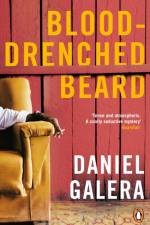
Blood-Drenched Beard is the gripping, visceral English-language debut from Daniel Galera.His father shoots himself, and all he's left with is the old cattle dog and a vague desire for explanation. He loves swimming so he drifts south to Garopaba, a quiet little town on the Brazilian coast, where his grandfather disappeared in mysterious, possibly brutal, circumstances decades before.There, in the midst of romantic flings and occasional trips, he comes to discover more than he could ever have imagined - not just about his grandfather, but also about himself.Praise for Daniel Galera: 'Outstandingly powerful'- Estado de Sao Paulo'The writer who has evolved more than any other of his generation'- NoMinimo Daniel Galera was born in Sao Paulo in 1979. He co-founded the influential publishing house Livros do Mal, and has translated David Foster Wallace, Zadie Smith and Irvine Welsh into Brazilian Portuguese. He has published a collection of short stories and three novels, as well as an acclaimed graphic novel (with Rafael Coutinho).
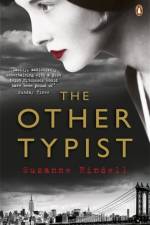
The Other Typist by Suzanne Rindell is a thrilling tale of the intoxicating and dark side of friendship. New York City, 1924: the height of Prohibition and the whole city swims in bathtub gin.Rose Baker is an orphaned young woman working for her bread as a typist in a police precinct on the lower East Side. Every day Rose transcribes the confessions of the gangsters and murderers that pass through the precinct. While she may disapprove of the details, she prides herself on typing up the goriest of crimes without batting an eyelid. But when the captivating Odalie begins work at the precinct Rose finds herself falling under the new typist's spell. As do her bosses, the buttoned up Lieutenant Detective and the fatherly Sergeant. As the two girls' friendship blossoms and they flit between the sparkling underworld of speakeasies by night, and their work at the precinct by day, it is not long before Rose's fascination for her new colleague turns to obsession.But just who is the real Odalie, and how far will Rose go to find out?'A mysterious central character, stunning writing and an ending that will leave you reeling makes The Other Typist the kind of book you can't get out of your head' Good Housekeeping'A genuinely delightful, witty page turner, full of surprises' Diva'Take a dollop of Alfred Hitchcock, a dollop of Patricia Highsmith, throw in some Great Gatsby flourishes, and the result is Rindell's debut, a pitch-black comedy about a police stenographer accused of murder in 1920s Manhattan . . . deliciously addictive' Kirkus ReviewsSuzanne Rindell is a doctoral student in American modernist literature at Rice University. The Other Typist is her first novel. She lives in New York City and is currently working on a second novel.
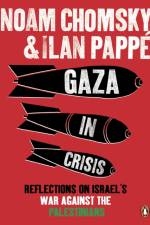
Gaza in Crisis is Noam Chomsky's clear-sighted analysis of an area in a desperate impasse.From the targeting of schools and hospitals, to the indiscriminate use of white phosphorus, Israel's conduct in 'Operation Cast Lead' has rattled even some of its most strident supporters.In Gaza in Crisis, Noam Chomsky and Ilan Papp survey the fallout from that devastation, and place the massacre in Gaza in the context of Israel's long-standing war against the Palestinians. It is a rigorous, historically informed and much-needed analysis of the situation and will be welcomed by all those eager for Chomsky's and Papp 's insights into yet another political catastrophe.'Noam Chomsky is a global phenomenon . . . he may be the most widely read American voice on foreign policy on the planet today' The New York Times Book Review'Ilan Papp is Israel's bravest, most principled, most incisive historian' John PilgerNoam Chomsky is the author of numerous bestselling political books, including Hegemony or Survival, Failed States, Interventions, What We Say Goes and Hopes and Prospects, all of which are published by Hamish Hamilton/Penguin. Ilan Papp is Professor of History at the University of Exeter, co-director of the Exeter Centre for Ethno-Political Studies, director of the Palestine Studies Centre at the University of Exeter, and the author of various books, including the bestselling The Ethnic Cleansing of Palestine (Oneworld).
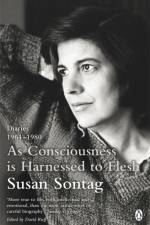
As Consciousness is Harnessed to Flesh reveals the inner life of Susan Sontag.Providing a unique insight into the mind of one of the leading intellectuals of the modern age, Susan Sontag's As Conscious is Harnessed to Flesh chronicles the cultural, moral, and political journeys of this renowned critic and artist at the height of her powers.As Consciousness Is Harnessed to Flesh follows Sontag through the turbulent years of the late 1960s - from her trip to Hanoi at the peak of the Vietnam War to her time making films in Sweden - up to 1980, just before the beginning of the Reagan era. This is an invaluable record of the inner workings of one of the most inquisitive and analytical thinkers of the twentieth century at the height of her power. It is also a remarkable document of on individual's political and moral awakening.'More true to life, both intellectual and emotional, than the most artful novel or careful biography' Sunday Telegraph'Gold dust' Sunday Times'A powerful self-portrait emerges. In its fragmentation . . . and passion, its combination of the erudite and the everyday, it is more true to life, both intellectual and emotional, than the most artful novel or careful biography. It may well be that Sontag's diaries will come to be seen as just as brilliant and important as anything she wrote' Sunday Telegraph'Mesmerising, fascinating' Guardian'Express the fullness and diversity of her intellectual curiosity. Revelatory in the most profound sense: they are existential fragments, self-selected thoughts, emotions, reactions . . . arising in one of the most remarkable minds of the twentieth century' The TimesOne of America's best-known and most admired writers, Susan Sontag was also a leading commentator on contemporary culture until her death in December 2004. Her books include four novels and numerous works of non-fiction, among them Regarding the Pain of Others, On Photography, Illness as Metaphor, At the Same Time, Against Interpretation and Other Essays and Reborn: Early Diaries 1947-1963, all of which are published by Penguin. A further eight books, including the collections of essays Under the Sign of Saturn and Where the Stress Falls, and the novels The Volcano Lover and The Benefactor, are available from Penguin Modern Classics.
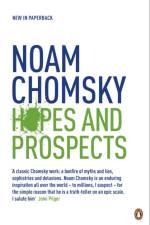
Hopes and Prospects is Noam Chomsky's indispensable analysis of the world at present and a roadmap for the futureIn Hopes and Prospects, Noam Chomsky examines the challenges of our early twenty-first century. He explores obstacles and threats such as the widening gap between North and South America, US exceptionalism (which continues under Obama), the fiascos of Iraq and Afghanistan, the US-Israeli assault on Gaza and the recent financial bailouts. He sees hope for the future and opportunities to move forward, however - in the democratic wave in Latin America and in the global solidarity movements which suggest 'real progress towards freedom and justice'.Hopes and Prospects is essential reading for anyone wishing to understand the primary challenges facing the human race in the coming years.'A treasure-trove of truths that shouldn't be left buried in our sandpit of propaganda and lies' Johann Hari, Independent'Noam Chomsky is a global phenomenon . . . he may be the most widely read American voice on foreign policy on the planet today' The New York Times Book Review'The west's most prominent critic of US imperialism . . . the closest thing in the English-speaking world to an intellectual superstar' GuardianNoam Chomsky is the author of numerous bestselling political books, including Hegemony or Survival, Failed States, Interventions, Perilous Power, What We Say Goes, Imperial Ambitions, Making the Future, How the World Works, and Hopes and Prospects all of which are published by Hamish Hamilton/Penguin. He is a professor in the Department of Linguistics and Philosophy at MIT, and is widely credited with having revolutionized modern linguistics. He lives in Lexington, Massachusetts.
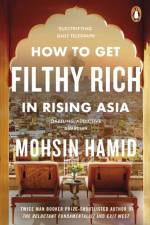
How to Get Filthy Rich in Rising Asia is Mohsin Hamid's spectacular, thought-provoking novel of modern Asia In this keenly-awaited follow-up to his bestselling The Reluctant Fundamentalist, Mohsin Hamid confirms his place as a radically inventive story-teller with his finger on the world's pulse.The astonishing and riveting tale of a man's journey from impoverished rural boy to corporate tycoon, it steals its shape from the business self-help books devoured by youths all over 'rising Asia'. It follows its nameless hero to the sprawling metropolis where he begins to amass an empire built on the most fluid and increasingly scarce of goods: water. Yet his heart remains set on something else, on the pretty girl whose star rises alongside his, their paths crossing and re-crossing in a love affair sparked and snuffed out again by the forces that careen their fates along.The hero of the story could be any one of us, hungry for a different life. And ours too could be the fate that awaits him . . .Fast-paced, vivid and emotionally absorbing, How to Get Filthy Rich in Rising Asia creates two unforgettable characters who find moments of transcendent intimacy in the midst of shattering change.Praise for How to Get Filthy Rich in Rising Asia: 'Even more intriguing, compelling and moving than The Reluctant Fundamentalist. A marvellous book' Philip Pullman 'This brilliantly structured, deeply felt book is written with the confidence and bravura of a man born to write. Hamid is at the peak of his considerable powers here, and delivers a tightly paced, preternaturally wise book about a thoroughly likable, thoroughly troubled striver in the messiest, most chaotic ring of global economy. Completely unforgettable' Dave Eggers 'Mohsin Hamid is one of the best writers in the world, period. Only a master could have written this propulsive tale of a striver living on the knife's edge, a noir Horatio Alger story for our frenetic, violent times' Ben Fountain'Written in the most compelling second person since Jay McInerney's Bright Lights, Big City, with which it also shares a sharp take on our frenetic, urban lives, Hamid's novel proves that the most compelling fiction today is coming from South Asia' Daily BeastMohsin Hamid is the author of The Reluctant Fundamentalist and Moth Smoke. His fiction has been adapted for the cinema, translated into over 30 languages, received numerous awards, and been shortlisted for the Man Booker Prize. He has contributed essays and short stories to publications such as the Guardian, The New York Times, Financial Times, Granta, and the New Yorker. Born and mostly raised in Lahore, he spent part of his childhood in California, studied at Princeton University and Harvard Law School, and has since lived between Lahore, London and New York.
Growing up during the 1980s in the safe complacency of the Australian suburbs, Plum Coyle should be happy. But on the cusp of her fourteenth birthday - and on the fringe of her peer group - she lives in terror of the disapproval of her cruel and fickle girlfriends, and most of all, she hates her awkward, changing body with a passion.So when Plum's glamorous next-door neighbour Maureen, a young wife and mother, befriends Plum, Plum responds with worshipful fervour. Plum feels herself reinvented. With Maureen, she becomes the girl she's always wanted to be. But Maureen has an ulterior motive for taking Plum under her wing . . .
Paul Theroux celebrates fifty years of wandering the globe by collecting the best writing on travel from the books that shaped him, as a reader and a traveller. Part philosophical guide, part miscellany, part reminiscence, The Tao of Travel enumerates 'The Contents of Some Travellers' Bags' and exposes 'Writers Who Wrote About Places They Never Visited'; tracks extreme journeys in 'Travel As An Ordeal' and highlights some of 'Travellers' Favourite Places'. Excerpts from the best of Theroux's own work are interspersed with selections from travellers both familiar and unexpected, including Vladimir Nabokov, Henry David Thoreau, Graham Greene, Ernest Hemingway and more. The Tao of Travel is a unique tribute to the pleasures and pains of travel in its golden age.
Stunningly repackaged, Kuki Gallmann's African Nights vividly portrays the harsh and beautiful landscapes of Africa.Africa evokes a deep sense of mystery. It is a place that retains what most of the world has lost: space, roots, traditions, awesome beauty, true wilderness, rare animals, and extraordinary people. In this wonderful and haunting collection of stories, Kuki Gallmann writes of her life in Africa, where every day brings challenge and adventure. African Nights is a treasury of memories, in which fascinating people and places are brought to life. It he healing powers Africa can have on those who embrace the land as a place of mystery, superstition, danger, and beauty.'Captures perfectly the magic of Kenya, creating an almost overwhelming picture of beauty and drama, pain and joy, death and resurrection . . . Her discovery of African culture, with its mystery and danger, is recounted in spare, lyrical prose' New York Times'Powerful, poetic, unbearably moving: I wept' Clare Francis (on I Dreamed of Africa)Kuki Gallmann was born near Venice and moved to Kenya in 1972 with her husband and young son. Following their deaths, she set up the Gallmann Memorial Foundation to promote new ways of combining development and conservation, and to provide sponsorship for the education of Kenyans. Her first book, I Dreamed of Africa, was published in 1991 to international acclaim and it became a world-wide bestseller. She lives in Kenya with her daughter and her dogs.
Like his mother Queen Victoria, Edward VII defined an era. Both reflected the personalties of their central figures: hers grand, imperial and pretty stiff; his no less grand, but much more relaxed and enjoyable. This book conveys Edward's distinct personality and significant influences. To the despair of his parents, he rebelled as a young man, conducting many affairs and living a life of pleasure. But as king he made a distinct contribution to European diplomacy and - which is little known - to London, laying out the Mall and Admiralty Arch. Richard Davenport-Hines's book is as enjoyable as its subject and the age he made.
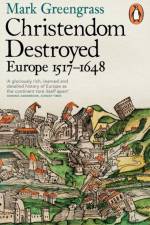
Mark Greengrass's gripping, major, original account of Europe in an era of tumultuous changeThis latest addition to the landmark Penguin History of Europe series is a fascinating study of 16th and 17th century Europe and the fundamental changes which led to the collapse of Christendom and established the geographical and political frameworks of Western Europe as we know it. From peasants to princes, no one was untouched by the spiritual and intellectual upheaval of this era. Martin Luther's challenge to church authority forced Christians to examine their beliefs in ways that shook the foundations of their religion. The subsequent divisions, fed by dynastic rivalries and military changes, fundamentally altered the relations between ruler and ruled. Geographical and scientific discoveries challenged the unity of Christendom as a belief-community. Europe, with all its divisions, emerged instead as a geographical projection. It was reflected in the mirror of America, and refracted by the eclipse of Crusade in ambiguous relationships with the Ottomans and Orthodox Christianity. Chronicling these dramatic changes, Thomas More, Shakespeare, Montaigne and Cervantes created works which continue to resonate with us. Christendom Destroyed is a rich tapestry that fosters a deeper understanding of Europe's identity today.
In derelict Dresden a cultivated, middle-class family does all it can to cope amid the Communist downfall. This striking tapestry of the East German experience is told through the tangled lives of a soldier, surgeon, nurse and publisher. With evocative detail, Uwe Tellkamp masterfully reveals the myriad perspectives of the time as people battled for individuality, retreated to nostalgia, chose to conform, or toed the perilous line between East and West. Poetic, heartfelt and dramatic, The Tower vividly resurrects the sights, scents and sensations of life in the GDR as it hurtled towards 9 November 1989.
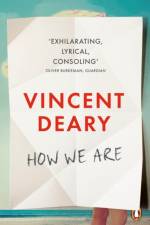
We live in small worlds. An astonishing literary debut and the first book in the monumental How To Live trilogy, How We Are explores the power of habit and the difficulty of change. A story told in three parts, this profound and ambitious trilogy gets right to the heart of what it means to be human: how we work, how we break, and how we mend.As Vincent Deary shows us, we live most of our lives automatically, in small worlds of more or less comfortable routine - what he calls Act One. Conscious change requires deliberate effort, and so, for the most part, we avoid it. But inevitably, from within or without, something will come along to disturb our small worlds - some News From Elsewhere. And with ingrained reluctance, we begin the work of adjustment: Act Two.Over decades of psychotherapeutic work, Deary has been a witness to the theatre of change - the way that ordinary people get stuck, struggle with new circumstances, and eventually transform their lives and get better. He is also keenly aware that novelists, poets, philosophers and theologians have grappled with these experiences for far longer than psychologists have. Drawing on his own personal experience, and a staggering range of literary, philosophical and cultural sources, Deary has produced a mesmerizing and universal portrait of the human condition.Part psychologist, part philosopher, part novelist, Deary helps us to see how we can resist being mere habit machines, and make our acts and our lives more fully our own.Vincent Deary is a health psychologist at Northumbria University. This, his first book, is part one of the How To Live trilogy, and will be followed by How We Break (book 2) and How We Mend (book 3).
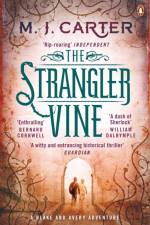
Penguin presents the unabridged, downloadable audiobook edition of M.J. Carters The Strangler Vine, read by the actor Sam Dastor. India. 1837. William Avery, a fresh young officer in the East India Company, arrives in Calcutta expecting to be seduced by its ancient traditions. Nine months later he hasnt learnt a word of Hindoostani, is in terrible debt, and longs to return home before the cholera epidemic finishes him off. A few months earlier, so rumour has it, the infamous and disgraced poet Xavier Mountstuart leaves Calcutta in order to track down the last of the remaining Thugs, a sinister secret fraternity notorious for strangling thousands of travellers. But after reaching the kingdom of Jubbulpore, Mountstuart mysteriously disappears. Then the Company leads Avery to Jeremiah Blake, an unruly ex-Captain who has embraced native life. Their mission? To cover 700 miles of treacherous road in three weeks and find Mountstuart. A more unlikely duo couldnt be imagined, but they must bury their differences if they wish to succeed - for all is not as it seems, and at the rotten heart of everything lies the secret of the macabre Thugs...
What Every Parent Needs to Know is the bestselling, step-by-step guide to the new primary school curriculum from Toby Young and Miranda Bondy.What is your child learning each day in school? How can you tell if they are doing well or badly? And what can you do to help?This practical, detailed and user-friendly manual contains absolutely everything you need to know about primary schooling and the new UK curriculum, ensuring your child will succeed and flourish every step of the way.As parents we do the very best for our children in choosing the right school and preparing them for their very first day. But for the next seven years we have little idea what our child is learning, whether they are doing well or badly and what, if anything, we can do to help.What Every Parent Needs to Know changes that. It gives us, the parents, the details, the thinking behind and a thorough understanding of the brand-new primary school curriculum launching in September 2014.Taking us year-by-year through our children's schooling, we'll be given simple explanations of:- What they'll be taught and why (from phonics checks to SPAG tests)- What they need to know at the start of each year- What they should be able to achieve at its end- The games and exercises we can do at home to help outWhat Every Parent Needs to Know explains the confusing jargon while being otherwise jargon free and is written by two parents (who between them have nine children) with many successful years working in staff rooms and classrooms.Not only will this guide help you understand your children's journey through primary school, but it will also help you prepare, encourage and nurture them every step of the way.It's the manual every confused, unsure or worried parent has been waiting for.Toby Young is the outspoken columnist who wrote the international bestseller How to Lose Friends and Alienate People. A high-profile and passionate education reformer, he co-founded and set up two primary schools and wrote How to Set Up a Free School (2011) . Toby has 4 children, all currently at primary school.Miranda Thomas started teaching in 1990, coinciding with the very first national curriculum. She is now an A level physics teacher in Wiltshire, as well as being the Chair of Governors at her local primary school and a parent herself. Her youngest child is currently in Year 8.
'Families are toxic...' Thanksgiving, New England, and writer Cynthia has been persuaded by elder sister Frances to come and visit for the autumn holiday. Cynthia is reluctant to join in this family reunion because she'd rather not see their long-estranged father. Yet Frances is adamant that they must all meet to clear the air - poisoned ever since their mother died when they were children. But Cynthia has her own ideas about how to use this family occasion. It's time to lift the lid on some unwelcome home truths about what happened all those years ago. And this time her daddy's feelings are not to be spared ...
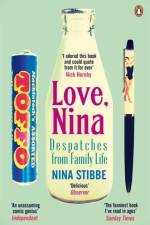
* * * WINNER OF THE 2014 NATIONAL BOOK AWARDS POPULAR NON-FICTION BOOK OF THE YEAR * * * I adored this book, and I could quote from it forever. Its real, odd, life-affirming, sharp, loving, and contains more than one reference to Arsenal FC Nick Hornby,The Believer Adrian Mole meets Mary Poppins mashed up in literary north London . . . Enormous fun Bookseller What a beady eye she has for domestic life, and how deliciously fresh and funny she is Deborah Moggach, author of The Best Exotic Marigold Hotel Nina Stibbes Love, Nina: Despatches from Family Life is the laugh-out-loud story of the trials and tribulations of a very particular family. In the 1980s Nina Stibbe wrote letters home to her sister in Leicester describing her trials and triumphs as a nanny to a London family. Theres a cat nobody likes, a visiting dog called Ted Hughes (Ted for short) and suppertime visits from a local playwright. Not to mention the two boys, their favourite football teams, and rude words, a very broad-minded mother and assorted nice chairs. From the mystery of the unpaid milk bill and the avoidance of nuclear war to mealtime discussions on pie filler, the greats of English literature, swearing in German and sexually transmitted diseases, Love, Nina is a wonderful celebration of bad food, good company and the relative merits of Thomas Hardy and Enid Blyton. Breezy, sophisticated, hilarious, rude and aching with sweetness: Love, Nina might be the most charming book Ive ever read Maria Semple, author of Whered You Go, Bernadette Nina Stibbe is the funniest new writer to arrive in years. Love, Nina is her first book - a memoir so warm, so witty and so wise, its like finding the friend you always deserved Andrew OHagan At the age of 20 Nina Stibbe moved from Leicestershire to London to become a nanny. Later she studied at Thames Polytechnic and worked in publishing. In 2014 her debut novel Man at the Helm was published. Love, Nina won the 2014 National Book Awards for Popular Non-Fiction Book of the Year. She now lives in Cornwall with her partner and children.
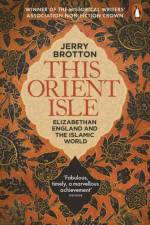
In 1570, when it became clear she would never be gathered into the Catholic fold, Elizabeth I was excommunicated by the Pope. On the principle that 'my enemy's enemy is my friend', this marked the beginning of an extraordinary English alignment with the Muslim powers who were fighting Catholic Spain in the Mediterranean, and of cultural, economic and political exchanges with the Islamic world of a depth not experienced again until the modern age. England signed treaties with the Ottoman Porte, received ambassadors from the kings of Morocco and shipped munitions to Marrakesh. By the late 1580s hundreds, perhaps thousands, of Elizabethan merchants, diplomats, sailors, artisans and privateers were plying their trade from Morocco to Persia.They included the resourceful mercer Anthony Jenkinson who met both S leyman the Magnificent and the Persian Shah Tahmasp in the 1560s, William Harborne, the Norfolk merchant who became the first English ambassador to the Ottoman court in 1582 and the adventurer Sir Anthony Sherley, who spent much of 1600 at the court of Shah Abbas the Great. The previous year, remarkably, Elizabeth sent the Lancastrian blacksmith Thomas Dallam to the Ottoman capital to play his clockwork organ in front of Sultan Mehmed. The awareness of Islam which these Englishmen brought home found its way into many of the great cultural productions of the day, including most famously Marlowe's Tamburlaine, and Shakespeare's Titus Andronicus and The Merchant of Venice. The year after Dallam's expedition the Moroccan ambassador, Abd al-Wahid bin Mohammed al-Annuri, spent six months in London with his entourage. Shakespeare probably began to write Othello six months later.This Orient Isle shows that England's relations with the Muslim world were far more extensive, and often more amicable, than we have appreciated, and that their influence was felt across the political, commercial and domestic landscape of Elizabethan England. It is a startlingly unfamiliar picture of part of our national and international history.
One monster. Three innocent girls. Ten years in captivity.22 August 2002: 21-year-old Michelle Knight disappears walking home. 21 April 2003: Amanda Berry goes missing the day before her seventeenth birthday. 2 April 2004: 14-year-old Gina DeJesus fails to come home from school. For over a decade these girls remained undetected in a house just three miles from the block where they all went missing, held captive by a terrifying sexual predator. Tortured, starved and raped, kept in chains, Captive reveals the dark obsessions that drove Ariel Castro to kidnap and enslave his innocent victims. Based on exclusive interviews with witnesses, psychologists, family and police, this is an unflinching record of a truly shocking crime in a very ordinary neighbourhood.Allan Hall was a New York correspondent for ten years, first for the Sun and later for the Daily Mirror. He has spent the last decade covering German-speaking Europe for newspapers including The Times and the Mail on Sunday. He is the author of two previous books, Monster, an investigation into the life and crimes of Josef Fritzl and Girl in the Cellar: The Natascha Kampusch Story. He lives and works in Berlin.
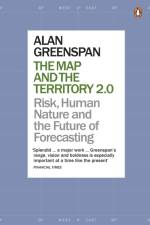
Like all of us, though few so visibly, Alan Greenspan was forced by the financial crisis of 2008 to question some fundamental assumptions about risk management and economic forecasting. No one with any meaningful role in economic decision making in the world saw beforehand the storm for what it was. How had our models so utterly failed us?To answer this question, Alan Greenspan embarked on a rigorous and far-reaching examination of how Homo economicus predicts the economic future, and how it can predict it better. Economic risk is a fact of life in every realm, from home to business to government at all levels. Whether we're conscious of it or not, we make wagers on the future virtually every day, one way or another. Very often, however, we're steering by out-of-date maps, when we're not driven by factors entirely beyond our conscious control.The Map and the Territory smartly updates our forecasting conceptual grid. It integrates the history of economic prediction, the new work of behavioural economists and the fruits of the author's own remarkable career to offer a thrillingly lucid and empirically based grounding in what we can know about economic forecasting and what we can't. The book explores how culture is and isn't destiny and probes what we can predict about the world's biggest looming challenges, from debt and the reform of the welfare state to natural disasters in an age of global warming.Alan Greenspan's approach, grounded in his trademark rigour, wisdom and unprecedented experience, offers a master class in economic decision making.ALAN GREENSPAN was born in 1926 and reared in the Washington Heights neighborhood of New York City. After studying the clarinet at Juilliard and working as a professional musician, he earned his B.A., M.A., and Ph.D. in economics from New York University. In 1954, he cofounded the economic consulting firm Townsend-Greenspan & Co. From 1974 to 1977, he served as chair of the Council of Economic Advisers under President Gerald Ford. In 1987, President Ronald Reagan appointed him chairman of the Federal Reserve Board, a position he held until his retirement in 2006.He is the author of the number one International bestseller The Age of Turbulence.
Abonner på vårt nyhetsbrev og få rabatter og inspirasjon til din neste leseopplevelse.
Ved å abonnere godtar du vår personvernerklæring.