



Gjør som tusenvis av andre bokelskere
Abonner på vårt nyhetsbrev og få rabatter og inspirasjon til din neste leseopplevelse.
Ved å abonnere godtar du vår personvernerklæring.Du kan når som helst melde deg av våre nyhetsbrev.

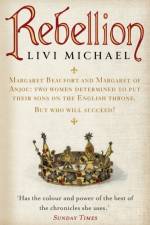
'Fine, taut writing . . . packs an emotional punch' - The TimesMargaret Beaufort and Margaret of Anjou - two women who will stop at nothing to place their sons on the English throne.In exile in France with her young son Prince Edward, Margaret of Anjou at last gives up on promises of aid by King Louis and sets sail for England. There, she will return her husband Henry to the throne - and ensure young Edward will be its heir.Meanwhile, Margaret Beaufort, separated from her son Henry of Richmond when he was an infant, sees the unrest surrounding the Lancastrian defeat as her chance to finally get him back. But the steps she takes to return her son imperil the kingdom and the throne's current occupant - King Edward IV. With rebellions tearing the country apart, how far will each woman go to further the interests of their sons? And who can stand in their way?
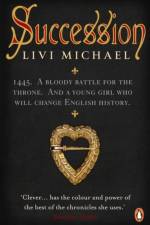
'In Succession Livi Michael engages meticulously with the diverse historical accounts of the Wars of the Roses, but she also invests intimate and poignant humanity into the personal tragedies of an era wrought with conflict and terror.' Elizabeth Fremantle, author of Queen's GambitBehind the bloody battle scenes of the Wars of the Roses lie the sinewy political skills of a remarkable pair of women.Margaret of Anjou, French, beautiful, unpopular; her marriage in 1444 to a young Henry VI causes national uproar. As English rule in France collapses, Henry goes insane, civil war erupts, and families are pitted against each other. With Henry VI incapacitated, Margaret Anjou is left to fight alone for her son's position as rightful heir. Meanwhile Margaret Beaufort, nobly born but far more distant from the throne, becomes a great heiress while only an infant. Her childhood is lived in echoing remote castles and she is lonely and vulnerable: everyone at Henry's court competes to be her guardian and to engineer an advantageous alliance through marriage to her. By the age of thirteen, she has married twice and given birth to her only son - the future King of England. But then she is separated from him . . . and her fight really begins Succession is the intense and powerful story of the women who gave birth to the Tudor dynasty.
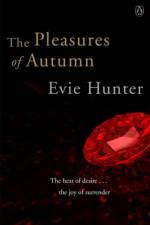
Let Evie Hunter, the bestselling Irish erotica author, light up your autumn fires with her latest sizzling novel, The Pleasures of Autumn. This is another of hot-hot-hot tale of romantic obsession and explosive sexual chemistry, a novel that fans of Sylvia Day, Kitty French and E.L. James will love and devour. When museum curator Sinead O'Sullivan is charged with stealing the Fire of Autumn, a dazzling ruby with a history of violence and treachery, bail is set at one million Swiss francs. Investigator Niall Moore is hired to stop her fleeing and to find the jewel.Their sexual chemistry is electric but logic says to ignore it. Desperate as she is to convince Niall of her innocence, Sinead cannot reveal everything she knows. And the feisty red-head's improbable tale tells him that she is not to be trusted.Yet it's impossible to ignore the carnal heat between them. Niall, an expert interrogator, uses every trick of the trade - and every weapon in his erotic armoury - to get at the truth. Sinead, a fast learner, counters his every move with one of her own. Thief and thief-taker fight for dominance and there can be only one winner.But what happens in their red-hot game of cat-and-mouse when criminals chasing the precious jewel come after Sinead ... and the stakes become deadly?In just a year Evie Hunter has shown that you can tell an addictive erotic story with a page-turning plot. The Pleasures of Autumn is the new must-have read all her fans have been waiting for. And if you're new to Evie, well you're in for a delcious treat ...
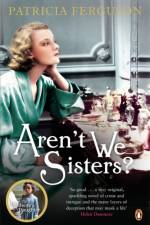
Following on from The Midwife's Daughter, Aren't We Sisters? is a gripping novel about buried secrets and unlikely friendship.Norah Thornby can no longer afford to live in her grand family home in the centre of Silkhampton. Unless, perhaps, she can find a respectable lodger.But Nurse Lettie Quick is not nearly as respectable as she seems. What's really going on at the clinic she has opened? And why has she chosen Silkhampton?Meanwhile the beautiful Rae Grainger has found the perfect place to stay, in an isolated house miles away from the town. It's certainly rather creepy, especially at candlelit bedtime, but Rae knows that all she has to do is stay out of sight, until others - paid, professional others - are ready to take her little problem away. Then she can just forget the whole ghastly business . . . can't she?No one guesses, of course, that there's a killer quietly at work in Silkhampton; that in one way or another all three women are in danger . . .
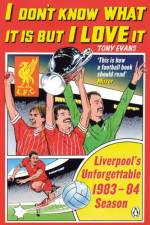
I Don't Know What It Is But I Love It by Tony Evans - Liverpool and the most unlikely success story in footballKenny Dalglish. Graeme Souness. Ian Rush. Alan Hansen. Bruce Grobelaar. They rank with the very greatest players ever. But the heroes of 1984 were an unlikely group to make history.Led by a 63-year old first-time manager and a captain show-off better known for his moves on the dancefloor, Liverpool's greatest season was a booze-fuelled journey to three trophies: the first division title, the League Cup and the European Cup, won on a remarkable night in Rome. The team's theme song was even the much-derided Chris Rea hit. Eye-watering, hilarious, and utterly unbelievable, this is the story of how they did it, and how their season was the last year of innocence in English football.This book is essential reading for fans of Red or Dead, 43 Years With The Same Bird: A Liverpudlian Love Affair and the memoirs of Steven Gerrard, Jamie Carragher and Kenny Dalglish.Tony Evans has been football editor of The Times for five years and was born a Liverpool fan. He writes a weekly column for The Game, The Times' weekly football supplement. He came to journalism at the age of 29 and spent his 20s following Liverpool and playing in bands, including a stint in The Farm. In 1983-84, he saw all 42 league games and most of the matches in other competitions.
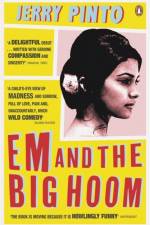
Brilliantly comic and almost unbearably moving, Jerry Pinto's Em and the Big Hoom is one of the most powerful and original fiction debuts of recent years.She was always Em to us. There may have been a time when we called her something ordinary like Mummy, or Ma, but I don't remember. She was Em, and our father, sometimes, was the Big Hoom.In a tiny flat in Bombay Imelda Mendes - Em to her children - holds her family in thrall with her flamboyance, her manic affection and her cruel candour. Her husband - to whom she was once 'Buttercup' - and her two children must bear her 'microweathers', her swings from laugh-out-loud joy to dark malevolence. In Em and the Big Hoom, the son begins to unravel the story of his parents: the mother he loves and hates in the same moment and the unusual man who courted, married and protected her - as much from herself as from the world. 'It is utterly persuasive and deeply affecting: stylistically adventurous it is never self-indulgent; although suffused with pain it shows no trace of self-pity. Parts of it are extremely funny, and its pages are filled with endearing and eccentric characters' Amitav Ghosh'Pinto chases the elusive portrait of a mother who simply said of herself that she was mad. As I read this novel, that also portrays a very tender marriage and the life of a Goan family in Bombay, it drowned me. I mean that in the best way. It plunged me into a world so vivid and capricious, that when I finished, I found something had shifted and changed within myself. This is a world of magnified and dark emotion. The anger is a primal force, the sadness wild and raw. Against this, the jokes are hilarious, reckless, free falling .... This is a rare, brilliant book, one that is wonderfully different from any other that I have read coming out of India' Kiran Desai'A child's-eye view of madness and sorrow, full of love, pain, and, unaccountably, much wild comedy. ne of the very best books to come out of India in a long, long time' Salman RushdieJerry Pinto has been a mathematics tutor, school librarian and journalist and is now associated with MelJol, an NGO that works in the sphere of child rights. He has edited several anthologies including, most recently, an anthology on his native city, Mumbai.
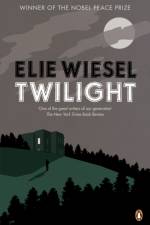
Twilight is a haunting novel by Nobel Peace prize-winning author Elie Wiesel.Raphael Lipkin hears voices and talks to ghosts. Spending the summer at the Mountain Clinic, a New York psychiatric hospital, he is not a patient but rather a visiting professional with a secret, highly personal quest.A Holocaust survivor who has painstakingly rebuilt his life, he has watched, horrified and helpless, as it all started coming apart. He longs for Pedro, the man who rescued him in postwar Poland - who became his mentor, hero, saviour and friend - and taught him truth from falsehood. But Pedro vanished into Stalin's gulags . . .Desperate to explain his own survival, Raphael now seeks among the delusional patients the answers to the mysteries of good, evil and madness.Elie Wiesel was born in 1928 in Sighet, Transylvania, which is now part of Romania. He was fifteen years old when he and his family were deported by the Nazis to Auschwitz. After the war, Elie Wiesel studied in Paris and later became a journalist. During an interview with the distinguished French writer, Francois Mauriac, he was persuaded to write about his experiences in the death camps. The result was his internationally acclaimed memoir, La Nuit or Night, which has since been translated into more than thirty languages.
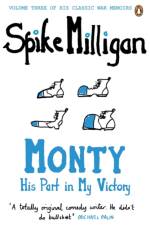
Spike Milligan's legendary war memoirs are a hilarious and subversive first-hand account of the Second World War, as well as a fascinating portrait of the formative years of this towering comic genius, most famous as writer and star of The Goon Show. They have sold over 4.5 million copies since they first appeared.'The most irreverent, hilarious book about the war that I have ever read' Sunday Express'Brilliant verbal pyrotechnics, throwaway lines and marvelous anecdotes' Daily Mail'Desperately funny, vivid, vulgar' Sunday Times'I had not informed my parents of my return, I wanted it to be a lovely surprise; it was, for me, they were away ...' The seventh and last volume of Spike Milligan's memoirs sees our hero returning from war and Italy ... but to what? Aside from shooting large, inaccurate guns at Germans, all he has done for five long years is blow a trumpet, tell rude jokes and write and perform sketches for the entertainment of bored and murderous soldiers - who on earth is going to pay a civilian to do more of that? From the giddy heights of Hackney Empire to a Zurich Freak Show and beyond, Spike makes his way through the backwaters of showbiz, first as band musician then as one-man wild-act and eventually in the company of a group of like-minded comedians called Harry Secombe, Michael Bentine and Peter Sellers. They decide to call themselves The Goons...'That absolutely glorious way of looking at things differently. A great man' Stephen Fry'Milligan is the Great God to all of us' John Cleese'The Godfather of Alternative Comedy' Eddie Izzard'Manifestly a genius, a comic surrealist genius and had no equal' Terry Wogan'A totally original comedy writer' Michael Palin'Close in stature to Lewis Carroll and Edward Lear in his command of the profound art of nonsense' GuardianSpike Milligan was one of the greatest and most influential comedians of the twentieth century. Born in India in 1918, he served in the Royal Artillery during WWII in North Africa and Italy. At the end of the war, he forged a career as a jazz musician, sketch-show writer and performer, before joining forces with Peter Sellers and Harry Secombe to form the legendary Goon Show. Until his death in 2002, he had success as on stage and screen and as the author of over eighty books of fiction, memoir, poetry, plays, cartoons and children's stories.
Spike Milligan's legendary war memoirs are a hilarious and subversive first-hand account of the Second World War, as well as a fascinating portrait of the formative years of this towering comic genius, most famous as writer and star of The Goon Show. They have sold over 4.5 million copies since they first appeared.'The most irreverent, hilarious book about the war that I have ever read' Sunday Express'Brilliant verbal pyrotechnics, throwaway lines and marvelous anecdotes' Daily Mail'Desperately funny, vivid, vulgar' Sunday TimesBack to those haunting days in Italy in 1944, at the foot of Mount Vesuvius, with lava running in great red rivulets down the slope towards us, and Jock taking a drag on his cigarette and saying, 'I think we've got grounds for a rent rebate.' The fifth volume of Spike Milligan's unsurpassed account of life as a Bombardier in World War Two sees our hero dispatched from the front line to psychiatric hospital and from there to a rehabilitation camp. Considered loony (and 'unfit to be killed in combat by either side'), he becomes embroiled in his own private battle with melancholy. But it is music, wit and a little help from his friends - including one Gunner Harry Secombe - that help carry him through to his first stage appearances ...'That absolutely glorious way of looking at things differently. A great man' Stephen Fry'Milligan is the Great God to all of us' John Cleese'The Godfather of Alternative Comedy' Eddie Izzard'Manifestly a genius, a comic surrealist genius and had no equal' Terry Wogan'A totally original comedy writer' Michael Palin'Close in stature to Lewis Carroll and Edward Lear in his command of the profound art of nonsense' GuardianSpike Milligan was one of the greatest and most influential comedians of the twentieth century. Born in India in 1918, he served in the Royal Artillery during WWII in North Africa and Italy. At the end of the war, he forged a career as a jazz musician, sketch-show writer and performer, before joining forces with Peter Sellers and Harry Secombe to form the legendary Goon Show. Until his death in 2002, he had success as on stage and screen and as the author of over eighty books of fiction, memoir, poetry, plays, cartoons and children's stories.
Spike Milligan's legendary war memoirs are a hilarious and subversive first-hand account of the Second World War, as well as a fascinating portrait of the formative years of this towering comic genius, most famous as writer and star of The Goon Show. They have sold over 4.5 million copies since they first appeared.'The most irreverent, hilarious book about the war that I have ever read' Sunday Express'Brilliant verbal pyrotechnics, throwaway lines and marvelous anecdotes' Daily Mail'Desperately funny, vivid, vulgar' Sunday Times'Keep talking, Milligan. I think I can get you out on Mental Grounds.' 'That's how I got in, sir.' 'Didn't we all.'The second volume of Spike Milligan's legendary recollections of life as a gunner in World War Two sees our hero into battle in North Africa - eventually. First, there is important preparation to be done: extensive periods of loitering ('We had been standing by vehicles for an hour and nothing had happened, but it happened frequently'), psychological toughening ('If a man dies when you hang him, keep hanging him until he gets used to it') and living dangerously ('no underwear!'). At last the battle for Tunis is upon them...'That absolutely glorious way of looking at things differently. A great man' Stephen Fry'Milligan is the Great God to all of us' John Cleese'The Godfather of Alternative Comedy' Eddie Izzard'Manifestly a genius, a comic surrealist genius and had no equal' Terry Wogan'A totally original comedy writer' Michael Palin'Close in stature to Lewis Carroll and Edward Lear in his command of the profound art of nonsense' GuardianSpike Milligan was one of the greatest and most influential comedians of the twentieth century. Born in India in 1918, he served in the Royal Artillery during WWII in North Africa and Italy. At the end of the war, he forged a career as a jazz musician, sketch-show writer and performer, before joining forces with Peter Sellers and Harry Secombe to form the legendary Goon Show. Until his death in 2002, he had success as on stage and screen and as the author of over eighty books of fiction, memoir, poetry, plays, cartoons and children's stories.
Spike Milligan's legendary war memoirs are a hilarious and subversive first-hand account of the Second World War, as well as a fascinating portrait of the formative years of this towering comic genius, most famous as writer and star of The Goon Show. They have sold over 4.5 million copies since they first appeared.'The most irreverent, hilarious book about the war that I have ever read' Sunday Express'Brilliant verbal pyrotechnics, throwaway lines and marvelous anecdotes' Daily Mail'Desperately funny, vivid, vulgar' Sunday Times'It's all over, Von Arnheim has surrendered and he's very angry.' 'This could mean war...'The third volume of Spike Milligan's laugh-a-line account of life as a gunner in World War Two resumes on the eve of victory in North Africa. Now Britain's looniest war hero must combat some of the direst threats a soldier has ever faced - boredom ('Christ, I just thought of Catford'), a cold ('In this weather?' 'Yed.'), moving camp ('It's a sort of Brighton with camels'), relaxing on the beach ('Life was golden, and we were the assayers'), moving camp again ('We're already somewhere else'), a visit to Carthage ('It's terrible, it's like Catford') and a perilous encounter with the gloriously endowed Mademoiselle Villion ('"e;Help! massage,"e; I said weakly'). Against the odds, they survive and are sent at last to Italy to be killed...'That absolutely glorious way of looking at things differently. A great man' Stephen Fry'Milligan is the Great God to all of us' John Cleese'The Godfather of Alternative Comedy' Eddie Izzard'Manifestly a genius, a comic surrealist genius and had no equal' Terry Wogan'A totally original comedy writer' Michael Palin'Close in stature to Lewis Carroll and Edward Lear in his command of the profound art of nonsense' GuardianSpike Milligan was one of the greatest and most influential comedians of the twentieth century. Born in India in 1918, he served in the Royal Artillery during WWII in North Africa and Italy. At the end of the war, he forged a career as a jazz musician, sketch-show writer and performer, before joining forces with Peter Sellers and Harry Secombe to form the legendary Goon Show. Until his death in 2002, he had success as on stage and screen and as the author of over eighty books of fiction, memoir, poetry, plays, cartoons and children's stories.
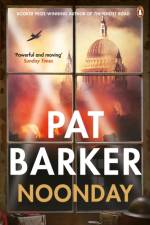
From the Booker Prize-winning and Women's Prize-shortlisted author of The Silence of the Girls The final novel in Pat Barker's acclaimed 'Life Class' trilogy - an unforgettable story of art and war, from one of our greatest writers on war and the human heart'Bold, hard-hitting, unforgettable, with luminous and unsparing insight' Independent on Sunday'Barker's command of detail and gift for metaphor are as sharp as ever... Noonday is in the first rank' Mail on Sunday'[There is] no end to her talent in describing how conflicts rupture the soul' Arifa Akbar, IndependentLondon, the Blitz, autumn 1940. As the bombs fall on the blacked-out city, ambulance driver Elinor Brooke races from bomb sites to hospitals trying to save the lives of injured survivors, working alongside former friend Kit Neville, while her husband Paul works as an air-raid warden. As the bombing intensifies, the constant risk of death makes all three of them reach out for quick consolation. Old loves and obsessions re-surface until Elinor is brought face to face with an almost impossible choice. Writing about the Second World War for the first time, Pat Barker brings the besieged and haunted city of London into electrifying life.The Life Class trilogy:Life ClassToby's RoomNoonday
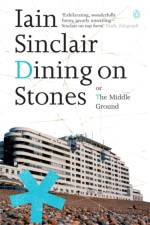
Dining on Stones is Iain Sinclair's sharp, edgy mystery of London and its environs.Andrew Norton, poet, visionary and hack, is handed a mysterious package that sees him quit London and head out along the A13 on an as yet undefined quest. Holing up in a roadside hotel, unable to make sense of his search, he is haunted by ghosts: of the dead and the not-so dead; demanding wives and ex-wives; East End gangsters; even competing versions of himself. Shifting from Hackney to Hastings and all places in-between, while dissecting a man's fractured psyche piece by piece, Dining on Stones is a puzzle and a quest - for both writer and reader.'Exhilarating, wonderfully funny, greatly unsettling - Sinclair on top form' Daily Telegraph'Prose of almost incantatory power, cut with Chandleresque pithiness' Sunday Times'Spectacular: the work of a man with the power to see things as they are, and magnify that vision with a clarity that is at once hallucinatory and forensic' Independent on SundayIain Sinclair is the author of Downriver (winner of the James Tait Black Memorial Prize and the Encore Award); Landor's Tower; White Chappell, Scarlet Tracings; Lights Out for the Territory; Lud Heat; Rodinsky's Room (with Rachel Lichtenstein); Radon Daughters; London Orbital, Dining on Stones, Hackney, that Rose-Red Empire and Ghost Milk. He is also the editor of London: City of Disappearances.Andrew Norton, poet, visionary and hack, is handed a mysterious package that sees him quit London and head out along the A13 on an as yet undefined quest. Holing up in a roadside hotel, unable to make sense of his search, he is haunted by ghosts: of the dead and the not-so dead; demanding wives and ex-wives; East End gangsters; even competing versions of himself. Shifting from Hackney to Hastings and all places in-between, while dissecting a man's fractured psyche piece by piece, Dining on Stones is a puzzle and a quest - for both writer and reader.Praise for Iain Sinclair:'A modern-day William Blake' Jacques Peretti, BBC Culture Show'One of the finest writers alive' Alan Moore'Eloquent chronicler of London's grunge and glory' Independent'He writes with a fascinated, gleeful disgust, sees with neo-Blakean vision, listens with an ear tuned to the white noise of an asphalt soundtrack' The Times'Sinclair is a genius . . . Sinclair is the poet of place' GQ'Sinclair breathes wondrous life into monstrous, man-made landscapes' TLS'Iain Sinclair is a reliably exhilarating writer' Telegraph'He is incapable of writing a dull paragraph' Scotland on SundayIain Sinclair is the author of Downriver (winner of the James Tait Black Memorial Prize and the Encore Award); Landor's Tower; White Chappell, Scarlet Tracings; Lights Out for the Territory; Lud Heat; Rodinsky's Room (with Rachel Lichtenstein); Radon Daughters; London Orbital, Ghost Milk, Dining on Stones and Hackney, that Rose-Red Empire. He is also the editor of London: City of Disappearances.
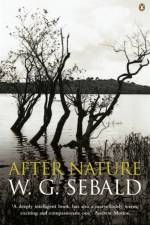
After Nature is the very first literary work by W. G. Sebald, author of AusterlitzAfter Nature by W.G. Sebald, author of Austerlitz, is his first literary work and the start of his highly personal and brilliant writing journey. In this long prose poem, Sebald introduces many of the themes that he explores in his subsequent books. Focusing on the conflict between man and nature, each of the three distinct parts of After Nature give centre stage to a different character from a different century - the last being W.G. Sebald himself.'A deeply intelligent book, but also a marvellously warm, exciting and compassionate one' Andrew Motion'A d but of rare poetic grandeur' Irish Times'Astonishing writing. A true poet at work' Evening Standard'Graceful, allusive, serious, but also immensely readable' Sunday Telegraph'When you read Sebald you are transported to another realm' Literary ReviewW . G. Sebald was born in Wertach im Allg u, Germany, in 1944 and died in December 2001. He studied German language and literature in Freiburg, Switzerland and Manchester. In 1996 he took up a position as an assistant lecturer at the University of Manchester and settled permanently in England in 1970. He was Professor of European Literature at the University of East Anglia and is the author of The Emigrants, The Rings of Saturn, Vertigo, Austerlitz, After Nature, On the Natural History of Destruction, Campo Santo, Unrecounted, For Years Now and A Place in the Country. His selected poetry is published in a volume called Across the Land and the Water.
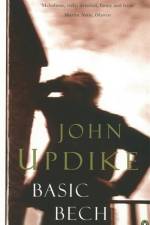
Basic Bech combines two classic titles -- Bech: A Book and Bech is Back -- from one of John Updike's most beloved characters.Henry Bech, the celebrated author of Travel Light, has been scrutinized, canonized and vilified by reviewers, academics, critics and readers across the world. Suffering from temporary impotence and not-so-temporary writer's block, Bech finds renewed fame when he returns to his native America and Think Big, his all-time blockbuster, hits the shops . . . In these classic novels by John Updike, we return to a character as compelling and timeless as Rabbit Angstrom: the inimitable Henry Bech. Famous for his writer's block, Bech is a Jew adrift in a world of Gentiles. As he roams from one adventure to the next, he views life with a blend of wonder and cynicism that will make you laugh with delight and wince in recognition.Praise for John Updike:'Our time's greatest man of letters - as brilliant a literary critic and essayist as he was a novelist and short-story writer. His death constitutes a loss to our literature that is immeasurable' Philip Roth'Alert, funny, sensuous. Here is a writer who can do more or less as he likes' Martin Amis'One of the most protean of American writers . . . For a writer whose prose can be so lush and hyper-charged, he has always been in contact with the material detritus of everyday life' The Times'He was the ideal son of a platonic union between John Cheever and J.D. Salinger, with Nabokov attending the christening as fairy godfather' James WoodJohn Updike was born in 1932 in Shillington, Pennsylvania. He graduated from Harvard College in 1954, and spent a year in Oxford, at the Ruskin School of Drawing and Fine Art. His novels, stories, and nonfiction collections have won numerous awards, including the Pulitzer Prize, the National Book Award, the National Book Critics Circle Award, the PEN/Faulkner Award and the Howells Medal of the American Academy of Arts and Letters. He died in January 2009.
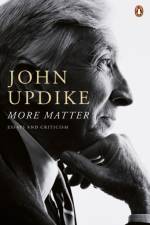
More Matter is a collection of John Updike's best-loved critical essays and reflections.From the journals of John Cheever to the Queen of England, More Matter is a lively discussion on contemporary art, issues and people, told from the inimitable perspective of Pulitzer prizewinner John Updike. Wide ranging, incisive, witty and always superbly written, it has something to say about almost everyone - from Graham Greene to Bill Gates to Mickey Mouse - and everything - from sexual politics to spiritual matters to unopenable packages. It provides any number of intimate glimpses into how this remarkable mind works.Praise for More Matter:'Unlike most journalism, Updike's occasional writing is so exquisite as to repay multiple readings' Publishers Weekly'More Matter attests to Mr. Updike's remarkable versatility and to his ardent drive to turn all his observations into glittering, gossamer prose. . . . In his strongest pieces, Mr. Updike's awesome pictorial powers of description combine with a rigorous, searching intelligence to produce essays of enormous tactile power and conviction' New York Times'More Matter will leave even his closest followers amazed. . . . Updike can write about anything, in any form and at any length, and do it with intelligence and knowledge and grace and agility and wit-and oh, the prose' Pittsburgh Tribune Review John Updike was born in 1932 in Shillington, Pennsylvania. He graduated from Harvard College in 1954, and spent a year in Oxford, at the Ruskin School of Drawing and Fine Art. His novels, stories, and nonfiction collections have won numerous awards, including the Pulitzer Prize, the National Book Award, the National Book Critics Circle Award, the PEN/Faulkner Award and the Howells Medal of the American Academy of Arts and Letters. He died in January 2009.
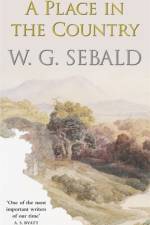
From the author of the critically-acclaimed Austerlitz and Across the Land and Water comes A Place in the Country, the much anticipated translation of one of W.G. Sebald's most brilliant works.When W. G. Sebald, the prize-winning author of Austerlitz, travelled to Manchester in 1966, he packed in his bags certain literary favourites which would remain central to him throughout the rest of his life and during the years when he was settled in England. In A Place in the Country, he reflects on six of the figures who shaped him as a person and as a writer, from Jean-Jacques Rousseau to Jan Peter Tripp. Fusing biography and essay, and finding, as ever, inspiration in place - as when he journeys to the Ile St. Pierre, the tiny, lonely Swiss island where Jean-Jacques Rousseau found solace and inspiration - Sebald lovingly brings his subjects to life in his distinctive, inimitable voice.A Place in the Country is a window into the mind of this much loved and much missed writer.Praise for W.G. Sebald:'A new kind of writing, combining fiction, memoir, travelogue, philosophy and much else besides . . . greatness in literature is still possible' John Banville, Irish Times'When you read Sebald you are transported to another realm. Reading him is a truly sublime experience' Literary Review'Is literary greatness still possible? One of the few answers available to English-Language readers is the work of W.G. Sebald' Susan SontagW.G. Sebald was born in Wertach im Allgau, Germany in 1944. He studied German language and literature in Freiburg, Switzerland and Manchester. In 1966 he took up a position as an assistant lecturer at the University of Manchester, and settled permanently in England in 1970. He was Professor of European Literature at the University of East Anglia, and the author of Austerlitz; The Emmigrants, which won a series of major awards, including the Berlin Literature Prize, the Heinrich Boll Prize, the Heinrich Heine Prize and the Joseph Breitbach Prize.
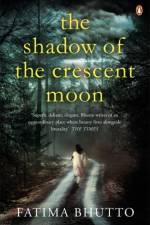
Fatima Bhutto's stunning debut novel The Shadow of the Crescent Moon begins and ends one rain swept Friday morning in Mir Ali, a small town in Pakistan's Tribal Areas close to the Afghan border. Three brothers meet for breakfast. Soon after, the eldest, recently returned from America, hails a taxi to the local mosque. The second, a doctor, goes to check in at his hospital. His troubled wife does not join the family that morning. No one knows where Mina goes these days. And the youngest, the idealist, leaves for town on a motorbike. Seated behind him is a beautiful, fragile girl whose life and thoughts are overwhelmed by the war that has enveloped the place of her birth.Three hours later their day will end in devastating circumstances.The Shadow of the Crescent Moon chronicles the lives of five young people trying to live and love in a world on fire. Individuals are pushed to make terrible choices. And, as the events of this single morning unfold, one woman is at the centre of it all.'A first novel of uncommon poise and acuity, The Shadow of the Crescent Moon is set in an old and protracted war for land and dignity. But its swift and suspenseful narrative describes a fiercely contemporary battle in the human heart: between the seductive fantasy of personal freedom and the tenacious claims of family, community and history.' Pankaj MishraFatima Bhutto was born in Kabul, grew up in Damascus, and lives in Karachi. This is her first novel.
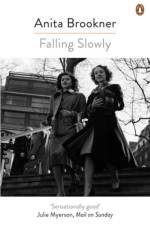
'She hoped one day to find the image she unconsciously sought, without knowing why she sought it, something to lift the spirits, to transport her on an imaginary journey, to give a hint of the transcendence which was so blatantly lacking in her everyday life of words and paper.'Beatrice and Miriam are sisters, sharing little except a traditional childhood that has left them burdened with unhappy memories.Beatrice is a pianist, a romantic, who believes in love, while Miriam, who married the rather colourless Jonathan Eldon for pragmatic reasons, companionship, status, is not beyond disillusionment. Following her divorce, she returns to Beatrice, who is beginning to appear fragile. While they share a home and a few acquaintances, neither confides to the other what is in their hearts.For the beautiful Beatrice, now prepared to settle for friendship and closeness rather than passion, there is Max and the hope of the carving a contented future with him. For Miriam there is love and esteem - and, finally, certainty.
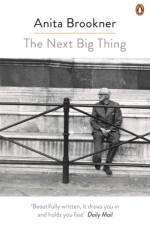
'He was not trained for freedom, that was the problem, had not been brought up for it.'At seventy-three, Herz is facing an increasingly bewildering world. He cannot see his place in it or even work out what to do with his final years. Questions and misunderstandings haunt Herz like old ghosts. Should he travel, sell his flat, or propose marriage to a friend he has not seen in thirty years? The letters he writes and does not send and the passers-by he encounters remind him how out of touch he is, how detached from the modern world. Yet Herz believes that he must do something, only he doesn't know what this next big thing in life should be . . .
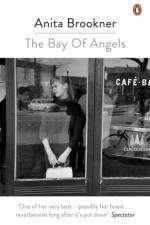
'Within a few weeks, it seemed, the fixed points of my existence had revealed themselves to be untrustworthy.'Zo is delighted when her widowed mother maries Simon, a generous older man who owns a villa in Nice. However, the long enchanted visits to France she enjoys come to an abrupt end when Simon suffers a bad fall. Zo and her mother, finding themselves surounded by well-meaning strangers, must learn how and how not to trust appearances . . .
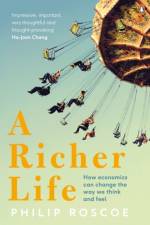
A Richer Life: How Economics Can Change the Way We Think and Feel by Philip Roscoe is a radical, inspiring, agenda-setting critique that shows how economics invades our most intimate decisions, and what the real alternatives might be.'A brilliant critique' Robert Skidelsky, prize-winning biographer of John Maynard Keynes'Impressive . . . important . . . very thoughtful and thought-provoking' Ha-Joon Chang, author of 23 Things They Don't Tell You About Capitalism'A splendid denunciation of the dismal science . . . a fine book, on the side of the angels' Guardian'A powerful description of the many ways we have lost our bearings as a society . . . makes the case that economics has left us impoverished as human beings . . . a powerful and engaging read' Sunday Times'Very readable and entertaining' IndependentIs a promotion at work worth more than time with family? Does the price of cheap socks compensate for their being made by children? Might a new lover be better than the one you have? How do we choose when what we want is bad for someone else? In fact, in a world as complicated as ours, how do we choose at all?Over the course of the 20th century economics has become our most trusted science of decision-making. From government policies to personal decisions - such as buying a house, educating our children, caring for our sick or even meeting a spouse - economic principles govern both our range of choices and how we choose between them. But economics is not a perfect science. It is political and far from impartial, and yet its values - ownership, efficiency, cost benefit and self-interest - now threaten to usurp all others. At a time when the most urgent problems require collective action, economics is perhaps our greatest obstacle to change.Written with humour, wisdom and compassion, and investigating the worlds of work, shopping, healthcare, house-buying, online dating, politics and daily life, this brilliant and timely book exposes the true cost of economic thinking, points the way to some compelling alternatives - co-operatives, local currencies, non-Western finance, community - and draws attention to some other, timeless values that few of us have yet forgotten.A Richer Life: How Economics Can Change the Way We Think and Feel was originally published in hardback as I Spend, Therefore I Am.
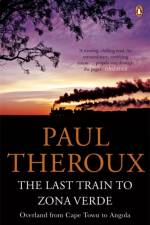
The Last Train to Zona Verde is an ode to the last African journey of Paul Theroux. 'Happy again, back in the kingdom of light,' writes Paul Theroux as he sets out on a new journey though the continent he knows and loves best. Having travelled down the right-hand side of Africa in Dark Star Safari, he sets out this time from Cape Town, heading northwards in a new direction, up the left-hand side, through South Africa and Namibia, to Botswana, then on into Angola, heading for the Congo, in search of the end of the line.Journeying alone through the greenest continent in what he feels will be his last African journey, Theroux encounters a world increasingly removed from both the intineraries of tourists and the hopes of post-colonial independence movements. Leaving the Cape Town townships, traversing the Namibian bush, passing the browsing cattle of the great sunbaked heartland of the savannah, Theroux crosses "e;the Red Line"e; into a different Africa: "e;the improvised, slapped-together Africa of tumbled fences and cooking fires, of mud and thatch"e;, of heat and poverty, and of roadblocks, mobs and anarchy.A final African adventure from the writer whose gimlet eye and effortless prose have brought the world to generations of readers, The Last Train to Zona Verde is Paul Theroux's ultimate safari.Praise for Paul Theroux:'Always a terrific teller of tales and conjurer of exotic locales, he writes lean prose that lopes along at a compelling pace' Sunday Times'One needs energy to keep up with the extraordinary, productive restlessness of Paul Theroux ... [He is] the most gifted, most prodigal writer of his generation' Jonathan Raban'His ability to sum up a city or a people in a few lines is undiminished' Daily TelegraphPaul Theroux's books include Dark Star Safari, Ghost Train to the Eastern Star, Riding the Iron Rooster, The Great Railway Bazaar, The Elephanta Suite, A Dead Hand, The Tao of Travel and The Lower River. The Mosquito Coast and Dr Slaughter have both been made into successful films. Paul Theroux divides his time between Cape Cod and the Hawaiian islands.
Combining the sexual frankness of Fifty Shades of Grey and of Belle de Jour's writing, with the fascinating insights of What the Nanny Saw, Scarlett O'Kelly's memoir of her year as a high-end escort, Paying For It, is an explicit, astonishing and compulsive story of living a double life .Facing financial meltdown, mother of three Scarlett O'Kelly did what the average woman would find unthinkable: she set herself up a sex worker. There was the sex, which, surprisingly for Scarlett, could have unexpected pleasures. Then the clients - ordinary men who worried that they had to hide their sexual needs, desires and fantasies from their wives or girlfriends. Not to mention her realisation that women just like her could build stronger relationships if they could let go their hang-ups in and out of bed. And there's the high price Scarlett paid for her double life - one she is still coming to terms with.Paying For It is a raw, intimate and powerful story of one brave woman's sacrifice in a time of hardship. It is a searingly honest and truly eye-opening account of modern life and what really goes on in couples' bedrooms.It is also an intriguing and risqu account of one woman's sexual odyssey - from her decision to make money from sex to her realisation that she had become sexually liberated in the process.Scarlett O'Kelly is a middle class everywoman - and her clients were ordinary middle class men - so this is an intriguing picture of a side of life that is usually hidden.
Survivor on the River Kwai is the heartbreaking story of Reg Twigg, one of the last men standing from a forgotten war. Called up in 1940, Reg expected to be fighting Germans. Instead, he found himself caught up in the worst military defeat in modern British history - the fall of Singapore to the Japanese.What followed were three years of hell, moving from one camp to another along the Kwai river, building the infamous Burma railway for the all-conquering Japanese Imperial Army. Some prisoners coped with the endless brutality of the code of Bushido by turning to God; others clung to whatever was left of the regimental structure. Reg made the deadly jungle, with its malaria, cholera, swollen rivers, lethal snakes and exhausting heat, work for him. With an ingenuity that is astonishing, he trapped and ate lizards, harvested pumpkins from the canteen rubbish heap and with his homemade razor became camp barber.That Reg survived is testimony to his own courage and determination, his will to beat the alien brutality of camp guards who had nothing but contempt for him and his fellow POWs. He was a risk taker whose survival strategies sometimes bordered on genius. Reg's story is unique.Reg Twigg was born at Wigston (Leicester) barracks on 16 December 1913. He was called up to the Leicestershire Regiment in 1940 but instead of fighting Hitler he was sent to the Far East, stationed at Singapore. When captured by the Japanese, he decided he would do everything to survive.After his repatriation from the Far East, Reg returned to Leicester. With his family he returned to Thailand in 2006, and revisited the sites of the POW camps. Reg died in 2013, at the age of ninety-nine, two weeks before the publication of this book.
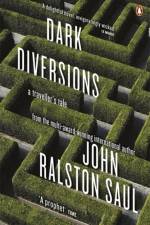
Intrigue, prestige, debauchery: Dark Diversions by acclaimed author John Ralston Saul is a black comedy of international proportions.From aristocrats and the privileged circles of New York and Paris to military dictators and the political infighting, double-dealing and corruption or their regimes in Morocco and Haiti, welcome to the world where money and power reside.Through a series of encounters with its inhabitants, at once beguiling and grotesque, our investigative narrator uncovers bizarrre and disturbing stories of secret lovers, exiled princesses, religious heresies and murder. But as he becomes further enmeshed in this savage realm, his ambiguous status becomes increasingly unsettling: is he the impartial observer of priviliged foibles and fundamental inequity he appears to be? Or is he, perhaps, an embodiment of the dark diversions he chronicles?Laced with scathing wit, Dark Diversions is a novel that inveigles its reader on a picaresque journey of depravity.'A delightful novel, invigoratingly wicked' Le Monde'Saul has the eye, the aloofness, the killer turn of phrase of a Truman Capote' Le FigaroJohn Ralston Saul is Canada's leading public intellectual. Declared a 'prophet' by Time magazine, Saul has received many awards and prizes, including Chile's Pablo Neruda Medal. He is president of PEN International, and his thirteen works have been translated into twenty-two languages in thirty countries. Dark Diversions is his sixth novel.
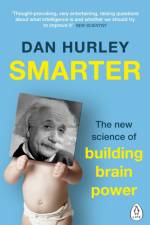
Journalist Dan Hurley's Smarter investigates how working memory can be manipulated, and how we can all make ourselves more intelligent.Can you make yourself smarter?Scientists have always believed that the one thing that couldn't improve was intelligence.But now science journalist Dan Hurley investigates the new field of 'intelligence training', showing that intelligence can be flexible and trainable. Is it all just hype? With vivid stories of lives transformed, insight into the latest groundbreaking scientific discoveries and narrating his experiences as a human guinea pig, Hurley delivers practical findings for people of every age and ability.Dan Hurley is the author of The 60-Second Novelist: What 22613 People Taught Me about Life, Natural Causes and Diabetes Rising.He was contributing editor of Psychology Today, is the Senior Writer at the Medical Tribune, won the investigative journalism award from the American Society of Journalists and Authors and writes regularly for Discover, The New York Times and Neurology Today.
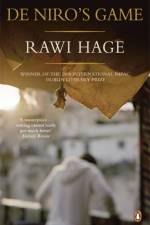
De Niro's Game is the stunning winner of the IMPAC Dublin Literary Award and the very first novel by up-and-coming Lebanese literary star Rawi Hage, also author of Cockroach.Bassam and George are childhood best friends who have grown up on the Christian side of war-torn Beirut. Now on the verge of adulthood, they must choose their futures: to remain in the exhausted, corrupt city of their birth, or to go into exile abroad, cut off from the only existence they have known.Bassam chooses one path - obsessed with leaving Beirut, he embarks on a series of petty crimes to fund his escape to the West. Meanwhile, George amasses power in the underworld of the city, embracing a life of military service, organised crime, killing, and drugs. But their two paths inevitably collide, with explosive consequences. De Niro's Game is Rawi Hage's devastating, timely portrait of two young men and an entire city formed and deformed by war.'A large and unsettling talent' Guardian'A masterpiece . . . writing cannot really get much better' Literary Review'Hollywood noir meets opium dreams in a blasted landscape of war-wasted young lives' Boston Globe'The most subtly nuanced, psychologically compelling book about the corrosive effects of war to be written for a long time . . .The descriptions of the city are so skilful you can taste the dust in the air' Financial TimesRawi Hage was born in Beirut, Lebanon, and lived through nine years of the Lebanese civil war. He is the author of De Niro's Game, which won the IMPAC Dublin Literary Award; Cockroach, which was the winner of the Paragraphe Hugh MacLennan Prize and also listed for various other prizes; and Carnival, to be published by Hamish Hamilton/ Penguin in April 2013. He lives in Montreal.
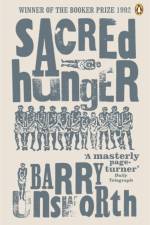
WINNER OF THE 1992 BOOKER PRIZE'Gripping . . . SACRED HUNGER covers a period between 1752 and 1765 . . . it concerns the entangled and conflicted fortunes of two cousins: Erasmus Kemp, the son of a Lancashire merchant, and Matthew Paris, a scholar and surgeon just released from prison for "e;denying Holy Writ"e; . . . the Liverpool Merchant is the vessel on which the whole of the novel hinges, and it carries the reader deep into the history of man's iniquitous greed . . . AS REGARDS ITS DRAMATIC BREADTH AND ENERGY, NO RECENT DOMESTIC NOVEL HAS COME WITHIN A MILE OF IT' - Anthony Quinn in the Independent
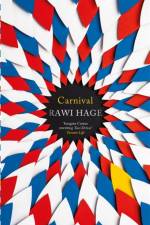
Carnival is a new novel from IMPAC Literary Award winner Rawi Hage.WINNER OF THE PARAGRAPHE HUGH MACLENNAN PRIZE FOR FICTIONThere are two types of taxi driver in the Carnival city - the spiders and the flies. The spiders sit and stew in their cars, waiting for the calls to come to them. But the flies are wanderers - they roam the streets, looking for the raised flags of hands.Fly is a wanderer and from the seat of his taxi we see the world in all of its carnivalesque beauty and ugliness. We meet criminals, prostitutes, madmen, magicians, and clowns of many kinds. We meet ordinary people going to extraordinary places, and revolutionaries just trying to find something to eat. With all of the beauty, truth, rage, and peripatetic storytelling that have made his first two novels international publishing sensations, Carnival gives us Rawi Hage at his searing best. By turns outrageous, hilarious, sorrowful, and stirring, Carnival is a tour de force that will make all of life's passengers squirm in their comfortable, complacent backseats.Praise for Rawi Hage:'A large and unsettling talent' Guardian'Searing, affecting, misanthropic. I'm not from Lebanon and I don't live in Canada, but Cockroach managed to take me to where I come from and where I live now more powerfully than anything I've read in a long while' Mohsin Hamid'The best novel I read this year was Rawi Hage's Cockroach. A dark book, narrated with verve and brilliance. It made me jump for joy' Colm T ib n, GuardianRawi Hage was born in Beirut, Lebanon, and lived through nine years of the Lebanese civil war during the 1970s and 1980s. He emigrated to Canada in 1992 and now lives in Montreal. His first novel, De Niro's Game, won the IMPAC Dublin Literary Award for the best English-language book published anywhere in the world in a given year, and has either won or been shortlisted for seven other major awards and prizes. Cockroach was the winner of the Paragraphe Hugh MacLennan Prize for Fiction and a finalist for the Governor General's Literary Awards. It was also shortlisted for the Rogers Writers' Trust Fiction Award and the Scotiabank Giller Prize.
Abonner på vårt nyhetsbrev og få rabatter og inspirasjon til din neste leseopplevelse.
Ved å abonnere godtar du vår personvernerklæring.