


Gjør som tusenvis av andre bokelskere
Abonner på vårt nyhetsbrev og få rabatter og inspirasjon til din neste leseopplevelse.
Ved å abonnere godtar du vår personvernerklæring.Du kan når som helst melde deg av våre nyhetsbrev.

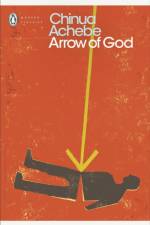
Ezeulu, headstrong chief priest of the god Ulu, is worshipped by the six villages of Umuaro. But he is beginning to find his authority increasingly under threat - from his rivals in the tribe, from those in the white government and even from his own family. Yet he still feels he must be untouchable - surely he is an arrow in the bow of his God? Armed with this belief, he is prepared to lead his people, even if it means destruction and annihilation. Yet the people will not be so easily dominated.Spare and powerful, Arrow of God is an unforgettable portrayal of the loss of faith, and the struggle between tradition and change. Continuing the epic saga of the community in Things Fall Apart, it is the second volume of Achebe's African trilogy, and is followed by No Longer at Ease.
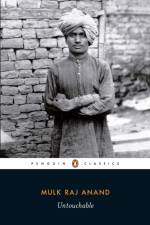
Mulk Raj Anand's extraordinarily powerful story of an Untouchable in India's caste system, with a new introduction by Ramachandra Guha, author of GandhiBakha is a proud and attractive young man, yet none the less he is an Untouchable - an outcast in India's caste system. It is a system that is even now only slowly changing and was then as cruel and debilitating as that of apartheid. Into this vivid re-creation of one day in the life of Bakha, sweeper and toilet-cleaner, Anand pours a vitality, fire and richness of detail that earn his place as one of the twentieth century's most important Indian writers.'One of the most eloquent and imaginative works to deal with this difficult and emotive subject' Martin Seymour-Smith'It recalled to me very vividly the occasions I have walked 'the wrong way' in an Indian city, and it is a way down which no novelist has yet taken me' E. M. Forster
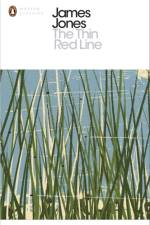
'Moves so intensely and inexorably that it almost seems like the war it is describing' The New York Times Book Review'Is it really worth it to die, to be dead, just to prove to everybody that you're not a coward?'On Guadalcanal in the south Pacific, the soldiers of C Company are about to enter the war. The men know they face their baptism of fire. But none know if they will be one of 'the lucky ones' to make it safely off the island. From Captain Stein, who feels like a father to his troops, and 'Mad' Sergeant Welsh, condemning all nations while swigging gin from his canteen, to Private Bell, who just wants to get home to his wife, they will discover the line that divides sanity from madness, and life from death.A scathing critique of heroism, The Thin Red Line is among the greatest masterpieces of war writing.'The men are real, the words are real, death is real, imminent and immediate' Los Angeles Times
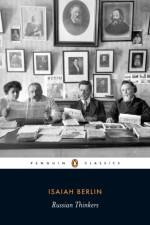
Few, if any, English-language critics have written as perceptively as Isaiah Berlin about Russian thought and culture. Russian Thinkers is his unique meditation on the impact that Russia's outstanding writers and philosophers had on its culture. In addition to Tolstoy's philosophy of history, which he addresses in his most famous essay, 'The Hedgehog and the Fox,' Berlin considers the social and political circumstances that produced such men as Herzen, Bakunin, Turgenev, Belinsky, and others of the Russian intelligentsia, who made up, as Berlin describes, 'the largest single Russian contribution to social change in the world.'
'I'll never understand the fucking Army.'Prew won't conform. He could have been the best boxer and the best bugler in his division, but he chooses the life of a straight soldier in Hawaii under the fierce tutelage of Sergeant Milt Warden. When he refuses to box for his company for mysterious reasons, he is given 'The Treatment', a relentless campaign of physical and mental abuse. Meanwhile, Warden wages his own campaign against authority by seducing the Captain's wife Karen - just because he can. Both men are bound to the Army, even though it may destroy them.Published here in its uncensored, original version, From Here to Eternity is a raw, electrifying account of the soldier's life in the months leading up to Pearl Harbor-of men who are trained to fight the enemy, but cannot resist fighting each other.
'. . . as when iron is drawn to a magnet, camphor is sucked into hot air, crystal lights up in the Sun, sulfur and a volatile liquid are kindled by flame, an empty eggshell filled with dew is raised towards the Sun . . .'An odd feature of the Bible is that it is full of stories featuring forms of magic and possession - from Joseph battling with Pharaoh's wizards to the supernatural actions of Jesus and his disciples. As, over the following centuries, the Christian church attempted to stamp out 'deviant' practices, there was a persistent interest in magic that drew strength from this Biblical validation. A strange blend of mumbo-jumbo, fraud and deeply serious study, magic was central to the European Renaissance, fascinating many of its greatest figures. Brian Copenhaver's wonderful anthology will be welcomed by everyone from those with the most casual interest in the magical tradition to anyone drawn to the Renaissance and the tangled, arcane roots of the scientific tradition.
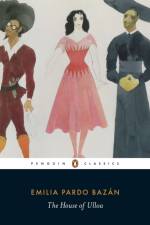
This rich and unforgettable story of sexual intrigue and political scheming, written by the Spanish feminist and intellectual Emilia Pardo Bazan, deserves recognition as one of the great nineteenth-century novels. The House of Ulloa follows pure and pious Father Juli n Alvarez, who is sent to a remote country estate to put the affairs of the marquis, an irresponsible libertine, in order. When he discovers moral decadence, cruelty and corruption at his new home, Juli n's well-meaning but ineffectual attempts to prevent the fall of the House of Ulloa end in tragedy. The House of Ulloa is the finest achievement of Emilia Pardo Baz n, a prolific writer, feminist, traveller and intellectual, and one of the most dynamic figures of her time.Fans of Zola or Hardy will enjoy the novel's rich naturalism, which combines gothic elements with evocative descriptions of Spanish customs and the countryside. At the same time, the novel evokes the social comedy of a Dickens or Thackeray with its biting social satire, frank exposure of sexual mores, and gentle mockery of its innocent hero-priest.
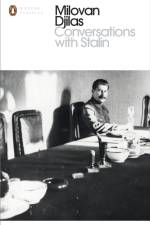
A mesmerising, chilling close-up portrayal of Stalin from Milovan Djilas, a Communist insider - with an introduction from Anne Applebaum, author of Gulag and Iron CurtainThis extraordinarily vivid and unnerving book three meetings held with Stalin during and after the Second World War. Djilas brilliantly describes the dictator in his lair - cunning, cruel, enormously talented. Few books give as clear a sense of what made Stalin such a compelling figure and how he was able to hypnotise and terrify those around him. Djilas also describes the key members of Stalin's court: Beria, Malenkov, Zhukov, Molotov and Khruschchev. The result is a gripping account of the ruler at the height of his fame and power.
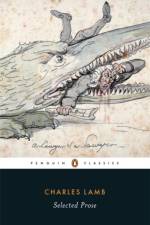
This selection brings together the best prose writings of the great early nineteenth-century essayist Charles Lamb, whose shrewd wit and convivial style have endeared him to generations of readers. These pieces include early discussions of Hogarth and Shakespeare; masterly essays written under the pen-name 'Elia' that range over such subjects as drunkenness, witches, dreams, marriage and the joy of roast pig; and letters to Lamb's circle of contemporaries, among them Samuel Taylor Coleridge and William Wordsworth. Wryly amused by the world, allusive, searching and endlessly inventive, these are the essential works of a master of English prose.In his introduction Adam Phillips discusses how Charles Lamb's tragic life and sainted reputation, caring for his mentally ill sister Mary, belied the quality of his work. This edition also includes a biographical index of Lamb's correspondents.Charles Lamb (1775-1834) was an English essayist best known for his humorous Essays of Elia from which the essay 'A Dissertation Upon Roast Pig' is taken. Lamb enjoyed a rich social life and became part of a group of young writers that included William Hazlitt, Percy Bysshe Shelley, Lord Byron and Samuel Taylor Coleridge with whom he shared a lifelong friendship. Lamb never achieved the same literary success as his friends but his influence on the English essay form cannot be underestimated and his book, Specimens of the English Dramatic Poets is remembered for popularising the work of Shakespeare's contemporaries.
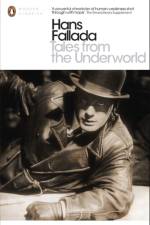
Darkly funny, searingly honest short stories from Hans Fallada, author of bestselling Alone in BerlinIn these stories, criminals lament how hard it is to scrape a living by breaking and entering; families measure their daily struggles in marks and pfennigs; a convict makes a desperate leap from a moving train; a ring - and with it a marriage - is lost in a basket of potatoes.Here, as in his novels, Fallada is by turns tough, darkly funny, streetwise and effortlessly engaging, writing with acute feeling about ordinary lives shaped by forces larger than themselves: addiction, love, money.
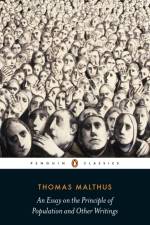
Malthus' life's work on human population and its dependency on food production and the environment was highly controversial on publication in 1798. He predicted what is known as the Malthusian catastrophe, in which humans would disregard the limits of natural resources and the world would be plagued by famine and disease. He significantly influenced the thinking of Darwin and Alfred Russel Wallace and his theories continue to raise important questions today in the fields of social theory, economics and the environment.With an introduction by Robert Mayhew.
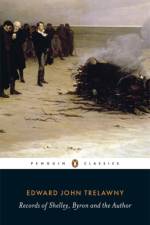
In February 1822 the writer and adventurer Edward John Trelawny arrived in Pisa to make the acquaintance of his heroes Shelley and Byron, leaving a broken marriage and an exotic seafaring career behind him. He became a close companion to them and their circle, and this collection of his reminiscences is one of the most fresh and intriguing documents of the Romantic age. It records his initial meeting with a cynical and flippant Byron, his impressions of a youthful, otherworldly Shelley and, most memorably, the poet's death at sea and the subsequent burning of his body on the sand. Trelawny's Records combine vigorous prose, vivid description and mythmaking to create one of the most memorable portraits of an age.Rosemary Ashton's new introduction explores the mysterious life and quixotic character of Trelawny, and this edition includes all the author's later revisions.Edward John Trelawny (1792-1881) was one of the most curious figures of the English Romantic Movement, and spent his long life travelling extensively as a naval officer, biographer and adventurer. After a brief education, Trelawny was assigned as a volunteer in the Royal Navy by the age of thirteen, and led an unaccomplished naval career until his resignation at nineteen. He met Shelley and Byron in Italy in 1822, where he became fascinated, almost hypnotized, by the two poets. His Records of Shelley, Byron and the Author, written after both their deaths, is the end-product of this strange obsession. An incorrigible romancer, Trelawny had three marriages - the second of which was to Tersitza, sister of the Greek warlord Odysseus Androutsos, whose cause he had joined and whose mountain fortress he looked after when Odysseus was arrested. He died after a fall at the age of eighty-eight, in England, and his ashes were buried in Rome in a plot adjacent to Shelley's grave.Rosemary Ashton was educated at the universities of Aberdeen, Heidelberg and Cambridge. She taught English literature at University College London from 1974 to 2012, and is Emeritus Quain Professor of English Language and Literature and an Honorary Fellow of UCL. She has published critical biographies of Samuel Taylor Coleridge, Thomas and Jane Carlyle, George Eliot, and George Henry Lewes, two books on Anglo-German literary and cultural relations in the nineteenth century, The German Idea: Four English Writers and the Reception of German Thought 1800-1860 (1980) and Little Germany: Exile and Asylum in Victorian England (1986), and two books about Victorian radicalism, 142 Strand: A Radical Address in Victorian London (2006) and Victorian Bloomsbury (2012).David Wright (1920-1994) was born in Johannesburg and came to England aged fourteen to attend the Northampton School for the Deaf. His first poem was published shortly after graduating from Oriel College, Oxford, and he published poetry throughout his life, including Moral Stories (1954), Monologue of a Deaf Man (1958), Metrical Observations (1980) and Elegies (1990). He was both a remarkable poet and a remarkable editor, responsible for, among others, the Penguin Classics edition of Edward Thomas's Selected Poems and Prose, The Penguin Book of English Romantic Verse and, with John Heath-Stubbs, The Oxford Book of Twentieth-Century Verse. He was also the author of a number of books on Portugal, a biography of Roy Campbell and a memoir, Deafness: A Personal Account.
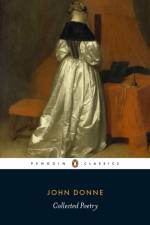
Regarded by many as the greatest of the Metaphysical poets, John Donne (1572-1631) was also among the most intriguing figures of the Elizabethan age. A sensualist who composed erotic and playful love poetry in his youth, he was raised a Catholic but later became one of the most admired Protestant preachers of his time. The Collected Poetry reflects this wide diversity, and includes his youthful songs and sonnets, epigrams, elegies, letters, satires, and the profoundly moving Divine Poems composed towards the end of his life. From joyful poems such as 'The Flea', which transforms the image of a louse into something marvellous, to the intimate and intense Holy Sonnets, Donne breathed new vigour into poetry by drawing lucid and often startling metaphors from the world in which he lived. His poems remain among the most passionate, profound and spiritual in the English language.
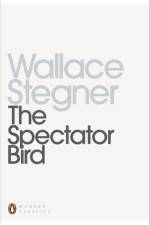
Literary agent Joe Allston, the central character of Stegner's novel All the Little Live Things, is now retired and, in his own words, 'just killing time until time gets around to killing me.' His parents and his only son are long dead, leaving him with neither ancestors nor descendants, tradition nor ties. His job, trafficking the talent of others, had not been his choice. He passes through life as a spectator. A postcard from an old friend causes Allston to return to the journals of a trip he and his wife had taken years before, a journey to his mother's birthplace, where he'd sought a link with the past. The memories of that trip, both grotesque and poignant, move through layers of time and meaning, and reveal that Joe Allston isn't quite spectator enough.Wallace Stegner was the author of, among other works of fiction, Remembering Laughter (1973); The Big Rock Candy Mountain (1943); Joe Hill (1950); All the Little Live Things (1967, Commonwealth Club Gold Medal); A Shooting Star (1961); Angle of Repose (1971, Pulitzer Prize); Recapitulation (1979); Crossing to Safety (1987); and Collected Stories (1990). His nonfiction includes Beyond the Hundredth Meridian (1954); Wolf Willow (1963); The Sound of Mountain Water (essays, 1969); The Uneasy Chair: A Biography of Bernard deVoto (1964); American Places (with Page Stegner, 1981); and Where the Bluebird Sings to the Lemonade Springs: Living and Writing in the West (1992). Three short stories have won O.Henry prizes, and in 1980 he received the Robert Kirsch Award from the Los Angeles Times for his lifetime literary achievements.
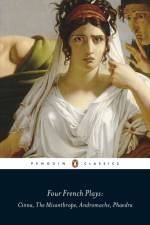
The 'greatest hits' of French classical theatre, in vivid and acclaimed new Penguin translations by John Edmunds and with editorial apparatus by Joseph Harris.The plays in this volume - Cinna, The Misanthrope, Andromache and Phaedra - span only thirty-seven years, but make up the defining period of French theatre. In Corneille's Cinna (1640), absolute power is explored in ancient Rome, while Moli re's The Misanthrope (1666), the only comedy in this collection, sees its anti-hero outcast for his refusal to conform to social conventions. Here also are two key plays by Racine: Andromache (1667), recounting the tragedy of Hector's widow after the Trojan War, and Phaedre (1677), showing a mother crossing the bounds of love with her son.This translation of Phaedra was originally broadcast on Radio Three with a cast including Prunella Scales and Timothy West, and was praised by playwright Harold Pinter. This is the first time it has been published. The edition also includes an introduction by Joseph Harris, genealogical tables, pronunciation guides, critiques and prefaces, as well as a chronology and suggested further reading.After a varied career as an actor, teacher, and BBC TV national newsreader, John Edmunds became the founder-director of Aberystwyth University's department of Theatre, Film and Television Studies. Joseph Harris is Senior Lecturer at Royal Holloway, University of London and author of Hidden Agendas: Cross-Dressing in Seventeenth-Century France (2005).
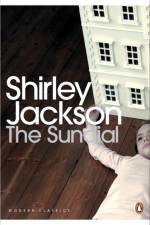
In The Sundial Shirley Jackson, author of We Have Always Lived in the Castle, blends family politics and apocalyptic terror to create a disturbing world of sinister relations and the macabre.'An amazing writer' Neil GaimanMrs Halloran has inherited the great Halloran house on the death of her son, much to the disgust of her daughter-in-law, the delight of her wicked granddaughter and the confusion of the rest of the household. But when the original owner - long dead - arrives to announce the world is ending and only the house and its occupants will be saved, they find themselves in a nightmare of strange marble statues, mysterious house guests and the beautiful, unsettling Halloran sundial which seems to be at the centre of it all. Shirley Jackson's chilling tales have the power to unsettle and terrify unlike any other. She was born in California in 1916. When her short story The Lottery was first published in The New Yorker in 1948, readers were so horrified they sent her hate mail; it has since become one of the greatest American stories of all time. Her first novel, The Road Through the Wall, was published in the same year and was followed by five more: Hangsaman, The Bird's Nest, The Sundial, The Haunting of Hill House and We Have Always Lived in the Castle, widely seen as her masterpiece. Shirley Jackson died in her sleep at the age of 48.'The world of Shirley Jackson is eerie and unforgettable ... It is a place where things are not what they seem; even on a morning that is sunny and clear there is always the threat of darkness looming, of things taking a turn for the worse' A. M. Homes'Shirley Jackson is unparalleled as a leader in the field of beautifully written, quiet, cumulative shudders' Dorothy Parker'Shirley Jackson's stories are among the most terrifying ever written' Donna Tartt
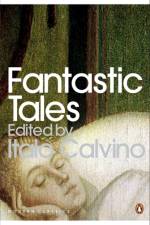
From fabulous enchantments and supernatural horrors to subtler, more psychological terrors, the best of nineteenth-century fantastic literature is collected here by Italo Calvino. These mysterious and macabre tales include Hoffmann's nightmarish 'The Sandman', Poe's terrifying 'The Tell-Tale Heart' and Dickens's chilling ghost story 'The Signal-Man', and relatively unknown works from celebrated writers including Honor de Balzac, Henry James, Sir Walter Scott, Guy de Maupassant and Robert Louis Stevenson, alongside lesser-known contributors. Each story comes with a fascinating introduction by Calvino.
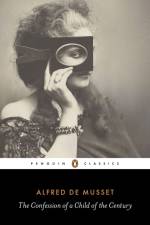
The Napoleonic Wars are over. Octave, a young Parisian, loves his mistress Elise - until he witnesses her being unfaithful. In despair, he descends into decadence and libertinism. However, the death of his father takes Octave to the countryside where he falls in love with Brigitte, a young widow who spends most of her time caring for others. At first, Brigitte tries to resist his advances, but eventually they become lovers. Octave, however, is quickly overcome by suspicion. Will Brigitte remain true to him? Doesn't every woman betray her lover sooner or later?
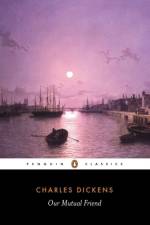
Penguin presents the audiobook edition of Our Mutual Friend by Charles Dickens, read by Robert Hardy. PLEASE NOTE: This recording has been pulled from the Penguin Archives so the quality will not be the same as modern recordings. Please listen to a sample before you buy. Our Mutual Friend centres on an inheritance - Old Harmons profitable dust heaps - and its legatees, young John Harmon, presumed drowned when a body is pulled out of the River Thames, and kindly dustman Mr Boffin, to whom the fortune defaults. With brilliant satire, Dickens portrays a dark, macabre London, inhabited by such disparate characters as Gaffer Hexam, scavenging the river for corpses; enchanting, mercenary Bella Wilfer; the social climbing Veneerings; and the unscrupulous street-trader Silas Wegg. The novel is richly symbolic in its vision of death and renewal in a city dominated by the fetid Thames, and the corrupting power of money. Part of a series of abridged, vintage recordings taken from the Penguin Archives. Affordable, collectable, quality productions - perfect for on-the-go listening.
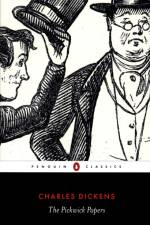
Penguin Classics presents Charles Dickens comic masterpiece, The Pickwick Papers, adapted for downloadable audiobook. Read by the actor Dinsdale Landen. The Pickwick Papers began as a literary spoof centred around sketches of stock sporting fops by caricaturist Robert Seymour. Following the success of Sketches by Boz, Dickens was recruited to compose the words which would accompany the illustrations. Dickens quickly made the project his own and created some of his most popular characters: Samuel Pickwick, and his companions Winkle, Augustus Snodgrass, and Tracy Tupman. At the height of its popularity The Pickwick Papers sold 40,000 copies a month and catapulted the 24 year old Dickens to fame. Affordable, collectable, quality productions - perfect for on-the-go listening. Abridged.
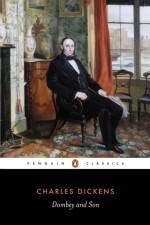
Penguin Classics presents the audiobook adaptation of Dombey and Son, Charles Dickens classic tale of family and power. Read by Andrew Sachs. Dombey and Son is both a firm and a family and the ambiguous connection between public and private life lies at the heart of Dickens novel. Paul Dombey is a man who runs his domestic affairs as he runs his business: calculatingly, callously, coldly and commercially. Through his dysfunctional relationships with his son, his two wives, and his neglected daughter Florence, Dickens paints a vivid picture of the limitations of a society dominated by commercial values and the drive for profit and explores the possibility of moral and emotional redemption through familial love. Part of a series of abridged, vintage recordings taken from the Penguin Archives. Affordable, collectable, quality productions - perfect for on-the-go listening.
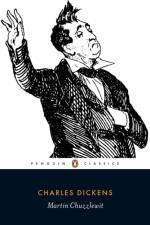
Penguin Classics presents the audiobook adaptation of Martin Chuzzlewit, a tale of inheritiance and destiny and the story Dickens considered his best. Read by John Wells. The greed of his family has led wealthy old Martin Chuzzlewit to become suspicious and misanthropic, leaving his grandson and namesake to make his own way in the world. And so young Martin sets out from the Wiltshire home of his supposed champion, the scheming architect Pecksniff, to seek his fortune in America. In depicting Martins journey - an experience that teaches him to question his inherited self-interest and egotism - Dickens created many vividly realized figures: the brutish lout Jonas Chuzzlewit, plotting to gain the family fortune; Martins optimistic manservant, Mark Tapley; gentle Tom Pinch; and the drunken and corrupt private nurse, Mrs Gamp. With its portrayal of greed, blackmail and murder, and its searing satire on America Dickenss novel is a powerful and blackly comic story of hypocrisy and redemption. Part of a series of abridged, vintage recordings taken from the Penguin Archives. Affordable, collectable, quality productions - perfect for on-the-go listening.
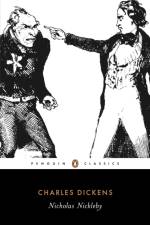
Penguin classics presents the audiobook adaptation of Charles Dickens comic classic, Nicholas Nickleby, read by Michael Siberry. Around the central story of Nicholas Nickleby and the misfortunes of his family, Dickens created some of his most wonderful characters: the muddle-headed Mrs Nickleby, the gloriously theatrical Crummles, their protege Miss Petowker, the pretentious Mantalinis and the mindlessly cruel Squeers and his wife. Nicholas Nichlebys loose, haphazard progress harks back to the picaresque novels of the 18th century - particularly those of Smollett and Fielding. Yet the novels exuberant atmosphere of romance, adventure and freedom is overshadowed by Dickens awareness of social ills and financial and class insecurity. Part of a series of abridged, vintage recordings taken from the Penguin Archives. Affordable, collectable, quality productions - perfect for on-the-go listening.
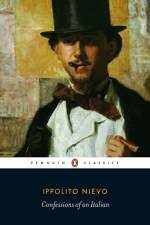
An overlooked classic of Italian literature, this epic and unforgettable novel recounts one man's long and turbulent life in revolutionary Italy.At the age of eighty-three and nearing death, Carlo Altoviti has decided to write down the confessions of his long life. He remembers everything: his unhappy childhood in the kitchens of the Castle of Fratta; romantic entanglements during the siege of Genoa; revolutionary fighting in Naples; and so much more. Throughout, Carlo lives only for his twin passions in life: his dream of a unified, free Italy and his undying love for the magnificent but inconstant Pisana. Peopled by a host of unforgettable characters - including drunken smugglers, saintly nuns, scheming priests, Napoleon and Lord Byron - this is an epic historical novel that tells the remarkable and inseparable stories of one man's life and the history of Italy's unification.Ippolito Nievo was born in 1831 in Padua. Confessions of an Italian, written in 1858 and published posthumously in 1867, is his best known work. A patriot and a republican, he took part with Garibaldi and his Thousand in the momentous 1860 landing in Sicily to free the south from Bourbon rule. Nievo died before he reached the age of thirty, when his ship, en route from Palermo to Naples, went down in the Tyrrhenian Sea in early 1861. He was, Italo Calvino once said, the sole Italian novelist of the nineteenth century in the 'daredevil, swashbuckler, rambler' mould so dear to other European literatures. Frederika Randall has worked as a cultural journalist for many years. Her previous translations include Luigi Meneghello's Deliver Us and Ottavio Cappellani's Sicilian Tragedee and Sergio Luzzatto's Padre Pio: Miracles and Politics in a Secular Age.Lucy Riall is Professor of Comparative History at the European University Institute. Her many books include Garibaldi. Invention of a Hero. 'Of all the furore that came out of the Risorgimento, only Manzoni and Nievo really matter today' - Umberto Eco 'The one 19th century Italian novel which has [for an Italian reader] that charm and fascination so abundant in foreign literatures' - Italo Calvino 'Perhaps the greatest Italian novel of the nineteenth century' - Roberto Carnero 'A spirited appeal for libert , galit and fraternit , the novel is also an astute, scathing and amusing human comedy, a tale of love, sex and betrayal, of great wealth and grinding poverty, of absolute power and scheming submission, of idealism and cynicism, courage and villainy' - The Literary Encyclopedia
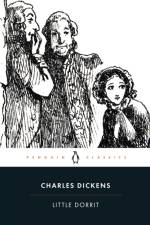
Penguin Classics presents Little Dorrit, Charles Dickens masterful depiction of prison-life, now adapted for downloadable audio. Read by the actor Anton Lesser. When Arthur Clennam returns to England after many years abroad, he takes a kindly interest in Amy Dorrit, his mothers seamstress, and in the affairs of Amys father, William Dorrit, a man of shabby grandeur, long imprisoned for debt in the Marshalsea. As Arthur soon discovers, the dark shadow of the prison stretches far beyond its walls to affect the lives of many, from the kindly Mr Panks, the reluctant rent-collector of Bleeding Heart Yard, and the tipsily garrulous Flora Finching, to Merdle, an unscrupulous financier, and the bureaucratic Barnacles in the Circumlocution Office. A masterly evocation of the state and psychology of imprisonment, Little Dorrit is one of the supreme works of Dickenss maturity. Part of a series of abridged, vintage recordings taken from the Penguin Archives. Affordable, collectable, quality productions - perfect for on-the-go listening.
A wonderful new collection of Henry James's short stories about the relationship between art and life, edited by Michael Gorra.This volume gathers seven of the very best of Henry James's short stories, all exploring the relationship between art and life. In 'The Aspern Papers', a critic is determined to get his hands on a great poet's papers hidden in a faded Venetian house - not matter what the human cost. 'The Author of Beltraffio', 'The Lesson of the Master' and 'The Figure in the Carpet' all focus on naive young men's unsettling encounters with their literary heroes. In 'The Middle Years', a dying novelist begins to glimpse his own potential, while 'The Real Thing' and 'Greville Fane' both explore the tension between artistic and commercial success. These fables of the creative life reveal James at his ironic, provocative best.Henry James was born in 1843 in New York and died in London in 1916. In addition to many short stories, plays, books of criticism, autobiography and travel, he wrote some twenty novels, the first published being Roderick Hudson (1875). They include The Europeans, Washington Square, The Portrait of a Lady, The Bostonians, The Princess Casamassima, The Tragic Muse, The Spoils of Poynton, The Awkward Age, The Wings of the Dove, The Ambassadors and The Golden Bowl.Michael Gorra is Professor of English at Smith College and the author of Portrait of a Novel: Henry James and the Making of an American Masterpiece (2012), a finalist for both the Pulitzer Prize and the James Tait Black Memorial Prize in biography.
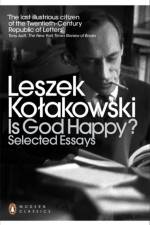
'The most esteemed philosopher to have produced a general introduction to his discipline since Bertrand Russell' Independent In these essays, one of the most important thinkers of the twentieth century writes about communism and socialism, the problem of evil, Erasmus and the reform of the Church, reason and truth, and whether God is happy. Accessible and absorbing, the essays in Is God Happy? deal with some of the eternal problems of philosophy and the most vital questions of our age. Leszek Kolakowski has also written on religion, Spinoza, Bergson, Pascal and seventeenth-century thought. He left communist Poland after his expulsion from Warsaw University for anti-communist activities. From 1970 he was a fellow of All Souls College, Oxford.'His distinctive mix of irony and moral seriousness, religious sensibility and epistemological scepticism, social engagement and political doubt was truly rare ... a true Central European intellectual-perhaps the last' Tony Judt, The New York Times Review of Books
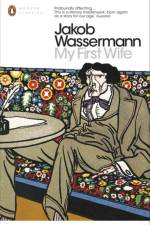
My First Wife is Jakob Wassermann's intense, powerful account of a marriage - and its ruinous collapse - translated by the award-winning translator of Alone in Berlin, Michael Hofmann. It is the story of Alexander Herzog, a young writer, who goes to Vienna to escape his debts and a failed love affair. There he is pursued by book-loving Ganna: giddy, girlish, clumsy, eccentric and wild. Dazzled and unnerved by her devotion to him, and attracted to the large dowry offered by her wealthy father, he thinks he can mould Ganna into what he wants. But no-one can control her troubling passions. As their marriage starts to self-destruct, Herzog will discover that Ganna has resources and determination of which he had no idea - and that he can never escape her.Posthumously published in 1934 and based on the author Jakob Wassermann's own ruinous marriage, My First Wife bears the unmistakable aura of true and bitter experience. It is a tragic masterpiece that unfolds in shocking detail. Now this story of rare intensity and drama is brought to English readers in a powerful new translation by Michael Hofmann.Reviews:'The candour and extremity and intelligence of My First Wife are profoundly affecting ... This is a literary masterwork of a vanished kind, but through the remarkable Hofmann it is born again as a story for our age. Hogmann has the rare ability to refresh the very heart of a text in translating it, to increase its connections to life' Rachel Cusk, Guardian'Like something out of Chekhov - it's all there, the ennui, the preening etiquette, the intellectual posturing ... painfully heartfelt ... My First Wife is a devastating indictment of the choices we make out of convenience against our hearts and instincts, and the tragedies that ensue' Independent'You won't find a more agonising, fascinating literary account of a marriage hitting the rocks' Mail Online
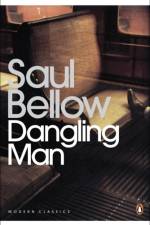
Expecting to be inducted into the army, Joseph has given up his job and carefully prepared for his departure to the battlefront. When a series of mix-ups delays his induction, he finds himself facing a year of idleness. Dangling Man is his journal, a wonderful account of his restless wanderings through Chicago's streets, his musings on the past, his psychological reaction to his inactivity while war rages around him, and his uneasy insights into the nature of freedom and choice.
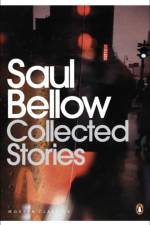
This is the definitive collection of short stories by Saul Bellow. Abundant, precise, various, rich and exuberant, the stories display the stylistic and emotional brilliance which characterizes this master of prose. Some stories recount the events of a single day, some are contained in a wider frame; each story is a characteristic combination of observation and a celebration of humanity.
Abonner på vårt nyhetsbrev og få rabatter og inspirasjon til din neste leseopplevelse.
Ved å abonnere godtar du vår personvernerklæring.