


Gjør som tusenvis av andre bokelskere
Abonner på vårt nyhetsbrev og få rabatter og inspirasjon til din neste leseopplevelse.
Ved å abonnere godtar du vår personvernerklæring.Du kan når som helst melde deg av våre nyhetsbrev.

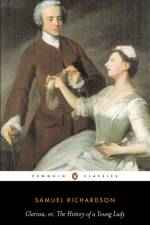
Pressured by her unscrupulous family to marry a wealthy man she detests, the young Clarissa Harlowe is tricked into fleeing with the witty and debonair Robert Lovelace and places herself under his protection. Lovelace, however, proves himself to be an untrustworthy rake whose vague promises of marriage are accompanied by unwelcome and increasingly brutal sexual advances. And yet, Clarissa finds his charm alluring, her scrupulous sense of virtue tinged with unconfessed desire. Told through a complex series of interweaving letters, Clarissa is a richly ambiguous study of a fatally attracted couple and a work of astonishing power and immediacy. A huge success when it first appeared in 1747, and translated into French and German, it remains one of the greatest of all European novels.
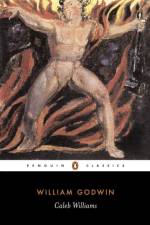
When honest young Caleb Williams comes to work as a secretary for Squire Falkland, he soon begins to suspect that his new master is hiding a terrible secret. But as he digs deeper into Falkland's past and finally unearths the guilty truth, the results of his curiosity prove calamitous when - even though Caleb has loyally sworn never to disclose what he has discovered - the Squire enacts a cruel revenge. A tale of gripping suspense and psychological power, William Godwin's novel creates a searing depiction of the intolerable persecution meted out to a good man in pursuit of justice and equality. Written to expose the political oppression and corrupt hierarchies its author saw in the world around him, Caleb Williams (1794) makes a radical call to end the tyrannical misuses of power.
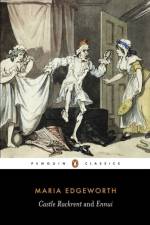
Thady Quirk, devoted steward to the decaying estate of the Rackrent family, narrates a riotous story of four generations of a dying dynasty in Castle Rackrent (1800). Thady will defend his masters to the end, but eventually his naivety and blind loyalty cause him to ignore the warning signs as the family's excesses lead them to ruin. This volume also includes Ennui, the entertaining 'confessions' of the Earl of Glenthorn, a bored, spoiled aristocrat. Desperate to be free from 'the demon of ennui', Glenthorn's quest for happiness takes him through violence and revolution, and leads to intriguing twists of fate. Both novels offer a darkly comic and satirical expos of the Irish class system, and a portrait of a nation in turmoil.
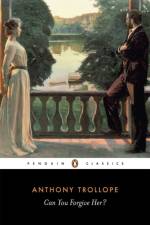
Alice Vavasor cannot decide whether to marry her ambitious but violent cousin George or the upright and gentlemanly John Grey - and finds herself accepting and rejecting each of them in turn. Increasingly confused about her own feelings and unable to forgive herself for such vacillation, her situation is contrasted with that of her friend Lady Glencora - forced to marry the rising politician Plantagenet Palliser in order to prevent the worthless Burgo Fitzgerald from wasting her vast fortune. In asking his readers to pardon Alice for her transgression of the Victorian moral code, Trollope created a telling and wide-ranging account of the social world of his day.
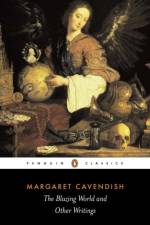
Flamboyant, theatrical and ambitious, Margaret Cavendish was one of the seventeenth century's most striking figures: a woman who ventured into the male spheres of politics, science, philosophy and literature. The Blazing World is a highly original work: part Utopian fiction, part feminist text, it tells of a lady shipwrecked on the Blazing World where she is made Empress and uses her power to ensure that it is free of war, religious division and unfair sexual discrimination. This volume also includes The Contract, a romance in which love and law work harmoniously together, and Assaulted and Pursued Chastity, which explores the power and freedom a woman can achieve in the disguise of a man.
The Mau Mau - the name of a secret society that once struck terror into the hearts of British settlers in Kenya. An episode in history that ended in a State of Emergency, with violent and brutal acts dividing a nation. This is an intensely personal and vivid story of two boys: one black, one white. Once they were friends even though their circumstances are very different. But in a country driven by fear and prejudice, even the best of friends can betray one another . . .Internationally acclaimed and award-winning author Beverley Naidoo explores new territory in this beautifully realized and moving story set in Britain's colonial past.
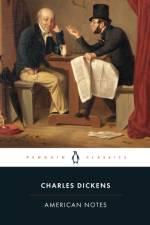
'Like Shakespeare, Dickens was able to embrace a whole world' John MortimerWhen Charles Dickens set out for America in 1842, he was the most famous man of his day to make the journey, and embarked on his travels with an intense curiosity. His frank descriptions cover everything from his comically wretched sea voyage to his sheer astonishment at Niagara Falls, while he also visited hospitals, prisons and law courts. But Dickens's depiction of America as a land ruled by money, built on slavery, with a corrupt press and unsavoury manners, provoked a hostile reaction on both sides of the Atlantic. American Notes is an illuminating account of a great writer's revelatory encounter with the New World.Edited with an Introduction and Notes by Patricia Ingham
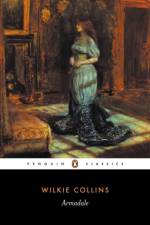
When the elderly Allan Armadale makes a terrible confession on his death-bed, he has little idea of the repercussions to come, for the secret he reveals involves the mysterious Lydia Gwilt: flame-haired temptress, bigamist, laudanum addict and husband-poisoner. Her malicious intrigues fuel the plot of this gripping melodrama: a tale of confused identities, inherited curses, romantic rivalries, espionage, money - and murder. The character of Lydia Gwilt horrified contemporary critics, with one reviewer describing her as 'One of the most hardened female villains whose devices and desires have ever blackened fiction'. She remains among the most enigmatic and fascinating women in nineteenth-century literature and the dark heart of this most sensational of Victorian 'sensation novels'.
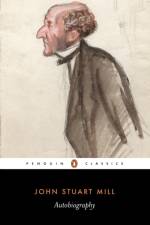
One of the greatest prodigies of his era, John Stuart Mill (1806-73) was studying arithmetic and Greek by the age of three, as part of an astonishingly intense education at his father's hand. Intellectually brilliant, fearless and profound, he became a leading Victorian liberal thinker, whose works - including On Liberty, Utilitarianism, The Subjection of Women and this Autobiography - are among the crowning achievements of the age. Here he describes the pressures placed on him by his childhood, the mental breakdown he suffered as a young man, his struggle to understand a world of feelings and emotions far removed from his father's strict didacticism, and the later development of his own radical beliefs. A moving account of an extraordinary life, this great autobiography reveals a man of deep integrity, constantly searching for truth.
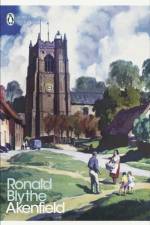
This colourful, perceptive portrayal of English country life reverberates with the voices of the village inhabitants, from the reminiscences of survivors of the Great War evoking days gone by, to the concerns of a younger generation of farm-workers and the fascinating and personal recollections of, among others, the local schoolteacher, doctor, blacksmith, saddler, district nurse and magistrate. Providing insights into farming, education, welfare, class, religion and death, Akenfield forms a unique document of a way of life that has, in many ways, disappeared.
Explorer Bruce Parry is embarking on yet another epic journey: down the Amazon - the world's greatest river, its largest forest, the most bio-diverse habitat on the planet and home to some of the last uncontacted tribes left on Earth. It's one hell of a trip, as Parry travels over 6,000 kms by foot, light aircraft and boat to meet and live with tribesmen, coca growers, loggers and illegal miners.Written in diary form, Amazon gives a rare insight into the ways of life that have existed since the dawn of time and are about to disappear forever.Illness, accidents, and all manner of unforeseen mishaps test Parry's strength every step of the way, but fans will know from Tribe that this man's thirst for new experiences, and his amazing resilience, knows no boundaries. Armchair travel and adventure doesn't get any better than this.
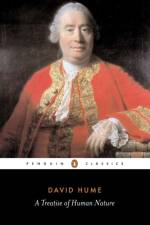
One of the most significant works of Western philosophy, Hume's Treatise was published in 1739-40, before he was thirty years old. A pinnacle of English empiricism, it is a comprehensive attempt to apply scientific methods of observation to a study of human nature, and a vigorous attack upon the principles of traditional metaphysical thought. With masterly eloquence, Hume denies the immortality of the soul and the reality of space; considers the manner in which we form concepts of identity, cause and effect; and speculates upon the nature of freedom, virtue and emotion. Opposed both to metaphysics and to rationalism, Hume's philosophy of informed scepticism sees man not as a religious creation, nor as a machine, but as a creature dominated by sentiment, passion and appetite.
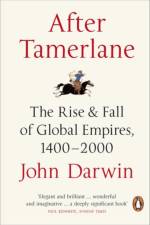
Tamerlane was the last of the 'world conquerors': his armies looted and killed from the shores of the Mediterranean to the frontier of China. Nomad horsemen from the Steppes had been the terror of Europe and Asia for centuries, but with Tamerlane's death in 1405, an epoch of history came to an end. The future belonged to the great dynastic empires - Chinese, Mughal, Iranian and Ottoman - where most of Eurasia's culture and wealth was to be found, and to the oceanic voyagers from Eurasia's 'Far West', just beginning to venture across the dark seas.After Tamerlane is an immensely important and stimulating work. It takes a fresh look at our global past. Our idea of world history is still dominated by the view from the West: it is Europe's expansion that takes centre-stage. But for much of the six-hundred year span of this book. Asia's great empires seemed much more than a match for the intruders from Europe. It took a revolution in Eurasia to change this balance of power, although never completely. The Chinese empire, against all the odds, has survived to this day. The British empire came and went. The Nazi empire was crushed almost at one. The rise, fall and endurance of empires - and the causes behind them - remain one of the most fascinating puzzles in world history.
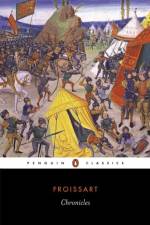
The Chronicles of Froissart (1337-1410) are one of the greatest contemporary records of fourteenth-century England and France. Depicting the great age of Anglo-French rivalry from the deposition of Edward II to the downfall of Richard II, Froissart powerfully portrays the deeds of knights in battle at Sluys, Crecy, Calais and Poitiers during the Hundred Years War. Yet they are only part of this vigorous portrait of medieval life, which also vividly describes the Peasants' Revolt, trading activities and diplomacy against a backdrop of degenerate nobility. Written with the same sense of curiosity about character and customs that underlies the works of Froissart's contemporary, Chaucer, the Chronicles are a magnificent evocation of the age of chivalry.
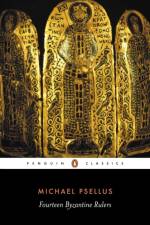
This chronicle of the Byzantine Empire, beginning in 1025, shows a profound understanding of the power politics that characterized the empire and led to its decline.
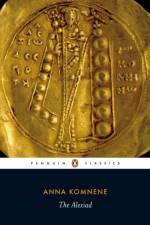
A revised edition of Anna Komnene's Alexiad, to replace our existing 1969 edition. This is the first European narrative history written by a woman - an account of the reign of a Byzantine emperor through the eyes and words of his daughter which offers an unparalleled view of the Byzantine world in the eleventh and twelfth centuries.
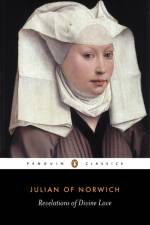
Coming from a society where women were barred from serious writing and teaching, Julian, an anchorite of the great medieval city of Norwich, nevertheless uses her womanlines and the English vernacular of the day to describe a series of revelations which she received from God in the year 1373. She identifies the female nature of Christ's suffering and the motherhood of God, using images from domestic daily life, emphasizing the homeliness of God's love. She writes in a lively and unpretentious manner and her theology is precise without ever being pedantic.
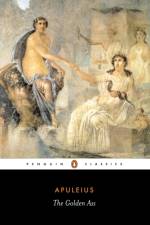
Written towards the end of the second century AD, The Golden Ass tells the story of the many adventures of a young man whose fascination with witchcraft leads him to be transformed into a donkey. The bewitched Lucius passes from owner to owner - encountering a desperate gang of robbers and being forced to perform lewd 'human' tricks on stage - until the Goddess Isis finally breaks the spell and Lucius is initiated into her cult. Apuleius' enchanting story has inspired generations of writers such as Boccaccio, Shakespeare, Cervantes and Keats with its dazzling combination of allegory, satire, bawdiness and sheer exuberance, and remains the most continuously and accessibly amusing book to have survived from Classical antiquity.
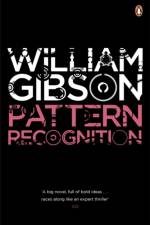
Pattern Recognition - a pulsating techno-thriller by William Gibson, bestselling author of NeuromancerCayce Pollard has been flown to London. She's a 'coolhunter' - her services for hire to global corporations desperate for certainty in a capricious and uncertain world. Now she's been offered a special project: track down the makers of the addictive online film that's lighting up the 'net. Hunting the source will take her to Tokyo and Moscow and put her in the sights of Japanese computer crazies and Russian Mafia men. She's up against those who want to control the film, to own it - who figure breaking the law is just another business strategy. The kind of people who relish turning the hunter into the hunted . . .William Gibson is a prophet and a satirist, a black comedian and an outstanding architect of cool. Readers of Neal Stephenson, Ray Bradbury and Iain M. Banks will love this book. Pattern Recognition is the first novel in the Blue Ant trilogy - read Spook Country and Zero History for more.'A big novel, full of bold ideas . . . races along like an expert thriller' GQ'Dangerously hip. Its dialogue and characterization will amaze you. A wonderfully detailed, reckless journey of espionage and lies' USA Today'A compelling, humane story with a sympathetic heroine searching for meaning and consolation in a post-everything world' Daily TelegraphIdoru is a gripping techno-thriller by William Gibson, bestselling author of Neuromancer'Fast, witty and cleverly politicized' Guardian
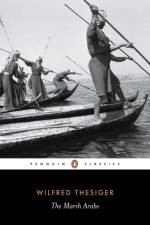
During the years he spent among the Marsh Arabs of southern Iraq Wilfred Thesiger came to understand, admire and share a way of life that had endured for many centuries. Travelling from village to village by canoe, he won acceptance by dispensing medicines and treating the sick. In this account of his time there he pays tribute to the hospitality, loyalty, courage and endurance of the people, describes their impressive reed houses, the waterways and lakes teeming with wildlife, the herding of buffalo and hunting of wild boar, moments of tragedy and moments of pure comedy, all in vivid, engaging detail.Untouched by the modern world until recently, these independent people, their way of life and their surroundings have suffered widespread destruction under the regime of Saddam Hussein. Wilfred Thesiger's magnificent account of his time spent among them is a moving testament to their now threatened culture and the landscape they inhabit.
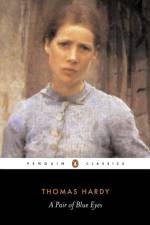
When Elfrise Swanston meets Stephen Smith she is attracted to his handsome face, gentle bearing and the sense of mystery which surrounds him. Although distressed to find that the mystery consists only in the humbleness of his origins, she remains true to their youthful vows. But societal pressures, and the advent of the superior Henry Knight, eventually displace her affections. Knight, however, proves to be an uncompromising moralist who, obsessed with fears about Elfride's sexual past, destroys her happiness.Writing of the struggle between classes and sexes, Hardy drew heavily on his own relationships, and in the introduction, Pamela Dalziel discovers fascinating parallels between Hardy's life and his art.
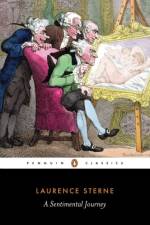
When Yorick, the roving narrator of Sterne's innovative final novel, sets off for France on a whim, he produces no ordinary travelogue. Jolting along in his coach from Calais, through Paris, and on towards the Italian border, the amiable parson is blithely unconcerned by famous views or monuments, but he engages us with tales of his encounters with all manner of people, from counts and noblewomen to beggars and chambermaids. And as drama piles upon drama, anecdote, flirtation and digression, Yorick's destination takes second place to an exhilarating voyage of emotional and erotic exploration. Interweaving sharp wit with warm humour, irony with sentiment, A Sentimental Journey paints a captivating picture of an Englishman's adventures abroad.
This unprecedented book, by one of Britain's leading intellectual historians, describes the intellectual impact that the study and consideration of the past has had in the western world over the past 2500 years, treating the practise of history not as an isolated pursuit but as an aspect of human society and an essential part of the cultural history of Europe and America. It magnificently brings to life the work of historians from the Greeks to the present, including Livy, Tacitus, Bede, Froissart, Clarendon, Gibbon, Macaulay, Michelet, Prescott and Parkman, explaining their distinctive qualities and allowing the modern reader to appreciate and enjoy them. But is also examines subjects as diverse as the new perspectives brought about by the rise of Rome, the interests of medieval chroniclers, the introduction into historical narratives of what the eighteenth century called 'sentiment', the effects of Romanticism and the emergence towards the end of the nineteenth century of an historical profession. It sets out to be not the history of an academic discipline, but a history of choice: the choice of pasts, and the ways they have been demarcated, investigated, presented and even sometimes learned from as they have changed according to political, religious, cultural and (often most importantly) patriotic circumstances. The book also aims to change our perceptions of the main turning points in the history of history. It dispels persistent myths, such as that the ancient historians wrote only contemporary history and had a purely cyclical view of time, that the eighteenth century lacked understanding of the past and that the critical study of sources began only with Ranke in the nineteenth century. The ideas that historians have had about both their own times and their civilization emerge freshly and often unexpectedly. Burrow argues that looking at the history of history is one of the most interesting ways we can try to understand the past. Nothing on the scale of or with the ambition of his book has yet been attempted in English.
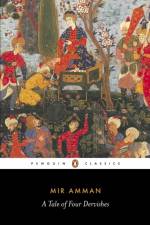
In despair at having no son to succeed him, the King of Turkey leaves his palace to live in seclusion. Soon after, however, he encounters four wandering dervishes - three princes and a rich merchant from Persia, Yemen and China - who have been guided to Turkey by a supernatural force that prophesied their meeting. The five men sit together in the dead of night, each in turn telling the tale of lost love that led him to renounce the world. As their stories within stories unfold, a magnificent world is revealed of courtly intrigue and romance, fairies and djinn, oriental gardens and lavish feasts, adventures and mishaps. A Tale of Four Dervishes (1803) is an exquisite example of Urdu fiction that provides a fascinating glimpse into the customs, beliefs and people of the time.
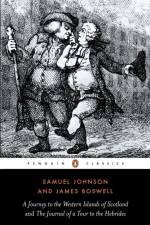
Book by Samuel Johnson, published in 1775. The Journey was the result of a three-month trip to Scotland that Johnson took with James Boswell in 1773. It contains Johnson's descriptions of the customs, religion, education, trade, and agriculture of a society that was new to him. The account in Boswell's diary, published after Johnson's death as The Journal of a Tour to the Hebrides, with Samuel Johnson, LL.D. (1785), offers an intimate personal record of Johnson's behavior and conversation during the trip.
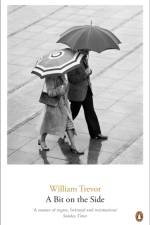
A Bit on the Side - Twelve remarkable stories by the master storyteller William Trevor'Compassionate, poignant, even heart-rending. Almost perfect works of art by perhaps the greatest short story writer now working in English' Sunday IndependentWilliam Trevor is truly a Chekhov for our age. In these twelve stories, a waiter divulges a shocking life of crime to his ex-wife; a woman repeats the story of her parents' unstable marriage after a horrible tragedy; a schoolgirl regrets gossiping about the cuckolded man who tutors her; and, in the volume's title story, a middle-aged accountant offers his reasons for ending a love affair. At the heart of this stunning collection is Trevor's characteristic tenderness and unflinching eye for both the humanizing and dehumanizing aspects of modern urban and rural life.If you enjoyed The Story of Lucy Gault and Love and Summer, you will love this book. It will also be adored by readers of Colm Toibin, George Saunders and James Joyce. 'A treat ... each meditate[s] on the subject of love - adulterous, unspoken, clandestine, sometimes cruel. Whether set in rural Ireland or London, their pages whisper of relished secrets and dreams foolishly clung to' Mail on SundayWilliam Trevor was born in Mitchelstown, County Cork. He has written eighteen novels and novellas, and hundreds of short stories, for which he has won a number of prizes including the Hawthornden Prize, the Yorkshire Post Book of the Year Award, the Whitbread Book of the Year Award and the David Cohen Literature Prize in recognition of a lifetime's literary achievement. In 2002 he was knighted for his services to literature. His books in Penguin are: After Rain; A Bit on the Side; Bodily Secrets; Cheating at Canasta; The Children of Dynmouth; The Collected Stories (Volumes One and Two); Death in Summer; Felicia's Journey; Fools of Fortune; The Hill Bachelors; Love and Summer; The Mark-2 Wife; Selected Stories; The Story of Lucy Gault and Two Lives.
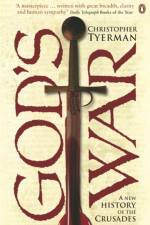
The story of how a group of warriors, driven by faith, greed and wanderlust, carved out new Christian-ruled states in the Middle East is one of the most extraordinary of all epics. The crusaders' stunning initial success started a sequence of great Crusades, each with its own story, that fundamentally shaped the Christian and Muslim worlds for two centuries, until the last Crusader castles were finally expunged. The energy and commitment that sent army after army into the eastern Mediterranean also led to the invasion and conversion of Central and Baltic Europe, Spain, Portugal, the destruction of the Cathars in Provence and the settlement of America. Told with great verve and authority, God's War is the definitive account of a fascinating but also horrifying story. We are still living with the images and legends of the crusades Tyerman tells us how the Church set about preaching the crusades, exploiting the perennial pessimism and guilt of the European nobility of the Middle Ages. He shows how crusading ideology penetrated the religious sensibility of the period, as well as its secular fiction and poetry Of all the modern histories of the crusades it is the shrewdest, the most reliable and the most complete. The Spectator
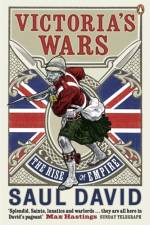
In the early part of Queen Victoria's reign, the British Empire almost quintupled in size. It was well on the way to becoming the greatest empire the world had ever seen. This is the story of how it happened and the people who made it happen. In a fast-moving narrative that ranges from London to the harsh terrain of India, Russia and the Far East, Saul David shows how Britain ruthlessly exploited her position as the world's only superpower to expand her empire. Yet little of this territorial acquisition was planned or sanctioned by the home government. Instead it was largely the work of the men on the ground, and to those at home it really did seem that the empire was acquired in a 'fit of absence of mind'. Saul David creates a vivid portrait of life on the violent fringes of empire, and of the seemingly endless and brutal wars that were fought in the name of trade, civilization and the balance of power.
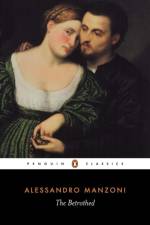
Set in Lombardy during the Spanish occupation of the late 1620s, The Betrothed tells the story of two young lovers, Renzo and Lucia, prevented from marrying by the petty tyrant Don Rodrigo, who desires Lucia for himself. Forced to flee, they are then cruelly separated, and must face many dangers including plague, famine and imprisonment, and confront a variety of strange characters - the mysterious Nun of Monza, the fiery Father Cristoforo and the sinister 'Unnamed' - in their struggle to be reunited. A vigorous portrayal of enduring passion, The Betrothed's exploration of love, power and faith presents a whirling panorama of seventeenth-century Italian life and is one of the greatest European historical novels.
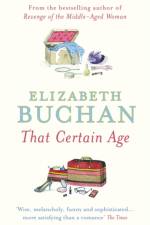
With gentle but penetrating wit and insight, Elizabeth Buchan tells the story oftwo women whose lives are separated by fifty years, but linked in a varietyof subtle and surprising ways as they try to make sense of the conflictingdemands of liberation and duty, freedom and necessity, and the labyrinthinepursuit of happiness...
Abonner på vårt nyhetsbrev og få rabatter og inspirasjon til din neste leseopplevelse.
Ved å abonnere godtar du vår personvernerklæring.