


Gjør som tusenvis av andre bokelskere
Abonner på vårt nyhetsbrev og få rabatter og inspirasjon til din neste leseopplevelse.
Ved å abonnere godtar du vår personvernerklæring.Du kan når som helst melde deg av våre nyhetsbrev.

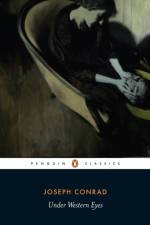
'It was I who removed de P- this morning.' With these chilling words Victor Haldin shatters the solitary, industrious existence of Razumov, his fellow student at St Petersburg University. Razumov aims to overcome the denial of his noble birth by a brilliant career in the tsarist bureaucracy created by Peter the Great. But in pre-revolutionary Russia Peter's legacy is autocracy tempered by assassination; and Razumov is soon caught in a tragic web with Haldin's trustful sister Natalia in spy-haunted Geneva. Their fateful story is told by an elderly Englishman who loves Natalia but plays his part of a 'dense Westerner' to the end.
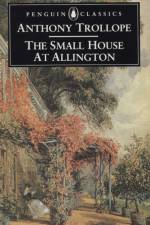
Engaged to the ambitious and self-serving Adolphus Crosbie, Lily Dale is devastated when he jilts her for the aristocratic Lady Alexandrina. Although crushed by his faithlessness, Lily still believes she is bound to her unworthy former fianc for life and therefore condemned to remain single after his betrayal. And when a more deserving suitor pays his addresses, she is unable to see past her feelings for Crosbie. Written when Trollope was at the height of his popularity, The Small House at Allington (1864) contains his most admired heroine in Lily Dale - a young woman of independent spirit who nonetheless longs to be loved - and is a moving dramatization of the ways in which personal dilemmas are affected by social pressures.
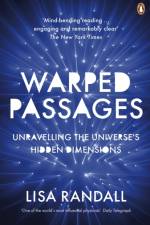
In Warped Passages one of the world's most exciting scientists gives us a glimpse into our future. Incredibly readable - and illustrated throughout - it allows the general reader to understand the questions that scientists are dealing with at the frontiers of research today. Lisa Randall allows the reader to understand the kind of problems that extra dimensions might solve and the kind of speculation that is needed even to imagine them. She also gives an introduction to developments in early twentieth century physics, particle physics and string theory and addresses current debates about relativity, quantum mechanics and gravity - and she describes the questions that are still to be solved.
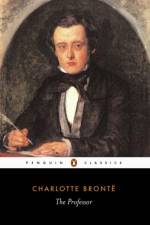
The hero of Charlotte Bronte's first novel escapes a dreary clerkship in industrial Yorkshire by taking a job as a teacher in Belgium. There, however, his entanglement with the sensuous but manipulative Zoraide Reuter, complicates his affections for a penniless girl who is both teacher and pupil in Reuter's school.
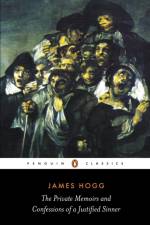
Brought up by a strict Calvinist pastor, Robert Wringham believes he is one of the elect, predestined for salvation while all others - including his real father and brother - are cursed. Convinced he is indestructible and above the law, Robert commits terrible crimes under the influence of Gil-Martin - his physical double - who claims they are acting in God's name to purify the world. But does this mysterious tempter actually exist? Could he be an agent of the devil? Subversive and unsettling, The Private Memoirs and Confessions of a Justified Sinner (1824) is a compelling psychological depiction of religious bigotry and the seductive effects of power on a tormented soul.
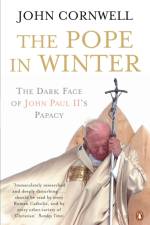
The Late John Paul II was portrayed by admirers as one of history's great popes. But in The Pope in Winter, leading Vatican expert John Cornwell seriously questions the workings of his papacy and points to fundamental flaws - exacerbated by age and infirmity - that have alarming consequences for both the Catholic Church's future and John Paul II's successor.
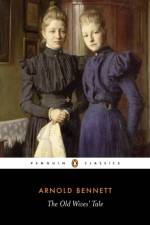
First published in 1908, The Old Wives' Tale affirms the integrity of ordinary lives as it tells the story of the Baines sisters--shy, retiring Constance and defiant, romantic Sophia--over the course of nearly half a century. Bennett traces the sisters' lives from childhood in their father's drapery shop in provincial Bursley, England, during the mid-Victorian era, through their married lives, to the modern industrial age, when they are reunited as old women. The setting moves from the Five Towns of Staffordshire to exotic and cosmopolitan Paris, while the action moves from the subdued domestic routine of the Baines household to the siege of Paris during the Franco-Prussian War.
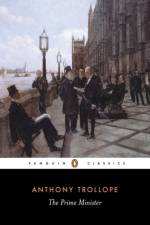
Plantaganet Palliser, Prime Minister of England - a man of power and prestige, with all the breeding and inherited wealth that goes with it - is appalled at the inexorable rise of Ferdinand Lopez. An exotic impostor, seemingly from nowhere, Lopez has society at his feet, while well-connected ladies vie with each other to exert influence on his behalf - even Palliser's own wife, Lady Glencora. But when the interloper makes a socially advantageous marriage, Palliser must decide whether to stand by his wife's support for Lopez in a by-election or leave him to face exposure as a fortune-hunting adventurer. A novel of social, sexual and domestic politics, The Prime Minister raises one of the most enduring questions in government - whether a morally scrupulous gentleman can make an effective leader.
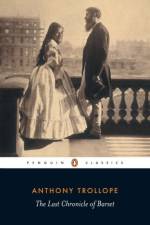
When Reverend Josiah Crawley, the impoverished curate of Hogglestock, is accused of theft it causes a public scandal, sending shockwaves through the world of Barsetshire. The Crawleys desperately try to remain dignified while they are shunned by society, but the scandal threatens to tear them, and the community, apart.Drawing on his own childhood experience of genteel poverty, Trollope gives a painstakingly realistic depiction of the trials of a family striving to maintain its standards at all costs. With its sensitive portrayal of the proud and self-destructive figure of Crawley, this final volume is the darkest and most complex of all the Barsetshire novels.
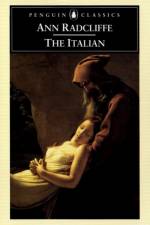
From the first moment Vincentio di Vivaldi, a young nobleman, sets eyes on the veiled figure of Ellena, he is captivated by her enigmatic beauty and grace. But his haughty and manipulative mother is against the match and enlists the help of her confessor to come between them. Schedoni, previously a leading figure of the Inquisition, is a demonic, scheming monk with no qualms about the task, whether it entails abduction, torture - or even murder. The Italian secured Ann Radcliffe's position as the leading writer of Gothic romance of the age, for its atmosphere of supernatural and nightmarish horrors, combined with her evocation of sublime landscapes and chilling narrative.
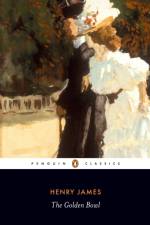
This story of the alliance between Italian aristocracy and American millionaires is "e;a work unique among all [James's] novels: it is [his] only novel in which things come out right for his characters ...he had finally resolved the questions, curious and passionate, that had kept him at his desk on his inquiries into the process of living. He could now make his peace with America and he could now collect and unify the work of a lifetime."e; Leon Edel in The Life of Henry James
Beautiful, proud Roxana is terrified of being poor. When her foolish husband leaves her penniless with five children, she must choose between being a virtuous beggar or a rich whore. Embarking on a career as a courtesan and kept woman, the glamour of her new existence soon becomes too enticing and Roxana passes from man to man in order to maintain her lavish society parties, luxurious clothes and amassed wealth. But this life comes at a cost, and she is fatally torn between the sinful prosperity she has become used to and the respectability she craves. A vivid satire on a dissolute society, Roxana (1724) is a devastating and psychologically acute evocation of the ways in which vanity and ambition can corrupt the human soul.
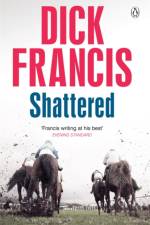
Shattered is a classic novel from Dick Francis, one of the greatest thriller writers of all time.Cheltenham Races, New Year's Eve. Gerard Logan witnesses the death of his close friend, jockey Martin Stukely, after a fall from his horse. In the aftermath, Gerard is left to pick up the pieces - including a mysterious unmarked videotape that Martin secretly left him.But before Gerard gets to watch it, the videotape is stolen.And soon further crimes against Gerard and those close to him start to occur. What was on the missing videotape? And why are the attacks continuing?In order to stay alive, Gerard needs to keep one step ahead of his enemies and uncover the truth - before his livelihood and everything he loves is shattered for good.Packed with intrigue and hair-raising suspense, Shattered is one of the many blockbuster thrillers from legendary crime writer Dick Francis. Other novels include the huge bestsellers Dead Heat, Under Orders and Silks. The Dick Francis legacy continues through his son Felix Francis: Refusal is his latest novel, following Bloodline and Gamble.Praise for the Dick Francis novels:'The narrative is brisk and gripping and the background researched with care . . . the entire story is a pleasure to relish' Scotsman'Dick Francis's fiction has a secret ingredient - his inimitable knack of grabbing the reader's attention on page one and holding it tight until the very end' Sunday Telegraph'Still the master' Racing Post'The master of suspense and intrigue' Country LifeDick Francis was one of the most successful post-war National Hunt jockeys. The winner of over 350 races, he was champion jockey in 1953/1954 and rode for HM Queen Elizabeth, the Queen Mother, most famously on Devon Loch in the 1956 Grand National. On his retirement from the saddle, he published his autobiography, The Sport of Queens, before going on to write forty-three bestselling novels, a volume of short stories (Field of 13), and the biography of Lester Piggott. Dick Francis died in February, 2010, at the age of 89, but he remains one of the greatest thriller writers of all time.
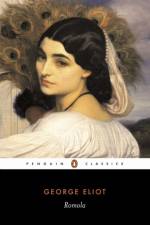
One of George Eliot's most ambitious and imaginative novels, Romola is set in Renaissance Florence during the turbulent years following the expulsion of the powerful Medici family during which the zealous religious reformer Savonarola rose to control the city. At its heart is Romola, the devoted daughter of a blind scholar, married to the clever but ultimately treacherous Tito whose duplicity in both love and politics threatens to destroy everything she values, and she must break away to find her own path in life. Described by Eliot as 'written with my best blood', the story of Romola's intellectual and spiritual awakening is a compelling portrayal of a Utopian heroine, played out against a turbulent historical backdrop.
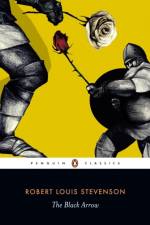
Caught in the midst of England's War of the Roses, young Dick Shelton's loyalties are torn between a guardian who betrays him and the leader of the secret fellowship, "e;The Black Arrow"e;. the Houses of York and Lancaster are locked in a brutal struggle for England's crown and the fate of the kingdom is at stake. Shelton finds himself entangled in the conspiracy. In order to survive he must distinguish friend from foe and confront the tests of war, shipwreck, murder and forbidden love.
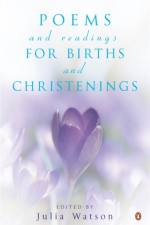
Traditionally the birth of a child has been marked by some form of religious 'welcoming' service and whilst many people still take this option, in our increasingly secular society, there has been a wish by many parents to celebrate the birth of their offspring with some other formal occasion.Local authorities in the UK now offer civil naming ceremonies in the same way they offer civil marriage ceremonies. And though only introduced in 2002, this scheme is fast growing in popularity. This third anthology in Julia Watson's series of poems and readings for both secular and religious ceremonies fills a real gap in the market.
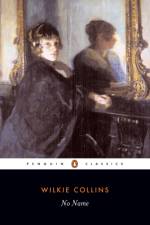
Magdalen and her sister Norah, beloved daughters of Mr and Mrs Vanstone, find themselves the victims of a catastrophic oversight. Their father has neglected to change his will, and when the girls are suddenly orphaned, their inheritance goes to their uncle. Now penniless, the conventional Norah takes up a position as a governess, but the defiant and tempestuous Magdalen cannot accept the loss of what is rightfully hers and decides to do whatever she can to win it back. With the help of cunning Captain Wragge, she concocts a scheme that involves disguise, deceit and astonishing self-transformation. In this compelling, labyrinthine story Wilkie Collins brilliantly demonstrates the gap between justice and the law, and in the subversive Magdalen he portrays one of the most exhilarating heroines of Victorian fiction.
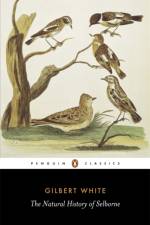
More than any other writer Gilbert White (1720-93) has shaped the relationship between man and nature. A hundred years before Darwin, White realised the crucial role of worms in the formation of soil and understood the significance of territory and song in birds. His precise, scrupulously honest and unaffectedly witty observations led him to interpret animals' behaviour in a unique manner. This collection of his letters to the explorer and naturalist Daines Barrington and the eminent zoologist Thomas Pennant - White's intellectual lifelines from his country-village home - are a beautifully written, detailed evocation of the lives of the flora and fauna of eighteenth-century England.
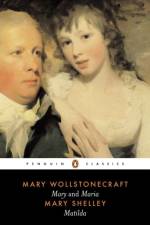
These three works of fiction - two by Mary Wollstonecraft, the radical author of A Vindication of the Rights of Woman, and one by her daughter Mary Shelley, creator of Frankenstein - are powerfully emotive stories that combine passion with forceful feminist argument. In Mary Wollstonecraft's Mary, the heroine flees her young husband in order to nurse her dearest friend, Ann, and finds genuine love, while Maria tells of a desperate young woman who seeks consolation in the arms of another man after the loss of her child. And Mary Shelley's Matilda - suppressed for over a century - tells the story of a woman alienated from society by the incestuous passion of her father. Humane, compassionate and highly controversial, these stories demonstrate the strongly original genius of their authors.
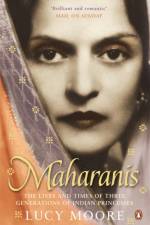
In Maharnis Lucy Moore brilliantly recreates the lives of four princesses - two grandmothers, a mother and a daughter - of the Royal courts of India. Their extraordinary story takes in tiger hunts, exotic palaces and lavish ceremonies in India, as well as the glamorous international scene of the Edwardian and interwar era. It is also an intimate portrait of four remarkable women - Chimnabai, Sunity, Indira and Ayesha - who changed the world they lived in. Through their lives Lucy Moore tells the history of a nation during an era of great change: the rise and fall of the Raj from the Indian Mutiny to Independence and beyond.
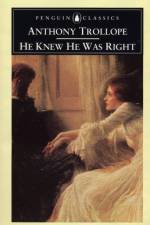
Louis Trevelyan unjustly accuses his wife Emily of a liaison with a friend of her father's. As his suspicion deepens into madness, Trollope gives a psychological study in which Louis's obsessive delirium is comparable to the tormented figure of Othello, tragically flawed by self-deception.
On a midsummer s evening a young Dublin woman, Lucy Dolan, prepares for a showdown that will help make sense of a heart-breaking and brutal atrocity that happened thirteen years earlier, changing her life forever. As she waits for the arrival of the charismatic figure who is the key to the mystery, she recounts her life story a rich and extraordinary tale spanning two generations of storytellers and deal-makers, fortune-tellers and gamblers, businessmen and warlords, and the people that feared, served and betrayed them. With each twist of this tumultuous story Lucy revisits her childhood and early adolescence trying to get her head around the things people do in the name of love and hate, greed and desire and she pieces together afresh the events that led to the night that still haunts her.
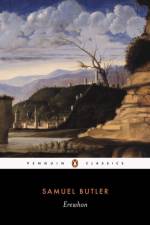
Setting out to make his fortune in a far-off country, a young traveller discovers the remote and beautiful land of Erewhon and is given a home among its extraordinarily handsome citizens. But their visitor soon discovers that this seemingly ideal community has its faults - here crime is treated indulgently as a malady to be cured, while illness, poverty and misfortune are cruelly punished, and all machines have been superstitiously destroyed after a bizarre prophecy. Can he survive in a world where morality is turned upside down? Inspired by Samuel Butler's years in colonial New Zealand and by his reading of Darwin's Origin of Species, Erewhon (1872) is a highly original, irreverent and humorous satire on conventional virtues, religious hypocrisy and the unthinking acceptance of beliefs.
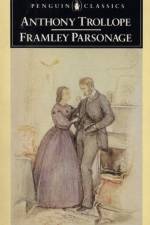
Mark Robarts is a clergyman with ambitions beyond his small country parish of Framley. In a naive attempt to mix in influential circles, he agrees to guarantee a bill for a large sum of money for the disreputable local Member of Parliament, while being helped in his career in the Church by the same hand. But the unscrupulous politician reneges on his financial obligations, and Mark must face the consequences this debt may bring to his family. One of Trollope's most enduringly popular novels since it appeared in 1860, Framley Parsonage is an evocative depiction of country life in nineteenth-century England, told with great compassion and acute insight into human nature.
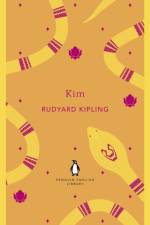
Kipling's epic rendition of the imperial experience in India is also his greatest long work. Two men - Kim, a boy growing into early manhood and the lama, an old ascetic priest - are fired by a quest. Kim is white, a sahib, although born in India. While he wants to play the Great Game of Imperialism, he is also spiritually bound to the lama and he tries to reconcile these opposing strands, while the lama searches for redemption from the Wheel of Life. A celebration of their friendship in an often hostile environment, Kim captures the opulence of India's exotic landscape, overlaid by the uneasy presence of the British Raj.
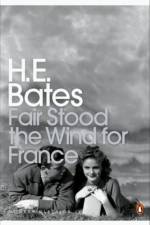
When John Franklin brings his plane down into Occupied France at the height of the Second World war, there are two things in his mind - the safety of his crew and his own badly injured arm. It is a stroke of unbelievable luck when the family of a French farmer risk their lives to offer the airmen protection. During the hot summer weeks that follow, the English officer and the daughter of the house are drawn inexorably to each other...
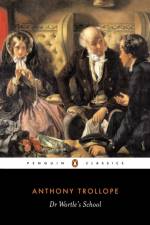
Mr Peacocke, a Classical scholar, has come to Broughtonshire with his beautiful American wife to live as a schoolmaster. But when the blackmailing brother of her first husband - a reprobate from Louisiana - appears at the school gates, a dreadful secret is revealed and the county is scandalized. Ostracised by the community, the pair seem trapped in a hopeless situation - until the combative but warm-hearted headmaster of the school, Dr Wortle, offers his support, and Mr Peacocke embarks upon a journey to America that he hopes will lay to rest the accusations once and for all. A perceptive exploration of Victorian morality, Dr Wortle's School (1881) also contains echoes of Trollope's own life, and his personal affection for the vivacious Bostonian Kate Field.
Son of a bankrupt landowner, Frank Gresham is intent on marrying his beloved Mary Thorne, despite her illegitimacy and apparent poverty. Frank's ambitious mother and haughty aunt are set against the match, however, and push him to save the family's mortgaged estate by making a good marriage to a wealthy heiress. Only Mary's loving uncle, Dr Thorne, knows the secret of her birth and the fortune she is to inherit that will make her socially acceptable in the eyes of Frank's family - but the high-principled doctor believes she should be accepted on her own terms. A telling examination of the relationship between society, money and morality, Dr Thorne (1858) is enduringly popular for Trollope's affectionate depiction of rural English life and his deceptively simple portrayal of human nature.
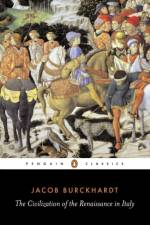
For nineteenth-century Swiss historian Jacob Burckhardt, the Italian Renaissance was nothing less than the beginning of the modern world - a world in which flourishing individualism and the competition for fame radically transformed science, the arts, and politics. In this landmark work he depicts the Italian city-states of Florence, Venice and Rome as providing the seeds of a new form of society, and traces the rise of the creative individual, from Dante to Michelangelo. A fascinating description of an era of cultural transition, this nineteenth-century masterpiece was to become the most influential interpretation of the Italian Renaissance, and anticipated ideas such as Nietzsche's concept of the 'Ubermensch' in its portrayal of an age of genius.
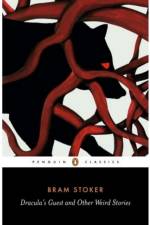
Although Bram Stoker is best known for his world-famous novel Dracula, he also wrote many shorter works on the strange and the macabre. This collection, comprising Dracula's Guest and Other Weird Stories, a volume of spine-chilling short stories collected and published by Stoker's widow after his death, and The Lair of the White Worm, an intensely intriguing novel of myths, legends and unspeakable evil, demonstrate the full range of his horror writing. From the petrifying open tomb in 'Dracula's Guest' to the mental breakdown depicted in 'The Judge's House' and 'Crooken Sands', these terrifying tales of the uncanny explore the boundaries between life and death, known and unknown, animal and human, dream and reality.
Abonner på vårt nyhetsbrev og få rabatter og inspirasjon til din neste leseopplevelse.
Ved å abonnere godtar du vår personvernerklæring.