





Gjør som tusenvis av andre bokelskere
Abonner på vårt nyhetsbrev og få rabatter og inspirasjon til din neste leseopplevelse.
Ved å abonnere godtar du vår personvernerklæring.Du kan når som helst melde deg av våre nyhetsbrev.

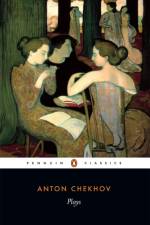
At a time when the Russian theatre was dominated by formulaic melodramas and farces, Chekhov created a new sort of drama that laid bare the everyday lives, loves and yearnings of ordinary people. Ivanov depicts a man stifled by inactivity and lost idealism, and The Seagull contrasts a young man's selfish romanticism with the stoicism of a woman cruelly abandoned by her lover. With 'the scenes from country life' of Uncle Vanya, his first fully mature play, Chekhov developed his own unique dramatic world, neither tragedy nor comedy. In Three Sisters the Prozorov sisters endlessly dream of going to Moscow to escape the monotony of provincial life, while his comedy The Cherry Orchard portrays characters futilely clinging to the past as their land is sold from underneath them.
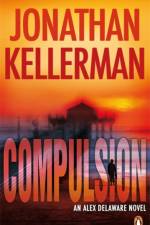
A young woman who disappeared into the inky black night... A retired schoolteacher stabbed to death in broad daylight...Two women butchered in a small-town beauty parlor...Three baffling murder cases, linked only by a perplexing lack of motive... Until LAPD Detective Milo Sturgis and psychologist Alex Delaware are called to the scene of a bizarre 'crime'. A stolen car has been anonymously returned to its owner, undamaged and unblemished - except for a tiny, solitary bloodstain. This miniscule clue is enough to set the pair on a hunt for a multiple killer, from the well-heeled centre of LA society to its desperate edges, even as far as New York where their search thaws out a long-cold case.However this killer proves to be a fleeting shape-shifter, defying identification - and to unmask him, Alex and Milo will have to confront the true face of murderous compulsion...
Downriver is a brilliant London novel by its foremost chronicler, Iain Sinclair.WINNER OF THE ENCORE AWARD AND THE JAMES TAIT BLACK MEMORIAL PRIZEThe Thames runs through Downriver like an open wound, draining the pain and filth of London and its mercurial inhabitants. Commissioned to document the shifting embankments of industry and rampant property speculation, a film crew of magpie scavengers, high-rent lowlife, broken criminals and reborn lunatics picks over the rivers detritus. They examine the wound, hoping to expose the cause of the city's affliction . . .'Remarkable: part apocalyptic documentary, part moth-eaten ghost story, part detective story. Inventive and stylish, Sinclair is one of the most interesting of contemporary novelists' Sunday Times'One of those idiosyncratic literary texts that revivify the language, so darn quotable as to be the reader's delight and the reviewer's nightmare' Guardian'Crazy, dangerous, prophetic' Angela CarterIain Sinclair is the author of Downriver (winner of the James Tait Black Memorial Prize and the Encore Award); Landor's Tower; White Chappell, Scarlet Tracings; Lights Out for the Territory; Lud Heat; Rodinsky's Room (with Rachel Lichtenstein); Radon Daughters; London Orbital, Dining on Stones, Hackney, that Rose-Red Empire and Ghost Milk. He is also the editor of London: City of Disappearances.
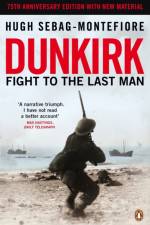
* * * Special 75th Anniversary Edition * * * Hugh Sebag-Montefiore's Dunkirk: Fight to the Last Man tells the story of the rescue in May 1940 of British soldiers fleeing capture and defeat by the Nazis at Dunkirk.Dunkirk was not just about what happened at sea and on the beaches. The evacuation would never have succeeded had it not been for the tenacity of the British soldiers who stayed behind to ensure they got away. Men like Sergeant Major Gus Jennings who died smothering a German stick bomb in the church at Esquelbecq in an effort to save his comrades, and Captain Marcus Ervine-Andrews VC who single-handedly held back a German attack on the Dunkirk perimeter thereby allowing the British line to form up behind him. Told to stand and fight to the last man, these brave few battalions fought in whatever manner they could to buy precious time for the evacuation. Outnumbered and outgunned, they launched spectacular and heroic attacks time and again, despite ferocious fighting and the knowledge that for many only capture or death would end their struggle.'A searing story . . . both meticulous military history and a deeply moving testimony to the extraordinary personal bravery of individual soldiers' Tim Gardam, The Times 'Sebag-Montefiore tells [the story] with gusto, a remarkable attention to detail and an inexhaustible appetite for tracking down the evidence' Richard Ovary, Telegraph Hugh Sebag-Montefiore was a barrister before becoming a journalist and then an author. He wrote the best-selling Enigma: The Battle for the Code. One of his ancestors was evacuated from Dunkirk.
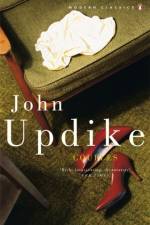
An intoxicating yet sensitive novel about the sexual experiences of ten couples from Tarbox, New England. Well-to-do, sociable, articulate but dangerously unfulfilled; they play word games in the evening and adultery all year round.
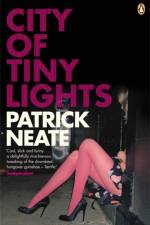
***Now a film starring Riz Ahmed, James Floyd, Billie Piper, Cush Jumbo, Roshan Seth and Antonio Aakeel***Meet Tommy Akhtar, Ugandan Asian cricket fan, devoted son, and not very successful private investigator with offices over his brother Gundappa's mini-cab firm in deepest West London.He's just woken up from his hangover (combing the parting on his toungue) when his next case comes through the door. It looks like just another investigation when hooker Melody comes into his office asking him to find her co-worker, Natasha, last seen meeting new client at a bar in Shepherd's Market.But as the search for Natasha intensifies, Tommy's world becomes increasingly sinister. He is drawn into a murder investigation, the criminal underworld, the world of fundamentalist religion and maybe even terrorist activities. Neate brilliantly explores the oddball underbelly and wierd cultural mix of London - The City of Tiny Lights - today and questions just what it really means to be British now. . .
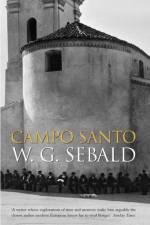
Campo Santo is a collection of essays by W. G. SebaldWhen W.G. Sebald died tragically in 2001 a unique voice was silenced. Campo Santo is a collection of the pieces he left behind - none of them previously published in book form - which provide a powerful insight into the themes that came to dominate his life. Four pieces pay tribute to Corsica, weaving elegiacally between past and present. Sebald also examines the works of writers such as Kafka, Nabokov, and G nter Grass, showing both how literature can provide restitution for the injustices of the world and how such literature came to have so great an influence on him. Campo Santo is a fitting memorial to W.G. Sebald, who himself studied the shifting nature of memory and time with such sensitivity.'A precious addition to the canon' Independent'Will come to be seen as indispensable to an understanding of his work' Sunday Times'Full of a sense of liberation and lightness ... these [pieces] abound in energy and work the authentic Sebaldian magic' Literary Review'We have become suspicious, rightly, of claims for literary greatness, but in Sebald's case the claim was triumphantly justified. He was, he is, the real thing' John Banville, Guardian'Sebald was probably the greatest intellect and voice of the late twentieth century' Anthony Beevor, The Times'A writer whose explorations of time and memory make him arguably the closest author modern European letters has to rival Borges' Sunday TimesW . G. Sebald was born in Wertach im Allg u, Germany, in 1944 and died in December 2001. He studied German language and literature in Freiburg, Switzerland and Manchester. In 1996 he took up a position as an assistant lecturer at the University of Manchester and settled permanently in England in 1970. He was Professor of European Literature at the University of East Anglia and is the author of The Emigrants, The Rings of Saturn, Vertigo, Austerlitz, After Nature, On the Natural History of Destruction, Campo Santo, Unrecounted, For Years Now and A Place in the Country. His selected poetry is published in a volume called Across the Land and the Water.
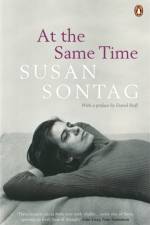
At the Same Time contains sixteen illuminating essays by Susan Sontag.With a preface by David Rieff.The sixteen essays gathered here represent the last pieces written by Susan Sontag in the years before her ddath in 2004. Reflecting on literature, photography and art, post 9/11 America and political activism, these essays encompass the themes that dominated Sontag's life and work, revealing why she remains one of the twentieth century's preeminent writers and thinkers.'These sixteen pieces brim over with vitality . . . every one of them opening up fresh lines of thought'John Gray, New Statesman'One of America's greatest public intellectuals'Observer'Excellent and essential'Financial Times'Reads like a greatest-hits album - a little politics, something on photography, some lit. crit. - of Sontag's passions'Daily Telegraph'Sontag's clear thinking . . . shines like a spotlight in dark places'The TimesOne of America's best-known and most admired writers, Susan Sontag was also a leading commentator on contemporary culture until her death in December 2004. Her books include four novels and numerous works of non-fiction, among them Regarding the Pain of Others, On Photography, Illness as Metaphor, At the Same Time, Against Interpretation and Other Essays and Reborn: Early Diaries 1947-1963, all of which are published by Penguin. A further eight books, including the collections of essays Under the Sign of Saturn and Where the Stress Falls, and the novels The Volcano Lover and The Benefactor, are available from Penguin Modern Classics.
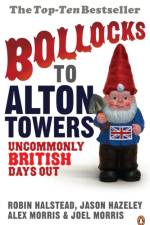
The British Lawnmower Museum, Keith Harding's World of Mechanical Music and Mad Jack's Sugar Loaf. In a world of theme parks, interactive exhibits, over-priced merchandise and queues, don't worry, these are names to stir the soul. Reassuring evidence that there's still somewhere to turn in search of the small, fascinating, unique and, dammit, British.In a stumbling journey across the country in search of the best we have to offer our intrepid heroes discovered dinosaurs in South London, a cold war castle in Essex, grown men pretending to be warships in Scarborough, unexplained tunnels under Liverpool and a terraced house in Bedford being kept warm for Jesus's return. And along the way they met the people behind them all: enthusiasts, eccentrics and, you know, those who just sort of fell into looking after a vast collection of gnomes ...Makes you proud!
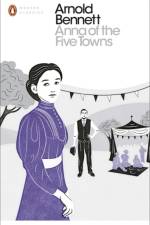
Growing up in the world of the 'five towns' of industrial England, with their furnaces and chimneys, huddled red-brown streets, prayer meetings and small-minded bigotry, Anna is dominated by her miserly and tyrannical father. When she inherits a fortune and finds love, she struggles to break free from the constraints upon her, even though she is torn between duty and her deepest feelings. Arnold's novel of parental tyranny and rebellion is a portrayal of a woman of great spirit, complexity and integrity. 'Deeply moving, original, and dealing with material that I had never encountered in fiction, but only in life' Margaret Drabble
A five star honeymoon in Rome what more could a girl want? In Amy s case, a husband might come in handy but, with the cost of a cancelled wedding to mop up and no chance of a refund on the honeymoon, she s jetting off to bask in the Italian sunshine alone. Except no one seems willing to leave her alone. If it s not nosy hotel guests, it s famous movie stars desperate to exchange suites. How s a girl supposed to wallow in misery when, under protest, she s dragged off to shop till she drops, or to film premieres or intimate picnics deux? But why was the wedding called off? Where is the absent groom? And can movie stars really fall in love with the girl next door?You d be mad to miss out on this Roman holiday
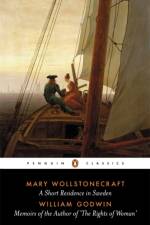
In these two closely linked works - a travel book and a biography of its author - we witness a moving encounter between two of the most daring and original minds of the late eighteenth century: A Short Residence in Sweden is the record of Wollstonecraft's last journey in search of happiness, into the remote and beautiful backwoods of Scandinavia. The quest for a lost treasure ship, the pain of a wrecked love affair, memories of the French Revolution, and the longing for some Golden Age, all shape this vivid narrative, which Richard Holmes argues is one of the neglected masterpieces of early English Romanticism.Memoirs is Godwin's own account of Wollstonecraft's life, written with passionate intensity a few weeks after her tragic death. Casting aside literary convention, Godwin creates an intimate portrait of his wife, startling in its candour and psychological truth. Received with outrage by friends and critics alike, and virtually suppressed for a century, it can now be recognized as one of the landmarks in the development of modern biography.
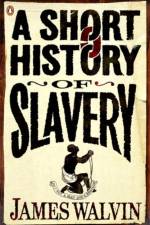
As we approach the bicentenary of the abolition of the Atlantic trade, Walvin has selected the historical texts that recreate the mindset that made such a savage institution possible - morally acceptable even. Setting these historical documents against Walvin's own incisive historical narrative, the two layers of this extraordinary, definitive account of the Atlantic slave trade enable us to understand the rise and fall of one of the most shameful chapters in British history, the repercussions of which the modern world is still living with.
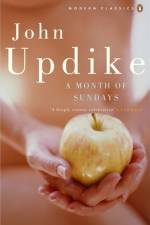
Updike's seventh novel concerns a month of seven days, a month of enforced rest and recreation as experienced by the Reverend Tom Marshfield, sent west from his Midwestern church in disgrace.
A burgeoning new city is built on the dreams of the American gold rush. It is also built upon a landscape that has been stretching, sliding and breaking apart for millennia. In 1906 the dreams of this city came crashing down beneath the rippling wave of a horrifying earthquake that turned roads into great rippling rivers, that set buildings ablaze for days on end, that made homes collapse upon themselves. Simon Winchester's breathtaking story delves deep beneath the surface of the earth and explains to us why the world moves as it does; and breaks apart with such devastating results. At the same time he never lets us forget the human story: what happened in this new, seemingly blessed city on the 18th April 1906. As he vividly portrays the lives of the people who suffered and survived the devastation he also tells a universal story: the hubris of man as he ignores the warnings of nature and how we respond and try to understand the world around us. Compelling, moving and enlightening, Simon Winchester brings to light the world beneath our feet and through the story of this one terrifying event one hundred years ago, begins to make sense of our world now.
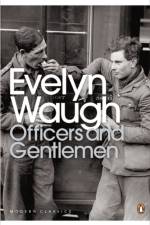
Guy Crouchback is now attached to a commando unit undergoing training on the Hebridean isle of Mugg, where the whisky flows freely and HM forces have to show respect for the laird. But the comedy of Mugg is followed by the bitterness of Crete.
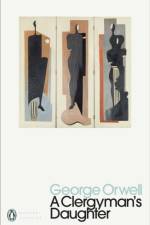
Intimidated by her father, the rector of Knype Hill, Dorothy performs her submissive roles of dutiful daughter and bullied housekeeper. Her thoughts are taken up with the costumes she is making for the church school play, by the hopelessness of preaching to the poor and by debts she cannot pay in 1930s Depression England. Suddenly her routine shatters and Dorothy finds herself down and out in London. She is wearing silk stockings, has money in her pocket and cannot remember her name. Orwell leads us through a landscape of unemployment, poverty and hunger, where Dorothy's faith is challenged by a social reality that changes her life.
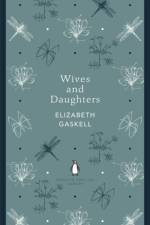
Seventeen-year-old Molly Gibson worships her widowed father. But when he decides to remarry, Molly's life is thrown off course by the arrival of her vain, shallow and selfish stepmother. There is some solace in the shape of her new stepsister Cynthia, who is beautiful, sophisticated and irresistible to every man she meets. Soon the girls become close, and Molly finds herself cajoled into becoming a go-between in Cynthia's love affairs. But in doing so, Molly risks ruining her reputation in the gossiping village of Hollingford - and jeopardizing everything with the man she is secretly in love with.
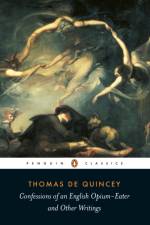
"e;Thou has the keys of Paradise, oh just, subtle, and mighty opium!"e; Determined to counter the lies about opium that had been told by travellers to the Orient and the medical profession, De Quincey describes his addiction, the consciousness alteringproperties of the drug, its pleasures and its pains.
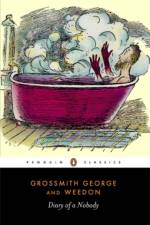
THE DIARY OF A NOBODY began as a serial in Punch and the book which followed in 1892 has never been out of print. The Grossmith brothers not only created an immortal comic character but produced a clever satire of their society. Mr Pooter is an office clerk and upright family man in a dull 1880s suburb. His diary is a wonderful portrait of the class system and the inherent snobbishness of the suburban middle classes. It sends up contemporary crazes for Aestheticism, spiritualism and bicycling, as well as the fashion for publishing diaries by anybody and everybody.
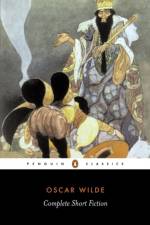
Fairy tales, ghost stories, detective fiction and comedies of manners - the stories collected in this volume made Oscar Wilde's name as a writer of fiction, showing breathtaking dexterity in a wide range of literary styles. Victorian moral justice is comically inverted in 'Lord Arthur Savile's Crime' and 'The Canterville Ghost', and society's materialism comes under sharp, humorous criticism in 'The Model Millionaire', while 'The Happy Prince' and 'The Nightingale and the Rose' are hauntingly melancholic in their magical evocations of selfless love. These small masterpieces convey the brilliance of Wilde's vision, exploring complex moral issues through an elegant juxtaposition of wit and sentiment.
The Romanticism that emerged after the American and French revolutions of 1776 and 1789 represented a new flowering of the imagination and the spirit, and a celebration of the soul of humanity with its capacity for love. This extraordinary collection sets the acknowledged genius of poems such as Blake's 'Tyger', Coleridge's 'Khubla Khan' and Shelley's 'Ozymandias' alongside verse from less familiar figures and women poets such as Charlotte Smith and Mary Robinson. We also see familiar poets in an unaccustomed light, as Blake, Wordsworth and Shelley demonstrate their comic skills, while Coleridge, Keats and Clare explore the Gothic and surreal.
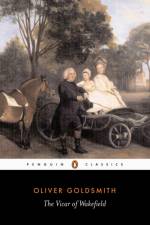
When Dr Primrose loses his fortune in a disastrous investment, his idyllic life in the country is shattered and he is forced to move with his wife and six children to an impoverished living on the estate of Squire Thornhill. Taking to the road in pursuit of his daughter, who has been seduced by the rakish Squire, the beleaguered Primrose becomes embroiled in a series of misadventures - encountering his long-lost son in a travelling theatre company and even spending time in a debtor's prison. Yet Primrose, though hampered by his unworldliness and pride, is sustained by his unwavering religious faith. In The Vicar of Wakefield, Goldsmith gently mocks many of the literary conventions of his day - from pastoral and romance to the picaresque - infusing his story of a hapless clergyman with warm humour and amiable social satire.
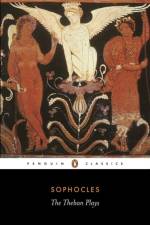
King Oedipus/Oedipus at Colonus/AntigoneThree towering works of Greek tragedy depicting the inexorable downfall of a doomed royal dynastyThe legends surrounding the house of Thebes inspired Sophocles to create this powerful trilogy about humanity's struggle against fate. King Oedipus is the devastating portrayal of a ruler who brings pestilence to Thebes for crimes he does not realize he has committed and then inflicts a brutal punishment upon himself. Oedipus at Colonus provides a fitting conclusion to the life of the aged and blinded king, while Antigone depicts the fall of the next generation, through the conflict between a young woman ruled by her conscience and a king too confident of his own authority.Translated with an Introduction by E. F. WATLING
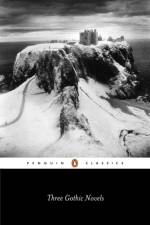
The Gothic novel, which flourished from about 1765 until 1825, revels in the horrible and the supernatural, in suspense and exotic settings.This volume, with its erudite introduction by Mario Praz, presents three of the most celebrated Gothic novels: The Castle of Otranto, published pseudonymously in 1765, is one of the first of the genre and the most truly Gothic of the three. Vathek (1786), an oriental tale by an eccentric millionaire, exotically combines Gothic romanticism with the vivacity of The Arabian Nights and is a narrative tour de force. The story of Frankenstein (1818) and the monster he created is as spine-chilling today as it ever was; as in all Gothic novels, horror is the keynote.
Augustus Melmotte is a fraudulent foreign financier who preys on dissolute nobility - using charm to tempt the weak into making foolish investments in his dubious schemes. Persuaded to put money into a notional plot to run a railroad from San Francisco to Santa Cruz, the capricious gambler Felix Carbury soon becomes one of his victims. But as Melmotte climbs higher in society, his web of deceit - which also draws in characters as diverse as his own daughter Marie and Felix's mother, the pulp novelist Lady Carbury - begins to unravel. A radical exploration of the dangers associated with speculative capitalism, this is a fascinating satire about a society on the verge of moral bankruptcy.
Bright, popular, pretty and successful, Grace Bowman had the world at her feet. So what drove her to starve herself nearly to death at the age of 18? And what, more importantly, made her stop? A grippingly honest account of life with anorexia nervosa, A Shape of My Own is Grace's hearbreaking, shocking and, finally, inspirational memoir. An extraordinary story, it is also a common one - is there a woman in the western world who has a normal relationship with food? A compulsive read, essential for anyone hoping to understand more about eating disorders and overcoming addiction.
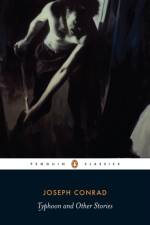
In these four stories, written between 1900 and 1902, Joseph Conrad bid gradual farewell to his adventurous life at sea and began to confront the more daunting complexities of life on land in the twentieth century. In 'Typhoon' Conrad reveals, in the steadfast courage of an undemonstrative captain and the imaginative readiness of his young first mate, the differences between instinct and intelligence in a partnership vital to human survival. 'Falk', the companion sea-story, contrasts, as Conrad once put it, 'common sentimentalism with the frank standpoint of a more or less primitive man', a man with a conscience, however, about the girl he desires. In one of the 'land-stories' Conrad explores the utter isolation of an East European emigrant in England; in the other, the plight of a woman ironically trapped by the unwitting alliance of two retired widowers - each blind in his own way.
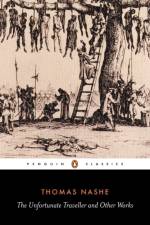
Written in the late sixteenth century, at the pinnacle of the English Renaissance, the rich and ingenious works of Thomas Nashe uniquely reveal the ambivant nature of the Elizabethan era. Mingling the devout and the bawdy, scholarship and slang, they express throughout an irrepressible, inexhaustible wit and an astonishing command of language. This collection of Nashe's finest works includes The Unfortunate Traveller, the sharp and grotesque tale of Jack Wilton, an Englishman travelling through Europe; Pierce Penniless, a biting satire on the society of his age; Terrors of the Night; Lenten Stuff; the sensual poem The Choice of Valentines; and extracts from Christ's Tears over Jerusalem and other works. Wide-ranging in subject, all capture the unique voice and fantastic ingenuity of one of the most entertaining Elizabethan writers - a man regarded by his contemporaries as the 'English Juvenal'.
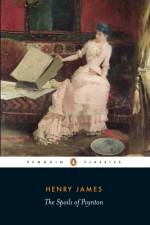
Mrs Gereth is convinced that Fleda Vetch would make the perfect daughter-in-law. Only the dreamy, highly-strung young woman can genuinely appreciate, and perhaps eventually share, Mrs Gereth's passion for her 'things' - the antique treasures she has amassed at Poynton Park in the south of England. Owen Gereth, however, has inconveniently become engaged to the uncultured Mona Brigstock. As a dramatic family quarrel unfolds, the hesitating Fleda is drawn in, yet she remains reluctant to captivate Owen, who seems as attracted to her as she is to him. Is she motivated by scruple or fear? In The Spoils of Poynton (1897), Henry James created a work of exquisite ambiguity in his depiction of three women fighting for the allegiance of one weak-willed man.
Abonner på vårt nyhetsbrev og få rabatter og inspirasjon til din neste leseopplevelse.
Ved å abonnere godtar du vår personvernerklæring.