


Gjør som tusenvis av andre bokelskere
Abonner på vårt nyhetsbrev og få rabatter og inspirasjon til din neste leseopplevelse.
Ved å abonnere godtar du vår personvernerklæring.Du kan når som helst melde deg av våre nyhetsbrev.

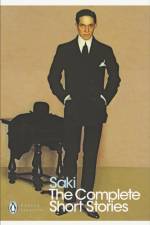
Saki is perhaps the most graceful spokesman for England's 'Golden Afternoon' - the slow and peaceful years before the First World War. Although, like so many of his generation, he died tragically young, in action on the Western Front, his reputation as a writer continued to grow long after his death. The stories are humorous, satiric, supernatural, and macabre, highly individual, full of eccentric wit and unconventional situations. With his great gift as a social satirist of his contemporaryupper-class Edwardian world, Saki is one of the few undisputed English masters of the short story.
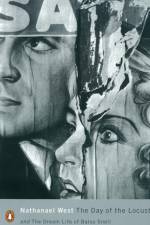
Tod Hackett is a brilliant young artist - and a man in danger of losing his heart. Brought to an LA studio as a set-designer, he is soon caught up in a fantasy world where the cult of celebrity rules.But when he becomes besotted by the beautiful Faye, an aspiring actress and occasional call-girl, his dream rapidly becomes a nightmare. For, with little in the way of looks and no money to buy her time, Tod's desperate passion can only lead to frustration, disillusionment and rage ...
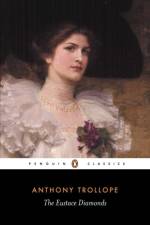
Following the death of her husband Sir Florian, beautiful Lizzie Eustace mysteriously comes into possession of a hugely expensive diamond necklace. She maintains it was a gift from her husband, but the Eustace lawyers insist she give it up, and while her cousin Frank takes her side, her new lover Lord Fawn states that he will only marry her if the necklace is surrendered. As gossip and scandal intensify, Lizzie's truthfulness is thrown into doubt, and, in her desire to keep the jewels, she is driven to increasingly desperate acts. The third in Trollope's Palliser series, The Eustace Diamonds bears all the hallmarks of his later works, blending dark cynicism with humour and a keen perception of human nature.
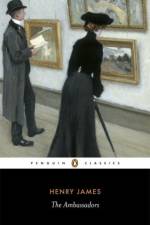
Concerned that her son Chad may have become involved with a woman of dubious reputation, the formidable Mrs Newsome sends her 'ambassador' Strether from Massachusetts to Paris to extricate him. Strether's mission, however, is gradually undermined as he falls under the spell of the city and finds Chad refined rather than corrupted by its influence and that of his charming companion, the comtesse de Vionnet. As the summer wears on, Mrs Newsome comes to the conclusion that she must send another envoy to Paris to confront the errant Chad, and a Strether whose view of the world has changed profoundly. James's favourite novel and one of the greatest of his late works, The Ambassadors is a subtle and often witty exploration of different American responses to a European environment.
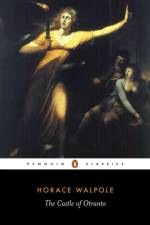
On the day of his wedding, Conrad, heir to the house of Otranto, is killed in mysterious circumstances. His calculating father Manfred fears that his dynasty will now come to an end and determines to marry his son's bride himself - despite the fact he is already married. But a series of terrifying supernatural omens soon threaten this unlawful union, as the curse placed on Manfred's ancestor, who usurped the lawful Prince of Otranto, begins to unfold. First published pseudonymously in 1764, purporting to be an ancient Italian text from the time of the crusades, The Castle of Otranto is a founding work of Gothic fiction. With its compelling blend of sinister portents, tempestuous passions and ghostly visitations, it spawned an entire literary tradition and influenced such writers as Ann Radcliffe and Bram Stoker.
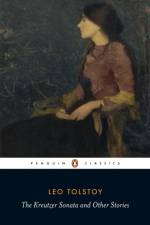
'The Kreutzer Sonata' is the self-lacerating confession of a man consumed by sexual jealousy and eaten up by shame and eventually driven to murder his wife. The story caused a sensation when it first appeared and Tolstoy's wife was appalled that he had drawn on their own experiences together to create a scathing indictment of marriage. 'The Devil', centring on a young man torn between his passion for a peasant girl and his respectable life with his loving wife, also illustrates the impossibility of pure love. 'The Forged Coupon' shows how an act of corruption can spiral out of control, and 'After the Ball' examines the abuse of power. Written during a time of spiritual crisis in Tolstoy's life, these late stories reflect a world of moral uncertainties.
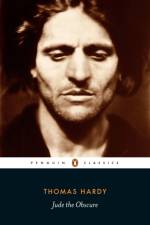
Jude Fawley, the stonemason excluded not by his wits but by poverty from the world of Christminster privilege, finds fulfilment in his relationship with Sue Bridehead. Both have left earlier marriages. Ironically, when tragedy tests their union it is Sue, the modern emancipated woman, who proves unequal to the challenge. Hardy's fearless exploration of sexual and social relationships and his prophetic critique of marriage scandalised the late Victorian establishment and marked the end of his career as a novelist.
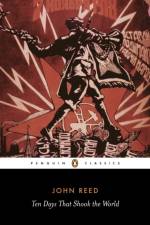
Ten Days That Shook the World is John Reed s eyewitness account of the Russian Revolution. A contemporary journalist writing in the first flush of revolutionary enthusiasm, he gives a gripping record of the events in Petrograd in November 1917, when Lenin and the Bolsheviks finally seized power. Containing verbatim reports both of speeches by leaders and the chance comments of bystanders, set against an idealized backcloth of the proletariat, soldiers, sailors, and peasants uniting to throw off oppression, Reed s account is the product of passionate involvement and remains an unsurpassed classic of reporting.
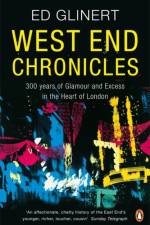
The streets and squares of the West End of London, some of the most famous in the world, have been home to poets and pop stars, world-renowned artists and revolutionary anarchists. They have been a playground of gangsters and gamblers, secret agents and religious visionaries. The exploits of these and many other colourful characters are recounted in Ed Glinert's latest volume. Packed with atmospheric incident and detail, it's a treasure trove of stories of the people, places and events at the hub of the world's most exciting city.
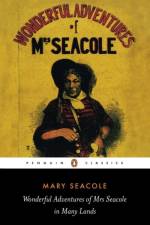
Written in 1857, this is the autobiography of a Jamaican woman whose fame rivalled Florence Nightingale's during the Crimean War. Seacole's offer to volunteer as a nurse in the war met with racism and refusal. Undaunted, Seacole set out independently to the Crimea where she acted as doctor and 'mother' to wounded soldiers while running her business, the 'British Hotel'. A witness to key battles, she gives vivid accounts of how she coped with disease, bombardment and other hardships at the Crimean battlefront."e;In her introduction to the very welcome Penguin edition, Sara Salih expertly analyses the rhetorical complexities of Seacole's book to explore the richness of her story. Traveller, entrepreneur, healer and woman of colour, Mary Seacole is a singular and fascinating figure, overstepping all conventional boundaries."e; Jan Marsh, Independent"e;It's hard to believe that this amazing adventure story is the true-life experience of a Jamaican woman - it would make a great film."e; Andrea Levy, Sunday Times
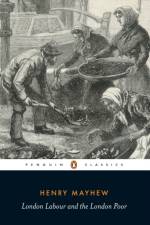
London Labour and the London Poor originated in a series of newspaper articles written by the great journalist Henry Mayhew between 1849 and 1850. A dozen years later, it had grown into the fullest picture we have of labouring people in the world's greatest city in the nineteenth century: a four volume account of the hopes, customs, grievances and habits of the working-classes that allows them to tell their own stories. Combining practicality with compassion, Mayhew worked unencumbered by political theory and strove solely to report on the lives of the London poor, their occupations and trades. This selection shows how well he succeeded. From costermongers to ex-convicts, from chimney-sweeps to vagrants, the underprivileged of London are uniquely brought to life - their plight expressed through a startling blend of first person accounts, Mayhew's perceptions, and sharp statistics.
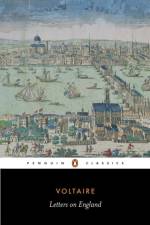
Also known as the Lettres anglaises ou philosophiques, Voltaire's response to his exile in England offered the French public of 1734 a panoramic view of British culture. Perceiving them as a veiled attack against the ancien regime, however, the French government ordered the letters burned and Voltaire persecuted.
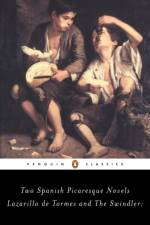
The unlikely heroes of the Spanish picaresque novels make their way - by whatever means they can - through a colourful and seamy underworld populated by unsavoury beggars, corrupt priests, eccentrics, whores and criminals. Both Lazarillo de Tormesand Pablos the swindler are determined to attain the trappings of the gentleman, but have little time for the gentlemanly ideals of religion, justice, honour and nobility.
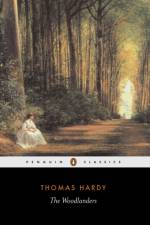
When country-girl Grace Melbury returns home from her middle-class school she feels she has risen above her suitor, the simple woodsman Giles Winterborne. Though marriage had been discussed between her and Giles, Grace finds herself captivated by Dr Edred Fitzpiers, a sophisticated newcomer to the area - a relationship that is encouraged by her socially ambitious father. Hardy's novel of betrayal, disillusionment and moral compromise depicts a secluded community coming to terms with the disastrous impact of outside influences. And in his portrayal of Giles Winterborne, Hardy shows a man who responds deeply to the forces of the natural world, thought they ultimately betray him.
This highly original, extremely enjoyable book tells the story of Britain s extraordinary scramble to world power in the 18th century and how, through hubris and incompetence, it lost almost everything it had gained. At the beginning of the eighteenth century, Britain was an important European power, but few would have predicted her global pre-eminence by 1760. As Brendan Simms shows with great flair and originality, Britain had a crucial card to play. It was the joining of the British crown to Hanover that gave Britain two empires: one scattered around the world and another the more important of the two - firmly locked into Germany. Having created a new empire Britain then spectacularly lost it, this time because of its chaotic failure to maintain its European alliances. This is an epic and often unexpected story, and Simms tells it brilliantly.
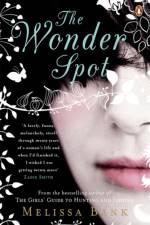
Meet Sophie Applebaum, an everywoman who doesn't quite fit in anywhere. She's looking for a career - but lacks a calling; looking for love - but winds up with men who put her off instead of pull her in. The women she befriends want a girl who's strong but who can't say no. At drinks parties, she feels like a solid trying to do a liquid's job. It isn't easy to find your place in the world, but Sophie's willing to work at it. And with every false step, she might just be getting closer to creating the life she wants to have...
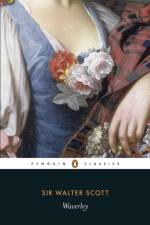
Set against the backdrop of the Jacobite Rebellion of 1745, Waverley depicts the story of Edward Waverley, an idealistic daydreamer whose loyalty to his regiment is threatened when they are sent to the Scottish Highlands. When he finds himself drawn to the charismatic chieftain Fergus Mac-Ivor and his beautiful sister Flora, their ardent loyalty to Prince Charles Edward Stuart appeals to Waverley's romantic nature and he allies himself with their cause - a move that proves highly dangerous for the young officer. Scott's first novel was a huge success when it was published in 1814 and marked the start of his extraordinary literary success. With its vivid depiction of the wild Highland landscapes and patriotic clansmen, Waverley is a brilliant evocation of the old Scotland - a world Scott believed was swiftly disappearing in the face of a new, modern era.
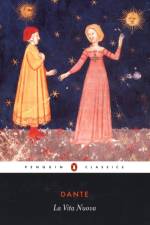
A unique treatise by a poet, written for poets, on the art of poetry, LA VITA NUOVA is elaborately and symbolically patterned, consisting of a selection of Dante's early poems, interspersed with his own prose commentary. The poems themselves tell the story of his love for Beatrice, from their first meeting at a May Day party in her father's house, through Dante's sufferings and his attempts to conceal the true object of his devotion by the use of 'screen-loves', to his overwhelming grief ather death, ending with the transformative vision of her in heaven. These are some of the richest love poems in literature and the movement from self-pitying lament to praise for the beloved's beauty and virtue, illustrate the elevating power of love.
During his decades of world fame as a novelist, Tolstoy also wrote prolifically in a series of essays and polemics on issues of morality, social justice and religion. These works culminated in What is Art?, published in 1898. Impassioned and iconoclastic, this powerfully influential work both criticizes the elitist nature of art in nineteenth-century Western society, and rejects the idea that its sole purpose should be the creation of beauty. The works of Dante, Michelangelo, Shakespeare, Beethoven, Baudelaire and Wagner are all vigorously condemned, as Tolstoy explores what he believes to be the spiritual role of the artist - arguing that true art must work with religion and science as a force for the advancement of mankind.
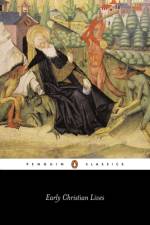
Written between the mid-fourth and late sixth centuries to commemorate and glorify the achievements of early Christian saints, these six biographies depict men who devoted themselves to solitude, poverty and prayer. Athanasius records Antony's extreme seclusion in the Egyptian desert, despite temptation by the devil and visits from his followers. Jerome also shows those who fled persecution or withdrew from society to pursue lives of chastity and asceticism in his accounts of Paul of Thebes, Hilarion and Malchus. In his Life of Martin, Sulpicius Severus describes the achievements of a man who combined the roles of monk, bishop and missionary, while Gregory the Great tells of Benedict, whose Rule became the template for monastic life. Full of vivid incidents and astonishing miracles, these Lives have provided inspiration as models for centuries of Christian worship.
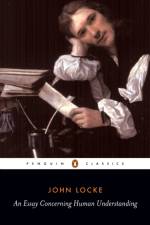
In An Essay Concerning Human Understanding, first published in 1690, John Locke (1632-1704) provides a complete account of how we acquire everyday, mathematical, natural scientific, religious and ethical knowledge. Rejecting the theory that some knowledge is innate in us, Locke argues that it derives from sense perceptions and experience, as analysed and developed by reason. While defending these central claims with vigorous common sense, Locke offers many incidental - and highly influential - reflections on space and time, meaning, free will and personal identity. The result is a powerful, pioneering work, which, together with Descartes's works, largely set the agenda for modern philosophy.
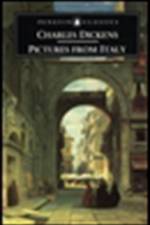
'When Dickens has described something you see it for the rest of your life' George OrwellIn 1844, Charles Dickens took a break from novel writing to travel through Italy for almost a year, and Pictures from Italy is an illuminating account of his experiences there. He presents the country like a magic-lantern show, as vivid images ceaselessly appear before his - and his readers' - eyes. Italy's most famous sights are all to be found here - St Peter's in Rome, Naples with Vesuvius smouldering in the background, the fairytale buildings and canals of Venice - but Dickens's chronicle is not simply that of a tourist. Combining compelling travelogue with piercing social commentary, he portrays a nation of great contrasts: between grandiose buildings and squalid poverty, ancient monuments and everyday life, past and present.Edited with an Introduction and Notes by Kate Flint
Brought up at Dorlcote Mill, Maggie Tulliver worships her brother Tom and is desperate to win the approval of her parents, but her passionate, wayward nature and her fierce intelligence bring her into constant conflict with her family. As she reaches adulthood, the clash between their expectations and her desires is painfully played out as she finds herself torn between her relationships with three very different men: her proud and stubborn brother, a close friend who is also the son of her family's worst enemy, and a charismatic but dangerous suitor. With its poignant portrayal of sibling relationships, The Mill on the Floss is considered George Eliot's most autobiographical novel; it is also one of her most powerful and moving.
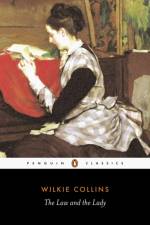
Despite the grave misgivings of both their families, Valeria Brinton and Eustace Woodville are married. But before long the new bride begins to suspect a dark secret in her husband's past and when she discovers that he has been living under a false name, she determines to find out why he is concealing his true identity from her. Soon she must endure an even greater shock: the revelation that her husband has been on trial for poisoning his first wife. Convinced of his innocence, Valeria is prepared to do anything to clear her husband's name, and in so doing upturns the conventions of polite nineteenth century society.
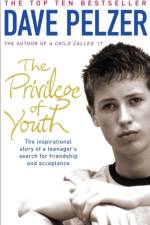
Dave Pelzer's bestselling autobiographical trilogy are an international phenomenon. Distressing, heartbreaking and yet inspirational, the fourth in the series guarantees the same level of success.His next book centres on his experience of bullying at school and the friends he made in his neighbourhood who helped him fight back.He tells the story of his high school years when he met two friends who helped him get through the perils and promises of adolescence. It is a story of hope and heartache, and reveals the many positive influences in Dave's teenage years as well as the agonizing choices he had to make to reclaim his life from the childhood he lost to abuse.
Felicity Lawrence's Sunday Times bestseller Not on the Label, updated with extraordinary new material on the horsemeat scandalIn 2004 Felicity Lawrence published her ground-breaking book, Not on the Label, where, in a series of undercover investigations she provided a shocking account of what really goes into the food we eat. She discovered why beef waste ends up in chicken, why a single lettuce might be sprayed six times with chemicals before it ends up in our salad, why bread is full of water. And she showed how obesity, the appalling conditions of migrant workers, ravaged fields in Europe and the supermarket on our high street are all intimately connected. Her discoveries would change the way we thought about the UK food industry for ever. And, when the horsemeat scandal hit the headlines in 2013, her book seemed extraordinarily prescient once again. Now, in this new edition of her seminal work, Felicity Lawrence delves deeply into that scandal and uncovers how the great British public ended up eating horses.'A brave examination of the calamities caused by a policy laughingly called one of 'cheap food'' Jeremy Paxman, Observer 'Book of the Year''Challenges each and every one of us to think again about what we buy and eat. It's almost like uncovering a secret state within the state' Andrew Marr, BBC Radio 4's Start The Week'A thorough, complex and shocking insight into the food we eat in the twenty-first century . . . Perhaps this should be sold as the most effective diet book ever written' Daily MailFelicity Lawrence is an award-winning journalist and editor who has been writing on food-related issues for over twenty years. She lives in London.
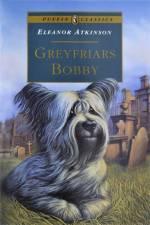
The famous true story about a devoted dog. Bobby, an active Skye terrier, adores his master Auld Jock, and when the old man dies, Bobby refuses to leave his grave in Greyfriars Churchyard in Edinburgh. By day, he plays with the local orphans and eats at a nearby tavern, but, in spite of anything even the Lord Provost himself can do, every night for fourteen years Bobby returns faithfully to sleep by his master.
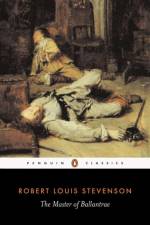
Set at the time of the Jacobite uprising, The Master of Ballantrae tells of a family divided. James Durie, Master of Ballantrae, abandons his ancestral home to support the Scottish rebellion - leaving his younger brother Henry, who is faithful to the English crown, to inherit the title of Lord Durrisdeer. But he is to return years later, embittered by battles and a savage life of piracy on the high seas, to demand his inheritance. Turning the people against the Lord, he begins a savage feud with his brother that will lead the pair from the Scottish Highlands to the American Wilderness. Satanic and seductive, the Master was regarded by Stevenson as 'all I know of the devil'; his darkly manipulative schemes dominate this subtle and compelling tragedy.This edition takes as its text the Edinburgh Edition of the novel, the last approved by the author. The introduction considers the novel's inspiration and its place as one of Stevenson's greatest studies in cruelty.
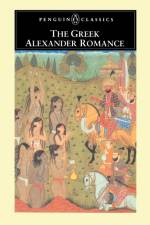
Mystery surrounds the parentage of Alexander, the prince born to Queen Olympias. Is his father Philip, King of Macedonia, or Nectanebo, the mysterious sorcerer who seduced the queen by trickery? One thing is certain: the boy is destined to conquer the known world. He grows up to fulfil this prophecy, building a mighty empire that spans from Greece and Italy to Africa and Asia. Begun soon after the real Alexander's death and expanded in the centuries that followed, The Greek Alexander Myth depicts the life and adventures of one of history's greatest heroes - taming the horse Bucephalus, meeting the Amazons and his quest to defeat the King of Persia. Including such elements of fantasy as Alexander's ascent to heaven borne by eagles, this literary masterpiece brilliantly evokes a lost age of heroism.
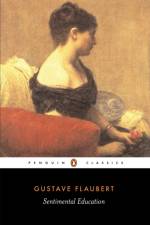
Sentimental Education begins with the hero - Frederic Moreau - leaving Paris and returning to the provinces and his mother. Part love story, part historical novel and satire it tells of how Moreau is driven by passion for an unattainable older woman. His 'sentimental education' turns out to be more of an anxious quest than a happy one, echoing Flaubert's own life experience of unrequited love. Packed with vivid detail and characterised by its historical authenticity, the book was described by Flaubert as 'the moral history of the men of my generation'.
Abonner på vårt nyhetsbrev og få rabatter og inspirasjon til din neste leseopplevelse.
Ved å abonnere godtar du vår personvernerklæring.