










Gjør som tusenvis av andre bokelskere
Abonner på vårt nyhetsbrev og få rabatter og inspirasjon til din neste leseopplevelse.
Ved å abonnere godtar du vår personvernerklæring.Du kan når som helst melde deg av våre nyhetsbrev.

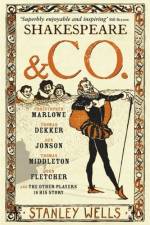
'Enjoyable, lively such a pleasure to read renders the drama of Shakespeare s contemporaries more than fringe entertainment Independent Shakespeare is one of the greatest of all English figures, considered a genius for all time. Yet as this enthralling book shows, he was at heart a man of the theatre, one among a community of artists in the teeming world of Renaissance London from the enigmatic spy Christopher Marlowe to the self-aggrandizing Ben Jonson, from the actor Richard Burbage to the brilliant Thomas Middleton. By bringing Shakespeare s contemporaries to life, Shakespeare & Co throws fresh new light on the man himself. Warm, cheerful, generous Wells sketches a whole gallery of Shakespeare s fellow playwrights He brings each vividly to life, making you feel that you ve met them personally in some Blackfriars tavern Simon Callow It was a time and place teeming with excitement, anecdote and incident, and Wells, in this richly enjoyable work, brings it to life with a novelist s sense of the telling detail Dominic Dromgoole Enthralling Observer This is one of the most sane and exciting books on Shakespeare I have read for a long time Scotland on Sunday
Half a century after their deaths, the dictatorships of Stalin and Hitler still cast a long and terrible shadow over the modern world. They were the most destructive and lethal regimes in history, murdering millions. They fought the largest and costliest war in all history. Yet millions of Germans and Russians enthusiastically supported them and the values they stood for. In this first major study of the two dictatorships side-by-side Richard Overy sets out to answer the question: How was dictatorship possible? How did they function? What was the bond that tied dictator and people so powerfully together? He paints a remarkable and vivid account of the different ways in which Stalin and Hitler rose to power, and abused and dominated their people. It is a chilling analysis of powerful ideals corrupted by the vanity of ambitious and unscrupulous men.
'Woolf is modern ... With Joyce and Eliot she has shaped a literary century' Jeanette WintersonVirginia Woolf tested the boundaries of fiction in these short stories, developing a new language of sensation, feeling and thought, and recreating in words the 'swarm and confusion of life'. Defying categorization, the stories range from the more traditional narrative style of 'Solid Objects' through the fragile impressionism of 'Kew Gardens' to the abstract exploration of consciousness in 'The Mark on the Wall'.Edited with an Introduction and Notes by Sandra Kemp
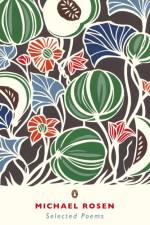
Michael Rosen's Selected Poems is a wonderfully moving sequence of prose poems extracted from his acclaimed autobiographical triptych, Carrying the Elephant, This is Not My Nose and In the Colonie. In a series of artful, deceptively simple poems, Rosen covers a vast terrain, collating vivid and fragmentary memories from his left-wing Jewish upbringing, his teenage holiday at a socialist summer camp in France, his London childhood and the death of his eighteen-year-old son from meningitis. He takes in, along the way, marriage, divorce, births and the undiagnosed illness (an underactive thyroid) from which Rosen suffered for ten years.
'Shall I embrace you, must I let you go? Again you haunt me: come then, hold me fast!'Goethe viewed the writing of poetry as essentially autobiographical and the works selected in this volume represent over sixty years in the life of the poet. In early poems such as 'Prometheus' he rails against religion in an almost ecstatic fervour, while 'To the Moon' is an enigmatic meditation on the end of a love affair. The Roman Elegies show Goethe's use of Classical metres in homage to abcient Rome and its poets, and 'The Diary' , supressed for more than a century, is a narrative poem whose eroticism is unusually combined with its morality. Arranged chronologically, David Luke's verse translations are set alonjgside the German orginals to give a picture of Goethe's poetic development. This edition also includes an introduction and notes placing the poems in the context of the poet's life and times.
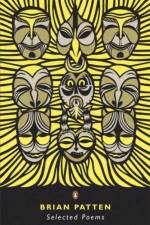
A selection of Brian Patten's best work over the last forty-five years, chosen by the poet himself. The earliest of these poems, 'Sleep Now', was written when Patten was fifteen, the latest when he was sixty. Presented in rough chronological order, the selection includes a dozen new poems.
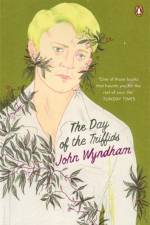
'One of those books that haunts you for the rest of your life' Sunday TimesWhen a freak cosmic event renders most of the Earth's population blind, Bill Masen is one of the lucky few to retain his sight. The London he walks is crammed with groups of men and women needing help, some ready to prey on those who can still see. But another menace stalks blind and sighted alike. With nobody to stop their spread the Triffids, mobile plants with lethal stingers and carnivorous appetites, seem set to take control.The Day of the Triffids is perhaps the most famous catastrophe novel of the twentieth century and its startling imagery of desolate streets and lurching, lethal plant life retains its power to haunt today.
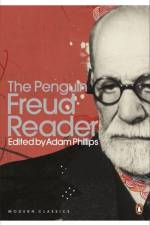
Here are the essential ideas of psychoanalytic theory, including Freud's explanations of such concepts as the Id, Ego and Super-Ego, the Death Instinct and Pleasure Principle, along with classic case studies like that of the Wolf Man. Adam Phillips's marvellous selection provides an ideal overview of Freud's thought in all its extraordinary ambition and variety. Psychoanalysis may be known as the 'talking cure', yet it is also and profoundly, a way of reading. Here we can see Freud's writings as readings and listenings, deciphering the secrets of the mind, finding words for desires that have never found expression. Much more than this, however, The Penguin Freud Reader presents a compelling reading of life as we experience it today, and a way in to the work of one of the most haunting writers of the modern age.
One of fifteen volumes in the new Freud series commissioned for Penguin by series editor Adam Phillips. Part of a plan to generate a new, non-specialist Freud for a wide readership, which goes way beyond the institutional/clinical market and presents material to the reader in a new way. This volume will contain NEW INTRODUCTORY LECTURES IN PSYCHOANALYSIS and AN OUTLINE OF PSYCHOANALYSIS.
This volume brings together Freud's main contributions to the psychology of love. His illuminating discussions of the ways in which sexuality is always psychosexuality - that there is no sexuality without fantasy, conscious or unconscious - have changed the ways we think about erotic life. In these papers Freud develops his now famous theories about the sexuality of childhood and the transgressive nature of human desire.In the famous case study of the eighteen-year-old 'Dora', we see Freud at work, both putting into practice and testing his sexual theories that were to change the modern world.
The Baron des Canolles is a man torn apart by the civil war that dominates mid-seventeenth century France. For while the na ve Gascon soldier cares little for the politics behind the battles, he is torn apart by a deep passion for two powerful women on opposing sides of the war: Nanon de Lartigues, a keen supporter of the Queen Regent Anne of Austria, and the Victomtesse de Cambes, who supports the rebellious forces of the Princess de Cond . Set around Bordeaux during the first turbulent years of the reign of Louis XIV, The Women's War sees two women taking central stage in a battle for all France. Humorous, dramatic and romantic, it offers a compelling exploration of political intrigue, the power of redemption, the force of love and the futility of war.
Benvenuto Cellini was a celebrated Renaissance sculptor and goldsmith - a passionate craftsman who was admired and resented by the most powerful political and artistic personalities in sixteenth-century Florence, Rome and Paris. He was also a murderer and a braggart, a shameless adventurer who at different times experienced both papal persecution and imprisonment, and the adulation of the royal court. Inn-keepers and prostitutes, kings and cardinals, artists and soldiers rub shoulders in the pages of his notorious autobiography: a vivid portrait of the manners and morals of both the rulers of the day and of their subjects. Written with supreme powers of invective and an irrepressible sense of humour, this is an unrivalled glimpse into the palaces and prisons of the Italy of Michelangelo and the Medici.
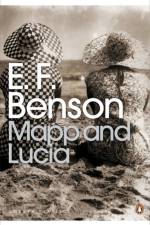
Subtly brilliant comedy of social rivalry between the wars. Emmeline Lucas (known universally to her friends as Lucia) is an arch-snob of the highest order. In Miss Elizabeth Mapp of Mallards Lucia meets her match. Ostensibly the most civil and genteel of society ladies, there is no plan too devious, no plot too cunning, no depths to which they would not sink, in order to win the battle for social supremacy. Using as their deadly weapons garden parties, bridge evenings and charming teas, the two combatants strive to outcharm each other - and the whole of Tilling society - as they vie for the position of doyenne of the town.
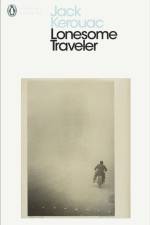
As he roams the US, Mexico, Morocco, Paris and London, Kerouac records life on the road in prose of pure poetry. Standing on the engine of a train as it rushes past fields of prickly cactus; witnessing his first bullfight in Mexico while high on opium; meditating on a sunlit roof in Tangiers or falling in love with Montmartre - Kerouac reveals both the endless diversity of human life and his own particular philosophy of self-fulfillment.
From 1970, things were changing in Ireland the Celtic Tiger had finally woken, and the rules for everything from gender roles and religion to international relations were being entirely rewritten. Luck and the Irish examines how the country has weathered these last thirty years of change, and what these changes may mean in the long run. R. F. Foster also looks at how characters as diverse as Gerry Adams, Mary Robinson, Charles Haughey and Bob Geldof have contributed to Ireland s altered psyche, and uncovers some of the scandals, corruption and marketing masterminds that have transformed Ireland and its luck.
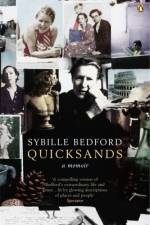
Beginning in 1956 with the publication of A Legacy, Sybille Bedford has narrated - in fiction and non-fiction - what has been by turns her sensuous, harrowing, altogether remarkable life. In this magnificent memoir, she moves from Berlin during the Great War to the artists' set on the C te d'Azur of the 1920s, through lovers, mentors, seducers and friends, and from genteel yet shabby poverty to relative comfort in London's Chelsea. Whether evoking the simple sumptuousness of a home-cooked meal or tracing the heart-rending outline of an intimate betrayal, she offers spellbinding reflections on how history imprints itself on private lives.
In 1612 Shakespeare gave evidence at the Court of Requests in Westminster it is the only occasion his spoken words are recorded. The case seems routine a dispute over an unpaid marriage-dowry but it opens up an unexpected window into the dramatist s famously obscure life-story. Charles Nicholl applies a powerful biographical magnifying glass to this fascinating episode in Shakespeare s life. Marshalling evidence from a wide variety of sources, including previously unknown documentary material on the Mountjoys, he conjures up a detailed and compelling description of the circumstances in which Shakespeare lived and worked, and in which he wrote such plays as Othello, Measure for Measure and King Lear.
Pugin was one of Britain s greatest architects and his short career one of the most dramatic in architectural history. Born in 1812, the son of the soi-disant Comte de Pugin, at 15 Pugin was working for King George IV at Windsor Castle. By the time he was 21 he had been shipwrecked, bankrupted and widowed. Nineteen years later he died, insane and disillusioned, having changed the face and the mind of British architecture.Pugin s bohemian early career as an antique dealer and scenery designer at Covent Garden came to a sudden end with a series of devastating bereavements, including the loss of his first wife in childbirth. In the aftermath he formed a vision of Gothic architecture that was both romantic and deeply religious. He became a Catholic and in 1836 published Contrasts, the first architectural manifesto. It called on the 19th century to reform its cities if it wanted to save its soul.Once launched, Pugin s career was torrential. Before he was 30 he had designed 22 churches, three cathedrals, half a dozen extraordinary houses and a Cistercian monastery. For eight years he worked with Charles Barry on the Palace of Westminster creating its sumptuous interiors, the House of Lords and the clock Big Ben that became one of Britain s most famous landmarks. He was the first architect-designer to cater for the middle-classes, producing everything from plant pots to wallpaper and early flat-pack furniture.God s Architect is the first full modern biography of this extraordinary figure. It draws on thousands of unpublished letters and drawings to recreate his life and work as architect, propagandist and romantic artist as well as the turbulent story of his three marriages, the bitterness of his last years and his sudden death at 40. It is the debut of a remarkable historian and biographer.
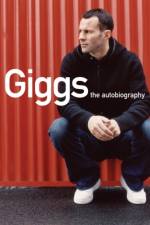
Ryan Giggs first played for Manchester United in the season before the Premiership began; back when Bryan Robson was still captain. He took possession of United's left wing and never loosened his grip. Over a fourteen year career so far, he's seen them all come and go: Cantona, Schmeichel, Beckham and the rest. Sir Alex Ferguson said of Giggs 'I knew we had an outstanding talent when we gave him his debut.' That was back in 1991, but it remains as true in 2005 as it ever was. Giggs has been a pivotal figure in United's dominance of the Premiership. There have been rivals but no other team can match the their sustained record of success over recent years. And Giggs is the only player to have played in all eight of those title winning campaigns. Off the pitch, Ryan Giggs has always closely guarded his private life. But here he opens up for the first time, sharing details of the sometimes turbulent childhood that shaped him and the relationships that have mattered to him to reveal the man behind the famous number 11 red shirt. One thing seems clear: the Old Trafford crowd will be singing 'Giggs will tear you apart again!' for a few years yet ...
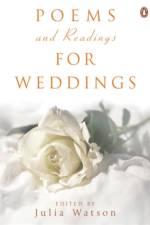
As recent reports suggest, many fewer weddings are now taking place in church. For those that are not having the traditional wedding service, it can be a problem finding suitable material to be read at a civil ceremony. And even some traditionalists like to have something extra read at their wedding lunch or party. This inspiring book offers 70 poems and readings which celebrate love and union - and offer the prospect of a lifetime's shared happiness.
Roll the diceGrace's childhood home, Chadlicote Manor, is being sold to settle family debts. Will losing her home break her heart or is it the chance for a new life?... move two spacesKaren's husband has the Manor in his sights as a chance to start over in rural paradise. But Karen prefers city living and, when a new flame turns up the heat, starting again might just mean the end of the road.... climb the ladderGemma is longing for a baby and, unlike her own loft apartment, Karen's house is an ideal family home. But the dream house can only have its dream baby if Gemma can convince her flakey sister to help out. ... to land onUp-and-coming rockstar Nick has designs on Gemma's flat. He's also taken a shine to classy estate agent, Lucinda, but she's not all she seems - and neither is he, since he's hiding a girlfriend he's looking to ditch when the sale goes through.. . . the Love Nestwhere all their troubles come home to roost!
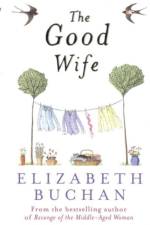
From the author of the bestselling phenomenon REVENGE OF THE MIDDLE-AGED WOMAN comes a compulsive novel about the fascinating tangle of marriage.Fanny Savage was once dutiful, clever, vulnerable and dreamy. Now married to Will, a successful politician with big ambitions, her life is a whirlwind of public engagements and loyalty to the party, a position that requires her to look good and remain silent. But she's no fool. She's well aware that the world outside her home is one that seethes with despair and danger, division and lack of faith, and how fragile happiness can be. She wonders if she's been happy coping with the transition from eager bride to politician's wife? Has she been the Good Wife? Does being good mean being truthful?
Diamond Street is Rachel Lichtenstein's fascinating account of London's Hatton Garden.Enter Hatton Garden, one of London's most mysterious streets. Home to ancient burial sites, diamond workshops, underground vaults, monastic dynasties, subterranean rivers and forgotten palaces. Here you'll meet sewer flushers, artists, goldsmiths, geologists and visionaries as Rachel Lichtenstein uncovers the history, secrets and stories that bring this vibrant Clerkenwell street and its environs to life.Praise for Diamond Street: 'Fascinating. The great joy of Lichtenstein's books is that she encourages us to look again at the places we take for granted' Daily Telegraph'Vivid and amusing, containing so many sparkling things, elegantly organized. Lichtenstein consulted a whole gang of glorious characters, collecting tales, history and lore on her way. An overwhelming trove of stories with a multiplicity of facets to intrigue' Observer'Engrossing, a superb oral historian. Lichtenstein proves to be an indefatigable explorer' Sunday Times'Lichtenstein is an artist, writer, local historian and archivist and her multi-faceted approach makes fascinating reading. She make[s] us look with a fresh eye at familiar urban spaces' Independent on Sunday'Lichtenstein has brought alive something of London . . . how one street can be a kind of Tardis, a portal to another world of parallel commerce, codes, rituals, history. A heartfelt book full of curiosity and love' The Times'A lively and rewarding addition to the capital's rich history' IndependentRachel Lichtenstein is an artist and writer. She is the co-author, with Iain Sinclair, of Rodinsky's Room and the author, most recently, of On Brick Lane.
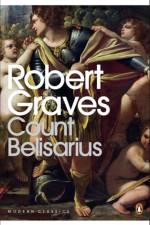
The sixth century was not a peaceful time for the Roman empire. Invaders threatened on all fronties, but they grew to respect and fear the name of Belisarius, the Emperor Justinian's greatest general. With this book Robert Graves again demonstrates his command of a vast historical subject, creating a startling and vivid picture of a decadent era.
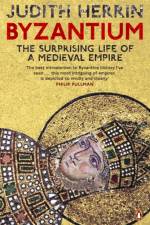
For a thousand years an extraordinary empire made possible Europe s transition to the modern world: Byzantium. An audacious and resilient but now little known society, it combined orthodox Christianity with paganism, classical Greek learning with Roman power, to produce a great and creative civilization which for centuries held in check the armies of Islam. Judith Herrin s concise and compelling book replaces the standard chronological approach of most histories of Byzantium. Instead, each short chapter is focused on a theme, such as a building (the great church of Hagia Sophia), a clash over religion (iconoclasm), sex and power (the role of eunuchs), an outstanding Byzantine individual (the historian Anna Komnene), a symbol of civilization (the fork), a battle for territory (the crusades). In this way she makes accessible and understandable the grand sweeps of Byzantine history, from the founding of its magnificent capital Constantinople (modern Istanbul) in 330, to its fall to the Ottoman Turks in 1453.
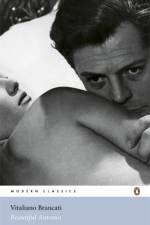
Having spent some time in Rome, Antonio - the handsomest young man in Catania - returns to his native town with the reputation of being a playboy and with a long list of amorous adventures behind him. To please his father, Antonio agrees to marry the beautiful Barbara. A year after their marriage however - scandal erupts. Barbara is still a virgin! The bride s family attempt to annul the marriage and Antonio s honour seems irrevocably lost.
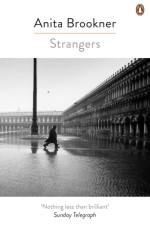
Strangers is the twenty fourth novel by Anita Brookner, the Booker Prize winning author of Hotel du Lac. Paul Sturgis is a retired banker manager who lives alone in a dark little flat. He walks alone and dines alone, seeking out and taking pleasure in small exchanges with strangers: the cheerful Australian girl who cuts his hair, the lady at the drycleaners. His only relative, and only acquaintance, is a widowed cousin by marriage - herself a virtual stranger - to whom he pays ritualistic visits on a Sunday afternoon. Trying to make sense of his current solitary state, and fearing that his destiny may be to die among strangers, Sturgis trawls through memories of his failed relationships and finds himself longing for companionship, or at the very least a conversation. But then a chance encounter with a stranger - a recently divorced and demanding younger woman - shakes up his routine and when an old girlfriend appears on the scene, Sturgis is forced to make a decision about how (and with whom) he wants to spend the rest of his days . . . 'Each book is a prayer bead on a string, and each prayer is a secular, circumspect prayer, a prayer and a protest and a charm against encroaching night' Hilary Mantel, Guardian'No one writes with more skill and honesty about the human condition and this book is possibly her finest' Julie Myerson, Observer'A novel of great stylistic beauty and psychological truth. As great a reflection on fear and regret as Philip Larkin or Beckett' Guardian'Like Graham Greene, she draws the reader into a world that has a character and signature all of its own . . . Strangers is a novel of sober brilliance, and the unerring, unflinching Brookner is still a much underestimated novelist' Helen Dunmore, The TimesAnita Brookner was born in south London in 1928, the daughter of a Polish immigrant family. She trained as an art historian, and worked at the Courtauld Institute of Art until her retirement in 1988. She published her first novel, A Start in Life, in 1981 and her twenty-fourth, Strangers, in 2009. Hotel du Lac won the 1984 Booker Prize. As well as fiction, Anita Brookner has published a number of volumes of art criticism.
Who has said what about organizations and their management? This handy compendium gives easy access to the principal ideas of the leading authorities. Brief, clear resumes bring out the main thrust of their thinking. The fifth edition of this evergreen resource for student and manager alike summarises the work of a wide range of experts to provide a truly comprehensive overview of the theory and practice of organization management. It covers the structure and national and international environments of organizations, management problems, managerial decision-making and influence, people problems, and organizational change and learning.
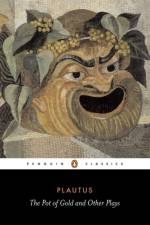
One of the supreme comic writers of the Roman world, Plautus (c.254-184 BC), skilfully adapted classic Greek comic models to the manners and customs of his day. This collection features a varied selection of his finest plays, from the light-hearted comedy Pseudolus, in which the lovesick Calidorus and his slave try to liberate his lover from her pimp, to the more subversive The Prisoners, which raises serious questions about the role of slavery. Also included are The Brothers Menaechmus, which formed the prototype for Shakespeare's The Comedy of Errors, and The Pot of Gold, whose old miser Euclio is a glorious study in avarice. Throughout, Plautus breathes new, brilliant life into classic comic types - including deceitful twins, scheming slaves, bitter old men and swaggering soldiers - creating an entertaining critique of Roman life and values.
In The Marquise of O-, a virtuous widow finds herself unaccountably pregnant. And although the baffled Marquise has no idea when this happened, she must prove her innocence to her doubting family and discover whether the perpetrator is an assailant or lover. Michael Kohlhaas depicts an honourable man who feels compelled to violate the law in his search for justice, while other tales explore the singular realm of the uncanny, such as The Beggarwoman of Locarno, in which an old woman's ghost drives a heartless nobleman to madness, and St Cecilia, which portrays four brothers possessed by an uncontrollable religious mania. The stories collected in this volume reflect the preoccupations of Heinrich von Kleist (1777-1811) with the deceptiveness of human nature and the unpredictability of the physical world.
Abonner på vårt nyhetsbrev og få rabatter og inspirasjon til din neste leseopplevelse.
Ved å abonnere godtar du vår personvernerklæring.