






Gjør som tusenvis av andre bokelskere
Abonner på vårt nyhetsbrev og få rabatter og inspirasjon til din neste leseopplevelse.
Ved å abonnere godtar du vår personvernerklæring.Du kan når som helst melde deg av våre nyhetsbrev.

Rich in drama and humour, they include the controversial Ion, a debate on poetic inspiration; Laches, in which Socrates seeks to define bravery; and Euthydemus, which considers the relationship between philosophy and politics. Together, these dialogues provide a definitive portrait of the real Socrates and raise issues still keenly debated by philosophers, forming an incisive overview of Plato's philosophy.
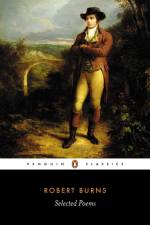
This selection gives equal weight to the two aspects of Robert Burns's reputation, as a lyricist and as a much-loved Scottish poet. Placing works in probable order of composition, it includes lyrics to his most well known songs, such as the nostalgic Auld Lang Syne, the romantic A Red, Red Rose, and the patriotic Scots What Hae. As a poet, Burns wrote with deceptive simplicity and imaginative sympathy, and demonstrated enormous range - from comic dramatic monologues such as Holy Willie's Prayer, which mocks hypocrisy, to narratives including the celebrated Tam O' Shanter, about the ghostly visions of a drunk.
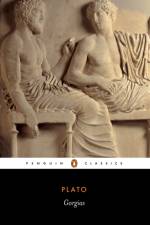
Taking the form of a dialogue between Socrates, Gorgias, Polus and Callicles, GORGIAS debates perennial questions about the nature of government and those who aspire to public office. Are high moral standards essential or should we give our preference to the pragmatist who gets things done or negotiates successfully? Should individuals be motivated by a desire for personal power and prestige, or genuine concern for the moral betterment of the citizens? These questions go to the heart of Athenian democratic principles and are more relevant than ever in today's political climate.
On 25 October 1854, during the Crimean War, the Light Brigade of the British Cavalry Division made the most magnificent and most brutal charge in military history. Almost 700 men armed with sabre and lance, charged straight at the muzzles of Russian cannons. This vivid and extraordinarily detailed account of the charge and the bloody m l e that followed, by an author with unique access to regimental archives, is told largely in the words of the survivors themselves. Terry Brighton takes the reader closer than ever before to the experience of charging down the Valley of Death.
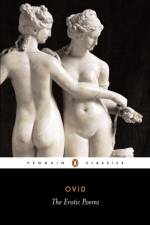
This collection of Ovid's poems deals with the whole spectrum of sexual desire, ranging from deeply emotional declarations of eternal devotion to flippant arguments for promiscuity. In the Amores, Ovid addresses himself in a series of elegies to Corinna, his beautiful, elusive mistress. The intimate and vulnerable nature of the poet revealed in these early poems vanishes in the notorious Art of Love, in which he provides a knowing and witty guide to sexual conquest - a work whose alleged obscenity led to Ovid's banishment from Rome in AD 8. This volume also includes the Cures for Love, with instructions on how to terminate a love affair, and On Facial Treatment for Ladies, an incomplete poem on the art of cosmetics.
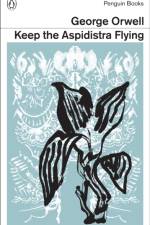
Gordon Comstock loathes dull, middle-class respectability and worship of money. He gives up a 'good job' in advertising to work part-time in a bookshop, giving him more time to write. But he slides instead into a self-induced poverty that destroys his creativity and his spirit. Only Rosemary, ever-faithful Rosemary, has the strength to challenge his commitment to his chosen way of life. Through the character of Gordon Comstock, Orwell reveals his own disaffection with the society he once himself renounced.
Mr. Artur Sammler, Holocaust survivor, intellectual, and occasional lecturer at Columbia University in 1960s New York City, is a "e;registrar of madness,"e; a refined and civilized being caught among people crazy with the promises of the future (moon landings, endless possibilities). His Cyclopean gaze reflects on the degradations of city life while looking deep into the sufferings of the human soul. "e;Sorry for all and sore at heart,"e; he observes how greater luxury and leisure have only led to more human suffering. To Mr. Sammler-who by the end of this ferociously unsentimental novel has found the compassionate consciousness necessary to bridge the gap between himself and his fellow beings-a good life is one in which a person does what is "e;required of him."e; To know and to meet the "e;terms of the contract"e; was as true a life as one could live.
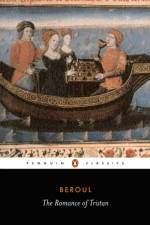
One of the earliest extant versions of the Tristan and Yseut story, Beroul's French manuscript of The Romance of Tristan dates back to the middle of the twelfth century. It recounts the legend of Tristan, nephew of King Mark of Cornwall, and the king's Irish wife Yseut, who fall passionately in love after mistakenly drinking a potion. Their illicit romance remains secret for many years, but the relentless suspicion of the king's barons and the fading effects of the magic draught eventually lead to tragedy for the lovers. While Beroul's work emphasizes the impulsive and often brutal behaviour of the characters, its sympathetic depiction of two people struggling against their destiny is one of the most powerful versions of this enduringly popular legend.
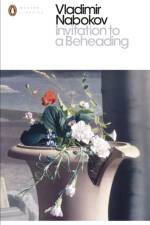
Written in Berlin in 1934, Invitation to a Beheading contains all the surprise, excitement and magical intensity of a work created in two brief weeks of sustained inspiration. It takes us into the fantastic prison-world of Cincinnatus, a man condemned to death and spending his last days in prison not quite knowing when the end will come. Nabokov described the book as a violin in a void. The worldling will deem it a trick. Old men will hurriedly turn from it to regional romances and the lives of public figures The evil-minded will perceive in little Emmie a sister of little Lolita But I know a few readers who will jump up, ruffling their hair .
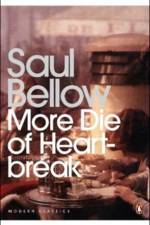
Kenneth Trachtenberg, the witty and eccentric narrator of More Die ofHeartbreak, has left his native Paris for the Midwest. He has come to benear his beloved uncle, the world-renowned botanist Benn Crader, self-described "e;plant visionary."e; While his studies take him around the world, Benn, a restless spirit, has not been able to satisfy his longings after his first marriage and lives from affair to affair and from "e;bliss to breakdown."e; Imagining that a settled existence will end his anguish, Benn ties the knot again, opening the door to a flood of new torments. As Kenneth grapples with his own problems involving his unusual lady-friend Treckie, the two men try to figure out why gifted and intelligent people invariably find themselves "e;knee-deep in the garbage of a personal life."e;
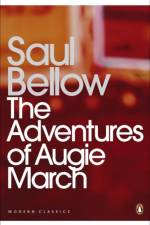
'The Adventures of Augie March is the Great American Novel. Search no further' Martin AmisA penniless and parentless Chicago boy growing up in the Great Depression, Augie March drifts through life latching on to a wild succession of occupations, including butler, thief, dog-washer, sailor and salesman. He is a 'born recruit', easily influenced by others who try to mould his destiny. Not until he tangles with the glamorous Thea, a huntress with a trained eagle, can he attempt to break free. A modern day everyman on an odyssey in search of reality and identity, Augie March is the star of star performer in a richly observed human variety show, a modern-day Columbus in search of reality and fulfilment.The Adventures of Augie March includes an introduction by Christopher Hitchens in Penguin Modern Classics.'Funny, poignant, crowded with carnivalesque types and yet narrated by a voice that is lonely and simple, it is Bellow's fat comic masterpiece' Observer
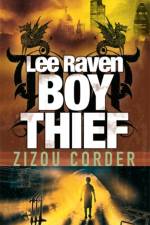
Lee Raven, boy thief, has stolen something he really didn't mean to. Now he faces a perilous flight through London (and the murky sewers below) as he tries to escape capture because Lee has stolen the Book of Nebo, a book that has existed for thousands of years and tells every story and legend known to man. It's priceless. Some will even kill to possess it. The pressure mounts and the future of Nebo is in Lee's hands can he prevent the most dangerous ending of them all?
An Icelandic saga which mixes realism with wild gothic imagination and history with eerie tales of hauntings. It dramatizes a 13th century view of the past, from the pagan anarchy of the Viking age to the settlement of Iceland, the coming of Christianity and the beginnings of organized society.
Coronation Year, 1953, and in Oldbury a Coronation football competition is organized. The boys from the bottom pitch get a team up, but there's no chance they'll win, of course. They're just the odds and sods one of them is even a girl but they're all football crazy and ready and eager to beat off the opposition.A funny and moving story of football and friendship in a world when the streets were full of kids and empty of cars. Not only for boys and girls of 9+, there's a real pull of nostalgia for adults as well. And, of course, for all lovers of football, whether on the pitch or in the park.
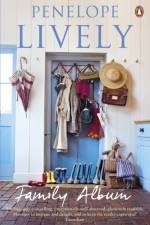
*NOMINATED FOR THE COSTA NOVEL AWARD*Family Album 'a hugely enjoyable read' from Booker Prize winner Penelope Lively'This novel should delight her regular readers and ensnare new ones' Evening StandardAllersmead is a big shabby Victorian suburban house. The perfect place to grow up for elegant Sandra, difficult Gina, destructive Paul, considerate Katie, clever Roger and flighty Clare.But was it? Now adults, the children return to Allersmead one by one. To their home-making mother and aloof writer father, and a house that for years has played silent witness to a family's secrets. And one devastating secret of which no one speaks . . .'One of those ridiculously simple, ridiculously readable novels whose artistry only becomes apparent when you put it down' Sunday Telegraph'A pleasure to read, hugely enjoyable, consistently absorbing, hilarious' IndependentPenelope Lively is the author of many prize-winning novels and short-story collections for both adults and children. She won the 1987 Booker Prize for her highly acclaimed novel Moon Tiger. She is a popular writer for children and has won both the Carnegie Medal and the Whitbread Award. She was appointed CBE in the 2001 New Year's Honours List, and DBE in 2012. Penelope Lively lives in London.
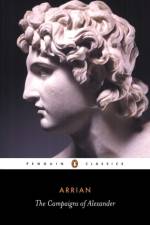
Although written over four hundred years after Alexander's death, Arrian's account of the man and his achievements is the most reliable we have. Arrian's own experience as a military commander gave him unique insights into the life of the world's greatest conqueror. He tells of Alexander's violent suppression of the Theban rebellion, his defeat of Persia and campaigns through Egypt and Babylon - establishing new cities and destroying others in his path. While Alexander emerges as a charismatic leader, Arrian succeeds brilliantly in creating an objective portrait of a man of boundless ambition, who was exposed to the temptations of power.
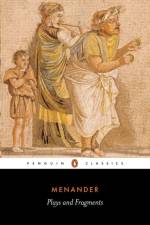
Menander (c. 341-291 BC) was the foremost innovator of Greek New Comedy, a dramatic style that moved away from the fantastical to focus upon the problems of ordinary Athenians. This collection contains the full text of 'Old Cantankerous' (Dyskolos), the only surviving complete example of New Comedy, as well as fragments from works including 'The Girl from Samos' and 'The Rape of the Locks', all of which are concerned with domestic catastrophes, the hazards of love and the trials of family life. Written in a poetic style regarded by the ancients as second only to Homer, these polished works - profoundly influential upon both Roman playwrights such as Plautus and Terence, and the wider Western tradition - may be regarded as the first true comedies of manners.
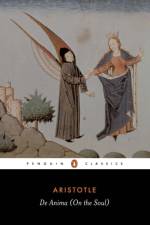
For the Pre-Socratic philosophers the soul was the source of movement and sensation, while for Plato it was the seat of being, metaphysically distinct from the body that it was forced temporarily to inhabit. Plato's student Aristotle was determined to test the truth of both these beliefs against the emerging sciences of logic and biology. His examination of the huge variety of living organisms - the enormous range of their behaviour, their powers and their perceptual sophistication - convinced him of the inadequacy both of a materialist reduction and of a Platonic sublimation of the soul. In De Anima, he sought to set out his theory of the soul as the ultimate reality of embodied form and produced both a masterpiece of philosophical insight and a psychology of perennially fascinating subtlety.
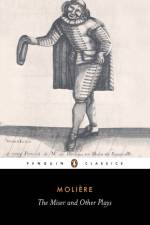
Moli re combined all the traditional elements of comedy - wit, slapstick, spectacle and satire - to create richly sophisticated and enduringly popular dramas. The Miser is the story of Harpagon, a mean-spirited old man who becomes obsessed with making money out of the marriage of his children, while The Hypochondriac, another study in obsession, is a brilliant satire on the medical profession. The School for Wives, in which an ageing domestic tyrant is foiled in his plans to marry his young ward, provoked such an outcry that Moli re followed it with The School for Wives Criticized - a witty retort to those who disapproved of the play's supposed immorality. And while Don Juan is the darkest and most tragic of all the plays in this collection, it still mocks the soullessness of the skinflint with scathing irony.
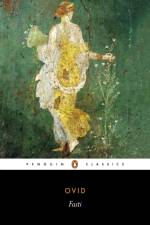
Written after he had been banished to the Black Sea city of Tomis by Emperor Augustus, the Fasti is Ovid's last major poetic work. Both a calendar of daily rituals and a witty sequence of stories recounted in a variety of styles, it weaves together tales of gods and citizens together to explore Rome's history, religious beliefs and traditions. It may also be read as a subtle but powerful political manifesto which derides Augustus' attempts to control his subjects by imposing his own mythology upon them: after celebrating the emperor as a Jupiter-on-earth, for example, Ovid deliberately juxtaposes a story showing the king of the gods as a savage rapist. Endlessly playful, this is also a work of integrity and courage, and a superb climax to the life of one of Rome's greatest writers.
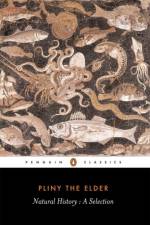
Pliny's Natural History is an astonishingly ambitious work that ranges from astronomy to art and from geography to zoology. Mingling acute observation with often wild speculation, it offers a fascinating view of the world as it was understood in the first century AD, whether describing the danger of diving for sponges, the first water-clock, or the use of asses' milk to remove wrinkles. Pliny himself died while investigating the volcanic eruption that destroyed Pompeii in AD 79, and the natural curiosity that brought about his death is also very much evident in the Natural History - a book that proved highly influential right up until the Renaissance and that his nephew, Pliny the younger, described 'as full of variety as nature itself'.
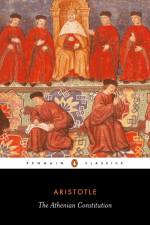
Probably written by a student of Aristotle, The Athenian Constitution is both a history and an analysis of Athens' political machinery between the seventh and fourth centuries BC, which stands as a model of democracy at a time when city-states lived under differing kinds of government. The writer recounts the major reforms of Solon, the rule of the tyrant Pisistratus and his sons, the emergence of the democracy in which power was shared by all free male citizens, and the leadership of Pericles and the demagogues who followed him. He goes on to examine the city's administration in his own time - the council, the officials and the judicial system. For its information on Athens' development and how the democracy worked, The Athenian Constitution is an invaluable source of knowledge about the Athenian city-state.
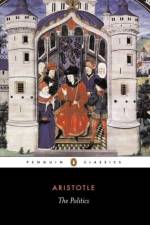
Twenty-three centuries after its compilation, 'The Politics' still has much to contribute to this central question of political science. Aristotle's thorough and carefully argued analysis is based on a study of over 150 city constitutions, covering a huge range of political issues in order to establish which types of constitution are best - both ideally and in particular circumstances - and how they may be maintained. Aristotle's opinions form an essential background to the thinking of philosophers such as Thomas Aquinas, Machiavelli and Jean Bodin and both his premises and arguments raise questions that are as relevant to modern society as they were to the ancient world.
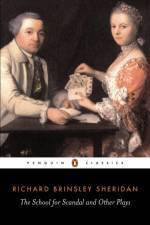
The three plays collected in this volume demonstrate Sheridan's unerring ability to create unrivalled comedy out of ingenious plots, witty repartee, farcical situations and flamboyant characters. And while he never overtly moralizes, Sheridan uses brilliant comedy to deflate hypocrisy and satirize the manners of his age. In The Rivals, Captain Absolute becomes his own rival for the hand of Lydia Languish - wooing her under another name, while her aunt, the verbally inept Mrs Malaprop, wishes her to marry the real Captain. School for Scandal continues the theme of imposture when Sir Oliver tests his nephews by appearing to them in disguise, and learns that reputation and the approval of society are of little value. And The Critic, featuring the pompous Puff and the arrogant Sneer, is a mocking depiction of the theatre, playwrights and, of course, critics.
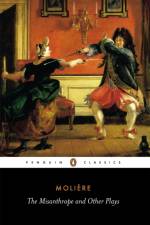
In the seventeenth century, Moli re raised comedy to the pitch of great art and, three centuries later, his plays are still a source of delight. He created a new synthesis from the major comic traditions at his disposal. This collection demonstrates the range of Moli re's comic vision, his ability to move between the broad and basic ploys of farce to the more subtle and sophisticated level of high comedy. The Misanthrope appears along with Such Preposterously Precious Ladies, Tartuffe, A Doctor Despite Himself, The Would-Be Gentleman, and Those Learned Ladies.
The plays in this volume all contain Aristophanes' trademark bawdy comedy and dazzling verbal agility. In THE BIRDS, two frustrated Athenians join the birds to build the utopian city of 'Much Cuckoo in the Clouds'. THE KNIGHTS is a venomous satire on Cleon, a prominent Athenian demagogue, while THE ASSEMBLY WOMEN deals with the battle of the sexes as the women of Athens infiltrate the all-male Assembly in disguise. The lengthy conflict with Sparta is the subject of PEACE, inspired by the hope of a settlement in 421 BC, and WEALTH reflects on the economic catastrophe that hit Athens after the war.
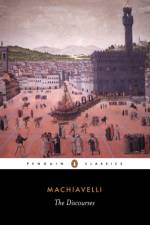
Few figures in intellectual history have proved as notorious and ambiguous as Niccol Machiavelli. But while his treatise The Prince made his name synonymous with autocratic ruthlessness and cynical manipulation, The Discourses (c.1517) shows a radically different outlook on the world of politics. In this carefully argued commentary on Livy s history of republican Rome, Machiavelli proposed a system of government that would uphold civic freedom and security by instilling the virtues of active citizenship, and that would also encourage citizens to put the needs of the state above selfish, personal interests. Ambitious in scope, but also clear-eyed and pragmatic, The Discourses creates a modern theory of republic politics.Leslie J. Walker s definitive translation has been revised by Brian Richardson and is accompanied by an introduction by Bernard Crick, which illuminates Machiavelli s historical context and his new theories of politics. This edition also includes suggestions for further reading and notes.
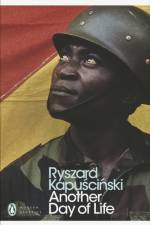
'This is a very personal book, about being alone and lost'. In 1975 Kapuscinski's employers sent him to Angola to cover the civil war that had broken out after independence. For months he watched as Luanda and then the rest of the country collapsed into a civil war that was in the author's words 'sloppy, dogged and cruel'. In his account, Kapuscinski demonstrates an extraordinary capacity to describe and to explain the individual meaning of grand political abstractions.
Imagism was a brief, complex yet influential poetic movement of the early 1900s, a time of reaction against late nineteenth-century poetry which Ezra Pound, one of the key imagist poets, described as a doughy mess of third-hand Keats, Wordsworth half-melted, lumpy . In contrast, imagist poetry, although riddled with conflicting definitions, was broadly characterized by brevity, precision, purity of texture and concentration of meaning: as Pound stated, it should use no superfluous word, no adjective, which does not reveal something it does not use images as ornaments. The image itself is the speech . It was this freshness and directness of approach which means that, as Peter Jones says in his invaluable Introduction, imagistic ideas still lie at the centre of our poetic practice .
Widely regarded as the first modern autobiography, The Confessions is an astonishing work of acute psychological insight. Jean-Jacques Rousseau (1712-78) argued passionately against the inequality he believed to be intrinsic to civilized society. In his Confessions he relives the first fifty-three years of his radical life with vivid immediacy - from his earliest years, where we can see the source of his belief in the innocence of childhood, through the development of his philosophical and political ideas, his struggle against the French authorities and exile from France following the publication of mile. Depicting a life of adventure, persecution, paranoia, and brilliant achievement, The Confessions is a landmark work by one of the greatest thinkers of the Enlightenment, which was a direct influence upon the work of Proust, Goethe and Tolstoy among others.
Abonner på vårt nyhetsbrev og få rabatter og inspirasjon til din neste leseopplevelse.
Ved å abonnere godtar du vår personvernerklæring.