

Gjør som tusenvis av andre bokelskere
Abonner på vårt nyhetsbrev og få rabatter og inspirasjon til din neste leseopplevelse.
Ved å abonnere godtar du vår personvernerklæring.Du kan når som helst melde deg av våre nyhetsbrev.

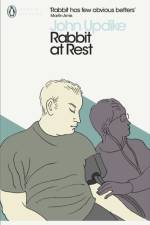
It's 1989, and Harry 'Rabbit' Angstrom is far from restful. Fifty-six and overweight, he has a struggling business on his hands and a heart that is starting to fail. His family, too, are giving him cause for concern. His son Nelson is a wreck of a man, a cocaine addict with shattered self-respect. Janice, his wife, has decided that she wants to be a working girl. And as for Pru, his daughter-in-law, she seems to be sending out signals to Rabbit that he knows he should ignore, but somehow can't. He has to make the most of life, after all. He doesn't have much time left ...
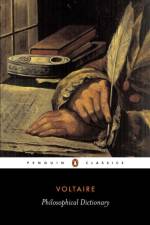
Voltaire's Philosophical Dictionary, first published in 1764, is a series of short, radical essays - alphabetically arranged - that form a brilliant and bitter analysis of the social and religious conventions that then dominated eighteenth-century French thought. One of the masterpieces of the Enlightenment, this enormously influential work of sardonic wit - more a collection of essays arranged alphabetically, than a conventional dictionary - considers such diverse subjects as Abraham and Atheism, Faith and Freedom of Thought, Miracles and Moses. Repeatedly condemned by civil and religious authorities, Voltaire's work argues passionately for the cause of reason and justice, and criticizes Christian theology and contemporary attitudes towards war and society - and claims, as he regards the world around him: 'common sense is not so common'.
Want to Play? is the first book in P.J. Tracy's bestselling Twin Cities series.The slaying of an old couple in small town America looks like one-off act of brutal retribution. But at the same time, in Minneapolis, teams of detectives scramble to stop a sickeningly inventive serial killer striking again in a city paralysed by fear.When the two separate investigations converge on an isolated catholic boarding school, decades old secrets begin to fall away. It seems an old killer has resurfaced. Yet still the killer's real identity remains dangerously out of reach . . .Want to Play? introduces P.J. Tracy's cult thriller characters Grace MacBride and Detectives Gino and Magozzi. Follow their journeys in the rest of the series: Live Bait, Dead Run, Snow Blind, Play to Killand Two Evils.Praise for P.J. Tracy:'The thriller debut of the year' Harlan Coben'Fast paced . . . a gripping read' Guardian
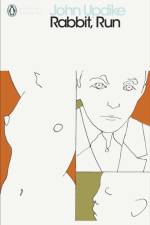
It's 1959 and Harry 'Rabbit' Angstrom, one time high school sports superstar, is going nowhere. At twenty-six he is trapped in a second-rate existence - stuck with a fragile, alcoholic wife, a house full of overflowing ashtrays and discarded glasses, a young son and a futile job. With no way to fix things, he resolves to flee from his family and his home in Pennsylvania, beginning a thousand-mile journey that he hopes will free him from his mediocre life. Because, as he knows only too well, 'after you've been first-rate at something, no matter what, it kind of takes the kick out of being second-rate'.Includes an afterword by the author.
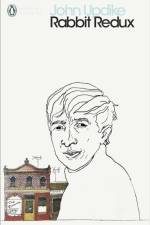
It's 1969, and the times are changing. America is about to land a man on the moon, the Vietnamese war is in full swing, and racial tension is on the rise. Things just aren't as simple as they used to be - at least, not for Rabbit Angstrom. His wife has left him with his teenage son, his job is under threat and his mother is dying. Suddenly, into his confused life - and home - comes Jill, an eighteen-year-old runaway who becomes his lover. But when she invites her friend to stay, a young black radical named Skeeter, the pair's fragile harmony soon begins to fail ...
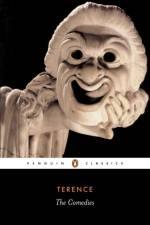
The Roman dramatist Terence (c. 186-159 BC) adapted many of his comedies from Greek sources, rendering them suitable for audiences of his own time by introducing subtler characterization and more complex plots. In his romantic play, The Girl from Andros, Terence portrays a love affair saved by a startling discovery. The Self-Tormentor focusses on a man's remorse after sending his son to war, and The Eunuch depicts a case of mistaken identity. Phormio is as rich in intrigue as a French farce, while The Mother-in-Law shows two families striving to save a marriage and The Brothers contrasts strict and lenient upbringings. With their tight plots and spare dialogue, Terence gave his plays a sense of humanity that became a model in the Renaissance and greatly influenced Moli re.
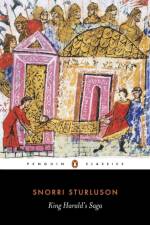
This compelling Icelandic history describes the life of King Harald Hardradi, from his battles across Europe and Russia to his final assault on England in 1066, less than three weeks before the invasion of William the Conqueror. It was a battle that led to his death and marked the end of an era in which Europe had been dominated by the threat of Scandinavian forces. Despite England's triumph, it also played a crucial part in fatally weakening the English army immediately prior to the Norman Conquest, changing the course of history. Taken from the Heimskringla - Snorri Sturluson's complete account of Norway from prehistoric times to 1177 - this is a brilliantly human depiction of the turbulent life and savage death of the last great Norse warrior-king.
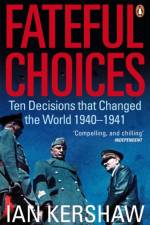
In 1940 the world was on a knife-edge. The hurricane of events that marked the opening of the Second World War meant that anything could happen. For the aggressors there was no limit to their ambitions; for their victims a new Dark Age beckoned. Over the next few months their fates would be determined. In Fateful Choices Ian Kershaw re-creates the ten critical decisions taken between May 1940, when Britain chose not to surrender, and December 1941, when Hitler decided to destroy Europe s Jews, showing how these choices would recast the entire course of history.
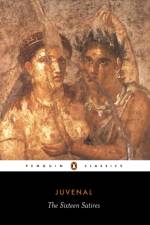
Perhaps more than any other writer, Juvenal (c. AD 55-138) captures the splendour, the squalor and the sheer energy of everyday Roman life. In The Sixteen Satires he evokes a fascinating world of whores, fortune-tellers, boozy politicians, slick lawyers, shameless sycophants, ageing flirts and downtrodden teachers. A member of the traditional land-owning class that was rapidly seeing power slip into the hands of outsiders, Juvenal also creates savage portraits of decadent aristocrats - male and female - seeking excitement among the lower orders of actors and gladiators, and of the jumped-up sons of newly-rich former slaves. Constantly comparing the corruption of his own generation with its stern and upright forebears, Juvenal's powers of irony and invective make his work a stunningly satirical and bitter denunciation of the degeneracy of Roman society
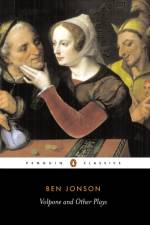
The three plays collected in this volume depict the faults, errors and foibles of ordinary people with exuberant humour, savage satire and acute observations. Volpone portrays a rich Venetian who pretends to be dying so that his despised acquaintances will flock to his bedside with extravagant gifts in hope of an inheritance. The Alchemist also deals with greed and gullibility, as a rascally trio of confidence tricksters, claiming to have the legendary Philosopher's Stone, fool a series of victims who are hoping to make some easy money. And in a wonderfully energetic portrait of Jacobean life, Bartholomew Fair shows a diverse group of Londoners sampling the delights and temptations of the Fair - and the traders, prostitutes and cutpurses who set out to exploit them.
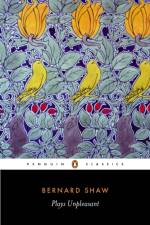
With Plays Unpleasant, Shaw issued a radical challenge to his audiences' complacency and exposed social evils through his dramatization of the moral conflicts between youthful idealism and economic reality, promiscuity and marriage, and the duties of women to others and to themselves. His first play, Widowers' Houses, depicts Harry Trench's dilemma on learning that the inheritance of his fianc e comes from her father's income as a slum landlord. In The Philanderer, charismatic Leonard Charteris proposes marriage to Grace, while he is still involved with the beautiful Julia Craven - who is not inclined to give him up so easily. And in Mrs Warren's Profession, Vivie Warren is forced to reconsider her own future when she discovers that her mother's immoral earnings funded her genteel upbringing.
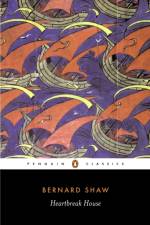
When Ellie Dunn joins a house-party at the home of the eccentric Captain Shotover, she causes a stir with her decision to marry for money rather than love, and the Captain's forthright daughter Hesione protests vigorously against the pragmatic young woman's choice. Opinion on the matter quickly divides and a lively argument about money and morality, idealism and realism ensues as Hesione's rakish husband, snobbish sister and Ellie's fianc - a wealthy industrialist - enter the debate. Written between 1916 and 1917 as war raged across Europe, Heartbreak House is a telling indictment of the generation responsible for the First World War. With its bold combination of high farce and bitter tragedy, Shaw's play remains an uncannily prophetic depiction of a society on the threshold of an abrupt awakening.
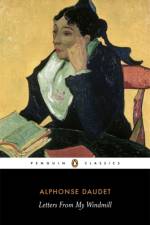
Alphonse Daudet's novels established him as the most successful writer in France by the end of the XIX century; but it was the LETTERS, first published in book form in 1869, which remained his favourite creation and has proved his most lasting. Throughout his working life in Paris Daudet never lost his almost umbilical attachment to Provence. These tales of that region are characterised by a tenderness and delicacy, a wistfulness and wry humour, which give moving substance to his claim that to invent, for him, was to remember.
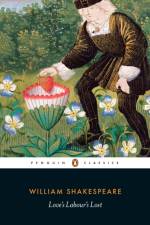
A King and his lords form an austere academy, swearing to have no contact with women for three years. But when the Princess of neighbouring France arrives with her female attendants, their pledge is quickly placed under strain. Soon all are in smitten and confusion abounds, as each struggles to secretly declare his love in this comedy of deception, desire and mistaken identity.
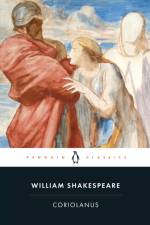
'Unable to rely on heaven, we look to Shakespeare as a contemporary conscience' Peter ConradCoriolanus, a famed warrior turned politician, is driven from Rome as a traitor when he arrogantly speaks out against popular rule and loses the good will of the starving people. Banished and embittered, he allies himself with his former enemies and begins to plot a merciless revenge on Rome. Shakespeare's politically ambiguous late tragedy of a great soldier who fails to be a great leader questions the notion of heroism and what power really means. Used and Recommended by the National TheatreGeneral Editor Stanley WellsEdited by G. R. Hibbard Introduction by Paul Prescott
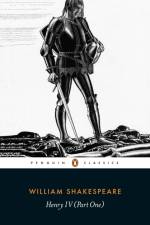
'The finest, most representative instance of what Shakespeare can do' Harold BloomPrince Hal, the son of King Henry IV, spends his time in idle pleasure with dissolute friends, among them the roguish Sir John Falstaff. But when the kingdom is threatened by rebellious forces, the prince must abandon his feckless ways. Ranging from taverns and brothels to the royal court and the battlefield, Shakespeare's masterful drama shows a prodigal son rising to meet his destiny as a ruler of men.Used and Recommended by the National TheatreGeneral Editor Stanley WellsEdited by Peter Davison Introduction by Charles Edelman
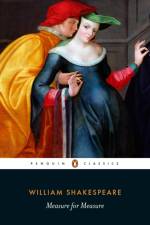
'Language is his power. His characters are precisely the words they speak' A. S. Byatt A young man is condemned to death for breaking a law forbidding sex outside marriage. When his sister pleads with the Lord Angelo to save him, he offers her a bargain - her brother's life in exchange for her virginity. One of Shakespeare's most enigmatic plays, Measure for Measure is a morally complex drama of intricate moves and countermoves that explores falsehood, justice and humanity's best and basest instincts.Used and Recommended by the National TheatreGeneral Editor Stanley WellsEdited by J. M. NosworthyIntroduction by Julia Briggs
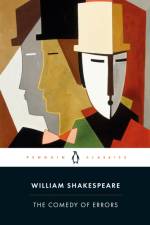
'After God, Shakespeare has created most' Alexandre DumasTwo sets of identical twins, separated at sea as babies, find themselves in the same city for the first time as adults. Soon, their friends mistake the twins for one another and bewilderment abounds. Joyful, mystical and brilliantly farcical, Shakespeare's shortest play is an early romantic comedy of confusion and ultimate reunion.Used and Recommended by the National TheatreGeneral Editor Stanley WellsEdited by Stanley WellsIntroduction by Randall Martin
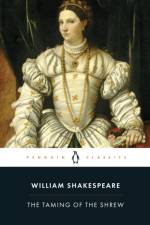
'I pity the man who cannot enjoy Shakespeare' George Bernard ShawThe beautiful and witty Katherina has sworn never to accept the demands of any would-be husband. But when she is pursued by the wily Petruchio, it seems that she has finally met her match. As he meets her caustic words with capricious cruelty, Katherina is forced to reconsider her position, in one of the greatest and most contentious of all comic battles of the sexes.Used and Recommended by the National TheatreGeneral Editor Stanley WellsEdited by G. R. HibbardIntroduction by M. J. Kidnie
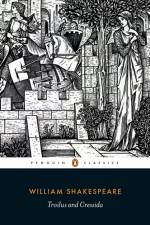
It is the seventh year of the Trojan War. The Greek army is camped outside Troy and Achilles - their military hero - refuses to fight. Inside the city Troilus, the Trojan King's son, falls in love with Cressida, whose father has defected to the Greek camp. In an exchange of prisoners the couple are split - they believe forever. The honour of lovers and soldiers is tested as a fierce battle begins and heroes must prove their worth.
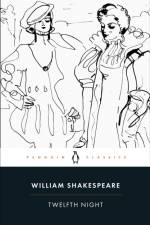
'If music be the food of love, play on,Give me excess of it'Separated from her twin brother Sebastian after a shipwreck, Viola disguises herself as a boy to serve the Duke Orsino. Wooing a countess on his behalf, she is stunned to find herself the object of her affections. Amorous intrigues, practical jokes, sexual confusion and riotous disorder ensue in this lyrical, hugely popular romantic comedy, which shows both the delights and the perils of desire. Used and Recommended by the National TheatreGeneral Editor Stanley WellsEdited by M. M. MahoodIntroduction by Michael Dobson
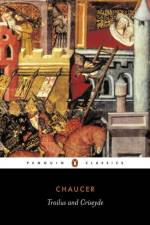
Set against the epic backdrop of the battle of Troy, Troilus and Criseyde is an evocative story of love and loss. When Troilus, the son of Priam, falls in love with the beautiful Criseyde, he is able to win her heart with the help of his cunning uncle Pandarus, and the lovers experience a brief period of bliss together. But the pair are soon forced apart by the inexorable tide of war and - despite their oath to remain faithful - Troilus is ultimately betrayed. Regarded by many as the greatest love poem of the Middle Ages, Troilus and Criseyde skilfully combines elements of comedy and tragedy to form an exquisite meditation on the fragility of romantic love, and the fallibility of humanity.
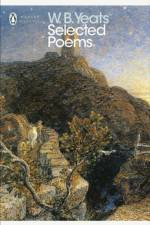
This selection of the works of W B Yeats, includes the final book from the unfairly neglected narrative poem 'The Wanderings of Oisin' and a number of lyrics from Yeats's work as poetic dramatist. It breaks new ground by allowing the reader to engage with a dozen poems in alternative versions; in many other cases it provides significant variants, so that Yeats's struggle to revise his poetry can be experienced with unusual immediacy.
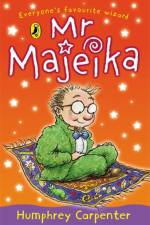
As a rule, magic carpets don't turn up in schools, but this is exactly what happens when Class Three s new teacher flies in through the classroom window and lands on the floor with a bump. Mr Majeika can behave just like any ordinary teacher if he wants to, but something has to be done about Hamish Bigmore, the class nuisance, and so he uses a little magic to turn him into a frog. And to everyone's delight it looks as if Hamish will have to remain a frog because Mr Majeika can't remember the spell to turn him back again! With Mr Majeika in charge, suddenly life at school become much more exciting there's even a magic-carpet ride to Buckingham Palace!
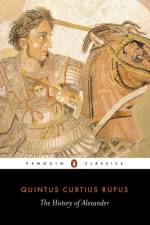
Alexander the Great (356-323 BC), who led the Macedonian army to victory in Egypt, Syria, Persia and India, was perhaps the most successful conqueror the world has ever seen. Yet although no other individual has attracted so much speculation across the centuries, Alexander himself remains an enigma. Curtius' History offers a great deal of information unobtainable from other sources of the time. A compelling narrative of a turbulent era, the work recounts events on a heroic scale, detailing court intrigue, stirring speeches and brutal battles - among them, those of Macedonia's great war with Persia, which was to culminate in Alexander's final triumph over King Darius and the defeat of an ancient and mighty empire. It also provides by far the most plausible and haunting portrait of Alexander we possess: a brilliantly realized image of a man ruined by constant good fortune in his youth.
Written in the third century BC in Alexandria, this is the only full surviving account of Jason's legendary quest for the Golden Fleece. It describes the thrilling adventures of the Argonauts on their voyage to Colchis to plead with king Aeetes for the fleece, his greatest treasure - and the Eros-inspired passion felt by his daughter, the beautiful witch-princess Medea, for the scheming Jason. Chronicling a journey that sees Jason and his crew traverse perilous seas, negotiate the treacherous Cyanean Rocks, and confront the lure of the Sirens' song, The Voyage of Argo is a masterful depiction of distinctly human heroism and betrayal caused by love. An eloquent marriage of romance and realism, it tells the definitive version of one of the greatest legends of the classical age: an epic tale of bravery, prophecy and magic.
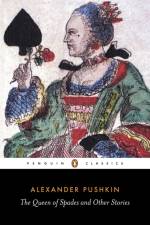
The Queen of Spades, one of his most popular and chilling short stories, tells of an inveterate card player who develops a dangerous obsession with the secret of an old lady's luck, which he believes will bring him the wealth he craves. The Negro of Peter the Great, a story based on the life Pushkin's own great-grandfather, is a vivid depiction - and criticism - of both French and Russian society, while Dubrovsky is the Byronic tale of a dispossessed young officer. The Captain's Daughter tells of a young man sent to military service - based on the actual events of the rebellion against Catherine II, it demonstrates Pushkin's unparalleled skill at blending fiction and history. Together these four stories display the versatility and innovation that earned Pushkin his reputation as a master of prose and established him as the towering figure in Russian literature.
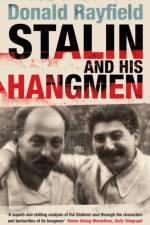
Stalin, like Hitler and other tyrants, won and held power because he had collaborators - hangmen. Drawing on newly released archival material, Donald Rayfield gives us a fuller and more colourful picture of Stalin's inner circle than ever before. Stalin was not the sole author of Stalinism. What motivated his chiefs of police, Feliks Dzierzynski, Viacheslav Manzhinsky, Genrikh Iagoda, Nikolai Ezhov and Lavrenti Beria? What did they want? What were their relations with the regime and its ruler? How did their upbringing and experience mould them? And how does the terror they create connect with the terror they felt? Stalin and His Hangmen reconstructs the psychological mechanism of a whole regime and what it held together. The extent of the misery caused by Stalin and his Hangmen can be compared in Europe only to that brought about by Hitler and his henchmen. But Stalin's heritage is, if possible, even worse than Hitler's. His rule enslaved three generations, not one, the horror of what he did has not yet been fully understood and his countrymen have not yet found the strenth to disavow him. All the more important, then, that this diabolical tale should be told.
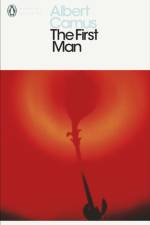
The unfinished manuscript of The First Man was discovered in the wreckage of car accident in which Camus died in 1960. Although it was not published for over thirty years, it was an instant bestseller when it finally appeared in 1994. The 'first man' is Jacques Cormery, whose poverty-stricken childhood in Algiers is made bearable by his love for his silent and illiterate mother, and by the teacher who transforms his view of the world. The most autobiographical of Camus's novels, it gives profound insights into his life and the powerful themes underlying his work.
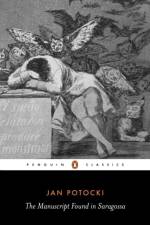
Alphonse, a young Walloon officer, is travelling to join his regiment in Madrid in 1739. But he soon finds himself mysteriously detained at a highway inn in the strange and varied company of thieves, brigands, cabbalists, noblemen, coquettes and gypsies, whose stories he records over sixty-six days. The resulting manuscript is discovered some forty years later in a sealed casket, from which tales of characters transformed through disguise, magic and illusion, of honour and cowardice, of hauntings and seductions, leap forth to create a vibrant polyphony of human voices. Jan Potocki (1761-1812) used a range of literary styles - gothic, picaresque, adventure, pastoral, erotica - in his novel of stories-within-stories, which, like the Decameron and Tales from the Thousand and One Nights, provides entertainment on an epic scale.
Abonner på vårt nyhetsbrev og få rabatter og inspirasjon til din neste leseopplevelse.
Ved å abonnere godtar du vår personvernerklæring.