




Gjør som tusenvis av andre bokelskere
Abonner på vårt nyhetsbrev og få rabatter og inspirasjon til din neste leseopplevelse.
Ved å abonnere godtar du vår personvernerklæring.Du kan når som helst melde deg av våre nyhetsbrev.

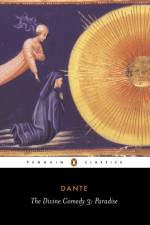
In Paradise, having plunged to the uttermost depths of Hell and climbed the Mount of Purgatory, Dante ascends to Heaven, continuing his soul's search for God, guided by his beloved Beatrice. As he progresses through the spheres of Paradise he grows in understanding, until he finally experiences divine love in the radiant presence of the deity. Examining eternal questions of faith, desire and enlightenment, Dante exercised all his learning and wit, wrath and tenderness in his creation of one of the greatest of all Christian allegories.
Baldwin's early essays have been described as 'an unequalled meditation on what it means to be black in America' . This rich and stimulating collection contains 'Fifth Avenue, Uptown: a Letter from Harlem', polemical pieces on the tragedies inflicted by racial segregation and a poignant account of his first journey to 'the Old Country' , the southern states. Yet equally compelling are his 'Notes for a Hypothetical Novel' and personal reflections on being American, on oother major artists - Ingmar Bergman and Andre Gide, Norman Mailer and Richard Wright - and on the first great conferance of Negro - American writers and artists in Paris. In his introduction Baldwin descrides the writer as requiring 'every ounce of stamina he can summon to attempt to look on himself and the world as they are' ; his uncanny ability to do just that is proclaimed on every page of this famous book.
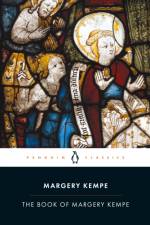
The story of the eventful and controversial life of Margery Kempe - wife, mother, businesswoman, pilgrim and visionary - is the earliest surviving autobiography in English. Here Kempe (c.1373-c.1440) recounts in vivid, unembarrassed detail the madness that followed the birth of the first of her fourteen children, the failure of her brewery business, her dramatic call to the spiritual life, her visions and uncontrollable tears, the struggle to convert her husband to a vow of chastity and her pilgrimages to Europe and the Holy Land. Margery Kempe could not read or write, and dictated her remarkable story late in life. It remains an extraordinary record of human faith and a portrait of a medieval woman of unforgettable character and courage.
Saudi Arabia - where marriages are arranged and there are no cinemas or parties to go to, where social life consists of trying to keep girls and boys apart rather than put them together. But as Rajaa Alsanea reveals in this absorbing novel, that's not the whole story: determination, mobile phones and the internet have made life easier for young Saudis, and the four girls in this novel are all finding romance even though mostly it goes badly wrong. Girls of Riyadh captures the trials and tribulations of a middle-class society quite unlike our own and blows the lid off all our preconceptions of Arab life.
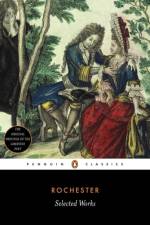
The brightest star at the court of King Charles II, John Wilmot, Earl of Rochester (1647-80), lived a life of reckless debauchery and sexual adventuring that led to his death at the age of thirty-three - described by Samuel Johnson as having 'blazed out his youth and health in lavish voluptuousness'. Rochester was also one of the wittiest and most complex poets of the seventeenth century, writing comic verse, scurrilous satires and highly explicit erotica - from the bawdy self-portrait in 'The Maimed Debauchee' and the tender passion of 'Absent from thee I languish still' to the comic world-weariness of 'Upon Nothing' and 'A Satyr against Mankind', which mocks human follies. With endless literary disguises, rhymes and alliteration, humour and humanity, Rochester's poems hold up a mirror to the extravagances and absurdities of his age.
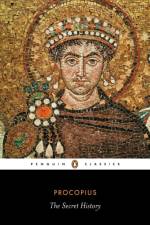
A trusted member of the Byzantine establishment, Procopius was the Empire's official chronicler, and his History of the Wars of Justinian proclaimed the strength and wisdom of the Emperor's reign. Yet all the while the dutiful scribe was working on a very different - and dangerous - history to be published only once its author was safely in his grave. The Secret History portrays the 'great lawgiver' Justinian as a rampant king of corruption and tyranny, the Empress Theodora as a sorceress and whore, and the brilliant general Belisarius as the pliable dupe of his scheming wife Antonina. Magnificently hyperbolic and highly opinionated, The Secret History is a work of explosive energy, depicting holy Byzantium as a hell of murder and misrule.
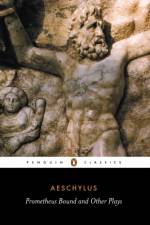
Aeschylus (525 456 BC) brought a new grandeur and epic sweep to the drama of classical Athens, raising it to the status of high art. In Prometheus Bound the defiant Titan Prometheus is brutally punished by Zeus for daring to improve the state of wretchedness and servitude in which mankind is kept. The Suppliants tells the story of the fifty daughters of Danaus who must flee to escape enforced marriages, while Seven Against Thebes shows the inexorable downfall of the last members of the cursed family of Oedipus. And The Persians, the only Greek tragedy to deal with events from recent Athenian history, depicts the aftermath of the defeat of Persia in the battle of Salamis, with a sympathetic portrayal of its disgraced King Xerxes.Philip Vellacott s evocative translation is accompanied by an introduction, with individual discussions of the plays, and their sources in history and mythology.
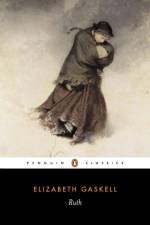
Ruth Hilton is an orphaned young seamstress who catches the eye of a gentleman, Henry Bellingham, who is captivated by her simplicity and beauty. When she loses her job and home, he offers her comfort and shelter, only to cruelly desert her soon after. Nearly dead with grief and shame, Ruth is offered the chance of a new life among people who give her love and respect, even though they are at first unaware of her secret - an illegitimate child. When Henry enters her life again, however, Ruth must make the impossible choice between social acceptance and personal pride. In writing Ruth, Elizabeth Gaskell daringly confronted prevailing views about sin and illegitimacy with her compassionate and honest portrait of a 'fallen woman'.
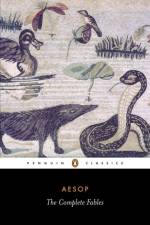
Aesop was probably a prisoner of war, sold into slavery in the early sixth century BC, who represented his masters in court and negotiations, and relied on animal stories to put across his key points. All these fables, full of humour, insight and savage wit, as well as many fascinating glimpses of ordinary life, have now been brought together for the first time in this definitive and fully annotated modern edition.
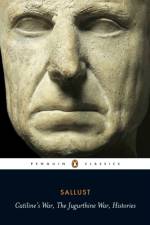
Sallust (86 c. 35 bc) is the earliest Roman historian of whom complete works survive, a senator of the Roman Republic and younger contemporary of Cicero, Pompey and Julius Caesar. His Catiline s War tells of the conspiracy in 63 bc led by L. Sergius Catilina, who plotted to assassinate numerous senators and take control of the government, but was thwarted by Cicero. Sallust s vivid account of Roman public life shows a Republic in decline, prey to moral corruption and internal strife. In The Jugurthine War he describes Rome s fight in Africa against the king of the Numidians from 111 to 105 bc, and provides a damning picture of the Roman aristocracy. Also included in this volume are the major surviving extracts from Sallust s now fragmentary Histories, depicting Rome after the death of the dictator Sulla.
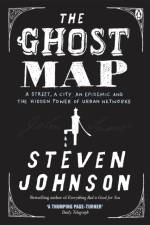
In Ghost Map Steven Johnson tells the story of the terrifying cholera epidemic that engulfed London in 1854, and the two unlikely heroes anaesthetist Doctor John Snow and affable clergyman Reverend Henry Whitehead who defeated the disease through a combination of local knowledge, scientific research and map-making. In telling their extraordinary story, Johnson also explores a whole world of ideas and connections, from urban terror to microbes, ecosystems to the Great Stink, cultural phenomena to street life. Re-creating a London full of dirt, dust heaps, slaughterhouses and scavengers, Ghost Map is about how huge populations live together, how cities can kill and how they can save us.
Mimi and Ralph have left social climbing, pushy parenting and their marital problems behind them in London, and moved west to the bucolic green depths of the country. Or so they thought. Yes, there's mud and masses of fresh air, plenty of handsome hayseeds and there's Rose, Mimi's new best friend and Dorset's answer to Martha Stewart. But what should be Shire Heaven is, it turns out, just as tricky to navigate as Notting Hell. There's low-level conflict between the racehorses in vintage/Diesel/Ralph Lauren and the brood mares in Barbour/Boden, there's guerrilla warfare between the landowners and eco-warriers and naked hostility between Old Money, New Money and No Money. Yes, in honeybourne, if you don't have:1) A landscaped garden within 1000 acres (minimum) of prime land2) A helipad for your trophy guests3) An organic farm shop selling 16 sorts of home-made sausages4) Four pony-mad polo-playing children5) A literary festival in your mini-stately6) A bottom that looks smackable in jodhpursThen, well...you're Mimi basically.And that's just the start of her problems. Mimi also has a secret. But can she keep it?
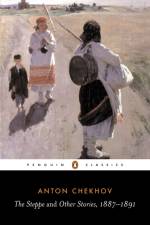
This collection of Chekhov's finest early writing reveals a young writer mastering the art of the short story. 'The Steppe', which established his reputation, is the unforgettable tale of a boy's journey to a new school in Kiev, travelling through majestic landscapes towards an unknown destiny. 'Gusev' depicts an ocean voyage, where the sea takes on a terrifying, primeval power; 'The Kiss' portrays a shy soldier's failed romantic encounter; and in 'The Duel' two men's enmity ends in farce. Haunting and highly atmospheric, all the stories in this volume show a writer emerging from the shadow of his masters - Tolstoy, Turgenev and Gogol - and discovering his own voice. They also illustrate Chekhov's genius for evoking the natural world and exploring inner lives.
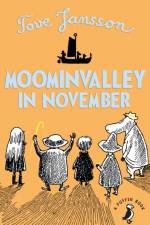
'They can't have moved away without saying a word!'Winter is coming, and the Fillyjonk, the Hemulen, Toft, Mymble, etc. are all waiting in Moominvalley to see the Moomins return home. Winter doesn't seem right without them . . .
'This is snow,' Moomintroll whispered to himself.Moomins always sleep through the winter - or they did until the year Moomintroll woke up and went exploring in the silent, snow-covered valley where the river used to scuttle along and all his friends were so busy in summer.
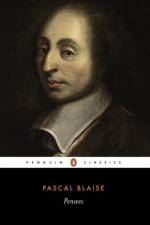
Blaise Pascal, the precociously brilliant contemporary of Descartes, was a gifted mathematician and physicist, but it is his unfinished apologia for the Christian religion upon which his reputation now rests. The Pense s is a collection of philosohical fragments, notes and essays in which Pascal explores the contradictions of human nature in pscyhological, social, metaphysical and - above all - theological terms. Mankind emerges from Pascal's analysis as a wretched and desolate creature within an impersonal universe, but who can be transformed through faith in God's grace.
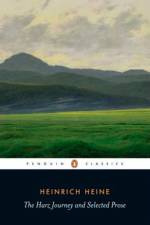
A poet whose verse inspired music by Schubert, Schumann, Mendelssohn and Brahms, Heinrich Heine (1797-1856) was in his lifetime equally admired for his elegant prose. This collection charts the development of that prose, beginning with three meditative works from the Travel Pictures, inspired by Heine's journeys as a young man to Lucca, Venice and the Harz Mountains. Exploring the development of spirituality, the later On the History of Religion and Philosophy in Germany spans the earliest religious beliefs of the Germanic people to the philosophy of Hegel, and warns with startling force of the dangers of yielding to 'primeval Germanic paganism'. Finally, the Memoirs consider Heine's Jewish heritage and describe his early childhood. As rich in humour, satire, lyricism and anger as his greatest poems, together the pieces offer a fascinating insight into a brilliant and prophetic mind.
Gerald of Wales was among the most dynamic and fascinating churchmen of the twelfth century. A member of one of the leading Norman families involved in the invasion of Ireland, he first visited there in 1183 and later returned in the entourage of Henry II. The resulting Topographia Hiberniae is an extraordinary account of his travels. Here he describes landscapes, fish, birds and animals; recounts the history of Ireland's rulers; and tells fantastical stories of magic wells and deadly whirlpools, strange creatures and evil spirits. Written from the point of view of an invader and reformer, this work has been rightly criticized for its portrait of a primitive land, yet it is also one of the most important sources for what is known of Ireland during the Middle Ages.
Scholar, churchman, diplomat and theologian, Gerald of Wales was one of the most fascinating figures of the Middle Ages and The Journey Through Wales describes his eventful tour of the country as a missionary in 1188. In a style reminiscent of a diary, Gerald records the day-to-day events of the mission, alongside lively accounts of local miracles, folklore and religious relics such as Saint Patrick's Horn, and eloquent descriptions of natural scenery that includes the rugged promontory of St David's and the vast snow-covered panoramas of Snowdonia. The landscape is evoked in further detail in The Description, which chronicles the everyday lives of the Welsh people with skill and affection. Witty and gently humorous throughout, these works provide a unique view into the medieval world.
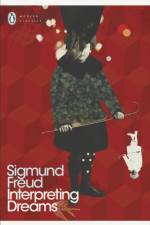
By a detailed investigation of the universal phenomenon of dreaming, Freud discovered a radical new way of exploring the unconscious and recognized that dreams are a conflict and compromise between conscious and unconscious impulses. Through his insights about dreams, Freud was able to revise his methods of treatment for neurotic patients and develop, largely through this remarkable work, his revolutionary theories of the Oedipus Complex and of the profound importance of infantile life and sexuality for the development of adults.
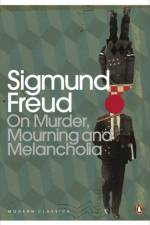
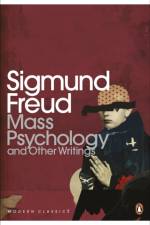
These works were written against a background of war and racism. Freud sought the sources of conflict in the deepest memories of humankind, finding clear continuities between our 'primitive' past and 'civilized' modernity. In Totem and Taboo he explores institutions of tribal life, tracing analogies between the rites of hunter-gatherers and the obsessions of urban-dwellers, while Mourning and Melancholia sees a similarly self-destructive savagery underlying individual life in the modern age, which issues at times in self-harm and suicide. And Freud's extraordinary letter to Einstein, Why War? - rejecting what he saw as the physicist's na ve pacifism - sums up his unsparing view of history in a few profoundly pessimistic, yet grimly persuasive pages.
Freud's religious unbeliefs are too easily dismissed as the standard scientific rationalism of the twentieth-century intellectual, yet he scorned the high-minded humanism of his contemporaries. In Mass Psychology and Analysis of the 'I' he explores the notion of 'mass-psychology' - his findings would prove all too prophetic in the years that followed. Writings such as A Religious Experience and The Future of an Illusion continue earlier work on the essential savagery of the civilized mind, and Moses the Man and Monotheistic Religion excavates the roots of religion and racism, which he concludes are inextricably intertwined.This remarkable collection reveals Freud not only at his most radically pessimistic, but also at his most personally courageous - engaging with his own adherences, his own antecedents, his own identity.
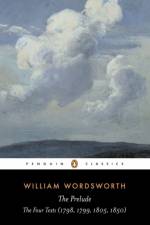
First published in July 1850, shortly after Wordsworth's death, The Prelude was the culmination of over fifty years of creative work. The great Romantic poem of human consciousness, it takes as its theme 'the growth of a poet's mind': leading the reader back to Wordsworth's formative moments of childhood and youth, and detailing his experiences as a radical undergraduate in France at the time of the Revolution. Initially inspired by Coleridge's exhortation that Wordsworth write a work upon the French Revolution, The Prelude has ultimately become one of the finest examples of poetic autobiography ever written; a fascinating examination of the self that also presents a comprehensive view of the poet's own creative vision.
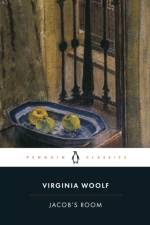
'Her first full work of the charged Modernism that would come to define her' Paris ReviewJacob Flanders is a young man passing from adolescence to adulthood in a hazy rite of passage. From his boyhood on the windswept shores of Cornwall to his days as a student in Cambridge, his elusive, chameleon-like character is gradually revealed in a stream of loosely related incidents and impressions: whether through his mother's letters, his friend's conversations, or the thoughts of the women who adore him. Then we glimpse him as a young man in 1914, caught under the glare of a London streetlamp as Europe is on the brink of war. This tantalizing novel heralded Woolf's departure from the traditional methods of the novel, with its experimental play between time and reality, memory and desire.Edited with an Introduction and Notes by Sue Roe
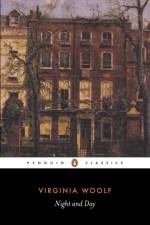
'Woolf's pivotal novel ... the writer feels her way into becoming the giantess she would be' Paris ReviewVirginia Woolf's delicate second novel is both a love story and a social comedy, yet it also subtly undermines these traditions, questioning a woman's role and the very nature of experience. Its protagonist, Katharine Hilbery, is beautiful and privileged but uncertain of her future. She must choose between becoming engaged to the oddly prosaic poet William, and her dangerous attraction to the lower-class Ralph. As she tries to decide, the lives of two other women - women's rights activist Mary Datchet and Katharine's mother, struggling with the weight of history - impinge on hers with unexpected and intriguing consequences. Edited with an Introduction and Notes by Julia Briggs
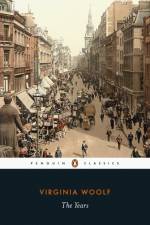
'A brilliant fantasia of all Time's problems, age and youth, change and permanence, truth and illusion' The Times Literary SupplementThe Years is the story of the Pargiter family - their intimacies and estrangements, anxieties and triumphs - mapped out against the bustling rhythms of London's streets during the first decades of the twentieth century, as their Victorian upbringing gives way to a new world, where the rules of etiquette have shifted from the drawing room to the air-raid shelter. Virginia Woolf's penultimate novel is a celebration of the resilience of the individual amid time, change, life, death and renewal.Edited with an Introduction and Notes by Jeri Johnson
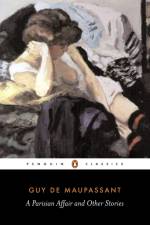
Set in the Paris of society women, prostitutes and small-minded bourgeousie, and the isolated villages of rural Normandy that de Maupassant knew as a child, the thirty-three tales in this volume are among the most darkly humorous and brilliant short stories in nineteenth-century literature. They focus on the relationships between men and women, as in the poignant fantasy of 'A Parisian Affair', between brothers and sisters, and between masters and servants. Through these relationships, Maupassant explores the dualistic nature of the human character and his stories reveal both nobility, civility and generosity, and, in stories such as 'At Sea' and 'Boule de Suif', vanity, greed and hypocrisy. Maupassant's stories repeatedly lay humanity bare with deft wit and devastating honesty.
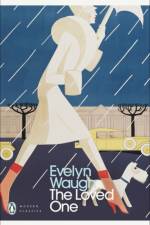
The more startling for the economy of its prose and plot, this novel's story, set among the manicured lawns and euphemisms of Whispering Glades Memorial Park in Hollywood, satirizes the American way of death and offers Waugh's memento mori.
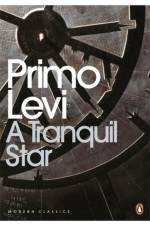
Primo Levi was one of the most astonishing voices to emerge from the twentieth century. This landmark selection of his short stories opens up a world of wonder, love, cruelty and curious twists of fate, where nothing is as it seems. In The Fugitive an office worker composes the most beautiful poem ever with unforeseen consequences, while Magic Paint sees a group of researchers develop a paint that mysteriously protects them from misfortune. Gladiators and The Knall are chilling explorations of mass violence, and in The Tranquil Star a simple story of stargazing becomes a meditation on language, imagination and infinity.
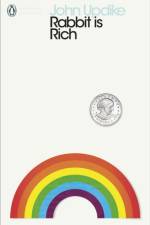
It's 1979 and Rabbit is no longer running. He's walking, and beginning to get out of breath. That's OK, though - it gives him the chance to enjoy the wealth that comes with middle age. It's all in place: he's Chief Sales Representative and co-owner of Springer motors; his wife, at home or in the club, is keeping trim; he wears good suits, and the cash is pouring in. So why is it that he finds it so hard to accept the way that things have turned out? And why, when he looks at his family, is he haunted by regrets about all those lives he'll never live?
Abonner på vårt nyhetsbrev og få rabatter og inspirasjon til din neste leseopplevelse.
Ved å abonnere godtar du vår personvernerklæring.