

Gjør som tusenvis av andre bokelskere
Abonner på vårt nyhetsbrev og få rabatter og inspirasjon til din neste leseopplevelse.
Ved å abonnere godtar du vår personvernerklæring.Du kan når som helst melde deg av våre nyhetsbrev.

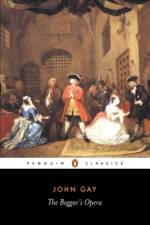
The tale of Peachum, thief-taker and informer, conspiring to send the dashing and promiscuous highwayman Macheath to the gallows, became the theatrical sensation of the eighteenth century.In THE BEGGAR'S OPERA, John Gay turned conventions of Italian opera riotously upside-down, instead using traditional popular ballads and street tunes, while also indulging in political satire at the expense of the Prime Minister, Sir Robert Walpole. Gay's highly original depiction of the thieves, informers, prostitutes and highwaymen thronging the slums and prisons of the corrupt London underworld proved brilliantly successful in exposing the dark side of a corrupt and jaded society.
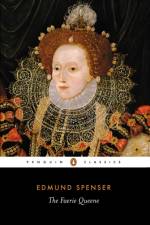
The Faerie Queene was the first epic in English and one of the most influential poems in the language for later poets from Milton to Tennyson. Dedicating his work to Elizabeth I, Spenser brilliantly united medieval romance and renaissance epic to expound the glory of the Virgin Queen. The poem recounts the quests of knights including Sir Guyon, Knight of Constance, who resists temptation, and Artegall, Knight of Justice, whose story alludes to the execution of Mary Queen of Scots. Composed as an overt moral and political allegory, The Faerie Queene, with its dramatic episodes of chivalry, pageantry and courtly love, is also a supreme work of atmosphere, colour and sensuous description.
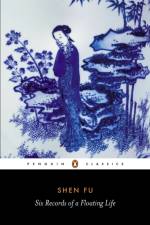
Six Records of a Floating Life (1809) is an extraordinary blend of autobiography, love story and social document written by a man who was educated as a scholar but earned his living as a civil servant and art dealer. In this intimate memoir, Shen Fu recounts the domestic and romantic joys of his marriage to Y n, the beautiful and artistic girl he fell in love with as a child. He also describes other incidents of his life, including how his beloved wife obtained a courtesan for him and reflects on his travels through China. Shen Fu's exquisite memoir shows six parallel 'layers' of one man's life, loves and career, with revealing glimpses into Chinese society of the Ch'ing Dynasty.
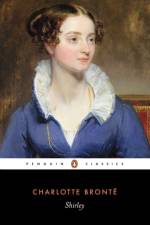
Struggling manufacturer Robert Moore has introduced labour saving machinery to his Yorkshire mill, arousing a ferment of unemployment and discontent among his workers. Robert considers marriage to the wealthy and independent Shirley Keeldar to solve his financial woes, yet his heart lies with his cousin Caroline, who, bored and desperate, lives as a dependent in her uncle's home with no prospect of a career. Shirley, meanwhile, is in love with Robert's brother, an impoverished tutor - a match opposed by her family. As industrial unrest builds to a potentially fatal pitch, can the four be reconciled? Set during the Napoleonic wars at a time of national economic struggles, Shirley (1849) is an unsentimental, yet passionate depiction of conflict between classes, sexes and generations.
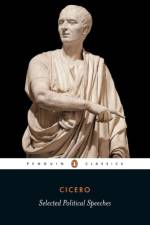
Amid the corruption and power struggles of the collapse of the Roman Republic, Cicero (106-43BC) produced some of the most stirring and eloquent speeches in history. A statesman and lawyer, he was one of the only outsiders to penetrate the aristocratic circles that controlled the Roman state, and became renowned for his speaking to the Assembly, Senate and courtrooms. Whether fighting corruption, quashing the Catiline conspiracy, defending the poet Archias or railing against Mark Antony in the Philippics - the magnificent arguments in defence of liberty which led to his banishment and death - Cicero's speeches are oratory masterpieces, vividly evocative of the cut and thrust of Roman political life.
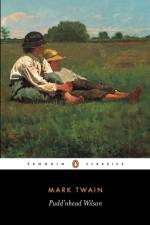
Determined that her baby son Tom shall not share her fate and remain in slavery, Roxy secretly exchanges him with his playmate Chambers, the son of her master. The two boys' lives in the quiet Missouri town of Dawson's Landing remain entwined even though they take very different directions. The indulged Tom (now heir to a fortune rightfully that of Chambers) goes to Yale, where he learns how to drink and gamble, while Chambers looks set to remain a subservient drudge. But then a strange sequence of events begins - one in which the much-derided lawyer, 'Pudd'nhead' Wilson, has a key part to play - and changes everything. Darkly ironic, blending farce and tragedy, Pudd'nhead Wilson is a complex and fascinating depiction of human nature under slavery.
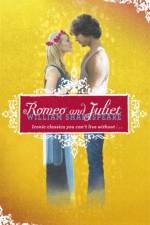
'Shakespeare invented the human as we continue to know it' Harold BloomSet in a city torn apart by feuds and gang warfare, Shakespeare's immortal drama tells the story of star-crossed lovers, rival dynasties and bloody revenge. Romeo and Juliet is a hymn to youth and the thrill of forbidden love, charged with sexual passion and violence, but also a warning of death: a dazzling combination of bawdy comedy and high tragedy. Used and Recommended by the National TheatreGeneral Editor Stanley WellsEdited by T. J. B. Spencer Introduction by Adrian Poole
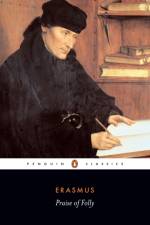
Erasmus of Rotterdam (c. 1466-1536) is one of the greatest figures of the Renaissance humanist movement, which abandoned medieval pieties in favour of a rich new vision of the individual's potential. Praise of Folly, written to amuse his friend Sir Thomas More, is Erasmus's best-known work. Its dazzling mixture of fantasy and satire is narrated by a personification of Folly, dressed as a jester, who celebrates youth, pleasure, drunkenness and sexual desire, and goes on to lambast human pretensions, foibles and frailties, to mock theologians and monks and to praise the 'folly' of simple Christian piety. Erasmus's wit, wordplay and wisdom made the book an instant success, but it also attracted what may have been sales-boosting criticism. The Letter to Maarten van Dorp, which is a defence of his ideas and methods, is also included.
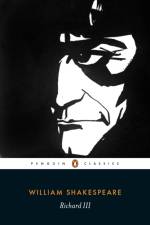
'Now is the winter of our discontent Made glorious summer by this sun of York'Shakespeare's final drama of the Wars of the Roses cycle begins as the dust settles on England after bloody civil war, and the bitter hunchback Richard, brother of the king, secretly plots to seize the throne. Charming and duplicitous, powerfully eloquent and viciously cruel, he is prepared to go to any lengths to achieve his goal. Richard III shows a man who, in his skilful manipulation of events and people, is a chilling incarnation of the temptations of power in a land shocked by war.Used and Recommended by the National TheatreGeneral Editor Stanley WellsEdited by E. A. J. HonigmannIntroduction by Michael Taylor
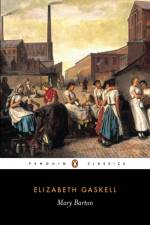
Mary Barton is beautiful but has been born poor. Her father fights for the rights of his fellow workers, but Mary wants to make a better life for them both. She rashly decides to reject her lover Jem, a struggling engineer, in the hope of marrying the rich mill-owner's son Henry Carson and securing a safe future. But when Henry is shot down in the street and Jem becomes the main suspect, Mary finds herself hopelessly torn between them. She also discovers an unpleasant truth - one that could bring tragedy upon everyone, and threatens to destroy her.
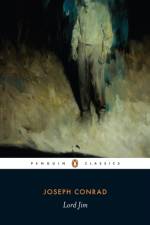
This compact novel, completed in 1900, as with so many of the great novels of the time, is at its baseline a book of the sea. An English boy in a simple town has dreams bigger than the outdoors and embarks at an early age into the sailor's life. The waters he travels reward him with the ability to explore the human spirit, while Joseph Conrad launches the story into both an exercise of his technical prowess and a delicately crafted picture of a character who reaches the status of a literary hero.
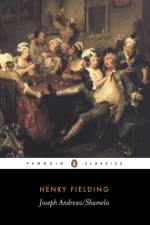
SHAMELA is a brilliant parody of Samuel Richardson's PAMELA, in which a virtuous servant girl long resists her master's advances and is eventually 'rewarded' with marriage. Fielding's far more spirited and sexually honest heroine, by contrast, merely uses coyness and mock modesty as techniques to catch a rich husband. JOSEPH ANDREWS, Fielding's first full-length novel, can also be seen as a response to Richardson, as the lascivious Lady Booby sets out to seduce her comically chaste servant Joseph, (himself in love with the much-put-upon Fanny Goodwill). As in Tom Jones, Fielding takes a huge cast of characters out on the road and exposes them to many colourful and often hilarious adventures.
Tennyson had a life-long interest in the legend of King Arthur and after the huge success of his poem 'Morte d'Arthur' he built on the theme with this series of twelve poems, written in two periods of intense creativity over nearly twenty years. Idylls of the King traces the story of Arthur's rule, from his first encounter with Guinevere and the quest for the Holy Grail to the adultery of his Queen with Launcelot and the King's death in a final battle that spells the ruin of his kingdom. Told with lyrical and dreamlike eloquence, Tennyson's depiction of the Round Table reflects a longing for a past age of valour and chivalry. And in his depiction of King Arthur he created a hero imbued with the values of the Victorian age - one who embodies the highest ideals of manhood and kingship.
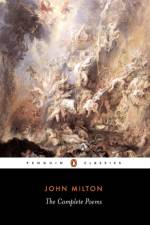
John Milton was a master of almost every type of verse, from the classical to the religious and from the lyrical to the epic. His early poems include the devotional 'On the Morning of Christ's Nativity', 'Comus', a masque, and the pastoral elegy 'Lycidas'. After Cromwell's death and the dashing of Milton's political hopes, he began composing Paradise Lost, which reflects his profound understanding of politics and power. Written when Milton was at the height of his abilities, this great masterpiece fuses the Christian with the classical in its description of the fall of Man. In Samson Agonistes, Milton's last work, the poet draws a parallel with his own life in the hero's struggle to renew his faith in God.
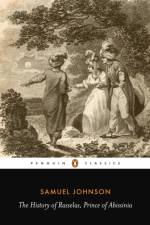
Rasselas, Prince of Abyssinia, leaves the easy life of the Happy Valley, accompanied by his sister Nekayah, her attendant Pekuah, and the much-travelled philosopher Imlac. Their journey takes them to Egypt, where they study the various conditions of men's lives, before returning home in a 'conclusion in which nothing is concluded'. Johnson's tale is not only a satire on optimism, but also an expression of truth about the human mind and its infinite capacity for hope.
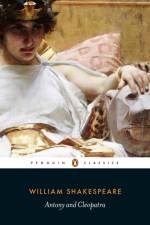
'Shakespeare's play is death-haunted from the start, and its self-glorifying lovers exist in a dream of passion' GuardianA battle-hardened soldier, Antony is one of the three leaders of the Roman world. But he is also a man in the grip of an all-consuming passion for the tempestuous and alluring queen of Egypt, Cleopatra. And when their life of pleasure together is threatened by encroaching politics, the conflict between love and duty has devastating consequences. A tragic drama of love and loss, sex and power, told in language of poetic sublimity, Antony and Cleopatra is one of Shakespeare's supreme imaginative achievements.Used and Recommended by the National TheatreGeneral Editor Stanley WellsEdited by Emrys JonesIntroduction by Ren Weis
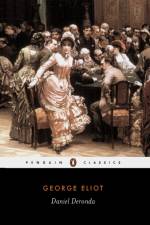
As Daniel Deronda opens, Gwendolen Harleth is poised at the roulette-table, prepared to throw away her family fortune. She is observed by Daniel Deronda, a young man groomed in the finest tradition of the English upper-classes. And while Gwendolen loses everything and becomes trapped in an oppressive marriage, Deronda's fortunes take a different turn. After a dramatic encounter with the young Jewish woman Mirah, he becomes involved in a search for her lost family and finds himself drawn into ever-deeper sympathies with Jewish aspirations and identity. 'I meant everything in the book to be related to everything else', wrote George Eliot of her last and most ambitious novel, and in weaving her plot strands together she created a bold and richly textured picture of British society and the Jewish experience within it.
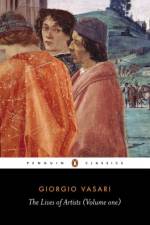
Beginning with Cimabue and Giotto in the thirteenth century, Vasari traces the development of Italian art across three centuries to the golden epoch of Leonardo and Michelangelo. Great men, and their immortal works, are brought vividly to life, as Vasari depicts the young Giotto scratching his first drawings on stone; Donatello gazing at Brunelleschi's crucifix; and Michelangelo's painstaking work on the Sistine Chapel, harassed by the impatient Pope Julius II. The Lives also convey much about Vasari himself and his outstanding abilities as a critic inspired by his passion for art.
Sally is big, blonde and pampered. She s married to Richard. But she loves Jerry. Jerry loves Sally in return, but he s also still in love with his wife Ruth. Who s been sleeping with Richard As a hot, feverish summer of snatched weekends, secret phone calls and illicit lovemaking on the beach comes to a head, it turns out everyone knows more than they ve been letting on. And that no one knows quite when to stop.
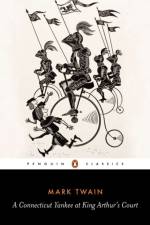
When Connecticut mechanic and foreman Hank Morgan is knocked unconscious, he wakes not to the familiar scenes of nineteenth-century America but to the bewildering sights and sounds of sixth-century Camelot. Although confused at first and quickly imprisoned, he soon realises that his knowledge of the future can transform his fate. Correctly predicting a solar eclipse from inside his prison cell, Morgan terrifies the people of England into releasing him and swiftly establishes himself as the most powerful magician in the land, stronger than Merlin and greatly admired by Arthur himself. But the Connecticut Yankee wishes for more than simply a place at the Round Table. Soon, he begins a far greater struggle: to bring American democratic ideals to Old England. Complex and fascinating, A Connecticut Yankee is a darkly comic consideration of the nature of human nature and society.
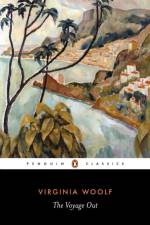
'A strange, tragic, inspired book ... It is absolutely unafraid' E. M. ForsterA party of English people are aboard the Euphrosyne, bound for South America. Among them is a young girl, Rachel Vinrace, innocent and wholly ignorant of the world of politics and society, books, sex, love and marriage. She is a free spirit half-caught, momentarily and passionately, by Terence Hewet, an aspiring writer, but her greatest discovery will be her own self. Virginia Woolf's first novel, published in 1915, is a haunting exploration of a young woman's mind, signalling the beginning of her fascination with capturing the mysteries and complexities of the inner life.Edited with an Introduction and Notes by Jane Wheare
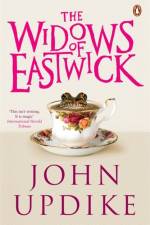
More than three decades have passed since the events described in The Witches of Eastwick and the three divorcees - Alexandra, Jane and Sukie - have left town, remarried, and become widows. They cope with their grief and solitude as widows do: they travel the world to exotic lands such as Canada, China and Egypt and renew old acquaintances. And then, one summer, they decide to go back to Eastwick.The old Rhode Island seaside town where they once indulged in sensuous mischief still holds enchantment for the three, but it also holds memories, and there are those who remember them and wish them ill . . .
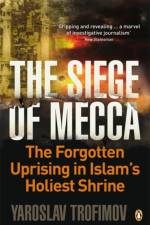
20 November 1979: as morning prayers began, hundreds of hardline Islamist gunmen, armed with rifles smuggled in coffins, stormed the Grand Mosque in Mecca. With thousands of terrified worshippers trapped inside, the result was a bloody siege that lasted two weeks, caused hundreds of deaths, prompted an international diplomatic crisis and unleashed forces that would eventually lead to the rise of al Qaeda.Journalist Yaroslav Trofimov takes us day-by-day through one of the most momentous and heavily censored events in recent history, interviewing many direct participants in the siege and drawing on secret documents to reveal the truth about the first operation of modern global jihad.
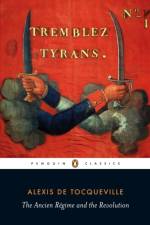
The Ancien R gime and the Revolution is a comparison of revolutionary France and the despotic rule it toppled. Alexis de Tocqueville (1805 59) is an objective observer of both periods providing a merciless critique of the ancien r gime, with its venality, oppression and inequality, yet acknowledging the reforms introduced under Louis XVI, and claiming that the post-Revolution state was in many ways as tyrannical as that of the King; its once lofty and egalitarian ideals corrupted and forgotten. Writing in the 1850s, Tocqueville wished to expose the return to despotism he witnessed in his own time under Napoleon III, by illuminating the grand, but ultimately doomed, call to liberty made by the French people in 1789. His eloquent and instructive study raises questions about liberty, nationalism and justice that remain urgent today.
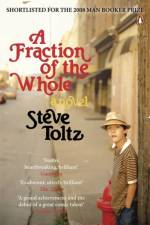
Steve Toltz's A Fraction of the Whole is a riotously funny explosion of a novelSHORTLISTED FOR THE MAN BOOKER PRIZE 2008From his prison cell, Jasper Dean tells the unlikely story of his scheming father Martin, his crazy Uncle Terry and how the three of them upset - mostly unintentionally - an entire continent. Incorporating death, parenting (good and bad kinds), one labyrinth, first love, a handbook for criminals, a scheme to make everyone rich and an explosive suggestion box, Steve Toltz's A Fraction of the Whole is a hilarious, heartbreaking story of families and how to survive them.'A fat book but very light on its feet, skipping from anecdote, to rant, to reflection, like a stone skimming across a pond . . . it is brilliant' Guardian'Sparkling comic writing . . .It gives off the unmistakeable whiff of a book that might just contain the secret of life' Independent'With tinges of magical realism and buckets of misanthropic humour it's a clever and funny debut' Observer'If first novels were sandwiches, Steve Toltz's would be a juicy, swaggering doorstop of a sarnie, overflowing with eccentrically combined but delicious ingredients . . . Toltz is a superb phrase-maker with an acute eye for humanity's shortfalls'Big IssueSteve Toltz was born in Sydney. After graduating from Newcastle University in 1994, he has lived in Sydney, Montreal, Vancouver, Barcelona and Paris, working primarily as a screenwriter and freelance writer, but also doing stints as both a private investigator and an English teacher. A Fraction of the Whole is his first book.
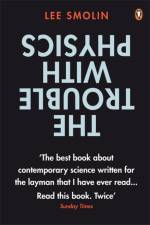
The Trouble with Physics is a groundbreaking account of the state of modern physics: of how we got from Einstein and Relativity through quantum mechanics to the strange and bizarre predictions of string theory, full of unseen dimensions and multiple universes.Lee Smolin not only provides a brilliant layman s overview of current research as we attempt to build a theory of everything , but also questions many of the assumptions that lie behind string theory. In doing so, he describes some of the daring, outlandish ideas that will propel research in years to come.
Why is it...That almost all the processed foods we eat contain the same handful of ingredients?That these handful of ingredients are produced by only a handful of multi-nationals?That some cereals contain more salt per serving than a packet of crisps?That served with milk, sugar and raisins, some cardboard packets have been said to be more nutritious than the cereal they contain?That there are half the number of dairy farms in the UK than there were 10 years ago?That over the same period the turnover of the top 20 global dairy corporations has increased by 60%?That over 60% of all processed foods in Britain contain soya?That the UK government's Committee on the Toxicity of Food judged that eating soya could have hormone-disrupting effects?That in 1970, a hundred grams of an average chicken contained less than 9 grams of fat, but today it contains nearly 23 grams of fat?That the amount of protein in that chicken has fallen by more than 30%?That children aged 4-14 in the UK get 16-17% of their daily calories from processed sugars?That the World Health Organisation's recommended limit is 10%?That industrialised farming uses 50 times more energy than traditional farming?That livestock farming creates greater carbon emissions than all of global transport put together?That some salmon farmers dye their fish?That sugar could be as bad for you as tobacco?That you might have been better off eating butter rather than margarine all along?That industrial processing removes much of the nutritional value of the food it produces?That by changing our diets we could reduce cancers by a third?That corporations are shaping our bodies, our minds and the future of the planet?Eat Your Heat Out explains how big business took control of what we eat and why so few of us even noticed. Crossing the globe in search of agribusiness's darkest secrets, Felicity Lawrence uncovers some startling facts and stomach-churning figures. Essential reading for anyone who cares about their health and our planet.
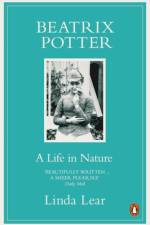
Beatrix Potter's books are adored by millions, but they were just one aspect of an extraordinary life. This captivating biography brings us the passionate, unconventional woman behind the beloved stories: a gifted artist and shrewd businesswoman; a pioneering scientific researcher; a powerful landowner who conserved acres of Lakeland countryside; a daughter who defied her parents with her first tragically short engagement and who, finally was given a second chance of love and happiness.
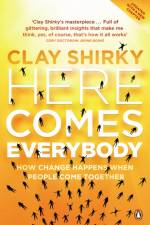
Welcome to the new future of involvement. Forming groups is easier than it's ever been: unpaid volunteers can build an encyclopaedia together in their spare time, mistreated customers can join forces to get their revenge on airlines and high street banks, and one man with a laptop can raise an army to help recover a stolen phone.The results of this new world of easy collaboration can be both good (young people defying an oppressive government with a guerrilla ice-cream eating protest) and bad (girls sharing advice for staying dangerously skinny) but it's here and, as Clay Shirky shows, it's affecting ... well, everybody. For the first time, we have the tools to make group action truly a reality. And they're going to change our whole world.
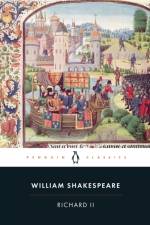
'Not all the water in the rough rude sea Can wash the balm off from an anointed king'Richard, a vain, despotic ruler, listens only to his flatterers. When his cousin Bolingbroke, previously banished, returns to seize the crown, Richard discovers that the throne given to him by God can be taken from him by men. Depicting a tortured and morally ambivalent soul wearing the 'hollow crown', whose illusions are brutally shattered, this tragic history play unravels the idea of kingship. It is also a work of epic lyricism, filled with some of Shakespeare's most intoxicating poetry. Used and Recommended by the National TheatreGeneral Editor Stanley WellsEdited by Stanley Wells Introduction by Paul Edmondson
Abonner på vårt nyhetsbrev og få rabatter og inspirasjon til din neste leseopplevelse.
Ved å abonnere godtar du vår personvernerklæring.