


Gjør som tusenvis av andre bokelskere
Abonner på vårt nyhetsbrev og få rabatter og inspirasjon til din neste leseopplevelse.
Ved å abonnere godtar du vår personvernerklæring.Du kan når som helst melde deg av våre nyhetsbrev.

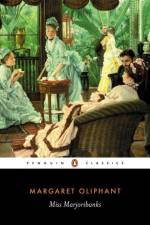
Returning home to tend her widowed father Dr Marjoribanks, Lucilla soon launches herself into Carlingford society, aiming to raise the tone with her select Thursday evening parties. Optimistic, resourceful and blithely unimpeded by self-doubt, Lucilla is a superior being in every way, not least in relation to men. 'A tour de force...full of wit, surprises and intrigue...We can imagine Jane Austen reading MISS MARJORIBANKS with enjoyment and approval in the Elysian Fields' - Q. D. Leavis. Leavisdeclared Oliphant's heroine Lucilla to be the missing link in Victorian literature between Jane Austen's Emma and George Eliot's Dorothea Brook and 'more entertaining, more impressive and more likeable than either'.
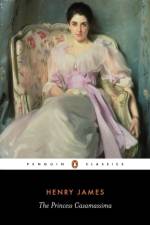
The illegitimate and impoverished son of a dressmaker and a nobleman, Hyacinth Robinson has grown up with a strong sense of beauty that heightens his acute sympathy for the inequalities that surround him. Drawn into a secret circle of radical politics he makes a rash vow to commit a violent act of terrorism. But when the Princess Casamassima - beautiful, clever and bored - takes him up and introduces him to her own world of wealth and refinement, Hyacinth is torn. He is horrified by the destruction that would be wreaked by revolution, but still believes he must honour his vow, and finds himself gripped in an agonizing and, ultimately, fatal dilemma. A compelling blend of psychological observation, wit and compassion, The Princess Casamassima (1886) is one of Henry James's most deeply personal novels.
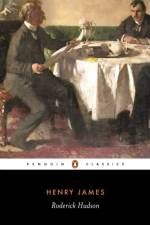
When wealthy Rowland Mallet first sees a sculpture by Roderick Hudson, he is astounded and pronounces it to be a work of genius, and is equally entranced by the sculptor's beauty, spirit and charisma. Wishing to give the impoverished artist the opportunity to develop his talent, he takes Roderick from America to Rome, where he becomes the talk of the city. But Roderick soon loses his inspiration and Rowland loses control of his prot g , while both fall in love with women they cannot ever have. Can Roderick be saved from the path to self-destruction he seems set on? One of Henry James's first novels, Roderick Hudson (1875) is a compelling depiction of the artistic temperament and of a young man who, like Icarus, flies too close to the sun.
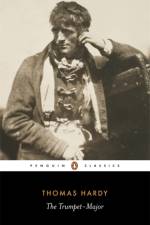
Anne Garland, who lives with her widowed mother in a mill owned by Miller Loveday, has three suitors: the local squire's nephew Festus and the miller's two sons, Robert and John. While Festus' aggressive pursuit deters the young woman from considering him as a husband, the indecisive Anne wavers between light-hearted Bob and gentle, steadfast John. But as their Wessex village prepares for possible invasion by Napoleon's fleet, all find their destinies increasingly tangled with the events of history. The Loveday brothers, one a sailor and one a soldier, must wrestle with their commitments to their country and their feelings for Anne. Lyrical and light-hearted, yet shot through with irony, The Trumpet-Major (1880) is one of Hardy's most unusual novels and a fascinating tale of love and desire.
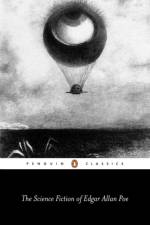
One of the greatest of all horror writers, Edgar Allan Poe (1809-49) also composed pioneering tales that seized upon the scientific developments of an era marked by staggering change. In this collection of sixteen stories, he explores such wide-ranging contemporary themes as galvanism, time travel and resurrection of the dead. 'The Unparalleled Adventure of One Hans Pfall' relates a man's balloon journey to the moon with a combination of scientific precision and astonishing fantasy. Elsewhere, the boundaries between horror and science are elegantly blurred in stories such as 'The Facts in the Case of M. Valdemar', while the great essay 'Eureka' outlines Poe's own interpretation of the universe. Powerfully influential on later authors including Jules Verne, these works are essential reading for anyone wishing to trace the genealogy of science fiction, or to understand the complexity of Poe's own creative vision
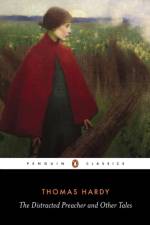
The darkly passionate short stories of Thomas Hardy are compelling explorations of love, social class, superstition and legend. This collection contains many of his finest and most representative, and includes 'The Withered Arm', an eerie depiction of arcane witchcraft in nineteenth-century England; 'Barbara of the House of Grebe', in which a beautiful man's tragic disfigurement by fire is savagely exploited by his rival; 'The Son's Veto', showing the cruelty of an educated youth towards his ignorant but tender mother; and 'The Distracted Preacher', the story of one man's conflict between heartfelt love and his own sense of moral and civic duty. By turns moving and poetic, and surprisingly modern and brutally macabre, these eloquent tales may be numbered among the greatest creations of Hardy's genius.
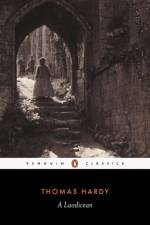
The daughter of a wealthy railway magnate, Paula Power inherits De Stancy Castle, an ancient castle in need of modernization. She commissions George Somerset, a young architect, to undertake the work. Somerset falls in love with Paula but she, the Laodicean of the title, is torn between his admiration and that of Captain De Stancy, whose old-world romanticism contrasts with Somerset's forward-looking attitude. Paula's vacillation, however, is not only romantic. Her ambiguity regarding religion, politics and social progress is a reflection of the author's own. This new Penguin Classics edition of Hardy's text contains an introduction and notes that illuminate and clarify these themes, and draws parallels between the text and the author's life and views.
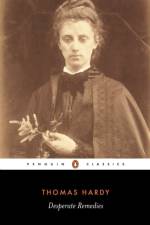
Hardy described Desperate Remedies as a tale of 'mystery, entanglement, surprise and moral obliquity'.Cytherea has taken a position as lady's maid to the eccentric arch-intriguer Miss Aldclyffe. On discovering that the man she loves, Edward Springrove, is already engaged to his cousin, Cytherea comes under the influence of Miss Aldclyffe's fascinating, manipulative steward Manston. Blackmail, murder and romance are among the ingredients of Hardy's first published novel, and in it he draws blithely on the 'sensation novel' perfected by Wilkie Collins. Several perceptive critics praised the author as a novelist with a future when Desperate Remedies appeared anonymously in 1871. In its depiction of country life and insight into psychology and sexuality it already bears the unmistakable imprint of Hardy's genius.
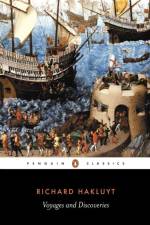
Renaissance diplomat and part-time spy, William Hakluyt was also England's first serious geographer, gathering together a wealth of accounts about the wide-ranging travels and discoveries of the sixteenth-century English. One of the epics of this great period of expansion, The Principal Navigations, Voyages, Traffiques and Discoveries of the English Nation describes, in the words of the explorers themselves, an astonishing era in which the English grew rapidly aware of the sheer size and strangeness of their world. Mingling accounts of the journeys of renowned adventurers such as Drake and Frobisher with descriptions by other explorers and traders to reveal a nation beginning to dominate the seas, Hakluyt's great work was originally intended principally to assist navigation and trade. It also presents one of the first and greatest modern portraits of the globe.
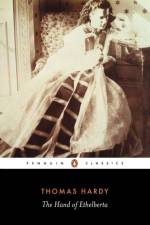
Adventuress and opportunist, Ethelberta reinvents herself to disguise her humble origins, launching a brilliant career as a society poet in London with her family acting incognito as her servants. Turning the male-dominated literary world to her advantage, she happily exploits the attentions of four very different suitors. Will she bestow her hand upon the richest of them, or on the man she loves? Ethelberta Petherwin, alias Berta Chickerel, moves with easy grace between her multiple identities, cleverly managing a tissue of lies to aid her meteoric rise. In The Hand of Ethelberta (1876), Hardy drew on conventions of popular romances, illustrated weeklies, plays, fashion plates and even his wife's diary in this comic story of a woman in control of her destiny.
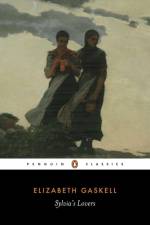
Elizabeth Gaskell's only historical novel, Sylvia's Lovers, is set in 1790 in the seaside town of Monkshaven (Whitby) where press-gangs wreak havoc by seizing young men for service in the Napoleonic wars. One of their victims is whaling harpooner, Charley Kinraid, whose charm and vivacity have captured the heart of Sylvia Robson. But Sylvia's devoted cousin, Philip Hepburn, hopes to marry her himself and, in order to win her, deliberately withholds crucial information - with devastating consequences. With its themes of suffering, unrequited love, and the clash between desire and duty, Sylvia's Lovers is one of the most powerfully moving of all Gaskell's novels, reputedly described by its author as 'the saddest story I ever wrote'.
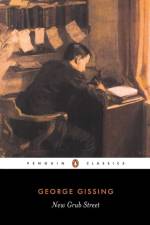
In New Grub Street George Gissing re-created a microcosm of London's literary society as he had experienced it. His novel is at once a major social document and a story that draws us irresistibly into the twilit world of Edwin Reardon, a struggling novelist, and his friends and acquaintances in Grub Street including Jasper Milvain, an ambitious journalist, and Alfred Yule, an embittered critic. Here Gissing brings to life the bitter battles (fought out in obscure garrets or in the Reading Room of the British Museum) between integrity and the dictates of the market place, the miseries of genteel poverty and the damage that failure and hardship do to human personality and relationships.
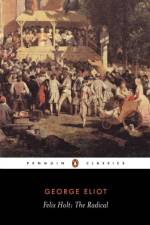
When the young nobleman Harold Transome returns to England from the colonies with a self-made fortune, he scandalizes the town of Treby Magna with his decision to stand for Parliament as a Radical. But after the idealistic Felix Holt also returns to the town, the difference between Harold's opportunistic values and Holt's profound beliefs becomes apparent. Forthright, brusque and driven by a firm desire to educate the working-class, Felix is at first viewed with suspicion by many, including the elegant but vain Esther Lyon, the daughter of the local clergyman. As she discovers, however, his blunt words conceal both passion and deep integrity. Soon the romantic and over-refined Esther finds herself overwhelmed by a heart-wrenching decision: whether to choose the wealthy Transome as a husband, or the impoverished but honest Felix Holt.
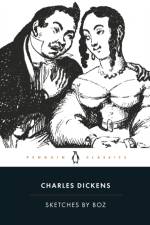
'Sets out the London of the 1830s before you, streets, people, pleasures, low life, prisons' Claire TomalinCharles Dickens's first published book, Sketches by Boz is a funny and touching collection of observation, fancy and fiction showing the London he knew in all its complexity - its streets, theatres, inns, pawnshops, law courts, prisons and, of course, the river Thames. His descriptions of everyday life and people seem to anticipate characters from his great novels - garrulous matrons, vulgar young clerks, Scrooge-like bachelors - while his powers of social critique shine in his unflinching depictions of the city's forgotten citizens, from child workers to prostitutes. This edition includes the original illustrations by George Cruikshank.Edited with an Introduction and Notes by Dennis Walder
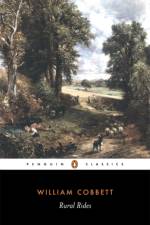
Travelling on horseback through southern England in the early 19th century, William Cobbett provides evocative and accurate descriptions of the countryside, colourful accounts of his encounters with labourers, and indignant outbursts at the encroaching cities and the sufferings of the exploited poor. Ian Dyck's new edition places these lively accounts of rural life in the context of Cobbett's political and social beliefs and reveals the volume as his platform for rural radical reform.
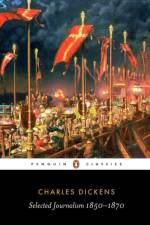
Throughout his writing career Charles Dickens was a hugely prolific journalist. This volume of his later work is selected from pieces that he wrote after he founded the journal Household Words in 1850 up until his death in 1870. Here subjects as varied as his nocturnal walks around London slums, prisons, theatres and Inns of Court, journeys to the continent and his childhood in Kent and London are captured in remarkable pieces such as 'Night Walks', 'On Strike', 'New Year's Day' and 'Lying Awake'. Aiming to catch the imagination of a public besieged by hack journalism, these writings are an extraordinary blend of public and private, news and recollection, reality and fantastic description.
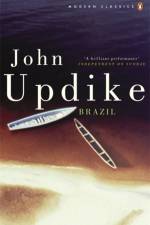
Tristao Raposo, a nineteen-year old black child of the Rio slums, spies Isabel Leme, an eighteen-year-old upper-class white girl, across the hot sands of Copacabana Neach, and presents her with a ring. Their flight into marriage takes them from urban banality to the farthest reaches of Brazil's wild west....
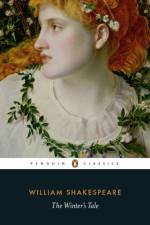
'The work of Shakespeare is virtually infinite' Jorge Luis BorgesA jealous king, convinced that his wife has been unfaithful and is having another man's baby, imprisons her and puts her on trial. The child is abandoned to die, but when she is found and raised by a shepherd, it seems redemption may be possible. A bravura blend of tragedy, comedy and romance, Shakespeare's emotionally potent late play explores artifice and nature, mortality and renewal, and the destructive and consoling effects of time.Used and Recommended by the National TheatreGeneral Editor Stanley Wells Edited by Ernest Schanzer Introduction by Russ McDonald
Something terrible has happened. Eleven-year-old Aubrey is on her own.'It was fun at first, playing house. Nothing to think about but T.V and cheese. A perfect world.'She's determined to hide away and take care of herself, because facing the truth is too much to bear.'I couldn't let anyone know that I was alone. I was staying right here.'But with the love of her grandmother and the letters she writes, can Aubrey begin to see that even though she's lost everything - all is not lost?
Welcome to the world of Connie Pickles. Best Friend #1 - Julie: Big boobs. Big ideas. Big fibber. Best Friend #2 - William: Giver of chocolate buttons. A shoulder for Connie to cry on. Makes other girls flutter and blush. Best Friend #3 - Delilah: hormone-crazed victim of a girls-only school. Flutters and blushes A LOT. Mother: French. Beautiful. Broke. Bra-expert. A romantic disaster area. Needs help.Connie used to be the only sensible person in her world. But now her life is spiralling out of control. Her mother refuses to fall for the right man, William is acting strangely and Connie's own heart is in tatters. So with a little help (and a lot of hindrance) from her friends, she sets out to solve the eternal mysteries of love, money, French things (including kisses) and incredibly uncomfortable underwear.
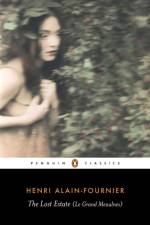
When Meaulnes first arrives at the local school in Sologne, everyone is captivated by his good looks, daring and charisma. But when Meaulnes disappears for several days, and returns with tales of a strange party at a mysterious house and a beautiful girl hidden within it, he has been changed forever. In his restless search for his Lost Estate and the happiness he found there, Meaulnes, observed by his loyal friend Francois, may risk losing everything he ever had. Poised between youthful admiration and adult resignation, Alain-Fournier s compelling narrator carries the reader through this evocative and unbearably poignant portrayal of desperate friendship and vanished adolescence.
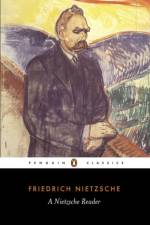
The literary career of Friedrich Nietzsche (1844-1900) spanned less than twenty years, but no area of intellectual inquiry was left untouched by his iconoclastic genius. The philosopher who announced the death of God in The Gay Science (1882) and went on to challenge the Christian code of morality in Beyond Good and Evil (1886), grappled with the fundamental issues of the human condition in his own intense autobiography, Ecce Homo (1888). Most notorious of all, perhaps, his idea of the triumphantly transgressive bermann ('superman') is developed in the extreme, yet poetic words of Thus Spake Zarathustra (1883-92). Whether addressing conventional Western philosophy or breaking new ground, Nietzsche vastly extended the boundaries of nineteenth-century thought.
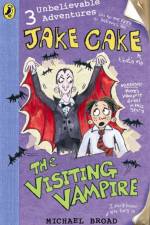
In this fourth book in the series, Jake battles with a vampire visiting his school (fangs and bats and zombies), a demon hairdresser (arrrrrggggh!) and stays in a haunted castle (things that go CLANG in the night!).
In July of 1943, British and American bombers launched an attack on the German city of Hamburg that was unlike anything the world had ever seen. For ten days they drenched the city with over 9,000 tons of bombs, with the intention of erasing it entirely from the map. The fires they created were so huge they burned for a month, and were visible for 200 miles. As those who survived emerged from their ruined cellars and air-raid shelters they were confronted with a unique vision of hell: a sea of flame that stretched to the horizon, the burnt-out husks of fire engines that had tried to rescue them, charcoaled corpses and roads that had become flaming rivers of melted tarmac. Using many new first-hand accounts and other material, Keith Lowe gives the human side of an inhuman story, and the result is an epic story of devastation and survival, and a much-needed reminder of the human face of war.
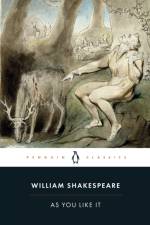
'All the world's a stage, And all the men and women merely players' Rosalind, banished by her cruel uncle, travels secretly to the Forest of Arden, where her exiled father holds court. There, dressed as a boy to avoid discovery, she encounters the man she loves - now a fellow exile - and resolves to remain in disguise to test his feelings for her. One of Shakespeare's most sunny, fast-paced and accessible comedies, As You Like It is an exuberant combination of concealed identities and verbal jousting, burlesque and pastoral dream, reconciliations and multiple weddings.Used and Recommended by the National TheatreGeneral Editor Stanley WellsEdited by H. J. Oliver Introduction by Katherine Duncan-Jones
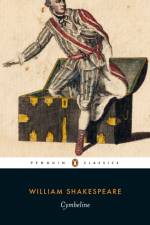
The King of Britain, enraged by his daughter's disobedience in marrying against his wishes, banishes his new son-in-law. Having fled to Rome, the exiled husband makes a foolish wager with a villain he encounters there - gambling on the fidelity of his abandoned wife. Combining courtly menace and horror, comedy and melodrama, Cymbeline is a moving depiction of two young lovers driven apart by deceit and self-doubt.
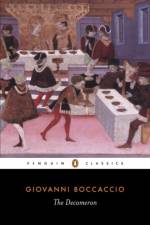
In the summer of 1348, as the Black Death ravages their city, ten young Florentines take refuge in the countryside. They amuse themselves by each telling a story a day for the ten days they are destined to remain there - a hundred stories of love, adventure and surprising twists of fate. Less preoccupied with abstract concepts of morality or religion than earthly values, the tales range from the bawdy Peronella hiding her lover in a tub to Ser Cepperallo, who, despite his unholy effrontery, becomes a Saint. The result is a towering monument of European literature and a masterpiece of imaginative narrative.
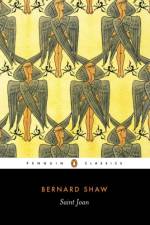
One of Shaw's most unusual and enduringly popular plays. With SAINT JOAN (1923) Shaw reached the height of his fame and Joan is one of his finest creations; forceful, vital, and rebelling against the values that surround her. The play distils Shaw's views on the subjects of politics, religion and creative evolution.
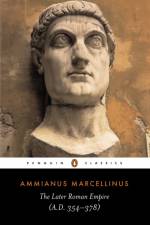
Ammianus Marcellinus was the last great Roman historian, and his writings rank alongside those of Livy and Tacitus. The Later Roman Empire chronicles a period of twenty-five years during Marcellinus' own lifetime, covering the reigns of Constantius, Julian, Jovian, Valentinian I, and Valens, and providing eyewitness accounts of significant military events including the Battle of Strasbourg and the Goth's Revolt. Portraying a time of rapid and dramatic change, Marcellinus describes an Empire exhausted by excessive taxation, corruption, the financial ruin of the middle classes and the progressive decline in the morale of the army. In this magisterial depiction of the closing decades of the Roman Empire, we can see the seeds of events that were to lead to the fall of the city, just twenty years after Marcellinus' death.
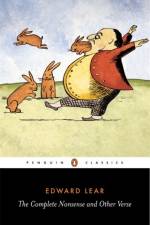
'Nonsense is the breath of my nostrils', wrote Edward Lear (1812-88), and this collection demonstrates the wonderfully varied ways in which he pursued his philosophy of life. He created an extraordinary world filled with bizarre creatures - from the Dong with a luminous nose to the Pobble who has no toes - who misbehave with joyful abandon. Here can be found such exuberant and timeless verse as 'The Owl and the Pussy-cat', 'The Quangle Wangle's Hat' and numerous comic limericks, along with stories, letters, alphabets and recipes, all accompanied throughout with his fantastical line drawings. Gently pointing out human follies and the absurdities of the conventional Victorian society in which he lived, Lear's nonsense has enchanted children and adults alike for generations.
Abonner på vårt nyhetsbrev og få rabatter og inspirasjon til din neste leseopplevelse.
Ved å abonnere godtar du vår personvernerklæring.