Gjør som tusenvis av andre bokelskere
Abonner på vårt nyhetsbrev og få rabatter og inspirasjon til din neste leseopplevelse.
Ved å abonnere godtar du vår personvernerklæring.Du kan når som helst melde deg av våre nyhetsbrev.

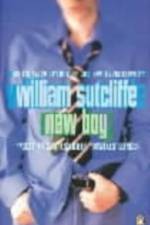
NEW BOY is a dark modern comedy about the hormonal angst of a Jewish lad growing up in north-west London's bagel belt. "e;Sutcliffe has managed to pull off a worthy British companion to Portnoy's Complaint"e; Jay Rayner,Observer "e;Well-written,clever and very funny"e; Literary Review "e;Smart,entertaining stuff...somewhere between Adrian Mole and Holden Caulfield"e; Philip Hensher,Mail on Sunday
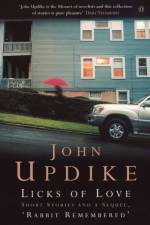
Collected with a dozen wonderful stories, all set in classic Updike territory, the short novel 'RABBIT REMEMBERED' is a major work in its own right - a riveting return to Updike's most celebrated fictional world. Janice and Nelson Angstrom, plus several other survivors of the irreducible Rabbit, fitfully entertain his memory while pursuing their own happiness over the edge of the millennium, as a number of old strands come together in entirely unexpected ways.
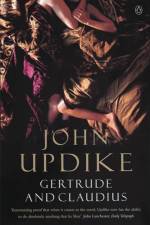
Using details of the ancient Scandinavian legends that were the inspiration for Hamlet, John Updike brings to life Gertrude's girlhood as the daughter of King Rorik, her arranged marriage to the man who becomes King Hamlet, and her middle-aged affair with her husband's younger brother. As only he could, Updike recasts a tale of medieval violence and presents the case for its central couple that Shakespeare only hinted at. Gertrude's warmth and lucidity, Claudius's soldierly yet peaceable powers of command are seen afresh against a background of fond intentions and familial dysfunction, on a stage darkened by the ominous shadow of a sullen, disaffected prince.
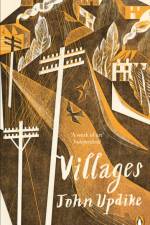
Owen Mackenzie's life story abounds with sin and seduction, domesticity and debauchery. His marriage to his college sweetheart is quickly followed by his first betrayal and he embarks upon a series of affairs. His pursuit of happiness, in a succession of small towns from Pennsylvania to Massachusetts, brings him to the edge of chaos, from which he is saved by a rescue that carries its own fatal price.
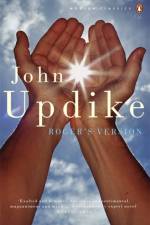
Middle-aged, brilliant and bored, Roger Lambert is a professor of Divinity at a New England university. Firmly convinced that religious belief can only justified by recourse to pure faith, he is dismissive when visited by a gangling student who claims, with evangelical zeal, that computer technology is on the brink of proving the existence of God. But when his unhappy wife flings herself into an affair with the younger man, and Roger's faith in his own placid life is thrown into question. With his marriage close to collapse, he finds himself increasingly drawn to his own half-niece, the nineteen-year-old Verna, in this cunning and comic exploration of religion, uncertainty and passion.
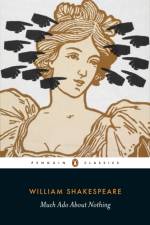
'We go to Shakespeare to find out about ourselves' Jeanette WintersonBeatrice and Benedick both claim they are determined never to marry. But when their friends trick them into believing that each harbours secret feelings for the other, the pair begin to question whether their witty banter and verbal sparring conceal something deeper. Schemes abound, dangerous misunderstandings proliferate and matches are eventually made in this dazzling, dark-edged comedy of mature love and second chances. Used and Recommended by the National TheatreGeneral Editor Stanley WellsEdited by R. A. FoakesIntroduction by Janette Dillon
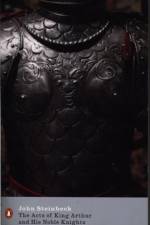
Steinbeck's first posthumously published work, The Acts of King Arthur and His Noble Knights is a reinterpretation of tales from Malory's Morte d'Arthur. In this highly successful attempt to render Malory into Modern English, Steinbeck recreated the rhythm and tone of the original Middle English.
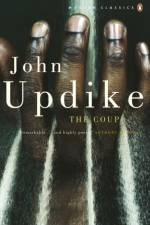
Nothing in his previous life could have prepared Colonel Hakim Felix Ellellou for his new role as the President of Kush. Neither the French army nor his American university provided a grounding in the subtle skills of revolutionary dictatorship. Still less did they expect him to acquire four wives...
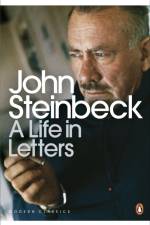
Nobel Prize-winner John Steinbeck was a prolific correspondent. Opening with letters written during Steinbeck's early years in California, and closing with an unfinished, 1968 note written in Sag Harbor, New York, this collection of around 850 letters to friends, family, his editor and a diverse circle of well-known and influential public figures gives an insight into the raw creative processes of one of the most naturally-gifted and hard-working writing minds of this century.
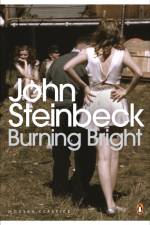
'A man can't scrap his bloodline, can't snip the thread of immortality.' Such is the strength of Joe Saul's desperate longing for a child, that he feels as if a dark curse is upon him after three unfruitful years of marriage. Yet unbeknown to him, he is sterile. His beautiful, young, devoted wife loves him so much that she secretly conceives the child of another man. But when Joe discovers her deception, his anguish is greater than ever before... A powerful, tragic and deeply moving tale.
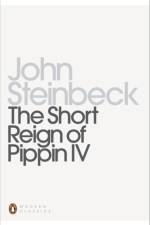
Steinbeck's only work of political satire turns the French Revolution on its head, as amateur astronomer Pippin Heristal is drafted in to rule the unruly French. Enchanting comedy ensues as Steinbeck creates the most hilarious royal court ever around the brief, bold reign of the corduroy-clad Pippin, his social-climbing wife Maria, his star-struck daughter Clotilde and her Californian beau, Todd. Featuring a motley crew of courtiers and con men, guards and gardeners, Steinbeck's late comic novel is an entrancing read about politics, power and the daily struggle not to lose one's head!
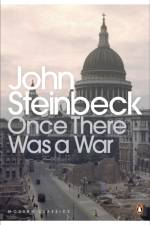
Set in England, Africa and Italy this collection of Steinbeck's World War II news correspondence was written for the New Yolk Herald Tribune in the latter part of 1943.
This lush, lyrical fantasy is Steinbeck's sole work of historical fiction. Henry Morgan ruled the Spanish Main in the 1670s, ravaging the coasts of Cuba and America and striking terror wherever he went. His lust and greed knew no bounds, and he was utterly consumed by two passions; to possess the mysterious woman known as La Santa Roja, the Red Saint, and to conquer Panama and wrest 'the cup of gold' from Spanish hands. Fantastic, swashbuckling stuff!
Each of these delightful interconnected tales is devoted to a family living in a fertile valley on the outskirts of Monterey, California, and the effects that one particular family has on them all. Steinbeck tackles two important literary traditions here; American naturalism, with its focus on the conflict between natural instincts and the demand to conform to society's norms, and the short story cycle. Set in the heart of 'Steinbeck land', the lush Californian valleys.
Nicholas's baby brother, Cheese, is famous. Well, his bottom is, because he advertises Dumper disposable nappies. Now the whole family is being whisked off on a nationwide tour starring Cheese.Little do they know the chaos waiting for them, including giant babies and goats on motorbikes!Rowan Clifford's black-and-white illustrations add to the comic mayhem in this sparkling new story.
A House Unlocked is Booker Prize winning author Penelope Lively's classic memoir.The only child of divorced parents, Penelope Lively was often sent to stay at her grandparents' country house Golsoncott. Years later, as the house was sold out of the family, she began to piece together the lives of those she knew fifty years before.In a needlework sampler, she sees her grandmother and the wartime children that she sheltered under her roof in 1940. Potted meat jars remind her of the ritual of doing the flowers for church. The smell of the harness room brings her Aunt Rachel - avant-garde artist, fervent horserider - vividly back to life.In A House Unlocked, Penelope Lively delves into the domestic past of her former home, and tells of her own youth and the contrasts between life today and the way they lived then.'Wonderful. Lively is brilliant and original . . . Every page of this book captures your attention' Daily Mail'Remarkable, richly enjoyable . . . a captivating memoir' Helen Dunmore, The Times'Engaging, curious, compelling, remarkable . . . Any time spent with Penelope Lively is a joy' ObserverPenelope Lively is the author of many prize-winning novels and short-story collections for both adults and children. She has twice been shortlisted for the Booker Prize: once in 1977 for her first novel, The Road to Lichfield, and again in 1984 for According to Mark. She later won the 1987 Booker Prize for her highly acclaimed novel Moon Tiger. Her other books include Going Back; Judgement Day; Next to Nature, Art; Perfect Happiness; Passing On; City of the Mind; Cleopatra's Sister; Heat Wave; Beyond the Blue Mountains, a collection of short stories; Oleander, Jacaranda, a memoir of her childhood days in Egypt; Spiderweb; her autobiographical work, A House Unlocked; The Photograph; Making It Up; Consequences; Family Album, which was shortlisted for the 2009 Costa Novel Award, and How It All Began. She is a popular writer for children and has won both the Carnegie Medal and the Whitbread Award. She was appointed CBE in the 2001 New Year's Honours List, and DBE in 2012. Penelope Lively lives in London.
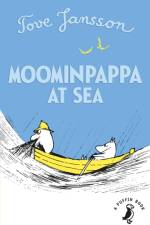
A Moomintroll is small and shy and fat, and has a Moominpappa and a Moominmamma. Moomins live in the forests of Finland. One day Moominpappa is feeling at a loss. He has no idea what to do with himself because it seems everything has already been done. So he takes his family off to start a new life in a lighthouse on a tiny, rocky island far out to sea. It's rather quiet and lonely at first, but as they begin to explore their unusual surroundings the Moomins discover some funny and surprising new things about themselves.
Dawn Bundy is fifteen. She doesn't fit in and she couldn't care less.Dawn has other things on her mind. Her dad disappeared two years ago and it's all God's fault. When Dawn's dad found God, it was the worst time ever. He thought he'd found the answer to everything. But that wasn't the end of it . . .
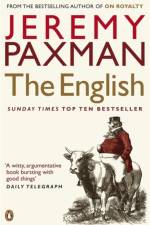
Jeremy Paxman is to many the embodiment of Englishness yet even he is sometimes forced to ask: who or what exactly are the English? And in setting about addressing this most vexing of questions, Paxman discovers answers to a few others. Like: Why do the English actually enjoy feeling persecuted? What is behind the English obsession with games? How did they acquire their odd attitudes to sex and to food? Where did they get their extraordinary capacity for hypocrisy?Covering history, attitudes to foreigners, sport, stereotypyes, language and much, much more, The English brims over with stories and anecdotes that provide a fascinating portrait of a nation and its people.
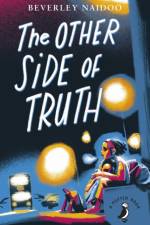
This is the story of 12 year-old Sade and her brother Femi who flee to Britain from Nigeria. Their father is a political journalist who refuses to stop criticising the military rulers in Nigeria. Their mother is killed and they are sent to London, with their father promising to follow. Abandoned at Victoria Station by the woman paid to bring them to England as her children, Sade and Femi find themselves alone in a new, often hostile, environment. Seen through the eyes of Sade, the novel explores what it means to be classified as 'illegal' and the difficulties which come with being a refugee.
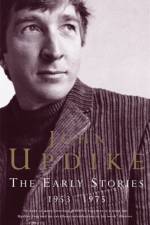
A grand collection of John Updike's inimitable early stories.Gathering together almost all the short fiction that John Updike published between 1953 and 1975, this collection opens with Updike's autobiographical stories about a young boy growing up during the Depression in a small Pennsylvania town. There follows tales of life away from home, student days, early marriage and young families, and finally Updike's experimental stories on 'The Single Life'. Here, then, is a rich and satisfying feast of Updike - his wit, his easy mastery of language, his genius for recalling the subtleties of ordinary life and the excitements, and perils, of the pursuit of happiness.
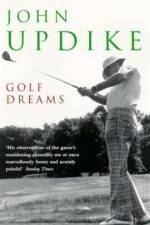
'Golf appeals to the idiot in us and the child. Just how childlike golf players become is proven by their frequent inability to count past five.'As an earnest golfer for over forty years, John Updike wrote frequently about the game. In Golf Dreams, Updike directs his inimitable style, his humour and shrewd insights towards a sport that, in turns, enthralled and infuriated him. This gathering of his pieces covers everything from the peculiar charms of bad golf and the satisfactions of an essentially losing struggle to the camaraderie of good golf and its own attendant perils.Praise for Golf Dreams:'John Updike has anatomized the greatness of golf with an eloquence only Wodehouse, in a lighter vein, has matched. It makes for a lyrical book which is also thought-provoking . . . his lowest handicap was 18, but, in this delightful book, he has not dropped a stroke' Max Davidson, Daily Telegraph'A stylish celebration of golf's propensity to transmogrify perfectly normal people into gibbering wrecks; not just 28-handicap novices but superstars, too' Jeff Randall, Sunday Times'There's a crafty pastiche of golf coaching manuals . . . and there's a delicious rumination on the dazzling green luxury of televised golf. There are high, arching flights of fancy concerning swing thoughts, the moral aspects of golf, the etiquette of the gimme . . . It is a treat both for Updike fans and for golf nuts' Robert Winder, Independent on SundayJohn Updike's first novel, The Poorhouse Fair, was published in 1959. Other novels by Updike include, Marry Me, The Witches of Eastwick, the Rabbit series and Villages. He has also written a number of volumes of short stories such as My Father's Tears and Other Stories and a poetry collection entitled Endpoint and Other Poems. His criticism, essays and other non fiction appeared in magazines such as The New Yorker and The New York Review of Books. He died in January 2009.
Ben Turnbull is a 66 year-old retired investment consultant living north of Boston in the year 2020. A recent war between the United States and China has thinned the population and brought social chaos. Nevertheless, Ben's life, traced by his journal entries over the course of the year, retains much of its accustomed comforts. Something of a science buff, he finds his personal history cuaght up in the dysjunctions and vagaries of the 'many universes'; his identity branches into variants extending back through history and ahead in the evolution of the universe, as both it and his own mortal, nature-shrouded existence move toward the end of time ...
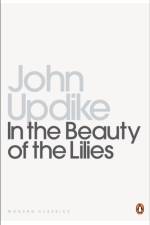
Taking its title from the "e;Battle Hymn of the Republic"e;, IN THE BEAUTY OF THE LILIES traces one family's profound journey through four generations--and across the spiritual landscape of twentieth-century America. It is one of John Updike's fullest and finest work of fiction.
In these wonderfully stylish and eclectic essays, Charles Nicholl pursues the fugitive traces of the past with the skill and relish that have earned him a reputation as one of the finest literary and historical detectives of our time.His subjects range from a murder-case in Renaissance Rome to the disappearance of Jim Thompson in 1960s Malaya, from the boyhood of Christopher Marlowe to the crimes of Jack the Ripper, from the remnants of a lost Shakespeare play to the last days of the poet-boxer Arthur Cravan in a Mexican fishing port.Full of insights, curiosities and unexpected discoveries, these thirty pieces written over two decades show the author of The Lodger and Leonardo da Vinci at his inquisitive best.
'He could mingle sublimity with pathos, bitterness with joy and peace and love' Aldous HuxleyIn one of Shakespeare's most perennially popular comedies a young woman, Hermia, flees ancient Athens with her lover, only to be pursued by her would-be husband and her best friend. Unwittingly, all four find themselves in an enchanted forest where fairies and sprites take an interest in human affairs, dispensing magical love potions and casting mischievous spells. Slapstick collides with courtly romance and confusion ends in harmony, as love is transformed, misplaced and ultimately restored.Used and Recommended by the National TheatreGeneral Editor Stanley WellsEdited by Stanley Wells Introduction by Helen Hackett
On a spring day in Vermont, seventy-nine-year-old painter Hope Chafetz tells the story of her life to Kathryn, a young interviewer from New York. Questions send Hope back to her youth, to the heady postwar days of American art and her relationships with the artists who defined their times. As the day wears on, Kathryn and Hope - interviewer and interviewee - try to understand one another across the gulf of age, experience and time that lies between them. And subtly, as each comes to know the other, their relationship changes ...
Spanning the origins of the Earth to the outcome of the First World War, this is a brilliantly compelling account of the evolution of life and the development of the human race. Along the way, Wells considers such diverse subjects as the Neolithic era, the rise of Judaism, the Golden Age of Athens, the life of Christ, the rise of Islam, the discovery of America and the Industrial Revolution. Breathtaking in its scope and passionate in its intensity, this history remains one of the most readable of its kind.
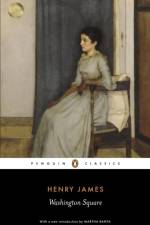
When timid and plain Catherine Sloper acquires a dashing and determined suitor, her father, convinced that the young man is nothing more than a fortune-hunter, decides to put a stop to their romance. Torn between her desire to win her father s love and approval and her passion for the first man who has ever declared his love for her, Catherine faces an agonising dilemma, and becomes all too aware of the restrictions that others seek to place on her freedom. James s masterly novel deftly interweaves the public and private faces of nineteenth-century New York society; it is also a deeply moving study of innocence destroyed.
'You must paint her just like that ... as the Tragic Muse' Suggests one of James's characters to Nick Dormer, the young Englishman who, during the course of the novel, will courageously resist the glittering Parliamentary career desired for him by his family, in order to paint. His progress is counterpointed by the 'Tragic Muse' of the title, Miriam Rooth, one of James's most fierily beautiful creations, a great actress indifferent to social reputation, and triumphantly dedicated to her art. In portraying the conflict between art and 'the world' which is his novel's central idea, James engaged obliquely with current debates on the new aestheticism of Pater and Wilde and on the nature of the actor's performance. Through the living complexity of his protagonists he reveals how much, as Philip Horne puts it, 'to take art seriously as an end in itself ... is still a provocative course'.
Abonner på vårt nyhetsbrev og få rabatter og inspirasjon til din neste leseopplevelse.
Ved å abonnere godtar du vår personvernerklæring.