


Gjør som tusenvis av andre bokelskere
Abonner på vårt nyhetsbrev og få rabatter og inspirasjon til din neste leseopplevelse.
Ved å abonnere godtar du vår personvernerklæring.Du kan når som helst melde deg av våre nyhetsbrev.

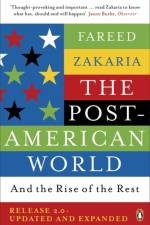
The growth of countries such as India, China, Brazil, Russia, South Africa and Kenya is generating a new landscape. The tallest buildings, biggest dams, highest-grossing movies and most advanced mobile phones are now all being made outside Europe and the United States. Countries that previously lacked polotical confidence and national pride are finding them.Is this an opportunity, or a threat? Fareed Zakaria's acclaimed bestseller, now expanded with a new afterword and throroughly updated throughout, has been heralded as the most thought-provoking book yet on our uncertain times. With lucidity, insight and imagination, he shows how the West must transform its global strategy, moving from a position of hegemony to one that recognizes this seismic power shift.
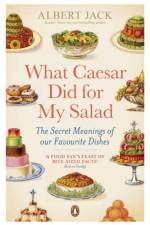
Did you know that the Cornish pasty was invented to protect tin miners from arsenic poisoning, or that the word 'salary' comes from Roman soldiers being paid their wages in salt? Why do we eat goose (or turkey) at Christmas? Is the Scotch egg actually from Scotland and what did some retired crusaders have to do with French toast? Who was the original Earl Grey and what sauce was inspired by Parliament? What dish was invented by Greek bandits on the run? Why were hot cross buns seen as magical and what's so rebellious about a haggis or medicinal about a gin and tonic? Did you know what the romantic history is behind the Bakewell Pudding?Albert Jack tells the strange tales behind our favourite dishes and drinks and where they come from (not to mention their unusual creators). What Caesar Did For My Salad is bursting with fascinating insights, characters and enough stories to entertain a hundred dinner parties.
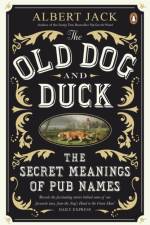
This is a book for everyone who has ever wondered why pubs should be called The Cross Keys, The Dew Drop Inn or The Hope and Anchor. You'll be glad to know that there are very good - strange and memorable - reasons behind them all.After much research about (and in) pubs, Albert Jack brings together the stories behind pub names to reveal how they offer fascinating and subversive insights on our history, customs, attitudes and jokes in just the same way that nursery rhymes do. The Royal Oak, for instance, commemorates the tree that hid Charles II from Cromwell's forces after his defeat at Worcester; The Bag of Nails is a corruption of the Bacchanals, the crazed followers of Bacchus, the god of wine and drunkenness; The Cat and the Fiddle a mangling of Catherine La Fidele and a guarded gesture of support for Henry VIII's first, Catholic, wife Catherine of Aragon; plus many, many more. Here too are even more facts about everything from ghosts to drinking songs to the rules of cribbage and shove hapenny, showing that, ultimately, the story of pub history is really the story of our own popular history
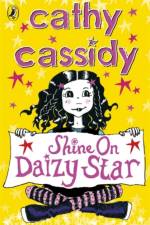
Meet the one and only Daizy Star!She's quirky and cool and loving life in Year Six with her best friends Willow and Beth. But when Dad hatches a mad plan that will turn life upside-down, Daizy is too horrified to tell anyone at all . . . and pretty soon she finds herself tangled up in a knot of secrets and lies. Will Daizy realize that even when she's sinking, her friends and family are there to help her swim?
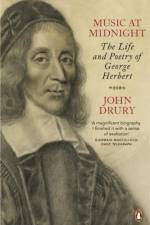
George Herbert wrote, but never published, some of the very greatest English poetry, recording in an astonishing variety of forms his inner experiences of grief, recovery, hope, despair, anger, fulfilment and - above all else - love.He was born in 1593 and died at the age of 39 in 1633, before the clouds of civil war gathered, his family aristocratic and his upbringing privileged. He showed worldly ambition and seemed sure of high public office and a career at court, but then for a time 'lost himself in a humble way', devoting himself to the restoration of the church at Leighton Bromswold in Buckinghamshire and then to his parish of Bemerton, three miles from Salisbury, whose cathedral music he called 'my heaven on earth'. When in the year of his death his friend Nicholas Ferrar, leader of the quasi-monastic community at Little Gidding, published Herbert's poems under the title The Temple, his fame was quickly established.Because he published no English poems during his lifetime, and dating most of them exactly is impossible, writing Herbert's biography is an unusual challenge. In this book John Drury sets the poetry in the whole context of the poet's life and times, so that the reader can understand the frame of mind and kind of society which produced it, and depth can be added to the narrative of Herbert's life. (T.S. Eliot: 'What we can confidently believe is that every poem in the book [The Temple] is in tune to the poet's experience.') His Herbert is not the saintly figure who has come down to us from John Aubrey, but a man torn for much of his life between worldly ambition and the spiritual life shown to us so clearly through his writings. The result is the most satisfying biography of this exceptional English poet yet written.
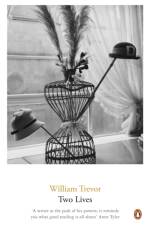
Two beautiful, memorable novels in one volume, both focussing on women who retreat into their imaginations until the boundaries between what is real and what is not become blurred. In Reading Turgenev , which was shortlisted for the 1991 Booker Prize, an Irish country girl is trapped in a loveless marriage with an older man. But she finds unusual solace in secret meetings with a man who shares her passion for Russian novels The second story, My House in Umbria tells how romantic novelist Emily Delahunty helps the survivors of a bomb attack on a train and invents colourful pasts for her convalescent patients.
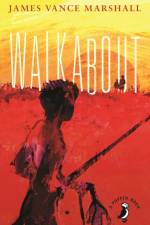
Mary and her young brother Peter are the only survivors of an aircrash in the middle of the Australian desert. Facing death from exhaustion and starvation, they meet an aboriginal boy who helps them to survive, and guides them along their long journey. But a terrible misunderstanding results in a tragedy that neither Mary nor Peter will ever forget...
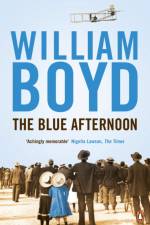
WINNER OF THE SUNDAY EXPRESS BOOK OF THE YEAR AWARD'Achingly memorable' The Times ________________________________A quest for secrets in the blue afternoon . . .Los Angeles, 1936. Kay Fischer, a young and ambitious architect, is being followed by an old man. When confronted, he explains that his name is Salvador Carriscant - and that he is her father.In a matter of weeks Kay will join Salvador on an extraordinary journey as they delve back into his past to not only learn the truth behind her own birth, but also to discover the whereabouts of a woman long thought dead - and to uncover the identity of a killer.________________________________'The finest storyteller of his generation' Daily Telegraph'An extraordinary story' John Mortimer, Sunday Telegraph, Books of the Year'Terrific' Jeremy Paxman, Independent, Books of the Year'Richly entertaining' Independent'A brilliant achievement' Time Out
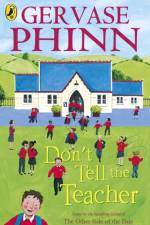
Brilliantly observed as always, family, teachers, pupils and the dreaded school inspector all leap to life in this wonderfully warm and witty, brand new, poetry collection from bestseller Gervase Phinn. New kids, disobedient deputy heads, school reports and fireworks, daydreamers and embarrassing mums all make an appearance. And if read on you might even just discover the whereabouts of Colin's confiscated conkers...just don't tell the teacher!
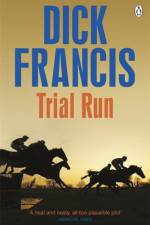
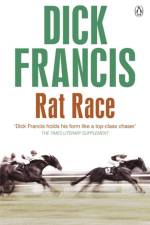
A classic mystery from Dick Francis, the champion of English storytellers.Ex-steeplechaser Randall Drew is reluctantly off to pre-Olympic games Moscow, as a favour to royalty. One of the blue bloods is destined to compete in the games and there are concerns - both of safety and of scandal - that only Drew, with his racing connections, can clear up. On arriving - speaking no Russian and wishing he were back home - Drew is supposed to identify and contact one Alyosha to clear up the scandal. Instead, he finds himself tailed by the KGB and embroiled in foiling a terrorist plot - or die trying.Home seems an awful long way away - and if he's not careful, he'll be going back in a box . . .Praise for Dick Francis:'As a jockey, Dick Francis was unbeatable when he got into his stride. The same is true of his crime writing'Daily Mirror'Dick Francis's fiction has a secret ingredient - his inimitable knack of grabbing the reader's attention on page one and holding it tight until the very end' Sunday Telegraph'The narrative is brisk and gripping and the background researched with care . . . the entire story is a pleasure to relish' Scotsman'Francis writing at his best' Evening Standard'A regular winner . . . as smooth, swift and lean as ever' Sunday ExpressDick Francis was one of the most successful post-war National Hunt jockeys. The winner of over 350 races, he was champion jockey in 1953/1954 and rode for HM Queen Elizabeth, the Queen Mother, most famously on Devon Loch in the 1956 Grand National. On his retirement from the saddle, he published his autobiography, The Sport of Queens, before going on to write forty-three bestselling novels, a volume of short stories (Field of 13), and the biography of Lester Piggott. During his lifetime Dick Francis received many awards, amongst them the prestigious Crime Writers' Association's Cartier Diamond Dagger for his outstanding contribution to the genre, and three 'best novel' Edgar Allan Poe awards from The Mystery Writers of America. In 1996 he was named by them as Grand Master for a lifetime's achievement. In 1998 he was elected a fellow of the Royal Society of Literature, and was awarded a CBE in the Queen's Birthday Honours List of 2000. Dick Francis died in February 2010, at the age of eighty-nine, but he remains one of the greatest thriller writers of all time.
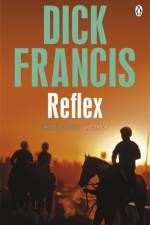
A classic mystery from Dick Francis, the champion of English storytellers. Jockey and amateur photographer Philip Nore knows all too well how it feels to take a tumble from a horse. He also knows what it's like to feel the wrath of furious owners and trainers. You can't always be a winner. George Millace hated winners. As a photographer he specialized in taking pictures that exposed the failings of riders. But now he's dead - and no one seems very sorry.But when Millace's home is broken into during his funeral and Nore finds himself helping clear up, he finds something unexpected. Millace had other pictures - ones people will go to desperate lengths to possess. Now he must find out who wants them - and fast. Because if George Millace's death was no accident then his killers are getting closer... Praise for Dick Francis:'As a jockey, Dick Francis was unbeatable when he got into his stride. The same is true of his crime writing' Daily Mirror 'Dick Francis's fiction has a secret ingredient - his inimitable knack of grabbing the reader's attention on page one and holding it tight until the very end' Sunday Telegraph'The narrative is brisk and gripping and the background researched with care . . . the entire story is a pleasure to relish' Scotsman 'Francis writing at his best' Evening Standard 'A regular winner . . . as smooth, swift and lean as ever' Sunday Express 'A super chiller and killer' New York Times Book ReviewDick Francis was one of the most successful post-war National Hunt jockeys. The winner of over 350 races, he was champion jockey in 1953/1954 and rode for HM Queen Elizabeth, the Queen Mother, most famously on Devon Loch in the 1956 Grand National. On his retirement from the saddle, he published his autobiography, The Sport of Queens, before going on to write forty-three bestselling novels, a volume of short stories (Field of 13), and the biography of Lester Piggott. During his lifetime Dick Francis received many awards, amongst them the prestigious Crime Writers' Association's Cartier Diamond Dagger for his outstanding contribution to the genre, and three 'best novel' Edgar Allan Poe awards from The Mystery Writers of America. In 1996 he was named by them as Grand Master for a lifetime's achievement. In 1998 he was elected a fellow of the Royal Society of Literature, and was awarded a CBE in the Queen's Birthday Honours List of 2000. Dick Francis died in February 2010, at the age of eighty-nine, but he remains one of the greatest thriller writers of all time.
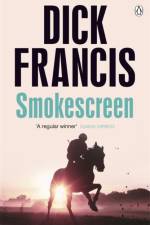
A classic mystery from Dick Francis, the champion of English storytellers.Edward Lincoln has scaled the Himalayas, survived deadly car chases and defeated scores of assassins. As a movie action man he's even suffered stoically at the hands of sadistic directors. After finishing his latest film, he's asked to visit South Africa to discover why a dying friend's horses are suddenly failing on the race track. Unfortunately, Lincoln's attempt to help a friend soon puts him in harm's way. From a nearly fatal interview to a dangerous accident in a gold mine, it seems only luck is keeping him alive. And in life, unlike the big-screen, there's no coming back from dead . . . Praise for Dick Francis: 'As a jockey, Dick Francis was unbeatable when he got into his stride. The same is true of his crime writing' Daily Mirror 'Dick Francis's fiction has a secret ingredient - his inimitable knack of grabbing the reader's attention on page one and holding it tight until the very end' Sunday Telegraph'The narrative is brisk and gripping and the background researched with care . . . the entire story is a pleasure to relish' Scotsman 'Francis writing at his best' Evening Standard 'A regular winner . . . as smooth, swift and lean as ever' Sunday Express Dick Francis was one of the most successful post-war National Hunt jockeys. The winner of over 350 races, he was champion jockey in 1953/1954 and rode for HM Queen Elizabeth, the Queen Mother, most famously on Devon Loch in the 1956 Grand National. On his retirement from the saddle, he published his autobiography, The Sport of Queens, before going on to write forty-three bestselling novels, a volume of short stories (Field of 13), and the biography of Lester Piggott. During his lifetime Dick Francis received many awards, amongst them the prestigious Crime Writers' Association's Cartier Diamond Dagger for his outstanding contribution to the genre, and three 'best novel' Edgar Allan Poe awards from The Mystery Writers of America. In 1996 he was named by them as Grand Master for a lifetime's achievement. In 1998 he was elected a fellow of the Royal Society of Literature, and was awarded a CBE in the Queen's Birthday Honours List of 2000. Dick Francis died in February 2010, at the age of eighty-nine, but he remains one of the greatest thriller writers of all time.
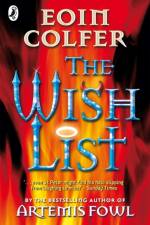
Meg Finn is in trouble, unearthly trouble. Cast out of her own home by her stepfather after her mother's death, Meg is a wanderer, a troublemaker. After a botched attempt to rob a pensioner's flat, Meg and her partner in crime, Belch, end up in a very sticky situation. Meg's soul is up for grabs as the divine and the demonic try every underhand ploy imaginable to claim it. Her only chance of salvation is the Wish List. But how can she persuade the pensioner Lowrie to help her when she has wronged him? Even if she can persuade him, will she really have enough points to face up to St Peter?
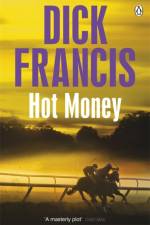
A classic mystery from Dick Francis, the champion of English storytellers. Matt Shore is a pilot down on his luck. Once he'd flown big jets and dropped supplies in war zones. Now he's ferrying high-class passengers between English race courses. But when one eventful trip ends with his plane exploding in a ball of fire, Matt knows he's not that unlucky. When the police confirm it was a bomb, Matt realizes he has a problem. One of his passengers must have been the target - the question is who? Matt to find out fast - because he's scheduled to ferry the same people over the coming weeks. Can Matt stay alive long enough to stop the bomber? Praise for Dick Francis: 'As a jockey, Dick Francis was unbeatable when he got into his stride. The same is true of his crime writing' Daily Mirror 'Dick Francis's fiction has a secret ingredient - his inimitable knack of grabbing the reader's attention on page one and holding it tight until the very end' Sunday Telegraph 'The narrative is brisk and gripping and the background researched with care . . . the entire story is a pleasure to relish' Scotsman 'Francis writing at his best' Evening Standard'A regular winner . . . as smooth, swift and lean as ever' Sunday Express Dick Francis was one of the most successful post-war National Hunt jockeys. The winner of over 350 races, he was champion jockey in 1953/1954 and rode for HM Queen Elizabeth, the Queen Mother, most famously on Devon Loch in the 1956 Grand National. On his retirement from the saddle, he published his autobiography, The Sport of Queens, before going on to write forty-three bestselling novels, a volume of short stories (Field of 13), and the biography of Lester Piggott. During his lifetime Dick Francis received many awards, amongst them the prestigious Crime Writers' Association's Cartier Diamond Dagger for his outstanding contribution to the genre, and three 'best novel' Edgar Allan Poe awards from The Mystery Writers of America. In 1996 he was named by them as Grand Master for a lifetime's achievement. In 1998 he was elected a fellow of the Royal Society of Literature, and was awarded a CBE in the Queen's Birthday Honours List of 2000. Dick Francis died in February 2010, at the age of eighty-nine, but he remains one of the greatest thriller writers of all time.
A classic mystery from Dick Francis, the champion of English storytellers. Malcolm Pembroke didn't get rich without making a few enemies - not least among the five wives and nine children left like wreckage in his wake. But when Moira, his fifth wife, is murdered and Malcolm believes that someone is out to get him, he knows of only one person he can turn to: his estranged son, Ian.Ian - an amateur jockey - wants nothing to do with his father until it becomes clear the old man's life is in danger. And worst of all the evidence suggests it's from someone in the family. Can Ian work out who it is before they strike again? Praise for Dick Francis:'As a jockey, Dick Francis was unbeatable when he got into his stride. The same is true of his crime writing' Daily Mirror'Dick Francis's fiction has a secret ingredient - his inimitable knack of grabbing the reader's attention on page one and holding it tight until the very end' Sunday Telegraph'The narrative is brisk and gripping and the background researched with care . . . the entire story is a pleasure to relish' Scotsman'Francis writing at his best' Evening Standard'A regular winner . . . as smooth, swift and lean as ever' Sunday Express'A super chiller and killer' New York Times Book Review Dick Francis was one of the most successful post-war National Hunt jockeys. The winner of over 350 races, he was champion jockey in 1953/1954 and rode for HM Queen Elizabeth, the Queen Mother, most famously on Devon Loch in the 1956 Grand National. On his retirement from the saddle, he published his autobiography, The Sport of Queens, before going on to write forty-three bestselling novels, a volume of short stories (Field of 13), and the biography of Lester Piggott. During his lifetime Dick Francis received many awards, amongst them the prestigious Crime Writers' Association's Cartier Diamond Dagger for his outstanding contribution to the genre, and three 'best novel' Edgar Allan Poe awards from The Mystery Writers of America. In 1996 he was named by them as Grand Master for a lifetime's achievement. In 1998 he was elected a fellow of the Royal Society of Literature, and was awarded a CBE in the Queen's Birthday Honours List of 2000. Dick Francis died in February 2010, at the age of eighty-nine, but he remains one of the greatest thriller writers of all time.
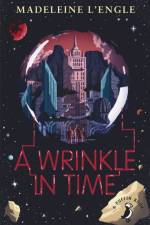
A Puffin Book - stories that last a lifetime.Now a major motion picture! Puffin Modern Classics are relaunched under a new logo: A Puffin Book. There are 20 titles to collect in the series, listed below, all with exciting new covers and fun-filled endnotes.A WRINKLE IN TIME is a classic sci-fi adventure for children by bestselling US author, Madeleine L'Engle.When Charles Wallace Murry goes searching through a 'wrinkle in time' for his lost father, he finds himself on an evil planet where all life is enslaved by a huge pulsating brain known as 'It'. How Charles, his sister Meg and friend Calvin find and free his father makes this a very special and exciting mixture of fantasy and science fiction, which all the way through is dominated by the funny and mysterious trio of guardian angels known as Mrs Whatsit, Mrs Who and Mrs Which.Madeleine L'Engle lived in New York and wrote over 60 books for children, including A WRINKLE IN TIME, the first in her Time Quintet series and winner of the highly prestigious Newbury Medal. she died in 2007, aged 88.
If you loved American Sniper you will love Not a Good Day to Die: The Untold Story of Operation Anaconda. Award-winning journalist Sean Naylor, an eyewitness to the action, vividly portrays the fight for Afghanistan's most hostile battleground. At dawn on March 2, 2002, the first major battle of the 21st Century began. Over 200 soldiers of the 101st Airborne and 10th Mountain Divisions flew into Afghanistan's Shahikot valley - and into the mouth of a buzz-saw. They were about to pay a bloody price for strategic, higher-level miscalculations that underestimated the enemy's strength and willingness to fight. After the attacks of September 11, 2001, Coalition forces quickly toppled the Taliban regime from the seat of government. But, believing the war to be all but over, the Pentagon and US Central Command refused to commit the forces required to achieve total victory in Afghanistan. Instead, they delegated responsibility for fighting the war's biggest battle to a tangle of untested units thrown together at the last moment. Then the world watched as Anaconda seemed to unravel.Denied the extra infantry, artillery and close air support with which they trained to go to war, the soldiers of this airborne assault fought for survival in brutal high-altitude combat. Backed up by a small, but crucial, team of special forces, they were all that stood between the Coalition and a military disaster. Perfect for fans of Black Hawk Down, Zero Dark Thirty, Chris Ryan, and Andy McNab. About the author: Sean Naylor is a senior writer for the Army Times. He has covered the Afghan mujahideen's war against the Soviets, and American military operations in Somalia, Haiti, Bosnia, Afghanistan, and Iraq. Named one of the 22 "e;unsung"e; influential print reporters in Washington by American Journalism Review in May 2002, he earned the White House Correspondents' Association's prestigious Edgar A. Poe Award for his coverage of Operation Anaconda.
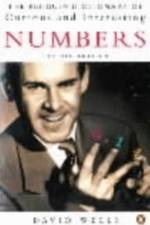
Why was the number of Hardy's taxi significant? Why does Graham's number need its own notation? How many grains of sand would fill the universe? What is the connection between the Golden Ratio and sunflowers? Why is 999 more than a distress call? All these questions and a host more are answered in this fascinating book, which has now been newly revised, with nearly 200 extra entries and some 250 additions to the original entries. From minus one and its square root, via cyclic, weird, amicable, perfect, untouchable and lucky numbers, aliquot sequences, the Cattle problem, Pascal's triangle and the Syracuse algorithm, music, magic and maps, pancakes, polyhedra and palindromes, to numbers so large that they boggle the imagination, all you ever wanted to know about numbers is here. There is even a comprehensive index for those annoying occasions when you remember the name but can't recall the number.
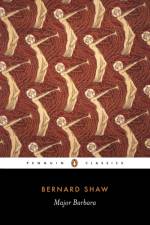
Andrew Undershaft, a millionaire armaments manufacturer, loves money and despises poverty. His estranged daughter Barbara, on the other hand, shows her love for the poor by throwing her energies into her work as a Major in the Salvation Army, and sees her father as another soul to be saved. But when the Army needs funds to keep going, it is Undershaft who saves the day with a large cheque - forcing Barbara to examine her moral assumptions. Are they right to accept money that has been obtained by 'Death and Destruction'? Full of lively comedy and sparkling debate, Major Barbara is one of Shaw's most forward-looking plays, brilliantly testing the tensions between religion, wealth and power, benevolence and equality, and metaphors and realities of war.
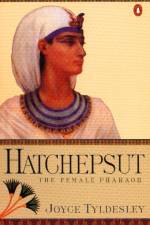
Queen - or, as she would prefer to be remembered King - Hatchepsut was an astonishing woman. Brilliantly defying tradition she became the female embodiment of a male role, dressing in men's clothes and even wearing a false beard. Forgotten until Egptologists deciphered hieroglyphics in the 1820's, she has since been subject to intense speculation about her actions and motivations. Combining archaeological and historical evidence from a wide range of sources, Joyce Tyldesley's dazzling piece of detection strips away the myths and misconceptions and finally restores the female pharaoh to her rightful place.
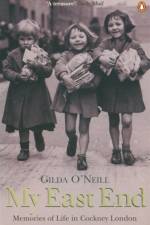
'Every page is a delight. Every chapter made vivid by a writer who has poured heart and soul into her book'. Val Hennessy, Daily Mail The East End of London - cockneys, criminals, street markets, pub singalongs, dog racing, jellied eels ... it is a place at once appealing and unruly, comforting and incomprehensible. Gilda O'Neill, an East Ender herself shows there is more to this fascinating area than a collection of cliched images. Using oral history and more traditional sources she builds up a powerful image of this community - bringing to us, with wit and honesty, the real story of London's East End
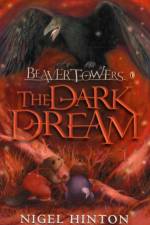
In this fourth BEAVER TOWERS adventure, Philip and old Mr Edgar set off on their travels so that Philip can learn how to use his powers to fight evil. But while they are away, the island itself is under threat from a strange creature named Retson. This time it is up to Baby B, the little beaver and Nick, the hedgehog, to save the day.
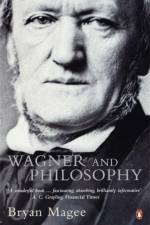
Wagner was one of the few major composers who studied philosophy seriously. Bryan Magee places the composer's artistic development in the context of the philosophy of his age, and gives us the first detailed and comprehensive study of the close links between Wagner and the philosophers - from the pre-Marxist socialists to Feuerbach and Schopenhauer. Magee explores the relationship between words and music, between the conscious and the unconscious mind, between art and philosophy. It tackles soberly and judiciously the Wagner whose paranoia, egocentricity and anti-semitism are repugnant, as well as the Wagner of artistic genius. The resulting text illuminates Wagner and the music-dramas in altogether new ways.
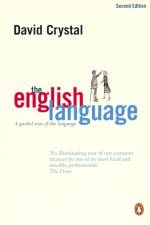
This is the definitive survey of the English language - in all its forms. Crystal writes accessibly about the structure of the language, the uses of English throughout the world and finally he gives a brief history of English. The book has been fully revised and there is a fascinating new chapter on 'The effect of technology' on the English language. 'Illuminating guided tour of our common treasure by one of its most lucid and sensible professionals' The Times 'A splendid blend of erudition and entertainment' THES
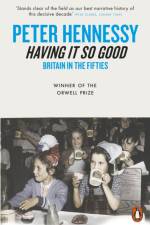
Having It So Good evokes Britain emerging from the shadow of war and the privations of austerity and rationing into growing affluence. Peter Hennessy takes his readers into the front-rooms where the Coronation was watched on television, to the classrooms and now coffee bars of 1950s Britain and also into the secret Cabinet rooms in which decisions about the British nuclear bomb were taken and plans made for the catastrophe of nuclear war. He brings to life the ageing Churchill, in his last faltering spell as Prime Minister, the highly-strung Anthony Eden taking his country to war in the teeth of American opposition and world opinion, and the rise of Supermac Harold Macmillan, gliding over problems with his Edwardian insouciance. Above all, Having It So Good captures the smell and the flavour of an extraordinary decade in which affluence and anxiety combined to produce their own winds of change.
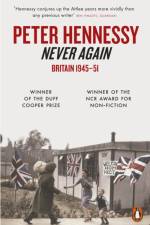
The first volume of Hennessy's postwar history of Britain concerns an age dominated by the shadow of war. With the beginnings of the Cold War, the foundations of the new Europe and the granting of independence of former colonies, Britain was forced to negotiate a new place in the world. It was also a time of rationing and of rebuilding, marked by the founding of the NHS and the welfare state. This comprehensive history embraces both high politics and everyday experience. It recreates the mood of the time and tells us where people lived, how they worked and what they wore.
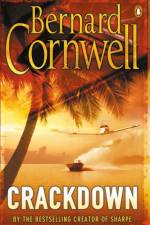
The dreams of an idle life in the paradise of the Bahamas are shattered when the discovery of a derelict, bullet-ridden yacht brings in the local police and the drug-runners. Nick Breakspear, desperate to escape his famous parentage, invalided out of the Marines, was heading only for peace, but the quixotic impulse makes him take up a challenge - and a lucrative offer - and he allows himself to be hired, for a private war, by a smooth-talking US presidential candidate. And it is the skills drawn from his depised father's world that will enable him to survive.
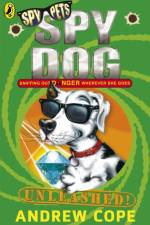
Super Spy Dog Lara is faced with her biggest challenge yet. Her nemesis, the evil Mr Big, has escaped from prison. Not only does he want to frame Lara and land her in big trouble, he's got his evil eye on the Millennium Diamond. It's the world's most precious jewel and it's about to go walkies . . .Spy Dog to the rescue!Gripping, funny, adventure fiction with brilliant illustrations throughout boys and girls aged 7+ won't be able to put it down!
Young, fiery and bright, Eshlaini has her whole future ahead of her until her father condemns her to a life of spinsterhood.Joyce has settled into Malaysian life after thirty years as an ex-pat wife or so she thinks, until a newcomer arrives and reveals just how little of her home she knows.Jade Moon wants the best for her family but, surrounded by Americans who reject her Korean traditions, she must first work out what the best means.Though cultures and distances separate them, their experiences reflect our universal fears and desires. From a breathtaking island off Singapore to upstate New York and France, Kim Edwards takes in the world, compassionately and gracefully exploring the obstacles of time, place and circumstance in all of our quests for love, happiness and acceptance.
This is the story of a cat, a broomstick and an ordinary schoolgirl called Rosemary. She bought them both in the market, quite cheaply. Of course, neither the cat nor the broomstick were just what they seemed, and they turned up just when Rosemary badly needed something nice to happen to her. A good cat is apt to be independent, so she did not have things all her own way, and as Carbonel proved to be a Royal cat in a very special sense, that was understandable. Between the cat and the broomstick, Rosemary picked up some useful spells and magic, and the adventures they brought about turned a dull-looking holiday into one long to be remembered for its unexpected excitements and rewards.
Abonner på vårt nyhetsbrev og få rabatter og inspirasjon til din neste leseopplevelse.
Ved å abonnere godtar du vår personvernerklæring.