





Gjør som tusenvis av andre bokelskere
Abonner på vårt nyhetsbrev og få rabatter og inspirasjon til din neste leseopplevelse.
Ved å abonnere godtar du vår personvernerklæring.Du kan når som helst melde deg av våre nyhetsbrev.

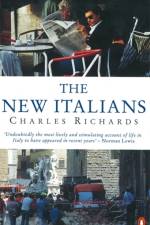
Italy has seduced generations with its sunshine, landscapes, art treasures and the warmth and vitality of its people, devoted to style, sensuality and the pleasures of life.The reality is less rosy. Italy is as exasperating as it is enchanting. Appalling public services, a rotten political class, the creeping tentacles of the Mafia, the all-forgiving Mother Church and infinitely indulgent mamma have long prevented Italians facing up to their collective failings. In The New Italians , journalist Charles Richards paints a compelling group portrait of the country and people, spanning football to Freemansonry, kickbacks to kidnappings. He concludes that however much things change, the Italians will remain essentially the same, and pull through with their customary brio .
The discovery of the Dead Sea Scrolls in Qumran, Palestine, in 1947 was one of the greatest archaeological finds of all time. Written in Hebrew, Aramaic and Greek, and hidden in caves by an ancient Jewish sect, these mysterious manuscripts revolutionized our understanding of the Bible, of Judaism and the early Christian world. Geza Vermes is the world's leading Dead Sea Scrolls scholar, whose English translations brought these extraordinary documents to thousands, and whose life has been inextricably interwoven with the scrolls for over sixty years. In this illuminating book he relates the controversial story of their discovery and publication around the world, revealing cover-ups, blunders and academic in-fighting, but also the passion and dedication of many of those involved. He shares what he has learned about the scrolls and, evaluating passages from them, gives his views on their true significance and what they can teach us, as well as those areas where scholarly consensus has not yet been reached. Few scholars have been as closely associated with the Dead Sea Scrolls as Vermes. Writing with candour and unique authority, he has created an ideal introduction to understanding these miraculous documents.
Bobby, a lively little Skye Terrier, adores his master Auld Jock and when the old man dies, Bobby refuses to leave his grave in Greyfriars Churchyard in Edinburgh. By day, he plays with local orphans and eats at a nearby tavern, but every night for fourteen years Bobby returns faithfully to sleep by his master's grave.Based on a true story.
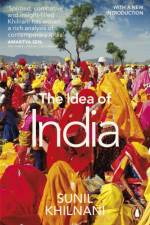
THE IDEA OF INDIA was originally published to mark the 50th anniversary of India's independence and has since established itself as a uniquely valuable and authoritative book on a key subject. At the heart of India's self-image since independence has been 'the idea of India' - modern, technocratic, egalitarian, secular - but the tensions between the idea and the reality have become almost intolerable. With the legacy of Nehru and Gandhi everywhere under attack and ferociously religious and militant politicians in power has the idea of India lost all meaning?
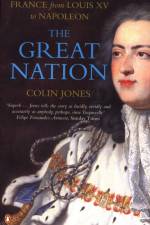
There can be few more mesmerising historical narratives than the story of how the dazzlingly confident and secure monarchy Louis XIV, 'the Sun King', left to his successors in 1715 became the discredited, debt-ridden failure toppled by Revolution in1789. The further story of the bloody unravelling of the Revolution until its seizure by Napoleon is equally astounding.Colin Jones' brilliant new book is the first in 40 years to describe the whole period. Jones' key point in this gripping narrative is that France was NOT doomed to Revolution and that the 'ancien regime' DID remain dynamic and innovatory, twisting and turning until finally stoven in by the intolerable costs and humiliation of its wars with Britain.
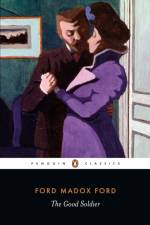
The Dowells, a wealthy American couple, have been close friends with the Ashburnhams for years. Edward Ashburnham, a first-rate soldier, seems to be the perfect English gentleman, and Leonora his perfect wife, but beneath the surface their marriage seethes with unhappiness and deception. Our only window on the strange tangle of events surrounding Edward is provided by John Dowell, the husband he deceives. Gradually Dowell unfolds a devastating story, in which everyone s honesty is in doubt. This extraordinary novel of passion and betrayal is a masterpiece of narrative skill and emotional depth.
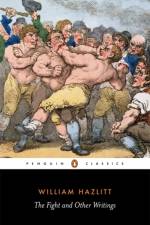
Hazlitt is one of the greatest masters of English prose style and this new selection demonstrates the variety and richness of his writing. The volume includes classic pieces of drama and literature criticism, such as his essays on Shakespeare and Coleridge, as well as less well-known material from his social and political journalism. This collection encourages the reader to reconsider the nature of critical writing, which Hazlitt transforms into an art form.
Armed with the insights of the scientific revolution, the men of the Enlightenment set out to free mankind from its age-old cocoon of pessimism and superstition and establish a more reasonable world of experiment and progress. Yet by the 1760s, this optimism about man and society had almost evaporated. In the works of Rousseau, Kant and Goethe, there was discernible a new inner voice, and an awareness of individual uniqueness which had eluded their more self-confident predecessors. The stage was set for the revolutionary crisis and the rise of Romanticism. In this book, Norman Hampson follows through certain dominant themes in the Enlightenment, and describes the contemporary social and political climate, in which ideas could travel from the salons of Paris to the court of Catherine the Great - but less easily from a master to his servant. On such vexed issues as the role of ideas in the "e;rise of the middle class"e; he provides a new and realistic approach linking intellectual and social history.
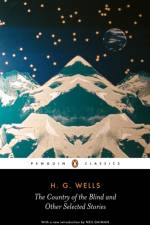
Herbert George Wells was perhaps best known as the author of such classic works of science fiction as The Time Machine and War of the Worlds. But it was in his short stories, written when he was a young man embarking on a literary career, that he first explored the enormous potential of the scientific discoveries of the day. He described his stories as "e;a miscellany of inventions,"e; yet his enthusiasm for science was tempered by an awareness of its horrifying destructive powers and the threat it could pose to the human race. A consummate storyteller, he made fantastic creatures and machines entirely believable; and, by placing ordinary men and women in extraordinary situations, he explored, with humor, what it means to be alive in a century of rapid scientific progress.
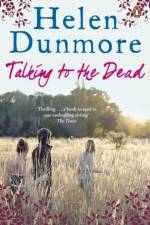
Talking to the Dead is bestselling author Helen Dunmore's fourth novel.There's nothing closer than sisters . . . Unloved by their distant mother, Isabel and Nina cemented their bond in childhood when tragedy struck the family. Many yeas later, with the difficult birth of Isabel's first child, it is Nina who comes to stay and help out her older sister. But Nina has other, important reasons for being under her sister's roof - not least of these is Isabel's husband, Richard.The tragedy that drew two sisters together so many years ago still has the power to wrench them apart . . . 'A writer of quiet deadly power . . . it takes two paragraphs to hook you. Don't resist' Time Out'Dunmore's capacity for hauntingly psychological storytelling is on brilliant display' Sunday Times'Flies off the page, startling the reader with its brilliance' Financial TimesHelen Dunmore has published eleven novels with Penguin: Zennor in Darkness , which won the McKitterick Prize; Burning Bright; A Spell of Winter, which won the Orange Prize; Talking to the Dead; Your Blue-Eyed Boy; With Your Crooked Heart; The Siege, which was shortlisted for the 2001 Whitbread Novel of the Year Award and for the Orange Prize for Fiction 2002; Mourning Ruby; House of Orphan; Counting the Stars and The Betrayal, which was longlisted for the Man Booker Prize 2010. She is also a poet, children's novelist and short-story writer.
Lord and Lady Clonbrony are more concerned with fashionable London society than with their responsibilities to those who live and work on their Irish estates. Concerned by this negligence, their son Lord Colambre goes incognito to Ireland to observe the situation and to discover the truth about the origins of his beloved cousin Grace. Can he find a solution that will bring prosperity and contentment to every level of society, including his own family? Rich in atmosphere and local character, The Absentee (1812) helped establish the 'regional' novel form, which influenced such varied writers as Scott, Thackeray and Turgenev. In this sparkling satire on Anglo-Irish relations, Maria Edgeworth created a landmark work of morality and social realism.
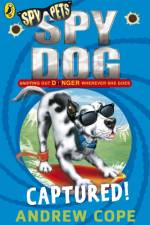
Spy Dog: Captured! by Andrew Cope is part of the brilliant Spy Dog series about the loveable Lara - Spy Dog extroadinaire! NEVER MIND JAMES BOND, LARA, THE WORLD'S ONE AND ONLY SPY DOG, IS BACK!AGENT'S ID: LARA - Licensed Assault and Rescue Animal. Also known as the Cook family's favourite mongrelSKILLS: Goal-keeping legend, language skills including Advanced Cat and Basic Dolphin, ace surfer and champion jugglerEQUIPMENT: Two new secret weapons!LATEST MISSION: Even in retirement, Lara's sharp spy instincts always give her a nose for mystery. There's more to the Cooks' holiday island than meets the eye, and it's down to Lara to sniff it out . . .*Please note this book was previously published as Spy Dog 2.* ***Fun, exciting books for boys and girls aged 7+***'We love Lara! ****' - Kraze Club'An imaginative, creative feast' - Radio TimesAndrew Cope was born in Derby in 1966. He is a teacher, writer and a huge fan of Derby County football club. He really does have a dog called Lara who has one sticky-up ear and came from the RSPCA, but he's not sure if she is actually a highly trained secret agent. Andrew lives with his wife and two children. This is his first book.
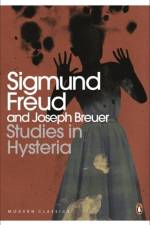
The tormenting of the body by the troubled mind, hysteria is among the most pervasive of human disorders - yet at the same time it is the most elusive. Freud's recognition that hysteria stemmed from traumas in the patient's past transformed the way we think about sexuality. Studies in Hysteria is one of the founding texts of psychoanalysis, revolutionizing our understanding of love, desire and the human psyche.
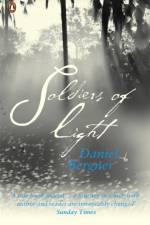
In this moving and unforgettable narrative journalist Daniel Bergner travels into the heart of Sierra Leone, a country torn apart by war. This is the story of the people he encounters in a realm of fire and jungle as they rebuild their lives: Lamin, who lost his hands to save his daughter; Komba, child soldier and sometime cannibal; Neall Ellis, the mercenary pilot with a conscience; Valentine Strasser the embittered ex-dictator; and the Western outsiders trying to save a land of startling beauty and brutality. Shocking, often heartbreaking yet ultimately hopeful, Soldiers of Light is a story of survival and a haunting work of literary reportage.
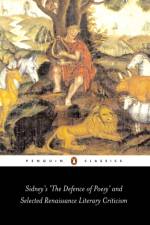
Controversy raged through England during the 1570-80s as Puritans denounced all manner of games & pastimes as a danger to public morals. Writers quickly turrned their attention to their own art and the first & most influential response came with Philip Sidney's Defense. Here he set out to answer contemporary critics &, with reference to Classical models of criticism, formulated a manifesto for English literature. Also includes George Puttenham's Art of English Poesy, Samuel Daniel's Defence of Rhyme, & passages by writers such as Ben Jonson, Francis Bacon & George Gascoigne.
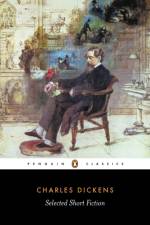
This witty and amusing collection of short pieces shows Dickens liberated from the more formal and sustained demands of the novel and experimenting with a diverse range of fictional techniques. In his tales of the supernatural, he creates frighteningly believable, spine-tingling stories of prophetic dreams and visions, as well as more fantastical adventures with goblins and apparitions. Impressionistic sketches combine imaginatively heightened travel journals with wry observations of home and abroad, while in his dramatic monologues, Dickens demonstrates his talent for exploring the secret workings of the human mind. These short works display Dickens's exuberant sense of comedy and character as his imagination is given free rein.
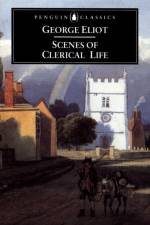
George Eliot (Mary Ann Evans) made her fictional debut when SCENES OF CLERICAL LIFE appeared in 'Blackwood's Magazine' in 1857. These stories contain Eliot's earliest studies of what became enduring themes in her great novels: the impact of religious controversy and social change in provincial life, and the power of love to transform the lives of individual men and women. 'Adam Bede' was soon to appear and bring George Eliot fame and fortune. In the meantime the SCENES won acclaim from a discerning readership including Charles Dickens: ' I hope you will excuse my writing to you to express my admiration...The exquisite truth and delicacy, both of the humour and the pathos of those stories, I have never seen the like of.'
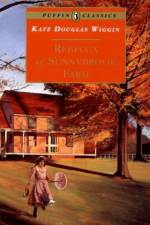
When ten-year-old Rebecca Randall leaves Sunnybrook Farm to go and live with her aunts, Miranda and Jane, in Riverboro neither she nor her aunts know quite what to expect. And with Rebecca around it's usually the unexpected that happens anyway. In fact it is this gift for the unexpected that means that life is never quite the same again for anyone with whom she comes into contact. This classic story of a young girl growing up in the American state of Maine at the end of the l9th century follows Rebecca's life, education and escapades through the next seven years until the day, as the new mistress of her aunts' old brick house, she begins her adult life.
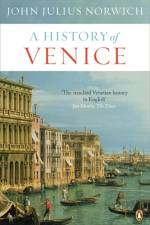
John Julius Norwich's dazzling history of Venice from its origins to its eighteenth century fall.'Lord Norwich has loved and understood Venice as well as any other Englishman has ever done. He has put readers of his generation more in his debt than any other English writer' Peter Levi, The Sunday Times.
One of Bernard Shaw s most glittering comedies, Arms and the Man is a burlesque of Victorian attitudes to heroism, war and empire. In the contrast between Bluntschli, the mercenary soldier, and the brave leader, Sergius, the true nature of valour is revealed. Shaw mocks deluded idealism in Candida, when a young poet becomes infatuated with the wife of a Socialist preacher. The Man of Destiny is a witty war of words between Napoleon and a strange lady , while in the exuberant farce You Never Can Tell a divided family is reunited by chance. Although Shaw intended Plays Pleasant to be gentler comedies than those in their companion volume, Plays Unpleasant, their prophetic satire is sharp and provocative.
Franceso Petrarch (1304-1374), creator of the sonnet form, remained for more than three hundred years the most influential poet in Europe, his works more widely read than even those of Dante. This collection contains English language versions of his poems from across six centuries, in a wide variety of translations and reinterpretations. Spanning the Trionfi series and the Canzoniere - Petrarch's empassioned sonnet-sequence concerning his beloved Laura - it also includes great English poems influenced by Petrarch. From Chaucer's early adaptation of a Petrarchan sonnet in Troilus and Criseyde to the sixteenth century translations by the Earl of Surrey, Byron's mocking consideration of the Canzoniere in Don Juan and Ezra Pound's parody Silet, all provide a unique insight into the significance of the founder of the European lyric tradition.
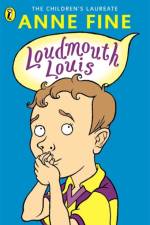
Everyone knows that Louis is a loudmouth, he never stops talking and drives everyone crazy. No one believes him when he announces that he's going to do a sponsored silence to raise money for the new school library. But Louis is determined, just for once, to keep his mouth shut. To his surprise he finds that he actually enjoys listening, that lessons are much better when he's really involved in them - and that it's very satisfying to raise money for the school.
Be inspired by Allen Carr's life story of how he quit his 100-a-day habit, and his quest to cure the world of smoking.'Truly inspirational. If you are convinced there is no way you will ever give up ... I strongly recommend you read it' Mail on Sunday_________ Allen Carr used to smoke 100 cigarettes a day - a habit that was driving him to despair. He tried every technique around but they just wouldn't work, until he discovered his now famous Easyway method in 1983 and finally quit for good. This led to the bestselling book, Allen Carr's Easy Way to Stop Smoking, and a successful chain of clinics, which has helped thousands of people across the world in their goal to be free of tobacco. His story, from slave to a habit that was destroying his life to latter-day lifestyle guru, makes for both inspirational and utterly compelling reading.
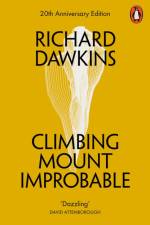
How could such an intricate object as the human eye - so complex and so precise - have come about by chance? In this masterful piece of popular science, Richard Dawkins builds a powerful and carefully reasoned argument for evolutionary adapatation as the force behind all life on earth. The metaphor of 'Mount Improbable' represents the combination of perfection and improbability that we find in the seemingly 'designed' complexity of living things. And through it all runs the thread of DNA, the molecule of life, responsible for its own destiny on an unending pilgrimage through time. Evocative illustrations accompany Dawkins' eloquent descriptions of astonishing adaptations in the living world.
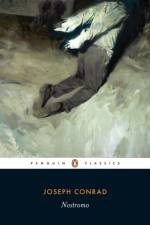
Nostromo, published in 1904, is one of Conrad's finest works. Nostromo -- though one hundred years old -- says as much about today's Latin America as any of the finest recent accounts of that region's turbulent political life. Insistently dramatic in its storytelling, spectacular in its recreation of the subtropical landscape, this picture of an insurrectionary society and the opportunities it provides for moral corruption gleams on every page with its author's dry, undeceived, impeccable intelligence.
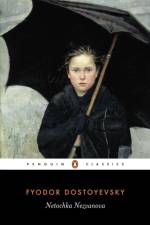
Netochka Nezvanova - a 'Nameless Nobody' - tells the story of a childhood dominated by her stepfather, Efimov, a failed musician who believes he is a neglected genius. The young girl is strangely drawn to this drunken ruin of a man, who exploits her and drives the family to poverty. But when she is rescued by an aristocratic family, the abuse against Netochka's delicate psyche continues in a more subtle way, condemning her to remain an outsider - a solitary spectator of a glittering society. Conceived as part of a novel on a grand scale, Netochka Nezvanova remained incomplete after Dostoyevsky was exiled to Siberia for 'revolutionary activities' in 1849. With its depiction of the suffering, loneliness, madness and sin that affect both rich and poor in St Petersburg, it contains the great themes that were to dominate his later novels.
'Okay, okay. So slap my teensy little paws. I messed up - big time.'Tuffy can't wait for Ellie and the family to go away on holiday. He and the gang plan to ignore the grumpy new cat-sitter, and run wild all night. But could that furry bundle, suddenly flying through the air, put a stop to all the fun?
Flour Babies by Anne Fine, won the Carnegie Medal and the Whitbread Children's Book Award in 1992. When the annual school science fair comes round, Mr Cartwright's class don't get to work on the Soap Factory, the Maggot Farm or the Exploding Custard Tins. To their intense disgust they get the Flour Babies - sweet little six-pound bags of flour that must be cared for at all times.Hilariously funny, Flour Babies is a brilliant depiction of secondary school life.
A moving, thought-provoking and uplifting story of a wonderful mother, daughter relationship.Gloria Hunniford's daughter, TV presenter Caron Keating, was 34 when she was diagnosed with breast cancer. The next seven years of Caron's life, and her family's, became a quest for recovery that ultimately took them across the world. They became experts in the illness and its treatment, both conventional and alternative. All the while Caron was living in the public eye and keeping her own, devastating secret. This is Gloria's account of Caron's life. It is about the difficult bond between mothers and daughters ... about what happens to a family when one of its members gets taken over by a disease.It's a celebration of an unbreakable mother - daughter relationship and how that relationship withstood the strain of Caron's illness. And above all it's a book to commemorate a spirited, magical woman. A woman who loved life and fought to hold onto it.'It is outstanding from the beginning ... feels painfully truthful but is utterly absorbing. It does make you cry - endlessly' Daily Express'We see Caron as a daughter, a sister, a wife, a friend and a mother - but most of all as a fighter. This is not a story of illness and death rather it's a beautiful, emotional celebration of an extraordinary life that sadly ended far too soon. A beautiful read' Daily Record
Cicero's speeches "e;In Defence of Sextus Roscius of Amerina,"e; "e;In Defence of Aulus Cluentius Habitus,"e; "e;In Defence of Gaius Rabirius,"e; "e;Note on the Speeches in Defence of Caelius and Milo,"e; and "e;In Defence of King Deiotarus"e; provide insight into Roman life, law, and history.
Abonner på vårt nyhetsbrev og få rabatter og inspirasjon til din neste leseopplevelse.
Ved å abonnere godtar du vår personvernerklæring.