


Gjør som tusenvis av andre bokelskere
Abonner på vårt nyhetsbrev og få rabatter og inspirasjon til din neste leseopplevelse.
Ved å abonnere godtar du vår personvernerklæring.Du kan når som helst melde deg av våre nyhetsbrev.

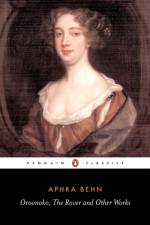
When Prince Oroonoko s passion for the virtuous Imoinda arouses the jealousy of his grandfather, the lovers are cast into slavery and transported from Africa to the colony of Surinam. Oroonoko s noble bearing soon wins the respect of his English captors, but his struggle for freedom brings about his destruction. Inspired by Aphra Behn s visit to Surinam, Oroonoko (1688) reflects the author s romantic view of Native Americans as simple, superior peoples in the first state of innocence, before men knew how to sin . The novel also reveals Behn s ambiguous attitude to African slavery while she favoured it as a means to strengthen England s power, her powerful and moving work conveys its injustice and brutality.
'What spectacle is more august than that of a great king in exile? Who is more worthy of respect than a brave man in misfortune?' When "e;Henry Esmond"e; appeared in 1852, noted writers and critics of the time acclaimed it as the best historical novel ever written. Set in the reign of Queen Anne, the story follows the troubled progress of a gentleman and an officer in Marlborough's army, as he painfully wrestles with an emotional allegiance to the old Tory-Catholic England until, disillusioned, he comes to terms of a kind with the Whiggish-Protestant future. This change also entails a very uncomfortable switch in his affections. The love story of Henry Esmond is charged with sombre, unconscious emotions, yet is skilfully embedded into historical events which are convincing but never too prominent.
Written immediately after Vanity Fair, Pendennis has a similar atmosphere of brooding disillusion, tempered by the most jovial of wits. But here Thackeray plunders his own past to create the character of Pendennis and the world in which he lives: from miserable schoolboy to striving journalist, from carefree Oxbridge to the high (and low) life of London. The result is a superbly panoramic blend of people, action and background. The true ebb and flow of life is caught and the credibility of Pen, his worldly uncle, the Major, and many of the other characters, extends far beyond the pages of the novel. Held together by Thackeray's flowing, confident prose, with its conversational ease of tone, Pendennis is as rich a portrait of England in the 1830s and 40s as it is a thorough and thoroughly entertaining self-portrait.
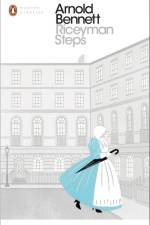
In the work that has been judged the finest of his later novels, (printed here in Bennett's corrected version) Arnold Bennett gives us an unfogettable portrait of a miser and his wife. Henry Earlforward is a second-hand bookseller with a passion for money. He marries Violet Arb, a widow with a fortune of her own, yet he is eaten up by fear and greed. Set against the dark forces of avarice is the Earlford's maid, Elsie, whose love of life, generosity of spirit and warm humanity give Riceyman Steps a fine balance between hopelessness and optimism. 'I closed the book at seven in the morning after the shortest sleepless night of my experience ... there I had "e;Bennett triumphant"e; without any doubt whatsoever' - Joseph Conrad
Sir Thomas Browne (1605-82) was a writer of breathtaking range and learning, whose works demonstrate a warm and humorous view of human nature. Religio Medici is a fascinating, witty and intimate exploration of his views on faith and tolerance, while substantial selections from Pseudodoxia Epidemica display Browne's breadth of knowledge and omnivorous curiosity in his account of common errors in a startling array of subjects including sciences, history, literature and philosophy. Hydriotaphia or 'Urn Buriall' is an intriguing meditation on death and the desire for immortality, The Garden of Cyrus considers the mysterious order to be found in nature, and A Letter to a Friend and the aphoristic Christian Morals provide profound spiritual guidance to readers.
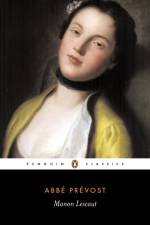
When the young Chevalier des Grieux first sets eyes on the exquisitely beautiful and charming Manon Lescaut they fall passionately in love. But his happiness turns to bitter despair when he discovers that Manon is mercenary and immoral, and has taken a rich lover to pay for their life of pleasure. A broken man, he swears to stay away from her, but cannot. Just as the Chevalier is helpless to end their relationship, so Manon is incapable of giving up the source of her income, and the lovers enter a destructive cycle that can only end in tragedy. Manon Lescaut (1731) is a devastating depiction of obsessive love and a haunting portrait of a captivating but dangerous woman.
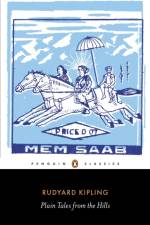
Originally written for the Lahore Civil and Military Gazette, the stories were intended for a provincial readership familiar with the pleasures and miseries of colonial life. For the subsequent English edition, Kipling revised the tales so as to recreate as vividly as possible the sights and smells of India for those at home. Yet far from being a celebration of Empire, Kipling's stories tell of 'heat and bewilderment and wasted effort and broken faith'. He writes brilliantly and hauntingly about the barriers between the races, the classes and the sexes; and about innocence, not transformed into experience but implacably crushed.
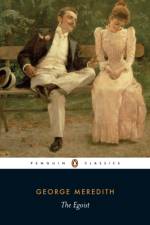
Virginia Woolf said of The Egoist: 'Meredith pays us a supreme compliment to which as novel-readers we are little accustomed ... He imagines us capable of disinterested curiosity in the behaviour of our kind.' In this, the most dazzlingly intellectual of all his novels, Meredith tries to illuminate the pretensions of the most powerful class within the very citadel of security which its members have built. He develops to their logical extremity his ideas on egoism, on sentimentality and on the power of comedy. Meredith saw egoism as the great enemy of truth, feeling and progress, and comedy as the great dissolver of artifice. The Egoist is the extreme expression of his recurrent theme: the defeat of egoism by the power of comedy.
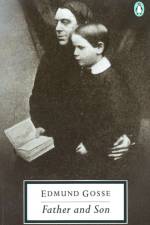
At birth Edmund Gosse was dedicated to 'the Service of the Lord'. His parents were Plymouth Brethren. After his mother's death Gosse was brought up in stifling isolation by his father, a marine biologist whose faith overcame his reason when confronted by Darwin's theory of evolution. Father and Son is also the record of Gosse's struggle to 'fashion his inner life for himself' - a record of whose full and subversive implications the author was unaware, as Peter Abbs notes in his Introduction. First published anonymously in 1907, Father and Son was immediately acclaimed for its courage in flouting the conventions of Victorian autobiography and is still a moving account of self-discovery.
In this final volume of The Forsyte Saga Galsworthy writes about the lives and loves of the Cherrell family, cousins of the Forsytes. For centuries, the Cherrell sons have left their home of Condaford Grange to serve the state as soldiers, clergymen and administrators, but the 1930s bring uncertainty in a world of rapidly altering morals and unemployment. Galsworthy s portrayal of the effect of political change on individuals show him as a great social novelist as well as the author of one of the most gripping family sagas ever written.
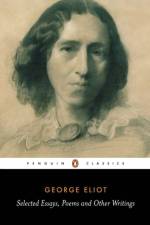
The works collected in this volume provide an illuminating introduction to George Eliot's incisive views on religion, art and science, and the nature and purpose of fiction. Essays such as 'Evangelical Teaching' show her rejecting her earlier religious beliefs, while 'Woman in France' questions conventional ideas about female virtues and marriage, and 'Notes on Form in Art' sets out theories of idealism and realism that she developed further in Middlemarch and Daniel Deronda. It also includes selections from Eliot's translations of works by Strauss and Feuerbach that challenged many ideas about Christianity; excerpts from her poems; and reviews of writers such as Wollstonecraft, Goethe and Browning. Wonderfully rich in imagery and observations, these pieces reveal the intellectual development of this most challenging and rewarding of writers.
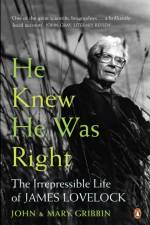
Jim Lovelock is an iconic figure in British science, a prophet whose prophecies are coming true. This is his definitive authorised biography. Lovelock is best known as the 'father' of Gaia theory, which isnow established as the most useful way of understanding the dramatic changes happening to the environment of the Earth.But few people know about his early work as a chemist and inventor - work which included inventing the detectors used to search for life on Mars, and blowing the whistle on the depletion of ozone layer. In his personal life, he was a Quaker and conscientious objector in World War Two (later changing his mind in view of the evils of Nazism), supported his family for a time by selling his own blood, and gave up a salary and security to become an independent scientist based in an English village - from which all his best known work emerged.As he approaches his 90th birthday, looking forward to going into space, this book truly reveals an independent, original and inspiring life.
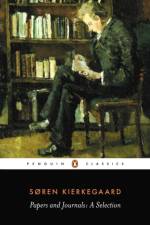
One of the greatest thinkers of the nineteenth century, S ren Kierkegaard (1814-55) often expressed himself through pseudonyms and disguises. Taken from his personal writings, these private reflections reveal the development of his own thought and personality, from his time as a young student to the deep later internal conflict that formed the basis for his masterpiece of duality Either/Or and beyond. Expressing his beliefs with a freedom not seen in works he published during his lifetime, Kierkegaard here rejects for the first time his father's conventional Christianity and forges the revolutionary idea of the 'leap of faith' required for true religious belief. A combination of theoretical argument, vivid natural description and sharply honed wit, the Papers and Journals reveal to the full the passionate integrity of his lifelong efforts 'to find a truth which is truth for me'.
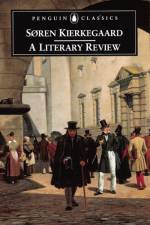
While ostensibly commenting on the work of a contemporary novelist, Kierkegaard used this review as a critique of his society and age. The influence of this short piece has been far-reaching. The apocalyptic final sections are the source for central notions in Heidegger's Being and Time. Later readers have seized on the essay as a prophetic analysis of our own time. Its concepts have been drawn into current debates on identity, addiction, and social conformity.
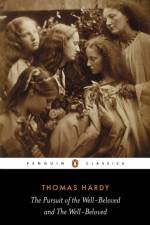
Hardy's two versions of a strange story set in the weird landscape of Portland. The central figure is a man obsessed both with the search for his ideal woman and with sculpting the perfect figure of Aphrodite.
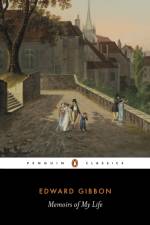
Edward Gibbon was one of the world's greatest historians and a towering figure of his age. When he died in 1794 he left behind the unfinished drafts of his Memoirs, which were posthumously edited by his friend Lord Sheffield, and remain an astonishing portrait of a rich, full life. Recounting Gibbon's sickly childhood in London, his disappointment with an Oxford 'steeped in port and prejudice', his successful years in Lausanne, his first and only love affair and the monolithic achievement of The Decline and Fall of the Roman Empire, he distils his genius for history into a remarkable gift for autobiography. Candid and detailed, these writings are filled with warmth and intellectual passion.
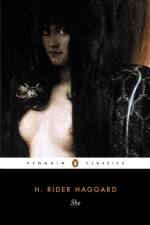
On his twenty-fifth birthday, Leo Vincey opens the silver casket that his father has left to him. It contains a letter recounting the legend of a white sorceress who rules an African tribe and of his father s quest to find this remote race. To find out for himself if the story is true, Leo and his companions set sail for Zanzibar. There, he is brought face to face with Ayesha, She-who-must-be-obeyed: dictator, femme fatale, tyrant and beauty. She has been waiting for centuries for the true descendant of Kallikrates, her murdered lover, to arrive, and arrive he does in an unexpected form. Blending breathtaking adventure with a brooding sense of mystery and menace, She is a story of romance, exploration discovery and heroism that has lost none of its power to enthrall.
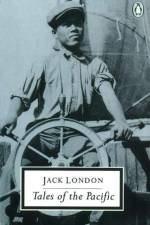
If you know London primarily through novels like WHITE FANG, these stories will provide a new perspective. Full of intriguing characters and snippets of pidgin, they also highlight London's concern with social issues.
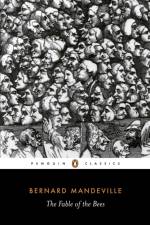
A physician with a particular interest in psychological disorders and satirist, Mandeville published versions of his notorious Fable of the Bees from 1714 to 1732. Each was a defence and elaboration of his short satirical poem The Angry Hive, 1705. The version of the Fable of 1723 and 1732 are the fullest defences of his early paradox that social benefit is the unintended consequence of personal vice. It is an argument that is generally held to lie behind Adam Smith's doctrine of the 'hidden hand' of economic development.
Wellington Redburn is a fifteen-year-old from the state of New York, with only one dream - to run away to sea. However, when he does fulfil this long-held fantasy, he quickly finds that reality as a cabin boy is far harsher than he ever imagined. Mocked by the crew on board the Highlander for his weakness and bullied by the vicious and merciless sailor Jackson, Wellington must struggle to endure the long journey from New York to Liverpool. But when he does reach England, he is equally horrified by what he finds there: poverty, desperation and moral corruption. Inspired by Melville's own youthful experiences on board a cargo boat, this is a compelling tale of innocence transformed, through bitter experience, into disillusionment. A fascinating sea journal and coming-of-age tale, Redburn provides a unique insight into the mind of one of America's greatest novelists.
Onboard the Fid le, a steamboat floating down the Mississippi to New Orleans, a confidence man sets out to defraud his fellow passengers. In quick succession he assumes numerous guises - from a legless beggar and a worldly businessman to a collector for charitable causes and a 'cosmopolitan' gentleman, who simply swindles a barber out of the price of a shave. Making very little from his hoaxes, the pleasure of trickery seems an end in itself for this slippery conman. Is he the Devil? Is his chicanery merely intended to expose the mercenary concerns of those around him? Set on April Fool's Day, The Confidence-Man (1857) is an engaging comedy of masquerades, digressions and shifting identity, and a devastating satire on the American dream.
Composed and published while John Bunyan (1628-1688) was in prison for his religious principles, Grace Abounding is an extraordinary spiritual autobiography. It was written in an age when religious radicalism was regarded as socially subversive, and is a haunting, often harrowing and ultimately inspiring account of his inner life: his long struggle with and eventual triumph over doubt and despair, his spiritual regeneration and his subsequent emergence as a preacher and writer of great imaginative power. God and Satan are the chief protagonists in Bunyan's drama, existing not as theological concepts but as terrifyingly immediate adversaries in the competition for his soul. Yet he finds his spiritual defences in the Bible, and Grace Abounding charts his passionate and imaginative involvement with this ultimate source of wisdom.
'I am the enfant terrible of literature and science. If I cannot, and I know I cannot, get the literary and scientific big-wigs to give me a shilling, I can, and I know I can, heave bricks into the middle of them.' With The Way of All Flesh, Samuel Butler threw a subversive brick at the smug face of Victorian domesticity. Published in 1903, a year after Butler's death, the novel is a thinly disguised account of his own childhood and youth 'in the bosom of a Christian family'. With irony, wit and sometimes rancour, he savaged contemporary values and beliefs, turning inside-out the conventional novel of a family's life through several generations.
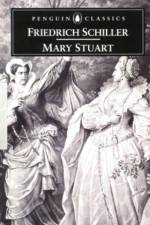
This dramatic story recounts Mary, Queen of Scots's remaining days held captive in Fotheringay Castle. In scenes alternating between Mary's prison and Elizabeth's court at Westminster, Schiller's play gradually builds a compelling picture of a tragic heroine rising above her suffering to gain in insight and spiritual depth. In contrast Elizabeth, in turmoil over the correct course of action for her country and trapped by the cruel demands of Realpolitik, can achieve worldly victory only at a terrible moral cost. Culminating in a fictitious meeting of the two women, Mary Stuart is a dramatic meditation on the nature of political power, but also a deeply moving human tragedy that captures the emotional essence of complex events.
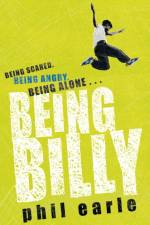
Being Billy is the award-winning first novel by Phil Earle. ***Heroic, Phil Earle's hugely anticipated third novel is out on 24 April 2013***Faces flashed before my eyes. And for every face there was a time that they had let me down. Each punch that landed was revenge, my chance to tell them I hadn't forgotten what they did.Eight years in a care home makes Billy Finn a professional lifer. And Billy's angry - with the system, the social workers, and the mother that gave him away.As far as Billy's concerned, he's on his own. His little brother and sister keep him going, though they can't keep him out of trouble. But he isn't being difficult on purpose. Billy's just being Billy. He can't be anything else. Can he?'Phil Earle writes starkly but sensitively about damaged children in this brilliant page-turning novel. It moved me to tears' - Jacqueline Wilson 'Being Billy was a total page-turner - authentic and gritty. Billy's voice doesn't falter . . . spiky, brave and compassionate' - Jenny Downham, author of Before I Die'Moving and powerful, I loved it' - Sophie McKenziePhil Earle was born, raised and schooled in Hull. His first job was as a care worker in a children's home, an experience that influenced the ideas behind Being Billy. He then trained as a drama therapist and worked in a therapeutic community in south London, caring for traumatized and abused adolescents.After a couple of years in the care sector, Phil chose the more sedate lifestyle of a bookseller, and now works in children's publishing. Phil lives in south-east London with his wife and children, but Hull will always be home.
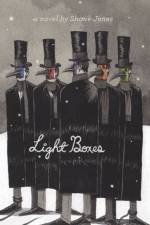
February is persecuting the townspeople. It has been winter for more than three hundred days. All forms of flight are banned and the children have started to disappear, taken from their beds in the middle of the night. The priests hang ominous sheets of parchment on the trees, signed 'February'. And somewhere on the outskirts of the town lives February himself, with the girl who smells of honey and smoke...In short bursts of intensely poetic language, this beautifully strange and otherworldly first novel tells the story of the people in the town and their efforts to combat the mysterious spectre of February. Steeped in visual imagery, this is a hauntingly enigmatic modern fairy tale - in which nothing is as it seems.
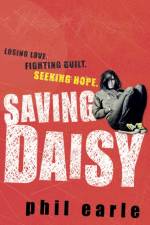
Saving Daisy is the second critically novel by Phil Earle***HEROIC, Phil Earle's hugely anticipated third novel is out on 24 April 2013***Daisy's mum is gone. Her dad refuses to talk about it. As far as Daisy's concerned, it's all her fault. As her life starts to spiral out of control, panic leads to tragedy and Daisy's left alone.But sometimes the kindness of a stranger can turn things around. A stranger who desperately wants to save Daisy - if she'll only let herself be saved . . .A powerful and moving story linked to Phil Earle's critically acclaimed debut book, Being Billy.Praise for Being Billy:'A wonderful book' - Morris Gleitzman'Phil Earle writes starkly but sensitively in this brilliant page-turning novel. It moved me to tears' - Jacqueline Wilson'This may be the most authoritative, honest and moving account of children trapped in the care system to date' - Keith Gray, Scotsman'life-affirming, redemptive, and really just rather good' - Marcus Sedgwick, Guardian'Moving and powerful, I loved it' - Sophie McKenzie'Being Billy was a total page-turner - authentic and gritty. Billy's voice doesn't falter . . . spiky, brave and compassionate - Jenny Downham
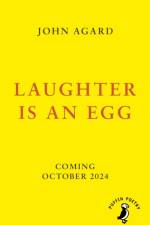
Laughter is an eggwith a crick-crack facethat can hide in the heartof the human race.Tummy tickling, rib-cracking and even wee-yourself laughs can all be found in the pages of this eggstraordinary collection of poems, riddles, jokes and ballads from the wonderful John Agard.
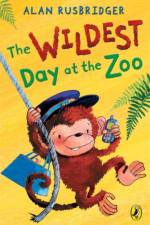
The loveable animals and their keepers at Melton Mowbray Zoo are back! Everyone has recovered from the disastrous weekend when the heating broke and Mr Pickles, the zoo director, asked all the keepers to take their animal home for the weekend. In fact, so much so, that a feeling of nonchalence pervades - the animals have been teamed with the same keepers for years and quite frankly it's become rather boring. So. in a bid to liven things up, the keepers decide to swap animals for the day and, as you can imagine this makes for some lively antics!Told in Alan's inimitable dead-pan voice this is another very charming and extremely funny story brought to life by Ben Cort's hugely imaginative illustrations.
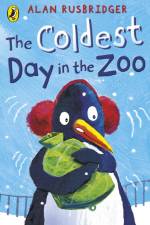
Slap bang in the middle of the coldest Friday of the coldest week of the year, the central heating breaks down at Melton Mowbray Zoo. The system needs a new flange but flanges can't be obtained on Fridays in Melton Mowbray, so Mr Pickles the head keeper asks all the other keepers to take the animal they are in charge of home for the weekend. The results range from disastrous to successful: when the penguin (who 'always hankered after the good life') decides to eat his tea in Mr Pumbles' bed, and the lion succeeds in scaring off Mr Leaf's mother-in-law to such an extent that she doesn't come back to lunch for three years...
Abonner på vårt nyhetsbrev og få rabatter og inspirasjon til din neste leseopplevelse.
Ved å abonnere godtar du vår personvernerklæring.