







Gjør som tusenvis av andre bokelskere
Abonner på vårt nyhetsbrev og få rabatter og inspirasjon til din neste leseopplevelse.
Ved å abonnere godtar du vår personvernerklæring.Du kan når som helst melde deg av våre nyhetsbrev.

While some of Shaw s earlier plays are still performed, his later plays, such as the ones in this volume, are barely known. As the collective title indicates, the themes here are political; yet, frankly, it is doubtful how seriously we can now take Shaw as a political thinker. Despite writing in the 1930s, he has little to say of the nature of totalitarianism: although he satirises Fascist dictators in Geneva , the satire is disappointingly mild. Neither did Shaw appear to foresee (on the evidence of these plays, at least) the imminent collapse of the British Empire.But it is Shaw the dramatist rather than Shaw the political philosopher who still holds our attention even in plays as explicitly political as these. He had a sharp intellect and a quirky sense of humour, and his dialogue still glints and sparkles: he couldn t write a dull line if he tried. No matter how serious the themes he addresses, the crispness of his writing and his lightness of touch still scintillate.Shaw seems, perhaps unfairly, out of fashion nowadays. But even in these lesser-known works, he demonstrates his matchless ability, still undimmed, to provoke and to entertain.
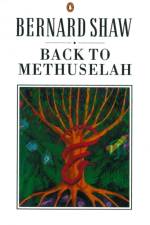
Back to Methuselah (A Metabiological Pentateuch) is a 1921 series of five plays and a preface by George Bernard Shaw. The five plays are:In the Beginning: B.C. 4004 (In the Garden of Eden); The Gospel of the Brothers Barnabas: Present Day; The Thing Happens: A.D. 2170; Tragedy of an Elderly Gentleman: A.D. 3000; As Far as Thought Can Reach: A.D. 31,920 The plays were published with a preface titled The Infidel Half Century, and first performed in 1922 by the New York Theatre Guild at the Garrick Theatre.
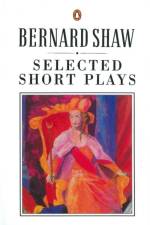
This selection comprises: "e;THE ADMIRABLE BASHVILLE"e; "e;HOW HE LIED TO HER HUSBAND"e; "e;PASSION, POISON AND PETRIFACTION"e; "e;THE GLIMPSE OF REALITY"e; "e;THE DARK LADY OF THE SONNETS"e; "e;OVERRULED"e; "e;THE MUSIC-CURE"e; "e;GREAT CATHERINE"e; "e;THE INCA OF PERUSALEM"e; "e;O'FLAHERTY V.C."e; "e;AUGUSTUS DOES HIS BIT"e; "e;ANNAJANSKA, THE BOLSHEVIK EMPRESS"e; "e;VILLAGE WOOING"e; "e;THE SIX OF CALAIS"e; and "e;CYMBELINE REFINISHED"e;.
Androcles and the Lion is a 1912 play written by George Bernard Shaw.Androcles and the Lion is Shaw's retelling of the tale of Androcles, a slave who is saved by the requited mercy of a lion. In the play, Shaw makes Androcles out to be one of many Christians being led to the Colosseum for torture. Characters in the play exemplify several themes and takes on both modern and supposed early Christianity, including cultural clash between Jesus' teachings and traditional Roman values.
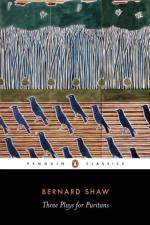
Shaw believed that theatre audiences of the 1890s deserved more than the hollow spectacle and sham he saw displayed on the London stage. But he also recognized that people wanted to be entertained while educated, and to see purpose mixed with pleasure. In these three plays of ideas, Shaw employed traditional dramatic forms - Victorian melodrama, the history play and the adventure story - to turn received wisdom upside down. Set during the American War of Independence, The Devil's Disciple exposes fake Puritanism and piety, while Caesar and Cleopatra, a cheeky riposte to Shakespeare, redefines heroism in the character of the ageing Roman leader. And in Captain Brassbound's Conversion, an expedition in Morocco is saved from disaster by a lady explorer's skilful manipulation of the truth.
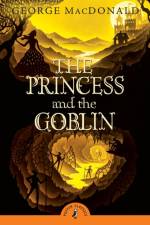
The enchanting story of The Princess and the Goblin, brilliantly introduced by Ursula Le Guin, author of the Earthsea quartet. Princess Irene lives in a castle in a wild and lonely mountainous region. One day she discovers a steep and winding stairway leading to a bewildering labyrinth of unused passages with closed doors - and a further stairway. What lies at the top? Can the ring the princess is given protect her against the lurking menace of the boglins from under the mountain?
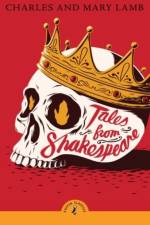
Discover Shakespeare's best-loved playsThese tales are the perfect introduction to Shakespeare's greatest plays. Charles and Mary Lamb vividly bring to life the power of Hamlet and Othello, the fun of As You Like It and the drama of Pericles. They never lose the feel of his beautiful language and humanity and convey all of his wit and wisdom. These tales are classic literature in their own right.
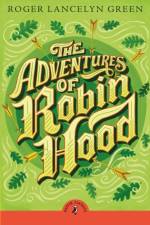
The classic story of social justice and outrageous cunning. Robin Hood, champion of the poor and oppressed, stands against the cruel power of Prince John and the brutal Sheriff of Nottingham. Taking refuge in the vast Sherwood Forest with his band of men, he remains determined to outwit his enemies.Brilliantly introduced by bestselling author John Boyne.
Adam Smith is celebrated all over the world as the author of The Wealth of Nations and the founder of modern economics. A few of his ideas - that of the 'Invisible Hand' of the market and that 'It is not from the benevolence of the butcher, the brewer, or the baker that we expect our dinner, but from their regard to their own interest' - have become icons of the modern world. Yet Smith saw himself primarily as a philosopher rather than an economist, and would never have predicted that the ideas for which he is now best known were his most important. This book, by one of the leading scholars of the Scottish Enlightenment, shows the extent to which The Wealth of Nations and Smith's other great work, The Theory of Moral Sentiments, were part of a larger scheme to establish a grand 'Science of Man', one of the most ambitious projects of the European Enlightenment, which was to encompass law, history and aesthetics as well as economics and ethics.Nicholas Phillipson reconstructs Smith's intellectual ancestry and formation, of which he gives a radically new and convincing account. He shows what Smith took from, and what he gave to, the rapidly changing and subtly different intellectual and commercial cultures of Glasgow and Edinburgh as they entered the great years of the Scottish Enlightenment. Above all he explains how far Smith's ideas developed in dialogue with those of his closest friend, the other titan of the age, David Hume. This superb biography is now the one book which anyone interested in the founder of economics must read.
From 'shotclog', a Yorkshire term for a companion only tolerated because he is paying for the drinks, to Albanian having 29 words to describe different kinds of eyebrows, the languages of the world are full of amazing, amusing and illuminating words and expressions that will improve absolutely everybody's quality of life. All they need is this book! This bumper volume gathers all three of Adam Jacot de Boinod's acclaimed books about language - The Wonder of Whiffling, The Meaning of Tingo and Toujours Tingo (their fans include everyone from Stephen Fry to Michael Palin) - into one highly entertaining, keenly priced compendium. As Mariella Frostup said 'You'll never be lost for words again!'
When, after fifteen years of runaway growth based largely on property speculation, the Irish economy finally crashed, Ireland's bankers and developers tried to keep themselves out of sight. But they couldn't keep themselves out of court - and it is in the courtrooms that the full, sickening drama of the Irish meltdown is being played out. Dearbhail McDonald, the brilliant legal editor of the Irish Independent, has been following the high-stakes rows through the courts and, drawing upon her unmatched contacts, tells the often bizarre stories behind an extraordinary reversal of fortune. From the man who ran a pyramid scheme in a Dublin suburb to the leading developer whose business now lies in ruins, from the judges to the solicitors to the ordinary mortgage-holders who find themselves on the wrong side of the law, Bust paints a gripping picture of the human drama - and the human cost - of an economic catastrophe.
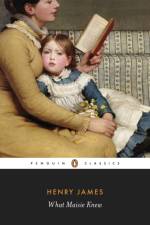
After her parents' bitter divorce, young Maisie Farange finds herself shuttled between her selfish mother and vain father, who value her only as a means for provoking each other. Maisie - solitary, observant and wise beyond her years - is drawn into an increasingly entangled adult world of intrigue and sexual betrayal, until she is finally compelled to choose her own future. What Maisie Knew is a subtle yet devastating portrayal of an innocent adrift in a corrupt society. Part of a relaunch of three James titles.
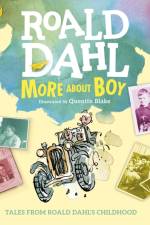
This new rebrand of MORE ABOUT BOY is a favourite book containing a wealth of new photos, facts and writings about Roald Dahl and his childhood, together with the original text and illustrations from his much-loved memoir. With lots of little-known details, this is a must-have for all Dahl fans!Look out for new Roald Dahl apps in the App store and Google Play- including the disgusting TWIT OR MISS! and HOUSE OF TWITS inspired by the revolting Twits.
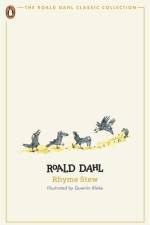
A collection of ribald rhymes featuring characters from fairy tales,fables and nursery rhymes - as you've never seen them before! From the tortoise and the hare and Hansel and Gretel to Ali Baba and Aladdin, these traditional stories will never seem the same again once you have had a taste of Roald Dahl's hilarious verse and Quentin Blake's suitably lively illustrations.Look out for new Roald Dahl apps in the App store and Google Play- including the disgusting TWIT OR MISS! inspired by the revolting Twits.
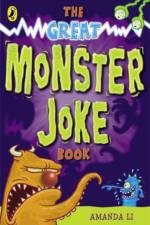
What sort of jokes do werewolves like best?Howlers!What's worse than being surrounded by huge great scary monsters? Being surrounded by AWFUL JOKES ABOUT MONSTERS! Think you can stomach hundreds of and ghastly gags? These monster gags will have you screaming for more! From gnarly knock knocks to gruesome groaners, you'll find everything to tickle your monster fancy.
On 28 August 1984, Josef Fritzl drugged his teenage daughter with ether and imprisoned her in an underground bunker behind eight locked doors. Over the following twenty-four years, he raped and abused her, never letting her or the children she bore him out of the dark, windowless cellar.Based on 150 new interviews with psychologists, neighbours, colleagues and friends who knew Fritzl, as well as the insight of his own chilling confession, Allan Hall reconstructs the monstrous personality behind this hideous crime. He exposes Josef Fritzl's dark past in Nazi Austria, his previous conviction as a rapist, the appalling conditions in which Elisabeth and her children were kept and her astonishingly brave conduct while held prisoner. Including exclusive photographs and previously unseen evidence, this is a truly heart-stopping record of one of the most elaborate and disturbing cases of abuse in modern times.
Adam Smith s landmark treatise on the free market paved the way for modern capitalism, arguing that competition is the engine of a productive society, and that self-interest will eventually come to enrich the whole community, as if by an invisible hand . Throughout history, some books have changed the world. They have transformed the way we see ourselves and each other. They have inspired debate, dissent, war and revolution. They have enlightened, outraged, provoked and comforted. They have enriched lives and destroyed them. Now Penguin brings you the works of the great thinkers, pioneers, radicals and visionaries whose ideas shook civilization and helped make us who we are.
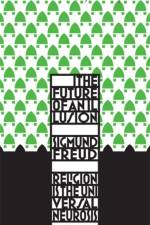
This investigation of religion by greatest psychoanalyst of the twentieth-century explores the role faith can take in the life of man, what it can mean to us and why as a species we are inclined towards it. Throughout history, some books have changed the world. They have transformed the way we see ourselves and each other. They have inspired debate, dissent, war and revolution. They have enlightened, outraged, provoked and comforted. They have enriched lives and destroyed them. Now Penguin brings you the works of the great thinkers, pioneers, radicals and visionaries whose ideas shook civilization and helped make us who we are.
Visionary English Socialist and pioneer of the Arts and Crafts movement, William Morris argued that all work should be a source of pride and satisfaction, and that everyone should be entitled to beautiful surroundings no matter what their class. Throughout history, some books have changed the world. They have transformed the way we see ourselves and each other. They have inspired debate, dissent, war and revolution. They have enlightened, outraged, provoked and comforted. They have enriched lives and destroyed them. Now Penguin brings you the works of the great thinkers, pioneers, radicals and visionaries whose ideas shook civilization and helped make us who we are.
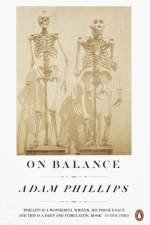
In this absorbing and provocative new book from one of Britain's most elegant and original prose stylists, psychoanalyst Adam Phillips addresses a variety of urgent concerns - many centred around the idea of balance. When might we know that enough is enough? Does the road of excess ever lead to the palace of wisdom? What is the role of the parent, the teacher and of psychoanalysis itself in the development of children's minds? Should we be happy, or is there something better we can be? And what can we learn from the tales of Jack and the Beanstalk or Cinderella?With his trademark combination of open-minded enquiry and exhilarating argument, drawing primarily on the twin worlds of literature and psychoanalysis, Adam Phillips will delight readers old and new in this much anticipated new book.
John Ruskin overturned Victorian society s ideas about art and architecture, arguing that ancient buildings must be conserved for their deep, mystical links with the past and that creative design is essential not for financial gain, but to communicate eternal human truths. Throughout history, some books have changed the world. They have transformed the way we see ourselves and each other. They have inspired debate, dissent, war and revolution. They have enlightened, outraged, provoked and comforted. They have enriched lives and destroyed them. Now Penguin brings you the works of the great thinkers, pioneers, radicals and visionaries whose ideas shook civilization and helped make us who we are.
Written in the second century AD by a Greek traveller for a predominantly Roman audience, Pausanias' Guide to Greece is an extraordinarily literate and well-informed guidebook. A study of buildings, traditions and myth, it describes with precision and eloquence the glory of classical Greece shortly before its ultimate decline in the third century. This volume, the first of two, concerns the five provinces of central Greece, with an account of cities including Athens, Corinth and Thebes and a compelling depiction of the Oracle at Delphi. Along the way, Pausanias recounts Greek legends that are unknown from any other source and quotes a wealth of classical literature and poetry that would otherwise have been lost. An inspiration to Byron and Shelley, the Guide to Greece remains one of the most influential travel books ever written.
Winner of the Spears Business Book of the Year AwardLonglisted for the Financial Times Goldman Sachs Business Book of the Year AwardIn today's financial climate, we are all, naturally, obsessed by debt. In almost every aspect of our life we experience it - on our credit cards, mortgages, bank loans and student loans. But where has this debt come from? How does it work? What is any money really worth? And what promises do we need to believe to keep the whole system afloat?In this fascinating look at money through the ages - including our own unstable future - award-winning financial journalist Philip Coggan examines the flawed structure of the global finance systems as they exist today, and asks, with deeper imbalances that the world is currently facing, what's actually at stake.
'Remember when you played cards or knucklebones or noughts and crosses? Or what about charades, murder in the dark, I spy or hide and seek? Or made chatterboxes, those devices made from a square of paper that you flipped open between thumbs and forefingers with wishes and dreams under the flaps.This book has the lot. It may even ween you off the telly. Remember blind man's buff? What about conversations, in which players discuss a topic by starting each sentence with a consecutive letter of the alphabet? Great family fun ' Sun HeraldWritten by two young mums, Parlour Games for Modern Families sets out to revive the tradition of indoor family games.This book is bursting with games of logic and memory, wordplay, card games, role-play, and rough and tumble. No game requires any equipment beyond a pack of cards, a dictionary, dice, paper, and pen. Games are organised thematically and referenced for age-appropriateness. All are set out with clear rules and instructions. There are games that will challenge and stimulate you, and games that will have you in fits; games that can last all night, and games to fill that empty half-hour before tea; games for adults and older children, and games to keep all the kids at a four-year-old's birthday party happy. Every family and every home needs a copy.
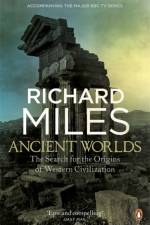
Across the Middle East, the Mediterranean and the Nile Delta, awe-inspiring, monstrous ruins are scattered across the landscape - vast palaces, temples, fortresses, shattered statues of ancient gods, carvings praising the eternal power of long-forgotten dynasties. These ruins - the remainder of thousands of years of human civilization - are both inspirational in their grandeur, and terrible in that their once teeming centres of population were all ultimately destroyed and abandoned.In this major book, Richard Miles recreates these extraordinary cities, ranging from the Euphrates to the Roman Empire, to understand the roots of human civilization. His challenge is to make us understand that the cities which define culture, religion and economic success and which are humanity's greatest invention, have always had a cruel edge to them, building systems that have provided both amazing opportunities and back-breaking hardship.This exhilarating book is both a pleasure to read and a challenge to us all to think about our past - and about the present.
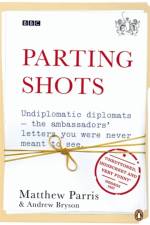
When leaving a foreign posting, Britain's ambassadors were encouraged to write a valedictory despatch until the practice was abolished in 2006. Unlike the usual style of the diplomatic bag, these last reports from foreign posts were unbuttoned, indiscreet and often very funny. There was much settling of scores, some poking fun of foreigners, a degree of moaning about the privations of Embassy life - and sometimes a bit of serious analysis too.Based on a very successful BBC radio series, Matthew Parris, who once worked for the Foreign Office and had the task of distributing the despatches, and Andrew Bryson have compiled an always entertaining and frequently hilarious volume of the best of them.
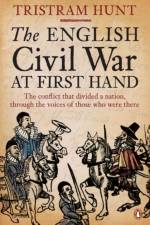
Almost a quarter of a million lives were lost as King and Parliament battled for their religious and political ideals in the English Civil War. England was divided between Cavaliers and Roundheads engaged in bitter struggles from Preston to Lostwithiel, Pembroke to York. Armies were on the march, villages were decimated and great dynasties destroyed: fathers and sons, uncles and cousins were pitted against each other in defence of their loyalties. The civil war led to the execution of a king, the beginnings of sectarian division in Ireland, savage clan warfare in Scotland and the roots of English socialism.Tristram Hunt avoids adding to the many, mostly transitory interpretations of the civil war and instead offers a timeless narrative based on the first-hand accounts of those who witnessed these traumatic events. In doing so he brings out the voices of the civil war generation - those who lost sons, who witnessed massacres and who fought for an ideal. In this book we see their motivations, fears and misery as the horror of war overwhelmed them. From Cromwell's letters to the memoirs of a Roundhead wife the civil war era is brought to life in all its terrible and fascinating glory.
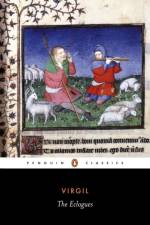
Haunting and enigmatic, Virgil's Eclogues combined a Greek literary form with scenes from contemporary Roman life to create a work that inspired a whole European tradition of pastoral poetry. For despite their rustic setting and the beauty of their phrasing, the poems in Virgil's first collection are also grounded in reality. Shepherds are overwhelmed by the torments of poetic love - but they must also endure such real-life events as the tragic consequences of Julius Caesar's murder in 44 bc and a civil war. In giving unforgettable expression to the disasters of the day through poetry, the Eclogues paved the way for the Georgics and the Aeneid, the two greatest works of Latin literature, and are also a major masterpiece in their own right.
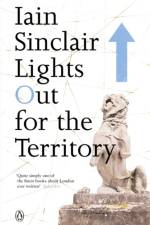
'A book about London; in other words, a book about everything' Peter Ackroyd, The TimesWalking the streets of London, Iain Sinclair traces nine routes across the territory of the capital. Connecting people and places, redrawing boundaries both ancient and modern, reading obscure signs and finding hidden patterns, Sinclair creates a fluid snapshot of the city. In LIGHTS OUT FOR THE TERRITORY he gives us a daring, provocative, enlightening, disturbing and utterly unique picture of modern urban life. And in the process he reveals the dark underbelly of a London many of us did not know existed.
Abonner på vårt nyhetsbrev og få rabatter og inspirasjon til din neste leseopplevelse.
Ved å abonnere godtar du vår personvernerklæring.