




















Gjør som tusenvis av andre bokelskere
Abonner på vårt nyhetsbrev og få rabatter og inspirasjon til din neste leseopplevelse.
Ved å abonnere godtar du vår personvernerklæring.Du kan når som helst melde deg av våre nyhetsbrev.

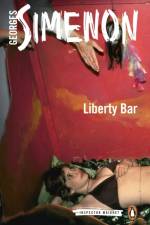
Madame Maigret takes the lead in a disturbing investigation in this new translation, book thirty-three of the new Penguin Maigret series.When he got to his door, he was surprised not to hear any noise in the kitchen and not to smell any food. He went in, crossed the dining room, where the table had not been laid, and at last saw Madame Maigret, in her slip, busy taking off her stockings. This was so unlike her that he could find nothing to say, and when she saw him standing there wide-eyed, she burst out laughing. Inspector Maigret's wife turns sleuth after a strange encounter in a Paris square leads her on the trail of a woman in a white hat, and towards a grisly tale of deception and greed.Penguin is publishing the entire series of Maigret novels in new translations.'His artistry is supreme' John Banville'One of the greatest writers of the twentieth century . . . Simenon was unequalled at making us look inside, though the ability was masked by his brilliance at absorbing us obsessively in his stories' Guardian 'A supreme writer . . . unforgettable vividness' Independent
'There are few situations in life which are more difficult to cope with than an adolescent son or daughter during the attempt to liberate themselves' Anna Freud was one of the most creative and innovative thinkers in the history of psychoanalysis, whose pioneering work in child analysis and development revolutionized the treatment of the young. This essential anthology of her writings includes extracts from her classic The Ego and the Mechanisms of Defence, as well as papers on normal and pathological child development, on adolescence, trauma, aggression and analytical technique. Together they offer a definitive overview of her entire career, displaying the richness, variety and originality of her thinking.'An achievement of the first importance ... underlines the clarity and cogency of Anna Freud's thinking, [and] makes it accessible to a wide audience' Clifford Yorke, former Medical Director, the Anna Freud Centre, London
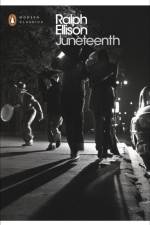
Published after Ellison's death, this follow-up to Invisible Man is a thunderous epic of memory, faith, loss and identity. 'Words are your business, boy. Not just the Word. Words are everything' 'Tell me what happened while there's still time,' demands the dying Senator Adam Sunraider to the itinerate black baptist minister he calls Daddy Hickman. As a young orphan, Sunraider was taken in and raised by Hickman, before reinventing himself as a racist politician. Now, as the two men confront the truth about their shared past in a final reckoning, Ellison's masterly novel takes in memories of a southern childhood, the rhythms of jazz and gospel and the richness of the African-American experience.'Majestic' Toni Morrison
Raw, lyrical and blazing with intensity, these short stories are a potent distillation of the genius of Ralph Ellison, author of Invisible Man.'He saw the dark bird glide into the sun and glow like a bird of flaming gold'Ranging from the Jim Crow South to a Harlem bingo parlour, from the hobo jungles of the Great Depression to Wales during the Second World War, they all display the musically layered voices, soaring language and sheer ebullience that made Ellison a giant of twentieth-century American writing. Written early in Ellison's career, several of these fourteen stories were unpublished in his lifetime, including 'A Storm of Blizzard Proportions' which features in this collection for the first time. 'Approach the simple elegance of Chekhov' Washington Post
'His artistry is supreme' John Banville The FBI man was convinced, in short, that Maigret was a big shot in his own country but that here, in the United States, he was incapable of figuring out anything . . .well, Maigret happened to believe that men and their passions are the same everywhere.Maigret is touring the United States to observe American policing methods, when a visit to a coroner's inquest in Arizona draws him into the tragic story of a young woman and five airmen in the desert.'One of the greatest writers of the twentieth century . . . Simenon was unequalled at making us look inside, though the ability was masked by his brilliance at absorbing us obsessively in his stories' Guardian 'A supreme writer . . . unforgettable vividness' Independent
Past acquaintances resurface in the sun-drenched south, in this new translation, book thirty-one of the new Penguin Maigret series.'The palm trees around the railway station were motionless, fixed in a Saharan sun . . . It really felt as if they were stepping into another world, and they were embarrassed to be entering it in the dark clothes that had been suited to the rainy streets of Paris the evening before.'An officer from Scotland Yard is studying Maigret's methods when a call from an island off the C te d'Azure sends the two men off to an isolated community to investigate its eccentric inhabitants.Penguin is publishing the entire series of Maigret novels in new translations.'His artistry is supreme' John Banville'One of the greatest writers of the twentieth century . . . Simenon was unequalled at making us look inside, though the ability was masked by his brilliance at absorbing us obsessively in his stories' Guardian 'A supreme writer . . . unforgettable vividness' Independent
Maigret's first impressions of the USA colour this sparkling new translation, book twenty-seven of the new Penguin Maigret series.What was it about him that had struck Maigret so forcefully? . . . Little John had cold eyes! . . . Four or five times in his life, he had met people with cold eyes, those eyes that can stare at you without establishing any human contact.Persuaded to sail to New York by a fearful young law student, Maigret finds himself drawn into the city's underworld, and a wealthy businessman's closely guarded past.Penguin is publishing the entire series of Maigret novels in new translations.'Compelling, remorseless, brilliant' John Gray'One of the greatest writers of the twentieth century . . . Simenon was unequalled at making us look inside, though the ability was masked by his brilliance at absorbing us obsessively in his stories' Guardian 'A supreme writer . . . unforgettable vividness' Independent
A sparkling new translation of this flashback to the start of Inspector Maigret's career, part of the new Penguin Maigret series.The profession he had always yearned for did not actually exist ... he imagined a cross between a doctor and a priest, a man capable of understanding another's destiny at first glance.The very first investigation by eager young police secretary Jules Maigret leads him to a wealthy Paris family's dark secrets.Penguin is publishing the entire series of Maigret novels in new translations.'His artistry is supreme' John Banville'One of the greatest writers of the twentieth century . . . Simenon was unequalled at making us look inside, though the ability was masked by his brilliance at absorbing us obsessively in his stories' Guardian 'A supreme writer . . . unforgettable vividness' Independent
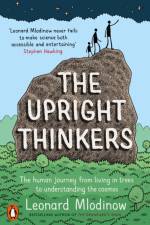
In this fascinating and illuminating work, Leonard Mlodinow guides us through the critical eras and events in the development of science, all of which, he demonstrates, were propelled forward by humankind's collective struggle to know. From the birth of reasoning and culture to the formation of the studies of physics, chemistry, biology, and modern-day quantum physics, we come to see that much of our progress can be attributed to simple questions-why? how?-bravely asked. Mlodinow profiles some of the great philosophers, scientists, and thinkers who explored these questions-Aristotle, Galileo, Newton, Darwin, Einstein and Lavoisier among them-and makes clear that just as science has played a key role in shaping the patterns of human thought, human subjectivity has played a key role in the evolution of science. At once authoritative and accessible, and infused with the author's trademark wit, this deeply insightful book is a stunning tribute to humanity's intellectual curiosity.
A timely intervention on climate change from the internationally acclaimed scientist and author of the hugely influential The Weather Makers.How close is the great climate crisis? Can our desire to overcome it drive humanity's next great waves of positive technological economic and social revolution? or will we be plunged into the dystopian collapses and terrors of civilisations past?This book describes in plain terms our climate predicament and brings news of exciting tools in the making that could help us avoid a climatic disaster. In December 2015 the nations of the world will gather in Paris to try to forge a climate treaty designed to give us a fighting chance to limit global warming to 2 C, widely regarded as the safe upper limit if we are to avoid catastrophe. If we succeed at Paris, forging a new era of international political cooperation in the fight against a warming planet, it is possible that the next decade will astonish us in the solutions that we discover to safeguard our planet for our grandchildren and their grandchildren.'Think Indiana Jones crossed with Charles Darwin' Financial Times'A wonderful writer, an original scientist, and a gifted populariser' Martin Woollacott, Guardian'If you're not already addicted to Tim Flannery's writing, discover him now' Jared Diamond
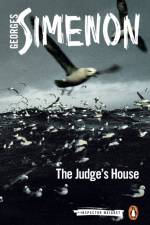
Exiled from Paris, Maigret discovers some disturbing secrets in a sleepy coastal town in this new translation, book twenty-two in the new Penguin Maigret series.He went out, lit his pipe and walked slowly to the harbour. He could hear scurrying footsteps behind him. The sea was becoming swollen. The beams of the lighthouses joined in the sky. The moon had just risen and the judge's house emerged from the darkness, all white, a crude, livid, unreal white. Exiled from the Police Judiciare in Paris, Maigret bides his time in a remote coastal town of France. There, among the lighthouses, mussel farms and the eerie wail of foghorns, he discovers that a community's loyalties hide unpleasant truths.Penguin is publishing the entire series of Maigret novels in new translations. This novel has been published in a previous translation as Maigret in Exile.'Compelling, remorseless, brilliant' John Gray'One of the greatest writers of the twentieth century . . . Simenon was unequalled at making us look inside, though the ability was masked by his brilliance at absorbing us obsessively in his stories' Guardian 'A supreme writer . . . unforgettable vividness' Independent
'Compelling, remorseless, brilliant' John Gray A small, thin man, rather dull to look at, neither young nor old, exuding the stale smell of a bachelor who does not look after himself. He pulls his fingers and cracks his knuckles and tells his tale the way a schoolboy recites his lesson.A mysterious note predicting the murder of a fortune-teller; a confused old man locked in a Paris apartment; a financier who goes fishing; a South American heiress ... Maigret must make his way through a frustrating maze of clues, suspects and motives to find out what connects them.This novel has been published in previous translations as To Any Lengths and Maigret and the Fortuneteller.'One of the greatest writers of the twentieth century . . . Simenon was unequalled at making us look inside, though the ability was masked by his brilliance at absorbing us obsessively in his stories' Guardian 'A supreme writer . . . unforgettable vividness' Independent
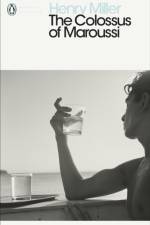
'Out of the sea, as if Homer himself had arranged it for me, the islands bobbed up, lonely, deserted, mysterious in the fading light'Enraptured by a young woman's account of the landscapes of Greece, Henry Miller set off to explore the Grecian countryside with his friend Lawrence Durrell in 1939. In The Colossus of Maroussi he describes drinking from sacred springs, nearly being trampled to death by sheep and encountering the flamboyant Greek poet Katsumbalis, who 'could galvanize the dead with his talk'. This lyrical classic of travel writing represented an epiphany in Miller's life, and is the book he would later cite as his favourite. 'One of the five greatest travel books of all time' Pico Iyer
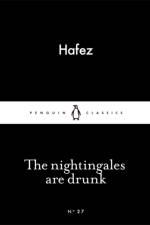
'Drunk or sober, king or soldier, none will be excluded'Sensual, profound, delighted, wise, Hafez's poems have enchanted their readers for more than 600 years. One of the greatest figures of world literature, he remains today the most popular poet in modern Iran.Introducing Little Black Classics: 80 books for Penguin's 80th birthday. Little Black Classics celebrate the huge range and diversity of Penguin Classics, with books from around the world and across many centuries. They take us from a balloon ride over Victorian London to a garden of blossom in Japan, from Tierra del Fuego to 16th century California and the Russian steppe. Here are stories lyrical and savage; poems epic and intimate; essays satirical and inspirational; and ideas that have shaped the lives of millions.Rumi (1207-73). Rumi's Selected Poems is available in Penguin Classics.
Maigret is cajoled out of retirement by a case involving an old classmate in book twenty-six of the new Penguin Maigret series.All that was still unclear, for sure. Ernest Malik had been right when he had looked at Maigret with a smile that was a mixture of sarcasm and contempt. This wasn't a case for him. He was out of his depth. This world was unfamiliar to him, and he had difficulty piecing it all together.Peacefully tending his garden in the countryside, Maigret is called upon to investigate a rich family with skeletons in their cupboard - and finds himself confronted by lies, snobbery and malice.Penguin is publishing the entire series of Maigret novels in new translations. This novel has been published in a previous translation as Maigret in Retirement.'His artistry is supreme' John Banville'One of the greatest writers of the twentieth century . . . Simenon was unequalled at making us look inside, though the ability was masked by his brilliance at absorbing us obsessively in his stories' Guardian 'A supreme writer . . . unforgettable vividness' Independent
WINNER OF THE 2015 BANCROFT PRIZE WINNER OF THE 2015 PHILIP TAFT PRIZEFINALIST FOR THE 2015 PULITZER PRIZE FOR HISTORYSHORTLISTED FOR THE 2015 CUNDHILL PRIZE IN HISTORICAL LITERATUREEconomist BOOKS OF THE YEAR 2015'A masterpiece of the historian's craft' The NationFor about 900 years, from 1000 to 1900, cotton was the world's most important manufacturing industry. It remains a vast business - if all the cotton bales produced in 2013 had been stacked on top of each other they would have made a somewhat unstable tower 40,000 miles high. Sven Beckert's superb new book is a history of the overwhelming role played by cotton in dictating the shape of our world. It is both a gripping narrative and a brilliant case history of how the world works.
A new translation of this gripping novel which sees the inspector brought out of his peaceful retirement, book nineteen in the new Penguin Maigret series.Maigret shrugged his shoulders, buried his hands in his pockets and went off without answering. He had just spent one of the most wretched days in his life. For hours, in his corner he had felt old and feeble, without idea or incentive. But now a tiny flame flickered. 'You bet we'll see' he growled.Maigret's peaceful retirement in the countryside is disrupted when a relative unwittingly embroils himself in a crime he did not commit and the inspector returns to Police Headquarters in Paris once again.Penguin is publishing the entire series of Maigret novels in new translations. This novel has been published in a previous translation as Maigret Returns.'Compelling, remorseless, brilliant' John Gray'One of the greatest writers of the twentieth century . . . Simenon was unequalled at making us look inside, though the ability was masked by his brilliance at absorbing us obsessively in his stories' Guardian 'A supreme writer . . . unforgettable vividness' Independent
In this eloquent, intimate exploration of the delights and demands of the piano, world-renowned concert pianist and music writer Charles Rosen draws on a lifetime's wisdom to consider every aspect of the instrument: from what makes a beautiful sound to suffering from stage fright, from the physical challenges of playing to tales of great musicians, including Vladimir Horowitz's recording tricks, Rachmaninov's hands and why Artur Rubenstein applied hairspray to the keys. Gracefully blending anecdote, history, expertise and memoir, Piano Notes will enchant anyone with a passion for music.
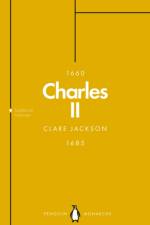
Charles II has always been one of the most instantly recognisable British kings - both in his physical appearance, disseminated through endless portraits, prints and pub signs, and in his complicated mix of lasciviousness, cynicism and luxury. His father's execution and his own many years of exile made him a guarded, curious, unusually self-conscious ruler. He lived through some of the most striking events in the national history - from the Civil Wars to the Great Plague, from the Fire of London to the wars with the Dutch.Clare Jackson's marvellous book takes full advantage of its irrepressible subject.
Billions of citizens around the world are frustrated with their governments. Why is this? And what can we do about it? In this groundbreaking book Michael Barber draws on his wealth of international experience advising political leaders, to show how those in power can make good on their promises. 'Refreshingly ruthless ... has an uplifting brio to it' Economist'Michael Barber is a source of inspiration and wisdom' Andrew Adonis, New Statesman'Excellent ... there is a lot of common sense and practical wisdom ... a breath of fresh air' David Willetts,Standpoint'Barber is the global overlord of public policy ... a record around the world of actually achieving change' Philip Collins, Prospect
A new translation of Georges Simenon's devastating novel set on the French Riviera, book seventeen in the new Penguin Maigret series.It had a smell of holidays. The previous evening, in Cannes harbour, with the setting sun, had also had the smell of holidays, especially the Ardena, whose owner swaggered in front of two girls with gorgeous figures..Dazzled at first by the glamour of sunny Antibes, Maigret soon finds himself immersed in the less salubrious side of the Riviera as he retraces the final steps of a local eccentric.Penguin is publishing the entire series of Maigret novels in new translations. This novel has been published in a previous translation as Maigret on the Riviera.'Compelling, remorseless, brilliant' John Gray'One of the greatest writers of the twentieth century . . . Simenon was unequalled at making us look inside, though the ability was masked by his brilliance at absorbing us obsessively in his stories' Guardian 'A supreme writer . . . unforgettable vividness' Independent
A rare and timely intervention from Kingsley Chiedu Moghalu, Deputy Governor of the Central Bank of Nigeria, on development in Africa.To many, Africa is the new frontier. As the West lies battered by financial crisis, Africa is seen as offering limitless opportunities for wealth creation in the march of globalization. But what is Africa to today's Africans? Are its economies truly on the rise? And what is its likely future?In this pioneering book, leading international strategist Kingsley Moghalu challenges conventional wisdoms about Africa's quest for growth. Drawing on philosophy, economics and strategy, he ranges from capitalism to technological innovation, finance to foreign investment, and from human capital to world trade to offer a new vision of transformation. Ultimately he demonstrates how Africa's progress in the twenty-first century will require nothing short of the reinvention of the African mindset. 'Africans seriously analyzing Africa's opportunities are all too rare. Kingsley Moghalu writes with insight and authority' Paul Collier'Savvy . . . distinguished' Mark Malloch-Brown 'Unique in the depth of its insight, the ambition of its scope, and the clarity of its argument. Kingsley Moghalu brings a remarkable intellect and his vast experience to this tour de force on Africa's economic transformation. This is a truly weighty contribution to understanding Africa's developmental dilemma and its quest for a more prosperous future' Ngozi Okonjo-Iweala'Insightful and analytical . . . sheds instructive light on Africa's position in the world. It is a testament to the palpable optimism that encompasses Africa while frankly addressing the myriad challenges that lie ahead for its economic transformation' Shashi TharoorKingsley Chiedu Moghalu is Deputy Governor of the Central Bank of Nigeria. He was the Founder and CEO of Sogato Strategies S.A., a global strategy and risk management consulting firm in Geneva, Switzerland. He has previously worked for the United Nations for 17 years in strategic planning, legal, development finance and executive management. His previous books include Global Justice and Rwanda's Genocide.
In September 2015 Queen Elizabeth II becomes Britain's longest-reigning monarch. During her long lifetime Britain and the world have changed beyond recognition, yet throughout she has stood steadfast as a lasting emblem of stability, continuity and public service.Historian and senior politician Douglas Hurd has seen the Queen at close quarters, as Home Secretary and then on overseas expeditions as Foreign Secretary. Here he considers the life and role of Britain's most greatly admired monarch, who, inheriting a deep sense of duty from her father George VI, has weathered national and family crises, seen the end of an Empire and heard voices raised in favour of the break-up of the United Kingdom.Hurd creates an arresting portrait of a woman deeply conservative by nature yet possessing a ready acceptance of modern life and the awareness that, for things to stay the same, they must change.With a preface by HRH Prince William, Duke of Cambridge
SPECTATOR BOOKS OF THE YEAR 2015Britain's empire has gone. Our manufacturing base is a shadow of its former self; the Royal Navy has been reduced to a skeleton. In military, diplomatic and economic terms, we no longer matter as we once did. And yet there is still one area in which we can legitimately claim superpower status: our popular culture. It is extraordinary to think that one British writer, J. K. Rowling, has sold more than 400 million books; that Doctor Who is watched in almost every developed country in the world; that James Bond has been the central character in the longest-running film series in history; that The Lord of the Rings is the second best-selling novel ever written (behind only A Tale of Two Cities); that the Beatles are still the best-selling musical group of all time; and that only Shakespeare and the Bible have sold more books than Agatha Christie. To put it simply, no country on earth, relative to its size, has contributed more to the modern imagination.This is a book about the success and the meaning of Britain's modern popular culture, from Bond and the Beatles to heavy metal and Coronation Street, from the Angry Young Men to Harry Potter, from Damien Hirst toThe X Factor.
The true story, told minute by minute, of the soldiers who defeated Napoleon - from Brendan Simms, acclaimed author of Europe: The Struggle for SupremacyEurope had been at war for over twenty years. After a short respite in exile, Napoleon had returned to France and threatened another generation of fighting across the devastated and exhausted continent. At the small Belgian village of Waterloo two large, hastily mobilized armies faced each other to decide the future of Europe.Unknown either to Napoleon or Wellington the battle would be decided by a small, ordinary group of British and German troops given the task of defending the farmhouse of La Haye Sainte. This book tells their extraordinary story, brilliantly recapturing the fear, chaos and chanciness of battle and using previously untapped eye-witness reports. Through determination, cunning and fighting spirit, some four hundred soldiers held off many thousands of French and changed the course of history.
A vivid and human glimpse into Europe's borderlands as they emerged from Soviet rule - back in print after nearly 20 years'In this superb book, in which one senses the spirit of Franz Kafka and Bruno Schulz, the dramatic world of the Eastern borderlands comes to life' Ryszard KapuscinskiAs Europe's borderlands emerged from Soviet rule, Anne Applebaum travelled from the Baltic to the Black Sea, through Lithuania, Belarus, Ukraine and the Carpathian mountains. Rich in vivid characters and stories of tragedy and survival, Between East and West illuminates the soul of a place, and the secret history of its people. 'A beautifully written and thought-provoking account of a journey along Europe's forgotten edge' Timothy Garton Ash'A vivid and penetrating assessment of the lands between the Baltic and the Black Sea in all their drama and desolation . . . a wise and useful book' Robert Conquest'Combines the excitement of a well-written and adventurous travelogue with sophisticated reportage' Norman Davies'You will be totally absorbed' Norman StoneAnne Applebaum is a historian and journalist, a regular columnist for the Washington Post and Slate, and the author of several books, including Gulag: A History, which won the 2004 Pulitzer Prize for non-fiction, and Iron Curtain, which in 2013 won the Duke of Westminster Medal for Military Literature and the Cundill Prize in Historical Literature. She is the Director of Political Studies at the Legatum Institute in London, and she divides her time between Britain and Poland, where her husband, Radek Sikorski, serves as Foreign Minister.
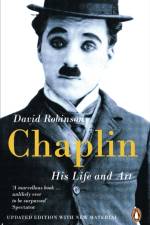
David Robinson's definitive and monumental biography of Charlie Chaplin, the greatest icon in the history of cinema, who lived one of the most dramatic rags to riches stories ever told. Chaplin's life was marked by extraordinary contrasts: the child of London slums who became a multimillionaire; the on-screen clown who was a driven perfectionist behind the camera; the adulated star who publicly fell from grace after personal and political scandal. This engrossing and definitive work, written with full access to Chaplin's archives, tells the whole story of a brilliant, complex man. David Robinson is a celebrated film critic and historian who wrote for The Times and the Financial Times for several decades. His many books include World Cinema, Hollywood in the Twenties and Buster Keaton. 'A marvellous book . . . unlikely ever to be surpassed' Spectator 'I cannot imagine how anyone could write a better book on the great complex subject . . . movingly entertaining, awesomely thorough and profoundly respectful' Sunday Telegraph 'One of the great cinema books; a labour of love and a splendid achievement' Variety 'One of those addictive biographies in which you start by looking in the index for items that interest you . . . and as dawn breaks you're reading the book from cover to cover' Financial Times
This updated edition of The Secret State revises Hennessy's picture of the Soviet threat that was presented to ministers from the last days of the Second World War to the 1960s. He maps the size and shape of the Cold War state built in response to that perceived threat, and traces the arguments successive generations of ministers, the military and civil servants have used to justify the British nuclear capability. He also adds new material exploring the threats presented by the IRA and radical Islamic terrorists post 9/11. In what circumstances would the Prime Minister authorize the use of nuclear force and how would his orders be carried out? What would the Queen be told and when? In this captivating new account, Peter Hennessy provides the best answers we have yet had to these questions.
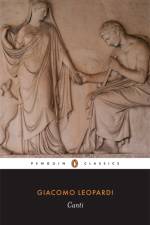
'So my mind sinks in this immensity:and foundering is sweet in such a sea'Revisited and reorganized over his lifetime, this extraordinary work was described by Leopardi as a 'reliquary' for his ideas, feelings and deepest preoccupations. It encompasses drastic shifts in tone and material, and includes early personal elegies and idylls; radical public poems on history and politics; philosophical satires; his great, dark, despairing odes such as 'To Silvia'; and later masterworks such as 'The Setting of the Moon', written not long before Leopardi's death. Infused with classical allusion and nostalgia, yet disarmingly modern in their spare, meditative style and their sense of alienation and scepticism, the Canti influenced the following two centuries of Western lyric poetry, and inspired thinkers and writers from Schopenhauer and Nietzsche to Beckett and Lowell.Jonathan Galassi's direct new translation sensitively responds to the musicality of the Canti, while his introduction discusses the paradoxes of Leopardi's life and work.
Zelda la Grange grew up in South Africa as a white Afrikaner who supported the rules of segregation. Yet just a few years after the end of Apartheid she would become a most trusted assistant to Nelson Mandela, growing to respect and cherish the man she had been taught was the enemy.Good Morning, Mr Mandela tells the extraordinary story of how a young woman had her life, beliefs, prejudices and everything she once believed in utterly transformed by the greatest man of her time. It is the incredible journey of an awkward, terrified young typist in her twenties later chosen to become the President's most loyal and devoted servants, spending most of her adult working life travelling with, supporting and caring for the man she would come to call 'Khulu', or 'grandfather'. Here Zelda pays tribute to Nelson Mandela as she knew him - a teacher who gave her the most valuable lessons of her life. A man who refused to be defined by his past, who forgave and respected all, but who was also frank, teasing and direct. As he renewed his country, he also freed Zelda from a closed world of fear and mistrust, giving her life true meaning. Now she shares his lasting and inspiring gifts with the world. This is a book about love and second chances. It will touch your life and make you believe that every one of us, no matter who we are or what we have done, has the power to change.
Abonner på vårt nyhetsbrev og få rabatter og inspirasjon til din neste leseopplevelse.
Ved å abonnere godtar du vår personvernerklæring.