





Gjør som tusenvis av andre bokelskere
Abonner på vårt nyhetsbrev og få rabatter og inspirasjon til din neste leseopplevelse.
Ved å abonnere godtar du vår personvernerklæring.Du kan når som helst melde deg av våre nyhetsbrev.

'Utterly extraordinary ... the starkest book I've read on the impacts of accelerating climate change for a very long time ... if we're not listening to the likes of Peter Wadhams, then we too are in denial' Jonathon PorrittMost of the scientific establishment predict that the North Pole will be free of ice around the middle of this century. As Peter Wadhams, the world's leading expert on sea ice, demonstrates in this book, even this assessment of the future is optimistic.Wadhams has visited the Polar Regions more often than any other living scientist - 50 times since he was on the first ship to circumnavigate the Americas in 1970 - and has a uniquely authoritative perspective on the changes they have undergone and where those changes will lead. From his observations and the latest scientific research, he describes how dramatically sea ice has diminished over the past three decades, to the point at which, by the time this book is published, the Arctic may be free of ice for the first time in 10,000 years.Wadhams shows how sea ice is the 'canary in the mine' of planetary climate change. He describes how it forms and the vital role it plays in reflecting solar heat back into space and providing an 'air conditioning' system for the planet. He shows how a series of rapid feedbacks in the Arctic region are accelerating change there more rapidly than almost all scientists - and political authorities - have previously realised, and the dangers of further acceleration are very real.A Farewell to Ice is a report from the frontline of planetary change in the Arctic and Antarctic by a leading authority, presenting incontrovertible scientific data, but always in clear language which the layman can easily understand. It is one of the most important books published in recent years about the existential challenge which human civilization now faces.
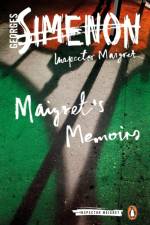
'Compelling, remorseless, brilliant' John Gray I can still see Simenon coming into my office the next day, pleased with himself, displaying even more self-confidence, if possible, than before, but nevertheless with a touch of anxiety in his eyes.' Maigret sets the record straight and tells the story of his own life, giving a rare glimpse into the mind of the great inspector - and the writer who would immortalise him.'One of the greatest writers of the twentieth century . . . Simenon was unequalled at making us look inside, though the ability was masked by his brilliance at absorbing us obsessively in his stories' Guardian 'A supreme writer . . . unforgettable vividness' Independent
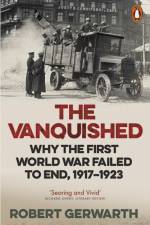
'This war is not the end but the beginning of violence. It is the forge in which the world will be hammered into new borders and new communities. New molds want to be filled with blood, and power will be wielded with a hard fist.' Ernst J nger (1918)For the Western allies 11 November 1918 has always been a solemn date - the end of fighting which had destroyed a generation, and also a vindication of a terrible sacrifice with the total collapse of their principal enemies: the German Empire, Austria-Hungary and the Ottoman Empire. But for much of the rest of Europe this was a day with no meaning, as a continuing, nightmarish series of conflicts engulfed country after country. In this highly original, gripping book Robert Gerwarth asks us to think again about the true legacy of the First World War. In large part it was not the fighting on the Western front which proved so ruinous to Europe's future, but the devastating aftermath, as countries on both sides of the original conflict were wrecked by revolution, pogroms, mass expulsions and further major military clashes. If the War itself had in most places been a struggle purely between state-backed soldiers, these new conflicts were mainly about civilians and paramilitaries, and millions of people died across central, eastern, and south-eastern Europe before the USSR and a series of rickety and exhausted small new states came into being. Everywhere there were vengeful people, their lives racked by a murderous sense of injustice, and looking for the opportunity to take retribution against enemies real and imaginary. Only a decade later, the rise of the Third Reich and other totalitarian states provided them with the opportunity they had been looking for.
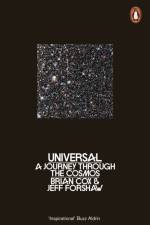
An awe-inspiring, unforgettable journey of scientific exploration from Brian Cox and Jeff Forshaw, the top ten bestselling authors of The Quantum Universe.We dare to imagine a time before the Big Bang, when the entire Universe was compressed into a space smaller than an atom. And now, as Brian Cox and Jeff Forshaw show, we can do more than imagine: we can understand. Over the centuries, the human urge to discover has unlocked an incredible amount of knowledge. What it reveals to us is breathtaking. Universal takes us on an epic journey of scientific exploration and, in doing so, reveals how we can all understand some of the most fundamental questions about our Earth, Sun, Solar System and the star-filled galaxies beyond. Some of these questions - How big is our solar system? How fast is space expanding? - can be answered from your back garden; the answers to others - How big is the Universe? What is it made of? - draw on the astonishing information now being gathered by teams of astronomers operating at the frontiers of the known universe.At the heart of all these questions - from the earliest attempts to quantify gravity, to our efforts to understand what dark matter is and what really happened at the birth of our universe - is the scientific process. Science reveals a deeper beauty, connects us to each other, to our world, and to our Universe; and, by understanding the groundbreaking work of others, reaches out into the unknown. What's more, as Universal shows us, if we dare to imagine, we can all do it.
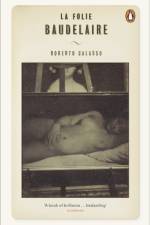
Roberto Calasso is one of the most original and acclaimed of writers on literature, art, culture and mythology. In Baudelaire's Folly, Calasso turns his attention to the poets and writers of Paris in the nineteenth century who created what was later called 'the Modern.' His protagonist is Charles Baudelaire: poet of nerves, art lover, pioneering critic, man about Paris, whose groundbreaking works on modern culture described the ephemeral, fleeting nature of life in the metropolis - and the artist's role in capturing this - as no other writer had done. With Baudelaire's critical intelligence as his inspiration, Calasso ranges through his life and work, focusing on two painters - Ingres and Delacroix - about whom Baudelaire wrote acutely, and then turns to Degas and Manet, who followed in the tracks Baudelaire laid down in his great essay The Painter of Modern Life. In a mosaic of stories, insights, dreams, close readings of poems and commentaries on paintings, Paris in Baudelaire's years comes to life. In the eighteenth century, a 'folie' was a garden pavilion set aside for people of leisure, a place of delight and fantasy. Here Calasso has created a brilliant and dramatic 'Folie Baudelaire': a place where the reader can encounter Baudelaire, his peers, his city, his extraordinary likes and dislikes, and his world, finally discovering that it is nothing less than the land of 'absolute literature'.
LONGLISTED FOR THE GORDON BURN PRIZE 2017An immersive, intimate journey into the world of the Thames Estuary and the people who spend their lives thereThe Thames Estuary is one of the world's great deltas, providing passage in and out of London for millennia. It is silted up with the memories and artefacts of past voyages. It is the habitat for an astonishing range of wildlife. And for the people who live and work on the estuary, it is a way of life unlike any other - one most would not trade for anything, despites its dangers.Rachel Lichtenstein has travelled the length and breadth of the estuary many times and in many vessels, from hardy tug boats to stately pleasure cruisers to an inflatable dinghy. And during these crossing she has gathered an extraordinary chorus of voices: mudlarkers and fishermen, radio pirates and champion racers, the men who risk their lives out on the water and the women who wait on the shore.From the acclaimed author of Brick Lane and Rodinsky's Room, Estuary is a thoughtful and intimate portrait of a profoundly British place. With a clear eye and a sharp ear, Rachel Lichtenstein captures the essence of a community and an environment, examining how each has shaped and continues to shape the other.
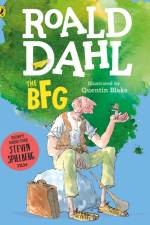
The much-loved Roald Dahl story now in full colour format.When Sophie is snatched from her bed in the middle of the night by a giant with a stride as long as a tennis court she is sure she's going to be eaten for breakfast. But luckily for Sophie, the BFG is far more jumbly than his disgusting neighbours, whose favourite pastime is guzzling up whoppsy-whiffling human beans. Sophie is determined to stop all this, and so she and the BFG cook up an ingenious plan to rid of the world of the Bloodbottler, the Fleshlumpeater and all their rotsome friends forever.
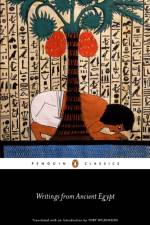
'Man perishes; his corpse turns to dust; all his relatives pass away. But writings make him remembered.'The fascination Ancient Egypt holds in our minds has many sources, but at the heart of it lie hieroglyphics. This extraordinary writing system was for many years seen as the ultimate challenge and puzzle before finally being cracked in the 1820s. Preserved carved in stone or inked on papyri, hieroglyphic writings give a unique insight into an awe-inspiring but also deeply mysterious culture.Toby Wilkinson has translated a rich selection of pieces, ranging from accounts of battles to hymns to stories to royal proclamations. This book is both very enjoyable and an essential resource for anyone wanting to study one of humankind's great civilizations.
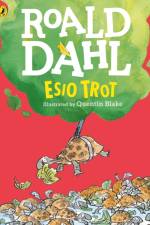
Roald Dahl's Esio Trot in glorious full colour!High up in a tall building lives Mr Hoppy all alone.Downstairs lives Mrs Silver. Mr Hoppy loves her. And Mrs Silver loves her tortoise, Alfie. Oh, if only Mr Hoppy could perform some great feat that would make him a hero in her eyes! Then one day his mind goes click and an amazing idea rushes into his head.With the help of a magical spell, some cabbage leaves and one hundred and forty tortoises, can shy Mr Hoppy win Mrs Silver's heart?And now you can listen to ESIO TROT ( with THE GIRAFFE AND THE PELLY AND ME) and other Roald Dahl audiobooks read by some very famous voices, including Kate Winslet, David Walliams and Steven Fry - plus there are added squelchy soundeffects from Pinewood Studios! And look out for new Roald Dahl apps in the App store and Google Play- including the disgusting TWIT OR MISS! and HOUSE OF TWITS inspired by the revolting Twits.
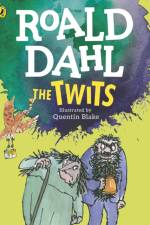
The classic Roald Dahl story with phizz-whizzing full-colour illustrations by Quentin Blake.Mr Twit is a foul and smelly man with bits of cornflake and sardine in his beard. Mrs Twit is a horrible old hag with a glass eye.Together they make the nastiest couple you could ever hope not to meet.Down in their garden, the Twits keep Muggle-Wump the monkey and his family locked in a cage. But not for much longer, because the monkeys are planning to trick the terrible Twits, once and for all . . . Look out for new Roald Dahl apps in the App store and Google Play- including the disgusting TWIT OR MISS! inspired by the revolting Twits.
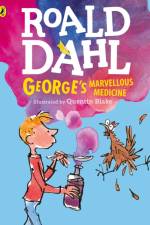
The classic Roald Dahl story with fabulous full-colour illustrations by Quentin Blake.George Kranky's Grandma is a miserable grouch. George really hates that horrid old witchy woman.One Saturday morning, George is in charge of giving Grandma her medicine.So-ho! Ah-ha! Ho-hum! George knows exactly what to do.A magic medicine* it will be. One that will either cure her completely . . . or blow off the top of her head.*WARNING: Do not try to make George's Marvellous Medicine yourselves at home. It could be dangerous.Look out for new Roald Dahl apps in the App store and Google Play- including the disgusting TWIT OR MISS! and HOUSE OF TWITS inspired by the revolting Twits."e;A true genius . . . Roald Dahl is my hero"e; David Walliams
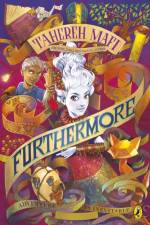
Colour and magic combine in this enchanting new middle grade fantasy from the bestselling author of the Shatter Me series.Born as blank as canvas in a world brimming with colour and magic, Alice's pale skin and milk-white hair mark her as an outcast. Because, for the people of Ferenwood, colour and magic are one and the same. And since the disappearance of her beloved father, Alice is more determined than ever to prove herself and her own magical abilities.To do so she'll have to travel into the mythical, dangerous land of Furthermore, with the help of a fiercely annoying boy named Oliver. But nothing in Furthermore is as it seems, and it will take all of Alice's wits to find her father and return him safely home.
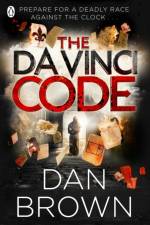
ABRIDGED EDITIONIf I die, the truth will be lost for ever . . . I must pass on the secret. History professor Robert Langdon receives an urgent late-night phone call while on business in France: the curator of the Louvre in Paris has been brutally murdered inside the museum. Alongside the body, police have found a series of baffling codes and need Langdon's help to decipher them. When Langdon and a French cryptologist, Sophie Neveu, begin to sort through the bizarre riddles, they find a trail that leads to the works of the famous artist and inventor Leonardo Da Vinci. As the clues unfold, Langdon and Neveu must decipher the code and quickly assemble the pieces of the puzzle before a stunning historical truth is lost forever . . .
London 1666 - A terrible plague has swept through the city and people live in fear of animals carrying the disease.Woofer is a loveable stray who works in the palace kitchen and Tiger Lily is the pampered pet spaniel of King Charles II. They come from very different worlds but this hasn't stopped them becoming the best of friends and looking out for each other. When Woofer finds himself in trouble he has to escape the palace grounds and Tiger Lily isn't far behind him.It's not long before a new danger emerges - a great fire is sweeping across London destroying everything in its path. Can these two brave dogs survive the blazing fire and make their way to safety?
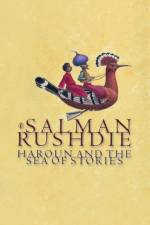
In a sad city, the saddest of cities, a city so ruinously sad that it had forgotten its name, lived a professional storyteller named Rashid and his son Haroun.' Thus begins Rushdie's magical and delightful book, which is comprised of hundreds of stories, funny and sad, all of them juggled at once, together with sorcery and love, wicked uncles and fat aunts, and mustachioed gangsters in yellow check pants.
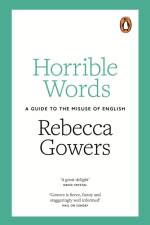
Nothing inflames the language gripers like a misplaced disinterested, an illogical irregardless, a hideous operationalisation. To purists these are 'howlers' and 'non-words', fit only for scorn. But in their rush to condemn such terms, are the naysayers missing something? In this provocative and hugely entertaining book, Rebecca Gowers throws light on a great array of horrible words, and shows how the diktats of the pedants are repeatedly based on misinformation, false reasoning and straight-up snobbery. The result is a brilliant work of history, a surreptitious introduction to linguistics, and a mischievous salute to the misusers of the language. It is also a bold manifesto asserting our common rights over English, even as it questions the true nature of style.
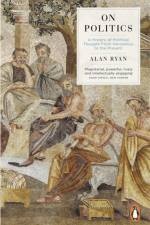
This is a book about the answers that historians, philosophers, theologians, practising politicians and would-be revolutionaries have given to one question:how should human beings best govern themselves? That question raises innumerable others: can we manage our own affairs at all? Should we even try? Many people in the past have thought that only some individuals were either able or entitled to practise self-government: Greeks, but not Persians; men, but not women; the better-off minority, but not the poor majority. Others have thought that few of us have any desire to govern ourselves, and that government is inevitably a matter of a competent elite managing an acquiescent mass.Then, what do we mean by 'freedom' today, and is it the same freedom that people enjoyed, or strove for, in the past? Almost every modern government claims to be democratic; but is democracy really the best way of organising our political life? For almost two thousand years, educated opinion said not. Today, educated opinion says yes. In the modern west, do we actually live in democracies? They certainly do not resemble what the Athenians fought and died to preserve. It seems that there may be less agreement than we might think about how human beings can best govern themselves. In this extraordinary book, more that thirty years in the making, Alan Ryan engages with the great thinkers of the past to explain their ideas with a lucidity which makes the book compelling reading. While acknowledging how much separates us from our intellectual forebears, he reminds us how often the ideas of long-dead or distant thinkers are more alive, and speak to us more vividly and immediately, than those of our contemporaries. At a time when we sometimes feel that the problems of the globe will simply overwhelm our ability to control them, he provides a peerless guide to the ways in which the problems of politics have been thought about by the greatest minds of our civilization.
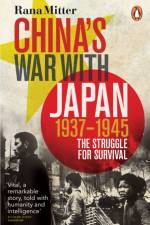
In Rana Mitter's tense, moving and hugely important book, the war between China and Japan - one of the most important struggles of the Second World War - at last gets the masterly history it deservesDifferent countries give different opening dates for the period of the Second World War, but perhaps the most compelling is 1937, when the 'Marco Polo Bridge Incident' plunged China and Japan into a conflict of extraordinary duration and ferocity - a war which would result in many millions of deaths and completely reshape East Asia in ways which we continue to confront today. With great vividness and narrative drive Rana Mitter's new book draws on a huge range of new sources to recreate this terrible conflict. He writes both about the major leaders (Chiang Kaishek, Mao Zedong and Wang Jingwei) and about the ordinary people swept up by terrible times. Mitter puts at the heart of our understanding of the Second World War that it was Japan's failure to defeat China which was the key dynamic for what happened in Asia.Reviews:'A remarkable story, told with humanity and intelligence; all historians of the second world war will be in Mitter's debt ... [he] explores this complex politics with remarkable clarity and economy ... No one could ask for a better guide than Mitter to how [the rise of modern China] began in the cauldron of the Chinese war' Richard Overy, Guardian'Rana Mitter's history of the Sino-Japanese War is not only a very important book, it also has a wonderful clarity of thought and prose which make it a pleasure to read' Antony Beevor'The best study of China's war with Japan written in any language ... comprehensive, thoroughly based on research, and totally non-partisan. Above all, the book presents a moving account of the Chinese people's incredible suffering ... A must read for anyone interested in the origins of China's contribution to the making of today's world' Akira IriyeAbout the author:Rana Mitter is Professor of the History and Politics of Modern China at the University of Oxford and a Fellow of St Cross College. He is the author of A Bitter Revolution: China's Struggle with the Modern World. He is a regular presenter of Night Waves on Radio 3.
In a move that would forever alter the map of the Middle East, Israel captured the West Bank, Golan Heights, Gaza Strip and Sinai Peninsula in 1967's brief but pivotal Six Day War. CURSED VICTORY is the first complete history of the war's troubled aftermath - a military occupation of the Palestinian territories that is now well into its fifth decade.Drawing on unprecedented access high-level sources, top-secret memos and never-before-published letters, the book provides a gripping and unvarnished chronicle of how what Israel promised would be an 'enlightened occupation' quickly turned sour, and the anguished diplomatic attempts to bring it to an end. Bregman sheds fresh light on critical moments in the peace process, taking us behind the scenes as decisions about the fate of the territories were made, and more often, as crucial opportunities to resolve the conflict were missed. As the narrative moves from Jerusalem to New York, Oslo to Beirut, and from the late 1960s to the present day, CURSED VICTORY provides vivid portraits of the key players in this unfolding drama, including Moshe Dayan, King Hussein of Jordan, Bill Clinton and Yasser Arafat. Yet Bregman always reminds us how diplomatic and back-room negotiations affected the daily lives of millions of Arabs, and how the Palestinian resistance, especially during the first and second intifadas, in turn shaped political developments.As Bregman concludes, the occupation has become a dark stain on Israel's history, and an era when international opinion of the country shifted decisively. CURSED VICTORY is essential reading for anyone who wants to understand the origins of the ongoing conflict in the region.
Half a millennium of European warfare brilliantly retold by masterly historian Brendan SimmsAt the heart of Europe's history lies a puzzle. In most of the world humankind has created enormous political frameworks, whether ancient (such as China) or modern (such as the United States). Sprawling empires, kingdoms or republics appear to be the norm. By contrast Europe has remained stubbornly chaotic and fractured into often amazingly tiny pieces, with each serious attempt to unify the continent (by Charles V, Napoleon and Hitler) thwarted.In this marvelously ambitious and exciting new book, Brendan Simms tells the story of Europe's constantly shifting geopolitics and the peculiar circumstances that have made it both so impossible to dominate, but also so dynamic and ferocious. It is the story of a group of highly competitive and mutually suspicious dynasties, but also of a continent uniquely prone to interference from 'semi-detached' elements, such as Russia, the Ottoman Empire, Britain and (just as centrally to Simms' argument) the United States.Europe: The Struggle for Supremacy will become the standard work on this crucial subject - and an extremely enjoyable one.Reviews:'This is a brilliant and beautifully written history. From the Holy Roman Empire to the Euro, Brendan Simms shows that one of the constant preoccupations of Europeans has always been the geography, the power and the needs of Germany. Europe is a work of extraordinary scholarship delivered with the lightest of touches. It will be essential, absorbing reading for anyone trying to understand both the past and the present of one of the most productive and most dangerous continents on earth' William Shawcross'World history is German history, and German history is world history.This is the powerful case made by this gifted historian of Europe, whose expansive erudition revives the proud tradition of the history of geopolitics, and whose immanent moral sensibility reminds us that human choices made in Berlin (and London) today about the future of Europe might be decisive for the future of the world' Timothy Snyder (author of Bloodlands)About the author:Brendan Simms is Professor of the History of International Relations at the University of Cambridge. His major books include Unfinest Hour: Britain and the Destruction of Bosnia (shortlisted for the Samuel Johnson Prize) and Three Victories and a Defeat: The Rise and Fall of the First British Empire.
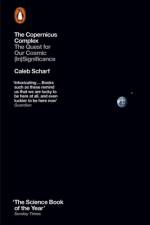
Though the concept of "e;the universe"e; suggests the containment of everything, the latest ideas in cosmology hint that our universe may be just one of a multitude of others-a single slice of an infinity of parallel realities.In The Copernicus Complex, the renowned astrophysicist and author Caleb Scharf takes us on a cosmic adventure like no other, from tiny microbes within the Earth to distant exoplanets and beyond, asserting that the age-old Copernican principle is in need of updating. As Scharf argues, when Copernicus proposed that the Earth was not the fixed point at the center of the known universe (and therefore we are not unique), he set in motion a colossal scientific juggernaut, forever changing our vision of nature. But the principle has never been entirely true-we do live at a particular time, in a particular location, under particular circumstances. To solve this conundrum we must put aside our Copernican worldview and embrace the possibility that we are in a delicate balance between mediocrity and significance, order and chaos.Weaving together cutting-edge science and classic storytelling, historical accounts and speculations on what the future holds, The Copernicus Complex presents a compelling argument for what our true cosmic status is, and proposes a way forward for the ultimate quest: to determine life's abundance not just across this universe but across all realities.
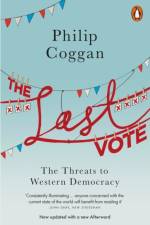
The Last Vote is a wake-up call showing why we cannot afford to take democracy for granted, from Philip Coggan, award-winning author of Paper Promises and The Money MachineCan we afford to take democracy for granted? It's now so much a part of our lives that we could be forgiven for thinking it mainly takes care of itself. Almost half the world's population now lives in a democratic state, while some Western democracies have now had universal suffrage for almost a century and have endured through even the most severe of global upheavals. In The Last Vote, Philip Coggan shows how democracy today faces threats that we ignore at our own risk. Amid the turmoil of the financial crisis, high debt levels, and an ever-growing gap between the richest and the rest, it is easy to forget that the ultimate victim could be our democracy itself. Tracing democracy's history and development, from the classical world through the revolution of the Enlightenment and on to its astounding success in the nineteenth and twentieth centuries, Coggan revisits the assumptions on which it is founded. What exactly is democracy? Why should we value it? What are its flaws? And could we do any better?The Last Vote is a wake-up call, and an illuminating defence of a system, which, in Churchill's words, is the worst possible form of government, except for all the others that have been tried. Reasoned, lucid and balanced, Coggan's argument parrots neither the agenda of left nor right, but calls for us all to work together to ensure we don't end up in an even greater mess than we're in today. Finally, he proposes ideas for change and improvement to the system itself so the next vote we cast will not be the last.Praise for Paper Promises:'This book stands way above anything written on the present economic crisis' Nassim Taleb, author of The Black Swan'Bold and confident... This book should be taken very seriously' John Authers, Financial Times'The most illuminating account of the financial crisis to appear to date ... written with a lucidity that conveys deep insights without a trace of jargon' John Gray, New StatesmanPhilip Coggan was a Financial Times journalist for over twenty years, and is now the Buttonwood columnist for the Economist. In 2009 he was named Senior Financial Journalist in the Harold Wincott awards and was voted Best Communicator at the Business Journalist of the Year Awards. He is the author of The Money Machine, and Paper Promises, winner of the Spears Business Book of the Year Award and longlisted for the Financial Times Goldman Sachs Business Book of the Year Award.
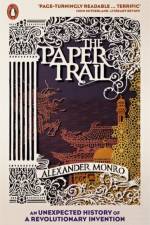
This is the story of how paper, a simple Chinese invention, has wrapped itself around our world, with history's most momentous ideas etched upon its surface. The emergence of paper in the imperial court of Han China brought about a revolution in the transmission of knowledge and of ideas. For over two millennia, it has allowed ideas, religions, philosophies and propaganda to spread around the world with ever greater ease. Paper was the first writing surface sufficiently cheap, portable and printable for books, pamphlets, prints and journals to be mass-produced and to travel widely. It enabled an ongoing dialogue between communities of scholars who could now engage with each others' ideas across continents and years.The Paper Trail traces the westward voyage of this ground-breaking invention; beginning with the Buddhist translators responsible for the spread of paper across China, Japan, Korea and Vietnam. It describes the theologians, scientists and artists who used paper to create the intellectual world of the Abbasid Caliphate, and journeys with the missionaries and merchants who carried it along the Silk Road. Paper finally reached Europe in 1276 and was indispensable to the scholars and translators who manufactured the Renaissance and Reformation from their desks.Paper created a world in which free thinking could flourish, and brought disciplines from science to music into a new age: the paper age. Paper still surrounds us in our everyday lives - on our desks, wrapping our food, in our wallets. It has become universal, and also supremely disposable. But is the age of paper coming to an end?
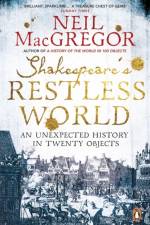
From Neil MacGregor, the acclaimed creator of A History of the World in 100 Objects and the Director of the British Museum, comes a unique, enthralling exploration of the age of William Shakespeare to accompany a new BBC Radio 4 series.Shakespeare lived through a pivotal period in human history. With the discovery of the New World, the horizons of Old Europe were expanding dramatically - and long-cherished certainties were crumbling. Life was exhilaratingly uncertain. What were Londoners thinking when they went to see Shakespeare's plays? What was it like living in their world? Here Neil MacGregor looks at twenty objects from Shakespeare's life and times, and uncovers the fascinating stories behind them. The objects themselves range from the grand (such as the hoard of gold coins that make up the Salcombe treasure) to the very humble, like the battered trunk and worn garments of an unknown pedlar. But in each case, they allow MacGregor to explore issues as diverse as piracy and Islam, Catholicism and disguise. MacGregor weaves the histories of objects into the words of Shakespeare's plays themselves to suggest to us where his ideas about religion, national identity, the history of England and the world, human nature itself, may have come from. The result is a fresh and thrilling evocation of Shakespeare's world.
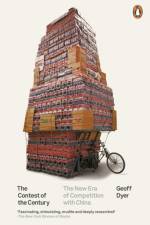
By sea and on the airwaves, by dollar and yuan, a contest has begun that will shape the next century. China's rise has now entered a critical new phase, as it seeks to translate its considerable economic heft into a larger role on the world stage, challenging American supremacy. Yet he also shows why China may struggle to unseat the West - its ambitious designs are provoking anxiety, especially in Asia, while America's global alliances have deep roots. If Washington can adjust to a world in which it is not the sole dominant power, it may be able to retain its ability to set the global agenda.
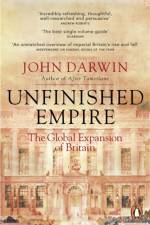
A both controversial and comprehensive historical analysis of how the British Empire worked, from Wolfson Prize-winning author and historian John DarwinThe British Empire shaped the world in countless ways: repopulating continents, carving out nations, imposing its own language, technology and values. For perhaps two centuries its expansion and final collapse were the single largest determinant of historical events, and it remains surrounded by myth, misconception and controversy today.John Darwin's provocative and richly enjoyable book shows how diverse, contradictory and in many ways chaotic the British Empire really was, controlled by interests that were often at loggerheads, and as much driven on by others' weaknesses as by its own strength.
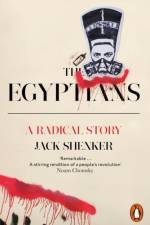
From award-winning journalist Jack Shenker, The Egyptians is the essential book about Egypt and radical politicsIn early 2011, Cairo's Tahrir Square briefly commanded the attention of the world. Half a decade later, the international media has largely moved on from Egypt's explosive cycles of revolution and counter-revolution - but the Arab World's most populous nation remains as volatile as ever, its turmoil intimately bound up with forms of authoritarian power and grassroots resistance that stretch right across the globe.In The Egyptians: A Radical Story, Jack Shenker uncovers the roots of the uprising that succeeded in toppling Hosni Mubarak, one of the Middle East's most entrenched dictators, and explores a country now divided between two irreconcilable political orders. Challenging conventional analyses that depict contemporary Egypt as a battle between Islamists and secular forces, The Egyptians illuminates other, far more important fault lines: the far-flung communities waging war against transnational corporations, the men and women fighting to subvert long-established gender norms, the workers dramatically seizing control of their own factories, and the cultural producers (novelists, graffiti artists and illicit bedroom DJs) appropriating public space in defiance of their repressive and increasingly violent western-backed regime.Situating the Egyptian revolution in its proper context - not as an isolated event, but as an ongoing popular struggle against a certain model of state authority and economic exclusion that is replicated in different forms around the world - The Egyptians explains why the events of the past five years have proved so threatening to elites both inside Egypt and abroad. As Egypt's rulers seek to eliminate all forms of dissent, seeded within the rebellious politics of Egypt's young generation are big ideas about democracy, sovereignty, social justice and resistance that could yet change the world.
Geza Vermes, translator and editor of The Complete Dead Sea Scrolls and worldwide expert on the life and times of Jesus, tells the enthralling story of early Christianity and the origins of a religion. The creation of the Christian Church is one of the most important stories in the development of the world's history, but also one of the most enigmatic and little understood, shrouded in mystery and misunderstanding. With a forensic, brilliant re-examination of all the key surviving texts of early Christianity, Geza Vermes illuminates the origins of a faith and traces the evolution of the figure of Jesus from the man he was - a prophet fully recognisable as the successor to other Jewish holy men of the Old Testament - to what he came to represent: a mysterious, otherworldly being at the heart of a major new religion. As Jesus's teachings spread across the eastern Mediterranean, hammered into place by Paul, John and their successors, they were transformed in the space of three centuries into a centralised, state-backed creed worlds away from its humble origins. Christian Beginnings tells the captivating story of how a man came to be hailed as the Son consubstantial with God, and of how a revolutionary, anti-conformist Jewish sub-sect became the official state religion of the Roman Empire.Reviews:'A beautiful and magisterial book' Rowan Williams, Archbishop of Canterbury, Guardian'An exciting and challenging port of call, sweeping aside much of the fuzzy thinking and special pleading that bedevils the study of sacred scripture ... courteously expressed and witty' Diarmaid MacCulloch, The Times'A challenging and engaging book that sets out to retrace the route by which a Jewish preacher in 1st-century Israel came to be declared as consubstantial and co-equal with the omnipotent, omniscient only God' Stuart Kelly, Scotsman'A major contribution to our understanding of the historical Jesus' Financial Times'A very accessible and entertaining read' Scotland on Sunday Books of the Year'A magnum opus of early Christian history and one of the year's most significant titles' Bookseller
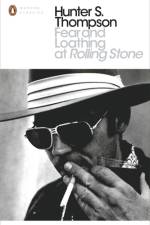
A compilation of the subversive, important and entertaining writer of Hunter S. Thompson - renowned American writer of Fear and Loathing in Las Vegas'It would not do to be found in the desert under these circumstances: firing wildly into the cactus from a car full of drugs...'Fear and Loathing at Rolling Stone showcases the evolution of the writer of Fear and Loathing in Las Vegas and Hell's Angels, through his work at the magazine that he helped to put on the map. Jann S. Wenner, Hunter Thompson's editor and friend for nearly thirty-five years, has chosen the pieces, including many never collected before. They show how Thompson's Rolling Stone writing, when taken as a whole, forms an extended, allusive autobiography of the writer himself as he pursues his lifelong obsession, the king-hell story of them all: The Death of the American Dream.
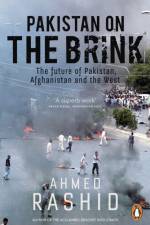
With Bin Laden dead, Pakistan threatened by internal power struggles, relationships between the United States and Pakistan at an all-time low, and as the US and Britain begin their withdrawal from Afghanistan, what are the possibilities-and hazards-facing the world's most unstable region? Where is the Taliban now, and how do they figure in the future of Pakistan as well as Afghanistan? What does the immediate future hold, and what are the choices that Pakistan, Afghanistan and the West can make? These are some of the crucial questions that Ahmed Rashid takes on in this follow-up to his acclaimed Descent into Chaos. Rashid correctly predicted that the Iraq war would need to be refocused into Afghanistan, and that Pakistan would emerge as the leading player through which American interests and actions would have to be directed. Now, as Washington and the rest of the West wrestle with negotiating with unreliable and unstable "e;allies"e; in Pakistan, there is no better guide to the dark future than Ahmed Rashid. He focuses on the long-term problems: the changing casts of characters, the future of international terrorism, and the actual policies and strategies both within Pakistan and Afghanistan and among the Western allies. As he has done so well in the past, Pakistan on the Brink offers sensible solutions and provides a way forward for all countries involved, while the world tries to bring some stability to a fractured region saddled with a legacy of violence and corruption.
Abonner på vårt nyhetsbrev og få rabatter og inspirasjon til din neste leseopplevelse.
Ved å abonnere godtar du vår personvernerklæring.