












Gjør som tusenvis av andre bokelskere
Abonner på vårt nyhetsbrev og få rabatter og inspirasjon til din neste leseopplevelse.
Ved å abonnere godtar du vår personvernerklæring.Du kan når som helst melde deg av våre nyhetsbrev.

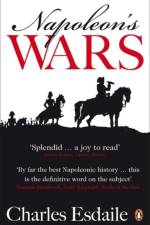
No other soldier has provoked as much anger or as much fervour as Napoleon Bonaparte. Was he a monster, driven on by an endless, ruinous quest for military adventure or was he a social and political visionary, brought down by petty reactionaries clinging to their privileges?Charles Esdaile s major new work reframes our understanding of Napoleon. Napoleon s Wars looks beyond the insatiable greed for glory to create a new, genuinely international context for Napoleon s career. The battles themselves Esdaile sees as almost side-effects, the consequences of rulers being willing to take the immense risks of fighting or supporting Napoleon risks that could result in the extinction of entire countries and regimes.
In the Autumn of 1940 the Jews of Warsaw were forced into a crowded ghetto, enduring unimaginable conditions until most were killed. Yet, amid this, one man, Emanuel Ringelblum, started an extraordinary clandestine organization dedicated to recording life under Nazi occupation. His aim: to ensure that, if he died, his people's history would still be written.Codenamed Oyneg Shabes, this underground group painstakingly gathered together an archive of some 35,000 documents - letters, poems, photographs, personal testimonies, menus, sketches, songs and official papers - which was buried in tin boxes and milk bottles just before the ghetto was razed to the ground. This secret cache lay deep beneath the rubble for years, long after most of the Oyneg Shabes's members had perished, until one of the few survivors led the way to its secret location.Only now can the story of this incredible historical record, and the people behind it, be fully told. It is a testament to an extraordinary act of defiance in the face of tyranny, and to the triumph of history.
Alexander Pushkin was Russia's first true literary genius. Best known for his poetry, he also wrote sparkling prose that revealed his national culture with elegance and understated humour. Here, his gift for portraying the Russian people is fully revealed. The Tales of Belkin, his first prose masterpiece, presents a series of interlinked stories narrated by a good-hearted Russian squire - among them 'The Shot', in which a duel is revisited after many years, and the grotesque 'The Undertaker'. Elsewhere, works such as the novel-fragment Roslavlev and the Egyptian Nights, the tale of an Italian balladeer seeking an audience in St. Petersberg, demonstrate the wide range of Pushkin's fiction. A Journey to Arzrum, the final piece in this collection, offers an autobiographical account of Pushkin's own experiences in the 1829 war between Russia and Turkey, and remains one of the greatest of all pieces of journalistic adventure writing.
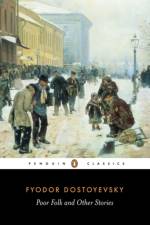
With their penetrating psychological insight and their emphasis on human dignity, respect and forgiveness, Dostoyevsky's early short stories contain the seeds of the themes that came to his major novels. Poor Folk, the author's first great literary triumph, is the story of a tragic relationship between an impoverished copy clerk and a young seamstress, told through their passionate letters to each other. In The Landlady Dostoyevsky portrays a dreamer hero who is captivated by a curious couple and becomes their lodger. Mr Prokharchin, inspired by a true story, is a sly comedy centring on an eccentric miser, and Polzunkov is a powerful character sketch which, in common with the other tales in this volume, questions the very nature of existence.
Founding father of the famous monastery on the island of Iona, a site of pilgrimage ever since his death in 597, St Columba was born into one of the ruling families in Ireland at a time of immense expansion for the Irish Church. This account of his life, written by Adomn n - the ninth abbot of Iona, and a distant relative of St Columba - describes his travels from Ireland to Scotland and his mission in the cause of Celtic Christianity there. Written 100 years after St Columba's death, it draws on written and oral traditions to depict a wise abbot among his monks, who like Christ was capable of turning water into wine, controlling sea-storms and raising the dead. An engaging account of one of the central figures in the 'Age of Saints', this is a major work of early Irish and Scottish history.
Goethe's Faust reworks the late-medieval myth of Dr Faust, a brilliant scholar so disillusioned he resolves to make a contract or wager with the devil, Mephistopheles. The devil will do all he asks on Earth and seek to grant him a moment in life so glorious that he will wish it to last for ever. But if Faust does bid the moment stay, he falls to Mephisto and must serve him after death. In this first part of Goethe's great work the embittered thinker and Mephistopheles enter into their agreement, and soon Faust is living a life beyond his study and - in rejuvenated form - winning the love of the charming and beautiful Gretchen. But in this compelling tragedy of arrogance, unfulfilled desire and self-delusion, Faust, served by the devil, heads inexorably towards destruction.
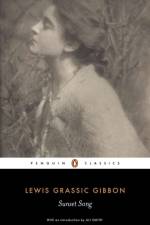
WITH AN INTRODUCTION BY ALI SMITHYoung Chris Guthrie lives a brutal life in the harsh landscape of northern Scotland, torn between her passion for the land, duty to her family and her love of books. When her mother, broken by repeated childbirths, takes her own life and poisons her two youngest children, Chris is left with her father to run the farm on her own. Soon she is alone, and for the first time can choose how to spend her life. But as the First World War begins, everything changes, and the young men leave Scotland for battle. The first in Gibbon's classic trilogy A Scot's Quair, Sunset Song is infused with local vernacular, and innovatively blends Scots and English in an intense description of Scottish life in the early twentieth century.
When young Francis Osbaldistone discovers that his vicious and scheming cousin Rashleigh has designs both on his father's business and his beloved Diana Vernon, he turns in desperation to Rob Roy for help. Chieftain of the MacGregor clan, Rob Roy is a brave and fearless man, able and cunning. But he is also an outlaw with a price on his head, and as he and Francis join forces to pursue Rashleigh, he is constantly aware that he, too, is being pursued - and could be captured at any moment. Set on the eve of the 1715 Jacobite uprising, Rob Roy brilliantly evokes a Scotland on the verge of rebellion, blending historical fact and a novelist's imagination to create an incomparable portrait of intrigue, rivalry and romance.
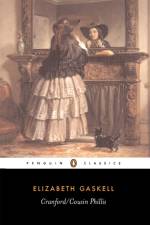
Cranford depicts the lives and preoccupations of the inhabitants of a small village - their petty snobberies and appetite for gossip, and their loyal support for each other in times of need. The village is dominated by women, from the kindly spinster Miss Matty, living in genteel poverty with her redoubtable sister, to Lady Glenmire, who shocks everyone by marrying the doctor. When men do appear, such as 'modern' Captain Brown or Matty's suitor from the past, they bring disruption and excitement to the everyday life of Cranford. This volume includes the novella Cousin Phillis, which depicts a fleeting love affair in a rural community at a time when old values are being supplanted by the new. Both works are exquisitely observed tragicomedies of human nature, told with great delicacy and affection.
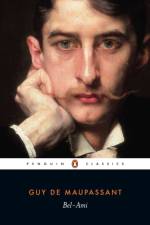
Young, attractive and very ambitious, George Duroy, known to his friends as Bel-Ami, is offered a job as a journalist on La Vie francaise and soon makes a great success of his new career. But he also comes face to face with the realities of the corrupt society in which he lives - the sleazy colleagues, the manipulative mistresses and wily financiers - and swiftly learns to become an arch-seducer, blackmailer and social climber in a world where love is only a means to an end. Written when Maupassant was at the height of his powers, Bel-Ami is a novel of great frankness and cynicism, but it is also infused with the sheer joy of life - depicting the scenes and characters of Paris in the belle epoque with wit, sensitivity and humanity.
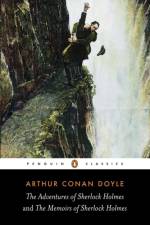
This collection includes many of the famous cases - and great strokes of brilliance - that made the legendary Sherlock Holmes one of fiction's most popular creations. With his devoted amanuensis, Dr Watson, Holmes emerges from his smoke filled rooms in Baker Street to grapple with the forces of treachery, intrigue and evil in such cases as 'The Speckled Band', in which a terrified woman begs their help in solving the mystery surrounding her sister's death, or 'A Scandal in Bohemia', which portrays a European king blackmailed by his mistress. In 'Silver Blaze' the pair investigate the disappearance of a racehorse and the violent murder of its trainer, while in 'The Final Problem' Holmes at last comes face to face with his nemesis, the diabolical Professor Moriarty - 'the Napoleon of crime'.
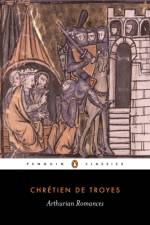
Taking the legends surrounding King Arthur and weaving in new psychological elements of personal desire and courtly manner, Chr tien de Troyes fashioned a new form of medieval Romance. The Knight of the Cart is the first telling of the adulterous relationship between Lancelot and Arthur's Queen Guinevere, and in The Knight with the Lion Yvain neglects his bride in his quest for greater glory. Erec and Enide explores a knight's conflict between love and honour, Clig s exalts the possibility of pure love outside marriage, while the haunting The Story of the Grail chronicles the legendary quest. Rich in symbolism, these evocative tales combine closely observed detail with fantastic adventure to create a compelling world that profoundly influenced Malory, and are the basis of the Arthurian legends we know today.
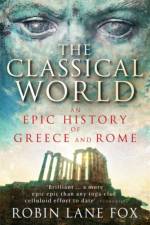
The classical civilizations of Greece and Rome dominated the world for centuries and continue to intrigue and enlighten us with their inventions, whether philosophy, politics, theatre, athletics, celebrity, science or the pleasures of horse racing. Robin Lane Fox's spellbinding history spans almost a thousand years of change, from the foundation of the world's first democracy in Athens to the Roman Republic and the Empire under Hadrian. Bringing great figures such as Homer, Socrates, Alexander, Julius Caesar, Augustus and the first Christian martyrs to life, exploring freedom, justice and luxury, this wonderfully exciting tour brings the turbulent histories of Greece and Rome together in a masterly study.
'Yes, you squashed cabbage leaf . . . you incarnate insult to the English language: I could pass you off as the Queen of Sheba'Pygmalion both delighted and scandalized its first audiences in 1914. A brilliantly witty reworking of the classical tale of the sculptor who falls in love with his perfect female statue, it is also a barbed attack on the British class system and a statement of Shaw's feminist views. In Shaw's hands, the phoneticist Henry Higgins is the Pygmalion figure who believes he can transform Eliza Doolittle, a cockney flower girl, into a duchess at ease in polite society. The one thing he overlooks is that his 'creation' has a mind of her own.With an Introduction by NICHOLAS GRENE
Dazzling modern lyrical poems from Catullus - by turns smutty, abusive, romantic and deeply moving.Introducing Little Black Classics: 80 books for Penguin's 80th birthday. Little Black Classics celebrate the huge range and diversity of Penguin Classics, with books from around the world and across many centuries. They take us from a balloon ride over Victorian London to a garden of blossom in Japan, from Tierra del Fuego to 16th-century California and the Russian steppe. Here are stories lyrical and savage; poems epic and intimate; essays satirical and inspirational; and ideas that have shaped the lives of millions.Catullus (c.84-54 BCE). Catullus's The Poems is available in Penguin Classics.
The Penguin English Library editionAs usual with the Sherlock Holmes stories it is very hard to say which are the best - but there are many stories here which would get the vote - ranging from The Boscombe Valley Mystery to the wonderful Adventure of Silver Blaze, from the Adventure of the Norwood Builder to A Case of Identity, but above to the uniquely strange and macabre Adventure of the Engineer's Thumb.
Wolfram von Eschenbach (fl. c. 1195-1225), best known as the author of Parzival, based Willehalm, his epic poem of military prowess and courtly love, on the style and subject matter of an Old French "e;chanson de geste."e; In it he tells of the love of Willehalm for Giburc, a Saracen woman converted to Christianity, and its consequences. Seeking revenge for the insult to their faith, her relatives initiate a religious war but are finally routed. Wolfram's description of the two battles of Alischanz, with their massive slaughter and loss of heroes, and of the exploits of Willehalm and the quasicomic Rennewart, well displays the violence and courtliness of the medieval knightly ideal. Wolfram flavors his brutal account, however, with tender scenes between the lovers, asides to his audience, sympathetic cameos of his characters--especially the women--and, most unusually for his time, a surprising tolerance for 'pagans'.
The vivid and exciting accounts written from the front line, taking the story of the British war with Napoleon from its desperate beginnings in Portugal to the final triumph at WaterlooThe Duke of Wellington was not only an incomparable battle commander but a remarkably expressive, fluent and powerful writer. His dispatches have long been viewed as classics of military literature and have been pillaged by all writers on the Peninsular War and the final campaigns in France and Belgium ever since they were published. This new selection allows the reader to follow the extraordinary epic in Wellington's own words - from the tentative beginnings in 1808, clinging to a small area of Portugal in the face of overwhelming French power across the whole of the rest of Europe, to the campaigns that over six years devastated opponent after opponent. The book ends with Wellington's invasion of France and the coda of 'the 100 days' that ended with Napoleon's final defeat at Waterloo.
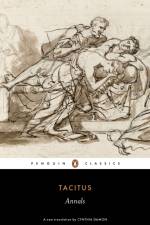
A compelling new translation of Tacitus' Annals, one of the greatest accounts of ancient Rome, by Cynthia Damon.Tacitus' Annals recounts the major historical events from the years shortly before the death of Augustus to the death of Nero in AD 68. With clarity and vivid intensity Tacitus describes the reign of terror under the corrupt Tiberius, the great fire of Rome during the time of Nero and the wars, poisonings, scandals, conspiracies and murders that were part of imperial life. Despite his claim that the Annals were written objectively, Tacitus' account is sharply critical of the emperors' excesses and fearful for the future of imperial Rome, while also filled with a longing for its past glories.This new Penguin Classics edition also includes chronologies, notes, appendices, a genealogy and an introduction discussing Tacitus's life and his approach to history.
Marie de France (fl. late twelfth century) is the earliest known French woman poet and her lais - stories in verse based on Breton tales of chivalry and romance - are among the finest of the genre. Recounting the trials and tribulations of lovers, the lais inhabit a powerfully realized world where very real human protagonists act out their lives against fairy-tale elements of magical beings, potions and beasts. De France takes a subtle and complex view of courtly love, whether telling the story of the knight who betrays his fairy mistress or describing the noblewoman who embroiders her sad tale on the shroud for a nightingale killed by a jealous and suspicious husband.
Insolent and defiant, the Chants de Maldoror, by the self-styled Comte de Lautr amont (1846-70), depicts a sinister and sadistic world of unrestrained savagery and brutality. One of the earliest and most astonishing examples of surrealist writing, it follows the experiences of Maldoror, a master of disguises pursued by the police as the incarnation of evil, as he makes his way through a nightmarish realm of angels and gravediggers, hermaphrodites and prostitutes, lunatics and strange children. Delirious, erotic, blasphemous and grandiose by turns, this hallucinatory novel captured the imagination of artists and writers as diverse as Modigliani, Verlaine, Andr Gide and Andr Breton; it was hailed by the twentieth-century Surrealist movement as a formative and revelatory masterpiece.
In 1794, Joseph Priestley - amateur scientist, ordained minister and radical thinker - set sail for America to escape persecution. Stephen Johnson tells his incredible story: the discovery of oxygen, the invention of a science, the founding of a church, and, with the great minds of his time, the development of the United States itself. But Priestley's revolutionary ideas put him in terrible danger. Johnson uses the progress of Priestley and his colleagues not merely to describe the wonder of discovery, but to show us how we have come to understand the world, how far we have travelled with the power of human enquiry - and how one man's curiosity can help build an entire country.
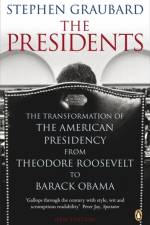
In this magisterial examination of the Presidency over the course of the 20th Century, the author explores the history of the world's greatest elective office and the role each incumbent has played in changing the scope of its powers. Using individual presidential portraits of each of the presidents of the past century Graubard asks, and answers, a wide variety of crucial questions about each President. What intellectual, social and political assets did they bring to the White House, and how quickly did they deplete or mortgage that capital? How well did they cope with crises, foreign and domestic? How much attention did they pay to their election pledges after they were elected? How did they use the media, old and new? Above all, how did they conduct themselves in office and what legacy did they leave to their successors? Graubard provides original analysis in each case, and reaches many surprising conclusions.
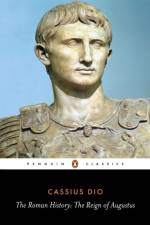
Augustus Caesar, the first emperor of Rome (27 BC-AD 14), brought peace and prosperity to his city after decades of savage civil war. This selection from Cassius Dio's Roman History gives the fullest description of that long struggle and ultimate triumph - detailing the brutal battles and political feuds that led to the collapse of Rome's 400-year-old republic, and Augustus' subsequent reign as emperor. Included are accounts of military campaigns from Ethiopia to Yugoslavia, and of long conflict with Antony and Cleopatra. With skill and artistry, Dio brings to life many speeches from the era - among them Augustus' damning indictment of Antony's passion for the Egyptian queen - and provides a fascinating account of the debate between the great general Agrippa and Maecenas on the virtues of republicanism and monarchy.
Barbara Tuchman's The Zimmerman Telegram is one of the greatest spy stories of all time.Nothing can stop an enemy from picking wireless messages out of the free air - and nothing did. In England, Room 40 was born . . .In January 1917, with the First World War locked in terrible stalemate and America still neutral, German Foreign Secretary Arthur Zimmerman gambled the future of the conflict on a single telegram. But this message was intercepted and decoded in Whitehall's legendary Room 40 - and Zimmerman's audacious scheme for world domination was exposed, bringing America into the war and changing the course of history. The story of how this happened and the incalculable consequences are thrillingly told in Barbara Tuchman's brilliant exploration.'A most exciting book, full of vivid pen portraits and curious episodes' Sunday Times'As thrilling as a John Buchan novel' The Times Literary Supplement'Its 200 pages are worth more than all the thrillers and whodunits of the fiction writers put together'Herald'A fine exciting book told with intense drama. A thriller of real life' Observer'Brilliant. Told with great literary and dramatic talent' New York Times Book ReviewBarbara Tuchman achieved prominence as a historian with The Zimmerman Telegram and international fame with the Pulitzer-Prize winning The Guns of August. She is also the author of The Proud Tower, Stilwell and the American Experience in China (also awarded the Pulitzer Prize), A Distant Mirror and The March of Folly. She died in 1989. The Guns of August and The Proud Tower are published by Penguin.
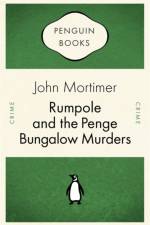
Horace Rumpole - cigar-smoking, claret-drinking, Wordsworth-spouting defender of some unlikely clients - often speaks of the great murder trial which revealed his talents as an advocate and made his reputation down at the Bailey when he was still a young man. Now, for the first time, the sensational story of the Penge Bungalow Murders case is told in full: how, shortly after the war, Rumpole took on the seemingly impossible task of defending young Simon Jerold, accused of murdering his father and his father's friend with a German officer's gun. And how the inexperienced young brief was left alone to pursue the path of justice, in a case that was to echo through the Bailey for years to come.
Stories by: Kathy Acker, Isabel Allende, Laila Baalabaki, Simone de Beauvoir, Svetlana Boym, Angela Carter, Kate Chopin, Colette, Elizabeth Cook, Candas Jane Dorsey, Carol Emshwiller, L.A. Hall, Radclyffe Hall, Bessie Head, Siv Holm, Evelyn Lau, La Marquise de Mannoury d'Ectot, Katherine Mansfield, Ann Oakley, Iva Pek rkov , Claire Rabe, Alifa Rifaat, Joanna Russ, May Sinclair, Verena Stefan, Gertrude Stein, Nicole Ward Jouve, Anna- Elisabeth Weirauch, Edith Wharton, Amy Yamada.Tales of forbidden lust, illicit desires, the twin hungers of loneliness and lust and the complexities of intimacy: all are explored in this fascinating anthology of stories on erotic themes.Spanning the last hundred years The Penguin Book of Erotic Stories by Women brings together tales that capture the sexual mores of their ages. This is an anthology that acknowledges and confirms a woman's right to shape and define her own sexuality, rather than having it forced on her by men.
Meet the Metrostanis, three young Pakistani men in New York City at the turn-of-the-millennium: AC, a gangsta rap spouting academic; Jimbo, a hulking Pushtun deejay from the streets of Jersey City; and Chuck, a wide-eyed, off-the-boat kid, searching for himself and the American Dream.In a city where origins matter less than the talent for self invention, they have the guts to claim the place as their own. But after the fall of the towers they embark on a road-trip to the hinterland in search of 'The Shaman', a Gatsbyesque compatriot who seemingly disappears into thin air - and then things begin to go horribly wrong. Suddenly, they find themselves in a changed, charged America . . .
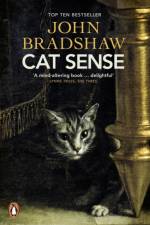
From John Bradshaw, one of the world's leading experts on animal behaviour, and the author of the Sunday Times Bestseller, In Defence of Dogs, Cat Sense is a scientific portrait of the true, surprising nature of catsWorshipped as gods, feared as demonic servants, seen as both wild opportunists and beloved companions, cats often seem as unfathomable, enigmatic and magical to us today as they did in ancient times. They have lived with humans for at least ten thousand years (far earlier than the reign of the Pharaohs), and today are the most popular pet in the world. That they now outnumber the dog, man's 'best friend', by three to one, is small wonder: at once affectionate and self-reliant, they seem to be perfectly suited to our busy 21st Century lifestyles. Yet cats still think like the wild scavengers and hunters from which they are descended - and to which they can quickly revert. Today, they face unprecedented challenges in their life with humans: from conservationists who cast them as a threat to wildlife; from other cats who they compete for territory with; and from good-intentioned owners and vets with misconceptions of what they require. Cats need not so much our sympathy, but our understanding, if they are to continue to enjoy our companionship. The recent surge in feline science - with John Bradshaw at the forefront - means we are now better equipped to understand them than ever before. Cat Sense offers us for the first time a true picture of one of humanity's closest and most enigmatic companions.Praise for In Defence of Dogs:'The most fantastic book, a revelation' Observer'Essential reading' Daily Telegraph'Nothing less than a manifesto for a new understanding' Guardian'A case grounded in kindness and science ... Authoritative, wise and rather moving' Independent'A wonderful, reassuring, and encouraging book' Literary Review'A wonderfully informative, passionate book' EconomistJohn Bradshaw is a biologist who founded and directs the world-renowned Anthrozoology Institute, based at the University of Bristol. He has been studying the behaviour of domestic cats and their owners for over 25 years, and is the author of many scientific articles, research papers and reviews. He is also the author of the Sunday Times bestseller, In Defence of Dogs.
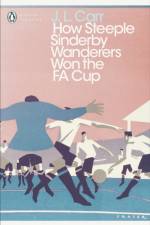
'One of the greatest football novels ever written and a comic masterpiece' DJ Taylor'But is this story believable? Ah, it all depends upon whether you want it to believe it.' J.L. CarrIn their new all-buttercup-yellow-stripe, Steeple Sinderby Wanderers, who usually feel lucky when their pitch is above water-level, are England's most obscure team. This uncategorizable, surreal and extremely funny novel is the story of how they start the season by ravaging the Fenland League and end it by going all the way to Wembley.Told through unreliable recollection, florid local newspaper coverage and bizarre committee minutes, How Steeple Sinderby Wanderers Won the F.A. Cup is both entertaining and moving. There will never be players again like Alex Slingsby, Sid 'the Shooting Star' Swift and the immortal milkman-turned-goalkeeper, Monkey Tonks.
Abonner på vårt nyhetsbrev og få rabatter og inspirasjon til din neste leseopplevelse.
Ved å abonnere godtar du vår personvernerklæring.