





Gjør som tusenvis av andre bokelskere
Abonner på vårt nyhetsbrev og få rabatter og inspirasjon til din neste leseopplevelse.
Ved å abonnere godtar du vår personvernerklæring.Du kan når som helst melde deg av våre nyhetsbrev.

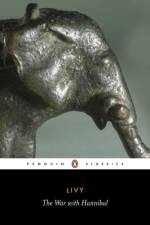
In The War with Hannibal, Livy (59 BC-AD 17) chronicles the events of the Second Punic War between Rome and Carthage, until the Battle of Zama in 202 BC. He vividly recreates the immense armies of Hannibal, complete with elephants, crossing the Alps; the panic as they approached the gates of Rome; and the decimation of the Roman army at the Battle of Lake Trasimene. Yet it is also the clash of personalities that fascinates Livy, from great debates in the Senate to the historic meeting between Scipio and Hannibal before the decisive battle. Livy never hesitates to introduce both intense drama and moral lessons into his work, and here he brings a turbulent episode in history powerfully to life.
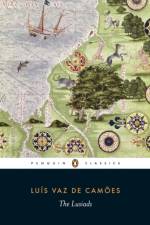
First published in 1572, The Lusiads is one of the greatest epic poems of the Renaissance, immortalizing Portugal's voyages of discovery with an unrivalled freshness of observation. At the centre of The Lusiads is Vasco da Gama's pioneer voyage via southern Africa to India in 1497-98. The first European artist to cross the equator, Camoes's narrative reflects the novelty and fascination of that original encounter with Africa, India and the Far East. The poem's twin symbols are the Cross and the Astrolabe, and its celebration of a turning point in mankind's knowledge of the world unites the old map of the heavens with the newly discovered terrain on earth. Yet it speaks powerfully, too, of the precariousness of power, and of the rise and decline of nationhood, threatened not only from without by enemies, but from within by loss of integrity and vision.
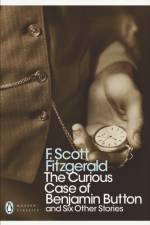
Full grown with a long, smoke-coloured beard, requiring the services of a cane and fonder of cigars than warm milk, Benjamin Button is a very curious baby indeed. And, as Benjamin becomes increasingly youthful with the passing years, his family wonders why he persists in the embarrassing folly of living in reverse. In this imaginative fable of ageing and the other stories collected here including The Cut-Glass Bowl in which an ill-meant gift haunts a family s misfortunes, The Four Fists where a man s life shaped by a series of punches to his face, and the revelry, mobs and anguish of May Day F. Scott Fitzgerald displays his unmatched gift as a writer of short stories.
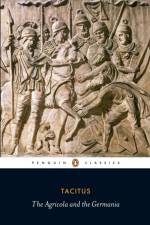
The Agricola is both a portrait of Julius Agricola - the most famous governor of Roman Britain and Tacitus' well-loved and respected father-in-law - and the first detailed account of Britain that has come down to us. It offers fascinating descriptions of the geography, climate and peoples of the country, and a succinct account of the early stages of the Roman occupation, nearly fatally undermined by Boudicca's revolt in AD 61 but consolidated by campaigns that took Agricola as far as Anglesey and northern Scotland. The warlike German tribes are the focus of Tacitus' attention in the Germania, which, like the Agricola, often compares the behaviour of 'barbarian' peoples favourably with the decadence and corruption of Imperial Rome.
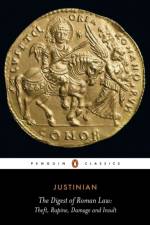
Codified by Justinian I and published under his aegis in A.D. 533, this celebrated work of legal history forms a fascinating picture of ordinary life in Rome.
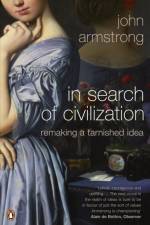
In Arthur Ransome's charming tale of childhood adventure, Secret Water, four children are pretending to be savages approaching an outpost of the civilized world. 'What is civilization?' asks Bridget, the youngest. 'Ices,' explains her brother, 'and all that sort of thing.'It is probably the briefest definition of the term on record in English, though it doesn't quite do justice to the grand idea of civilization. But if it isn't ices then what exactly is meant by civilization, and why do we need it? Today, the debate around civilization and its meaning has almost disappeared. If talked about at all, it will be as part of a different debate: the political tensions between different parts of the world, colonial history, developments in engineering.Yet the promise of civilization is greater: if considered in its full meaning civilization can be a way of reconnecting grand, societal forces - economic liberty, social freedom - with the more intimate and deeper needs of life - wisdom, maturity, a flourishing of culture. In In Search of Civilization John Armstrong argues cogently and passionately that our sources of wisdom, maturity and happiness are rapidly drying up.Only by reviving a conversation about civilization can we put in place the conditions for our renaissance.
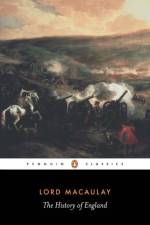
One of the greatest figures of his age, Thomas Babington Macaulay (1800-59) was widely admired throughout his life for his prose, poetry, political acumen and oratorical skills. Among the most successful and enthralling histories ever written, his History of England won instantaneous success following the publication of its first volumes in 1849, and was rapidly translated into most European languages. Beginning with the Glorious Revolution of 1688 and concluding at the end of the reign of William III in 1702, it illuminates a time of deep struggle throughout Britain and Ireland in vivid and compelling prose. But while Macaulay offers a gripping narrative, and draws on a wide range of sources including historical accounts and creative literature, his enduring success also owes a great deal to his astonishing ability to grasp, and explain, the political reality that has always underpinned social change.
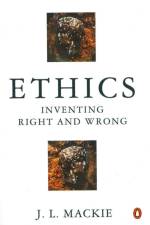
An insight into moral skepticism of the 20th century. The author argues that our every-day moral codes are an 'error theory' based on the presumption of moral facts which, he persuasively argues, don't exist. His refutation of such facts is based on their metaphysical 'queerness' and the observation of cultural relativity.
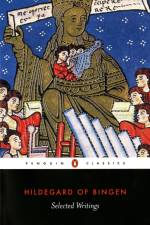
Benedictine nun, poet and musician, Hildegard of Bingen (1098-1179) was one of the most remarkable figures of the Middle Ages. She undertook preaching tours throughout the German empire at the age of sixty, and was consulted not only by her religious contemporaries but also by kings and emperors, yet it is largely for her apocalyptic and mystical writings that she is remembered. This volume includes selections from her three visionary works, her treatises on medicine and the natural world, her devotional songs, and fascinating letters to prominent figures of her time. Dealing with such eternal subjects as the relationship between humans and nature, and men and women, Hildegard's works show her to be a wide-ranging thinker who created such fresh, startling images and ideas that her writings have been compared to Dante and Blake.
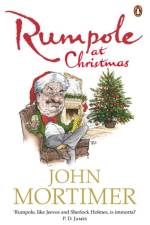
Rumpole at Christmas - the hilarious festive stories of John Mortimer's greatest character'Without Rumpole, the world would be a poorer place' Daily MailHorace Rumpole is not overfond of the rituals of Christmas: turkey, tinsel and the like. But happily the festive season is not one respected by the criminal fraternity; meaning that celebrations in the Rumpole household are frequently disturbed in most-welcome ways.There's the suspicious Father Christmas at Equity's Court's festive party. The actor who goes missing from the panto on the night of a major crime. As well as the body cluttering up the health farm (where the great barrister is gloomily restricted to a diet of yak's milk and steamed spinach to please She Who Must Be Obeyed).These seven wonderful Rumpole stories show the great man at his sharpest, wittiest and best. Readers of Sherlock Holmes, P.D. James and P.G. Wodehouse will love this book.'One of the great comic creations of modern times' Evening Standard'There is a truth in Rumpole that is told with brilliance and grace' Daily Telegraph'Rumpole remains and absolute delight' The Times Sir John Mortimer was a barrister, playwright and novelist. His fictional political trilogy of Paradise Postponed, Titmuss Regained and The Sound of Trumpets has recently been republished in Penguin Classics, together with Clinging to the Wreckage and his play A Voyage round My Father. His most famous creation was the barrister Horace Rumpole, who featured in four novels and around eighty short stories. His books in Penguin include: The Anti-social Behaviour of Horace Rumpole; The Collected Stories of Rumpole; The First Rumpole Omnibus; Rumpole and the Angel of Death; Rumpole and the Penge Bungalow Murders; Rumpole and the Primrose Path; Rumpole and the Reign of Terror; Rumpole and the Younger Generation; Rumpole at Christmas; Rumpole Rests His Case; The Second Rumpole Omnibus; Forever Rumpole; In Other Words; Quite Honestly and Summer's Lease.
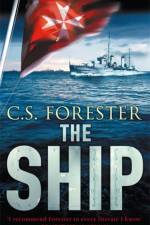
One vital convoy can break Mussolini s stranglehold on Malta but it is intercepted in the Mediterranean by enemy warships Five light British cruisers are left to beat back the armed might of the Italian battle fleet and C.S. Forester creator of Horatio Hornblower takes us aboard HMS Artemis as she steams into battle against overwhelming odds. We get inside the heads of Artemis s men, from the Captain on his bridge down to the lowest engine room rating, as they struggle over one long and terrifying afternoon to do their duty. C.S. Forester brilliantly recounts life aboard a British warship during some of the darkest days of the Second World War: capturing the urgency of the blazing guns, the thunderous rupturing of deck plates, the screams of pain and the shouts of triumph.
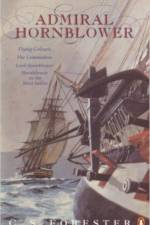
An omnibus edition compromising of four C S Forester's classic seafaring tales about Horatio Hornblower, namely: Flying Colours, The Commodore, Lord Hornblower and Hornblower in the West Indies.
Beautiful and independent, Arabella has been brought up in rural seclusion by her widowed father. Devoted to reading French romances, the sheltered young woman imagines all sorts of misadventures that can befall a heroine such as herself. As she makes forays into fashionable society in Bath and London, many scrapes and mortifications ensue - all men seem like predators wishing to ravish her, she mistakes a cross-dressing prostitute for a distressed gentlewoman, and she risks her life by throwing herself into the Thames to avoid a potential seducer. Can Arabella be cured of her romantic delusions? An immediate success when it first appeared in 1752, The Female Quixote is a wonderfully high-spirited parody of the style of Cervantes, and a telling and comic depiction of eighteenth-century English society.
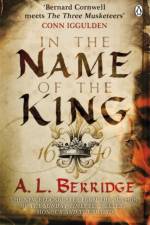
1640, and the pall of war hangs over France...The young Chevalier de Roland has scarcely set foot in the city before he crosses swords with a cruel nobleman to defend a young woman's honour. Too late he learns he has stumbled on a conspiracy within the King's own household to seize power by secret alliance with Spain. Accused of treason and forced to flee into hiding, Andr must fight on alone, staking both his life and his honour in the battle to save France.Blood and Steel is an epic swashbuckling pageturner that sweeps from the political intrigues of Cardinal Richelieu to the great battlefields of the Thirty Years War.
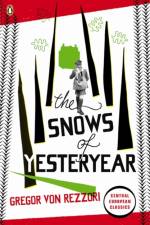
The Snows of Yesteryear (1989) is Gregor von Rezzori's haunting evocation of his childhood in Czernowitz, in present-day Ukraine. Growing up after the First World War, Rezzori portrays a twilit world suspended between the dying ways of an imperial past and the terrors of the twentieth century. He recalls his volatile, boar-hunting father, his earthy nursemaid, his fragile, aristocratic mother, his adored governess and the tragic death of his beloved sister, in a luminous story of war, unrest, eccentricity, folk tales, dark forests, night flights, and what it is like to lose your home.
For almost all nations the First World War was an unparalleled disaster, but the Italian experience especially was to have catastrophic consequences. Weakened and embittered, trying and failing to come to terms with 600,000 dead and with an entire generation of men militarized by fighting, Italy gave birth to a new form of political life: Fascism.Richard Bosworth brings to life the period when Italians participated in a vast and ultimately ruinous political experiment under their dictator, Benito Mussolini, and his fascist henchmen. The fascists were the first totalitarians, aiming to reshape Italy and its people utterly. Their regime was based on a cult of violence and obedience. Yet, despite this, Italians found ingenious ways of adapting, limiting, undermining and ridiculing Mussolini's ambitions for them. The heart of this book is its engagement with the life of these ordinary Italians and their families, struggling through terrible times. Bosworth creates a powerful, plausible and entertaining picture of Italian life and a regime which - as the world hurtled towards the cataclysm of the Second World War - was to force humiliation, defeat, invasion and the utter collapse of the nation state.
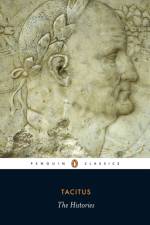
In AD68 Nero's suicide marked the end of the first dynasty of imperial Rome. The following year was one of drama and danger, though not of chaos.In the surviving books of his Histories the barrister-historian Tacitus, writing some thirty years after the events he describes, gives us a detailed account based on excellent authorities. In the 'long but single year' of revolution four emperors emerge in succession: Galba, Otho, Vitellius and Vespasian - who established the Flavian dynasty.Rhiannon Ash stays true to the spirit of Wellesley's prose whilst making the translation more accessible to modern readers.
After a lifetime in business, I ve never been able to develop a set of rules or a step-by-step formula that will guarantee success in anything, much less in a field as dynamic and changing as business. What I can do, however, is talk about how to lose. I guarantee that anyone who follows my formula will be a highly successful loser. The Ten Commandments for Business Failure is a lighthearted cautionary bible for leaders from a hugely admired elder statesman who is sought out for advice by a wide circle of luminaries. Plenty of speakers and writers are happy to dispense advice on how to succeed in business. From football coaches to ex-CEOs to psychologists to preachers, success gurus are everywhere. But none of them can offer any guarantees; the true path to success can t be laid out as a simple step-by-step plan. The same cannot be said of failure, however. Failure is easy. In fact, there are ten serious blunders companies and individuals make over and over again, leading to failure so consistently that the list ought to be written in stone. Don Keough, who has seen and heard a lot in his six decade career, calls them his Ten Commandments for Business Failure. They include such reliable bad advice as Quit Taking Risks, Be Inflexible, Assume Infallibility, Put All Your Faith in Experts, and Be Afraid of the Future.
This ambitious and revelatory collection turns the traditional chronology of anthologies on its head, listing poems according to their first individual appearance in the language rather than by poet.
Aquinas (1224-74) lived at a time when the Christian West was opening up to a wealth of Greek and Islamic philosophical speculation. An embodiment of the thirteenth-century ideal of a unified interpretation of reality (in which philosophy and theology work together in harmony), Aquinas was remarkable for the way in which he used and developed this legacy of ancient thought an achievement which led his contemporaries to regard him as an advanced thinker. Father Copleston's lucid and stimulating book examines this extraordinary man whose influence is perhaps greater today than in his own lifetime and his thought, relating his ideas wherever possible to problems as they are discussed today.
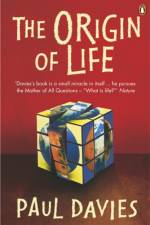
The origins of life remains one of the great unsolved mysteries of science. Growing evidence suggests that the first organisms lived deep underground, in environments previously thought to be uninhabitable, and that microbes carried inside rocks have travelled between Earth and Mars. But the question remains: how can life spring into being from non-living chemicals? THE FIFTH MIRACLE reveals the remarkable new theories and discoveries that seem set to transform our understanding of life's role in the unfolding drama of the cosmos.
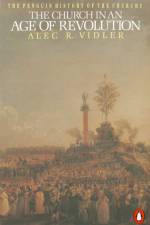
The French Revolution dealt a fatal blow to the alliance of Church and State. The Christian church had to adapt to great changes - from the social upheavals of the Industrial Revolution to the philosophical speculations of Kant's 'Copernican revolution', to Darwin's evolutionary theories. Some Christians were driven to panic and blind reaction, others were inspired to re-interpret their faith; the results of this conflict within the fabric of the Church are still reverberating today. In this masterly appraisal of a doubt-ridden and turbulent period in Christianity Alec Vidler concludes with a discussion of the position of the Church in modern times and expertly answers the question: 'Has the Church stood up to the Age of Revolution?'
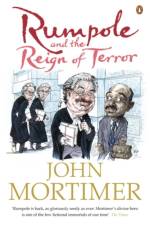
Rumpole and the Reign of Terror - a delightful novel starring John Mortimer's iconic barrister'Rumpole, like Jeeves and Sherlock Holmes, is immortal' P. D James, Mail on Sunday'I thank heaven for small mercies. The first of these is Rumpole' Clive James, ObserverJustice isn't blind - it's just a little short sighted and weak around the knees ...Just in case Rumpole and the Penge Bungalow Murders gave fans the impression that the Great Defender was resting on his laurels, his new case sends him at full sail into our panicky new world. Rumpole is asked to defend a Pakistani doctor who has been imprisoned without charge or trial on suspicion of aiding Al Qaeda. Meanwhile, on the home front, She Who Must Be Obeyed is threatening to share her intimate view of her husband in a tell-all memoir. The result is Rumpole at his most ironic and indomitable, and John Mortimer at his most entertaining.This hilarious novel will be loved by fans of Rumpole and readers of Sherlock Holmes, P.D. James and P.G. Wodehouse.Sir John Mortimer was a barrister, playwright and novelist. His fictional political trilogy of Paradise Postponed, Titmuss Regained and The Sound of Trumpets has recently been republished in Penguin Classics, together with Clinging to the Wreckage and his play A Voyage round My Father. His most famous creation was the barrister Horace Rumpole, who featured in four novels and around eighty short stories. His books in Penguin include: The Anti-social Behaviour of Horace Rumpole; The Collected Stories of Rumpole; The First Rumpole Omnibus; Rumpole and the Angel of Death; Rumpole and the Penge Bungalow Murders; Rumpole and the Primrose Path; Rumpole and the Reign of Terror; Rumpole and the Younger Generation; Rumpole at Christmas; Rumpole Rests His Case; The Second Rumpole Omnibus; Forever Rumpole; In Other Words; Quite Honestly and Summer's Lease.
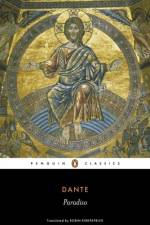
Having plunged to the uttermost depths of Hell and climbed the Mount of Purgatory in parts one and two of the Divine Comedy, Dante ascends to Heaven in this third and final part, continuing his soul s search for God, guided by his beloved Beatrice. As he progresses through the spheres of Paradise he grows in understanding, until he finally experiences divine love in the radiant presence of the deity. Examining eternal questions of faith, desire and enlightenment, Dante exercised all his learning and wit, wrath and tenderness in his creation of one of the greatest of all Christian allegories.
THE COMPLETE HISTORY OF GLOBAL CHANGE FROM 1945 TO THE PRESENT DAY The world since 1945 has witnessed fundamental changes, notably the increasing influence of the West - particularly the USA - in a variety of spheres, the emergence and collapse of the USSR, the end of colonial empire in Asia and Africa and the escalation of wars and other conflicts in the Third World. In this incisive survey T. E. Vadney examines the key events without ever neglecting the underlying trends. He explores therapid changes in the Middle East, the end of apartheid in South Africa and the aims of American foreign policy. He concludes with a new epilogue in which he examines the direction of post-1945 history as the world enters the twenty-first century.
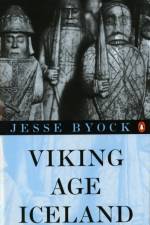
Medieval Iceland was unique amongst Western Europe, with no foreign policy, no defence forces, no king, no lords, no peasants and few battles. It should have been a utopia yet its literature is dominated by brutality and killing. The reasons for this, argues Jesse Byock, lie in the underlying structures and cultural codes of the islands' social order. 'Viking Age Iceland' is an engaging, multi-disciplinary work bringing together findings in anthropology and ethnography interwoven with historical fact and masterful insights into the popular Icelandic sagas, this is a brilliant reconstruction of the inner workings of a unique and intriguing society.
Begun in 1262 AD, Masnavi-ye Ma navi, or spiritual couplets', is thought to be the longest single-authored mystical poem ever written. As the spiritual masterpiece of the Persian Sufi tradition, it teaches how to progress to the ultimate goal of the Sufi path - union with God. Jalaloddin Rumi was a poet and a mystic, but he was first a teacher; in these verses he draws the reader into the complexities of human love and separation and explains the path to divine love through the elimination of self-regard and worldly desires. Drawing on diverse sources from bawdy tales and fables to stories of the prophet Mohammed, these verses are brief in expression yet copious in meaning.
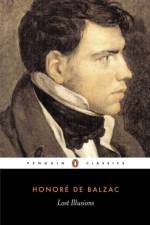
Handsome would-be poet Lucien Chardon is poor and na ve, but highly ambitious. Failing to make his name in his dull provincial hometown, he is taken up by a patroness, the captivating married woman Madame de Bargeton, and prepares to forge his way in the glamorous beau monde of Paris. But Lucien has entered a world far more dangerous than he realized, as Madame de Bargeton's reputation becomes compromised and the fickle, venomous denizens of the courts and salons conspire to keep him out of their ranks. Lucien eventually learns that, wherever he goes, talent counts for nothing in comparison to money, intrigue and unscrupulousness. Lost Illusions is one of the greatest novels in the rich procession of the Com die humaine, Balzac's panoramic social and moral history of his times.
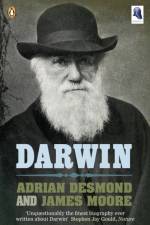
This biography of Charles Darwin attempts to capture the private unknown life of the real man - the gambling and gluttony at Cambridge, his gruelling trip round the globe, his intimate family life, worries about persecution and thoughts about God. Central to all of this, his pioneering efforts on the theory of evolution now that recent studies have overturned the commonplace views of Darwin that have held for more than a century.
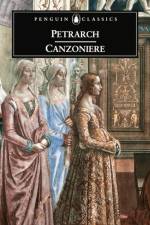
The 'Canzoniere', a sequence of sonnets and other verse forms, were written over a period of about 40 years. They describe Petrarch's intense love for Laura, whom he first met in Avignon in 1327, and her effect on him after she died in 1348. The collection is an examination of the poet's growing spiritual crisis, and also explores important contemporary issues such as the role of the papacy and religion.
Abonner på vårt nyhetsbrev og få rabatter og inspirasjon til din neste leseopplevelse.
Ved å abonnere godtar du vår personvernerklæring.