













Gjør som tusenvis av andre bokelskere
Abonner på vårt nyhetsbrev og få rabatter og inspirasjon til din neste leseopplevelse.
Ved å abonnere godtar du vår personvernerklæring.Du kan når som helst melde deg av våre nyhetsbrev.

The Poincare Conjecture tells the story behind one of the world s most confounding mathematical theories. Formulated in 1904 by Henri Poincare, his Conjecture promised to describe the very shape of the universe, but remained unproved until a huge prize was offered for its solution in 2000. Six years later, an eccentric Russian mathematician had the answer.Here, Donal O Shea explains the maths behind the Conjecture and its proof, and illuminates the curious personalities surrounding this perplexing conundrum, along the way taking in a grand sweep of scientific history from the ancient Greeks to Christopher Columbus. This is an enthralling tale of human endeavour, intellectual brilliance and the thrill of discovery.
Considered by Andr Gide to be one of the ten greatest novels in the French language, Germinal is a brutal depiction of the poverty and wretchedness of a mining community in northern France under the second empire. At the centre of the novel is Etienne Lantier, a handsome 21 year-old mechanic, intelligent but with little education and a dangerous predisposition to murderous, alcoholic rage. Germinal tells the parallel story of Etienne's refusal to accept what he appears destined to become, and of the miners' difficult decision to strike in order to fight for a better standard of life.
'A kind of magical realism for science fiction ... Quite, quite brilliant' TorPart pulp adventure, part otherworldly meditation, this is the story of Trafalgar Medrano: intergalactic trader and lover of bitter coffee and black cigarettes. In the bars and caf s of Rosario, Argentina, he recounts tall tales of his space escapades - involving, among other things, time travel and dancing troglodytes.'A unique brand of science fiction ... unlike anything I've ever read' Los Angeles Review of Books
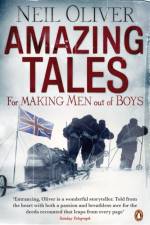
Captain Robert Falcon Scott didn't start out life as a hero. In fact, as a boy and young man he was considered small, frail and shy. So what was it that turned this ordinary man into a legend?
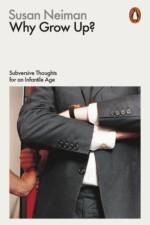
In Why Grow Up, the latest volume in the Philosophy in Transit series, world-renowned philosopher Susan Neiman looks at growing up as an ideal with urgent relevance todayBecoming an adult today can seem a grim prospect. As you grow up, you are told to renounce most of the hopes and dreams of your youth, and resign yourself to a life that will be a pale dilution of the adventurous, important and enjoyable life you once expected. But who wants to do any of that? No wonder we live in a culture of rampant immaturity, argues internationally-renowned philosopher Susan Neiman, when maturity looks so boring.In Why Grow Up, Neiman explores the forces that are arrayed against maturity, and shows how philosophy can help us want to grow up. Travel, both literally and as a metaphor, has been seen as a crucial step to coming of age by thinkers as diverse as Kant, Rousseau, Hume and Simone de Beauvoir. Neiman discusses childhood, adolescence, sex, and culture, and asks how the idea of travel can help us build a model of maturity that makes growing up a good option and leaves space in our culture for grown-ups. Refuting the widespread belief that the best time of your life is the decade between sixteen and twenty-six, she argues that being grown-up is itself an ideal: one that is rarely achieved in its entirety, but all the more worth striving for.Susan Neiman is an American moral philosopher who has taught at Yale and Tel Aviv University. She currently lives in Germany, where she is the Director of the Einstein Forum in Potsdam.
PRE-ORDER BOOK 11 OF THE LADYBIRD EXPERT HISTORY OF THE SECOND WORLD WAR, FROM AWARD-WINNING HISTORIAN JAMES HOLLANDWhy were British troops in Burma?What was The Defence of the Admin Box?How did the British defeat the Japanese troops?THE BURMA CAMPAIGN was one of the most prolonged campaigns in the South-East Asian theatre of war, but it was also one of the most dramatic.Against Japanese troops, and monsoon weather, the Allies finally prevailed, demonstrating to the world that the Axis powers could be defeated in the East. BRITAIN'S TURNING POINT IN THE WAR IN THE EASTWritten by historian, author and broadcaster James Holland, Burma 1943-1944 is an essential, accessible introduction to Britain's triumph in the East.Discover more titles in the Ladybird Expert series:D-DayThe Desert WarGenetics
Part of the ALL-NEW LADYBIRD EXPERT SERIES- Why did the Allies attack on D-Day?- How did the Allies pick Normandy as a target?- What was Operation Overload, the second front against the Nazis?JUNE 6 1944: D-Day was a deciding conflict in World War II. But the invasion was not a straightforward attack. From feeding Nazi spies false information on the attack, to developing new technology like the Mulberry harbours, D-Day changed the course of the War for good. THE LARGEST SEABORNE INVASION IN HISTORYWritten by historian, author and broadcaster James Holland, D-DAY 1944 is an essential introduction to the naval invasion that began the liberation of Western Europe from the Nazis.
Abonner på vårt nyhetsbrev og få rabatter og inspirasjon til din neste leseopplevelse.
Ved å abonnere godtar du vår personvernerklæring.