




Gjør som tusenvis av andre bokelskere
Abonner på vårt nyhetsbrev og få rabatter og inspirasjon til din neste leseopplevelse.
Ved å abonnere godtar du vår personvernerklæring.Du kan når som helst melde deg av våre nyhetsbrev.

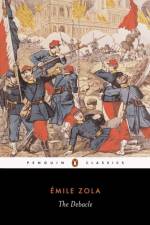
Conservative and working-class, Jean Macquart is an experienced, middle-aged soldier in the French army, who has endured deep personal loss. When he first meets the wealthy and mercurial Maurice Levasseur, who never seems to have suffered, his hatred is immediate. But after they are thrown together during the disastrous Franco-Prussian war of 1870-71, the pair are compelled to understand one other. Forging a profound friendship, they must struggle together to endure a disorganised and brutal war, the savage destruction of France's Second Empire and the fall of Napoleon III. One of the greatest of all war novels, The Debacle is the nineteenth novel in Zola's great Rougon-Macquart cycle. A forceful and deeply moving tale of close friendship, it is also a fascinating chronicle of the events that were to lead, in the words of Zola himself, to 'the murder of a nation'.
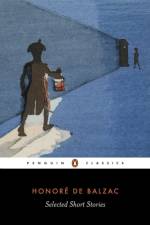
One of the greatest French novelists, Balzac was also an accomplished writer of shorter fiction. This volume includes twelve of his finest short stories - many of which feature characters from his epic series of novels the Comedie Humaine. Compelling tales of acute social and psychological insight, they fully demonstrate the mastery of suspense and revelation that were the hallmarks of Balzac's genius. In The Atheist's Mass, we learn the true reason for a distinguished atheist surgeon's attendance at religious services; La Grande Breteche describes the horrific truth behind the locked doors of a decaying country mansion, while The Red Inn relates a brutal tale of murder and betrayal. A fascinating counterpoint to the renowned novels, all the stories collected here stand by themselves as mesmerizing works by one of the finest writers of nineteenth-century France.
Handsome would-be poet Lucien Chardon is poor and naive, but highly ambitious. Failing to make his name in his dull provincial hometown, he is taken up by a patroness, the captivating married woman Madame de Bargeton, and prepares to forge his way in the glamorous beau monde of Paris. But Lucien has entered a world far more dangerous than he realized, as Madame de Bargeton's reputation becomes compromised and the fickle, venomous denizens of the courts and salons conspire to keep him out of their ranks. Lucien eventually learns that, wherever he goes, talent counts for nothing in comparison to money, intrigue and unscrupulousness. Lost Illusions is one of the greatest novels in the rich procession of the Comedie humaine, Balzac's panoramic social and moral history of his times.
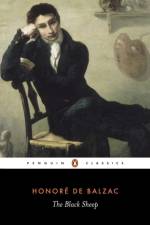
Philippe and Joseph Bridau are two extremely different brothers. The elder, Philippe, is a superficially heroic soldier and adored by their mother Agathe. He is nonetheless a bitter figure, secretly gambling away her savings after a brief but glorious career in Napoleon's army. His younger brother Joseph, meanwhile, is fundamentally virtuous - but their mother is blinded to his kindness by her disapproval of his life as an artist. Foolish and prejudiced, Agathe lives on unaware that she is being cynically manipulated by her own favourite child, but will she ever discover which of her sons is truly the black sheep of the family? A dazzling depiction of the power of money and the cruelty of life in nineteenth-century France, The Black Sheep compellingly explores is a compelling exploration of the nature of deceit.
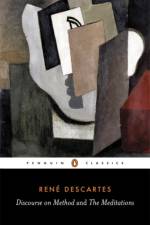
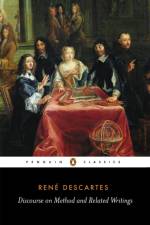
Rene Descartes was a central figure in the scientific revolution of the seventeenth century. In his Discourse on Method he outlined the contrast between mathematics and experimental sciences, and the extent to which each one can achieve certainty. Drawing on his own work in geometry, optics, astronomy and physiology, Descartes developed the hypothetical method that characterizes modern science, and this soon came to replace the traditional techniques derived from Aristotle. Many of Descartes' most radical ideas - such as the disparity between our perceptions and the realities that cause them - have been highly influential in the development of modern philosophy.
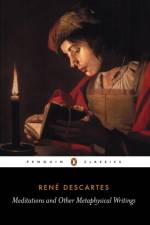
Of all the works of the man claimed by many as the father of modern philosophy, the MEDITATIONS, first published in 1641, must surely be Rene Descartes' masterpiece. This volume consists of not only a new translation of the original Latin text and the expanded objections and replies, but also includes selected correspondence and other metaphysical writings from the period 1641-49.
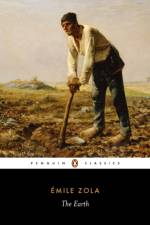
When Jean Macquart arrives in the peasant community of Beauce, where farmers have worked the same land for generations, he quickly finds himself involved in the corrupt affairs of the local Fouan family. Aging and Lear-like, Old Man Fouan has decided to divide his land between his three children: his penny-pinching daughter Fanny, his eldest son - a far from holy figure known as 'Jesus Christ' - and the lecherous Buteau, Macquart's friend. But in a community where land is everything, sibling rivalry quickly turns to brutal hatred, as Buteau declares himself unsatisfied with his lot. Part of the vast Rougon-Macquart cycle, The Earth was regarded by Zola as his greatest novel. A fascinating portrayal of a struggling but decadent community, it offers a compelling exploration of the destructive nature of human ignorance and greed
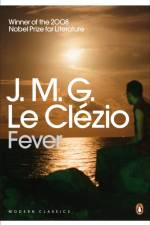
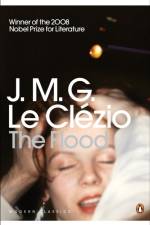
In these nine unforgettable and impressionistic 'tales of little madness', the Nobel Prize-winning author Le Clezio explores how the physical sensations we experience every day can be as strong as feelings of love or hate, with their power to bring chaos to our lives. In 'The Day that Beaumont became Acquainted with his Pain', a man with toothache spends the night seeking ways to disown his throbbing jaw; in 'Fever', Roch finds his mind transported by sunstroke; while in 'A Day of Old Age' little Joseph tries to comprehend the physical suffering of a dying old woman. Set in a timeless, spaceless universe, these experimental and haunting works portray the landscape of the human consciousness with dazzling verbal dexterity and power.
Fran ois Besson listens to a tape recording of a girl contemplating suicide. Drifting through the days in a provincial city, he thoughtlessly starts a fire in his apartment, attends confession, and examines, with great intentness but without affection, a naked woman he wakes beside. And, as Besson moves through an ugly and threatening rain, his thoughts eventually lead to violence, first turned outward and then directed languidly against himself.
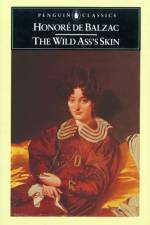
Balzac is concerned with the choice between ruthless self-gratification and asceticism, dissipation and restraint, in a novel that is powerful in its symbolism and realistic depiction of decadence.
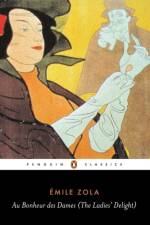
Now the basis for the major BBC tv adaptation The Paradise, this is a lavish drama and a timeless commentary on consumerism. The Penguin Classics edition of emile Zola's The Ladies' Delight is based on an acclaimed, vivid and modern translation by Robin Buss, who has also introduced the novel.The Ladies' Delight is the glittering Paris department store run by Octave Mouret. He has used charm and drive to become director of this mighty emporium, unscrupulously exploiting his young female staff and seducing his lady customers with luxurious displays of shimmering silks, satins, velvets and lace. Then Denise Baudu, a na ve provincial girl, becomes an assistant at the store - and Mouret discovers that he in turn can also be enchanted. With its greedy customers, gossiping staff and vibrant sense of theatre, The Ladies' Delight (Au Bonheur des Dames in the original French) is one of the most richly exciting novels in Zola's Les Rougon-Macquart cycle.This edition also contains a bibliography, introduction, chronology and explanatory notes.Emile Zola (1840-1902) was the leading figure in the French school of naturalistic fiction. His principal work, Les Rougon-Macquart, is a panorama of mid-19th century French life, in a cycle of 20 novels which Zola wrote over a period of 22 years, including Au Bonheur des Dames (1883), The Beast Within (1890), Nana (1880), and The Drinking Den (1877).'A complete page-turner about the consumer society, greed, fashion and instant gratification'India Knight'A fine translation'The Times Literary Supplement
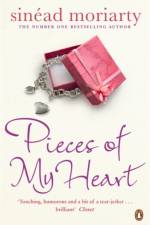
Sinead Moriarty's sixth novel, Pieces of My Heart, is a serious look at a dreadful disease, but it's never a downer because it's filled with Sinead's trademark warmth, humour and compassion. With her thoughtful and insightful analysis of what anorexia can do to a family, Sinead brings to Pieces of My Heart many of the qualities of a Jodi Picoult novel, while still managing to balance the darkness with a lightness of touch that compares with the writing of Marian Keyes.Ava is juggling a life that seems to have too many pieces. First, there are her chalk-and-cheese daughters, Alison the angel and Sarah the tearaway.Then there's husband Paul. Unfortunately, he seems more interested in work than home - which might explain why her sex life is practically on life support. That certainly can't be said about her Viagra-popping Dad, a loveable rogue who is determined to grow old disgracefully.She would envy her best friend Sally, sassy single singleton-about-town, if she didn't know that behind her polished exterior Sally is as vulnerable as a kitten.Somewhere in there is Ava herself, trying to do her best for all of them but lately feeling like she's running on empty. But that's before she notices Alison is in deep trouble. Now she knows there's no such thing as empty - not if she is to hold on to the most precious pieces of her heart ...Sinead Moriarty's novels have sold over half a million copies in Ireland and the UK and she is a four times nominee for the popular fiction Irish Book Award. She has won over readers and critics telling stories that are funny, humane, moving and relevant to modern women. Pieces of My Heart is Sinead at her very best.Sinead Moriarty lives with her family in Dublin. Her other titles are: The Baby Trail; A Perfect Match; From Here to Maternity; In My Sister's Shoes; Keeping It In the Family (also titled Whose Life is it Anyway?), Me and My Sisters and This Child of Mine.
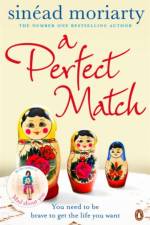
In her second novel, A Perfect Match, Sinead Moriarty tells the story of Emma Hamilton who embarks on the path to adopting a baby when she and her husband can't conceive. It manages to be both hilarious and incredibly moving is comparable to the writing of Marian Keyes in its ability to balancing of light and shade.After two years of being deafened by the TICKTOCK of her biological clock and tormented by Mother Nature's refusal to grant her a baby, Emma Hamilton decides to go for the instant solution: finding a Russian baby in need of a home.But Emma hasn't reckoned on the route to adoption being so complicated. Between proving that she's fit to be a mother (by inventing an unblemished past and discovering an unsuspected talent for housekeeping), driving her long-suffering husband insane with madcap schemes to make them the perfect would-be parents (a few Russian verbs a night and they'll be fluent in no time), and tripping over red tape every step of the way (who knew social workers could be so terrifying?) Emma finds out that adoption is far from the easy option - and that perfection has very little to do with finding the perfect match.Sinead Moriarty's novels have sold over half a million copies in Ireland and the UK and she is a four times nominee for the popular fiction Irish Book Award. She has won over readers and critics telling stories that are funny, humane, moving and relevant to modern women. A Perfect Match is a follow-up to The Baby Trail, but it also stands on its own as a complete story.
Sinead Moriarty poured all her experiences in trying to get pregnant for the first time into her debut novel The Baby Trail. Her heroine Emma Hamilton discovers that the road to conception is far from straightforward and her story is a moving and funny exploration of an experience so central to so many women's lives. The novel established Sinead as a major talent in the tradition of Marian Keyes.TicktockticktockTICKTOCK ... That's Emma Hamilton's biological clock you can hear. She wants a baby and she wants one NOW. But when Mother Nature refuses to play ball, Emma decides to give her a prod - or two.Soon her life is a roller-coaster of post-sex handstands (you can't argue with gravity), hormone-inducing (sanity-reducing) drugs and a veritable army of probing specialists (torturers, more like). It's out with the booze and spontaneous sex, in with green tea and ovulation tests.Emma couldn't have conceived that the road to pregnancy would turn into the mother of all journeys. But she's finding out that once you're on the baby trail, nothing is sacred - and one way or another, life will never be the same again ...Sinead Moriarty's novels have sold over half a million copies in Ireland and the UK and she is a four times nominee for the popular fiction Irish Book Award. She has won over readers and critics telling stories that are funny, humane, moving and relevant to modern women. The Baby Trail was Sinead's first novel and her distinctive voice, and trademark mix of light and shade, announced that a fabulous new talent had arrived.
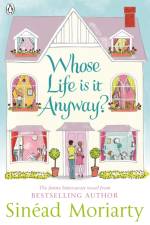
Also published under the title Keeping It In the Family.In her fifth novel, Whose Life Is It Anyway?, Sinead Moriarty has done it again: taken a complex topic - what happens when a young woman falls in love with someone dramatically different than the kind of man her family would have expected - and created an insightful, gripping and moving story filled with delightfully sparky characters, plenty of straight-talking, and all her trademark fun and humour. In balancing of light and shade, pathos and comedy, Sinead manages to pull off a unique feat - a story that combines the provocative qualities of a Jodi Picoult story with the warmth and humour of Marian Keyes.It's tricky for Niamh O'Flaherty, growing up in a North London home that's a shrine to all things Irish. But it's even trickier being an adult and realizing that her family expects her to settle down with a nice Irish lad, especially now that she's living in Dublin.When Niamh finally meets the love of her life he is the last person she would expect to fall for her. Pierre is older and an intellectual, but she loves his ability to laugh at himself, his calmness and strength of character, and, of course, his stunning looks.There's just one problem: if Pierre's parents - Jean and Fleur - are sniffy about their pride and joy hooking up with a girl who writes a fluffy newspaper column, her parents, Mick and Annie, are going to go ballistic when they hear that their daughter intends to marry someone who couldn't be less Irish if he tried . . .Sinead Moriarty's novels have sold over half a million copies in Ireland and the UK and she is a four times nominee for the popular fiction Irish Book Award. She has won over readers and critics telling stories that are funny, humane, moving and relevant to modern women. Whose Life Is It Anyway? is Sinead at her very best. Sinead Moriarty lives with her family in Dublin. Her other titles are: The Baby Trail; A Perfect Match; From Here to Maternity; In My Sister's Shoes; Pieces of My Heart; Me and My Sisters and This Child of Mine.
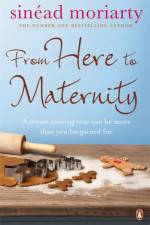
Delicious, funny and touching, From Here to Maternity is Sinead Moriarty's final installment of Emma Hamilton's struggles to become a mother.'Brilliantly eccentric and utterly charming - we love this!' OK Magazine From Here to Maternity tells the story of Emma Hamilton who embarks on the path to adopting a baby when she and her husband can't conceive. Just as Emma Hamilton and her husband James become parents of an eight-month-old Russian baby, Yuri, they find out that Emma is pregnant. Which is a bit of a shock since they had come to terms with not being able to have children. Emma discovers that having her dreams come true brings a whole new set of problems as she is faced with well-meaning friends and family - and not-so-well-meaning maternity Nazis - telling her how to be a mother. Only her wonderful calm long-suffering husband, a mad family that makes her look like the down-to-earth sensible one, and fantastic friends whose lives are even crazier than her own, keep Emma from losing it. 'Enjoyable and endearing' Closer '[Moriarty has] an unexpected flair for side-splitting humour and fun' Evening Herald
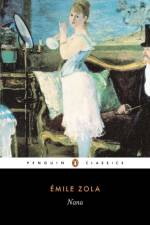
Born to drunken parents in the slums of Paris, Nana lives in squalor until she is discovered at the The tre des Varietes. She soon rises from the streets to set the city alight as the most famous high-class prostitute of her day. Rich men, Comtes and Marquises fall at her feet, great ladies try to emulate her appearance, lovers even kill themselves for her. Nana's hedonistic appetite for luxury and decadent pleasures knows no bounds - until, eventually, it consumes her. Nana provoked outrage on its publication in 1880, with its heroine damned as 'the most crude and bestial sort of whore', yes the language of the novel makes Nana almost a mythical figure: a destructive force preying on a corrupt society.
This is the second of a new two-volume edition of the works of Descartes in Penguin Classics. This volume is designed for students who approach Descartes from the point of view of his philosophy of science. Includes DISCOURSE ON METHOD, the most accessible and well-known of his discussions of scientific method; the first seven chapters of the earlier, unpublished work, THE WORLD; as well as a selection of Descartes' correspondence and his replies to his critics.
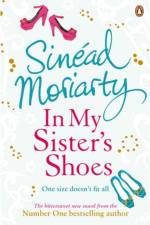
In one of the many fantastic reviews for Sinead Moriarty's fourth novel, In My Sister's Shoes, the reviewer praised Sinead's ability to apply 'the light tender touch to dark, painful subjects'. It's a perfect description of how Sinead tells the story of a younger sister stepping in to help out when her older sister is diagnosed with cancer. In a similar way to Marian Keyes, Sinead manages to balance light and dark with wonderful finesse, warmth and humour.Kate O'Brien is thirty and has very little to think about except trying to keep her balance as she totters up London's media-land ladder.Fiona O'Brien is Kate's responsible older sister - with a husband, twin boys, a dog and now ... a life-changing problem.It's a problem that means Kate going back to Dublin. Pronto. There she finds herself stepping into Fiona's shoes - and discovering that she's definitely not cut out to be a domestic goddess. On top of that, the ex she thought she'd got over years ago turns up to haunt her.Will either of the O'Brien sisters survive? And even if they do, can either of them slip back into their old shoes ever again?Sinead Moriarty's novels have sold over half a million copies in Ireland and the UK and she is a four times nominee for the popular fiction Irish Book Award. She has won over readers and critics telling stories that are funny, humane, moving and relevant to modern women. In My Sister's Shoes is Sinead at her very best.Sinead Moriarty lives with her family in Dublin. Her other titles are: The Baby Trail; A Perfect Match; From Here to Maternity; Keeping It In the Family (also titled Whose Life Is It Anyway?); Pieces of My Heart; Me and My Sisters and This Child of Mine.
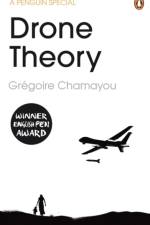
Drone Theory is Gregoire Chamayou's poignant and sharply argued polemic against US drone warfare.In 2011 alone, the US deployed one drone strike every four days in Pakistan. Drone Theory is a rigorous polemic against the increasing use of robot warfare around the world. Drawing on philosophical debate, moral lessons from Greek mythology and transcripts of conversations between drone operators, Drone Theory re-evaluates the socio-political impact of drone warfare on the world - and its people. Chamayou takes us through Nevada, Pakistan and arresting philosophical terrain to reveal how drones are changing the landscape of war theory and to highlight the profound moral implications of our own silence in the face of drone warfare.Born in 1976, Gregoire Chamayou is a philosopher at the Centre National de la Recherche Scientifique in Paris and the author of Les corps vils and Manhunts: A Philosophical History. Chamayou also lectures at Universite de Paris Ouest, and has written for Le Monde Diplomatique among other publications. Janet Lloyd has translated over seventy books from French to English and has twice been awarded the Scott Moncrieff prize.
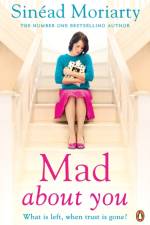
'A perfect mix of intrigue, emotion and humour, this is a really gripping and enjoyable read ****' Closer'The inevitable comparisons with Marian Keyes are justified and well deserved - Moriarty's characters are likeable, well developed and funny ****' HeatSinead Moriarty's riveting novel, Mad About You, makes you stop and think about the importance of trust in relationships - how fragile it can be, how easily damaged, how hard to repair. Sinead combines the storytelling genius of Jodi Picoult, and the compassion and humour of Marian Keyes, in a gripping story of contemporary marriage. Emma and James Hamilton have weathered lots of storms in their ten-year marriage. From the heartbreak of infertility, to the craziness of then becoming parents to two babies in one year, to coping with James losing his job, somehow they have always worked as a team.However, the pressure of moving for James's new job puts them under stress like never before. So when James starts getting texts from a stranger - texts that show startling insights into their lives - Emma is not sure what to think. She is far from home, isolated and before long finds herself questioning everything about their relationship.Somehow she has to get a grip, but how can she do that when a stranger seems set on driving Emma out of her home and her marriage?'One of the brightest voices in modern women's fiction' Bella
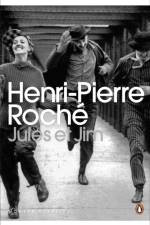
Based on a real-life love triangle and later made into Fran ois Truffaut's famous New Wave film, Henri-Pierre Roche's Jules et Jim is a paean to youth set in free-spirited Paris before the First World War. Jules and Jim live a carefree, bohemian existence: they write in cafes, travel when the mood takes them, and share the women they love without jealousy. Like Lucie, flawless, an abbess, and Odile, impulsive, mischievous, almost feral. But it is Kate - with a smile the two friends have determined to follow always, but capricious enough to jump in the Seine from spite - who steals their hearts most thoroughly. Henri-Pierre Roche was in his mid-seventies when he wrote this, his autobiographical debut novel. The inspiration for the legendary film directed by Fran ois Truffaut, it captures perfectly with excitement and great humour the tenderness of three people in love with each other and with life.This Penguin Modern Classics edition is translated by Patrick Evans with an introduction by Agn s C. Poirier and an afterword by Fran ois Truffaut.Henri-Pierre Roche (1879-1959) was born in Paris. After studying art at the Academie Julian, he became a journalist and art dealer, mixing with the avant-garde artistic set; his friends and acquaintances included the artists Michel Duchamp and Francis Picabia, and in 1905 he introduced Gertrude Stein to Pablo Picasso. In 1916, following his discharge from the French army, Roche went to New York and set up a Dadaist magazine, The Blind Man, with Duchamp and the artist Beatrice Wood. It wasn't until his seventies that he wrote the semi-autobiographical Jules et Jim (1953); his second novel, Les deux anglaises et le continent, was published in 1956.If you enjoyed Jules et Jim, you might like Raymond Radiguet's The Devil in the Flesh, also available in Penguin Modern Classics.'A perfect hymn to love and perhaps to life'Fran ois Truffaut, director of Jules et Jim and The 400 Blows
In 1842, eight years before his death, Balzac described Ursule Mirouet as the masterpiece of all the studies of human society that he had written; he regarded the book as 'a remarkable tour de force'.An essentially simple tale about the struggle and triumph of innocence reviled, Ursule Mirouet is characterized by that wealth of penetrating observation so readily associated with Balzac's work. The twin themes of redemption and rebirth are illuminated by a consistently passionate rejection of both philosophic and practical materialism in favour of love. In this case love is aided by supernatural intervention, which itself effectively illustrates Balzac's life-long fascination with the occult.
A fascinating recreation of the world of one of England's most charismatic monarchs, from award-winning author and historian Richard BarberThe destruction of the French army at Crecy in 1346 and the subsequent siege and capture of Calais marked a new era in European history. The most powerful, glamorous and respected of all western monarchies had been completely humiliated by England, a country long viewed either as a chaotic backwater or a mere French satellite.The young Edward III's triumph would launch both countries, as we now know, into a grim cycle of some 90 years of further fighting ending with English defeat, but after Crecy anything seemed possible - Edward's claim to be King of France could be pressed home and, in any event, enormous rewards of land, treasure and prestige were available both to the king and to the close companions who had made the victory possible. It was to enshrine this moment that Edward created one of the most famous of all knightly orders, the Company of the Garter.Barber writes about both the great campaigns and the individuals who formed the original membership of the Company - and through their biographies makes the period tangible and fascinating. This is a book about knighthood, battle tactics and grand strategy, but it is also about fashion, literature and the privates lives of everyone from queens to freebooters. Barber's book is a remarkable achievement - but also an extremely enjoyable one.Reviews:'Barber [has an] infectious passion for and deep knowledge of his subject matter ... elegant prose and rigorous historical analysis ... a valuable and thorough addition to the body of work on this most impressive of English monarchs' Sunday Times'In Edward III and the Triumph of England [Barber] has written the kind of book that the king would have enjoyed: full of battles, glitter and ceremony ... he has an original eye and an elegant pen' Jonathan Sumption, Literary Review'Barber share's his hero's love of chivalry ... The book sparkle[s] with some of Edward's own glitz' Telegraph'This absorbing book is layered rather than linear, sifting with uncommon sensitivity through challenging sources to test the boundaries of what we can and cannot know ... We discover the complexity of the world in which Edward and his commanders lived' Helen Castor, The TimesAbout the author:Richard Barber has had a huge influence on the study of medieval history and literature, both as a writer and as a publisher. His major works include The Knight and Chivalry (winner of the Somerset Maugham Award), Edward Prince of Wales and Aquitaine, The Penguin Guide to Medieval Europe and The Holy Grail: The History of a Legend. He lives in East Anglia.
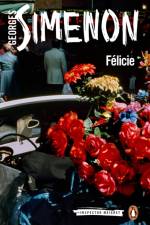
'The father of contemporary European detective fiction' Ann Cleeves In his mind's eye he would see that slim figure in the striking clothes, those wide eyes the colour of forget-me-not, the pert nose and especially the hat, that giddy, crimson bonnet perched on the top of her head with a bronze-green feather shaped like a blade stuck in it . . . Felicie had given him more trouble than all the 'hard' men who had been put behind bars.This novel has been published in a previous translation as Maigret and the Toy Village.'Compelling, remorseless, brilliant' John Gray'A supreme writer . . . unforgettable vividness' Independent
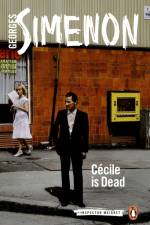
'The father of contemporary European detective fiction' Ann Cleeves Poor Cecile! And yet she was still young. Maigret had seen her papers: barely twenty-eight years old. But it would be difficult to look more like an old maid, to move less gracefully, in spite of the care she took to be friendly and pleasant. Those black dresses that she must make for herself from bad paper patterns, that ridiculous green hat!In the dreary suburbs of Paris, the merciless greed of a seemingly respectable woman is unearthed by her long suffering niece, and Maigret discovers the far-reaching consequences of their actions.This novel has been published in a previous translation as Maigret and the Spinster.'Compelling, remorseless, brilliant' John Gray'A supreme writer . . . unforgettable vividness' Independent
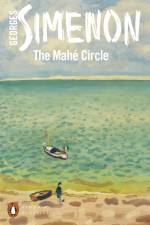
'Powerful . . . unputdownably gripping' Guardian'The island itself. Its throbbing heat as if in a belljar under the sun, the scorpion in his son's bed, the deafening sound of cicadas'During his first holiday on the island of Porquerolles Dr Mahe caught a glimpse of something irresistible. As the memory continues to haunt him, he falls prey to a delusion that may offer an escape from his conventional existence - or may destroy him. This is the first English translation of The Mahe Circle, Simenon's dark, malevolent depiction of an ordinary man trapped in mundanity and consumed by obsession. 'Extraordinary . . . Simenon is one of the most important writers of the 20th century' Independent
A new translation of Georges Simenon's gripping novel set in an insular fishing community, book eight in the new Penguin Maigret series.It was indeed a photograph, a picture of a woman. But the face was completely hidden, scribbled all over in red ink. Someone had tried to obliterate the head, someone very angry. The pen had bitten into the paper. There were so many criss-crossed lines that not a single square millimetre had been left visible.On the other hand, below the head, the torso had not been touched. A pair of large breasts. A light-coloured silk dress, very tight and very low cut.Sailors don't talk much to other men, especially not to policemen. But after Captain Fallut's body is found floating near his trawler, they all mention the Evil Eye when they speak of the Ocean's voyage.Penguin is publishing the entire series of Maigret novels in new translations. This novel has been published in a previous translation as The Sailors' Rendezvous.'Compelling, remorseless, brilliant' John Gray'One of the greatest writers of the twentieth century . . . Simenon was unequalled at making us look inside, though the ability was masked by his brilliance at absorbing us obsessively in his stories' Guardian 'A supreme writer . . . unforgettable vividness' Independent
One of Voltaire's earliest tales, Zadig is set in the exotic East and is told in the comic spirit of Candide; L'Ingenu, written after Candide, is a darker tale in which an American Indian records his impressions of France
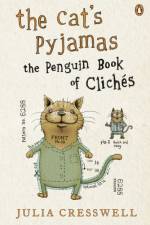
A fascinating, thematic exploration of cliches from as the actress said to the bishop to zero hour, explaining what they are and where they ve come from. Julia Cresswell has taken her best-selling dictionary of cliches ( Sumptuous A mine of information. Guardian) back to the drawing board and has created a book, packed with famous (and infamous) quotations and memorable information, that will change the way you see English.
Abonner på vårt nyhetsbrev og få rabatter og inspirasjon til din neste leseopplevelse.
Ved å abonnere godtar du vår personvernerklæring.