






















Gjør som tusenvis av andre bokelskere
Abonner på vårt nyhetsbrev og få rabatter og inspirasjon til din neste leseopplevelse.
Ved å abonnere godtar du vår personvernerklæring.Du kan når som helst melde deg av våre nyhetsbrev.

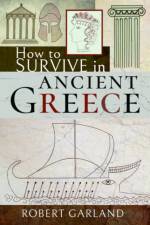
Focussing on Athens in 490-323 BCE, How to Survive in Ancient Greece is ex-pat's guide to living in the ancient city. Covers all areas of everyday life in this ancient civilisation, from religious beliefs and travel through to what to wear.
Recipes and remedies from Lady Sabine Winn's receipt books from the celebrated Nostell Priory Archive, published for the first time. Beautifully illustrated with period prints, drawings and documents, as well as specially commissioned vignettes by author, genealogist and graphic artist Caroline Rochford.
Nine armies of 27 divisions of the Communist Chinese People's Volunteer Army, numbering 250,000 troops, launch a night attack along a 40-mile front of the US Eighth Army.
How photography and cameras began; the difficulties of using early cameras in wartime.
Britannia Airways Corporation was established in 1961 and went on to become the world's largest holiday airline. It ceased operations on 1 November 2005, when, having been taken over, it was rebranded - today it remains as part of Thomason Airways.
The first detailed study of Captain Cook's search for the Unknown Southern Continent - Antarctica. Brings together accounts of his three Antarctic journeys into a single volume.
Fascinating insight into the French experience of the battle and their view of their defeat.
Communist China enters the Korean War on 26 October 1950, when elements of the Chinese People's Liberation Army ambush and overpower UN forces at Onj?ng in North Korea. For the first time UN air superiority is challenged as Chinese MiG-15 jet fighters attack American aircraft south of the Yalu River in MiG Alley'.
Covers the Armies of Classical Greece, from the Persian Wars to the rise of Macedon. Examines the equipment, organization and tactics of the famous hoplite heavy infantry that dominated warfare in this period.
Artefacts are used to understand the lives of people living in the frontier communities of Hadrian's Wall. The first time objects from collections across the Wall have been combined in one volume. Heavily-illustrated with extended captions.
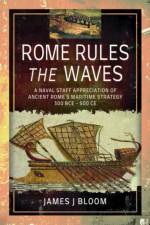
The commonly-held view of Rome's naval history is that it essentially ended with the defeat of Antony and Cleopatra's fleet at Actium in 31 BC, which left Rome with no rivals at sea just as the Republican period gave to the Empire. There were no more big naval battles so, this view would have it, Rome's navy was scarcely needed and its role was of little significance to the strategy of the Empire. James J Bloom rams this point of view below the waterline in his reappraisal of the crucial role of the Roman imperial navy. The author (following the line of preeminent naval theoreticians, Alfred Mahan and Sir Julian Corbett) takes the view that sea power is not merely about naval engagements. In its deeper sense, sea power is the steadfast exertion of command of the sea lanes to project trade, suppress piracy, transport troops and supplies and protect land-based military garrisons and expeditions. In effect, this book is a grand-strategical survey of Roman naval power as an instrument to support Roman imperial policy. In contrast to other works on the subject, Bloom argues that modern naval strategic theory can be usefully applied to Roman naval operations.The geography of their empire determined that the Romans would move most of their military supplies by water. During both the Republican and Imperial periods, nearly all of the provinces had extensive coasts alongside the Mediterranean, the Black Sea or the Atlantic Ocean. These interconnected seaways gave the Romans a distinct advantage over their adversaries around the perimeter, who generally had to utilize coasts adjacent to or interdicted by Roman maritime control. As Roman land power threaded along the Black Sea and Atlantic shorelines, major river and estuarine systems became a significant component of this web of vital waterways. Amphibious reach was an essential element of Roman sea power in guarding the wet flanks of the legions and ferrying troops to threatened choke points. Appendices will include scale drawings of the various ship types discussed in the text with their characteristics displayed in tabular form, several maps illustrating the maritime factors of the empire, and a resume of maritime exploration and discoveries in Roman times.
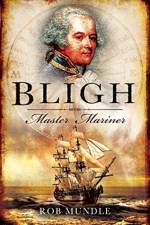
The Eighteenth Century was an era when brave mariners took their ships beyond the horizon in search of an unknown world. Those chosen to lead these expeditions were exceptional navigators, men who had shown brilliance as they ascended the ranks in the Royal Navy. They were also bloody good sailors.
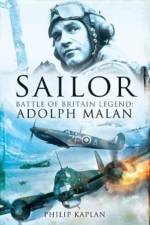
'I do not think that Malan could join a squadron without improving it, however good it was. Not by sword-waving, but by a strength of mind and integrity that are at once recognisable and effective...he was the best pilot of the War' - Air Commodore Al Deere, C.B.E., D.S.O., D.F.C.
First time full collection of Despatches reports have been published. Unique insight into what happened from those in command.
Fascinating insight into Hitler's obsession with and use of the Berchtesgadener region as his Southern HQ. Superb, new and, for the most part, previously unseen images coupled with informative captions and additional text.
Strategic, operational, tactical and logistical analysis of a quarter of century of warfare between Rome and Persia, from an author with plentiful military command experience.
The first book to celebrate the service of this class of sub. A gripping tale of courage under appalling conditions. Strong appeal to submarine market.
The Frontline Napoleonic Library is an unparalleled collection of classic works on the Napoleonic Wars. Presenting some of the finest memoirs and studies of the period the collection brings together renowned contemporary accounts with more recent analytical publications.
Highly illustrated account of the British pioneers of manned flight. Vivid descriptions of the exploits of Edwardian airmen like Samuel Cody and A.V. Roe.
Little has been written on and is known about the Desert Air Force (DAF). Covers the popular campaigns of North Africa and Italy 1942 45.
The North Irish Horse were the first reservist regiment to see action in The Great War. They fought throughout the War with distinction.
Continues a series that has received good reviews. Fascinating discussion of plausible what if scenarios grounded in real history
Narrates the dramatic events of Aurelian's life and reign. Aurelian saved the Roman Empire from foreign invasion and collapse, earning him the title 'Restorer of the World' from a grateful Senate.
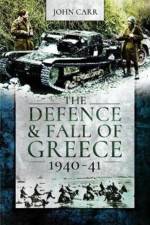
Narrates the spirited but ultimately doomed Greek defence against invasion by Fascist Italy and Nazi Germany in 1940 and 41 Gives the neglected Greek perspective of these important campaigns of WW2 Thoroughly researched, drawing heavily on contemporary Greek sources and eyewitness accounts.
First full-length biography of the man who stopped Attila. Narrates dramatic events in the crumbling Roman Empire leading up to the climactic Battle of the Catalaunian Plains.
First publication dedicated to the role of the LRDG in the costly Dodecanese campaign September - November 1943. Draws on official and personal sources, many untapped or published before.
Abonner på vårt nyhetsbrev og få rabatter og inspirasjon til din neste leseopplevelse.
Ved å abonnere godtar du vår personvernerklæring.