



Gjør som tusenvis av andre bokelskere
Abonner på vårt nyhetsbrev og få rabatter og inspirasjon til din neste leseopplevelse.
Ved å abonnere godtar du vår personvernerklæring.Du kan når som helst melde deg av våre nyhetsbrev.

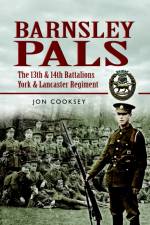
Presents the history of the raising, training and service of the Barnsley Pals in the Great War.
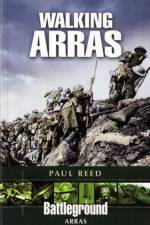
Walking Arras marks the final volume in a trilogy of walking books about the British sector of the Western Front. Paul Reed once more takes us over paths trodden by men who were asked to make a huge ' and, for all too many, the ultimate ' sacrifice. The Battle of Arras falls between the Somme and Third Ypres; it marked the first British attempt to storm the Hindenburg Line defences, and the first use of lessons learned from the events of 1916. But it remains a forgotten part of the Western Front. It also remains one of the great killing battles of the Great War, with such a high fatal casualty rate that a soldier's chances of surviving Arras were much slimmer than even the Somme or Passchendaele. Most soldiers who served in the Great War served at Arras at some point; it was a name very much in the consciousness of the survivors of the Great War. Ninety years later, while there has been development at Arras, it is still an impressive battlefield and one worthy of the attention of any Great War enthusiast. This book will give a lead in seeing the ground connected with the fighting in 1917. Making a slight departure from the style of the previous two walking books, the chapters look at the historical background of an area and then separately describe a walk; with supplementary notes about the associated cemeteries in that region.
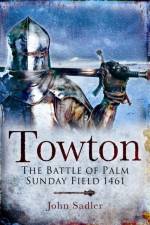
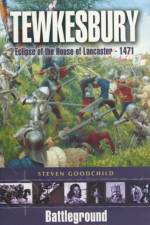
* Graphic new account of the bloodiest battle of the Wars of the Roses * Reconstructs the fighting in vivid detail * Insight into the rival commanders Edward IV and the Duke of Somerset * Incorporates the results of recent archaeological research * Sets the battle in the wider context of medieval military history
Provides information about building and modifying model kits of famous warship types. This illustrated volume takes the modeller through a brief history of the subject class, using scale plans to highlight differences between sisterships and changes in their appearance over their careers. It covers the Fletcher class.
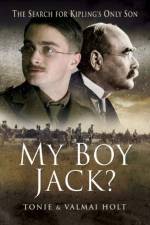
Republished to coincide with the new ITV film, My Boy Jack? starring Daniel Radcliffe, this is the full account of the tragic life of John 'Jack" Kipling. On 27th September 1915 John Kipling, the only son of Britain's best loved poet, disappeared during the Battle of Loos. The body lay undiscovered for 77 years. Then, in a most unusual move, the Commonwealth War Graves Commission (CWGC)re-marked the grave of an unknown Lieutenant of the Irish Guards, as that of John Kipling. There is considerable evidence that John's grave has been wrongly identified and for the first time in this book, the authors name the soldier they believe is buried in 'John's grave'. This is the first biography of John's short life, analysing the devastating effect it had on his famous father's work.
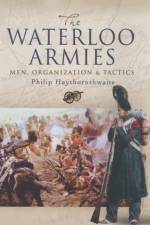
A detailed study of the Waterloo armies, it includes an analysis of the armies engaged - French, British, Hanoverians, Brunswickers, Netherlanders, Prussians. This book provides an insight into the organization, structure, chain of command, personnel as well as pen-portraits of the commanders and the men.
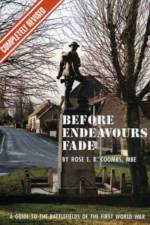
From the Belgian coast, across the fields of Flanders, over the valley of the Somme and down the line to the Argonne, this title covers all the major battlefields of the First World War. It is suitable for those contemplating a tour of the battlefields in Belgium and France.
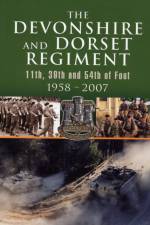
The Devon and Dorsets rank among the finest and most respected infantry county regiments. It is being amalgamated into a new large Regiment, The Rifles. The book presents a comprehensive history of the final years of a famous county regiment. It also covers the 48 years since the amalgamation of the Devons with the Dorsets.
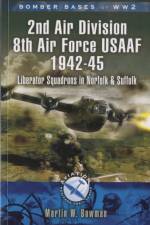
As part of the "AHT" series, which deals with airfields, this book concentrates on Norfolk and Suffolk. It looks at the history and personalities associated with each base, and what remains. It also explores the favourite local wartime haunts where aircrew and ground crew would go.
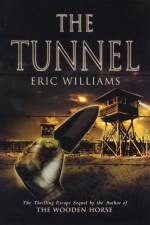
Traces Peter Howard, who was to become one of The Wooden Horse escapers, from his being shot down, through his capture, and first two POW camps. This work gets into the mind of a man determined to escape his captors. It shows that for all the many schemes dreamt up, very few ever got started and of those a 'home run' was like a lottery win.
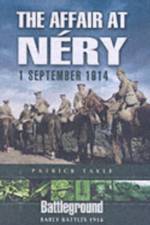
Nery was one of the first battles of the Great War. There were three Victoria Crosses awarded. It included one of the only classic cavalry actions of the War. Nery is a classic case study of an artillery duel and cavalry action.
The Battle of Loos formed part of a wider offensive conducted by both French and British Forces in September 1915. The British First Army, under the leadership of General Haig, were to break through the German line at Loos thanks in part to their superior numbers, while other operations were to achieve a similar result in Champagne and at Vimy Ridge.
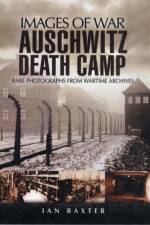
The concentration camp at Auschwitz-Birkenau was the site of the single largest mass murder in history. Over one million mainly Jewish men, women, and children were murdered in its gas chambers. Countless more died as a result of disease and starvation. 'Auschwitz Death Camp' is a chilling pictorial record of this infamous establishment. Using some 250 photographs together with detailed captions and accompanying text, it describes how Auschwitz evolved from a brutal labor camp at the beginning of the war into what was literally a factory of death. The images how people lived, worked and died at Auschwitz.The book covers the men who conceived and constructed this killing machine, and how the camp provided a vast labor pool for various industrial complexes erected in the vicinity. 'Auschwitz Death Camp' is shocking proof of the magnitude of horror inflicted by the Nazis on innocent men, women and children. Such evil should not be forgotten lest it reappear.
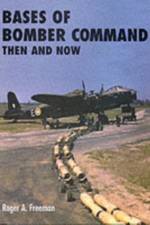
Sixty years ago over 100 aerodromes in east and north-eastern England were occupied by the men and machines of RAF Bomber Command. This book describes the physical development, construction and operational history of every airfield It is illustrated with wartime and present-day aerial photographs.
Steve Goodchild's gripping account of the fighting at Tewksbury, and of the politics and intrigue that led to it, is the first to take fully into account the landscape of the West Country over which the opposing armies marched and the terrain on which they fought.
During the 1960s swarms of motorcyclists roamed along London's North Circular Road in nightly "burn ups". Their pit stop was the Ace Cafe at Stonebridge Park. This is their story as told by the boys who raced and the policemen who chased, woven against a background of contemporary reports.
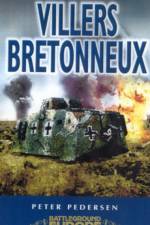
Villers-Bretonneux was the key to the strategically important communications centre of Amiens, a principal objective of the German offensive that began in March 1918. This story tells how the initiative fell to brigade and battalion commanders and how units were hastily cobbled together to stem the German tide.
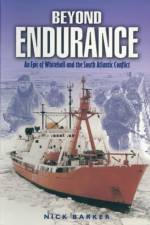
An Epic of Whitehall and the South Atlantic Conflict. This is the story of HMS Endurance before, during and after the Falklands conflict.
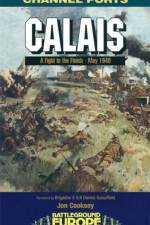
The guide will take the visitor beyond the ferry terminal and hypermarkets to reveal the hidden Calais and the actions of individuals and units in this defence.
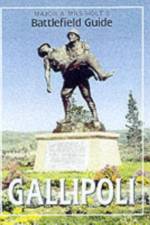
Provides the historical background to the Gallipoli campaign.
Sixty years have elapsed since the cataclysmic demise of Adolf Hitler and his Third Reich. In this book Tony Le Tissier (author of Berlin Then and Now) traces the rise of Hitler, the Nazi Party and its ramifications, together with its deeds and accomplishments, during the twelve years that the Third Reich existed within today's boundaries of the Federal Republics of Germany and Austria. The homes - or sites of them - of the dramatis personnae; the Nazi legends of their martyrs; the sites of the former Third Reich shrines at the Obersalzberg; in Munich; Nuremberg; Bayreuth, and in Berlin; the Hitler Youth schools and the Party colleges; the 'euthanasia' killing centres; the concentration camps, and much much more. Tony then follows the progress of Hitler's war: from the attack on Poland on September 1, 1939 to defeat in Berlin and the final round-up at Flensburg in May 1945. A final chapter covers the de-Nazification of Germany, the whole volume being illustrated by 'then and now' comparison photographs which are the central theme of After the Battle.
Updated edition, published to conincide with the 100th Anniversary
Histories of the Waterloo campaign and tours of the battlefield generally concentrate on the battle between the armies of Napoleon and Wellington and the role of Blucher's Prussians is left in the background. This account tells how the Prussians advanced towards the battlefield and records the decisive fight that broke out when they arrived.
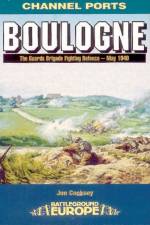
Boulogne - 23 May, 1940. A town under siege. A rampant German panzer division hammers at its gates. Panic in the street and chaos on the docks. Air Raids. Frightened refugees and dispirited Allied soldiers scramble to escape. Churchill sends battalions of the Irish and the Welsh Guards, to help the French garrison stem the German tide.
Now available in paperback, this book brilliantly portrays what it was like to be facing death day after day with neither a bed to sleep in or a hot meal to look forward to. This is warfare in the raw - brutal yet humorous, immensely tragic but, sadly, all true. A diary which was brought to a wider audience when the hardback was published in 1999. Having sold out in a few months it is now being published in paperback for the first time.
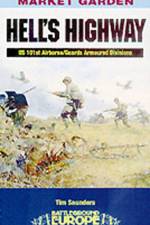
Hell's Highway is the dramatic name given to the vital stretch of road that the British 3rd Guards Armoured Division had to advance down rapidly on their route to relieve the American Paras (82d Airborne) at Nijmegen and the British I st Airborne Division at Arnhem. Adopting the clear and successful style of Battleground works this book relies on personal accounts to embellish this dramatic story.
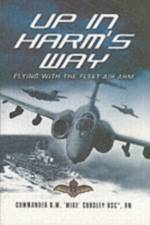
Covers the author's flying career from the finish of World War II until his final appointment as CO of the Naval Test Squadron at Boscombe Down. Mike Crosley became involved with the introduction of Britain's first carrier-borne jet aircraft. The book explains how modern techniques, such as the angled flight deck, were developed and tested.
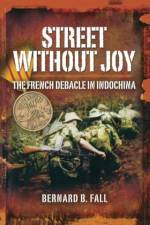
Originally published in 1961, this book offered a warning about what American forces would face in the jungles of Southeast Asia; a war fought without fronts against a mobile enemy. This book describes the brutality of the Indochina War, in which French forces suffered a staggering defeat at the hands of Communist-led Vietnamese nationalists.
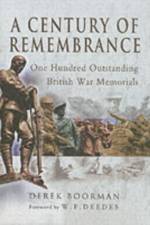
A study of one hundred United Kingdom war memorials, which commemorate 20th century conflicts from the Boer War to the Falklands and Gulf wars. The memorials chosen are listed as near as possible in chronological order and represent different wars, different artists, different areas of the country, and a variety of types of memorial.
Abonner på vårt nyhetsbrev og få rabatter og inspirasjon til din neste leseopplevelse.
Ved å abonnere godtar du vår personvernerklæring.