


Gjør som tusenvis av andre bokelskere
Abonner på vårt nyhetsbrev og få rabatter og inspirasjon til din neste leseopplevelse.
Ved å abonnere godtar du vår personvernerklæring.Du kan når som helst melde deg av våre nyhetsbrev.

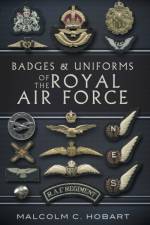
Provides a unique photographic portrait of the Royal Air Force during one of the most significant and interesting decades in aviation history. This is the second volume in a major new series that seeks to explore a wide variety of aspects of the Royal Air Force's history over the course of the 20th and 21st centuries.
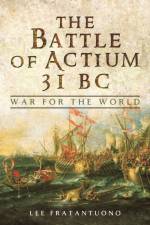
Possibly the most important battle in Roman history, Actium drew the final curtain on the Roman Republic and ushered in the Roman Empire
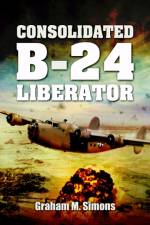
The Consolidated B-24 Liberator was almost certainly the most versatile Second World War Bomber.
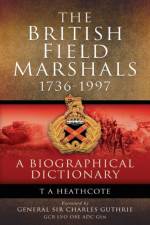
Whether any advantage or benefit will be drawn from the suspension or effective abolition of the rank of Field Marshal is debatable. What is certain, however, is that Dr. Tony Heathcotes idea of compiling a definitive biographical dictionary of holders of this illustrious rank since its introduction by George II in 1736, is opportune and inspired.
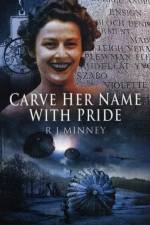
Violette Szabo's inspiring story was turned into a book and film "Carve Her Name with Pride", with Virginia McKenna taking the lead. This story of a true heroine will not only appeal to those interested in the Second World War, but also to a mass audience.
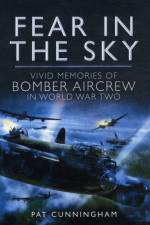
The young men who flew with RAF Bomber Command in World War Two were a complex mixture of individuals but they all shared the gift of teamwork.
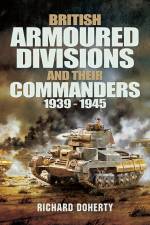
First narrative history and reference work on the development and employment of British Armoured Divisions in WW2. Covers the war in the main Western theatres. Also covers the characters and contribution of these elite divisions' commanders.
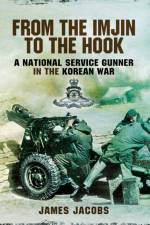
The Korean War is enjoying growing popularity and interest after years of neglect. A unique account by a conscript who was uniquely present at two of the key battles of the War. The author records his extraordinary experiences with modest understatement
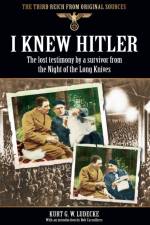
An insider's account of life with Adolf Hitler - now back in print for the first time in 75 years. A riveting personal account of the life of Hitler before he came to power in 1933. Original and full edition comprising of 572 pages.
Throughout the relatively short yet highly distinguished history of the Royal Air Force there has been a tendency for the men and women of the Service to be overshadowed by the glamour of the aircraft.
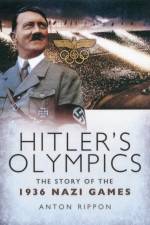
Illustrated with photographs of the event, this account looks at how the rise of the Nazis affected German sportsmen and women in the early 1930s. It reveals how the rest of the world allowed the Berlin Olympics to go ahead despite the knowledge that Nazi Germany was a police state.
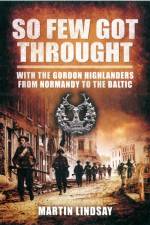
On D-Day 27 officers and 565 men of 1st Battalion Gordon Highlanders landed on the coast of Normandy. By the time 51st Highland Division reached Bremen the following April, after ten months continuous fighting, 1st Gordons had lost 75 Officers and 986 men in battle.So few got through, but amongst them was Martin Lindsay, and seldom, if ever, can a trained writer have been presented with such a splendid opportunity. The author, a former distinguished explorer, commanded the Battalion in 16 operations, who was wounded, mentioned in despatches and awarded the DSO, here tells his epic story.With him we can live through the life of a regimental officer in the orchards of Calvados and on the mudflats of Holland, in show of the Ardennes, the Siegfried Line Break-through, the assault crossing of the Rhine forward to the very heart of Germany.
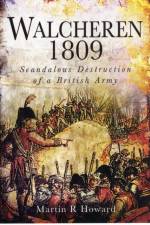
Illustrated with maps, photographs of Walcheren today, and contemporary images from the Dutch archives. Provides a medically informed (but easily understandable) account of the mysterious fever which decimated the expeditionary force and blighted the British army for the remainder of the Napoleonic Wars.
Concise, accessible, authoritative guide to Kent's family and local history sources
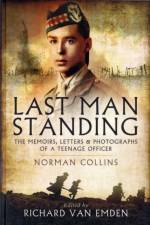
It hardly seems credible today that a nineteenyear- old boy, just commissioned into the Seaforth Highlanders, could lead a platoon of men into the carnage of the Battle of the Somme. Or that, as the machine gun bullets whistled past and shells exploded, he could maintain his own morale to lead a platoon, keeping its discipline and cohesion, in spite of desperate losses. Norman Collins, the author of this superb memoir, was this remarkable man.Using Norman's own words, Last Man Standing follows him from his childhood in Hartlepool to his subsequent service in France. The book also covers such shattering events as the German naval assault on Hartlepool in December 1914 when, as a seventeen-year-old, Norman was subjected to as big a bombardment as any occurring on the Western Front at that time. Norman's love for, and devotion to, the men under his command shine out in this book and his stories are gripping and deeply moving. They are illustrated by a rare collection of private photographs taken at or near the front by Norman himself, although the use of a camera was strictly proscribed by the Army. Most of the images have never been published before.
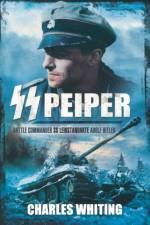
On the night of 14 July, 1976 - Bastille Day - an elderly German was brutally murdered in a little French village where he had taken refuge from the evil shadow which had dogged him for the past thirty-two years. His killers were never brought to justice; indeed, no real attempt was ever made to track them down, the affair being politically embarrassing to both the French and the German governments. The murdered man was Jochen Peiper, once the dashing leader of one of the most renowned units in the German Army. The shadow which hung over him was his alleged complicity in the murder of over seventy unarmed American soldiers during the Ardennes offensive in the winter of 1944/45. It is certain that Peiper was not at the fateful crossroads near Malmedy at the time the men died, but that is not to say that they were not killed on his orders. Guilty or not, Peiper was tried and imprisoned after the war and on his release might have been said to have paid his debt for his supposed part in what had become known as the Malmedy Massacre. But there were those who thought otherwise.After exhaustive research, this classic work sees Charles Whiting tell the story of this enigmatic man, regarded by some as a brilliant and dashing leader of men, by others as a Nazi war criminal, with the vividness and punch which characterized Peiper's military career. All the facts may never be uncovered but all that are known are recorded here. What is certain is that Jochen Peiper remains one of the most controversial miltary figures to emerge from the maelstrom of the Second World War.
Originally published: Great Britain: Allen Lane, 1983.
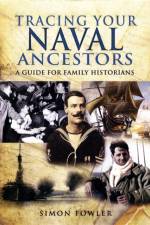
This concise guide to naval history and naval records is essential reading and reference for anyone researching the fascinating story of Britains navy and the men and women who served in it. Whether you are interested in the career of an individual seaman, finding out about a medal winner or just want to know more about a particular ship, campaign or operation, this book will point you in the right direction.
Full background to the life of the alleged serial killer, Mary Ann Cotton
It Had to Be Tough tells the fascinating story of the origins of the Commandos (Britain's first Special Service troops and the forerunners of today's Parachute Regiment, the SAS and the SBS). The Commandos were raised on the specific and personal orders of Winston Churchill in the dark days of the summer of 1940 when these islands faced the real threat of a Nazi invasion. It was a bold, but typically Churchillian, decision.This engaging book traces the formation of the Commandos and the extreme and often unorthodox training methods and techniques used to prepare the volunteers from all branches of the British Army for subsequent world-wide operations. These ground-breaking operations included the 'great raids' on Norway and France, and the full scale invasions of North Africa, Sicily, Italy, Normandy and Burma.Arguably the Army Commandos were disbanded too hastily after the War but their legacy, traditions and fighting spirit live on in those artillery, engineer and corps troops who today win their coveted 'Green Berets' and serve
The criminal lives of 100 Victorian convicts based on the official records of the police and prison authorities.
With comprehensive captions and text this superb book tells the story of the production of the Panzer IV to the key battles in Poland, France, North Africa, Italy, Russia and North West Europe. The Panzer IV proved to be so diverse and effective that it earned a unique tactical role on the battlefield.
This is the third book in the popular Elite Forces Operations Series it will appeal to all interested in Operation Market Garden.
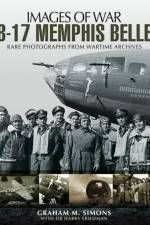
Without doubt Boeing Flying Fortress B-17F 41-42285 Memphis Belle and her crew generate an image that is an all-American icon.
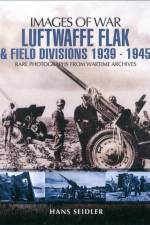
From the outset of WW2, Gőring's Luftwaffe Flak units saw extensive fighting with their 2cm, 3.7cm and deadly 8.8cm anti-aircraft guns. This book describes the evolution of this unique element of the Nazi war machine by means of clear text and superb images.
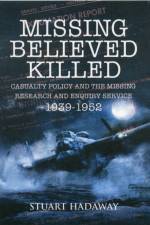
During the early years of WW2 it soon became apparent that the system for tracing the remains of RAF aircrew deemed Missing Believed Killed was totally inadequate. The Missing Research Section (MRS) of the Air Ministry was set up in 1941 to deal with this problem. It collected and collated intelligence reports from a wide variety of official, unofficial and covert sources in an attempt to establish the fate of missing aircrew, using forensic or semi-forensic work to identify personal effects passed on through clandestine channels or bodies washed up on Britains shores.
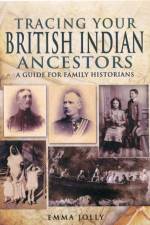
Tracing Your British Indian Ancestors gives a fascinating insight into the history of the subcontinent under British rule and into the lives the British led there. It also introduces the reader to the range of historical records that can be consulted in order to throw light on the experience of individuals who were connected to India over the centuries of British involvement in the country. Emma Jolly looks at every aspect of British Indian history and at all the relevant resources. She explains the information held in the British Library India Office Records and The National Archives. She also covers the records of the armed forces, the civil service and the railways, as well as religious and probate records, and other sources available for researchers. At the same time, she provides a concise and vivid social history of the British in India: from the early days of the East India Company, through the Mutiny and the imposition of direct British rule in the mid-nineteenth century, to the independence movement and the last days of the Raj.Her book will help family historians put their research into an historical perspective, giving them a better understanding of the part their ancestors played in India in the past.
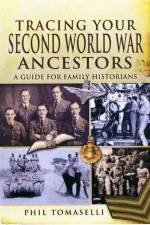
The Second World War was the defining conflict of the twentieth century and it is one of the most popular and fascinating areas for historical research - and for family historians. More records than ever are available to researchers whose relatives served during the war. And this new book by Phil Tomaselli is the perfect guide to how to locate and understand these sources - and get the most out of them. He explains how, and from where, service records can be obtained, using real examples showing what they look like and how to interpret them. He also examines records of the military units relatives might have served in so their careers can be followed in graphic detail. The three armed services are covered, along with the merchant navy, the Home Guard, civilian services, prisoners of war, gallantry and campaign medals, casualties, women's services and obscure wartime organizations. Also included are a glossary of service acronyms, information on useful websites, an introduction to the National Archives and details of other useful sources.
Abonner på vårt nyhetsbrev og få rabatter og inspirasjon til din neste leseopplevelse.
Ved å abonnere godtar du vår personvernerklæring.