











Gjør som tusenvis av andre bokelskere
Abonner på vårt nyhetsbrev og få rabatter og inspirasjon til din neste leseopplevelse.
Ved å abonnere godtar du vår personvernerklæring.Du kan når som helst melde deg av våre nyhetsbrev.

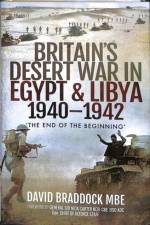
A concise and authoritative account of the North Africa campaigns.
Heathrow is by far the UK's largest and most important airport. This is a highly readable account of the history and expansion of the airport.
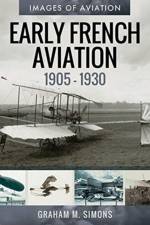
The French had been involved in human flight since 1783, and this book explores the men, the machines, the places and the events of French aviation history.
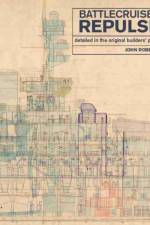
This new title reproduces two complete sets (1916 and 1936) of official Admiralty plans .
Cold War nadir: January 1968 and in Czechoslovakia the new Communist Party leader Alexander Dubcek has made it clear that this is the opportunity to loosen the Soviet stranglehold on the country. As the Prague winter slowly eases into a Prague spring, it really does seem as if Dubcek has judged it right.
Covers the history of British transportation to Australia, from the first to the the final fleet.
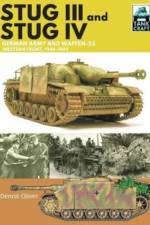
A detailed design and operational history of the StuG III and StuG IV.
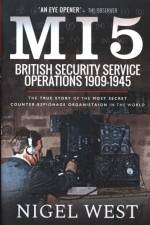
The story of what is arguably the most secret and misunderstood of all the British government departments.
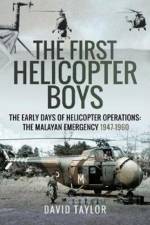
There have been many books written about operations during the Indonesian Confrontation and the enormous contribution made by the helicopter squadrons to the successful outcome of hostilities, but almost nothing of a similar nature concerning the Malayan Emergency - until now.
Latested book in the Locomotive Portfolios' series, this time covering the design and development of the Great Western, Grange Class Locomotives.
This book explores the life of beloved children's author Roald Dahl, revealing some of the little-known events that shaped his life and work.
No-holds barred account of one man's crusade against London's gangs in the 1970s.
Second title in P&S's new series 'Irish Perspectives', bridging the gap to bring Irish history to the British market, across a range of titles that are so deeply connected to British history as a whole.
The first book ever devoted solely to torture as practiced in Britain and its empire.
This book delves into the history of the Gunpowder Plot, exploring the idea that the government was not only aware of what the plotters had in mind, but that they also offered a helping hand - or perhaps even instigated the plot themselves in the first place.
The first systematic publication of a famous plans collection.
The story of Patrick Mackay, the serial killer dubbed the most dangerous man in Britain during his trial in 1975.
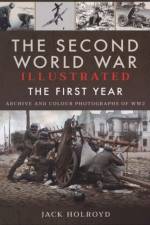
The first volume covers contributory factors leading up to the outbreak of hostilities. Hitler's amazing success in correcting the real and perceived insults to the German nation resulting from the Great War and the Treaty of Versailles is acknowledged. There followed a military operation – Blitzkrieg – which rocked the world as two super powers, France and Great Britain, were soundly thrashed on the battlefield of Europe by Nazi Germany. With the skin of their teeth the British Expeditionary Force fled across the Channel from Dunkirk, leaving most of their equipment behind. The invasion of Kent in the south of England by a triumphant enemy equipped with a cruel and oppressive regime replete with Gestapo, concentration camps and policies of racial and political persecution presented a spine-tingling threat to the British people. With Winston Churchill at the helm disparaging peace treaties with the Nazi regime, the fight back began. A few thousand fighter pilots of the RAF defeated the Luftwaffe by a very narrow margin and Hitler looked to the east for his further bullying of national groups. The first year of the war ended, in September 1940, with Mussolini threatening Egypt and the Suez Canal.
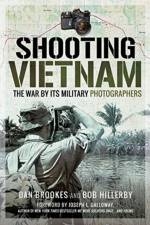
An expansive mix of combat and personal, off-duty photos of the war in Vietnam.
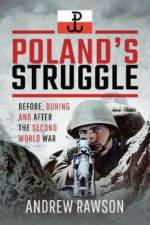
Poland was re-created as an independent nation at the end of the First World War, but it soon faced problems as Nazi Germany set about expanding its control on Europe. The Wehrmacht's attack on 1 September 1939 was followed by a Red Army invasion two weeks later.
A contemporary account written as the war was being fought of Wellington's army.
Abonner på vårt nyhetsbrev og få rabatter og inspirasjon til din neste leseopplevelse.
Ved å abonnere godtar du vår personvernerklæring.