





Gjør som tusenvis av andre bokelskere
Abonner på vårt nyhetsbrev og få rabatter og inspirasjon til din neste leseopplevelse.
Ved å abonnere godtar du vår personvernerklæring.Du kan når som helst melde deg av våre nyhetsbrev.

Few managers devote enough attention to the thinking processes they should apply to their jobs. Yet long, energetic hours at work are wasted if business decisions are not logical, clear - and correct. Effective Decision Making is the definitive guide to the crucial managerial skill of creative thinking. In this classic book John Adair, Britain's foremost expert on leadership training, tells you everything you need to know to enable you to analyse your own thought processes, think outside the box and know when to turn to others to help you make your decisions. Including advice on every aspect of the decision-making process, Effective Decision Making will help you to: * Approach problems efficiently and effectively - define objective, collect information, develop options, evaluate, decide and implement * Think in a more imaginative way * Know when to rely on your intuition * Feel more confident about arguing your case * Develop your thinking skills With examples of good and poor decision making, as well as exercises designed to help you maintain and improve your mental fitness, Effective Decision Making will enable you to master one of the most important skills needed to make you an effective leader.
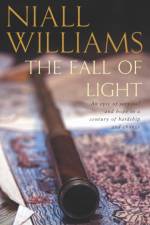
Francis Foley is a proud, stubborn man, and cannot stand to be beholden to anyone. Quick to anger and slow to forgiveness, it is his temper that, one day, costs his sons their home - and their mother. This will not be the last of their losses however: as the four boys and their father embark on an odyssey to find untenanted land they can call their own, their already diminished family is divided further. But if a combination of choice and chance cause the five to separate and scatter, each to their own road, then a series of casual encounters and coincidences offer some hope for reunion and - in Francis's case - redemption. Set in Ireland in the mid-nineteenth century, The Fall of Light traces the footsteps of the five Foley men. With elegant, elegiac prose, Niall Williams guides his characters through hazard and hardship, friendship, love and death, across the world . . . and home again.
On February 16,1944, Anne Frank recorded in her diary that Peter, whom she at first disliked but eventually came to love, had confided to her that if he got out alive, he would reinvent himself entirely. This is the story of what might have happened if the boy in hiding survived to become a man. Peter arrives in America, the land of self-creation; he flourishes in business, marries, and raises a family. He thrives in the present, plans for the future, and has no past. But when The Diary of a Young Girl is published to worldwide acclaim and gives rise to bitter infighting, he realises the cost of forgetting. Based on extensive research of Peter van Pels and the strange and disturbing life Anne Frank's diary took on after her death, this is a novel about the memory of death, the death of memory, and the inescapability of the past. 'This is a brave novel in the strongest sense of the word, carefully treading mined terrain to thought-provoking and memorable effect' Observer 'In this thoughtful novel, Feldman imagines how Peter's life might have turned out had he survived the war. It's an account of his struggle to deal with the past in the face of public obsession with the girl he loved. Fascinating and moving' New Woman 'An inventive postscript to the famous story' Financial TimesOn February 16,1944, Anne Frank recorded in her diary that Peter, whom she at first disliked but eventually came to love, had confided in her that if he got out alive, he would reinvent himself entirely. This is the story of what might have happened if the boy in hiding survived to become a man. Peter arrives in America, the land of self-creation; he flourishes in business, marries, and raises a family. He thrives in the present, plans for the future, and has no past. But when The Diary of a Young Girl is published to worldwide acclaim and gives rise to bitter infighting, he realises the cost of forgetting. Based on extensive research of Peter van Pels and the strange and disturbing life Anne Frank's diary took on after her death, this is a novel about the memory of death, the death of memory, and the inescapability of the past.
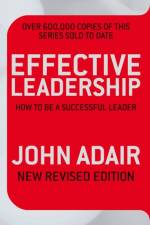
Leaders play an essential role in every aspect of our modern lives and good leadership is an art that is highly prized. Effective leaders not only control, appraise and analyse, they also encourage, improve and inspire. In Effective Leadership John Adair, Britain's foremost expert on leadership training, shows how every manager can learn to lead. Drawing on numerous examples of leadership in action - commercial, historical, military - he identifies the essential requirements for good leadership and explains how you can enhance your personality, knowledge and position to become the best leader you can be. Recognized as the ultimate tool for any aspiring leader, this landmark book will help you to: * Understand leadership - the characteristics and skills you need to be an effective leader * Develop leadership abilities - how to define tasks, plan, brief, communicate, motivate and set an example * Grow as a leader - how to put your leadership skills into practice
Fergal is a self-confessed nerd with an eccentric hobby: tin collecting. He likes the lucky dip aspect of buying tins that have their labels missing - after all, you never know what might be inside. It's Fergal's idea of living dangerously. That is, until the day he innocently opens up a tin to find . . . a bloodied human finger. Everyone thinks it's a joke. But not Fergal - and when his next tin discovery is a note with the word 'Help' scribbled on it, he feels compelled to track down the factory responsible for these mysterious and macabre products. Fergal might be hungry to play detective, but has he opened a can of worms . . . ? This Dahl-esque black comedy will have readers squirming on the edge of their seats. Funny, frightening and totally gross - Alex Shearer taps into the repulsive-but-appealing tradition of urban myths that are perennial playground fodder.
'You'll be sorry when I'm dead.' That's what Harry said to his sister, before the incident with the lorry. And now he is just that - dead. And he wishes more than anything that he hadn't said it. He wishes he could say sorry. And say goodbye to everyone he left behind - his mum, his dad, his best friend Pete, even Jelly Donkins, the class bully. Now he's on the Other Side, waiting to move on to the Great Blue Yonder. But he doesn't know how to get there - until he meets Arthur, a small boy in a top hat, who's been dead for years, who helps him say goodbye...
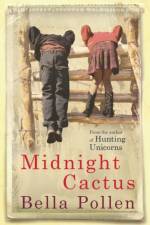
To the south lies Mexico. To the north you can see the flat plains and snow tipped peaks of the Patagonia Mountains . . . and in between is a strange and wild landscape representing a freedom so great that for a long moment, I find it hard to breathe. On the run from her claustrophobic marriage in London, Alice Coleman moves her two small children to the Arizona desert with the intention of renovating an abandoned mining town on the Mexican Border - and there finds an escape and solitude she hadn't thought possible. But in the dusty, alien atmosphere, where it seems that everyone - from Benjamin, the town's Mexican caretaker to the laconic cowboy, Duval - has something to hide, Alice is uncertain whom to trust. As winter moves to scorching summer, what seemed idyllic turns deadly as Alice is drawn deeper into an obsessive quest for revenge, until finally she must decide how far she is willing to go to cling on to her freedom and what exactly she will have to sacrifice. Fierce and compelling, Midnight Cactus explores the territory between unrealized dreams and the pull of family. In a blistering climax Alice discovers it is only by risking everything that you learn what is really worth living for.
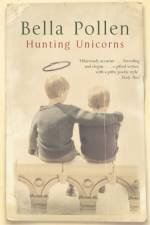
American Maggie Monroe is a journalist for New York's hard-hitting current affairs show Newsline. Independent and fearless, the more cutting-edge the story, the happier she is. But when her next assignment turns out to be an in-depth documentary on the decline of England's ruling classes, she's furious at being sent to cover a bloody tea party. Meet the Earl and Countess of Bevan, eccentric, maddening and with family secrets to hide. Meet Daniel Bevan - their eldest son. Funny, attractive and hopelessly alcoholic. Meet Daniel's responsible brother Rory - angry, self-mocking and strictly teetotal. When Maggie discovers Rory to be an uninvited chaperone on the first stop of her journey the two look set to clash. Maggie finds herself torn between her journalist ideals and coming to terms with a greater understanding. This unlikely romantic comedy paints an endearing portrait of a family, which like so many others, holds itself together despite its evident frailties. 'Hilariously accurate . . . A gifted writer with a pithy, poetic style' Wendy Holden, Daily Mail
On paper, Sadie's got it all - the partner, the children, the house. But in real life, that doesn't feel quite enough. Sadie can't help harking back to the time when she was a career woman by day and a party animal by night. And what happened to feeling like a sex kitten, anyway? The only sleepless nights she's getting now are due to the baby. Maybe a little reinvention is the answer . . . Sadie can't resist creating a fictitious online identity for herself as a hot TV producer. It's only a bit of harmless fun . . . until truth and fantasy become dangerously tangled. It isn't long before she's wondering if the exciting alter ego she has dreamed up really is the kind of person she wants to be after all . . .Wry, funny and with a wonderful twist in the tale, Lucy Diamond's debut novel Any Way You Want Me is an enchanting story of infidelity, motherhood and friends reunited.
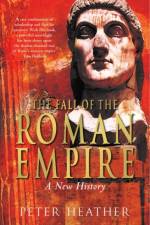
In AD 378 the Roman Empire had been the unrivalled superpower of Europe for well over four hundred years. And yet, August that year saw a small group of German-speaking asylum-seekers rout a vast Imperial army at Hadrianople, killing the Emperor and establishing themselves on Roman territory. Within a hundred years the last Emperor of the Western Empire had been deposed. What had gone wrong? In this ground breaking book, Peter Heather proproses a stunning new solution to one of the greatest mysteries of history. Mixing authoratative analysis with thrilling narrative, he brings fresh insight into the panorama of the empire's end, from the bejewelled splendour of the imperial court to the dripping forests of "e;Barbaricum"e;. He examines the extraordinary success story that was the Roman Empire and uses a new understanding of its continued strength and enduring limitations to show how Europe's barbarians, transformed by centuries of contact with Rome, eventually pulled it apart. 'a colourful and enthralling narrative . . .an account full of keen wit and an infectious relish for the period.' Independent On Sunday 'provides the reader with drama and lurid colour as well as analysis . . . succeeds triumphantly.' Sunday Times 'a fascinating story, full of ups and downs and memorable characters' Spectator 'bursting with action . . .one can recommend to anyone, whether specialist or interested amateur.' History Today 'a rare combination of scholarship and flair for narrative' Tom Holland
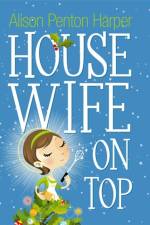
'I've left you a list on my desk,' Rick said . . . The house fell silent and I wandered into the study to collect my instructions. There was only one scrawled piece of paper on the desk so there was no mistaking the single command. It said: organize Christmas. Helen is finally finding her feet just in time for the looming festive season. Surrounded by family, friends and the finer things in life, Helen's generous offer to organize Christmas for the neurotic Leoni soon snowballs into an unmanageable avalanche of tasks when her chaotic boss dumps his seasonal arrangements on her too. And with Julia heading towards a mind-boggling midlife crisis of her own, it looks as though Helen is well and truly stuffed! And so it begins, the season of good grief to all women . . . Praise for Alison Penton Harper: 'Laugh-a-minute, frothy fun' Sunday Express
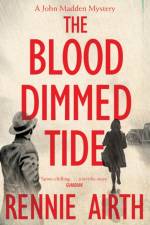
In Rennie Airth's The Blood Dimmed Tide it is 1932 and John Madden, former Scotland Yard Inspector, is now a farmer in the peaceful Surrey countryside. However his peace is about to be shattered, for when a young girl goes missing, it is he who discovers her disfigured body hidden in a wood. Disturbed by what he has seen he is convinced the killer has struck before . . .When a second body is found, Madden's instinct is proved right - there is a multiple killer at large. Allying himself with his old colleagues, and against the wishes of his anxious wife, he immerses himself in one more case, and his insights into the personality of the man they are seeking are soon borne out.But he will have to stay one step ahead of a killer who is a master of reinvention, and who has been covering his tracks for many years. And soon significant links are discovered in Germany, where the Nazis are on the brink of power . . .Enjoy more of this historical crime series with The Dead of Winter and The Reckoning.
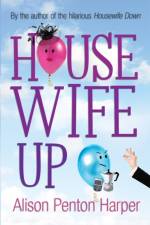
"e;Heaven save us from ourselves. And if you can't manage that, I'd settle for saving me from me. Just when I thought it was safe to go back in the water, here I am again, drowning for all to see. Not waving, as the troubled swimmer once famously said. I busied myself with any household task I could find . . ."e; Recently widowed but putting a brave face on it all (thanks to a not insignificant windfall) Helen's only problem, it seems, is the imminent arrival of her fortieth birthday. Not something she can possibly avoid, ignore or sulk about - not with friends like Leoni and sisters like Julia around . . . And there is much to celebrate. A beautiful new flat, gorgeous hospitable neighbours and a delicious sense of freedom that only money can buy. Until, that is, money becomes the one big fat problem in Helen's life and she becomes part of the unwilling army of the employed. But it is no ordinary job that Helen is qualified for, in fact she is qualified for precious little, which leads to her first ever encounter with 'the boss from hell' . . .
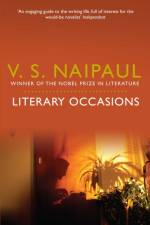
A remarkable companion piece to The Writer and the World, Naipaul's previous volume of highly acclaimed essays, Literary Occasions is a stirring contribution to the fading art of the critic, and a revelation of a life in letters.In these eleven extended pieces V. S. Naipaul charts more than half a century of personal enquiry into the mysteries of the written word and of fiction in particular. Here are his boyhood experiences of reading books and his first youthful efforts at writing them; the evolution of his ideas about the extent to which individual cultures shape identities and influence literary forms; observations on Conrad, his literary forebear; the moving preface he wrote to the only book his father ever published; and his reflections on his career, ending with his celebrated Nobel lecture, 'Two Worlds'. 'He is an exceptionally good and perceptive critic - a few passages on Dickens are worth whole books by others - and when he addresses the art of fiction he not only writes beautifully (as always) but with complete humility' New Statesman
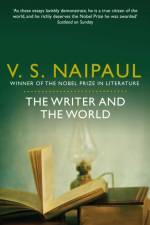
During forty years of travel, V. S. Naipaul has created a wide-ranging body of work, an exceptional and sustained meditation on our world. Now his finest pieces of reflection and reportage - many of which have been unavailable for some time - are collected in one volume. With an abiding faith in modernity balanced by a sense of wonder about the past, Naipaul has explored an astonishing variety of societies and peoples through the prism of his experience. Whether writing about Indian mutinies and despair, Mobutu's mad reign in Zaire, or the New York mayoral elections, he demonstrates time and again that no one has a shrewder intuition of the ways in which the world works. Infused with a deeply felt humanism, The Writer and the World attests powerfully not only to Naipaul's status as the great English prose stylist of our time but also to his keen, often prophetic, understanding. 'All [of these essays] are worth reading (and rereading), both for the contemporary and historical information and insight they artfully impart and for what they tell us about a uniquely complex writer' Spectator
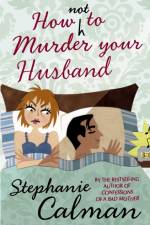
The idea for this book came when Stephanie began making a list of things that annoy her about her husband, and found how hard it was, once she had started, to stop. Here are the first Ten Things, just to give you an idea. He: (1) Leaves the bread unwrapped after making toast so it goes stale. (2) Writes illegible names and addresses on things like Christmas cards then tells her off when she try to amend them. (3) Breathes really loudly when he's asleep - 'I wasn't SNORING' - so that it's like being woken every night at 2am by Darth Vader. And not in a sexy, black cloak, galaxy ruling sort of way. (4) Says, 'I'm putting you in charge of that' as if he's doing her a favour when he wants to get out of doing something. (5) Says, 'Well, let's not make a problem out of it, shall we?' before ignoring the thing she's just told him about that's really bugging her and that she wants him to fix. (6) Doesn't fix things the minute she asks him to. (7) Manages to get the children to bed with far less yelling than she does. (8) Always sees the other side in an argument, i.e., the side that isn't hers. (10) Adores her mother. Viciously funny, touchingly honest and only too true, this is Stephanie Calman at her brilliant best.
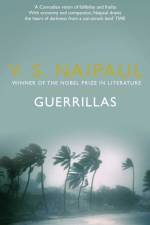
Set on a troubled Caribbean island - where Asians, Africans, Americans and former British colonials co-exist in a state of suppressed hysteria - V. S. Naipaul's Guerrillas is a novel of colonialism and revolution. A white man arrives with his mistress, an Englishwoman influenced by fantasies of native power and sexuality, unaware of the consequences of her actions. Together with a leader of the 'revolution', they act out a gripping drama of death, sexual violence and spiritual impotence. Guerrillas depicts a convulsion in public life, and ends in private violence. The novel comes with extraordinary force from the centre of a profound moral awareness of the world's plight. 'Impeccable . . . Guerrillas seems to me Naipaul's Heart of Darkness: a brilliant artist's anatomy of emptiness, and of despair' Observer
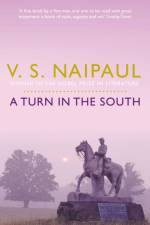
A Turn in the South is a reflective journey by V. S. Naipaul in the late 1980s through the American South. Naipaul writes of his encounters with politicians, rednecks, farmers, writers and ordinary men and women, both black and white, with the insight and originality we expect from one of our best travel writers. Fascinating and poetic, this is a remarkable book on race, culture and country. 'Naipaul's writing is supple and fluid, meticulously crafted, adventurous and quick to surprise. And, as usual, there's the freshness and originality of his way of looking at things' Sunday Times 'Naipaul writes as if a modern oracle has chosen to speak through him. It is a tissue of brilliantly recorded hearsay, of intense listening by a man with a remarkable ear' New York Times Review of Books 'This is a journey below the Mason-Dixon line into a society riven by too many defeats; the broken cause of the old Confederacy, and the frustrated anger of Southern blacks whose power is circumscribed . . . It is the best thing outside fiction that I have read on the Old South pregnant with the new since W. J. Cash's The Mind of the South published over fifty years ago' Sunday Telegraph
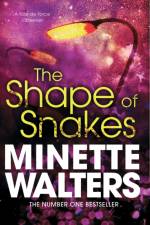
Exposing the horrifying consequences when communities ignore the people who need them the most, The Shape of Snakes is the psychological mystery from crime queen Minette Walters.November 1978. Britain is on strike. The dead lie unburied, rubbish piles in the streets - and somewhere in West London a black woman dies in a rain-soaked gutter. Her passing would have gone unmourned but for the young woman who finds her and who believes - apparently against reason - that Annie was murdered. But whatever the truth about Annie - whether she was as mad as her neighbours claimed, whether she lived in squalor as the police said - something passed between her and Mrs Ranelagh in the moment of death which binds this one woman to her cause for the next twenty years. But why is Mrs Ranelagh so convinced it was murder when by her own account Annie died without speaking? And why would any woman spend twenty painstaking years uncovering the truth - unless her reasons are personal . . . ?
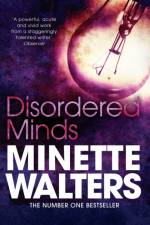
A thirty year old murder case and a possible wrongful conviction, Disordered Minds is the mystery thriller from crime queen Minette Walters. In 1970, Harold Stamp, a retarded twenty-year-old was convicted on disputed evidence and a retracted confession of brutally murdering his grandmother - the one person who understood and protected him. Less than three years later he is dead, driven to suicide by isolation and despair. A fate befitting a murderer, perhaps, but what if he were innocent? Thirty years on, Jonathan Hughes, an anthropologist specializing in social stereotyping, comes across the case by accident. He finds alarming disparities in the evidence and has little doubt that Stamp's conviction was a terrible miscarriage of justice. But how far is Hughes prepared to go in the search for justice? Is the forgotten story of one friendless young man compelling enough to make him leave his books and face his own demons? And with what result? If Stamp didn't murder Grace Jeffries then somebody else did . . . and sleeping dogs are best left alone . . .
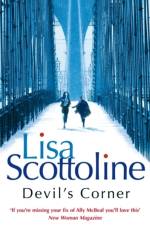
When prosecutor Vicki Allegretti arrives at a rowhouse to meet a confidential informant, she finds herself in the wrong place at the wrong time. She's almost shot to death, and two others are gunned down before her disbelieving eyes. How did a routine investigation become a double homicide? She can identify the killers, now all she has to do is to find them. The deeper she probes, the more she realizes that she's dealing with ruthless killers. Her suspicions take her to Devil's Corner, a place on the brink of ruin - thick with broken souls, innocent youth and a scourge that plays on both. Sadly, her delectable colleague Dan Molloy is too married to give her the kind of support she really needs, but when she teams up with an unlikely ally, she buckles up for a wild ride down a dangerous street. And into the crossfire of a powerful and relentless conspiracy. Set against the pulsing backdrop of Philadelphia, with a storyline driven by strong female characters and the breakneck pace that has become her trademark, DEVIL'S CORNER is Lisa Scottoline's most satisfying novel yet. 'Lisa Scottoline has been added to my list of must-read authors. Her stories are filled with teeth-gnashing suspense, her characters are compelling, and her humor cuts to the heart of the issue with laserlike accuracy' Janet Evanovich
On a world of intelligent robots who seem to have forgotten their own distant past, it is a time of war as the soldiers of Artemis City set out to conquer everything within range on the continent of Shull, killing or converting every robot they capture to their philosophy, while viewing their own wire-based minds as nothing but metal to be used or recycled for the cause.Elsewhere, the more individualistic robots of Turing City believe they are something more than metal, but when the Artemisian robot Kavan sets out on a determined crusade to prove himself, even Turing City can't stand against him. Increasingly tied up with Kavan's destiny is Karel, a Turing robot with elements of Artemis's philosophy already woven into his mind ... as well as Karel's wife Susan, and their recently created child..Following the inevitable violence and destruction, Artemisian ambition focuses elsewhere and a journey begins towards the frozen kingdoms of the north ... and towards the truth about the legendary 'Book of Robots', a text which may finally explain the real history of this strange world ...In a completely alien but brilliantly realized landscape, here is a powerful story of superb action, barbaric cruelty and intense emotional impact.
In these extraordinary tales about ordinary people from ordinary places, Tim Winton describes turnings of all kinds: second thoughts, changes of heart, nasty surprises, slow awakenings, abrupt transitions. The seventeen stories overlap to paint a convincing and cohesive picture of a world where people struggle against the terrible weight of their past and challenge the lives they have made for themselves.In The Turning Tim Winton gives us seventeen exquisite overlapping tales of second thoughts and mid-life regret - extraordinary stories of ordinary people from ordinary places. Here are turnings of all kinds - changes of heart, nasty surprises, slow awakenings, sudden detours - where people struggle against the terrible weight of the past and challenge the lives they've made for themselves.
Tim Winton's That Eye, the Sky is a tale about a boy's vision of the world beyond, and the blurry distinctions between the natural and supernatural. At twelve years old, Morton - Ort for short - is not quite a child, but not yet an adult; his isolated outback world is an intriguing combination of boyish innocence, adolescent confusion and burgeoning awareness. When his father is seriously injured in a car crash, however, that world is suddenly thrown into complete disarray and the whole family have to adjust. As Ort, his sister, mother and grandmother are struggling to come to terms with what has happened, a stranger appears in their midst. Preaching God's word, Henry Warburton's unexpected arrival seems eerily prescient, at a time when the family most need a helping hand, and Henry quickly makes himself indispensable. In fact, for Ort in particular, it is Henry's presence, perhaps more even than his father's accident, that brings the greatest change to his world. 'The great strength of the novel is in the way the grotesque contrasts and parallels in human life are spread out, examined and accepted.' - Los Angeles Times
A remarkable, stirring novel, Birmingham Friends perfectly captures the complicated intimacy of female relationships.Anna has always been exceptionally close to her mother, Kate and as a child, was captivated by the stories her mother would tell of her childhood in Birmingham with her best friend, Olivia. Olivia and Kate seemed to have a magical friendship.But when Kate dies, she leaves her daughter a final story, one that this time tells the whole truth of her life with Olivia Kemp. As Anna reads, she is shocked to discover how little she really knew about the mother she felt so close to. With Kate's words of caution ringing in her head, she goes in search of the one woman who can answer urgent questions about her mother's life, and about her own . . .*Birmingham Friends was originally published as Kate and Olivia*
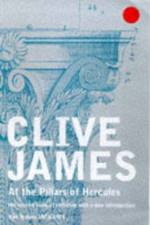
First published to great acclaim in 1979, At the Pillars of Hercules (a title taken from a certain Soho pub) confirmed Clive James's place as a writer of immense talent, and as entertaining and elegant as ever. His main topics are contemporary poetry, aesthetics and the theory and practice of criticism, the popular novel, and the literature of modern history and politics. His discussions range from the legacy of Auden and Larkin to Gore Vidal and Lord Longford. His inimitable wit and candour are ever present in this collection of criticism, featuring a previously unpublished introduction.
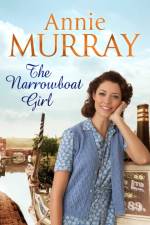
The Narrowboat Girl by Annie Murray is the story of a young woman's search for freedom and happiness.Young Maryann Nelson is devastated at the loss of her beloved father. But worse is to come when her mother, Flo, sees an opportunity to better herself and her family in a marriage to the local undertaker, Norman Griffin. Though on the surface a caring family man, Norman is not at all what he seems, as Maryann and her sister Sal soon discover.Unable to turn to their unsympathetic mother for support, the girls are left alone with their harrowing secret. But for Sal it is too much to bear . . . The chance of a new life opens up for Maryann when she befriends Joel Bartholomew. Aboard his narrowboat, the Esther Jane, she finds herself falling in love with life on the canal as she is swept away from Birmingham and all her worries. Until Joel's feelings for Maryann begin to change, awakening all the old nightmares that she had thought were long buried, and in panic and confusion she takes flight . . . The Narrowboat Girl is followed by sequel, Water Gypsies.
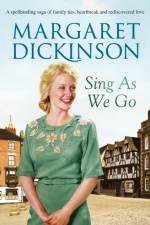
Sing As We Go is a heart-rending wartime novel from the much-loved author of The Clippie Girls, Margaret Dickinson.Kathy Burton longs to escape the drudgery of her life as an unpaid labourer on her father's farm. With only the local church choir and the occasional dance at the village hall for amusement, she yearns for the bright lights. Spurning Morry Robinson's proposal of marriage, Kathy goes to work in the city and is captivated by the sophisticated and handsome floor manager, Tony Kendall.Kathy has fallen deeply and irrevocably in love and, even when the country is plunged into war, she can see no obstacle to their future. But she has reckoned without the devious mind of Tony's invalid mother, Beatrice Kendall.Determined that the possessive woman won't win, Kathy plans her wedding, but the day is ruined when Tony is called up. Feeling deserted, Kathy is forced to face yet further heartache alone. At last, she finds solace in joining a concert party entertaining service men and women. But behind the songs and the smiles, her heart is breaking . . .
Slipstream brilliantly illuminates the literary world of the latter half of the 20th century, as well as giving a highly personal insight into the life of Elizabeth Jane Howard, one of our most beloved British writers. Born in London in 1923, Elizabeth Jane Howard was privately educated at home, moving on to short-lived careers as an actress and model, before writing her first acclaimed novel, The Beautiful Visit, in 1950. She has written many highly regarded novels, including Falling and After Julius. Her Cazalet Chronicles have become established as modern classics and were adapted for a major BBC television series and for BBC Radio 4. She has been married three times - firstly to Peter Scott, the naturalist and son of Captain Scott, and most famously and tempestuously to Kingsley Amis. It was Amis' son by another marriage, Martin, to whom she introduced the works of Jane Austen and ensured that he received the education that would be the grounding of his own literary career. Her closest friends have included some of the greatest writers and thinkers of the day: Laurie Lee, Arthur Koestler and Cecil Day-Lewis, among others.
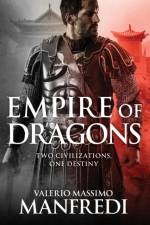
Anatolia, AD 260. The Roman outpost of Edessa is on its last legs after the Persian siege, and Roman Emperor Publius Licinius Valerianus agrees to meet his adversary to negotiate peace. But the meeting is a trap and the Emperor ends up in enemy hands, along with the commander of his personal guard, Marcus Metellus Aquila, and ten of his most valiant and trusted men. Their destiny is sealed: they will rot away in a mine, forced into slavery. But Metellus - legate of the Second Augusta Legion, hero of the empire - and his men break free and find shelter at an oasis, where they meet a mysterious, exiled prince. The Romans become the prince's private militia, agreeing to safeguard the prince's journey back to his homeland, Sera Maior, the mythical Kingdom of Silk - China. And so they begin an extraordinary and epic journey through the forests of India, the Himalayan mountains, the deserts of central Asia, all the way to the heart of China - as the very survival of the world's greatest two empires is at stake.
Abonner på vårt nyhetsbrev og få rabatter og inspirasjon til din neste leseopplevelse.
Ved å abonnere godtar du vår personvernerklæring.