
Gjør som tusenvis av andre bokelskere
Abonner på vårt nyhetsbrev og få rabatter og inspirasjon til din neste leseopplevelse.
Ved å abonnere godtar du vår personvernerklæring.Du kan når som helst melde deg av våre nyhetsbrev.

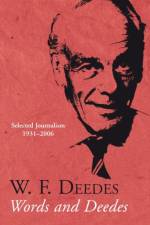
For seventy-five years, W. F. Deedes has reported on the most important events, affairs and issues that have affected Britain, Europe and the World. Words and Deedes brings together a life's work, selecting the very best of his journalism to give a unique overview of the best part of the last century. Starting as a cub reporter in 1931, Deedes' inimitable eye was cast over the world caught in economic depression and inching closer to another devastating war. Yet, whether describing his campaign to alleviate the hardships of disadvantaged children or the ruthlessness of Mussolini's war machine, Deedes' pieces seem as fresh and vibrant now as they did then. This vivid and immediate style suffuses all his writing, making each story relevant, whether it be recent or more than fifty years old. This remarkable volume charts a course through some of the most turbulent times the world has ever seen, and yet on every page there is something to enlighten, delight or amuse. With this collection, W. F. Deedes cements his place as one of the very finest journalists of this, or any other century.
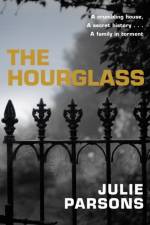
Beyond high iron gates fastened shut with a length of chain, lies the stark, beautiful Trawbawn. Here, haunted by a dark, mysterious past and largely ignored by the people of nearby Skibbereen, lives the frail Lydia Beauchamp. But old Ma Beauchamp's private existence is interrupted when a stranger arrives - a young man called Adam who wanders into the vast grounds of Trawbawn and becomes one of Lydia's most welcome contacts with the outside world. When Lydia sets her new confidante a challenge, he eagerly accepts - Adam must travel to Dublin to find her estranged daughter. But it is a task tainted by an air of menace. For what terrible past has driven a daughter from her mother? And what true motive lies behind Adam's generous act? Soon the unlikely friends are entwined in a deadly game, and a pursuit born of an old lady's desire for peace mutates into a terrible, relentless need for revenge . . .
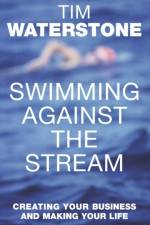
Waterstone's was DTI awarded as one of the three most financially successful business start-ups of the 1980s and, culturally, may be considered to have changed the complexion and scale of bookselling in the British isles and Europe. This massive success is in no small way due to Tim Waterstone's excellent business practices and belief that business can work for the good of the community. In this book he shares his top ten rules for creating businesses and making lives, using real-life case studies of how businesse succeed, and also how they can fail. Essential reading for anyone with a dream of starting up alone.
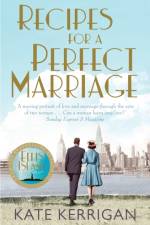
"e;They say there is no such thing as a perfect marriage, but of course there is. A perfect marriage is where two people live together for most of their lives until death separates them. What there is no such thing as is an easy marriage. And when it comes to love, people have somehow come around to equating love with ease"e;. New York food writer Tressa returns from honeymoon worried that she has married her impossibly handsome new husband Dan out of late-thirties panic instead of love. In 1930's Ireland, her grandmother, Bernadine, is married off to the local schoolteacher after her family are unable to raise a dowry for her to marry her true love, Michael. During the first year of her marriage, Tressa distracts herself from her stay-or-go dilemma by working on her grandmother's recipes, searching for solace and answers through their preparation. Through the stories of these two women RECIPES FOR A PERFECT MARRIAGE challenges the modern ideal of romantic love as a given and ponders whether true love can really be learned. 'This story is written with so much heart, its beat is palpable in every word on every page' Cecelia Ahern, author of P.S., I LOVE YOU
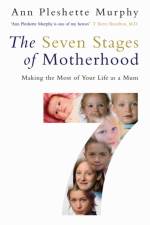
'Ann Pleshette Murphy is one of my heroes' T. Berry Brazelton, M.D., bestselling author of What Every Baby Knows This is the book every mum needs, and it hasn't been available until now. Seven Stages of Motherhood looks at the experience of parenting not only in the first year or two of a baby's life, but right on through childhood and adolescence and even into adulthood. Ann Pleshette Murphy argues that women evolve as mothers throughout the lives of their children, and her book is intended as a guide through this remarkable experience. Practical, sensible and above all readable, it will be invaluable to first-time parents and absolutely relevant to mothers of growing families. 'A beautiful insight into the joys and sorrows of motherhood, an emotional lifeline to mothers everywhere as they journey through the confusing yet rewarding stages of motherhood. Not to be missed' William Pollack, author of Real Boys 'Heartwarming, witty and wise ... let Annie be your guide on this charming tour through motherhood' Harvey Karp, MD, paediatrician and author of The Happiest Baby on the Block
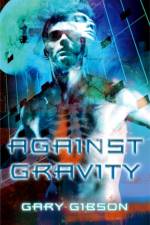
Against Gravity is a stunning sci-fi thriller from Gary Gibson, author of the Shoal Sequence.In the late twenty-first century, you will find a very different world. Little is as it used to be, and many are not what they seem. Kendrick Gallmon, survivor of an infamous research facility called the Maze, is trying to pick up the pieces of his life, even though he knows the Labrat augments are slowly killing him. Then one day his heart stops beating, forever, and a ghost urges him to return to the source of all his nightmares, a long-abandoned military complex filled with entirely real voices of the dead.
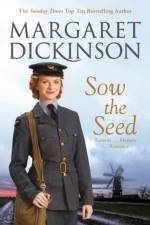
The second part of the Fleethaven Trilogy, Sow the Seed is a moving and evocative wartime saga from Margaret Dickinson.Lincolnshire, 1926. Kate Hilton is devastated when her mother tells her she is to be sent away to boarding school. For the more Esther tries to keep her from her childhood sweetheart, Danny, the more determined she is to marry him.It isn't until she is eighteen, and finally told the bitter truth about her family's past, that Kate is forced to see why she and Danny can never marry. Torn apart by these revelations, Kate finds unexpected release with the outbreak of war, when she leaves Fleethaven Point to become a driver in the WAAF.In the chaos and destruction of the war years, Kate will witness many things. For as well as all the pain, suffering and loss, she will experience her first taste of a love that finally allows her to leave the past behind . . .The Fleethaven Trilogy concludes with Reap the Harvest.
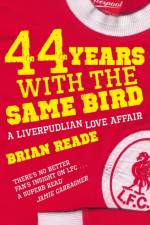
There have been football books which have told their tale through the partisan heart of a besotted fan, and those that have dissected their subject through the scientific mind of an objective writer. But rarely does one fuse the blind passion of a lifelong supporter with the cold eye of an award-winning journalist in the way 44 Years With The Same Bird does.That bird is the Liver Bird, and on the surface this book is a pitch-side view of the entire modern era of Britain's most successful football club. It is Brian Reade's take on the extraordinary stories behind the 48 trophies he has seen Liverpool lift since watching them en route to their first ever FA Cup win in 1965, right through to the Champions League defeat in Athens in 2007. It takes in all of the big nights that propelled the club to five European Cups, three UEFA Cups, twelve titles, countless domestic cup triumphs, bitter failures, the tragic disasters in Sheffield and Brussels, as well as the barren years of the late 60s and the 90s.But the book goes far deeper than that. It's about how football allowed a father who was separated from his son to forge a precious bond. How a football club can make a city that is dying on its knees keep believing in itself. How you should never, as a professional, get too close to your heroes. How being part of a disaster at a football match (Hillsborough) can leave you a mental wreck, unwilling to carry on, but how witnessing a miracle on a football pitch (Istanbul) makes you realize that no matter how low you sink, you should never give in.
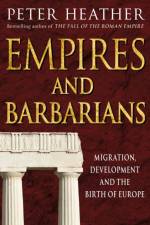
At the start of the first millennium AD, southern and western Europe formed part of the Mediterranean-based Roman Empire, the largest state western Eurasia has ever known, and was set firmly on a trajectory towards towns, writing, mosaics, and central heating. Central, northern and eastern Europe was home to subsistence farmers, living in wooden houses with mud floors, whose largest political units weighed in at no more than a few thousand people. By the year 1000, Mediterranean domination of the European landscape had been destroyed. Instead of one huge Empire facing loosely organised subsistence farmers, Europe - from the Atlantic almost to the Urals - was home to an interacting commonwealth of Christian states, many of which are still with us today . This book tells the story of the transformations which changed western Eurasia forever: of the birth of Europe itself.
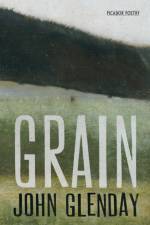
Though John Glenday has long been admired for his lyrically delicate and emotionally powerful poetry, he has remained something of a well-kept secret. His third collection, Grain, makes his singular talent available to a wider audience. Sometimes Glenday's poems are forcefully direct; sometimes they are so quiet they feel as if they were composed within a capacious listening, as a form of secular prayer. Glenday's seamless lyric can also disguise some wild and surreal tales: the Beauty and the Beast told in reverse, a bizarre list of new saints, or a can of peaches waiting for the invention of the tin-opener. However, the lasting impression is of a genuinely spiritual poet, one with the ability to turn every earthly detail towards the same clear light. Grain announces Glenday as an essential voice in contemporary poetry.
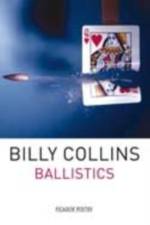
It is no understatement to say that Billy Collins has found poetry a whole new audience across the English-speaking world. No poet writing today insists on such open, direct and courteous engagement with the reader, and no poet has shown the common experience to be such an astonishing and singular one. Collins' gift is to make the reader believe that everything is unfolding in real time and in living speech; his poetry always has the sheen and vibrancy of the present moment. While Ballistics addresses the most grave and serious of subjects - death and love, solitude and aging - Collins' light touch and lighter spirit never desert him. Even in his darkest verses, Collins never fails to remind us of the sheer miracle, comedy and strangeness of our simply being here. 'The teasing, buoyant images in Ballistics are firmly anchored in visions of too-quiet mornings, droplets of water, cold marble and bare light bulbs. But he now writes, more simply and assuredly than he used to, about the flights of imagination that keep melancholy at bay . . . Ballistics glows with the confidence of a writer fully aware of his work's power to delight' New York Times
Molly Harper is the manager of Ireland's only dedicated romance bookshop - 'Happily Ever After'. She can't stand Milo Jones, the super-smooth new owner but he does have a rather attractive son, Sam. When Milo decides he wants to change the bookshop into a highbrow literary one, Molly, with the help of her friends, must fight back if she wants to save the store. Her best friend, Paige Brady, local County Councillor and member of the popular 'Happily Ever After Book Club' has problems of her own. She has just launched a general election campaign and is astonished when another woman, Annette Higgins, starts to attack her in a very personal way. But Paige is determined to stay in the race. Can you judge a man by the shoes they wear? Kate Bowan, another Book Club afficionado, and Molly's housemate thinks so. Shop assistant in the trendy Burnaby designer shoe shop, 'Baroque' by day, she runs the popular dummy dating service 'Test-Crash Dates' by night. But one particular client is proving to be more than a handful. In the Irish village of Burnaby, life is about to change for three very different women.
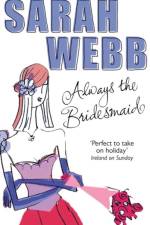
Amy's life is not working out the way she always dreamed it would. She's about to turn the dreaded 3-0, her career is going nowhere fast and her love life is not exactly flourishing. To make matters worse, while things are falling apart for Amy, they seem to be coming together for everyone else in her life . . . Visiting her friend, Jodie, Amy finds that she and Jack, the man she once thought she might marry, have spent the night together. Her younger sister Suzi has just arrived home with her 'Golden Delicious' Australian fiance in tow, and announced their May wedding. And now Amy discovers that her best friend Beth is also planning on tying the knot, and Amy is asked to be bridesmaid. With a sinking heart, she remembers that old saying: always the bridesmaid, never the bride . . . Surely it can't be true? 'A real girlie page-turner that keeps you amused, entertained and guessing until the final page' Belfast Telegraph 'A rollicking hilarious romance. Definitely one to carry on to the plane' RTE Guide
'When I was a little girl I believed what I was told over and over again: that I was evil, that I deserved to be tortured because I was the Devil's child . . .'In April 2007 foster-mother Eunice Spry was sentenced to fourteen years in prison for her sadistic abuse of the children in her care. The details of her cruelty were so sickening they shocked the country. Alloma Gilbert was one of Spry's young victims, sent to live with her at the age of six and left at her mercy for eleven brutal years.Eunice used her own twisted religious beliefs as an excuse for punishing her foster children. When she took them to live on an isolated farmhouse, the abuse escalated to terrifying levels - a stick was thrust down Alloma's throat so often it was stained red with blood, she was starved for over a year and survived only by secretly eating pigswill, and the vicious beatings were relentless. At the age of seventeen she finally escaped but, alone in the outside world, she fell prey to abusive men. It was the birth of her baby daughter that saved her, that finally taught her what love really is. Written with powerful honesty, Deliver Me From Evil is a moving and inspiring story of survival.
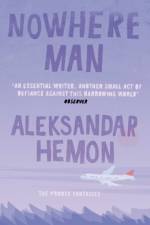
'Aleksandar Hemon has established himself as that rare thing, an essential writer. Another small act of defiance against this narrowing world' Observer 'His language sings . . . I should not be surprised if Hemon wins the Nobel Prize at some point' Giles Foden In Aleksandar Hemon's electrifying first book, The Question of Bruno, Jozef Pronek left Sarajevo to visit Chicago in 1992, just in time to watch war break out at home on TV. Unable to return, he began to make his way in a foreign land and his adventures were unforgettable. Now Pronek, the accidental nomad, gets his own book, and startles us into yet more exhilarating ways of seeing the world anew. 'If the plot is mercury, quick and elusive, sentence by sentence and word for word, Aleksandar Hemon's writing is gold' Times Literary Supplement 'Downbeat but also hilarious, while the writing itself is astonishing' Time Out 'Hemon can't write a boring sentence, and the English language is the richer for it' New York Times 'Sheer exuberance, generosity and engagement with life' Sunday TimesIn Aleksandar Hemon's electrifying first book, The Question of Bruno, Jozef Pronek left Sarajevo to visit Chicago in 1992, just in time to watch war break out at home on TV. Unable to return, he began to make his way in a foreign land and his adventures were unforgettable. Now Pronek, the accidental nomad, gets his own book, and startles us into yet more exhilarating ways of seeing the world anew.
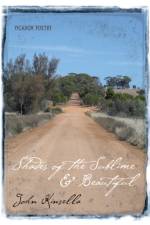
Australian John Kinsella is one of the most highly regarded poets currently writing in English. Taking Edmund Burke's 250-year old masterpiece A Philosophical Enquiry into the Origin of Our Ideas of the Sublime and Beautiful as his template, Kinsella has produced his most accomplished and broadly representative work to date. Shades of the Sublime & Beautiful is a warm, human, anecdotally rich book, concentrating many of the themes that have obsessed its author over the last twenty years: language, love, the invocation of place, the mysteries of the Australian wilderness, and our mediations between the human and natural realms. Together, these lyric meditations build towards a profound thesis on the ecology of the imagination, and are always conducted in concrete, vivid and exuberant language that is unmistakably Kinsella's own. 'Kinsella's poems are a very rare feat: they are narratives of feeling. Vivid sight - of landscapes, of animals, of human forms in distant light - becomes insight. There is, often, the shock of the new. But somehow awaited, even familiar. Which is the homecoming of a true poet' George Steiner 'John Kinsella is an Orphic fountain, a prodigy of the imagination . . . he frequently makes me think of John Ashbery: improbable fecundity, eclecticism, and a stand that fuses populism and elitism in poetic audience' Harold Bloom
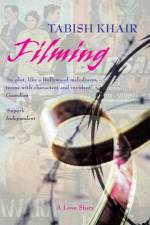
Set primarily in India and spanning the twentieth century, Filming tells a series of stories, including that of one-time prostitute Durga, who is persuaded to give away her young son, Ashok, and that of Saleem, the son of a prostitute and two-times star of the silver screen. As these stories intertwine and overlap, they combine to create a novel that is simultaneously about the small details and the bigger picture, weaving together major historical events - including Partition, the assassination of Gandhi, the rise of photography and the Bombay film industry, and the development of barbed wire - with the everyday moments that make up the fabric of our lives. 'Its plot, like a Bollywood melodrama, teems with characters and incident' Guardian 'Elegantly structured and taut with understated passion, Filming is a brilliant recreation of the lost world of early cinema and the continuing tragedy of religious hatred . . . Its delights as well as its message should find admiring readers everywhere' Independent 'Absorbing . . . Filming is distinguished by its ambition, its structural inventiveness and its highly evocative prose' TLS 'Underpinning this intriguing novel is a concern for the truth . . . In keeping with Khair's pertinent and thought-provoking musings on self-deception, its skill lies in making us question our assumptions about what we do and why we do it' New Statesman
Detective Harry Mason has rejoined the South African Police Service after a two-year leave of absence, and moved over to the specialised Serious and Violent Crimes unit, headed by the tough and fiery veteran commander Superintendent Carl 'Blackie' Swarts. Soon afterwards, Harry is assigned to investigate the slaying of a minor politician and his family, in a township west of Johannesburg. The case, at first seemingly unsolvable, is abruptly saved by an enigmatic grassroots anarchist whom Harry befriended during the apartheid riots of the '80s, and soon the SVC is hot on the heels of one of the country's most secretive and violent vigilante groups, known as 'The Guardians', headed up by two brothers whose brutality is legendary amongst the poor inhabitants of Johannesburg's squatter camps. As the investigation slices away at the layers of secrecy surrounding this group, other secrets surface - truths that ultimately pose a threat to Harry's unit, and to the city at large. When Harry is abruptly gunned down by unseen assassins during a dawn raid on a remote village, and a bomb is detonated in the judicial heartland of Johannesburg, his former police partner and long-time friend, Detective Jacob Tshabalala, is forced to take matters into his own hands, and expose a splinter faction of vigilantes operating within the police service itself - a faction whose connections stretch all the way into parliament itself.
Mei is a modern, independent Chinese woman. She runs her own business in Beijing, working as a private investigator; she owns a car; she even has that most modern of commodities, a male secretary. One day, 'Uncle' Chen - no relation but a close friend of her mother's - comes to Mei with a case to investigate. He asks her to find the Eye of Jade, a Han dynasty artefact of great value. The Eye of Jade was taken from its museum during the years of the Cultural Revolution when Red Guards swarmed the streets, destroying many remnants of the past. Mei's investigations reveal a story that has far more to do with the past, and her own family history, than she could ever have expected. This story forces her to delve into that dark part of China's history, Mao's labour camps and the countless deaths for which no-one was ever held responsible. It exposes the agonising choices made during the Revolution, to kill or be killed, to love or to live. Eye of Jade is a fascinating glimpse of city life in modern China. Liang captures vividly Beijing's bustle and noise, from seedy gambling dens and cheap noodle bars to the splendour of the Forbidden City. Through a rich cast of characters including immigrant workers and government officials, she examines the sometimes uneasy relationship between China's brutal communist past and its increasingly capitalist present.
Four women gather to celebrate their friendship. A quarter-century of intimacies shared, betrayals survived, differences reconciled. There is Claire, with her unsuitable men; she knows that life will never give her the one thing she has always wanted. Nora, the perfect housewife, has kept something hidden from her friends for over twenty-five years. Maggie has been unhappily married to Ray for longer than she cares to remember. And then there is Georgie, feisty and opinionated, who has had her own way more than is good for her. But tonight, the complex web of spouses, lovers and secrets that has bound them all together is about to unravel. And one of the four women plans not to be there. At a Time Like This, things can never be the same again . . . 'Dunne is such a gifted storyteller that she credibly recreates a world that pulls the reader in deep . . . ' Evening Herald
When Chelsea Duke took a year out to travel round the world alone, she had no idea what she was letting herself in for. Never having described herself as the outdoorsy type or having stayed in a hostel before, life on the backpacker trail held some rather unpleasant surprises. But by the end of the year she had amassed a range of survival techniques to rival Ray Mears, all of which she is generously passing on here. From beauty treatments to do before you set off and how not to kill yourself in a South American shower, to the indispensable nature of the sparkly flip-flop, High Heels and a Head Torch will tell you everything you need to know to keep yourself looking and feeling glam when your wardrobe fits into a shoe box and those little home comforts are a million miles away. As well as lists of DOs and DON'Ts and tons of useful advice on every aspect of the travel experience, including personal safety, High Heels and a Head Torch is full of hilarious anecdotes and is the ultimate survival tool for any glamorous girl about to set off in search of adventure.
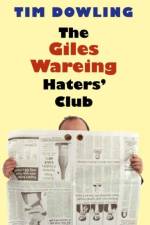
Giles Wareing has started telling people he's forty, even though he's actually thirty-nine years and eleven months. It's supposed to help him conquer the fear, but in fact he has only given the fear a four-week head start. Giles is a freelance writer of amusing articles for a national newspaper. One day, feeling particularly fortyish, he happens to type 'Giles Wareing+unfunny' into a search engine. And that's when he discovers the thread. The thread is called 'The Giles Wareing Haters' Club', and is entirely devoted to holding everything he has ever written up to excoriating criticism and ridicule. As Giles becomes obsessed with the thread, with tracking down its participants, his angst begins to focus on one particularly scornful contributor, and it soon becomes clear that things are going really quite badly wrong . . . A tragedy, a farce and a detective story, The Giles Wareing Haters' Club is an absorbing, hilarious and razor-sharp look at the modern male in all his dysfunctional glory. 'Entertaining and unexpectedly poignant' Times Literary Supplement 'Very funny . . .Cringe comedy at its best' GQ 'An acerbically dry and hilarious tale' InStyle
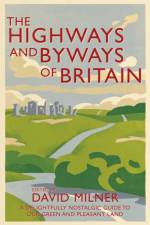
Between the end of the nineteenth century and the Second World War Macmillan published a much-loved and extremely successful series of books under the title of 'Highways and Byways'. In them, the authors took readers on a delightful guided tour of the country, county by county, pointing out places of interest, key historical events and local lore and legend. Now, Macmillan is reissuing - in one beautifully designed volume - a selection of those highways and byways, which affords contemporary readers both a charming period piece and a wonderful glimpse of the very best of Britain.
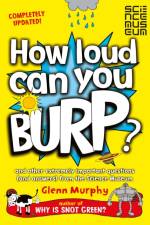
How loud can you burp? Could we use animal poo to make electricity? Why is water wet, and is anything wetter than water? What's the deadliest disease in the world? What are clouds for? What's the difference between a brain and a computer? This is a wonderfully funny and informative book which helps us take a fresh look at the world (and universe) we live in, with no boring bits and an abundance of fascinating facts!A doodle-filled book of questions and answers from the author of the bestselling Why Is Snot Green?, Glenn Murphy
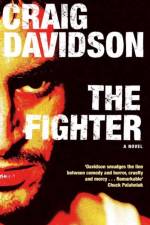
When a pair of fighters step into an illegal ring, sometimes only one walks out. This is the story of two men from radically different backgrounds, but with one thing in common. For Rob, it's a question of talent and duty. For Paul, it's one of fear. In the bloody world of bare-knuckle boxing the stakes are mercilessly high. Testing the difficult relationships between fathers and their sons, The Fighter explores the lengths to which these men are driven for self-knowledge, and the depths they will plumb in order to belong.
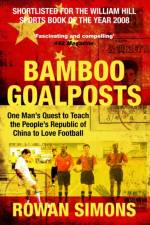
Rowan Simons has lived (and played football) in China for over twenty years and Bamboo Goalposts is his amusing and insightful account of what it's like to live, work and play there. He presents and works with Beijing TV and runs his own media company, but his real passion is getting China to embrace the social and health benefits of amateur football. Which isn't easy in a country where for decades it was illegal for more than ten people to congregate for the purposes of a recreational sporting activity. Rowan built a football pitch and clubhouse and now heads Club Football - http://www.clubfootball.com.cn - whose growing membership has given him genuine hope that by the time the Beijing Olympics begin in 2008 he might be getting somewhere. No other book communicates more clearly, more humourously and more affectionately what contemporary China is like when viewed through Western eyes. Rowan speaks fluent Chinese and his love of the country and its people shines off every page. He has lived there for so long that he understands what it takes to get ahead, but at the same time he is still very much a down-to-earth English football fan who just wants to share his passion for the beautiful game. Bamboo Goalposts is a personal odyssey inspired by the selfless pioneers of amateur football who took the game around the world in centuries past, but somehow missed China.
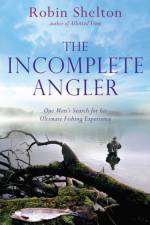
When Robin was a boy, fishing with his father was an integral and much-loved part of family holidays, but as an adult he fished infrequently, with terrible technique and rare success. Until one day, feeling inspired to supplement the vegetables from his allotment with nature's free bounty, fish, he tentatively decided to try again. Full of dizzy excitement at all the equipment available - the rods, the reels, the rigs, the lures, the tackle box complete with light in its lid, into which everything packed so beautifully - he embarked on his journey as a born-again angler. What follows is a funny, touching and even informative book about Britain's most popular sport. From beachcasting off the stormy Pembrokeshire coast to flyfishing for trout in tranquil Hertfordshire, Robin shares his experiences, his successes and failures, and even some of his favourite recipes. Along the way he discovers exactly why anglers feel so passionate about their chosen sport.
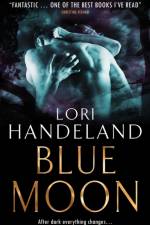
Miniwa, Wisconsin, is under siege, but not by the usual summer tourists. The area's normally shy wolf population has begun stalking human prey, and their victims have been disappearing . . . or worse. Something is happening in the woods. Something no on can explain . . . Officer Jessie McQuade has seen plenty in her years on the force - but nothing as intriguing as the gorgeous, naked man she encounters while tracking a rogue wolf. Professor Will Cadotte is a Native American activist. He's also the only man capable of distracting Jessie from her work. And for a cop, distraction - no matter how pleasurable can be deadly. It's against Jessie's better judgement to accept Will's help in her investigation, yet she soon finds herself doing exactly that - and more. Will's dark, penetrating eyes see into a part of Jessie's soul she never knew existed. It's exhilarating, and terrifying. Now, as a town's deepest secrets come to light no one is safe: not friends, lovers, or strangers. And as Jessie follows a trail to the shocking truth, she'll have to decide who she can trust when the moon is full . . .
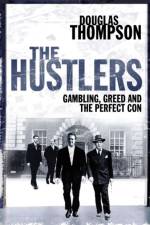
Invitations to John Aspinall and John Burke's illegal gambling parties were the most sought after in 1950s London - only the wealthy and well-connected were allowed past their door. When the police finally arrested them, Aspinall and Burke challenged the law - and won. As a result gambling was legalised. Which interested crime boss Billy Hill and his lieutenant Bobby McKew, because suddenly clubs sprang up everywhere and Billy had a foolproof way of fixing the cards. He also had his eye on the ultimate prize, Aspinall's exclusive new club, The Clermont... Revealing for the first time how Aspinall and Hill plotted to steal a fortune, based on testimony from Burke and McKew, The Hustlers is a riotous journey back to 50s and 60s London. With a cast of characters that ranges from safecracker Eddie Chapman to the reckless Earl of Derby, from croupier Louis the Rat to unlucky Lord Lucan, it vividly recreates the exploits of the gamblers and gangsters whose lives collided in the clubs and pubs of Mayfair. 'a fascinating glimpse into a bygone world . . . when chemmy parties took London by storm and toffs were often found to be rubbing shoulders with gangsters' Daily Express
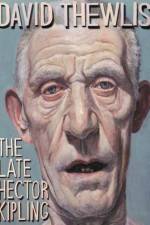
Hector Kipling has everything to live for: he is a talented artist with loving parents, a beautiful girlfriend, dependable mates and good health. But when Kirk Church, one of his best friends, and a habitual painter of cutlery, announces that he may have a brain tumour, the prospect of a character-building bereavement, with all the attendant suffering and sympathy, is a little too difficult for Hector to resist. Will it make him a better artist? Will it make him as successful as his friend Lenny Snook, who fills limousines with blood and has just been nominated for the Turner Prize? As events begin to unravel it doesn't take long for Hector's charmed world to fall completely and irreparably apart. From settees to stalkers, con men to corpses, paranoid self-portraits to S&M, The Late Hector Kipling is an irreverent and candid exploration of life, death, art and everything in between. 'Wonderful entertainment . . . A funny and successful satire' Observer Review 'Exquisitely written with a warm heart and a wry wit, this is a stunning debut.' Elle 'David Thewlis has written an extraordinarily good novel, which is not only brilliant in its own right, but stands proudly beside his work as an actor, no mean boast.' Billy Connolly 'I laughed and laughed until I read my own name amongst the carnage of Thewlis's unfortunate characters. This book is a disgrace - it's mean, cruel and refreshingly cynical.' Jake Chapman
Abonner på vårt nyhetsbrev og få rabatter og inspirasjon til din neste leseopplevelse.
Ved å abonnere godtar du vår personvernerklæring.