


Gjør som tusenvis av andre bokelskere
Abonner på vårt nyhetsbrev og få rabatter og inspirasjon til din neste leseopplevelse.
Ved å abonnere godtar du vår personvernerklæring.Du kan når som helst melde deg av våre nyhetsbrev.

Savage giant moles, rail pirates, and explorers abound in China Mieville's thrilling young adult novel, Railsea.On board the moletrain Medes, Sham Yes ap Soorap watches in awe as he witnesses his first moldywarpe hunt. The giant mole bursting from the earth, the harpoonists targeting their prey, the battle resulting in one's death and the other's glory - are extraordinary. But no matter how spectacular it is, travelling the endless rails of the railsea, Sham senses that there's more to life. Even if his captain can think only of her obsessive hunt for one savage mole. When they find a wrecked train, it's a welcome distraction. But the impossible salvage Sham finds there leads to trouble. Soon he's hunted on all sides: by pirates, trainsfolk, monsters and salvage-scrabblers. And it might not be just Sham's life that's about to change. It could be the whole of the railsea.
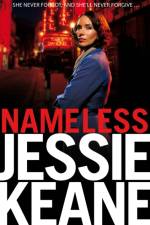
She never forgot, and she'll never forgive . . .In 1941, mixed race Ruby Darke is born into a family that seem to hate her, but why? While her two brothers dive into a life of gangland violence, Ruby has to work in their family store. As she blossoms into a beautiful young woman she crosses paths with aristocrat Cornelius Bray, a chance meeting that will change her life forever. When she finds herself pregnant, and then has twins, she is forced to give her children away. At that point she vows never to trust another man again. As the years pass, Ruby never forgets her babies, and as the family store turns into a retail empire, Ruby wants her children back. But secrets were whispered and bargains made, and if Ruby wants to stay alive she needs to forget the past, or the past will come back and kill her.Nameless is a gripping underworld thriller by bestselling author Jessie Keane. It is followed by the thrilling sequel, Lawless.
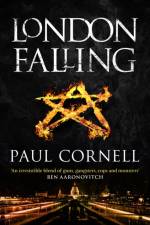
'He's gone and written a novel too! I suspect it will be just as good as everything else he's written, and that's not fair at all.' - George R. R. Martin, author of Game of Thrones. London Falling by Paul Cornell is an exciting urban gothic mystery, where dark powers gather in the battle for London's streets.The dark is rising . . . Detective Inspector James Quill is about to complete the drugs bust of his career. Then his prize suspect Rob Toshack is murdered in custody. Furious, Quill pursues the investigation, co-opting intelligence analyst Lisa Ross and undercover cops Costain and Sefton. But nothing about Toshack's murder is normal. Toshack had struck a bargain with a vindictive entity, whose occult powers kept Toshack one step ahead of the law - until his luck ran out. Now, the team must find a 'suspect' who can bend space and time and alter memory itself. And they will kill again. As the group starts to see London's sinister magic for themselves, they have two choices: panic or use their new abilities. Then they must hunt a terrifying supernatural force the only way they know how: using police methods, equipment and tactics. But they must all learn the rules of this new game - and quickly. More than their lives will depend on it.Continue the gritty Shadow Police series with The Severed Streets and Who Killed Sherlock Holmes?'An irresistible blend of guns, gangsters, cops and monsters' - Ben Aaronovitch, author of Rivers of London.
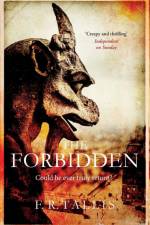
When ambitious Doctor Paul Clement takes a job at the mission hospital on Saint Sebastien, he has dreams of discovering cures for tropical diseases. What he finds is a place where the black arts are just a way of life. After witnessing the ritualistic murder of a young man, said to be one of the living dead, her is forbidden to speak of what he has seen. On returning to Paris, Clement's attention turns to studying the nervous system and resuscitation. He is told of patients who have apparently died, been brought back to life, and whilst suspended between life and death, experience what they believe to be heaven. Clement attempts a daring experiment in order to confirm these extraordinary reports, but the outcome is wholly unexpected. Could it be that when he is resuscitated, he brings something back with him - an ancient evil, so powerful that it can never be destroyed? Is the good doctor slowly succumbing to madness, or has he really passed through the gates of hell?
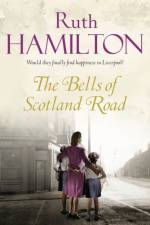
In 1930, Bridget O'Brien, a young widow with two children, fled her brutal and bigoted father and headed for Liverpool and an arranged marriage with a man she had never met. Her destination, the famous Scotland Road, was noisome and terrifying and a far cry from the clean air and flowing rivers of the only country she had known, Ireland. When she met her middle-aged bridegroom, Sam Bell, whose twin sons were older than she was, her sense of isolation only increased. Anthony, one of her so-called stepsons, also held out the strong hand of friendship, but Liam, the favourite of his father, had the power to terrify her. Liam was cold, compelling, mysterious and antagonistic. He was also a priest.
The O'Neils, who have lost brothers and sons into the bowels of London's East End, keep watch over their one remaining young male, a boy named Seamus. Hardworking and good-hearted, they cling together and help each other, and a whole community.Meanwhile, Rosh Allen mourns the loss of Phil, her dearly-beloved husband. Aided and impeded by her mother, Anna, she struggles to raise three fatherless children. With the help of a kind-hearted neighbour, her wounds begin to heal, and she begins to take the first faltering steps into 'normality'.Tess and Don Compton are on the verge of separation. An apparently greedy and selfish woman, Tess wants a semi-detached house, and all her own way. But what really lies behind her desire to live on the posh side of the street.Behind the three families, two men are at work. One will do serious damage; the other will reunite a clan that goes all the way back to Ireland and to ancestors thrown ashore from the ships of the Spanish Armada.Brilliant storytelling that is perfect for fans of Nadine Dorries' The Four Streets or Maureen Lee.
In 1920 the Burton-Masseys lost their home, Pendleton Grange, their lands and several businesses in the heart of Bolton, including Massey's Yort. Reduced to a life of hardship, Alex Burton-Massey's widow and daughters took refuge in Caldwell Farm, all that was left of their former wealth. James Mulligan was the man who now owned their lands, and Massey's Yort quickly became known as Mulligan's Yard. He was a silent, brooding character whose manners teetered on the brink of rudeness, but in spite of this, many women found him attractive. Who was he? Did he hide a dark secret in the cellars of Pendleton Grange? And why did he involve himself so deeply in the lives of the Burton-Massey girls?
Ash is James Herbert's most controversial novel, and will make you wonder what is fact and what is fiction.Fear will let you in. Terror will keep you there. They were miscreants with black souls, roaming the corridors and passageways. Infamous people thought long-deceased. Hiding and nurturing their evil in a basement full of secrets so shocking they would shake the world if they were ever revealed. David Ash, ghost hunter and parapsychologist, arrives at Comraich Castle - a desolate, ancient place with a dark heart - to investigate a series of disturbing events. An incorporeal power has been ignited by a long-ago curse, fed and now unleashed by the evil of those who once inhabited this supposed sanctuary - and by some who still do. Yet their hour of retribution is at hand . . .
I'll not ask you to be mine ... I will never seek to blunt the fury in you, never, and will honour your will as my own. What say you? Can you be a soldier's wife? New England, 1673. Martha Allen, a young woman reviled by her family because of her refusal to marry, is packed off to be a servant in her cousin's home. She takes charge of the neglected household and annoys everyone around her - including a mysterious Welshman who works for the family, a man whose forceful nature matches her own. As they both gradually let their guard down, a fragile, uneasy friendship grows between the pair. Meanwhile, on the other side of the Atlantic, a band of assassins, driven by the will of Charles II, charter a ship to the New World. They have a single aim: to capture Thomas Morgan, the killer of Charles I, and bring him back to London where he will face an excruciating death. The Royalists want to see his head on a spike outside the Tower of London. As Martha begins to fall for the tall Welshman, he reveals a little of his past. It soon becomes clear that his life is in grave danger. As the threat of the assassins grows closer, can Martha find it in herself to be a traitor's wife? Praise for The Heretic's Daughter 'Absolutely compelling' Daily Mail 'A very fine novel ... a remarkably accomplished telling of a truly shocking tale' Daily Express
A Swedish crime writer as thrilling as Mankell, a detective as compelling as Wallander . . . Woman with Birthmark by Hakan Nesser is the fourth title in his atmospheric Van Veeteren series.A young woman shivers in the December cold as her mother's body is laid to rest in a cemetery. The only thing that warms her is the thought of the revenge she will soon take . . . Then a middle-aged man is killed at his home, shot twice in the chest and twice below the belt. He had recently received a series of bizarre phone calls where an old song is played down the line - evoking an eerie sense of both familiarity and unease. Before the police can find the culprit, a second man is killed in the same way. Chief Inspector Van Veeteren and his team must dig far back into each man's past - but with few clues at each crime scene, can they find the killer before anyone else dies?Woman with Birthmark is followed by the fifth book in the series, The Inspector and Silence.
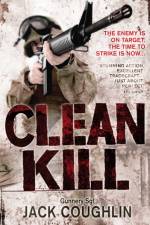
At a 15th Century castle outside of Edinburgh, Sir Geoffrey Cornwell, overseer of Task Force Trident and a former colonel, is in the process of brokering an unprecedented agreement. Prince Abdullah of Saudi Arabia and the Israeli Foreign Minister are scheduled to sign an historic peace treaty - that is, until their meeting is violently interrupted by a missile strike that leaves the Foreign Minister of Israel dead and the Prince injured.Gunnery Sergeant Kyle Swanson is immediately called to the UK, where he thwarts another attempt on the prince of Saudi Arabia's life. The attackers are Middle Eastern, but they aren't working for Al Qaeda - they're employed by foreign operatives opposed to the peace agreement and determined to claim Saudi oil reserves for themselves. Meanwhile, Juba comes out of hiding. One of the best snipers in the world and Kyle's nemesis, Juba remains determined to exact revenge on the man who nearly took his life.With scenes of tremendous suspense that span the globe, Clean Kill pits our hero against a group whose greed and vengeance know no limits . . .
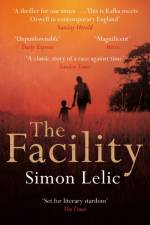
Henry Graves has dedicated his life to the prison service, but he is unprepared for the challenge his new and secret assignment brings. Tasked with managing a government facility hidden deep in the countryside, Henry finds himself tested as never before: by the confused and frightened prisoners, by the sinister Dr Silk and, above all, by his conscience. Tom Clarke, a precocious but naive journalist, has his own problems meanwhile. His career - and his life - is turned upside down by the arrival of Julia Priestley, who seeks his help in finding her estranged husband, Arthur, an innocent dentist who has been arrested under severe new anti-terrorism legislation. The authorities admit they have taken him but will not say where he is being held - or why. Discovering a trail that implicates those at the very top of government, Tom and Julia begin a quest to find Arthur, and the truth about his incarceration. But some people will stop at nothing to keep the facility's secret hidden, and soon the couple find themselves fighting for their lives . . .
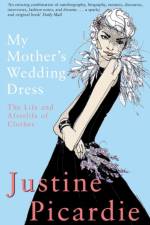
In this absolutely unique treasure trove of fashion, family memoir and literature, Justine Picardie tells a sequence of stories that reveal the fabric of the past, and how a family has fashioned itself through the clothes that they have worn: from her mother's black wedding dress to her first party frock, a translucent winged fairy outfit that provided an early lesson in what we uncover, and what we cover up. She also tells of her encounters with fashion designers - Karl Lagerfeld and Donatella Versace, among others; conversations with supermodels, and her search for Charlotte Bronte's ring. My Mother's Wedding Dress unravels why we care so much about clothes - the white satin and feathers and little black dresses with which we armour ourselves; the material of our lives. Above all, it is Justine Picardie's inimitable voice and thought-provoking quest for answers to her own past that make this book so special. 'An enticing combination of autobiography, biography, memoir, discourse, interviews, fashion notes, and dreams... a sparky and original book' Daily Mail 'Highly stylish and unusual, a selection of swatches that works as a whole' Sunday Telegraph
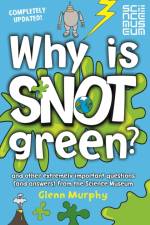
Why is snot green? Do rabbits fart? What is space made of? Where does all the water go at low tide? Can animals talk? What are scabs for? Will computers ever be cleverer than people? Discover the answers to these and an awful lot of other brilliant questions frequently asked at the Science Museum in this wonderfully funny and informative book.Divided into five sections, which cover everything from the Big Bang to bodily functions and cool gadgets:Lost in SpaceThe Angry PlanetAnimal AnswersBeing HumanFantastic FuturesPacked with doodles and information about all sorts of incredible things, and published in association with the Science Museum, this book contains absolutely no boring bits!
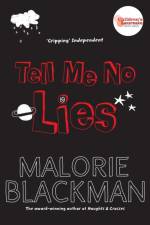
Gemma longs for her lost mother, taking comfort from the cuttings in her scrapbook; pictures of mothers who loved their children come what may. Mike is new to the area; a boy with a terrible secret to hide. A secret about his missing mother. Gemma and Mike - two kids hurt by their past and now inextricably linked. Their effect on each other's lives will be explosive.
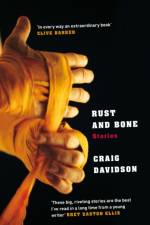
Rust and Bone conjures a savage world of prizefighters, gamblers and sex addicts; dogs fight to the death and bare-knuckled men fight for survival on the most extreme margins. And yet these gritty stories are tempered by gentleness, the quiet understanding in the most intimate relationships. A whale trainer's accident, a boy's life endangered - where human vulnerability is so close to the surface, the humanity of these characters heralds redemption and hope.
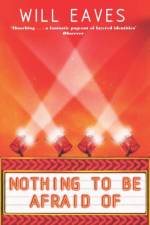
An earthquake strikes at the heart of London, its epicenter a theatre where a lavish production of The Tempest has just opened. Thus the scene is set for Will Eaves's gloriously deft tragicomedy of our time. Nothing To Be Afraid Of is both a lament for hope abandoned and innocence betrayed, and an exquisite comic pageant of Shakespearian vitality and compassion: an incidental theatrical history, across the twentieth century, of the art of pretence; of patience, trust and loyalty; of folly in youth and unforgivable old age. 'Tender, playful and full of beautifully observed descriptions of growing up and growing old . . . with some terrific comic set-pieces the equal of anything in Waugh and Wodehouse. Now that's good writing' Daily Telegraph 'In the case of his novel, Eaves has nothing to be afraid of. This deft, absorbing book more than confirms the promise of The Oversight. Eaves is a master of the dark arts of city fiction. He is to be read, relished and watched very closely' Independent 'Nothing To Be Afraid Of provides several coups de theatre . . . [it] is a tragicomic tale of secrets, a drowned daughter, infidelity and mistaken identity . . . It is so clever, so apt, so right that you have no option but to read the novel with its built-in encore all over again. It seems even better the second time round' Sunday Telegraph
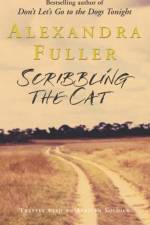
When Alexandra "e;Bo"e; Fuller was in Zambia a few years ago visiting her parents, she asked her father about a nearby banana farmer who was known for being a "e;tough bugger"e;. Her father's response was a warning to steer clear of him: "e;Curiosity scribbled the cat,"e; he told Bo. Nonetheless, Fuller began her strange friendship with the man she calls K, a white African and veteran of the Rhodesian War. With the same fiercely beautiul prose that won her such acclaim for Don't Let's Go to the Dogs Tonight, Fuller here recounts her friendship with K. He is, seemingly, a man of contradictions. Tattooed, battle-scarred, and weathered by farm work, K is a lion of a man, feral and bulletproof. Yet he is also a born-again Christian, given to weeping when he recollects his failed romantic life and welling up inside with memories of battle. For his war, like all wars, was a brutal one, marked by racial strife, jungle battles, brutal tortures, and the murdering of innocent civilians. Like all the veterans of the war, K has blood on his hands. Driven by K's memories, Fuller and K decide to enter the heart of darkness in the most literal way, by traveling from Zambia through Zimbabwe (formerly Rhodesia) and Mozambique to visit the scenes of the war and to meet other veterans. What results from Fuller's journey is a remarkably unbiased and unsentimental glimpse at life in Africa, a land that besets its creatures with pests, plagues, and natural disasters, making the people there at once more hardened and more vulnerable than elsewhere.
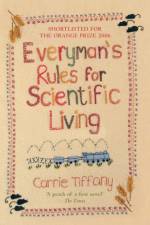
It is 1934, the Great War is long over and the next is yet to come. Amid billowing clouds of dust and information, the government 'Better Farming Train' slides through the wheat fields and small towns of Australia, bringing expert advice to those living on the land. The train is on a crusade to persuade the country that science is the key to successful farming, and that productivity is patriotic. In the swaying cars an unlikely love affair occurs between Robert Pettergree, a man with an unusual taste for soil, and Jean Finnegan, a talented young seamstress with a hunger for knowledge. In an atmosphere of heady scientific idealism, they marry and settle in the impoverished Mallee with the ambition of proving that a scientific approach to cultivation can transform the land. But after seasons of failing crops, and with a new World War looming, Robert and Jean are forced to confront each other, the community they have inadvertently destroyed, and the impact of their actions on an ancient and fragile landscape. Shot through with humour and a quiet wisdom, this haunting first novel vividly captures the hope and the disappointment of the era when it was possible to believe in the perfectibility of both nature and humankind. 'Beautifully written . . . kindly, sometimes hilarious and ultimately very sad' Times Literary Supplement 'A peach of a first novel by a writer with a deep understanding of relationships and the outside pressures that wear away the good soil' Sunday Times
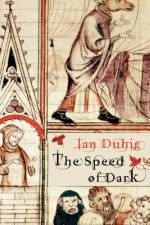
Ian Duhig's The Speed of Dark is structured around his astonishing reworking of the text of Le Roman de Fauvel, a medieval text that railed against the corruption of the 12th-century French court and church. In Duhig's hands, however, the tale of the power-mad horse-king Fauvel gains a terrifying and almost prophetic contemporary relevance, and is identified with more recent crusades, crazed ambitions and insatiable greeds. Elsewhere Duhig's many admirers will be delighted by his new ballads and elegies, his erudite high jinks and his low gags - with which he builds on the new imaginative territory he staked out in The Lammas Hireling to such universal acclaim. The Speed of Dark again shows Duhig as one the most capacious and brilliant minds in contemporary poetry. 'The most original poet of his generation' Carol Ann Duffy, Guardian 'His poetry is learned, rude, elegant, sly and funny, mixing gilded images, belly-laughs and esoteric lore about language (including Irish), art, history, politics and children's word-games' Ruth Padel, Independent on Sunday 'Duhig telescopes topical allusions, scholarly references and coarse humour into tightly-shaped, surreal poems which burst open with explosive moral force' Alan Brownjohn, Sunday Times
Following the exceptional acclaim for his first two books, Farley might have been forgiven for resting on his laurels with his 'difficult third' - but Tramp in Flames instead finds him driving his formal ambition and remarkable imagination harder than ever. A book of considerable emotional daring and sometimes Wordsworthian sweep, Tramp in Flames is the work of a meticulous archivist of our cultural memory, and sets the palimpsest of the present hour on a light-box. It also shows Farley rapidly becoming one of the definitive English voices of the age. 'Resonant without being flashy . . . lines that will stick with you for a really, really long time' Mark Haddon 'Funny, observant, brilliantly musical . . . streetwise, erudite, elusive, but very accessible' Ruth Padel, Financial Times 'Farley is one of our most vital and engaging voices. Even a title can twist at the familiar, commanding our attention. He has the knack of both establishing and undermining the securities of memory purely through turn of phrase' W. N. Herbvert, Scotland on Sunday Poetry Book Society Recommendation
Part memoir, part travelogue, Tales From the Torrid Zone is rooted in Alex Frater's birthplace, the tiny tropical republic of Vanuatu where his father ran its hospital and his mother, in her front garden, built its first school. From this obscure South Seas group he ranges over the hot, wet, beautiful swathe of the world that has haunted him ever since - dines with a tropical queen in a leper colony, makes his way across tropical Africa (and two civil wars) in a forty-four-year-old flying boat, delivers a new church bell to a remote Oceanian island and visits scores of countries to learn about their history, politics, medicine, flora and fauna (including the remarkable role of the coconut in tropical life). But, as becomes plain, the torrid zone is not just a geographical phenomenon, it's also a state of mind. The result is a witty, entertaining and immensely readable book from a fine storyteller.
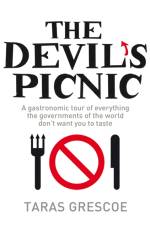
Never in history have we seemed to have such global freedom, such an opportunity to indulge our wildest tastes. We think we live in a time of unprecedented choice. But as Taras Grescoe discovers, this is just an illusion. In this witty expose our intrepid author goes in search of the things that the rulers of the world will punish you for trying - all the time asking the question: why in ostensibly free states should we be criminalized for behaviour that concerns no one but ourselves? In a travelogue that takes in Swiss absinthe, Cuban cigars, Bolivian coca tea and stinking French cheese, Taras Grescoe drinks, smokes and eats his way to finding out. Fun, philosophical, and unafraid of the big questions, this is a journey for free-thinkers, not the faint-hearted. As insightful and outraged as Fast Food Nation and as funny and astute as Dude, Where's My Country , The Devil's Picnic is a feast for anyone who has ever made a stand for personal liberty.
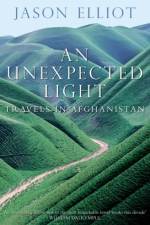
An Unexpected Light, Travels in Afghanistan was greeted on publication by universal critical acclaim and is now widely acknowledged as the most influential contemporary work of Afghanistan. Written on the eve of 9/11, at the height of Afghanistan's isolation from the world, Jason Elliot's uncannily prescient account of his winter journey through the country torn by civil war is as pertinent today as it was then. Winner of the Thomas Cook/Daily Telegraph Travel Book Award in the UK and a New York Times Bestseller in the USA, it recounts the author's daring and passionate investigation into an extraordinary culture, first as a clandestine guest of the mujaheddin during the Soviet occupation, and ten years later during the Taleban advance on the besieged capital, Kabul. This new edition of An Unexpected Light is illustrated with the author's photographs and celebrates a classic work of travel literature. 'Jason Elliot is that rare traveller who surrenders himself to people and places and this tale is a many-layered reconstruction of his experience . . . I am sure this book will soon be among the classics of travel' DORIS LESSING 'An Unexpected Light is often unexpectedly funny and constantly perceptive, but it is also profound' New York Times 'What raises the book to the level of a classic is its intensely personal meditation on the magic of unplanned adventure, of the pain and pleasure of pushing into the unknown. The whole book, like Elliot's travels themselves, operated on this heightened level' The Times
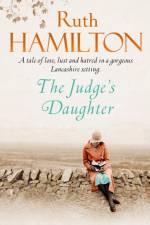
Agnes Makepeace has always been courageous and strong-minded and on the surface, she couldn't be more unlike the chilly, reserved Helen Spencer. Agnes knows there is a mystery to her own background and is determined to discover the truth about her past. She believes the key to unlock the secret is held with husband's employer, Judge Zachary Spencer of Lambert House - a mean-spirited widower and solitary man. Judge Spencer has long neglected his daughter, Helen and notices her even less when he takes a new wife. But he has underestimated both the extent of his daughter's misery and her determination to enact her revenge. Helen's new-found confidence causes her to behave in a way that will have a lasting, and shocking impact on both families and, surprisingly, leads to a lifelong friendship with Agnes. Yet it is only when the broodingly silent house on Skirlaugh Rise ceases to hold its breath and deliver the answers that Agnes has been seeking that she can finally find the peace of mind she has always longed for.
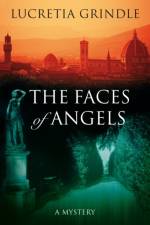
A sweltering day in Florence, and newly-wed art student Mary Warren breaks away from her tour group in the Boboli Gardens to wander into a shady tunnel of trees. But the tranquil setting conceals a complex maze and a masked killer: within minutes Mary has been severely attacked and her husband brutally murdered. A year later and the 'Honeymoon Killer', Karel Indrizzio, is dead and Mary is living a restless life in Philadelphia. Her scars are a constant reminder of that dreadful day, but in an effort to help her forget, her friend - attractive journalist, Pierangelo - invites her to return to Italy. However, in this city Mary's dark secret cannot stay buried for long. For there is a new menace stalking the women of Florence, and his technique is startlingly reminiscent of her own attacker's. Piero is following the deadly trail and Mary soon recognizes terrifying implications and patterns in his research: either this is a copycat, or her husband's murderer is still at large . . .
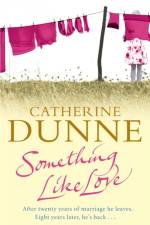
After twenty years of marriage, Ben ups and leaves his wife Rose, their children and their family home in Dublin. Just like that: no words of regret, no compromise, no note - only a simple 'I don't love you anymore'. It has taken Rose all this time to get her life together again: she's brought up her three children, Lisa, Brian and Damien single-handedly, and not without difficulty for never again does she want to be completely broke, or to have to revisit that night in hospital with Damien hovering between life and death. To think about it just makes her shudder. Now Rose is concentrating on her business, the 'Bonne Bouche' bakery, and all the clients she's won, all the friends she's made. Her accounts are in order, the business is blooming. Life really doesn't seem too bad. Until Ben returns, again without warning, and it is soon clear that he expects to infiltrate Rose's carefully created world in the most unwelcome of ways. A stunning sequel to In the Beginning, Catherine Dunne's first novel, Something Like Love is an astonishing portrait of a marriage, and of how the ties that bind are sometimes there forever.
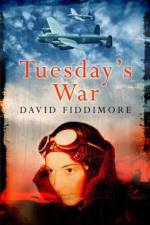
This wasn't to be the last time that we left pieces of aeroplane all over Germany, but you remember your first time. It's just like your first kiss. It is 1944 and as their battered Lancaster Bomber limps home to base in thick fog, an RAF crew are horrified to find a second Bomber just moments in front. It is too close for their own pilot to react, but in one skilful move their forerunner swoops out of the way and the crew's lives are saved. Back on the runway the seven, thankful young men eagerly await their saviour's return and are stunned, when the pilot climbs down from the cockpit, to find themselves face to face with female Air Transport Auxiliary pilot Grace Baker. Grace quickly befriends the crew, introducing them to their new Bomber, 'Tuesday's Child' and ensconsing herself in their spare bunk. Then when rear gunner 'Pete the Pole' absconds, the lads don't think twice about asking Grace to secretly take his place in 'Tuesday' as they return to Germany . . . As radio operator Charlie Bassett regales the reader with the drama of combat during his eight weeks aboard 'Tuesday's Child' in 1944, a funny, authentic and deeply humane tale unfolds. Comparable to Sebastian Faulks' Birdsong, Tuesday's War races vividly across the page, emotionally entwining the reader in the lives and friendships of its extraordinary characters and awakening us to the heroics and realities of war.
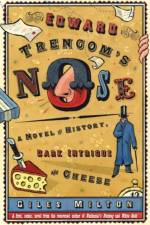
Edward Trencom has bumbled through life, relying on his trusty nose to turn the family cheese shop into the most celebrated fromagerie in England. But his world is turned upside down when he stumbles across a crate of family papers. To his horror, Edward discovers that nine previous generations of his family have come to sticky ends because of their noses. When he investigates further, Edward finds himself caught up in a Byzantine riddle to which there is no obvious answer . . . Giles Milton's deliciously comic debut novel is a mouth-watering blend of Louis de Bernieres, Tom Sharpe and P. G. Wodehouse with every page permeated by the pungent odour of cheese. 'The pong of ripe Limburger lingers impressively' - Observer 'Comic novels are difficult to write: any old halfwit can produce 400 pages of stinking high seriousness, but it takes a real wit to manage 400 pages of mild, fragrant good humour' Guardian
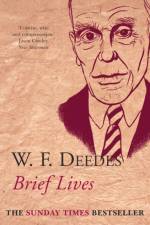
In this eclectic selection of biographical sketches Bill Deedes remembers some of the key figures of the twentieth century. Political heavyweights such as Ramsay MacDonald, Stanley Baldwin and Anthony Eden are reassessed and re-evalued, while record breakers such as Sir Edmund Hillary and Roger Bannister are shown to be far more than just their achievements. Further afield, W. F. Deedes ruminates on the chaotic and shady world of Imelda Marcos, the dignity and determination of anti-apartheid campaigner Helen Suzman and the controversial leadership of Ian Smith in Rhodesia. But there are lighter portraits too. Noel Coward, with his useful advice on trains, Mary Whitehouse's inadvertent demonstration of pornography and Malcolm Muggeridge's half-hearted suicide attempt all feature in this delightful compendium. Like his previous books, Dear Bill and At War With Waugh, Brief Lives is an affectionate, perceptive and anecdotal book, bursting with life, humour and wit.
Abonner på vårt nyhetsbrev og få rabatter og inspirasjon til din neste leseopplevelse.
Ved å abonnere godtar du vår personvernerklæring.