




Gjør som tusenvis av andre bokelskere
Abonner på vårt nyhetsbrev og få rabatter og inspirasjon til din neste leseopplevelse.
Ved å abonnere godtar du vår personvernerklæring.Du kan når som helst melde deg av våre nyhetsbrev.

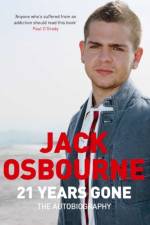
By the time Jack was fifteen he was addicted to alcohol and prescription drugs, was hanging out with rock stars in LA and living a life that any teenager would aspire to. And then The Osbournes turned him into a global celebrity. But as much as Jack enjoyed his fame, underneath it all he was still an awkward teenager, using his sense of humour as a shield. And with fame and money came a greater access to drugs - his addictions took a firmer hold on him and his behaviour was soon out of control. In 21 Years Gone Jack writes with brutal frankness about his descent into addiction and the low point he reached when Sharon was diagnosed with cancer. Scared that his mum might die, Jack retreated further into his alcoholic shell, hating who he was, hating what he did. Every night he would get into bed and pray for God to take his life. When Sharon realised what was happening she told Jack he had to go to rehab - and slowly he turned his life around. Discovering a passion for extreme sports, he went from overweight and unfit to the lean young man he is today - courtesy of such adventures as running with the bulls in Pamplona, fighting a Thai martial arts expert known only as 'The Man' and scaling El Capitan, one of the world's toughest climbs. By turns funny, disarmingly honest and moving, 21 Years Gone is the amazing story of young man who has confronted his demons and defeated them.
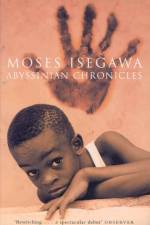
Set in a tribal village during the years of the Idi Amin terror in Uganda, Abyssinian Chronicles takes us into the heart of Africa, vividly immersing us in the mesmerizing extremes of beauty and brutality, wisdom and ignorance, wealth and poverty, hope and despair that define the continent today. We come to intimately know an extended family rich in centuries-old tradition, and follow the unsentimental education of the boy who takes it all in, who learns, observes and teaches, and starts to feel the very earth moving under the African experience and the people he loves. Filled with extraordinary characters, animated by a wicked sense of humour and guided by intense, clear-eyed compassion, this novel feels at once classic and unique. 'As Rushdie's Midnight's Children was for modern India, Abyssinian Chronicles will likely prove to be a breakthrough book for Uganda' Time Out US 'A spectacular first novel. Epic, sprawling, brimming with life - and death' Elle US
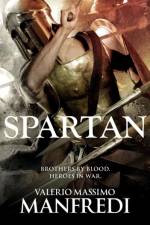
Herodotus tells us that not all of the three hundred Spartan warriors died at the hands of Xerxes, King of the Persians, in the battle of the Thermopylae: two were saved bringing a life-saving message back to the city . . .Valerio Massimo Manfredi's Spartan is the saga of a Spartan family, torn apart by a cruel law that forces them to abandon one of their two sons - born lame - to the elements. The elder son, Brithos, is raised in the caste of the warriors, while the other, Talos, is spared a cruel death and is raised by a Helot shepherd, among the peasants. They live out their story in a world dominated by the clash between the Persian empire and the city-states of Greece - a ferocious, relentless conflict - until the voice of their blood and of human solidarity unites them in a thrilling, singular enterprise.
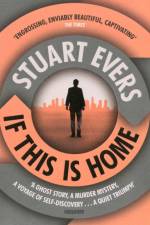
Mark Wilkinson has three names. He left his own behind in the rainy north of England. U.S. immigration know him as Joe Novak. And at the Valhalla, the mysterious complex in Vegas where he sells lofty ambition and dark desires, he goes by Mr Jones. Since the age of eighteen, Mark has been running away, and hard. Away from everything that is flat and dull and ordinary: his market town. Away from disappointment: his vanished mother, his broken father. And away from heartbreak. Bethany Wilder, beautiful goth, carnival queen, partner in dreams, tragic ghost, never made it with him to America. He's thirty now and again it's time to flee - in the opposite direction, towards home. With shades of JG Ballard, Murakami, and Joseph O'Neill, this is an inventive and emotional novel about the power of dreams to destroy, of memory to distort, and of courage, ultimately, to heal.
Living the high life in LA - cocktail parties, exotic restaurants and a cosmopolitan boyfriend - Ree Drummond thinks she's got it all figured out. But, try as she might, she can't shake the feeling that something is missing. Returning to her hometown to get her life in order, Ree is struck by a bolt of lightning - a blue-eyed, strong-jawed, enigmatic cowboy. She calls him Marlboro Man, and though he's a million miles away from anything she's ever known before, their attraction is undeniable. But with her family coming apart at the seams, her ex-boyfriend still on the scene, and a new career waiting for her in the city, their courtship is far from simple. As life on the ranch beckons (complete with cows, horses, prairie fires and lots of manure), is she really ready to trade in her high heels for Wranglers? Heartwarming, funny and passionate, Pioneer Woman is a story of romance against the odds, and of how love can find you in the most unexpected places.
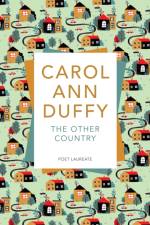
The Other Country was Carol Ann Duffy's third collection, and as with her later books, takes its readers on journeys that seem initially similar - but soon prove anything but. This book leads our imagination to places our minds could not have suspected were there, or would not have dared to go alone. Some of its voices are disarmingly direct, while others blur the lines between fantasy and reality, confession and self-delusion, forcing us to re-examine everything we thought we knew about some of our most basic human drives and emotions. Deeply intelligent, unflinchingly honest, with a deftness of touch and tone, and openness all the more moving for its lack of sentimentality, The Other Country is as remarkable a collection today as it was on its first publication.
'Enchanting ... while writing a series of richly comic recollections which had me laughing out loud every few pages, he has now written a book with much more underlying seriousness and much more to say about the human condition than any Booker prizewinner could achieve' A. N. Wilson, Country Life 'Intensely comical ... contains some of the funniest scenes I have seen in print this year' Jeremy Paxman, Observer 'Although on route to meet plenty of people more famous ... none of them can begin to match the charm of the book's bumbling narratior in his Dickensian progression from weedy daydreamer, to failed solicitor, country squire, genealogist, obituarist and lurker at stage doors. This man is an institution, one of the great English eccentrics of our time' James Delingpole, Literary Review
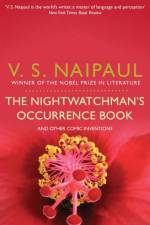
With a preface by the author. V. S. Naipaul's legendary command of broad comedy and acute social observation is on abundant display in these classic works of fiction - two novels and a collection of stories - that capture the rhythms of life in the Caribbean and England with impressive subtlety and humour. The Suffrage of Elvira is Naipaul's hilarious take on an electoral campaign in the back country of Trinidad, where the candidates' tactics include blatant vote-buying and supernatural sabotage. The eponymous protagonist of Mr Stone and the Knights Companion is an ageing Englishman of ponderously regular habits whose life is thrown into upheaval by a sudden marriage and an unanticipated professional advancement. And the stories in A Flag on the Island take us from a Chinese bakery in Trinidad - whose black proprietor faces bankruptcy until he takes a Chinese name - to a rooming house in London, where the genteel landlady plays a nasty Darwinian game with her budgerigars. Unfailingly stylish, filled with intelligence and feeling, The Nightwatchman's Occurrence Book is the work of a writer who can do just about anything that can be done with language. 'V. S. Naipaul has a substantial claim as a comic writer . . . This humour, conducted throughout with the utmost stylistic quietude, is completely original' Kingsley Amis, Spectator
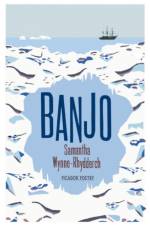
While Banjo opens with a clutch of fine lyrics, elegies and set-pieces, at the heart of Samantha Wynne-Rhydderch's new book is a remarkable tale of darkness and light, music and silence. Celebrating the centenary of Captain Scott's arrival at the South Pole in 1912, Banjo gives us new psychological insight into the lives of the early Antarctic pioneers, as well as an extraordinary account of the role played by music in surviving the long Antarctic winters. Banjo is Wynne-Rhydderch's most accomplished collection to date, and further evidence of a writer of great imaginative versatility. 'Everything is close to the nerve, everything under cool emotional pressure. The cuts blossom into freshness and colour. And delight, the delight borne out of precision of sound and an exquisite command of register' George Szirtes 'Lines full of beauty, sometimes gorgeous, sometimes stark . . . implicating us in the essential human situations, life, death and survival, she explores' Philip Gross
"e;First you take a drink,"e; F. Scott Fitzgerald once noted, "e;then the drink takes a drink, then the drink takes you."e; Fitzgerald wrote alcohol into almost every one of his stories. On Booze gathers debutantes and dandies, rowdy jazz musicians, lost children and ragtime riff-raff into a newly compiled collection taken from The Crack-Up, and other works. On Booze portrays "e;The Jazz Age"e; as Fitzgerald experienced it: roaring, rambunctious, and lush - with quite a hangover.
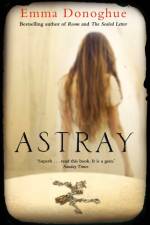
With the turn of each page, the characters that roam across these pages go astray. They are emigrants, runaways, drifters; gold miners and counterfeiters, attorneys and slaves. They cross borders of race, law, sex, and sanity. They travel for love or money, under duress or incognito. This fascinating collection from Emma Donoghue, author of the internationally bestselling Room, is a sequence of fourteen fact-inspired fictions about travels to, in and from North America, Astray offers a past in scattered pieces, a surprising and moving history for restless times.
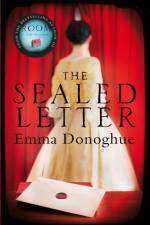
'The Sealed Letter is a page-turner with a jaw-dropping ending' Stylist Helen Codrington is unhappily married. Emily 'Fido' Faithfull hasn't seen her once-dear friend for years. Suddenly, after bumping into Helen on the streets of Victorian London, Fido finds herself reluctantly helping Helen to have an affair with a young army officer. The women's friendship quickly unravels amid courtroom accusations of adultery, counter-accusations of cruelty and attempted rape, and the appearance of a mysterious 'sealed letter' that could destroy more than one life . . . Based on a real-life scandal that gripped England in 1864, Emma Donoghue's The Sealed Letter is a delicious tale of secrets, betrayal, and forbidden love.
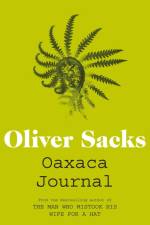
'Light and fast-moving, unburdened by library research but filled with erudition' New Yorker Oliver Sacks, the bestselling author of Awakenings and The Man Who Mistook His Wife for a Hat, is most famous for his studies of the human mind: insightful and beautifully characterized portraits of those experiencing complex neurological conditions. However, he has another scientific passion: the fern. Since childhood Oliver has been fascinated by the ability of these primitive plants to survive and adapt in many climates. Oaxaca Journal is the enthralling account of his trip, alongside a group of fellow fern enthusiasts, to the beautiful province of Oaxaca, Mexico. Bringing together Oliver's endless curiosity about natural history and the richness of human culture with his sharp eye for detail, this book is a captivating evocation of a place, its plants, its people, and its myriad wonders.
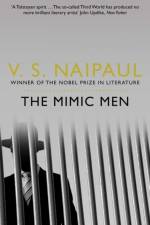
With a preface by the author.V. S. Naipaul's The Mimic Men is a profound, moving and often humorous novel that evokes a colonial man's experience in the post-colonial world. Born of Indian heritage, raised in the British-dependent Caribbean island of Isabella, and educated in England, forty-year-old Ralph Singh has spent a lifetime struggling against the torment of cultural displacement. Now in exile from his native country, he has taken up residence at a quaint hotel in a London suburb, where he is writing his memoirs in an attempt to impose order on a chaotic existence. His memories lead him to recognize the cultural paradoxes and tainted fantasies of his colonial childhood and later life: his attempts to fit in at school, his short-lived marriage to an ostentatious white woman. But it is the return to Isabella and his subsequent immersion in the roiling political atmosphere of a newly self-governing nation - every kind of racial fantasy taking wing - that ultimately provide Singh with the necessary insight to discover the crux of his disillusionment.'A Tolstoyan spirit . . . The so-called Third World has produced no more brilliant literary artist' John Updike, New Yorker
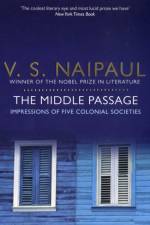
V. S. Naipaul's first travel book, The Middle Passage, takes us on a rich and emotional journey to a place of the greatest interest - his birthplace.In 1960, Dr Eric Williams, the first Prime Minister of independent Trinidad, invited V. S. Naipaul to revisit his native country and record his impressions. In this classic of modern travel writing he created a deft and remarkably prescient portrait of Trinidad and the Caribbean societies of four adjacent countries, Guyana, Surinam, Martinique and Jamaica. Haunted by the legacies of slavery and colonialism, and so thoroughly defined by the norms of Empire that it can scarcely comprehend its end, Naipaul catches this poor, topsy-turvy world at a critical moment, a time when racial and political assertion had yet to catch up - a perfect subject for the acute understanding and dazzling prose of this great writer. 'Naipaul travels with the artist's eye and ear and his observations are sharply discerning.' Evelyn Waugh 'Belongs in the same category of travel writing as Lawrence's books on Italy, Greene's on West Africa and Pritchett's on Spain' New Statesman
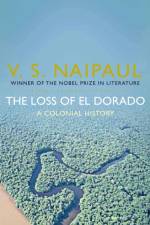
At the centre of this extraordinary historical narrative are two linked themes: the grinding down of the aborigines during the long rivalries of the quest for El Dorado, the mythical kingdom of gold; and, two hundred years later, the man-made horror of the new slave colony. In The Loss of El Dorado, V. S. Naipaul shows how the alchemic delusion of El Dorado drew the small island of Trinidad into the vortex of world events, making it the object of Spanish and English colonial designs and a Mecca for treasure-seekers, slave-traders, and revolutionaries. And through an accumulation of casual, awful detail, he takes us as close as we can get to day-to-day life in the Caribbean slave plantations - at the time thought to be more brutal than their American equivalents. In this brilliantly researched book, living characters large and small are rescued from the records and set in a larger, guiding narrative - about the New World, empire, African slavery, revolution - which is never less than gripping.
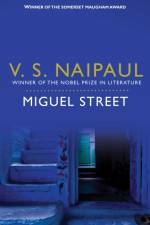
Miguel Street, V. S. Naipaul's first written work of fiction, is set in a derelict corner of Port of Spain, Trinidad, during World War Two and is narrated by an unnamed, precociously observant neighbourhood boy. We are introduced to a galaxy of characters, from Popo the carpenter, who neglects his livelihood to build 'the wild thing without a name', to Man-man, who goes from running for public office to staging his own crucifixion, and the dreaded Big-Foot, the bully with glass tear ducts. As well as the lovely Mrs Hereira, in thrall to her monstrous husband. V. S. Naipaul writes with prescient wisdom and crackling wit about the lives and legends that make up Miguel Street: a living theatre, a world in microcosm, a cacophony of sights, sounds and smells - all seen through the eyes of a fatherless boy. The language, the idioms and the observations are priceless and timeless and Miguel Street overflows with life on every page. This is an astonishing novel about hope, despair, poverty and laughter; and an enchanting and exuberant tribute to V. S. Naipaul's childhood home.
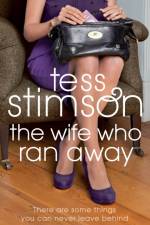
Kate Forrest is invisible... Ned, the husband she adores, doesn't seem to know she's alive, and her two charming children have grown into stroppy adolescents. Her boss is suddenly shunting her towards career Siberia, and her demanding mother is never off the phone. With her fortieth birthday fast approaching, all Kate wants to do is run away from the lot of them. And so she does. On impulse, Kate walks out of her job, her family and her life, and gets on a plane to Italy. With no ties and no responsibilities, she soon finds herself deliriously caught up in La Dolce Vita - and the arms of a man barely half her age. But when the unthinkable threatens her family, Kate is brutally forced to choose between her past and the future.
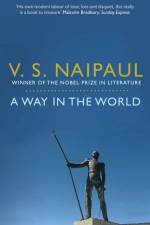
A Way in the World is a vastly innovative novel exploring vastly innovative novel explores colonial inheritance through a series of narratives that span continents, swing back and forth between past and present and delve into both autobiography and fiction. V. S. Naipaul offers a personal choice of examples of Spanish and British imperial history in the Caribbean, including an imagined vision of Raleigh's last expedition and an introduction to Francisco de Miranda, a would-be liberator and precursor to Bolivar, which are placed within a context of echoing modernity and framed by two more personal, heavily autobiographical sections sketching the narrator - an eloquent yet humble man of Indian descent who grew up in Trinidad but spent much of his adult life in England and Africa. Meditative and dramatic, these historical reconstructions, imbued with Naipaul's acute perception, drawn with his deft and sensitive touch, and told in his beautifully wrought prose, are transmuted into an astonishing novel exploring the profound and mysterious effect of history on the individual.
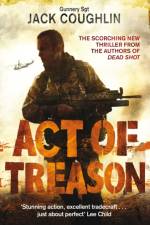
Marine sniper Kyle Swanson and his beautiful girlfriend, CIA agent Lauren Carson, are on a mission in Pakistan when their world is turned inside out. Kyle is captured and thrown in prison. Lauren is accused of being a double agent. The one person they can trust to help is the man who sent them on the black operation - Jim Hall, a legendary CIA agent, Kyle's sniper mentor, and Lauren's boss and former lover.But Hall has gone rogue. He is selling America's innermost secrets to a ruthless Pakistani warlord who wants to mould al- Qaeda into a legitimate political party, and secure a nuclear arsenal. For Jim Hall, his former protege Swanson is the final obstacle.Caught in the sights of a man he once idolized, and who taught him how to shoot, Swanson must prevent a global disaster - from the streets of Washington to the Bavarian Alps, the two snipers stalk each other in a deadly hunt that has only one possible outcome.
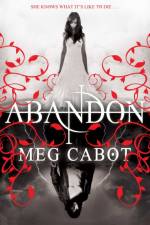
Last year, Pierce died - just for a moment. And when she was in the space between life and death, she met John. Tall dark and terrifying, it's his job to usher souls from one realm to the next. There's a fierce attraction between them, which Pierce carries back into our world. But she knows that if she allows herself to fall for John she will be doomed to a life of shadows and loneliness in the Underworld. When things get dangerous for her, her only hope is to do exactly what John says. Can she trust a guy who lives for the dead?Inspired by Greek myth, Abandon is the first in a darkly romantic trilogy from Meg Cabot, creator of The Princess Diaries.
'This is my tale and I will leave you to tell whether it be high romance or tragedy.' Sixteen-year-old Frances Stuart arrives at the Restoration court to find her innocence and beauty are highly-prized commodities, envied by the women and desired by the men. Before long, King Charles II falls passionately in love with her and will stop at nothing to make her his mistress. But Frances is no conventional court beauty. She is determined to make her own choices in life, and to be with the man she loves. Can she overcome the dangerous pitfalls of the King's obsession, the Queen's jealousy, and the traps set for her by the King's notorious mistresses, and make the life she wants for herself? Set against the drama of the Great Plague and the Fire of London, The Painted Lady brings to life the vibrant and decadent court of Charles II and in Frances Stuart discovers a passionate young woman prepared to fight for her own destiny. Praise for Maeve Haran's The Lady and the Poet 'This is history as pure entertainment, an inventive and delicious feast of passion, wit and intrigue.' The Times 'With its fascinating insight into Tudor life, this will absorb you to the end' She 'The clothes, the jewels, the smell of the place are all evoked; and everyone from the Queen herself to the elusive, sexy figure of Donne come wonderfully to life' A. N. Wilson, Readers' Digest
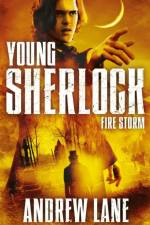
Fire Storm is the fourth in the Young Sherlock Holmes series in which the iconic detective is reimagined as a brilliant, troubled and engaging teenager - creating unputdownable detective adventures that remain true to the spirit of the original books.Teenage Sherlock has come up against some challenges in his time, but what confronts him now is baffling. His friend and her father have vanished. Their house looks as if nobody has ever lived in it. Sherlock begins to doubt his sanity, until a clever clue points him to Scotland. Following that clue leads him into a mystery that involves kidnapping, bodysnatchers and a man who claims he can raise the dead. Before he knows it, Sherlock is fighting for his life as he begins to work out what has happened to his friends. Will he be fast enough to save them?Sherlock Holmes. Think you know him? Think again.Continue the investigative adventures with Andrew Lane's Snake Bite and Knife Edge.
Earth is conquered. The Shongairi have arrived in force, and humanity's cities lie in radioactive ruins. In mere minutes, over half the human race has died. Now Master Sergeant Stephen Buchevsky, who thought he was being rotated home from his latest tour in Afghanistan, finds himself instead prowling the back country of the Balkans, dodging alien patrols and trying to organize the scattered survivors without getting killed. His chances look bleak. The aliens have definitely underestimated human tenacity - but no amount of heroism can endlessly hold off overwhelming force. Then, emerging from the mountains and forests of Eastern Europe, new allies present themselves to the ragtag human resistance. Predators, creatures of the night, human in form but inhumanly strong. Long Enemies of humanity . . . until now. Because now is the time to defend Earth.
NOT EVEN THE BOMBS THAT DESTROYED THEIR CITY COULD BREAK THEIR SPIRIT ... Three generations of strong, determined women and the war that threatened to tear them apart. In the backstreets of Liverpool, Eileen Watson lives with her mother, Nellie, daughter Mel and her three tear-away sons. Life isn't great, but they have eachother, and family can get you through anything. Or...can it? Then, on the third day in September 1939, Britain declares war on Germany and their lives change forever. The children have to be evacuated, but daughter Mel refuses to go, and so Eileen says goodbye to het mother and sons, moves away from the street they love and faces a future without most of the people in her precious family. Thus begins a journey for them all. A journey filled with forbidden love, tragedy and the terrifying sounds of a city they love crumbling into craters left by the Luftwaffe. Their lives will never be the same again ...
Whistling Tor is a place of secrets, a mysterious, wooded hill housing the crumbling fortress of a chieftain whose name is spoken throughout the district in tones of revulsion and bitterness. A curse lies over Anluan's family and his people; those woods hold a perilous force whose every whisper threatens doom. For young scribe Caitrin it is a safe haven. This place where nobody else is prepared to go seems exactly what she needs, for Caitrin is fleeing her own demons. As Caitrin comes to know Anluan and his home in more depth she realizes that it is only through her love and determination that the curse can be broken and Anluan and his people set free.
Deborah, cultured and intelligent, has been handicapped since childhood. Convinced of her lack of attractiveness, her work has become her life. Leigh, a painter, refuses to be discouraged by her rejections. As Deborah blossoms into a woman in love, she is drawn into a sinister unknown world.
Inspiring the Hitchcock classic, Marnie is a psychological crime novel by the author of the Poldark series, Winston Graham.Marnie appears to be charming and efficient. A true professional. But inwardly she is unscrupulous, a rebel against society and the law. When she starts working for a small family firm, two of the partners vie for her attentions, and as Mark Rutland, the younger partner, forces his way into Marnie's world he becomes desperate to understand her. Why is she so cynical, so uncaring? Why is she a thief and a liar? Who is the real Marnie? Mark sets a trap . . . but it is not only Marnie who is caught . . .
The play opens in a hospital; the characters are patients, doctors and nurses. It is a recognizable, predictable world. And yet, as the scenes unfold - in dialogue crackling with intelligence and insight, with incandescent bite and humour - our sense of normalcy is rocked from under us. Are these doctors and nurses really just patients from the Arno Klein Psychiatric Wing? Or are they something else entirely: people who are playing psychiatric patients playing doctors and nurses? And who, exactly, is Arno Klein? Described by the Boston Globe on its first performance as 'an unselfconscious, fizzing, inventive black comedy that is enormously funny', The Day Room displays Don DeLillo's extraordinary talents in the brightest of lights.
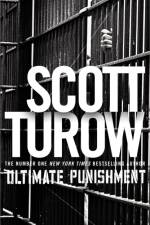
As a pioneer of the modern legal novel and a criminal lawyer, Scott Turow has been involved with the death penalty for more than a decade, including successfully representing two different men convicted in death-penalty prosecutions. In Ultimate Punishment, a vivid account of how his views on the death penalty have evolved, Turow describes his own experiences with capital punishment from his days as an impassioned young prosecutor to his recent service on the Illinois commission which investigated the administration of the death penalty and influenced Governor George Ryan's unprecedented commutation of the sentences of 164 death row inmates on his last day in office. Along the way, he provides a brief history of America's ambivalent relationship with the ultimate punishment, analyzes the potent reasons for and against it, including the role of the victims' survivors, and tells the powerful stories behind the statistics, as he moves from the Governor's Mansion to Illinois' state-of-the art 'super-max' prison and the execution chamber.
Abonner på vårt nyhetsbrev og få rabatter og inspirasjon til din neste leseopplevelse.
Ved å abonnere godtar du vår personvernerklæring.