









Gjør som tusenvis av andre bokelskere
Abonner på vårt nyhetsbrev og få rabatter og inspirasjon til din neste leseopplevelse.
Ved å abonnere godtar du vår personvernerklæring.Du kan når som helst melde deg av våre nyhetsbrev.

When Mr Harrington Brande moves himself and his precious young son Nicholas to a grand house in the deserted Spanish town of San Jorge he is planning on a fresh start for the two of them. And only the two of them. For Mr Harrington Brande is a proud man and a jealous man. His beloved wife has recently fled his stifling love and now Brande has transferred all of his adoration onto Nicholas. He monitors his son's every move and is obsessed with ensuring that the bond between them is stronger than ever. But history begins to repeat itself when Nicholas befriends the gardener Jose. Jose is like no one Nicholas has ever met before and he instantly holds him in high regard. Brande does not take too kindly to having to vie for his son's attention with the Spanish gardener, and becomes increasingly suspicious of his rival. Encouraged by his butler, Garcia, Brande becomes convinced that Jose is not the person he pretends to be. Blinded by love and jealousy, how far will Brande go to secure his son's affections? In the magnificent narrative tradition of The Citadel, The Stars Look Down and Cronin's other classic novels, The Spanish Gardener is a great book by a much-loved author.
Desmonde Fitzgerald is handsome, charming and blessed with a marvellous singing voice - he is the Minstrel Boy. He becomes a priest, winning the coveted Golden Chalice for his singing when in seminary school abroad. But the duality of nature threatens to destroy the brilliant future that lies before him. Beloved of his parishioners and canon, he is devastatingly attractive to women, in particular the wealthy patron of his church at Kilbarrack, Ireland. But it is not until her wayward and sensual niece, Claire, arrives that disaster strikes . . . In the magnificent narrative tradition of The Citadel, The Stars Look Down and Cronin's other classic novels, The Minstrel Boy is a great book by a much-loved author
In a story of wide and fascinating detail A. J. Cronin tells of Dr. David Morey who tries to atone for his desertion of the woman he loved. Beguiled by the prospect of riches he goes on to marry Dottie, a spoiled but beautiful neurotic who brings him almost constant misery, until a chance remark makes him seek retribution in memories of the past and a return to his native Scotland. In the magnificent narrative tradition of The Citadel, The Stars Look Down and Cronin's other classic novels, The Judas Tree is a great book by a much-loved author.
Lady with Carnations is not only the traditional name of a famous Holbein miniature which unexpectedly comes into a London salesroom in the mid-thirties: it is also the soubriquet by which some of her close friends think of the antique-dealer who buys it. Katharine Lorimer, by hard work, flair and courage, has worked her way to the top of a trade that traditionally belongs to men. Yet, having acquired the Holbein despite fierce competition, she feels not triumph but a terrible anxiety and desolation. The antique business is going through the doldrums, and she herself is reaching the limit of her resources. Worse still, she feels appallingly alone in the world. Reserved and fastidious, she keeps a certain distance from even her dearest friends, and the person she loves most, her niece Nancy, is bound up in her own ambitions to become a famous actress. Katharine has bought the miniature as a gigantic gamble, hoping to sell it to a wealthy American collector, and she sets off for New York with Nancy and her niece's fiance. What happens to them all there, and how their lives are altered, makes an engrossing tale, a delightful love story, showing at its best Dr Cronin's gifts as a novelist. Every Cronin 'fan', every reader who enjoys a novel with the old-fashioned virtues of a well-worked-out plot, sympathetic characters, and humanity, will find it absorbing. In the magnificent narrative tradition of The Citadel, The Stars Look Down and Cronin's other classic novels, Lady With Carnations is a great book by a much-loved author.
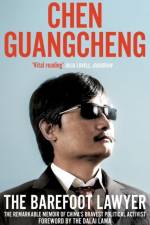
It was like a scene out of a thriller: one morning in April 2012, China's most famous political activist-a blind, self-taught lawyer-climbed over the wall of his heavily guarded home and escaped. For days, his whereabouts remained unknown; after he turned up at the American embassy in Beijing, a furious round of high-level negotiations finally led to his release and a new life in the United States. Chen Guangcheng is a unique figure on the world stage, but his story is even more remarkable than we knew. The son of a poor farmer in rural China, blinded by illness when he was an infant, Chen was fortunate to survive a difficult childhood. But despite his disability, he was determined to educate himself and fight for the rights of his country's poor, especially a legion of women who had endured forced sterilizations under the hated 'one child' policy. Repeatedly harassed, beaten, and imprisoned by Chinese authorities, Chen was ultimately placed under house arrest. After a year of fruitless protest and increasing danger, he evaded his captors and fled to freedom. Both a riveting memoir and a revealing portrait of modern China, this passionate book tells the story of a man who has never accepted limits and always believed in the power of the human spirit to overcome any obstacle.
In the heat of late afternoon, a young boy waits at the station for his father. A plume of steam, white against the purple-heathered hills, marks the train. Beyond, blooming along the shoreline, the flowers of high summer, as a tall-funnelled paddle steamer beats and froths down the wide Clyde estuary . . . A narrative in the great Cronin tradition, this is the stirring chronicle of Laurence Carroll as he grows from childhood to adult years in Scotland. The tale of his struggles - early illness, a widowed mother, poverty, the uncles who try to help him, and the women who have such an unhappy effect upon him, is told with warm humour and with that intense and sympathetic realism for which A J Cronin is known. In the magnificent narrative tradition of The Citadel, The Stars Look Down and Cronin's other classic novels, A Song of Sixpence is a great book by a much-loved author.
Robert Shannon was a devoted scientist on the brink of a medical discovery of great importance. He had no time or inclination for women . . . or for any of the world outside his laboratory. But Jean Law had other plans for him. Strictly brought up by narrow-minded parents, confined by her hospital lectures and her dingy boarding-house, she hardly knew the fires that burned beneath her calm exterior . . . except that they burned for Robert Shannon. She knew she had to have him for herself, and, despite her family's religious beliefs , their shocked disapproval, and all she had been taught was her destiny, she was determined to fight for him. In the magnificent narrative tradition of The Citadel, The Stars Look Down and Cronin's other classic novels, Shannon's Way is a great book by a much-loved author.
Gracie Lindsay's return to Levenford arouses mixed feelings: to her uncle Daniel she is the daughter he never had; to David Murray she is the woman he still loves though he is now engaged to another; and to the townspeople she is the girl who seven years earlier left Levenford pregnant and in disgrace. Now at 25 Gracie is more lovely than ever and just as careless of propriety as before . . . This is the poignant and moving story of Gracie's struggle to win self-respect and the regard of the town. In the magnificent narrative tradition of The Citadel, The Stars Look Down and Cronin's other classic novels, Gracie Lindsay is a great book by a much-loved author.
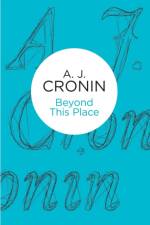
Paul Mathry, a student about to graduate and embark upon a teaching career, finds out that his father was convicted for murder, a secret that his mother had hidden from him since his childhood. Driven by an intense desire to see his father, Paul sets out to visit him in prison, only to find out that visitors are never allowed there. From there, he meets the primary witnesses in the case that convicted his father, not all of whom are supportive to Paul's cause. He encounters several dead ends but he persists, with the help of a store girl named Lena and a news reporter. His persistent campaign finally bears fruit. Rees Mathry, Paul's father, goes on appeal and is vindicated. The novel ends with Paul's father, a hardened, cynical man, seeing a fleeting hope for self-renewal and a purposeful life. In the magnificent narrative tradition of The Citadel, The Stars Look Down and Cronin's other classic novels, Beyond This Place is a great book by a much-loved author.
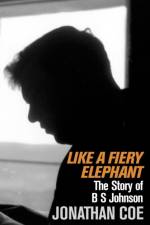
In his heyday, during the 1960s and early 1970s, B. S. Johnson was one of the best-known young novelists in Britain. A passionate advocate for the avant-garde in both literature and film, he became famous -- not to say notorious -- both for his forthright views on the future of the novel and for his idiosyncratic ways of putting them into practice. But in November 1973 Johnson's lifelong depression got the better of him, and he was found dead at his north London home. He had taken his own life at the age of forty. Jonathan Coe's biography is based upon unique access to the vast collection of papers Johnson left behind after his death, and upon dozens of interviews with those who knew him best. As unconventional in form as one of its subject's own novels, it paints a remarkable picture -- sometimes hilarious, often overwhelmingly sad -- of a tortured personality; a man whose writing tragically failed to keep at bay the demons that pursued him.
Two people are hiring out their services in Castlemere - a prostitute with only hours to live, and a hired assassin with only hours to make his kill . . . When the naked body of a young prostitute is found on a narrowboat on the Castlemere Canal, police enquiries focus on the nearby Barbican Hotel. For with a sales conference in progress there's no shortage of men who could have met the girl there. But soon Superintendent Shapiro and his team have a great deal more to contend with. For the dead woman was not the only person to have hired herself out that night: a paid assassin is at large - and he is gunning for the conference organizer Philip Kendall. Jo Bannister's Castlemere novels are tough and very realistic - in the tradition of Lynda La Plante's Prime Suspect.
A town the size of Castlemere might expect to see one major fire a year. When a derelict warehouse burns down just days after a blaze destroys Rachid's Eight-Till-Late, Detective Chief Inspector Frank Shapiro is worried. Either of the fires could have been accidental, but together they suggest an arsonist at work. A third, and fatal, episode confirms it. Helped by his enigmatic Irish sergeant, Cal Donovan, Shapiro investigates, well aware that any delay in making an arrest will invite further attacks. But before much progress can be made Shapiro is relieved of duty, accused of destroying vital evidence in an earlier investigation - evidence that would have spared an innocent man an eight-year prison sentence. Shapiro's closest colleagues, Detective Inspector Liz Graham and Detective Sergeant Donovan, are incredulous: the allegation wars with everything they know about a man they have worked for and respected for years. And yet the evidence can't be ignored. Liz and Donovan must embark on a race against time to clear Shapiro's name - if they can - and to track down a pyromaniac before he brings his career to a truly horrifying climax.
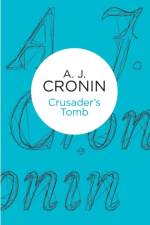
Knowing his father's profoundest wish, that his son should succeed him as Rector of Stillwater, Stephen Desmonde tried to be worthy. But the siren call of art was too overwhelming; he felt driven as though by demons to pursue his vision of the world's beauty. He must put on canvas the truth as he saw it, whatever the cost might be, whether it was the blank misunderstanding of his family or the ridicule of the public. Few artists could have survived the scandal and mockery he had to endure in the sensational trial that stirred all England. Indeed, Stephen Desmonde himself could not have survived without the tender and understanding love of the unforgettable Jenny Dill, the uneducated but strangely wise little Cockney girl whose devotion kept him going when all else failed. It was Jenny who restored his confidence in himself and his vision, and in her love he found the serenity and peace that marked his greatest creations. Crusader's Tomb, also published as A Thing of Beauty, is altogether a memorable novel, whose many characters and diverse moods are woven together with a skill and an appeal mastered by only the greatest storytellers of any age.
Junior creative Tim Callaghan can hardly believe his luck when he's flown out to Dubai to supervise the filming of an advert for an international charity. He is immediately entranced by the city - a futuristic environment unlike anywhere he's ever been before, with an almost uncanny level of customer service. Shimmering and seductive, it seems as though nothing bad could ever happen in Dubai. But when a crew member is found dead in in mysterious circumstances, Tim learns that if a place seems too good to be true, it probably is . . .
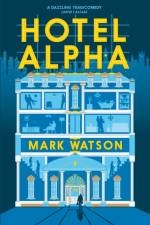
Howard York - self-made man and founder of London's extraordinary Hotel Alpha - is one of those people who makes you feel that anything is possible. He is idolized by his blind adopted son, Chas, and Graham, the inimitable concierge, whose lives revolve around the Alpha. But when two mysterious disappearances raise questions that no one seems willing to answer, Chas and Graham must ask themselves whether Howard's vision of the perfect hotel has been built on secrets as well as dreams . . .Captivating, brilliant and full of surprises, Hotel Alpha is an ingenious novel about the incidental and life-changing ways in which we connect with one another. You can discover more about the hotel and its inhabitants in 100 extra stories at www.hotelalphastories.com.
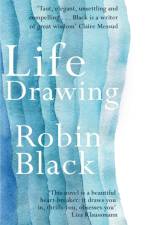
Augusta and Owen have taken the leap. Leaving the city and its troubling memories behind, they have moved to the country for a solitary life where they can devote their days to each other and their art, where Gus can paint and Owen can write.But the facts of a past betrayal prove harder to escape than urban life. Ancient jealousies and resentments haunt their marriage and their rural paradise.When Alison Hemmings moves into the empty house next door, Gus is drawn out of isolation, despite her own qualms and Owen's suspicions. As the new relationship deepens, the lives of the two households grow more and more tightly intertwined. It will take only one new arrival to intensify emotions to breaking point.Fierce, honest and astonishingly gripping, Life Drawing by Robin Black is a novel as beautiful and unsparing as the human heart.
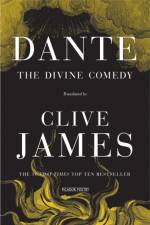
'Finally I realised that I had been practising for this job every time I wrote a quatrain . . . I had spent all this time - the greater part of a lifetime - preparing my instruments' The Divine Comedy is the precursor of modern literature, and Clive James's vivif translation - his life's work and decades in the making - presents Dante's entire epic poem in a single song. While many poets and translators have attempted to capture the full glory of The Divine Comedy in English, many have fallen short. Victorian verse translations established an unfortunate tradition of reproducing the sprightly rhyming measures of Dante but at the same time betraying the strain on the translator's powers of invention. For Dante, the dramatic human stories of Hell were exciting, but the spiritual studies of Purgatory and the sublime panoramas of Heaven were no less so. In this incantatory translation, James - defying the convention by writing in quatrains - tackles these problems head-on and creates a striking and hugely accessible translation that gives us The Divine Comedy as a whole, unified, and dramatic work.
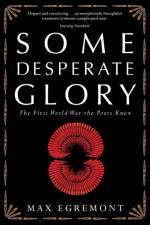
While the First World War devastated Europe, it inspired profound poetry - words in which the atmosphere and landscape of battle are evoked perhaps more vividly than anywhere else. The poets - many of whom were killed - show not only the war's tragedy but the hopes and disappointments of a generation of men. In Some Desperate Glory, historian and biographer Max Egremont gives us a transfiguring look at the life and work of this assemblage of poets. Wilfred Owen with his flaring genius; the intense, compassionate Siegfried Sassoon; the composer Ivor Gurney; Robert Graves who would later spurn his war poems; the nature-loving Edward Thomas; the glamorous Fabian Socialist Rupert Brooke; and the shell-shocked Robert Nichols all fought in the war, and their poetry is a bold act of creativity in the face of unprecedented destruction. Some Desperate Glory includes a chronological anthology of their poems, with linking commentary, telling the story of the war through their art. This unique volume unites the poetry and the history of the war, so often treated separately, granting readers the pride, strife, and sorrow of the individual soldier's experience coupled with a panoramic view of the war's toll on an entire nation.
Rachael Boast's first collection, Sidereal, was one of the most highly regarded debuts of recent years, winning the Forward Prize for Best First Collection and the Seamus Heaney Centre for Poetry Prize. Her second, Pilgrim's Flower, richly confirms and dramatically extends that talent - but where Sidereal's gaze was often firmly fixed on the heavens, Boast's focus here has shifted earthward. The book sings life's intoxicants - love, nature, literature, friendship, and other forms and methods of transcendence - and sees Boast's pitch-perfect lyrical metaphysic challenge itself at every turn. Pilgrim's Flower gives an almost Rilkean attention to the spaces between things - the slippage between what we think we know, and what is actually there - and in doing so brings the language of rite, observance and rune to the details of our daily lives.
Kate is smart, successful and adept at making people feel at home: her husband Adam, her children, the guests of the hotel chain she works for. But her own foundations are about to be knocked away - for while Kate has been building a life, Adam's attention has been elsewhere. Who is the woman he's been emailing? And whose number keeps showing up on his phone? Kate tries to hold things together for her daughters, but what can she say, now Adam won't be coming home? As Kate searches for answers, she is forced to reassess her family, her future, and the man she thought she knew . . .
Scott and Zelda Fitzgerald, Pablo Picasso, Cole and Linda Porter, Ernest Hemingway, John Dos Passos - all are summer guests of Gerald and Sara Murphy. Visionary, misunderstood, and from vastly different backgrounds, the Murphys met and married young, and set forth to create a beautiful world. They alight on Villa America: their coastal oasis of artistic genius, debauched parties, impeccable style and flamboyant imagination. But before long, a stranger enters into their relationship, and their marriage must accommodate an intensity that neither had forseen. When tragedy strikes, their friends reach out to them, but the golden bowl is shattered, and neither Gerald nor Sara will ever be the same.Ravishing, heart-breaking, and written with enviable poise, Villa America delivers on all the promise of Liza Klaussmann's bestselling debut, Tigers in Red Weather. It is an overwhelming, unforgettable novel.
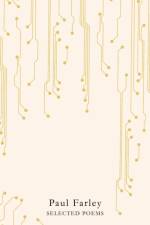
Paul Farley is now widely recognized as one of the leading English poets writing today. Selected Poems takes stock of a singular talent of great formal gifts: for readers new to his work, this is an ideal and generous introduction, drawing on four collections from his acclaimed debut The Boy from the Chemist is Here to See You to his most recent, The Dark Film. Farley is a cultural archivist, a nostalgist of the darkest and most unsettling kind, and a meticulous curator of those fleeting details which define our lives and times most poignantly: he already reads like one of the poets by whom future generations will know us best. His Selected Poems is a marvellous introduction to one of poetry's most capacious and eclectic imaginations.
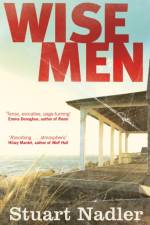
Hilton Wise is the son of one of the most powerful and wealthy lawyers in the United States. When he falls for Savannah, a young black girl he meets on Cape Cod during the summer of 1952, he has no idea that his passion for her will lead to the exposure of his father's deepest secrets. The result will shatter his family, and hers. Years later, unable to forget, Hilton abandons his comfortable life on the east coast and sets out to find Savannah. But as he struggles to right the wrongs he set in motion he comes to realize that forgiveness doesn't have a price. Set in the last half of the twentieth century, years that changed America for ever, Wise Men is a sweeping story about love and regret, about the crushing weight of familial obligation, and about the difficulty of doing the right thing in an unjust world.
For centuries much of Europe was in the hands of the very peculiar Habsburg family. An unstable mixture of wizards, obsessives, melancholics, bores, musicians and warriors, they saw off - through luck, guile and sheer mulishness - any number of rivals, until finally packing up in 1918. From their principal lairs along the Danube they ruled most of Central Europe and Germany and interfered everywhere - indeed the history of Europe hardly makes sense without them. Simon Winder's extremely funny new book plunges the reader into a maelstrom of alchemy, skeletons, jewels, bear-moats, unfortunate marriages and a guinea-pig village. Danubia is full of music, piracy, religion and fighting. It is the history of a dynasty, but it is at least as much about the people they ruled, who spoke many different languages, lived in a vast range of landscapes, believed in many rival gods and often showed a marked ingratitude towards their oddball ruler in Vienna. Readers who discovered Simon Winder's genius for telling wonderful stories of middle Europe with Germania will be delighted by the eccentric and fascinating stories of the Habsburgs and their world. Danubia was longlisted for the Samuel Johnson Prize for Non-Fiction 2013.
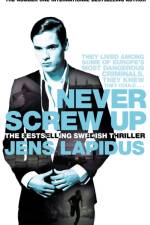
Niklas, a weapons expert, has returned home after years as a mercenary. His world has no laws. His life has made him a violence fanatic and an adrenaline junkie. He is haunted by traumatic childhood memories. One night his mother calls, hysterical. Someone has been murdered in her apartment building. Thomas is a demoralized cop. He's working the night shift when the call about the murder comes in. The victim has been badly beaten, and his arms have been pockmarked by syringes. But someone wants the case silenced - why? Mahmud is just out of jail, and keen to live the high life. He has debts to someone he used to deal for. In a game of russian roulette, his life is spared - but at what cost? He has to look for a man whom he later wishes he'd never found. And his search takes him to a side of Stockholm he wishes he'd never seen. No matter how hard they try, the power is not theirs. It belongs to Radovan who rules over the dark parts of the city where everything is for sale. But the price is much too high.
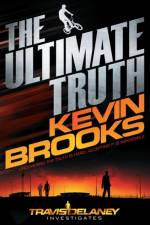
When Travis Delaney's parents die in a car crash, Travis is devastated. In a bid to pull himself out of his grief, he starts to look into the last case they were investigating at the private investigation agency they ran. What starts as a minor distraction soon becomes a sinister, unbelievable mystery - and Travis is determined to solve it. Why were his parents looking for a missing boy when the boy's family says he isn't missing? Where is the boy himself? And why would a man who is in surveillance photos taken by Travis's parents turn up at their funeral? As Travis searches for answers, he starts to have the chilling realization that the question he should be asking is the one he most wants to avoid: Was the accident that killed his parents really what it seemed? An intriguing, exciting adventure from a master of suspense.
Fourteen-year-old Travis Delaney is trying to get his life back on track following the crash that killed his parents last summer. The police called it an accident, but Travis knows better. His parents were on to something, and whatever they were investigating . . . ended with their murder.Since Travis's Grandad took over Delaney and Co, things have finally started to look up. But when his private investigation partner, Courtney, is attacked following a routine inquiry into a local business, Travis can't help but get involved, even though he's supposed to be focusing on his own investigation into thefts at school. But what he discovers draws him into more danger than he ever could have imagined.Tangled up in a web of gang warfare, dirty police and secret organisations, Travis needs to find a way out. But at the heart of it all is a traitor. Someone close to Travis. Someone he's supposed to trust.But trust is a dangerous thing.
New York, 1963. Fashion, music and attitudes are changing, and there's nowhere in in the world more exciting. Sherry, Donna, Allison and Pamela have each landed a dream internship at Gloss; America's number-one fashion magazine. Each girl is trying to make her mark on 1960s New York and each finds herself thrown head-first into the buzzing world of celebrity, high-end fashion and gossip. But everything isn't as glamorous as it seems - secrets from the past threaten to shatter their dreams. They're finding out that romance in New York is as unpredictable and thrilling as the city itself. Perfect for teenage fans of Mad Men, Ugly Betty, The Devil Wears Prada and Sex in the City.
It is 1940. As the Second World War escalates and London becomes a target for German bombs, Dodo and her horse-mad little brother Wolfie are evacuated to the country, away from everything they know. After weeks of homesick loneliness, they come across an orphaned foal. They name the horse Hero for surviving against the odds and together they raise him, train him, and learn to ride. Their days are suddenly full of life and excitement again, but the shadow of war looms over their peaceful existence, and soon Hero must live up to his name . . .
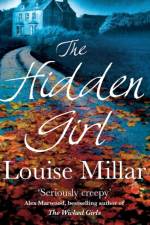
One cold March morning, a removal van arrives at Tornley Hall in Suffolk. Will and Hannah Riley have been waiting a long time to adopt, and Hannah is obsessed that this new 'dream' family home in Tornley, will improve their chances with social services. She has given up her career at a human rights organisation, and persuaded a reluctant Will to give up their flat in London. Yet as Will starts to commute back to work, heavy snow arrives. Hannah finds herself cut off from the world in this tiny, isolated hamlet. As she paints over the cracks in the abandoned old house, trying to ignore its reflection of the recent change in her once-happy marriage to Will, the house starts to reveal unexpected secrets to her. Rooms are locked. Intruders break in. There are strange noises and shadows at night. When Hannah witnesses an assault on a vulnerable woman in a neighbouring field, she starts to realise that everything in Tornley is also not what it seems. She has to make a choice. Tell the police, and risk her social worker becoming suspicious about the safety of Hannah and Will's new home; or cover up the crime, to get what she wants. Hannah makes her choice. Then just as their social worker is due to visit to approve their new home, a shocking turn of events takes place that rips Hannah's world apart. Before she knows it, she is alone, frightened, and trapped in a place where no one ever goes . . .
Abonner på vårt nyhetsbrev og få rabatter og inspirasjon til din neste leseopplevelse.
Ved å abonnere godtar du vår personvernerklæring.