










Gjør som tusenvis av andre bokelskere
Abonner på vårt nyhetsbrev og få rabatter og inspirasjon til din neste leseopplevelse.
Ved å abonnere godtar du vår personvernerklæring.Du kan når som helst melde deg av våre nyhetsbrev.

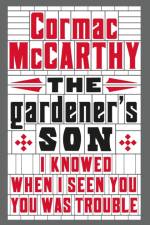
The original screenplay, The Gardener's Son, is the tale of two families: the wealthy Greggs, who own the local cotton mill, and the McEvoys, a family of mill workers beset by misfortune.Two years ago, Robert McEvoy was involved in an accident that led to the amputation of his leg. Consumed by bitterness and anger, he quit his job at the mill and fled. Now, news of his mother's terminal illness brings Robert home. What he finds on his return stokes the slow burning rage he carries within him, a fury that ultimately consumes both the McEvoys and the Greggs.This taut, riveting drama was Cormac McCarthy's first written screenplay. Directed by Richard Pearce, it was produced as a two-hour film in 1976 and received two Emmy Award nominations. This is the first UK publication of the film script in book form.
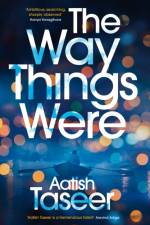
When Skanda's father Toby dies, estranged from Skanda's mother and from the India he once loved, it falls to Skanda to return his body to his birthplace. This is a journey that takes him halfway around the world and deep within three generations of his family, whose fractures, frailties and toxic legacies he has always sought to elude.Both an intimate portrait of a marriage and its aftershocks, and a panoramic vision of India's half-century - in which a rapacious new energy supplants an ineffectual elite - The Way Things Were is an epic novel about the pressures of history upon the present moment. It is also a meditation on the stories we tell and the stories we forget; their tenderness and violence in forging bonds and in breaking them apart. Set in modern Delhi and at flashpoints from the past four decades, fusing private and political, classical and contemporary to thrilling effect, this book confirms Aatish Taseer as one of the most arresting voices of his generation.
For the past fifty years, Monday afternoons in New Haven have always been the same: Roz, Rhoda, Bea, Jackie and Bette - the Bridge Ladies. A card table with four folding chairs (and one dummy seat). A plate of homemade cookies or brownies on the kitchen counter somewhere, largely untouched. And once they begin the game, hours of silence, punctuated only by the sound of cards being plucked up or snapped down. As a child, Betsy Lerner thought the Bridge Ladies were fascinatingly chic, with their frosted hair-dos and shiny nylons. To the teenage Betsy, they seemed hopelessly square. As an adult, working in New York City, they were a relic of her past. But when her husband accepted a job in New Haven, she found herself right back where she started.Suddenly, the Bridge Ladies came hurtling back, their Monday lunch and Bridge Club still ongoing. They had accepted their lot in life and were, mostly, grateful. They didn't talk about their problems, much less those involving sex, relationships, or their children. On paper, they were unremarkable, even dull. But once Betsy started really looking at them, she realized that they were anything but.Wildly perceptive and, in turns, hilarious and fearlessly vulnerable, Lerner's memoir is required reading for anyone who has ever had a mother. And it teaches us an important lesson: Facebook may connect us across the world, but social media can't deliver a pot roast and it won't dry your tears.
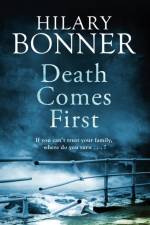
If you can't trust your family, where do you turn . . . Joyce Mildmay's life is torn apart when her husband Charlie is killed in a tragic yachting accident. Though financially secure, Joyce is left to raise their three children by herself within Tarrant Park, a secluded gated development set in the rural countryside outside of Bristol. Six months later a mysterious letter arrives on her doorstep which turns her shattered world upside down. The letter is from Charlie, delivered belatedly in the event of his death, and contains a sinister warning that Joyce's father, Henry Tanner, and the family business is not as it seems. For their children to be safe, her husband pleas, she must leave their home and never look back. Confused and alarmed by this message from beyond the grave, Joyce decides instead to stay and unearth the truth. But what she learns reveals a trail of intrigue and deception that stretches back through the years. It seems that death is just the beginning. . .
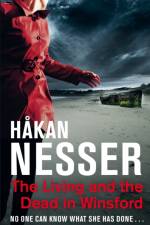
Winner of the Rosenkrantz Award for Best Thriller of the YearFrom the bestselling, award-winning Swedish author Hakan Nesser, The Living and the Dead in Winsford is a gripping and deeply atmospheric psychological thriller set on Exmoor.There is nobody in the world who knows that we are here . . .A woman arrives in the village of Winsford on Exmoor. She has travelled a long way and chosen her secluded cottage carefully. Maria's sole intention is to outlive her beloved dog Castor. And to survive the torrent of memories that threaten to overwhelm her. Weeks before, Maria and her husband Martin fled Stockholm under a cloud. The couple were bound for Morocco, where Martin planned to write an explosive novel; one that would reveal the truth behind dark events within his commune of writers decades before. But the couple never made it to their destination.As Maria settles into her lonely new life, walking the wild, desolate moors, it becomes clear that Winsford isn't quite the sanctuary she thought it would be. While the long, dark evenings close in and the weather worsens, strange things begin to happen around her. But what terrible secrets is Maria guarding? And who is trying to find her?A haunting, masterly unravelling of a dreadful crime, in The Living and the Dead in Winsford, Hakan Nesser, the bestselling, award-winning author of the Van Veeteren series, tightens the tension like a noose . . .
Set in the tumultous times of World War II, The Colours of Love by Rita Bradshaw is a story of a capable and resourceful woman who proves that nothing is stronger than a mother's love.Can love survive when all is lost?England is at war, but nothing can dim land girl Esther Wynford's happiness at marrying the love of her life -fighter pilot Monty Grant. Their short honeymoon results in a baby, but on the birth of her daughter, Joy, Esther's world falls apart. Esther's dying mother confesses to a dark secret that she has kept to herself for twenty years: Esther is not her natural daughter but the result of an exchange of babies after her own child was stillborn. Esther's real mother was forced to give up her baby to an orphanage by her furious family who were incensed about the unsuitability of their daughter's lover, and Joy's birth makes the reason clear. Harshly rejected by Monty, and with the man Esther believed was her father breathing fire and damnation, she takes her precious baby and leaves everything and everyone she's ever known, determined to fend for herself and her child. But her fight is just beginning . . .
Biz Stone, the co-founder of Twitter, discusses innovation, creativity and the secrets of being a successful entrepreneur, through stories from his remarkable life and career.THINGS A LITTLE BIRD TOLD MEFrom GQ's 'Nerd of the Year' to one of Time's most influential people in the world, Biz Stone represents different things to different people. But he is known to all as the creative, effervescent, funny, charmingly positive and remarkably savvy co-founder of Twitter -- the social media platform that singlehandedly changed the way the world works. Now, Biz tells fascinating, pivotal, and personal stories from his early life and his careers at Google and Twitter, sharing his knowledge about the nature and importance of ingenuity today. In Biz's world:-Opportunity can be manufactured-Great work comes from abandoning a linear way of thinking-Creativity never runs out -Asking questions is free-Empathy is core to personal and global successIn this book, Biz also addresses failure, the value of vulnerability, ambition, and corporate culture. Whether seeking behind-the-scenes stories, advice, or wisdom and principles from one of the most successful businessmen of the new century, THINGS A LITTLE BIRD TOLD ME will satisfy every reader.
Frances Leviston's first collection, Public Dream, was one of the most acclaimed debuts of recent years, and praised for combining 'technical mastery with a lucidity that verges on the hypnotic' (Independent).Leviston's keenly-anticipated second book sees both an intellectual and dramatic intensification of her project. We often credit poetry as a kind of truth-telling, but it can also be an agent and a vessel of disinformation: in the course of making its proofs and confessions, it also seeks to persuade and seduce by any means it can. Leviston uses both sides of poetry's tongue to address one of the key questions of the age: how have we come to know what we think we know? In the title poem, a woman preparing for a child's birthday party suddenly glimpses the invisible screen of false data behind which she lives - and her own complicity in its power. Many of these poems are concerned with ruined or abandoned structures, dismembered and disappearing bodies, constructed and deconstructed identities; behind them lie the false gods who manipulate the streams of information with which we must navigate the contemporary world. In Leviston's inimitably vivid and vital language,Disinformation challenges us to rescue our idea of identity from that mass of glib truth and persistent falsehood - and proposes how we might begin to think of poetry itself as a means to that end.
Successful film and TV star Chris O'Dowd collaborates with friend and fellow screenwriter Nick Vincent Murphy on Moone Boy: The Fish Detective, the second book in this hilarious illustrated series inspired by the Sky TV series they co-wrote.Martin's parents are strapped for cash: it's going to be a budget Christmas this year. So Martin plans to buy his own presents - and attempts, unsuccessfully, to get a job. Padraic puts in a word for him with his Auntie Bridget, who runs the local butcher's shop. But her shop is struggling as the fish shop across the road undercuts her, and Bridget just can't compete. No one knows how the owner, Francie Feeley, does it - especially since he doesn't seem to employ anyone at his fish factory. No one goes in; no one comes out - it's a mystery.Intrigued, Martin decides to go undercover and find out the truth, like a fish-mole - or a fish detective. Martin infiltrates the factory and discovers that Francie is illegally employing a gang of Brazilian fish-gutters. They're a lot of fun and one of them, Fabio, becomes Martin's good friend. But when Martin is exposed as a spy, he has to choose which side he's on. Will Christmas be ruined for the whole of Boyle?
As a single 51-year-old woman, Elizabeth McDonnell had given up hope of ever becoming a mother. When she was approved to adopt ten-year-old Lara, a sweet and caring girl, it was a dream come true. Elizabeth knew that that her new daughter had had a difficult past but when she found out that Lara had been abused, the extent of her emotional damage became clear. By the age of twelve, Lara was often out of control, hanging out with drug dealers in Oxford, disappearing for days. For the next five years Elizabeth put herself in danger to rescue her daughter time and time again, while battling the authorities who failed to give Lara the help she so desperately needed. She had no idea that her daughter was being trafficked by a sex ring. Because she refused to give up on Lara, today Elizabeth and Lara have a close and loving relationship. Deeply moving, You Can't Have My Daughter is the story of a mother determined to keep her promise to her daughter: 'I will always be there for you, whether you want me to or not'.
Successful film and TV star, Chris O' Dowd, collaborates with friend and screenwriter Nick Vincent Murphy in Moone Boy: The Blunder Years, the first in this hilarious, illustrated series.Martin Moone is eleven and completely fed up with being the only boy in a family of girls. He's desperate for a decent wingman to help him navigate his idiotic life. So when best mate Padraic suggests Martin get an imaginary friend - or 'IF' for short - he decides to give it a go. His first attempt is Loopy Lou, a hyperactive goofball who loves writing rubbish rap songs. But Martin soon gets fed up with Lou's loopiness and decides to trade in his IF for someone a little less wacky. Enter Sean 'Caution' Murphy, an imaginary office clerk in a bad suit with a passion for laziness and a head full of dodgy jokes. Sean is full of tips and tricks to guide Martin through the perils of the playground, from dealing with his sisters' pranks to beating the bullying Bonner boys. But getting rid of Lou is not that easy, and having TWO imaginary friends is a recipe for trouble!
With a new introduction for the paperback.London is a supreme achievement of civilization. It offers fulfilments of body and soul, encourages discovery and invention. It is a place of freedom, multiplicity and co-existence. It is a Liberal city, which means it stands for values now in peril. London has also become its own worst enemy, testing to destruction the idea that the free market alone can build a city, a fantastical wealth machine that denies too many of its citizens a decent home or living. In this thought-provoking, fearless, funny and subversive book, Rowan Moore shows how London's strength depends on the creative and mutual interplay of three forces: people, business and state. To find responses to the challenges of the twenty-first century, London must rediscover its genius for popular action and bold public intervention. The global city above all others, London is the best place to understand the way the world's cities are changing. It could also be, in the shape of a living, churning city of more than eight million people, the most powerful counter-argument to the extremist politics of the present.
In May 1941 Lena Mukhina was an ordinary teenage girl, living in Leningrad, worrying about her homework and whether Vova - the boy she liked - liked her. Like a good Soviet schoolgirl, she was also diligently learning German, the language of Russia's Nazi ally. And she was keeping a diary, in which she recorded her hopes and dreams. Then, on 22 June 1941, Hitler broke his pact with Stalin and declared war on the Soviet Union. All too soon, Leningrad was besieged and life became a living hell. Lena and her family fought to stay alive; their city was starving and its citizens were dying in their hundreds of thousands. From day to dreadful day, Lena records her experiences: the desperate hunt for food, the bitter cold of the Russian winter and the cruel deaths of those she loved. A truly remarkable account of this most terrible era in modern history, The Diary of Lena Mukhina is the vivid first-hand testimony of a courageous young woman struggling simply to survive.
Like his father before him, Donn is born to the now mythical role of the Lord of the Mountain, a remote community in rural Ireland, unmarked by the passage of time. But Donn longs for a wider kingdom. He deserts his bride, roams the world, fights in wars, is footloose - yet finds that he is homesick.Sixteen years later he returns to take up the threads of his old life, to learn to love his afflicted daughter, and to bring progress to the neglected green valley. Light comes, water flows, the land prospers. Then, on a night of innocent festivity, a monstrous crime is perpetrated.His kingdom violated, Donn dedicates himself to a terrible revenge that can only destroy the avenger as well as the hunted
Careless of the hurts he inflicts along the way, Bart O'Breen walks his own road, as proud as the devil and as lonely as hell.In the Galway village of Boola, Bart O'Breen is a strong wilful young man who leaves trouble and harm in his wake. As always in a novel by Walter Macken, there is a host of memorable secondary characters, and an unfailing accuracy and warmth in the depiction of the life of the "e;plain people"e; of the west of Ireland. One of Walter Macken's finest novels, Sunset on the Window-Panes is a moving and memorable story of Irish life.
This is the story of Stephen O'Riordan, a true son of the wild and beautiful land of Connemara, of his hopes and ambitions, and of his passionate and stormy love for Kathleen, sister of his bitterest enemy . . .It is also the story of Ireland after twenty-five years of liberty, like Stephen new in its freedom and thought yet primitive in its emotions, its people witty, bawdy, boozy, hard-working, loud-voiced or gentle - but never dull . . .
Sullivan was a born actor. Blessed and cursed with the artist's gifts and temperament in full measure, he could hold an audience, or a woman's heart, in the palm of his hand. From a boyhood stuffed with multi-coloured dreams to defy Galway's slums, through fit-ups and fairs in the Irish countryside, to struggle and renown in Dublin, London and New York, his crowded, generous journey was rich in comedies, disappointments and surprises.Success was as capricious as the seasons. But when it came, was it enough?Could it replace the one girl who had learnt always to expect the unexpected from Sullivan . . . ?
"e;The smile froze on Judy's lips as she heard the scream. It seemed to come from the direction in which she had just walked; she retraced her steps, and saw the girl she had seen earlier, standing by the willow tree, by the pram, her hands to her mouth.'She's gone!' the girl said. 'The baby's gone.'"e;In an isolated cottage a woman has been bludgeoned to death; outside, a man has been crushed by a car, uttering the word 'intruder' before losing consciousness. That, and a row overheard earlier that morning, is all Detective Chief Inspector Lloyd has to go on.Who is the dead woman? Where's her handbag? If it was a burglary, why the extreme violence? A house-removal is in progress, but were the couple moving in or moving out? Were they a couple? Who was having the argument? If it was a domestic, why is the handbag missing? Who was the intruder? Was there an intruder? Who rang 999? Was it a love triangle? Who was driving the car found abandoned a mile away?Questions without answers, and Lloyd is short-handed; a baby has disappeared from Malworth, and DS Tom Finch has joined the team urgently searching for leads.Lloyd doesn't yet know how deeply involved in that enquiry Judy Hill, still on maternity leave, has become, nor how profoundly it will affect both her and his own murder investigation . . .
February 13th: what seemed like Wilma Fenton's lucky night, when she scooped her biggest-ever win at bingo, turned out to be the night she died at the hands of someone lurking in the dimly lit alleyway leading to her flat.An eyewitness to the incident gives Detective Chief Inspectors Lloyd and Hill some hope. But the witness is Tony Baker, an ambitious TV journalist and TV personality, who, almost twenty years ago, single-handedly tracked down a serial killer. Did Baker see more than he claims? Does he want to beat the police to the punch again?This complication triggers a deadly chain of events when the man the media will come to call the Anonymous Assassin publicly challenges Baker to catch him before he strikes again. In the full glare of the national media, Lloyd and Hill must spearhead a force-wide hunt for a relentless killer . . .
More than half of Bartonshire, it seemed, had entertained murderous thoughts at some time or another about bullying farmer Bernard Bailey. Which might have explained why his property was protected by more security devices and surveillance cameras than Fort Knox.All, sadly, to no avail.After six months of highly publicised death threats, linked to a stubborn refusal to sell land for a new road, Bernard's bloodied corpse is discovered in his isolated farmhouse by his wife Rachel. A gruesome beginning to the working week which launches DCI Lloyd and DI Judy Hill into the most unusual murder enquiry of their careers.For as the initial evidence is sifted, the question for once isn't 'Who stood to gain from the death?' but 'Why didn't they do it sooner?'With the ever-present eye of the camera recording events, Lloyd and Hill have more evidence than they ever thought possible. But is it enough to stop a killer walking free . . . ?
'I shot someone dead.' He watched for her reaction, and there was more than just surprise in those dark blue eyes; there was something very like respect. 'I got out just over eight years ago.' 'What was it like?''Prison?'She shook her head, smiling slightly. 'Killing someone,' she said.Andrew and Kathy Cope, the proprietors of a debt-ridden detective agency on the verge of losing their home, are found dead in their fume-filled car. Few doubt that it was suicide.But Detective Chief Inspector Lloyd does. He knew Kathy, and doesn't believe she was a quitter. And why, he asks DI Judy Hill, were groceries put away on the wrong shelves? Why is Andy Cope's wheelchair still in the boot? Even Kathy's last case is a puzzle. Why, of all the detectives she might have employed, did a member of the super-wealthy Esterbrook family choose to hire the Copes?That night, the murder of matriarch Angela Esterbrook appears to vindicate Lloyd's doubts, but even he doesn't realize that the Copes' apparent suicide is just the curtain-raiser on a tragedy of almost Shakespearean proportions . . .
"e;He'd waited for her outside her flat that night, but Lloyd had come home with her, and he'd had to let it go. But he'd get her. One day. He'd get her."e;Four young women. Four horrific rapes. Committed by a man who called himself the 'Stealth Bomber'.Colin Arthur Drummond - a privileged young man from Malworth - now stands accused of these crimes. And, watching his trial from the public gallery, Detective Inspector Judy Hill cannot forget his chilling description of a fifth unreported rape.Or his threat that she was to be his sixth.In court Drummond denies all charges, his lawyer 'Hotshot' Harper claiming police corruption and brutality. But the prosecution has an open-and-shut case; he had been caught in the act by two independent witnesses, and they have a DNA profile which proves he is the rapist. What could go wrong?Something does. For sixteen months later, Colin Drummond is threatening Judy again. And as Judy sets out to prove his guilt for the second time - and save her own job - Detective Chief Inspector Lloyd is called to a horrifying scene. It appears Colin Drummond has picked his next victim . . .
Victor Holyoak made his millions by selling state-of-the-art security systems. In the end, even the most sophisticated devices were no protection against the intruder who murdered him in his own factory.The millionnaire's death shocked the townsfolk of Stansfield. But was there something they didn't know about their deceased benefactor?Chief Inspector Lloyd was convinced he had seen Victor somewhere before. Was his memory playing tricks again? Or did the murky past hold the clues to a murder that seemed to come under the heading of unfinished business?
Which is the odd one out:An ex-call girl wife of a wealthy crook, who has kept one step ahead of the law, a struggling artist married to Stansfield's prospective Conservative party candidate, or the telephone line which links them?Answer: the telephone line. It isn't dead.A double murder investigation brings Chief Inspector Lloyd and the newly promoted Inspector Judy Hill together again as colleagues. But the case is a severe test of both Judy's professionalism and Lloyd's ego, and soon threatens their more private relationship . . .
When the celebrity football match was abandoned just before half-time, Bartonshire police had no way of knowing that the swirling, choking fog had concealed much, much more than the striker's fancy footwork.But by the end of the evening Chief Inspector Lloyd and Inspector Judy Hill were looking for a rapist - and a killer.And, somewhere in Stansfield, Melissa Whitworth was just beginning to discover the truth about her husband . . .
The murder of a deputy headmaster's wife on the night of the Sesquicentennial Ball at a minor-league boys' public school brings together the team of Inspector Lloyd and Judy Hill. Diana Hamlyn's body has been found on the school's playing field. Death had been caused by the traditional blunt instrument, her clothing was disarrayed, her underclothes missing. It was a particularly disturbing killing.As Lloyd and Hill begin the harrowing routine of a murder investigation they rapidly learn that the woman had been a nymphomaniac - her conquests many, her fidelities few, the list of suspects for her killing appallingly long. That list includes her husband, her lovers and her colleagues, none with perfect alibis, some ostentatiously lying.It is an old-fashioned puzzle peopled with very contemporary characters. Once again Jill McGown presents a true novel of detection.
Shortlisted for the 2016 David Gemmell Morningstar Award for Best Debut Death and destruction will bar her way. . . Kyndra's fate holds betrayal and salvation, but the journey starts in her small village. On the day she comes of age, she accidentally disrupts an ancient ceremony, ending centuries of tradition. So when an unnatural storm targets her superstitious community, Kyndra is blamed. She fears for her life until two strangers save her, by wielding powers not seen for an age - powers fuelled by the sun and the moon.Together, they flee to the hidden citadel of Naris. And here, Kyndra experiences disturbing visions of the past, showing war and one man's terrifying response. She'll learn more in the city's subterranean chambers, amongst fanatics and rebels. But first Kyndra will be brutally tested in a bid to unlock her own magic.If she survives the ordeal, she'll discover a force greater than she could ever have imagined. But could it create as well as destroy? And can she control it, to right an ancient wrong? With George R. R. Martin's Game of Thrones now a huge TV success, fantasy fiction has never been more popular. And these books are traditional fantasy at its very best.
Although best known for Little Lord Fauntleroy and The Secret Garden, Frances Hodgson Burnett was considered one of the leading writers in America on the strength of her adult novels, which made her name in the 1870s and 1880s. Ripe for rediscovery, Bello is proud to bring a select group of these classic novels back into print.That Lass O' Lowrie's was Frances Hodgson Burnett's first novel. A tale of Lancashire, her chosen heroine is pit-girl. Burnett uses the novel to explore questions of social inequality and injustice, with much of the material drawn from real life. Serialised in Scribner's Monthly before publication as a book, and first published in April 1877, That Lass O' Lowrie's won unanimous praise from the critics.
The news rocked the town. A woman's body found in a boathouse. And the woman's last known companion Missing Presumed Fled. To the people of Stansfield it's an open and shut case.But Detective Inspector Lloyd - teamed up once more with Sergeant Judy Hill - isn't so quick to jump to conclusions. To begin with he's certain of only two things. First, that nothing can stop the reawakening of his tender feelings towards his colleague.And second: in a murder enquiry you don't rule out . . .
Although best known for Little Lord Fauntleroy and The Secret Garden, Frances Hodgson Burnett was considered one of the leading writers in America on the strength of her adult novels, which made her name in the 1870s and 1880s. Ripe for rediscovery, Bello is proud to bring a select group of these classic novels back into print.Robin is the second volume of Frances Hodgson Burnett's last substantial work, and follows on from The Head of the House of Coombe. Set in London during the First World War, Robin portrays the horror, rather than nobility or glamour, of that devastating period and completes the story of Robin, Lord Coombe, Donal and Feather.
Abonner på vårt nyhetsbrev og få rabatter og inspirasjon til din neste leseopplevelse.
Ved å abonnere godtar du vår personvernerklæring.