

















Gjør som tusenvis av andre bokelskere
Abonner på vårt nyhetsbrev og få rabatter og inspirasjon til din neste leseopplevelse.
Ved å abonnere godtar du vår personvernerklæring.Du kan når som helst melde deg av våre nyhetsbrev.

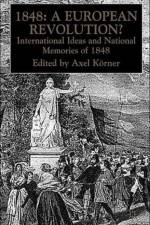
This book is among the rare contributions to the 150th anniversary of 1848 which takes a completely new, theoretically informed approach. The book offers original research on the history of European ideas and takes part in the current debate about the relationship between history and memory.
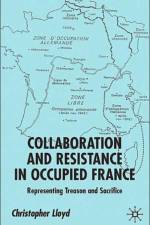
This book is about how people behaved during the German occupation of France during World War Two, and more specifically about how individuals from different social and political backgrounds recorded and reflected on their experiences during and after these tragic events.
This book provides an authoritative guide to debate on Elizabethan England's poet laureate. It covers key topics and provides histories for all of the primary texts. Some of today's most prominent Spenser scholars offer accounts of debates on the poet, from the Renaissance to the present day. Essential for those producing new research on Spenser.
This book explores the impact of Keats on authors and artists from 1821 to the end of the First World War. It examines the work of authors including Shelley, Browning and Thomas Hall Caine, and artists Holman Hunt and Rossetti. The study also includes tributes to Keats by women authors and artists such as Christina Rossetti and Jessie Marion King.
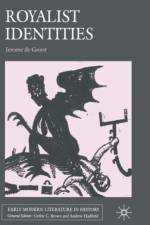
Royalist Identities shifts the emphasis from the question 'What is Royalism?' to 'What did Royalism want to be?' The texts analyzed show how Royalism was concerned with the construction of a set of binary roles and behavioural models designed to perpetuate a certain paradigm of social stability.
Das succintly covers the principal normative and positive strands that one needs to be properly familiar with in the area of economic globalization. The unique feature that distinguishes it from the competition is its succinct coverage of numerous, carefully selected, thematic issues that falls under the rubric of globalization.
This book provides new ways of analyzing the key issues in international finance and open economy macroeconomics. The topics covered include: financial globalization and the evolution of the international financial system; the intertemporal model of international borrowing and lending; and the causes of financial crisis in emerging economies.
God is said to be Spirit, but the language of spirit is ignored in contemporary philosophy of religion. As well as exploring the notion of spirit in Hegel, Romanticism and Kierkegaard, participants explore the view that God is a spirit without a body, and the relations between 'spirit' and 'truth'.
In this collection, distinguished theologians and philosophers of religion explore the relation of key Biblical concepts to our world. They examine a range of concepts, including authority, faith and history, the historical Jesus, the resurrection and miracles.
Also included are four case studies, showing how the concepts and arguments philosophers deploy in discussing violence, war and terrorism apply to particular instances of both insurgent and state terrorism, ranging from World War II to September 11, 2001.
It situates the problem of skepticism in the context of the history of philosophy and explores its significance for the modern crisis of reason manifested in post-Kantian philosophy, which presaged the critical turn toward social theory.
The book's area of study includes economics and business development, development economics, trade and investment, global competitiveness economics policy in Asia, globalisation, the WTO, and regional and international economic integration.
The crisis of the so-called Golden Age regime has been paralleled since the late 1960s by an increasing importance of market exchanges as opposed to vertically integrated manufacturing activity, leading to major changes in the size structure of firms.
Economic Development, Inequality and War shows how economic decline, income inequality, pervasive rent seeking by ruling elites, political authoritarianism, military centrality and competition for mineral exports contribute to war and humanitarian emergencies.
Real World Economic Outlook is a yearly publication that will review issues in the global economy from a different, radical and more realistic perspective.
This book examines selected pertinent topics on issues relating to current and future EU developments. In its initial sections, the book focuses on an array of wide ranging micro (agriculture, industry and competition) and macro (EMU, regional convergence and enlargement) issues. In particular, the book posits possible alternative strategies (e.g.
What are the prospects of the liberal democratic form of state spreading throughout the world? Democracy and the Global System analyses the relationship between liberal democracy and the international system while developing a critique of liberal internationalism.
This work provides a clear and comprehensive chronology of the Eastern Roman Empire from the foundation of Constantinople in 324 AD to the extinction of the last Byzantine principality in 1461 AD, ultimately shedding light on a once-obscure period of Eastern Mediterranean and Balkan history whose events still resonate in world politics.
Between 1808 and 1830, the Whigs made a remarkable transition from opposition to office that highlights important trends in early Nineteenth-Century Britain.
This book analyzes major transformations in Jewish life and thought: from idolatry to exclusive monotheism in the biblical age, from state-based identity to cultural nationalism in the Roman empire;
Discussing prostitutes and politicians, philosophers and charlatans, confidence tricksters and novelists, Libertine Enlightenment presents a fascinating overview of the sexual dimension of enlightened modernity.
This collection of essays is arranged around the central issue raised by a raft of new empirical research - the relationship between social identity, or the 'vision of the self', and the ways in which this can explain historical agency.
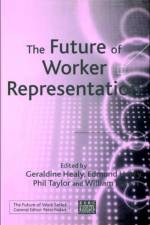
A representation gap has appeared in the British workplace as trade unions have declined. Part Two looks at non-union representation and the role that works councils, voluntary organizations and single-issue campaigns can play in giving British workers a new voice at work.
The promotion of workplace partnership in the high performance workplace has become central to policy debates on the 'modernization' of employment relations in British industry.
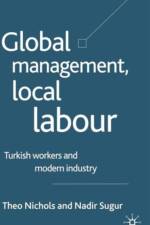
Little discussion about 'globalization' has concerned one of the truly global forces - the management of multi-national and large domestic corporations - and the significance of modern management practices for workers in the developing world.
This collection explores the concept of civility in the early modern period. It addresses a range of writings in English and Scots - among them, conduct manuals, colonial tracts, diaries, letters, dialogues, poetry, drama, chronicles - by English, Welsh and Scots men and women in and about the Atlantic archipelago.
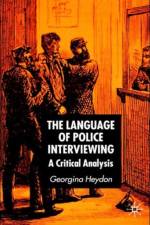
Police interviewing is a critical part of the justice process, and more attention is now being paid to training in interview techniques.
The West cannot afford to ignore China. China is the coming economic superpower of the Twenty-first-century, and now is the time to start understanding China and building relationships to it. It breaks down a number of misconceptions about China and offers managers a more realistic view of management in China today.
The viability of treating these entities as bearers of moral responsibilities is explored in the context of some of the most critical and debated issues and events in international relations, including the genocide in Rwanda, development aid, the Kosovo campaign and global justice.
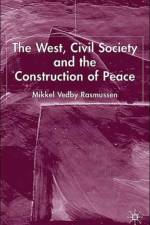
The West, Civil Society and the Construction of Peace describes how the challenges of peacemaking following the First and Second World Wars defined the West. Mikkel Vedby Rasmussen explains how the values of civil society have held the West together and concludes that 'the democratic peace ' is not a 'law' but a recipe for security.
Abonner på vårt nyhetsbrev og få rabatter og inspirasjon til din neste leseopplevelse.
Ved å abonnere godtar du vår personvernerklæring.