











Gjør som tusenvis av andre bokelskere
Abonner på vårt nyhetsbrev og få rabatter og inspirasjon til din neste leseopplevelse.
Ved å abonnere godtar du vår personvernerklæring.Du kan når som helst melde deg av våre nyhetsbrev.

Made by the U.S.A., The International System is a historical account, embedded in a set of theoretical constructs, of the two hundred year drive by the United States to first, become a global power and, second, create an international security and economic system capable of protecting and promoting its strategic and economic interests.
When human beings do horrifying things, are they evil? By exploring such popular literature as The Talented Mr. Ripley , Dante's Inferno , The Turn of the Screw , and The Strange Case of Dr. Jekyll and Mr. Hyde , Koehn illustrates that the roots of human violence are not true evil but a symptom of our failure to really know who we are.
In the tradition of the English School of International Relations theory, this project from Robert Jackson seeks to show how continuities in international politics outweigh the changes.
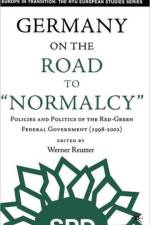
Many thought that the 'German question', that had shaped European history so catastrophically in the last century, had been solved for good in 1990. The book addresses these issues by examining the policies and politics of the Red-Green government and by putting recent changes and developments in this country in a long-term perspective.
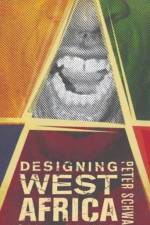
Many African nations are now described as 'fourth world nations', ones which essentially have no future. Focusing on the six most visible leaders of the period - painting detailed portraits of them both as leaders and as people - Schwab looks at how Africa served as a ground to play out larger international conflicts, namely the Cold War.
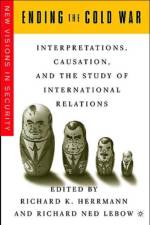
Although in hindsight the end of the Cold War seems almost inevitable, almost no one saw it coming and there is little consensus over why it ended. In this volume, prominent experts on Soviet affairs and the Cold War interrogate these competing interpretations in the context of five 'turning points' in the end of the Cold War process.
The economy has hit a soft patch.' - US Federal Reserve Chairman Alan Greenspan, reacting to the weak US job growth in June 2004 Mats Larsson: 'No, the economy is closing in on the limits of business development and economic growth and we are starting to see the consequences.
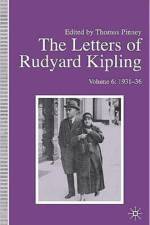
This new volume of The Letters of Rudyard Kipling , fully annotated, is the last of six volumes which form the first comprehensive publication of Kipling's letters, and covers the last five years of his life. This volume also contains a comprehensive index to all six volumes of the edition.
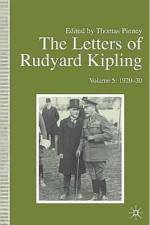
This new volume of The Letters of Rudyard Kipling , fully annotated, is one of six volumes which form the first comprehensive publication of Kipling's letters. The letters are varied and interesting in themselves, and provide the means for a greatly enlarged understanding of Kipling's life and works.
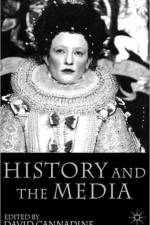
This book examines the boom in history, in television and film, newspapers and radio and the constraints and opportunities it offers. Leading historians and broadcasters, such as Melvyn Bragg, Simon Schama and David Puttnam, draw on their personal experiences to explore the problems and highlights of representing history in the media.
This new, corpus-driven approach to the study of language and style of literary texts makes use of the Dickens' 4.6 million-word corpus for a detailed examination of patterns of lexical collocations.
Palgrave Advances in Development Studies aims to provide readers with an understanding of the disparate theories concerning development, their assumptions and the intellectual forces underpinning them.
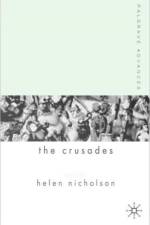
The Crusades were a startling and spectacular phenomenon that exerted a powerful influence on European development over a period of many centuries. This volume is intended as an introductory guide and analysis of how different aspects of crusading studies have developed.
Over the past fifty years, the history and culture of the Byzantine empire has ceased to be the preserve of a few scholars and is now taught and debated in universities all over the world.
The field of spatial econometrics has come to include the methods and models that deal with estimation and testing problems encountered when attempting to implement regional economic models.
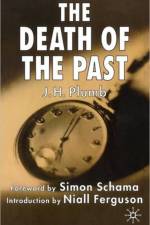
Plumb investigates the way that humankind has, since the beginning of recorded time, moulded the past to give sanction to their institutions of government, their social structure and morality.
This book gives an authoritative overview of the literature on non-stationarity, integration and unit roots, providing direction and guidance. It also provides detailed examples to show how the techniques can be applied in practical situations and the pitfalls to avoid.
Each year thousands of people die from bacteria resistant to antibiotics. Alternative drugs are urgently needed. A surprising ray of hope from the past are viruses that kill bacteria, but not us. Award-winning science journalist Thomas Hausler investigates how these long-forgotten cures may help sick people today.
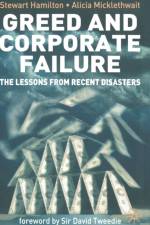
This book is for anyone who wants to know what truly lies behind the scandals and disasters of global business which marred the first few years of the 21st century. It examines why companies fail, finding the reasons few, yet all too common. It also explores what the prudent investor, board member or manager should be alert to but often is not.
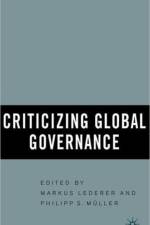
The first part challenges the concept of global governance, the second part focuses on organizational and institutional aspects, and the last part examines the rule systems implemented by global governance practices.
Charts Coleridge's prolific creation of love poems from early flirtatious verse to poems about marital incompatibility, the blank faces of young women fearing for their reputations, and others. In his prose, Coleridge responds to Parliamentary debates about punishing adulteresses and gives advice about how marriage can warp the soul.
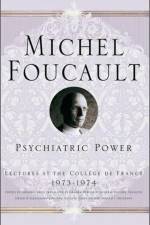
In this new addition to the College de France Lecture Series Michel Foucault explores the birth of psychiatry, examining Western society's division of 'mad' and 'sane' and how medicine and law influenced these attitudes. This seminal new work by a leading thinker of the modern age opens new vistas within historical and philosophical study.
The book examines how distinct social structures, political cultures, patterns of party and interest group politics, classes, public policies, liberal democratic and authoritarian institutions, and the discourses that frame them, are being reshaped by political actors.
This book presents a critical portrait of the British police through a detailed ethnography of their work at football matches. Megan O'Neill not only sheds light on a topic of intense media interest, football hooliganism, but also presents the police in a totally fresh perspective.
A collection of nine articles written by leading scholars in Britain, Ireland, Italy and the USA on various aspects of the city of St Petersburg during the important first century and a quarter of its existence, from its founding in 1703 to the end of the reign of Alexander I.
The issue of unfunded public pension systems has moved to the centre of public debate all over the world. Unfortunately, a large part of the discussions have remained on a qualitative level. This book seeks to address this by providing detailed knowledge on modelling pension systems.
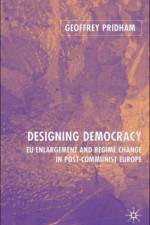
Designing Democracy is the first systematic and in-depth study of the effects of the EU's democratic conditionality, originally set out in the Copenhagen conditions of 1993, on the new political systems of Central and Eastern Europe.
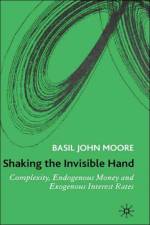
This book makes the case that economies are complex systems and in response to this, develops a unique dynamic nonequilibrium process analysis of macroeconomics. It provides a brief introduction to complex systems, chaos theory and unit roots. The importance and implications of contingency for economic behaviour are developed.
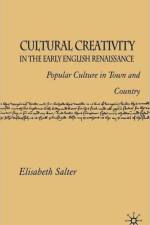
This book is about the ways that ordinary people in town and country creatively define themselves, their families and their social networks. It explores inheritance strategies, personal possessions, attitudes to commemoration after death, the daily fashioning of identity and the interactions between imagination and daily life.
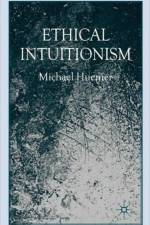
A defence of ethical intuitionism where (i) there are objective moral truths; (ii) we know these through an immediate, intellectual awareness, or 'intuition'; and (iii) knowing them gives us reasons to act independent of our desires. The author rebuts the major objections to this theory and shows the difficulties in alternative theories of ethics.
Abonner på vårt nyhetsbrev og få rabatter og inspirasjon til din neste leseopplevelse.
Ved å abonnere godtar du vår personvernerklæring.