


























Gjør som tusenvis av andre bokelskere
Abonner på vårt nyhetsbrev og få rabatter og inspirasjon til din neste leseopplevelse.
Ved å abonnere godtar du vår personvernerklæring.Du kan når som helst melde deg av våre nyhetsbrev.

An examination of the collaboration between Egyptian and Indian nationalists against the British Empire, this book argues that the basis for Third World or Non-Aligned Movement was formed long before the Cold War.
This important look at CAP combines historical research and analysis with the author's first-hand experience with the organization, providing the first historical narrative of a consequential player in the Black Power Movement.
Chou and Ching examine the processes of schooling in Taiwan amidst social, cultural, economic, and political conflict resulting from local and global dilemmas. Collectively, these issues offer a panoramic and in-depth glimpse from the past to the future of educational trends in Taiwan.
Teachers, as often as students, articulate frustrations over each other's choices and expectations. Florence explores the cross-cultural complexities of teacher/student interactions, particularly African immigrant teachers.
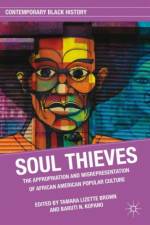
Considers the misappropriation of African American popular culture through various genres, largely Hip Hop, to argue that while such cultural creations have the potential to be healing agents, they are still exploited -often with the complicity of African Americans- for commercial purposes and to maintain white ruling class hegemony.
This book shows how British authors used landscape description to shape the meaning of the First World War. Using a broad range of critically neglected archival materials, it reexamines modernist and traditional writing to reveal how various modes of topographical representation allowed authors to construct healing responses to the war.
This book addresses the gendered political authority in Sierra Leone, a relatively unknown topic, and looks at the part it plays in women's history, political history, political transformation in Africa, and global women's political leadership.
An exploration of questions of nationality in Brazil and Argentina, at the time when the cities were flooded with impoverished European immigrants. The author argues that processes of representation and identity formation between national and immigrant groups have to be examined within the historical context of the host nations.
An Introduction to Buddhist Psychology is a lucid, intelligible and authentic introduction to the foundations of Buddhist psychology.
Is there more to 1970s British cinema than sex, horror and James Bond? This lively account argues that this is definitely the case and explores the cultural landscape of this much maligned decade to uncover hidden gems and to explode many of the well-established myths about 1970s British film and cinema.
This book provides comprehensive coverage of the models of contemporary democracy; its social, cultural, economic and political prerequisites; its empirically existing varieties and its two major challenges - globalization and mediatization. The book also covers the global spread of democracy and its spread into supranational democracies.
Judith Shklar called for a radical shift in political theory, toward a view of the history of ideas through the lens of exile. Hess takes this lens and applies it to Shklar's own life and theoretical work.
The Chinese Tao and the Western Trinity have a fundamental unity of theme: the unity of opposites. Both are connected with problems as broad and diverse as how to describe the entire universe, how a system can talk about itself, the relationship between symbols and realities, and the nature of signs and sacraments.
Through a unique collection of essays drawn from rich case studies, Authoritarianism in the Middle East provides important insights into the ongoing instabilities of the Middle East, and the authoritarianism and democratisation processes that have led to dramatic socio-political transformations.
The author examines Brazil's emerging role as an important actor in various sectors of global governance. By exploring how Brazil's exercise of power developed over the last decade in the sectors of health, food security and bioenergy, this book sheds light on the power strategies of an emerging country from the global south.
Race and Racism in Russia identifies the striking changes in racial ideas, practices, exclusions and violence in Russia since the 1990s, revealing how 'Russianness' has become a synonym for racial whiteness. This ground-breaking book provides new theories and substantive insights into race and ethnicity in a Russian context.
Managing Cultural Heritage explores managerial and governance issues within the cultural heritage sector, with particular regard to the ecomuseum. Moreover, a social accountability model is supplied to ecomuseums in order to be accountable towards its shareholder, the local community.
The author draws on behavioral ecology to predict the evolution of organized crime in unregulated systems of exchange and the further development of racketeer economies into unstable kleptocratic states. The result is a new model that explains the expansion and contraction of political-economic complexity in prehistoric and contemporary societies.
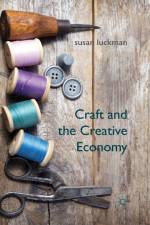
Craft and the Creative Economy examines the place of craft and making in the contemporary cultural economy, with a distinctive focus on the ways in which this creative sector is growing exponentially as a result of online shopfronts and home-based micro-enterprise, 'mumpreneurialism' and downshifting, and renewed demand for the handmade.
This book aims to decipher the complex web of structural, institutional and cultural contradictions which shape the inclusion-exclusion dialectic and the multifaceted grid within which the 'us' becomes the 'other' and the 'other' becomes the 'us'. It looks at how international migrants in Europe transform from legal subjects into legal abjects.
Sustainable Development in Malaysia and Indonesia examines a range of topics pertaining to sustainable development in the two countries.
Exploring the developments that have occurred in the practice of oral history since digital audio and video became viable, this book explores various groundbreaking projects in the history of digital oral history, distilling the insights of pioneers in the field and applying them to the constantly changing electronic landscape of today.
This study offers a comparative analysis of Latin American and Middle Eastern corporatism by looking at Egypt and Mexico's differing experiences with privatization and showing that how the working class was attached to the regime during the period of state-building shapes leaders institutional options and capabilities for market reform.
Here Calkins shows business how to create and maintain a defensive strategy including: how to understand and get competitive intelligence; how to determine if your brand or company is at risk; how to create a defensive strategy; limiting risk and preventing a trial; understanding your own IP as a weapon - and much more.
White southern writers are frequently associated with the racism of blackface minstrelsy in their representations of African American characters, however, this book makes visible the ways in which southern novelists repeatedly imagine their white characters as in some sense fundamentally black.
Weaving together a social history of the American beef industry with her own account of growing up in the shadow of her grandfather's cattle business, Halley juxtaposes the two worlds and creates a link between the meat industry and her own experience of the formation of gender and sexuality through family violence.
Terrorist's Creed casts a penetrating beam of empathetic understanding into the disturbing and murky psychological world of fanatical violence, explaining how the fanaticism it demands stems from the profoundly human need to imbue existence with meaning and transcendence.
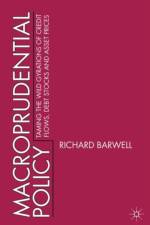
The financial crisis of 2008 is probably the single most important economic event in post-war history. Macroprudential policy is the response to that crisis - a determined attempt to stabilize the financial system. This book explains why it is necessary, who will be responsible for executing this responsibility and how they will go about doing it.
For five centuries, since Vasco de Gama's ships began making the Indian Ocean a Portuguese lake, many governments used naval force to serve their political purposes.
In this innovative book, Sarah Cooper revisits the history of film theory in order to bring to the fore the neglected concept of the soul and to trace its changing fortunes. The Soul of Film Theory charts the legacy of this multi-faceted, contested term, from the classical to the contemporary era.
Abonner på vårt nyhetsbrev og få rabatter og inspirasjon til din neste leseopplevelse.
Ved å abonnere godtar du vår personvernerklæring.