

























Gjør som tusenvis av andre bokelskere
Abonner på vårt nyhetsbrev og få rabatter og inspirasjon til din neste leseopplevelse.
Ved å abonnere godtar du vår personvernerklæring.Du kan når som helst melde deg av våre nyhetsbrev.

The book is about my life's experiences in my childhood and adult life and how it all happened for a reason.Three doctors and three therapists told me I would never walk again, but I'm still walking with my walker.God bless you.Carmen Renae MillerAlthough parts of my book seem unbelievable, it is all true facts. God bless you.
During that evening, Prince Demetrjusz decided to take a walk. Roald had insisted on accompanying him, and Kenechukwa followed at a distance. During the brisk walk that Demetrjusz took, he had tried to lose himself in the city. There were several shops open, and he looked idly into the windows, until he saw a flash of silver. Pausing, Demetrjusz looked a little closer into a shop window. With surprise, Demetrjusz saw a tiny woman standing before a display of brightly colored fabric. Her hair was white with a frame of black. Only one other person the prince had ever seen had that unique color pattern or diminutive stature-that of the figure skater from the previous charity performance. The prince's sensitive ears picked up every syllable that the tiny beauty said. "e;Stefanie, if you could use this in the costume you are sewing for me. I have to get back before my curfew is up."e;Stefanie said, "e;Domino, you can stay in my spare room. You don't have to stay at the institute anymore. You will be twenty-one in a couple of days."e;Demetrjusz sucked in a deep breath. This was Domino, the woman that had plagued his thoughts all day. The prince continued to listen as Domino said, "e;Dominique, please call me Dominique. I can't today. I have another event for the institute tomorrow night, and then I will be unemployed."e;Demetrjusz was in too deep of thought to notice that the woman that had infatuated him all day was saying her goodbyes. Dominique rushed out the door and straight into the immovable body of the prince. Demetrjusz gently steadied her little body with his hands, holding Dominique a little too long. Dominique looked up at Demetrjusz, her Kelly green eyes snapping their disapproval as she said, "e;Excuse me, sir."e;Dominique felt extremely annoyed at the tall, very handsome stranger who was holding her. Dominique raised her eyebrow at him when he did not release her and moved to the side.Prince Demetrjusz realized that he was breaking a cultural norm and apologized. Reluctantly, he released the little performer. And before Demetrjusz could stop Dominique, she had hopped on a public bus and was gone. Demetrjusz could still smell Dominique's intoxicating fragrance of peppermint and lavender as he watched the public transportation carry away the elusive female.Roald and Kenechukwa walked up to the prince. Roald inquired, "e;Did you know that young woman, Your Highness?"e;Demetrjusz answered as he stared at the bus driving away, "e;No, but I will."e; Turning to his friends, he said, "e;Most definitely, I will."e; The other two men looked at each other and shrugged their shoulders.
This is the first episode of a children's story about a young polar bear who lives in the cold Arctic.The cold air penetrates his fluffy white fur. He wishes he could live where the sun shines and the temperature is warm all year. He visits a mobile library and reads about Florida and decides he wants to go there. With his mother's permission, his cousin James's companionship, and the help of a very intelligent dolphin, he realizes his dream.In future stories, global warming threatens his homeland, forcing his family to face challenging solutions.The cover and images of this work was painted by the artist: Amy ValentinewhiterobinO00@gmail.com
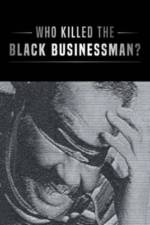
This book is about a young man coming to age back in the sixties, when Black men wore Afros and dashikis. We have just realized how important allies really were, no more mopping floors and working in the auto factories. We were going to be business owners, and no one could imagine what was in store for us-the burning down of my brother's nightclub, a fight for my life, and my mother hanging on for dear life as my brother's nightclub went up in flames. The opening of my photo lab was the biggest photo finishing plant the Kodak I've ever seen; that was owned by a Black man, hundreds of accounts from Los Angeles to Beverly Hills, but the robbers didn't care. The police could not protect me; my employee respects life, going to work every day. This was the fight of my life; could you imagine coming to work finding your mother beat down in the store? I had to defend myself and my employees; it was a tale. Was it worth it? The dead bodies in the alley, my wife having no idea of what I was going through every day. My kids did not care; they only saw that I was never there. Get the insight of what it meant to be a Black business owner in the sixties. Everyone talked about a Black business owner getting a free ride with business loans from the SBA, but they never knew the truth. I still wake up at night in cold sweats, thinking about what I have been through. Was it all worth it?
Darryl Jefferson grew up with the sole ambition of becoming a US Army soldier. Despite many people advising against it, he ultimately fulfilled his goal and enlisted in the Army while the wars in Iraq and Afghanistan were raging. He soon discovered that this experience was much different than he had anticipated, but in the process, he would learn and discover much about himself, the real world, and the human condition. This is his story.
The year 1865 finds Edward behind the lines during the Civil War, where he finds his fatally wounded brother and watches him die, then buries him in the new land. Edward is the owner of a bar and gambling hall in Ohio 1882. An ambitious man, he takes the opportunity to enter politics in Cincinnati. He must give up the woman he has been keeping, for she will taint his new life. Now in 1899, in a loveless marriage to the daughter of a political boss, he banks everything on a mayoral campaign and loses. The birth of his second son, Charles, only serves to further trap him in despair. Charles's story begins in 1917. He is eighteen years old and studying his heart's desire at the Art Institute of Chicago. He is called home by his father, Edward, to serve with his brother and enlist in the Army in World War I. He cannot be protected by his deeply upset mother. He goes to war, giving up his dream of being a painter. In 1925, Charles is a reporter working for a daily newspaper in Chicago doing a story about bootleggers. On an impulse, he goes to visit the art school that he left years ago. He receives a phone call that his father has died and goes home to Louisville. While there, he reads that his reporter partner has been murdered by the gangsters they were investigating. Charles breaks down and is comforted by his brother's wife, Molly, with whom he has always been in love. Eight years later, in the middle of the Depression, Charles is penniless and out of work and is seeking the haven and warmth of the local library. He falls in love with Genevieve, a retiring young woman who is flattered by his attention. He sees her off to her family for Christmas. Then after visiting the whore whom he sees occasionally, he decides that he must change his luck, change his life, and marry. In 1939, Charles is a salesman in Louisville. He is married now with two children who are strangers to him. The city is under a plague of starlings. He feeds birds from his office window then goes to a museum, where he often escapes, to see a Vermeer. He talks with Natalie, the curator who has befriended him, and is unsettled by how much of himself he reveals. Unused to the intimacy, he gets drunk and finds that the police are shooting the starlings. Sickened by the slaughter, he goes home and begs forgiveness of Genevieve.
Multimillionaire Ethan Barris sold his Internet startup and now greatly enjoyed teaching computer science to the brightest seniors at Laketown Science Academy, an all-girls school. He also reveled in insulting and humiliating his colleagues on the school faculty who he thought were mediocre losers.Ethan found additional pleasure in having sex with several much younger women while bullying his long-time girlfriend into taking an action she would immediately deeply regret.One morning, while leaving for work, Ethan was stabbed to death on his front porch. The police were making no progress, and super sleuth Amy Bell was hired by Ethan's one friend in the faculty to investigate the killing.Amy soon realized that virtually everybody who knew Ethan strongly disliked him, except for his students who respected and admired him.Who hated Ethan so much that they would kill him on that mid-September morning? Amy found it hard to believe any of her suspects would go that far. But somebody clearly did, and the beautiful and brilliant Amy represented the last best chance to solve the case.Author David Schwinger, when not writing Amy Bell mysteries-there are now thirteen-enjoys composing songs, playing pickleball, and traveling the world with his wife, Sherryl. He first met Sherryl when she was his student in a mathematics class he taught at City College of New York. Their secret romance became the inspiration for his first Amy Bell mystery, The Teacher's Pet Murders.
Stephen Frazier has over thirty years of experience for raising catalpa trees and catalpa worms. After hundreds of experiments, tips and suggestions from numerous entomologists, he has written the complete guide, tested and proven, for raising healthy catalpa trees, healthy catalpa worms, and the correct handling and preserving of catalpa worms. The text is supported by seventy-three color photographs and two diagrams.
The Art of Southwest Landscaping is the second in a series on landscaping in the desert regions of the Southwest. It is dedicated to the wide variety of delightful desert accents, cacti, groundcovers, ornamental grasses, palms, shrubs, succulents, trees and vines that can beautify landscapes. The author, Dawn Layna Fried, has included a broad selection of plant species that she has used in her own practice as a landscape designer over the past 30 years. Dawn Layna Fried, also an avid plant photographer, has always been passionate about creating magnificent, outdoor living spaces using a variety of color and greenery. She has spent years designing and installing award-winning landscapes for her company, Horticulture Unlimited Inc, in Tucson, Arizona. Each of the plant species listed in this book have been used by Dawn to create unforgettable Southwest landscapes. Stunning photographs accompany each species. The author hopes her book will be the inspiration for you to create unimaginable gardens in your own backyard. The Art of Southwest Landscaping will educate longtime desert dwellers and newcomers alike about the variety of amazing landscape plants available today for small and large gardens. The book includes specific plant suggestions for a variety of landscapes, along with detailed characteristics and special features, such as flower color, fragrance, texture and uses for shade, sun or to attract butterflies. It also identifies the genus and species for each plant with detailed resources on how to keep plants healthy.
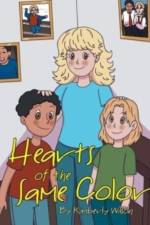
This is a true story. This happened over twenty years ago. My hope with Hearts of the Same Color is it that it can help one child not have to carry something into adulthood that he or she should never have to carry; it is something no one should have to wear. We can all be proud of ourselves inside and out. I hope this will give our children a realization that they are not alone in their struggles. Just because people say hurtful things does not mean that it is true, and we do not ever have to let that define us. We can be polite and say thank you for sharing because we cannot change them. However, we can say kind and loving things to ourselves. We can love ourselves and realize our own value as well as our importance. Eventually, we can break the chain that so many of us carry of not being enough. May God bless you all and protect you all as we continue this journey of life.
Sing Sing 614 represents the # of inmates executed at this historical prison. Joe Wood (cover) was the first black man executed in 1891. Learn why his electrode was switched from his right leg to his left. Meet Gordon Hamby, deemed the handsomest man on death row. Eight-hundred women wrote not to execute him. On the day of his execution Hamby told Warden Lewis E. Lawes "e;don't worry warden, in 24 hours I'll be back!"e; The trouble is, not only did Hamby come back, but he also brought everyone else from Sing Sing's death house with him, including Joe Wood. This book will entertain you.
Three childhood friends found themselves entwined in the vicissitudes of life on the mean streets of the South Bronx, where the invisible hands of greed lacked empathy. In a desperate attempt to escape poverty, Malcolm, Eric, and Yadiel actuated by a feeling of hopelessness, embraced a path in the streets that lead them into a life of gangs, arson, murder, and drugs. By 1977, on the gritty streets of the South Bronx, buildings were going up in smoke all over the city at a time when arson was the answer to everything. As Greed told the story of life and death, heroin filled the veins of those who tried to escape the horrors of the world through a delusive feeling of euphoria. By the early eighties, crack, a very potent form of cocaine, surfaced on the streets of New York, and with it came a profitable curse that conveyed death and destruction everywhere it went.
We have many conspiracy theories. This book adds the costliest in money and lives. The conspiracy is to lead professors of finance, economics, political science and law away from understanding today's money supply system. This is accomplished by not requiring professors to study the 1913 Federal Reserve Act to become professors. This is the act of Congress that established our checking account systems. Professors can't teach what they don't understand and they can't understand what they don't study. What wasn't taught to the author by his professors is the 1913 Federal Reserve Act replaced "e;gold as money"e; with "e;checking account balances as money"e;, but it didn't say so directly. The Federal Reserve Act also gave the government's power to control checking account deposits to non-government people, but it didn't say so directly. It gave the non-government people the power to increase a checking account balance without actually depositing money, but it didn't say so directly. The non-government people are allowed to make a checking deposit, without actually depositing money, and loan that Money-Less-Deposit to the US national debt. The non-government executives of the Federal Reserve board did say that directly, but the professors would have had to also study the 1864 National Currency Act to recognize that the conspiracy is within the reserves of the Federal Reserve, but they aren't required to study that act either to become professors. The purpose of this book is to counter the conspiracy by explaining the economic system created by the Federal Reserve Act to citizens and then ask citizens to help the author persuade professors to study the Federal Reserve Act so they can begin teaching us the correct information. That information will lead the U.S. to financial greatness because right now citizens are conquered by a misunderstood document passed by Congressmen over one hundred years ago.
Abonner på vårt nyhetsbrev og få rabatter og inspirasjon til din neste leseopplevelse.
Ved å abonnere godtar du vår personvernerklæring.