









Gjør som tusenvis av andre bokelskere
Abonner på vårt nyhetsbrev og få rabatter og inspirasjon til din neste leseopplevelse.
Ved å abonnere godtar du vår personvernerklæring.Du kan når som helst melde deg av våre nyhetsbrev.

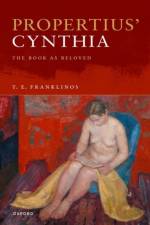
Propertius' Cynthia considers Propertius' metapoetic and intra- and intertextual habits and their relationship with the repetitious amatory discourse that he fashions for himself with his beloved, Cynthia.
Explores what nineteenth-century alphabet books can tell us about literacy and constructions of childhood in Britain throughout this period. The volume shows how artists and writers including William Thackeray, Edward Lear, and Kate Greenaway participated in ongoing debates about what counted as literacy and how reading should be taught.
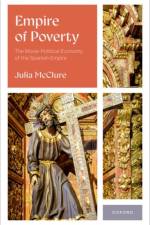
Empire of Poverty examines the ways in which the concept of poverty has been a building block of empires, race, and imperial inequalities.
Explores the ways in which the nineteenth- and twentieth-century feminist ideal of the New Woman engaged and interacted with fin de siècle technologies of speed in order to fashion a new, dynamic identity for women of the period.
Memories of Colonisation in Medieval and Modern Castile: Rereading and Refashioning al-Andalus traces the evolving memory of a dominant al-Andalus in medieval Castilian and, later, modern Spanish literature, and its imbrications with contemporary formations of collective identity, race, and nation.
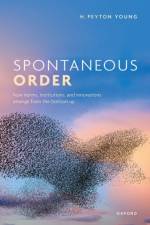
Spontaneous Order brings together Peyton Young's research on evolutionary game theory and its diverse applications across a wide range of academic disciplines, including economics, sociology, philosophy, biology, computer science, and engineering.
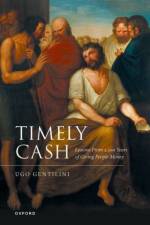
This book provides a historical overview of the 2,500-year history of cash transfers to better understand the roots of contemporary debates on whether and how such assistance should be provided.
In World Order in Late Antiquity Blachford examines the diverse suzerain order of late antiquity as 'barbarous' nomadic tribes challenged the hierarchical ambitions of two rival empires who both claimed a unique role in the maintenance of world order.
François Rabelais and the Renaissance Physiology of Invention: Ingenious Animation explores the medical poetics of inventive, embodied thinking or ingenuity instantiated in Rabelais's Gargantua and, mostly, his Quart livre.
There is a tendency, in contemporary epistemology, to treat 'perceptual knowledge' and 'self-knowledge' as labels for different and largely unconnected sets of philosophical problems. The project of this volume is to bring out how much is to be gained from treating the two topics as, on the contrary, intimately connected. One set of questions that comes into view when we do concerns the sense in which perceptual knowledge, as understood from the first-person perspective, seem to be 'direct'. In a famous passage, Austin contrasted reliance on what we call 'evidence' with the way perceptual experience 'settles' questions. How should we understand the difference? In what sense is perceptual knowledge 'direct', in contradistinction to evidence-based, inferential knowledge? A connected set of issues has to do with the relationship between the epistemic authority of perception and self-consciousness. Is the way perceptual experience 'settles' questions inherently manifest to the perceiver? Is a perceiver's awareness of (e.g.) seeing that p to be explained by reference to the very capacities at work in seeing that p? Or does it reflect the operation of some kind of second-order perceptual capacity? Consideration of these matters, in turn, prompts questions about the nature of the first-person perspective. 'I can see that p' is a first-person self-ascription. But does it express the distinctively immediate kind of knowledge commonly labelled first-person self-knowledge? How would an affirmative answer to this question bear on a philosophical understanding of the 'first-person perspective'? These are rough indications of some of the ways in which reflection on the relationship between perceptual knowledge and self-awareness promises to shed valuable light on both topics.
In Diffracting Collaborative Leadership, Barbara Simpson proposes that leadership in organizations may be understood as a complementary duality of 'leaders' and 'leading' and explores this as a creative, collaborative process of future-making that arises from uncertainties.
This book provides first-time English translations of two chapters from Brucker's Latin work: The 'Preliminary Discourse', explaining the method of the new discipline, and 'The Socratic School', illustrating the hermeneutic consequences of his method.
Supporting the latest Cambridge IGCSE Mathematics syllabus assessment criteria, this in-depth guide brings clarity and focus to exam preparation with detailed and practical guidance and tips alongside revision strategies and content, enabling students to reach their full potential.
Reversing Ethnic Cleansing through Minority Returns examines whether and how ethnic, religious, and political minorities should be returned and reintegrated after conflict.
This book asserts that there is no political representation without performance. When politicians, protesters, or politically engaged entertainers appear in public, they make or constitute political representation by performing it, shaping how we conceive roles and institutions and imagine society and democracy.
Sense and Nonsense, third edition, provides an introduction to the ideas, methods and findings of evolutionary theory.
An integrated approach to inorganic chemistry that provides students with a unified and contemporary view of the field.
This volume offers the most extensive treatment of NATO in the last two decades, providing detailed coverage of NATO allies, policies, and organizational structures. It brings together internationally renowned scholars who interrogate the Alliance's actions from historical, theoretical, and empirical perspectives.
A catalogue of the 2,150 ancient pre-imperial Greek coins from Ionia in the collection of the Ashmolean Museum, Oxford. Text, and plates are interleaved, so that the description of each coin, which includes physical details, comparanda, provenance information, and accession number, is opposite its photographs. Multiple indices complete the volume.
The volume contains a critical edition of 42 questions (no. 98-138 and 220-221), revolving around medieval ethics. It is part of the Quaestiones Theologiae corpus, the chief speculative work of Stephen Langton, later Archbishop of Canterbury. The edition is preceded by an extensive study of Langton's selected ethical and logical theories.
Investing in Health and Wellbeing: When Prevention is Better than Cure, Second Edition provides a framework to investigate health promotion and protection, illustrating the principles with practical examples.
This revision guide covers everything your students need to know about the Edexcel A Level Maths course. They will build all the knowledge they need for the Edexcel A Level Maths exams. The course is clearly covered across Pure, Statistics and Mechanics including questions on the large data set.
Abonner på vårt nyhetsbrev og få rabatter og inspirasjon til din neste leseopplevelse.
Ved å abonnere godtar du vår personvernerklæring.