





















Gjør som tusenvis av andre bokelskere
Abonner på vårt nyhetsbrev og få rabatter og inspirasjon til din neste leseopplevelse.
Ved å abonnere godtar du vår personvernerklæring.Du kan når som helst melde deg av våre nyhetsbrev.

What does the idea of taking 'the point of view of the universe' tell us about ethics? Lazari-Radek and Singer defend objectivism in ethics, and hedonistic utilitarianism, following Henry Sidgwick's lead. They explore how to justify an ethical theory; conflicts of self-interest and universal benevolence; and whether we should discount the future.
In short, punchy essays by distinguished researchers from across a range of disciplines, this book provides a new way of understanding globalization, moving away from the standard accounts of global forces, economic flows, and capitalist dynamics, to show how ordinary practices and artefacts are crucial elements and symbols of globalization.
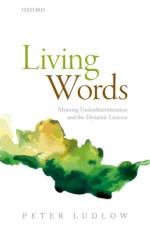
Peter Ludlow shows how word meanings are much more dynamic than we might have supposed, and explores how they are modulated even during everyday conversation. The resulting view is radical, and has far-reaching consequences for our political and legal discourse, and for enduring puzzles in the foundations of semantics, epistemology, and logic.
This book critically and constructively explores the resources offered for natural law doctrine by classical thinkers from three traditions: Jewish, Christian, and Islamic. Three scholars each offer a programmatic essay on natural law doctrine in their particular religious tradition and then respond to the other two essays.
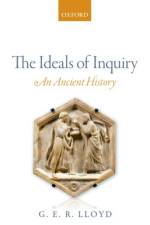
Long before science as we know it existed, sophisticated studies of the physical world were undertaken-in Mesopotamia, India, China, and Greece. G. E. R. Lloyd explores the methods, subject-matter, and aims of those studies. He illuminates the origins of human intellectual inquiry, finding similarities and differences across cultures.
Takes a fresh approach to the 'science and religion' debate, taking a scientist's reading of the enigmatic and beautiful Book of Job as a centrepiece, and asking what science might ultimately be for. Rather than conflicting with faith, science can be seen as a deeply religious activity.
Students and scholars of biblical reception history; of new testament studies; of English/British history; of English/British literature
This book presents a novel and comprehensive process theory of organization applicable to 'a world on the move'. It contains a number of practical examples to illustrate the theoretical framework and will serve as an excellent introduction for researchers and graduate students.
This study analyzes Hegel's philosophy of religion in the light of ongoing debates about the relation between religion and politics as well as the history of their conceptualization in the modern West. Lewis argues that recent non-traditional, more Kantian interpretations of Hegel's project open up a new understanding of his treatment of religion.
Daniel Deronda, George Eliot's last great novel, charts the intertwined lives of spirited Gwendolen Harleth and the idealistic Deronda. Both are damaged by their pasts, and alienated from the society around them, in a story set against the backdrop of economic crisis, political uncertainty, and proto-Zionism.
This book argues that major patterns of variation across languages are structured by general principles of efficiency in language use and communication, an approach that has far-reaching theoretical consequences for issues such as ease of processing, language universals, complexity, and competing and cooperating principles.
A volume which examines twelfth and thirteenth century officers and the practices used to regulate them in England, placing them not only within a British context but also a wider European one and exploring how administration, law, politics, and norms where used to control the insolence of office.
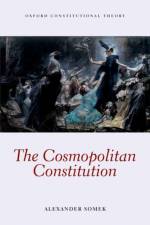
This book looks at the changes of the foundations of constitutional authority since the eighteenth century. Somek argues that post WWII, people are no longer the fountain of authority, instead the new commitment to human rights and the 'peer review system' among nations, marks the advent of the cosmopolitan constitution.
Genetic Analysis applies the combined power of molecular biology, genetics, and genomics to explore how the priniciples of genetics can be used as analytical tools to solve biological problems.
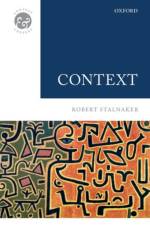
Robert Stalnaker explores the contexts in which speech takes place, the ways we represent them, and the roles they play in explaining the interpretation and dynamics of speech. His central thesis is the autonomy of pragmatics: the independence of theory about structure and function of discourse from theory about mechanisms serving those functions.
Vision science has grown hugely in the past decades, but there have been few books showing readers how to adopt a computional approach to understanding visual perception, along with the underlying mechanisms in the brain. This book explains the computational principles and models of biological visual processing, and in particular, primate vision.
This book provides a convincing argument for the view that whole cells and whole plants growing in competitive wild conditions show aspects of plant behaviour that can be accurately described as 'intelligent'.
Dante's British Public examines the many and various ways in which the work of the leading poet of medieval Europe has been acquired, represented, and discussed by British readers over the last six centuries.
The Roman Law of Obligations presents a series of lectures delivered by the late Peter Birks as an introductory course in Roman law. Discovered in complete manuscript form following his death, the lectures are published here for the first time.
International courts and tribunals make decisions which shape international law. Yet what grants them the legitimacy to make these decisions in the first place? This book proposes a theory of international public law that argues that these international courts democratically derive their legitimacy from the people and citizens.
Based on interviews and conversations with leaders and managers in Europe and the United States, the book presents seven of the most common explanations for persistent gender imbalances and shows how they are based on common stereotypes and myths about men's and women's abilities and preferences.
Starting with the French Revolution Massacres and Morality studies mass killing as perpetrated by states. In particular it examines the role that civilian immunity has played in shaping the behaviour of perpetrators and how international society has responded.
Climate change is the most difficult threat facing humanity this century and negotiations to reach international agreement have so far foundered on deep issues of justice. Providing provocative and imaginative answers to key questions of justice, informed by political insight and scientific understanding, this book offers a new way forward.
Mediatrix examines the roles women played as patrons, dedicatees, and readers, as well as writers, in the English Renaissance, and the relationship between these literary activities and religious and political activism.
This book offers reconstructions of various syntactic properties of Proto-Germanic, including verb position in main clauses, the syntax of the wh-system, and the (non-)occurrence of null pronominal subjects and objects.
In the first fully documented study of British and Irish popular reactions to the outbreak of the First World War, Catriona Pennell explores UK public opinion of the time and successfully challenges the myth of British 'war enthusiasm'.
Provides readers with a methodology to evaluate the impacts of a wide diversity of development projects and policies on local economies, together with a diversity of applications of these tools-from poverty programs to global price shocks, irrigation projects, eco-tourism, migration, production subsidies, and government corruption.
This book offers an accessible overview of what is known about the evolution of the human capacity for language and what sets human language apart from the simple communication systems used by non-human animals. It draws on a wide range of disciplines, including philosophy, neuroscience, genetics, and animal behaviour.
The book explains the fundamental ideas of density functional theory, and how this theory can be used as a powerful method for explaining and even predicting the properties of materials with stunning accuracy.
The book focuses on molecular evolution and phylogenetics, dealing with the statistical methods of data analysis implemented in commonly-used computer software.
Abonner på vårt nyhetsbrev og få rabatter og inspirasjon til din neste leseopplevelse.
Ved å abonnere godtar du vår personvernerklæring.