



















Gjør som tusenvis av andre bokelskere
Abonner på vårt nyhetsbrev og få rabatter og inspirasjon til din neste leseopplevelse.
Ved å abonnere godtar du vår personvernerklæring.Du kan når som helst melde deg av våre nyhetsbrev.

What makes a good scientific image? Is science defined by its pictures? The present book offers a broad comparative survey of the history, generation, use and function of images in scientific practice based on an extensive range of historical sources in the natural sciences, technology and medicine, particularly physics, astronomy, and chemistry.
This book takes on board the assumption that we should be naturalists, and argues that the position can accommodate the idea of God. Naturalism and theism are no longer logically incompatible, and the fashionable atheism of our times is shown to depend upon an unwarranted commitment to scientism and a questionable conception of God.
Feeling Pleasures argues that the sense of touch assumed a new and unique importance in the sixteenth and seventeenth centuries and that the work of major poets of the period, including Edmund Spenser, William Shakespeare, and John Milton, should be read alongside these developing ideas.
William L. Harper presents a compelling new account of Isaac Newton's work on gravity and the cosmos. He argues that Newton's inferences from phenomena realize an ideal of empirical success that is richer than prediction, and explores the ways in which Newton's method aims to turn theoretical questions into ones which can be answered empirically.
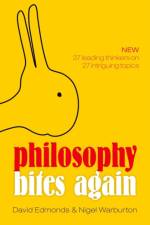
In Philosophy Bites Again, a brand new selection of interviews from the popular podcast, leading philosophers explore some of the major philosophical questions that affect us all. Both thought-provoking and engaging, the discussion ranges from pleasure, pain, and himour, to free will, the self, and the meaning of life.
Secular Chains uses close readings of the work of a range of canonical poets to re-evaluate the relationship between English literary culture and the political challenges to religious authority that emerged in the wake of the civil wars, and which culminated in the intellectual ferment of the early Enlightenment.
Thinking with Literature offers a succinct introduction to a cognitive literary criticsm, broad in scope but focusing on a particular cluster of approaches, it aims to induce a change of perspective in the reader.
A refreshing, student-focused introduction to the use of statistics in the study of the biosciences. Emphasising why statistical techniques are essential tools for bioscientists, Biomeasurement removes the stigma attached to statistics by giving students the confidence to use key techniques for themselves.
Christopher Peacocke presents a new theory of subjects of consciousness, together with a theory of the nature of first person representation. He identifies three sorts of self-consciousness-perspectival, reflective, and interpersonal-and argues that they are key to explaining features of our knowledge, social relations, and emotional lives.
Graham Priest presents an original exploration of questions concerning the one and the many. He covers a wide range of issues in metaphysics-unity, identity, grounding, mereology, universals, being, intentionality and nothingness-and draws on Western and Asian philosophy as well as paraconsistent logic to offer a radically new treatment of unity.
Timothy Chappell develops a picture of what philosophical ethics can be like, once set aside from conventional moral theory. His question is 'How are we to know what to do?', and the answer he defends is 'By developing our moral imaginations'-a key part of human excellence, which plays many roles in our practical and evaluative lives.
This book traces the development of English slang from the earliest records to the latest tweet and explores why and how slang is used. Based on inside information from real live slang users as well as the best scholarly sources, this book is guaranteed to teach you some new words that you shouldn't use in polite company.
This new edition continues to provide the first truly integrated study of the topic - one that discusses both the how and why of flowering plant reproductive biology.
A history of the attempts to introduce international criminal courts and new international criminal laws after World War I to repress aggressive war, war crimes, terrorism, and genocide.
Why Law Matters argues that public institutions and legal procedures are valuable and matter as such, irrespective of their instrumental value. Examining the value of rights, public institutions, and constitutional review, the book criticises instrumentalist approaches in political theory, claiming they fail to account for their enduring appeal.
The book outlines how companies should synchronize competitive strategies with extant strategies for social engagement and political and regulatory activism in order to build and sustain business success.
Re-interpreting Durkheim's theory of the sacred, this book sets out a theory of the sacred for use across a range of humanities and social science disciplines and draws on contemporary case study material to show how sacred forms-whether in 'religious' or 'secular' guise-continue to shape social life in the modern world.
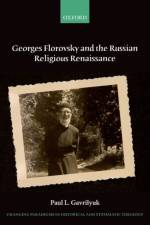
This study offers a new interpretation of twentieth-century Russian Orthodox theology by engaging the work of Georges Florovsky (1893-1979), especially his program of a 'return to the Church Fathers'.
Provides an economic history of Tanzania since independence in 1961. It covers the policies of African Socialism and the Arusha Declaration, the collapse of the early 1980s, the relationship with the IMF, and the reforms of the 1990s and 2000s.
Contributing to interdisciplinary debates in cultural economy and the social studies of finance, and grounded in extensive empirical research, this book offers an innovative analysis of how the contemporary global financial crisis was governed. The focus is on the US and UK between 2007 and 2011
This book considers ethical thinking in ancient Israel in the period from the 8th to the 2nd century BC.
Presents a unifying approach to the physics of chaos, nonlinear systems, dynamic networks, evolutionary dynamics, econophysics, and the theory of relativity. Each chapter has many worked examples and simple computer simulations that allow the student to explore the rich phenomena of nonlinear physics.
Humans are not model epistemic citizens. Our reasoning can be careless, our beliefs eccentric, and our desires irrational. Quassim Cassam develops a new account of self-knowledge which recognises this feature of human life. He argues that self-knowledge is a genuine cognitive achievement, and that self-ignorance is almost always on the cards.
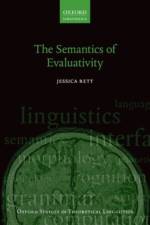
This book focuses on the semantic phenomenon of evaluativity in sentences such as John is tall and its consequences across constructions. It proposes an account based on assumptions that speakers and hearers make about the relationship between the simplicity of a situation and the simplicity of the language used to describe that situation
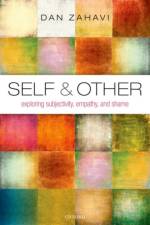
Dan Zahavi engages with classical phenomenology, philosophy of mind, and a range of empirical disciplines to explore the nature of selfhood. He argues that the most fundamental level of selfhood is not socially constructed or dependent upon others, but accepts that certain dimensions of the self and types of self-experience are other-mediated.
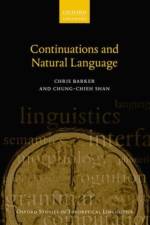
This book takes concepts developed by researchers in theoretical computer science and adapts and applies them to the study of natural language meaning. Summarizing over a decade of research, Chris Barker and Chung-chieh Shan put forward the Continuation Hypothesis: that the meaning of a natural language expression can depend on its own continuation
Hannah Ginsborg presents fourteen essays which establish Kant's Critique of Judgment as a central contribution to the understanding of human cognition. The papers bring out the significance of Kant's philosophical notion of judgment, and use it to address interpretive issues in Kant's aesthetics, theory of knowledge, and philosophy of biology.
This is the first full historical study of a key strand in the development of modern moral philosophy. The subject is a school of British ethical theorists from the late 19th to the mid-20th century, including Sidgwick and Moore. Hurka shows what these philosophers thought, how they influenced each other, and how their ideas changed through time.
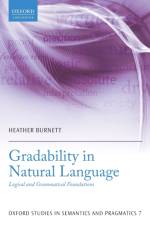
This book presents a new theory of the relationship between vagueness, context-sensitivity, gradability, and scale structure in natural language. Heather Burnett proposes a new formal reasoning system called DelTCS in which she sets out a completely new theory of gradable linguistic constructions.
Neo-Kantianism was an important movement in German philosophy of the late 19th century: Frederick Beiser traces its development back to the late 18th century, and explains its rise as a response to three major developments in German culture: the collapse of speculative idealism; the materialism controversy; and the identity crisis of philosophy.
Abonner på vårt nyhetsbrev og få rabatter og inspirasjon til din neste leseopplevelse.
Ved å abonnere godtar du vår personvernerklæring.