














Gjør som tusenvis av andre bokelskere
Abonner på vårt nyhetsbrev og få rabatter og inspirasjon til din neste leseopplevelse.
Ved å abonnere godtar du vår personvernerklæring.Du kan når som helst melde deg av våre nyhetsbrev.

Organizational Progeny uses fascinating new data on nearly 200 intergovernmental organizations and detailed accounts of the origins of prominent and diverse institutions. It argues that we are experiencing a proliferation of organizational progeny over which national governments are literally losing "control".
Through the eyes of Newman, who has often been called 'the Father of the Second Vatican Council', this book looks at the documents of Vatican Il which have shaped the post-conciliar Catholic Church and considers how far they have been correctly interpreted or understood.
Sensory experience seems to be the basis of our knowledge of mind-independent things. The puzzle is to understand how that can be: how does our sensory experience enable us to conceive of them as mind-independent? This book is a debate between two rival approaches to understanding the relationship between concepts and sensory experience.
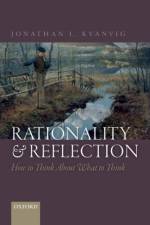
Jonathan L. Kvanvig presents a new account of rationality, Perspectivalism, which both avoids elevating rationality so that only the most reflective of us are capable of rational beliefs, and avoids reducing it to the level of beasts. He defends optionality about what it is reasonable to think, and provides a framework for rational disagreement.
Charting the history and analytical underpinnings of comparative constitutional inquiry, this book probes the various types, aims, and methodologies of engagement with the constitutive laws of others through the ages. It explores how and why comparative constitutional inquiry has been and ought to be pursued by academics and jurists worldwide.
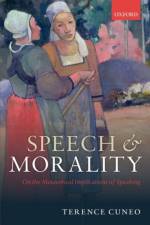
Terence Cuneo presents a new argument for moral realism. According to the normative theory of speech, speech acts are generated by an agent's altering her normative position with regard to her audience. In doing so she takes on rights and responsibilities, some of which are moral and objective: these are a necessary condition of speech.
Gonzalo Rodriguez-Pereyra presents a new study of Leibniz's Principle of the Identity of Indiscernibles-a principle which rules out numerically distinct but perfectly similar things. He explores Leibniz's definition of the Principle, evaluates his arguments for and from it, and concludes that it was central but inessential to Leibniz's philosophy.
This book presents the latest scientific and management information on multiaged silviculture.
The history of six centuries of weeping Britons. A comprehensive debunking of the myth of the British 'stiff upper lip', from medieval mystics to Margaret Thatcher.
Jose L. Zalabardo presents a new account of central ideas in Wittgenstein's Tractatus Logico-Philosophicus on the structure of reality and our representations of it in thought and language. He explores Wittgenstein's picture theory of propositional representation, the unity of facts and propositions, and the nature of everyday propositions.
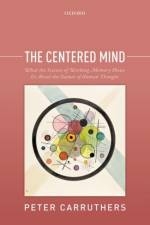
Peter Carruthers challenges the central assumptions of many philosophers on reflective thinking and consciousness. He draws on extensive knowledge of the scientific literature on working memory to argue that non-sensory propositional attitudes (such as beliefs, goals, and decisions) are never conscious, and never under direct intentional control.
Discusses how a knowledge of long-term change in ecosystems can inform and influence their conservation, integrating perspectives from archaeology, environmental history and palaeoecology.
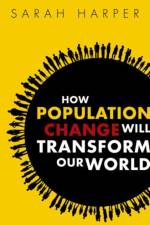
In How Population Will Transform Our World , Sarah Harper looks at fertility rates and age structures of populations in different regions of the world against the backdrop of urbanization and climate change, drawing out the profound implications and challenges for societies, economies, and the environment in the decades to come.
Four small water voles are about to embark upon a long and perilous journey along the Great River, but will they ever find a safe place to call home? Features beautiful black and white illustrations by Simon Mendez.
Eighteenth-Century Fiction and the Reinvention of Wonder examines the place of wonder in eighteenth-century fiction, arguing that t wonder was, in fact, integral to-rather than antithetical to-the developing techniques of novelistic fiction.
Reconsiders the role of the Phillips curve in macroeconomic analysis in the first twenty years following the famous work by A W H Phillips, after whom it is named.
This is a study of the theology of William Perkins (1558-1602), a prominent Cambridge scholar and teacher during the reign of Elizabeth I. Though often described as a Puritan, W. B. Patterson argues that Perkins was in fact a prominent and effective apologist for the established church.
This is the first work to analyse data privacy laws across Asia. Written by the leading expert in this area, the book sets out the international context of the development of national data privacy law before examining and comparing data privacy in all 26 Asian jurisdictions.
Oceans feed us and affect our climate. With climate change, pollution, and overfishing, our oceans are at risk as never before. Yet we are only just learning their history and processes. Here, Zalasiewicz and Williams describe what we know of their origin and development on Earth, oceans on other planets, and what the future might hold for our own.
The only autobiography by a major Victorian novelist, Trollope's account offers a fascinating insight into his literary life and opinions. This edition shows how he exaggerated to create his compelling narrative, and includes other writings to show how subtle and complex his approach to literature really was.
Helen Frowe offers a new account of when and why it is morally permissible for a person to use force to defend herself or others against harm. She explores the use of force between individuals before extending the enquiry to war, to argue that we should judge the ethics of killing in war by the moral rules that govern killing between individuals.
Twelve of the greatest voices from ancient Greece and Rome - and why they still inspire and affect us in the 21st century. A book for all readers who want to know more about the literature that underpins Western civilization.
This book examines different approaches to the study of labour law, comparing traditional with more market-focussed approaches. It argues that the idea of the labour constitution continues to offer a useful framework for scholarly analysis, emphasising the critical nature of the link between democracy and the protection of workers' interests.
Quentin Skinner highlights the use of judicial rhetoric in some of Shakespeare's most famous works, shedding new light on Shakespeare's reading and the intellectual base of his work.
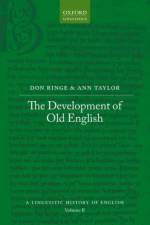
This book, the second volume in A Linguistic History of English, describes the development of Old English from Proto-Germanic. It is an internal history of the structure of English that combines traditional historical linguistics, modern syntactic theory, the study of languages in contact, and the variationist approach to language change.
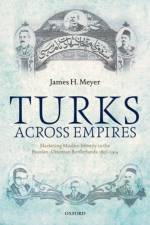
Tells the story of the pan-Turkists, a group of Muslim activists who became involved in a wave of revolutions taking place in Russia (1905), Iran (1906) and the Ottoman Empire (1908), demonstrating how theirs is part of a larger history of trans-imperial Muslims, the Russian-Ottoman borderlands, and the late imperial age.
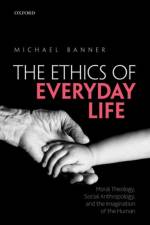
The book provides an exploration of how Christianity has thought about what it is to live a human life and asks how Christianity's understanding of being relates to and challenges alternative contemporary accounts as they are mapped and explored in social anthropology.
What kind of thing are we? Paul Snowdon's answer is that we are animals, of a sort. This view-'animalism'-may seem obvious but on the whole philosophers have rejected it. Snowdon argues that animalism is a defensible way of thinking about ourselves. Its rejection rests on the tendency when doing philosophy to mistake fantasy for reality.
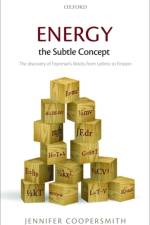
This book explains the idea of energy by tracing the story of its discovery, from Galileo through to Einstein. It explains the physics using the minimum of mathematics, presenting both a gripping historical narrative and a fascinating introduction to an elusive physical concept.
Presents an account of West African slavery in Cuba and Bahia from 1790, arguing that the large numbers of slaves brought to the same plantations from the same areas of West Africa was a factor in many of the slave uprisings of the time, connecting people and events in a fascinating and unique narrative.
Abonner på vårt nyhetsbrev og få rabatter og inspirasjon til din neste leseopplevelse.
Ved å abonnere godtar du vår personvernerklæring.